How to Decorate the Top of a Dresser Without Overdoing It
A dresser top has a funny way of collecting things. One perfume bottle becomes three, a candle appears, then a tray, then a vase, and suddenly the whole surface looks busier than you meant it to.
The good news is that top of dresser decor usually looks better when you do less, not more.
A big mirror might only need a lamp and a vase underneath it. A dark dresser can handle a little color. A patterned dresser may need almost nothing at all. And sometimes the smartest styling choice is simply leaving a stretch of the top completely empty.
These rooms are a good reminder that there’s no single dresser formula. The fun part is figuring out what your dresser already has going for it, then adding just enough to make it feel finished.
1. Lean Art Into The Mirror
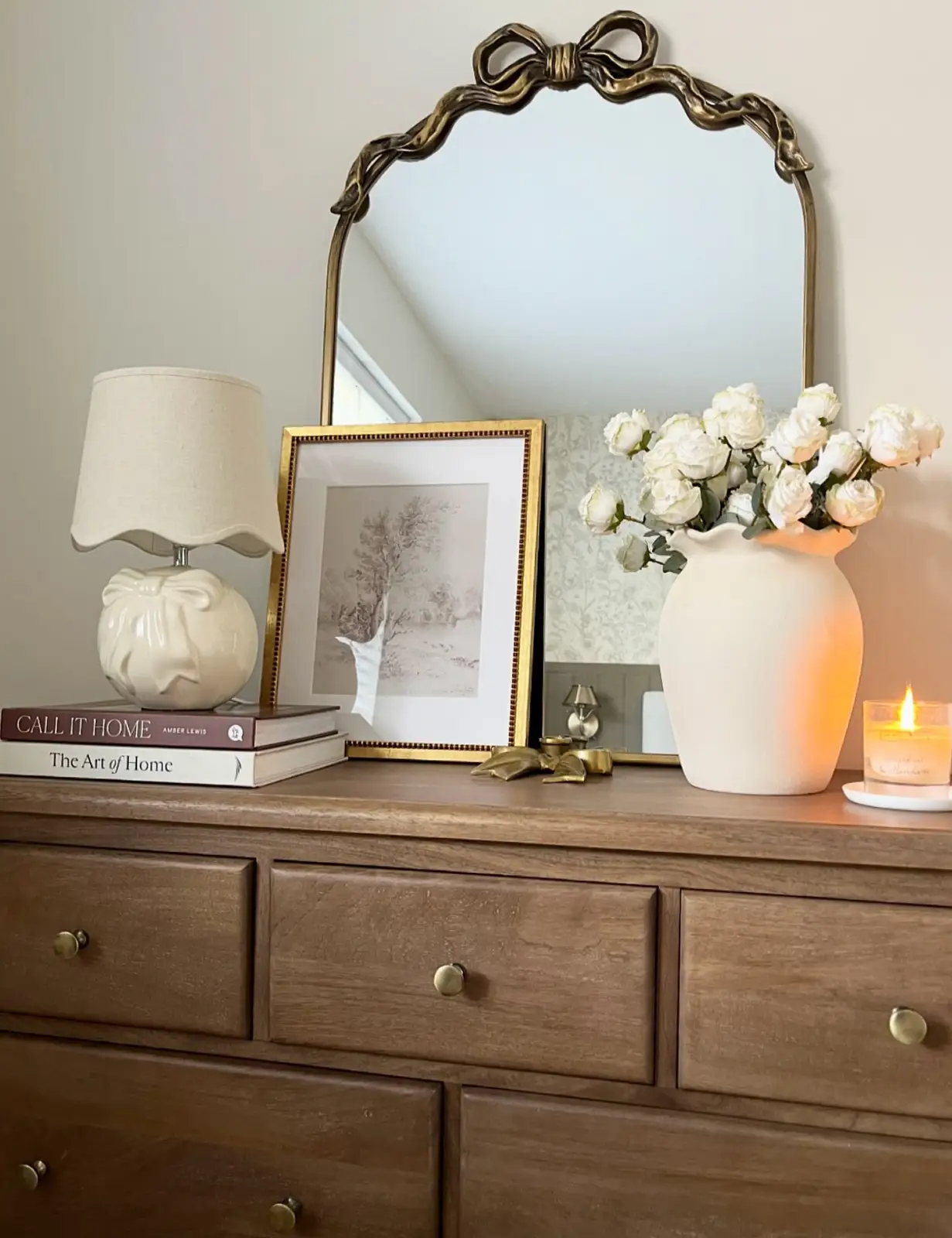
The little framed print leaning against the ornate mirror is the detail I’d keep from this dresser. It fills the awkward space between the lamp and flowers without needing another nail in the wall.
A couple of books underneath give the smaller pieces some height. Nothing lines up perfectly, which suits the old-fashioned mirror much better than a neat, symmetrical arrangement would.
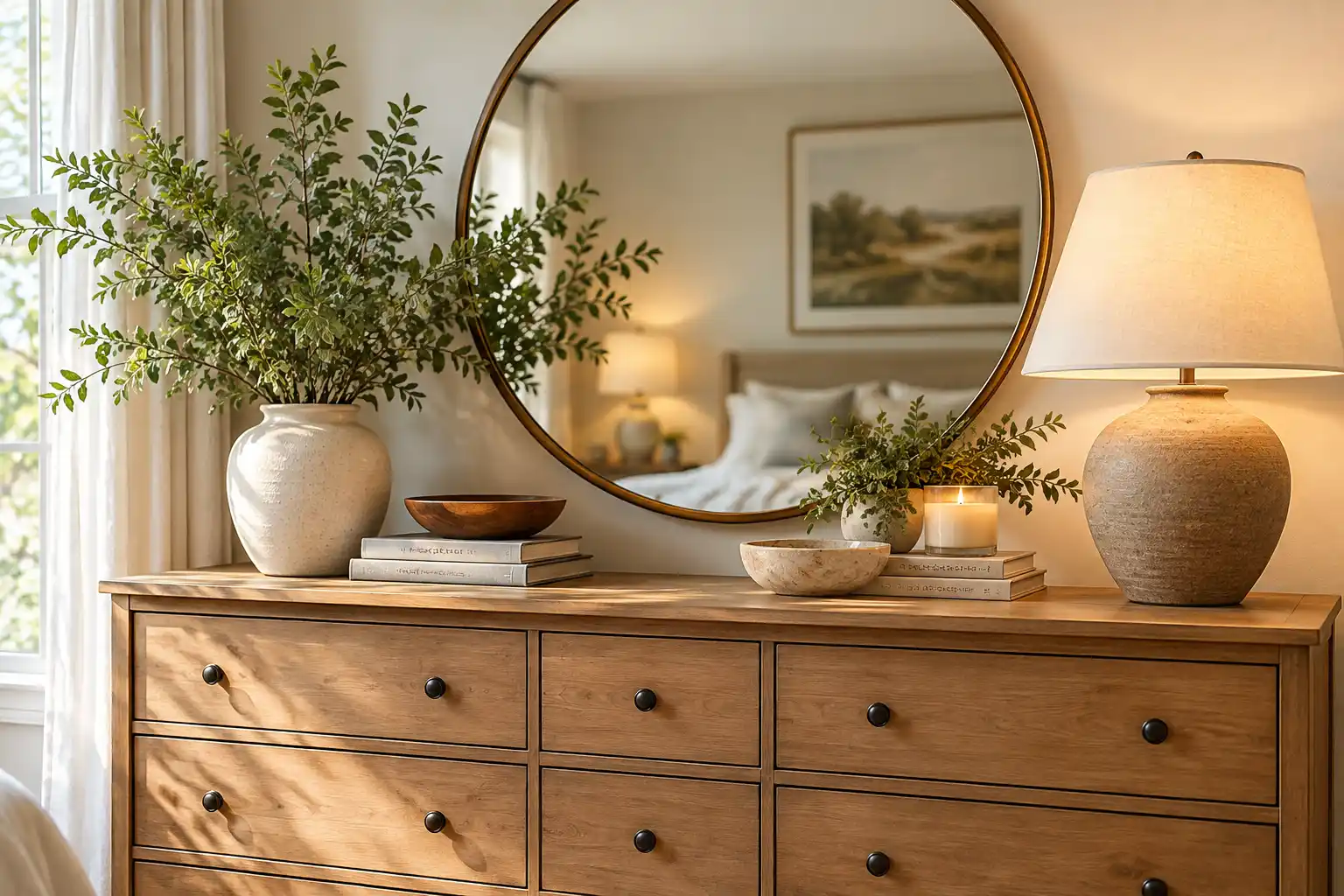
2. Go Big With The Mirror
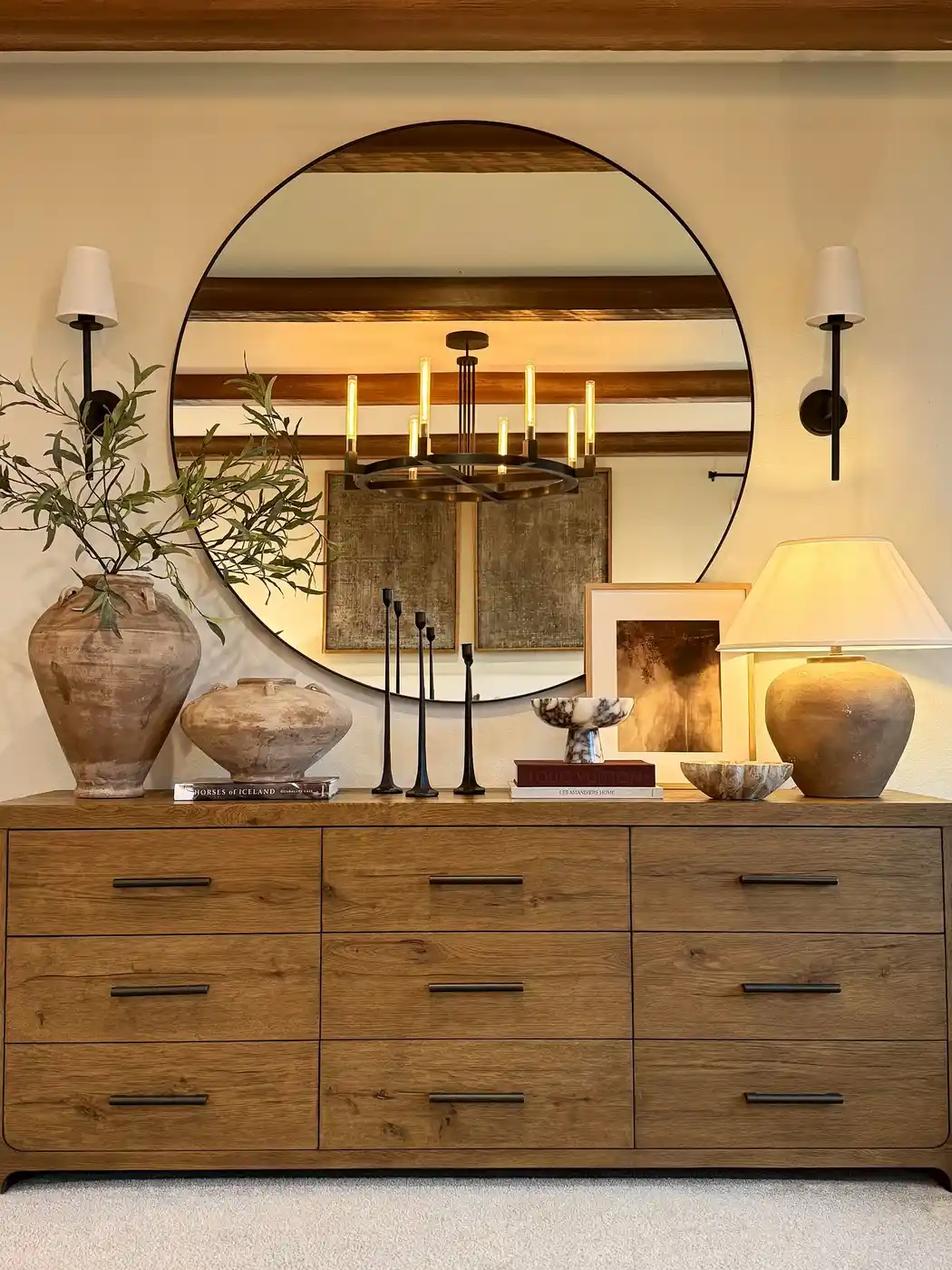
That oversized mirror takes up nearly the whole wall above the dresser. Smaller decor would disappear beneath it, so the larger pottery and lamp make sense.
The middle is busier, with books and several smaller pieces filling the gaps. I wouldn’t add much more. Once a mirror is this large, the dresser doesn’t need another major feature competing for attention.
3. Give White Some Breathing Room
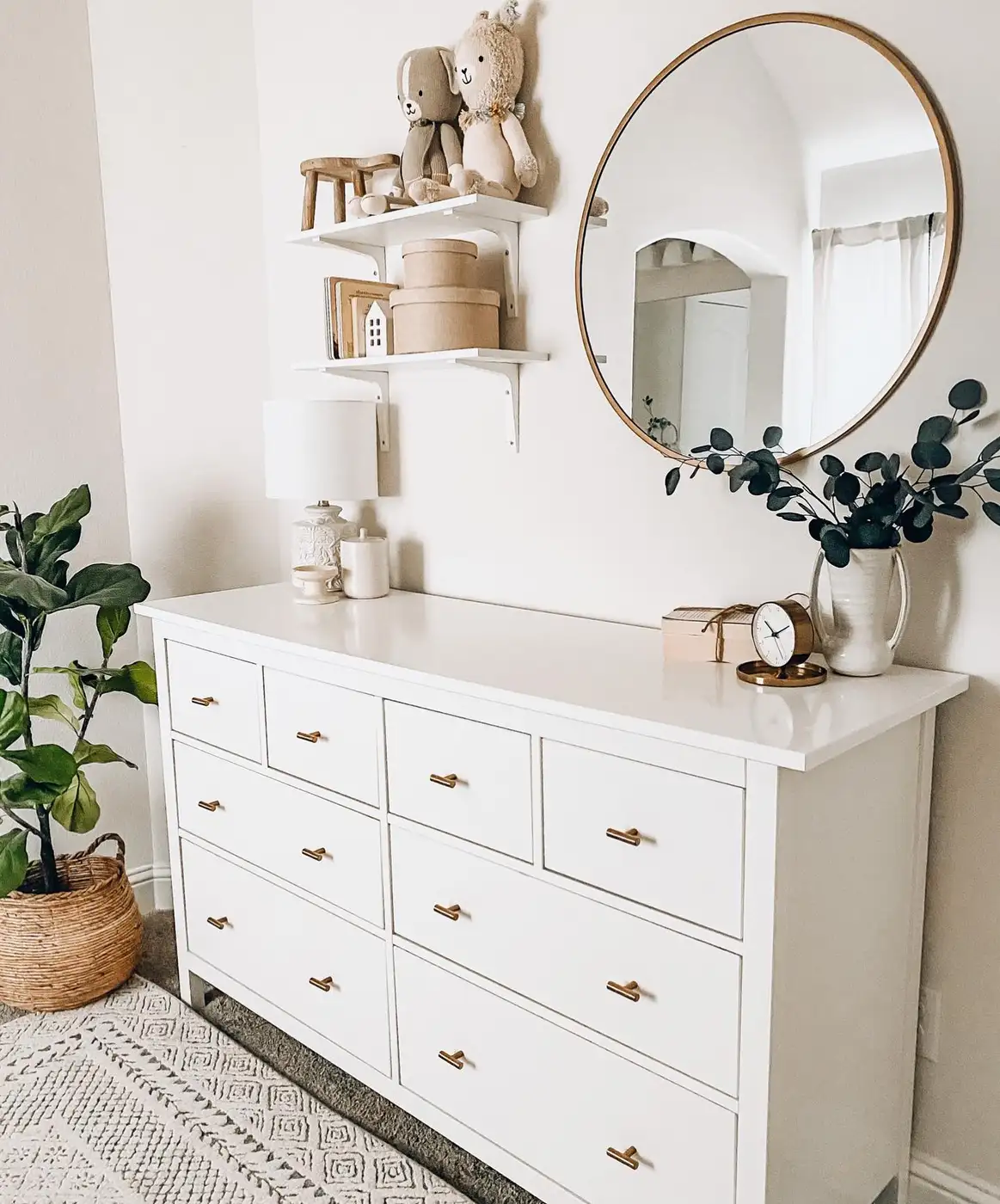
White dresser, white wall, pale accessories. It could have felt washed out, but the green branch keeps that from happening.
The best part is how much empty surface remains visible. A lamp at one end and greenery at the other are enough. The smaller objects stay grouped instead of wandering across the whole top.
4. Let Flowers Break The Line
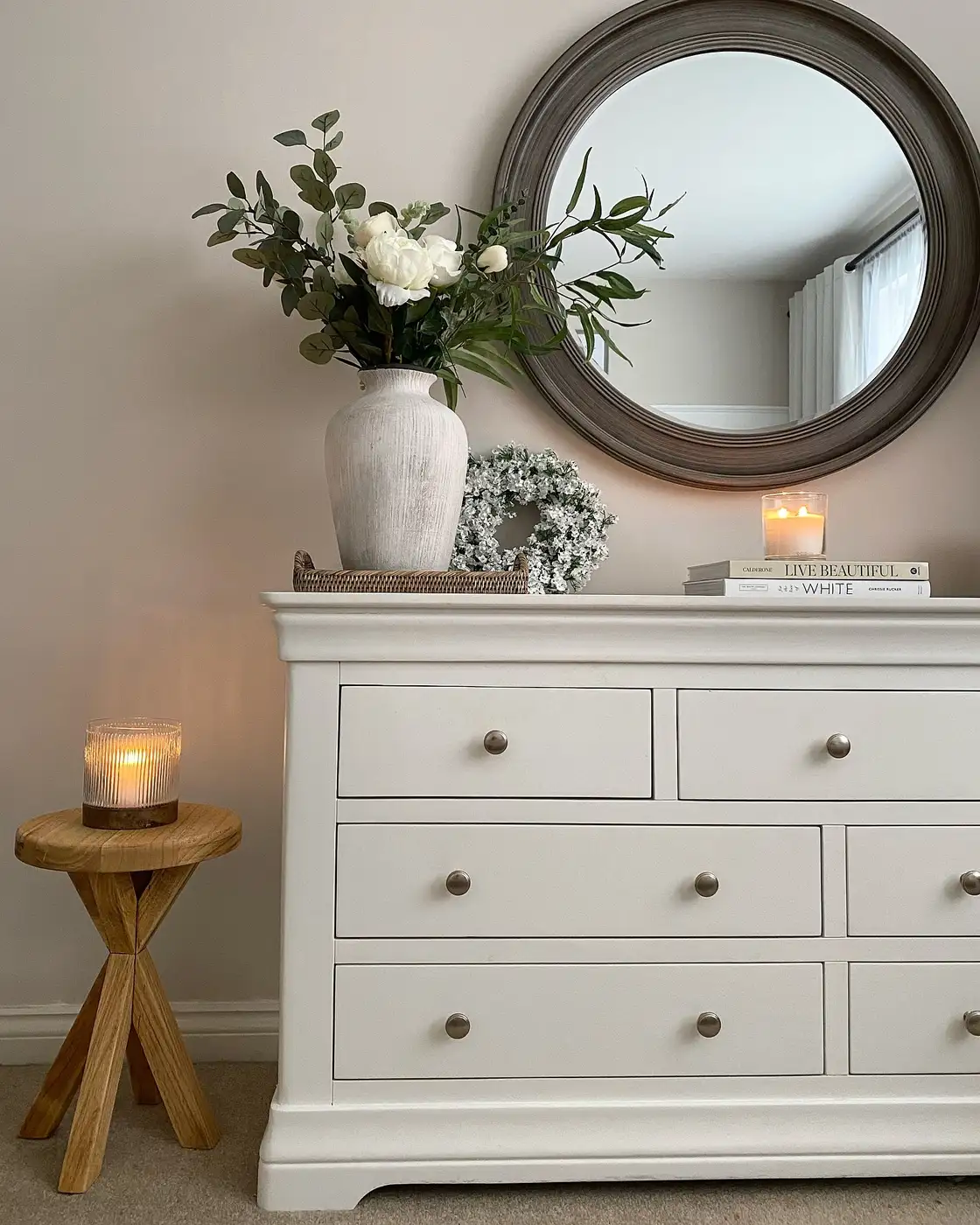
The tall white flowers reach right across the edge of the round mirror. That overlap is small, but it stops the mirror and dresser from feeling like two completely separate layers.
Books and a few low objects sit underneath. Nothing else needs height.
I wouldn’t put a second tall arrangement on the other side. The slight imbalance is nicer.
5. Let The Plants Take Over
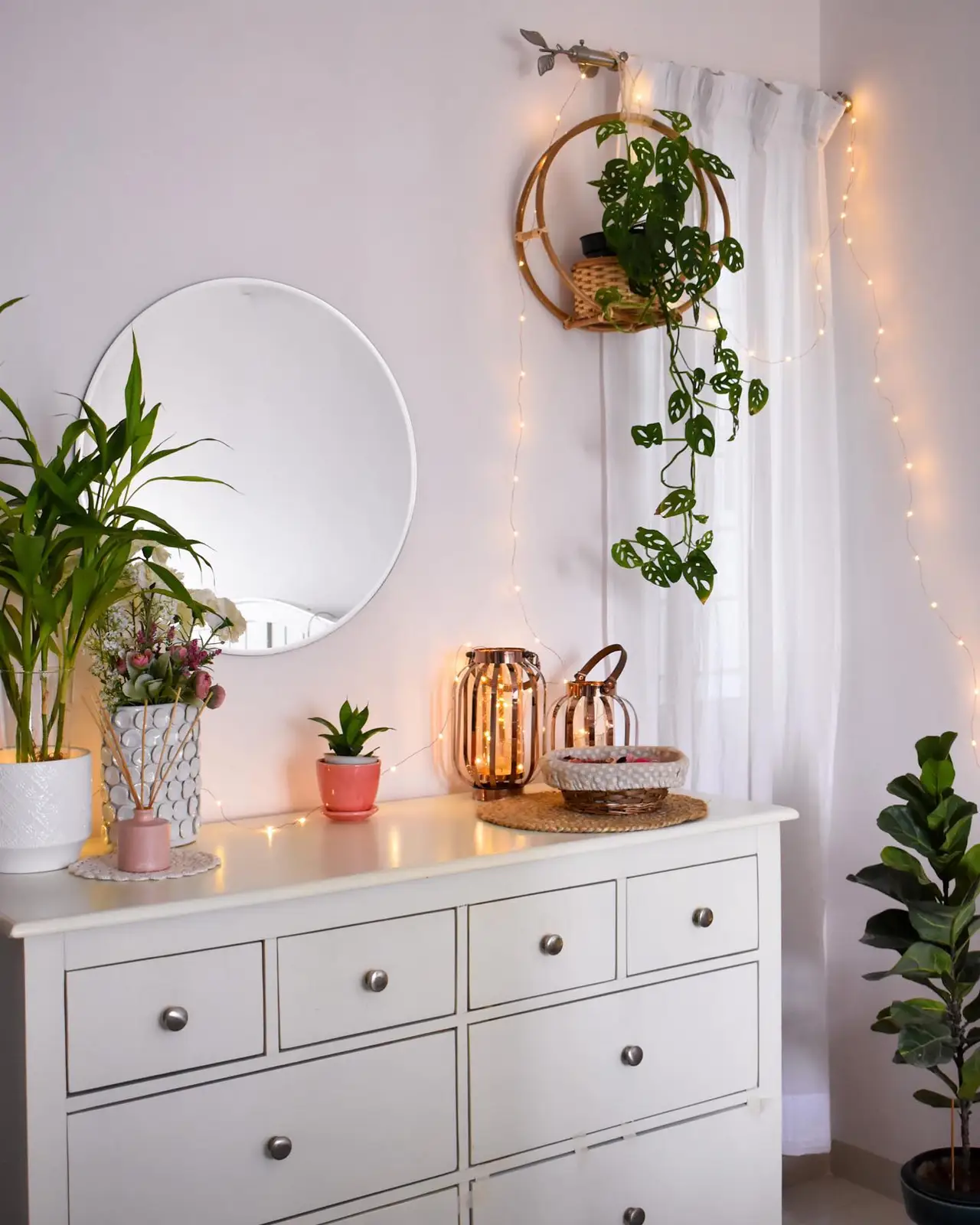
This dresser isn’t really about objects sitting neatly on top. It’s the greenery surrounding the whole corner that catches your eye first.
There are plants at several heights, including one hanging above the dresser, plus tiny warm lights tucked around the area. Copper-toned lanterns bring in another warm note.
A framed print or decorative sign would probably be too much here. There is already plenty to look at.
6. Start With The Lamp
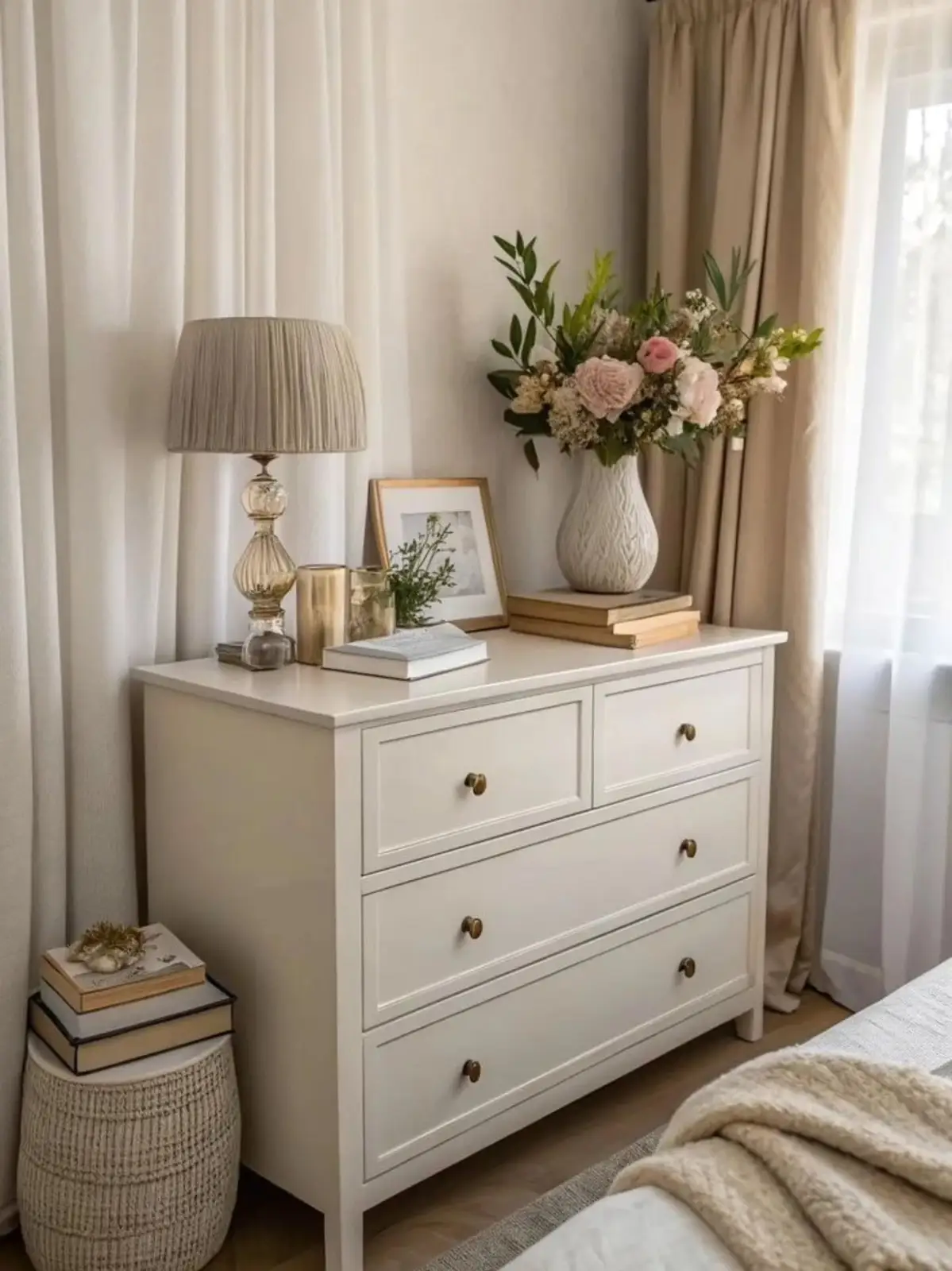
The pleated lamp is the strongest object on this dresser, and everything else gets smaller around it.
A few framed pieces, books, candles, and flowers trail across the remaining surface without matching one another. That looser arrangement suits the soft bedroom around it.
The dusty pink flowers are enough color. I wouldn’t introduce another bright shade.
7. Leave A Gap In The Middle
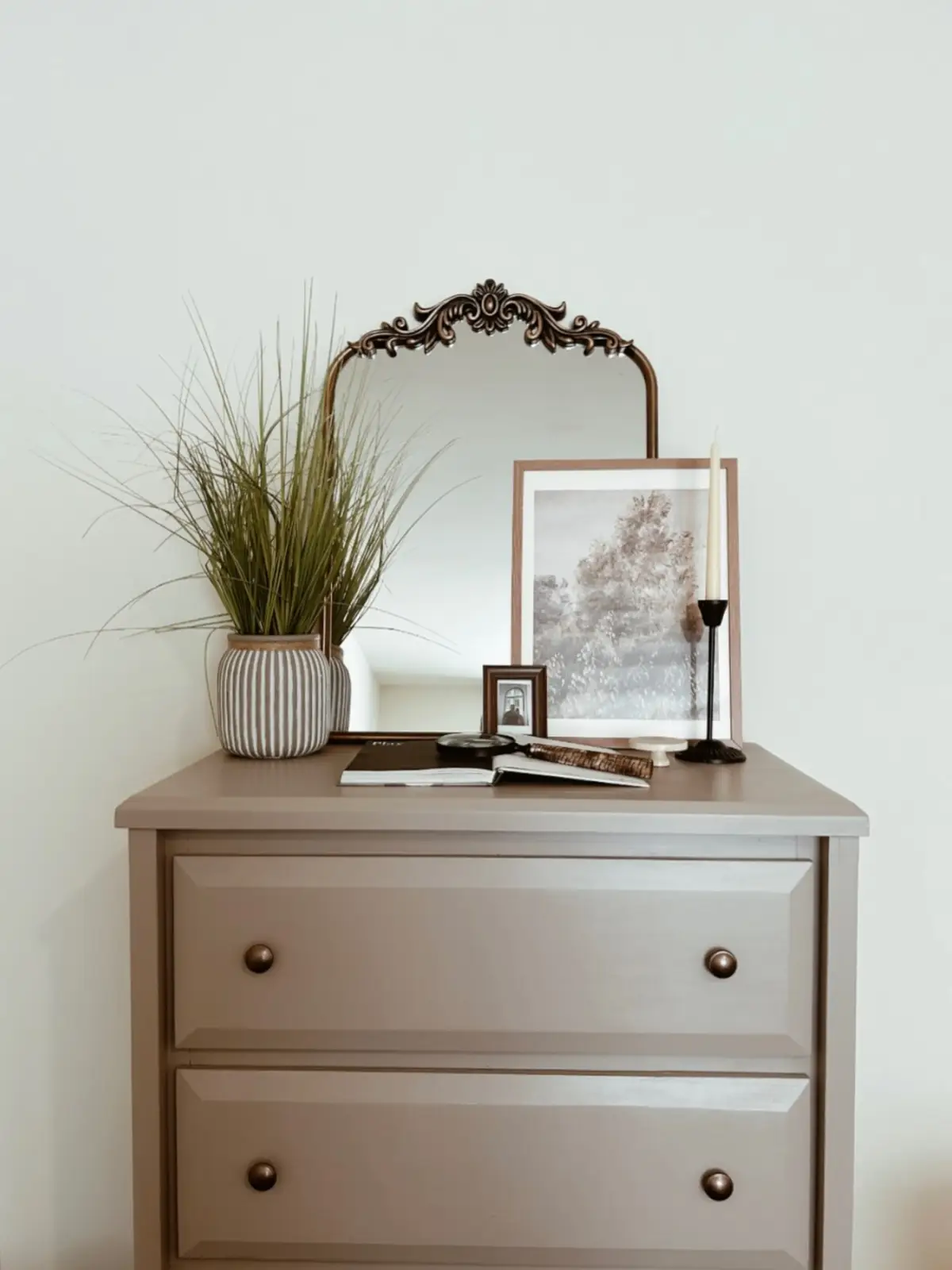
Two small groups sit at opposite ends of this dresser, with a surprisingly large patch of bare wood between them.
Keep that gap.
A leafy plant gives one side height. Layered art and a candlestick handle the other. Filling the middle with bowls, books, and little ornaments would only make the dresser look narrower.
8. Make Room For A Vanity
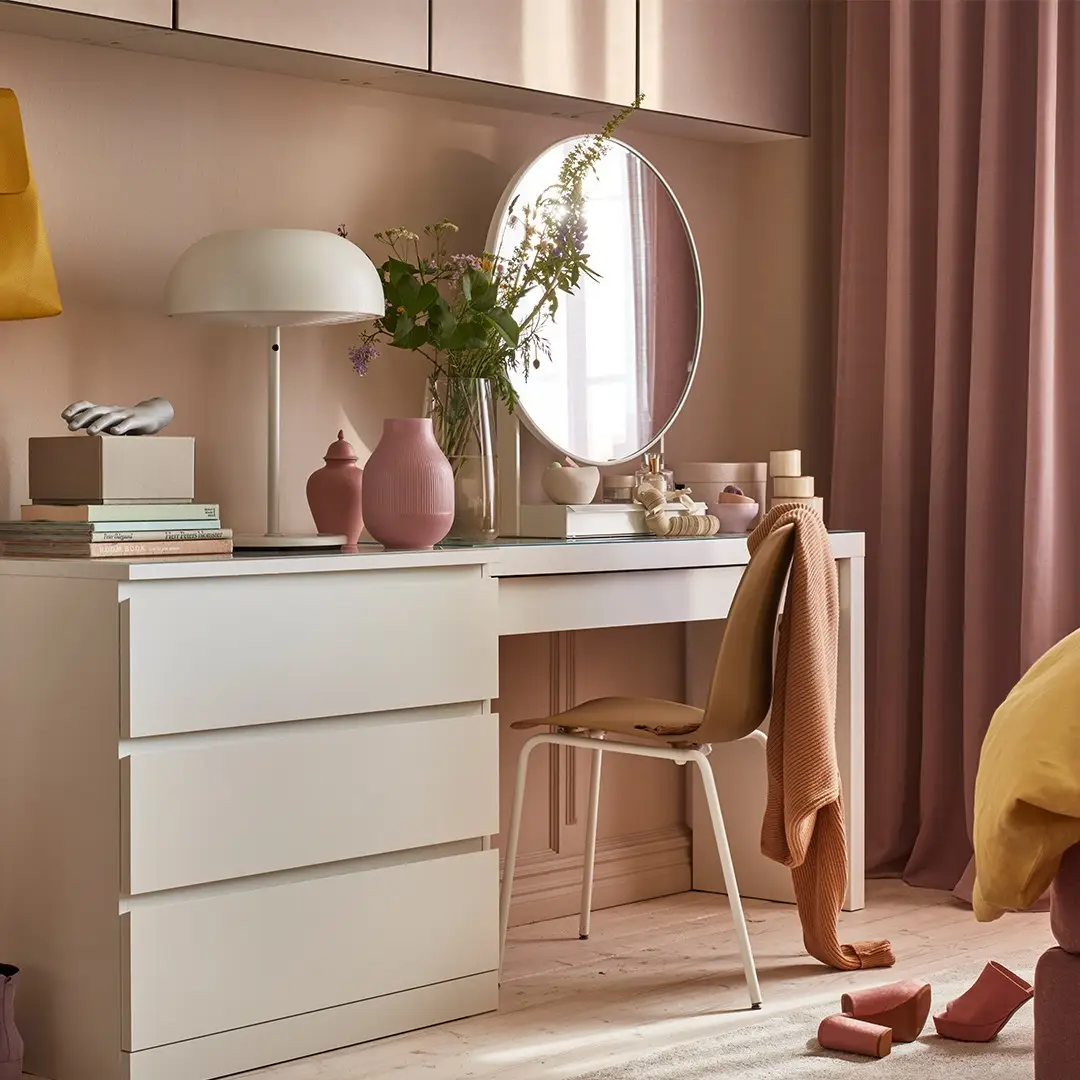
One end of this long dresser is doing real work. The round mirror and chair turn it into a small makeup or getting-ready spot, while the other end carries the decorative pieces.
That split is smarter than covering the whole surface with decor.
The pinks are repeated through the chair, flowers, curtain, and small accessories, so the two sides still belong together. Just keep the space directly in front of the mirror fairly open. A vanity gets annoying fast when you have to move five pretty things before you can use it.
9. Warm Up Deep Green
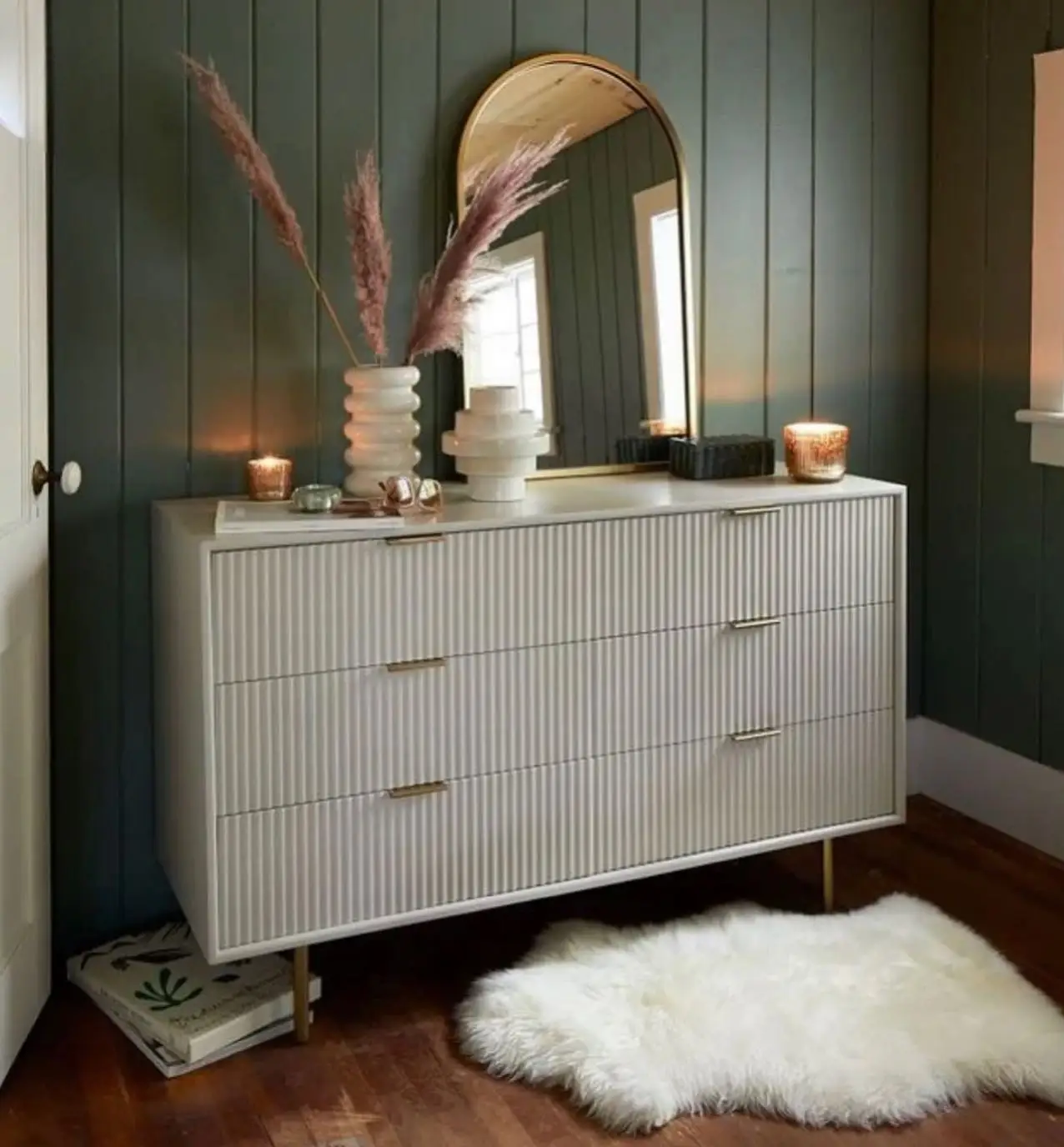
The dark green wall is already dramatic. The dresser itself stays pale, then warm dried stems and candlelight soften the contrast.
That’s enough.
The mirror, two sculptural vases, a tray, and a few small pieces don’t try to outdo the wall. I’d keep it that way. Dark paint doesn’t automatically need lots of decor sitting against it.
10. Mix Glass With Solid Pieces
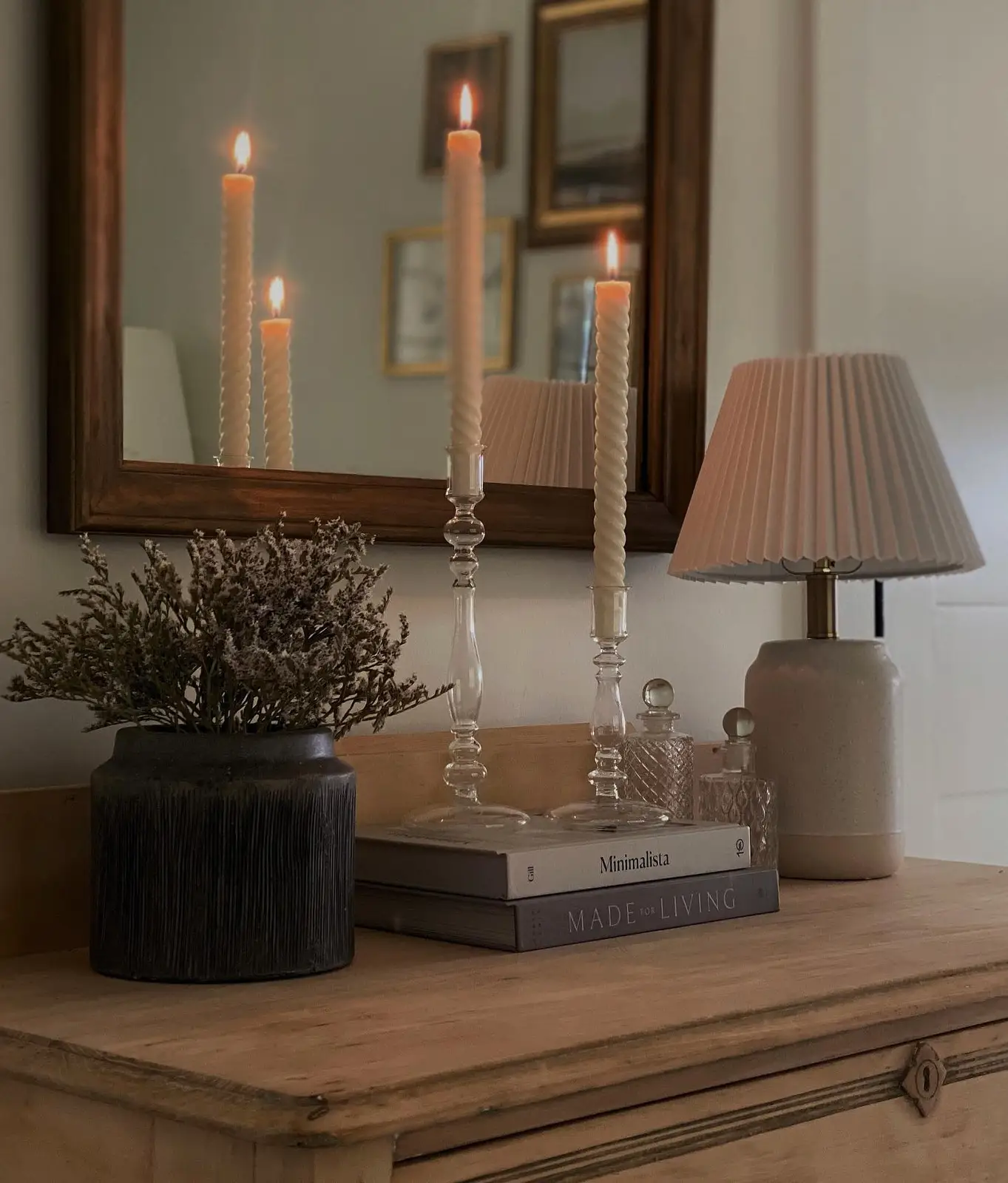
Clear candlesticks could easily disappear here, but placing them beside the solid lamp and dark vase gives them something stronger to sit against visually.
The books underneath are doing a quiet job too. They raise the candlesticks just enough.
There are several different finishes on this dresser, yet the colors stay muted. Much better than buying a matching set of three identical accessories.
11. Let The Dresser Show Off
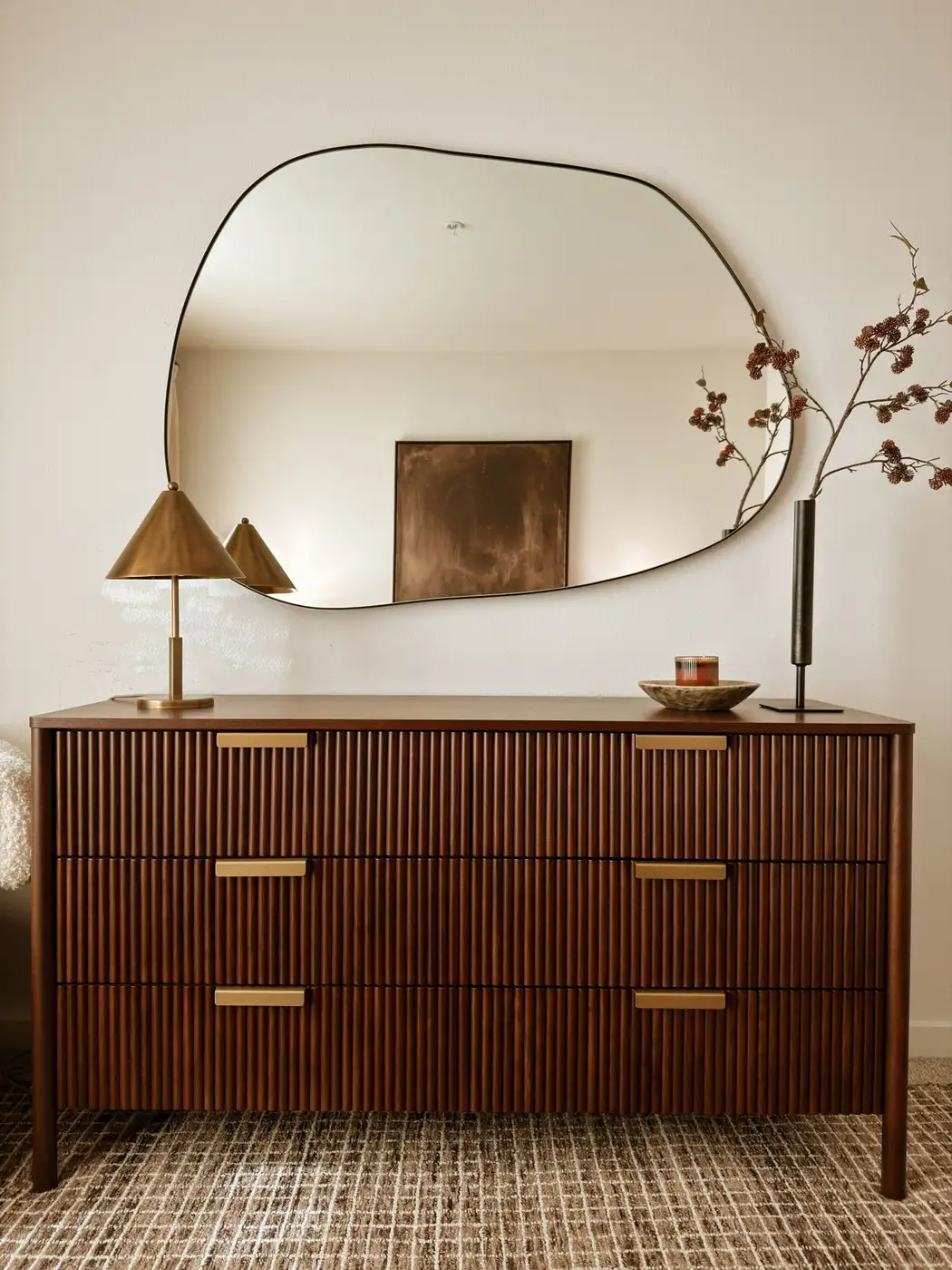
That ribbed wood front and brass hardware already give this piece plenty of detail.
So the top is almost empty.
Two slim lamps, one tall branch, and a couple of small objects are all it needs. I’d be especially careful with a dresser like this. Covering the top with baskets and books would hide the reason the furniture looks good in the first place.
12. Bring In Dry Branches
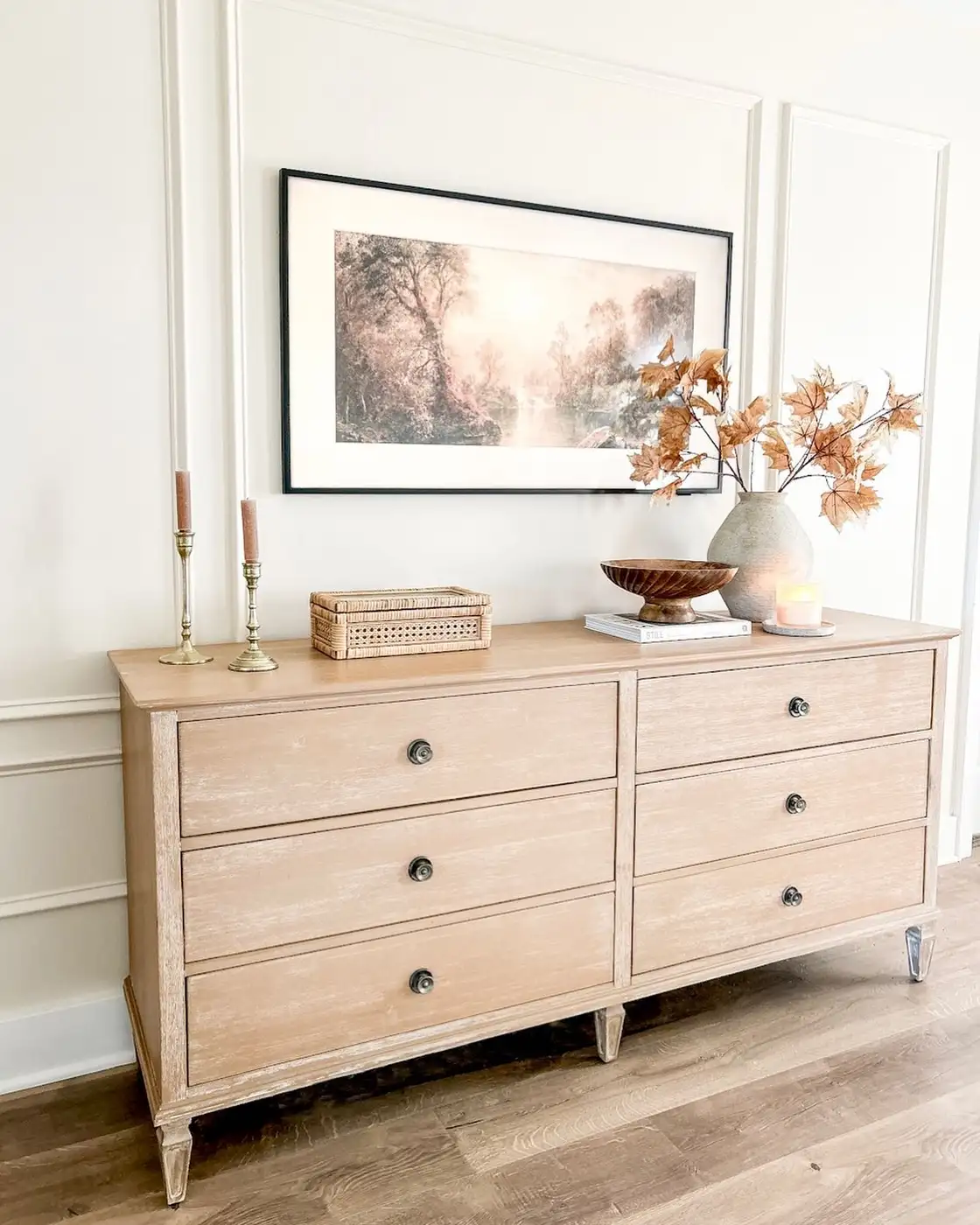
The rusty brown branches are the first thing I’d notice here. They pick up the warm tones in the landscape above without looking like the art and vase were bought as a set.
A woven box and shallow wooden bowl keep the rest low.
Quiet, earthy, and not overly arranged.
13. Move Some Decor To The Floor
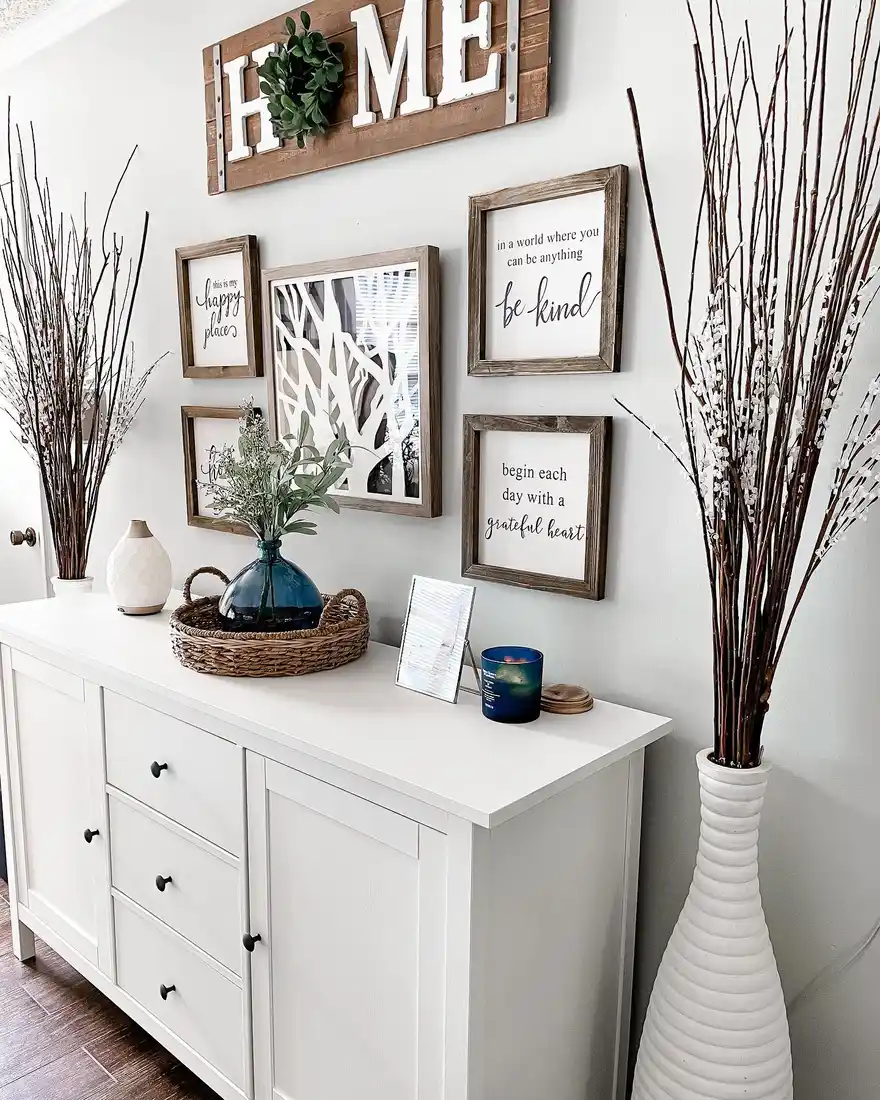
Not everything has to sit on the dresser.
Tall branches rise from the floor on both sides here, framing the furniture without eating up the surface. The wall carries the signs and artwork, while the dresser itself gets a tray, small frame, candle, and a few lower pieces.
That’s a handy setup when you like a fuller look but still want usable dresser space.
I’d leave the tall tabletop vases out. The branches already handle height.
14. Stay Low Under The TV
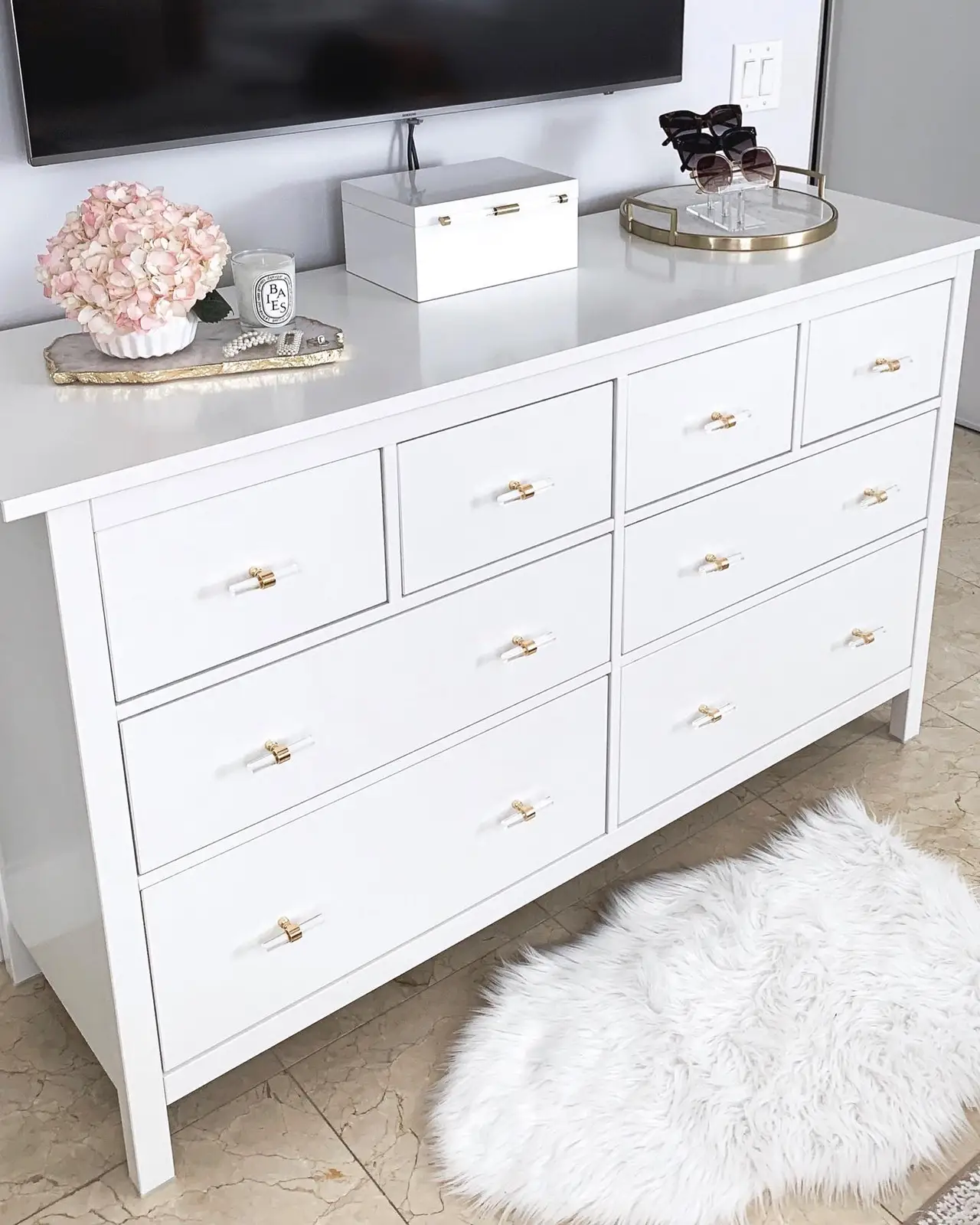
A television changes the rules.
Tall branches and oversized lamps directly underneath it can crowd the screen, so the decor here stays low. Flowers, a storage box, and a small tray give the dresser something besides electronics without pushing into the viewing area.
This is one spot where I’d choose practicality over a perfectly styled arrangement.
15. Let Busy Wallpaper Be Enough
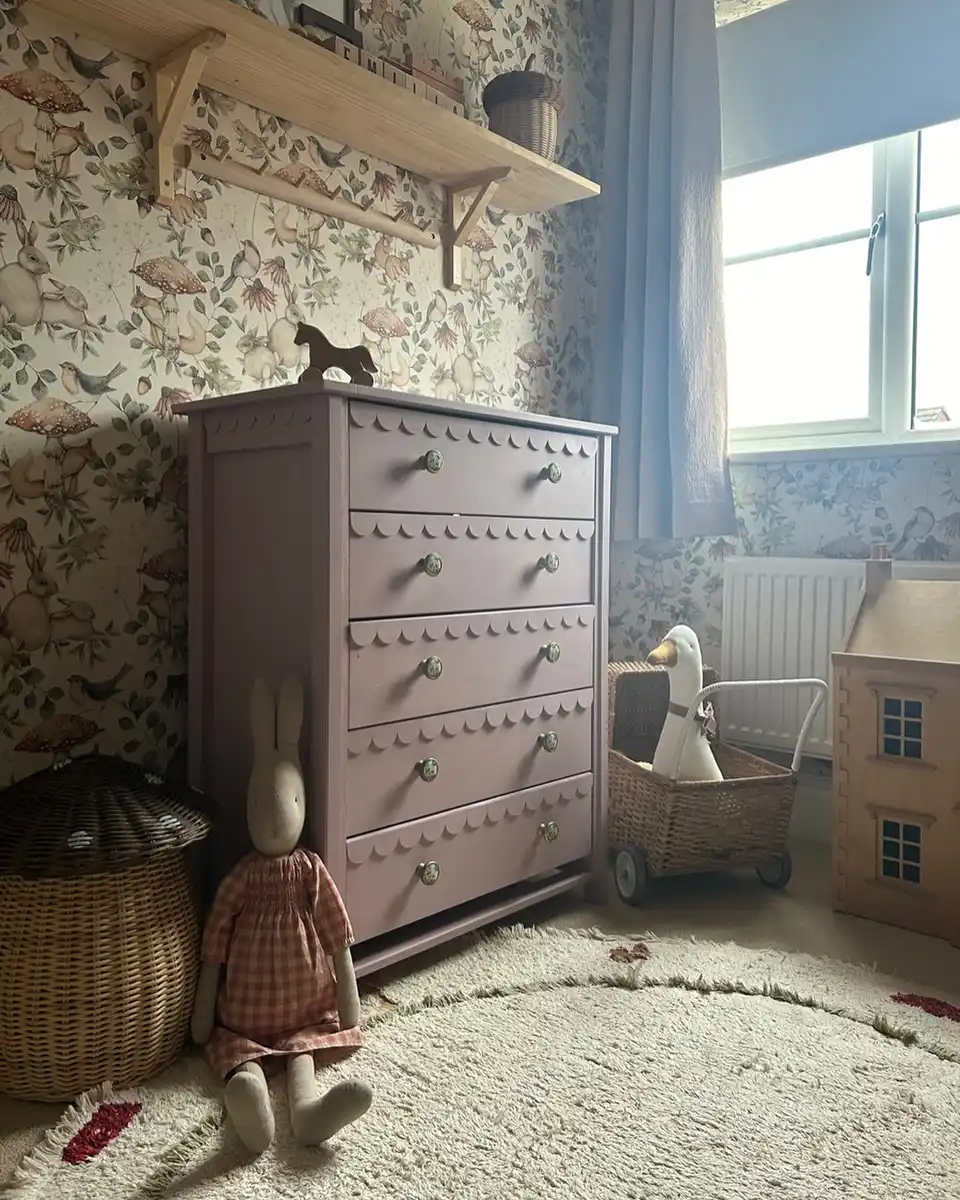
The floral wallpaper already covers the room in pattern. Shelves, baskets, toys, and the rug add even more detail.
The dresser doesn’t need to join in.
Leaving most of its top clear gives this nursery one calmer patch. And in a child’s room, extra open surface isn’t exactly a bad thing.
16. Spread Boho Decor Upward
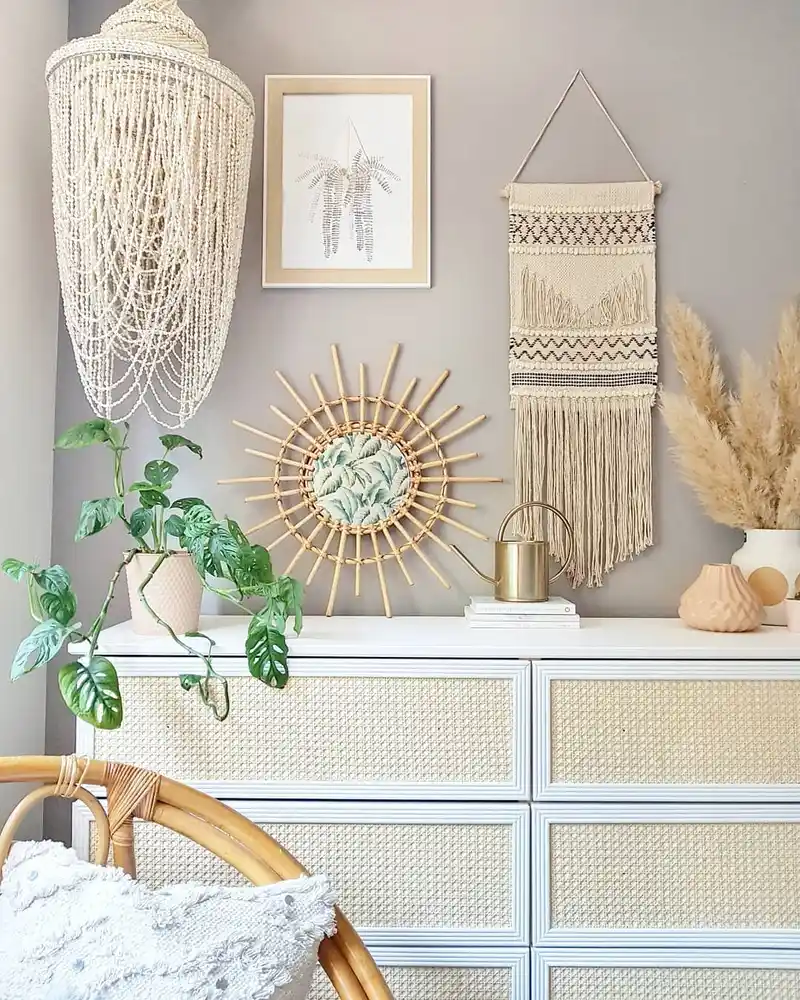
The dresser top is only one layer of this setup.
Above it, woven wall pieces, art, fringe, and a sunburst-style mirror spread loosely across the wall. Plants and dried grasses continue those natural shapes below.
The spacing isn’t perfectly even, and I wouldn’t fix it. Making every piece line up would take away the relaxed feel.
One thing I would avoid: another quote sign. There is already enough happening on the wall.
17. Keep Vintage Pieces Separated
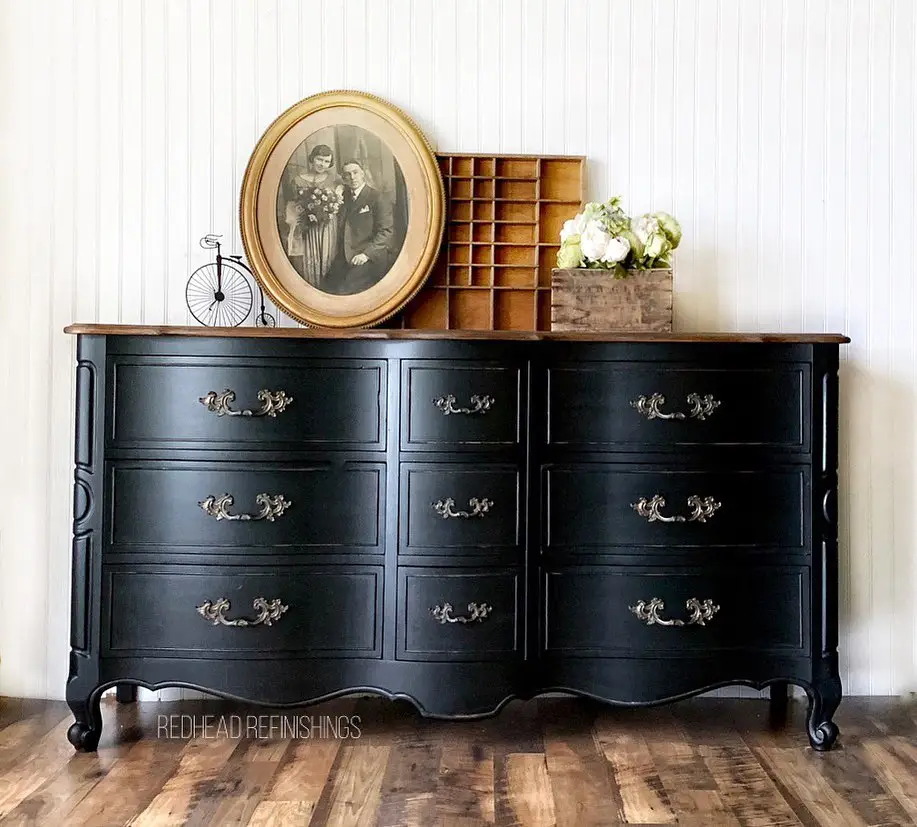
An oval portrait, wooden cubby, tiny bicycle, and box of white flowers sound like a lot when listed together. On the dresser, they don’t feel crowded because each piece gets its own little patch of space.
That’s important with vintage decor.
Older pieces often have strong shapes and lots of detail already. Put ten of them shoulder to shoulder and they start looking like shelf stock. Four interesting objects are plenty here.
18. Repeat Texture, Not Objects
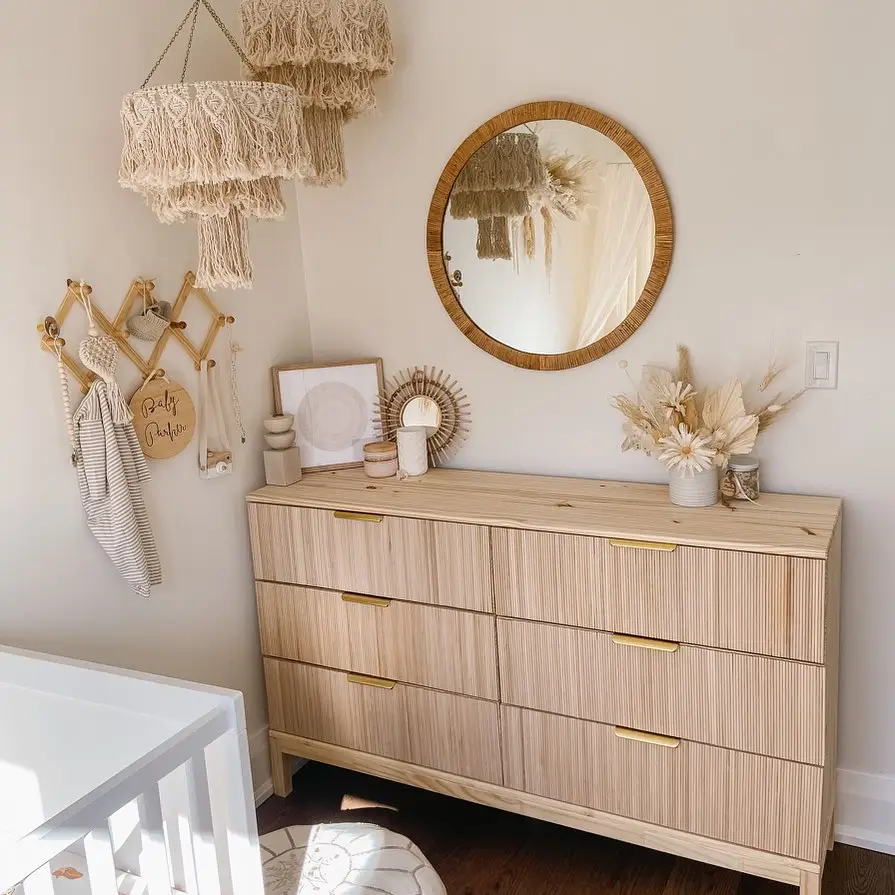
The woven mirror, fringe, peg rack, dry flowers, and pale wood dresser aren’t matching pieces. They just share similar natural textures.
That feels much less forced.
You could take the same approach without buying anything as a set: one woven piece, one pale wood piece, and something dry or leafy. Let the materials repeat rather than the exact shapes.
19. Push Height Toward The Edges
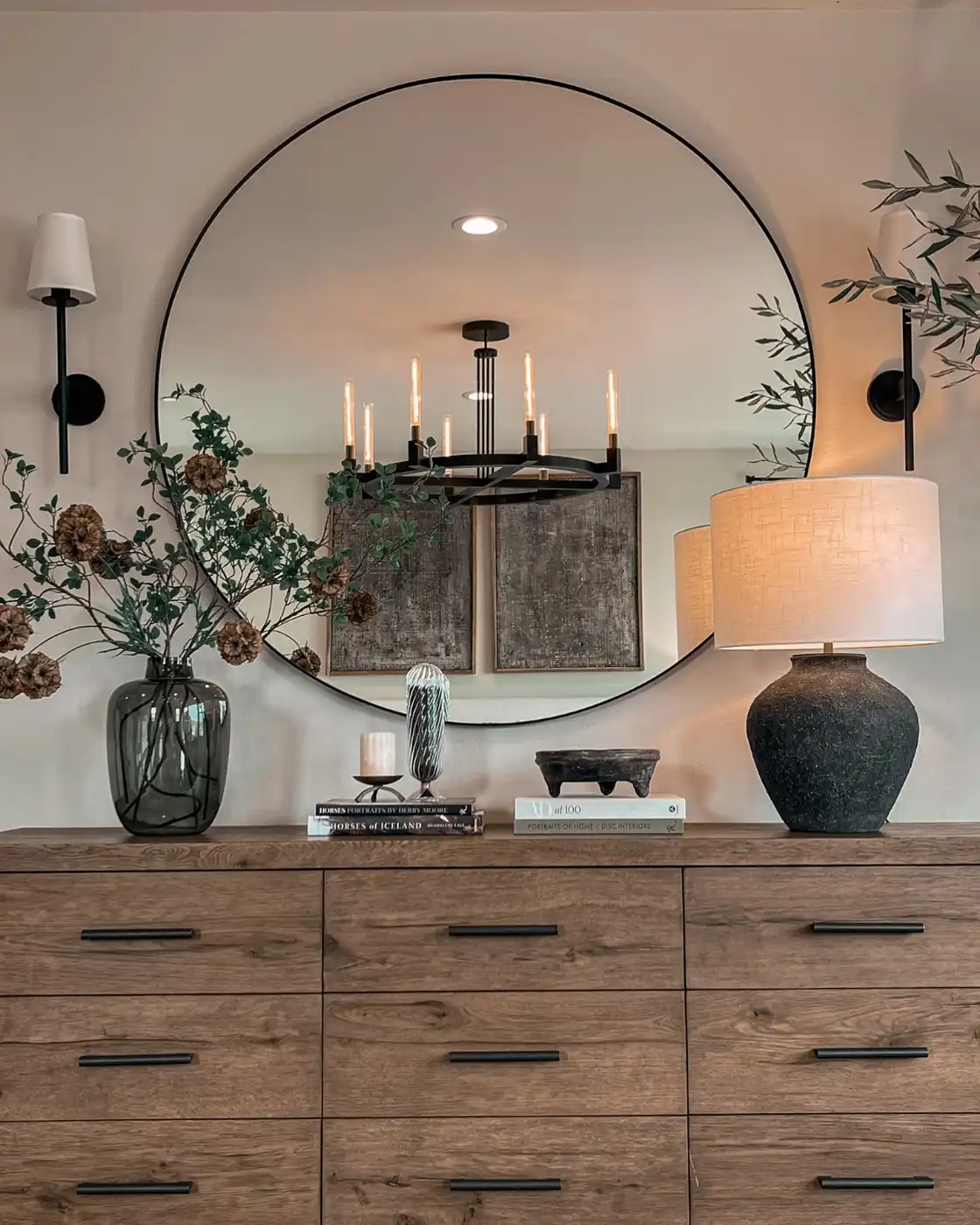
A leafy arrangement rises on the left. A substantial lamp sits on the right. Between them, the objects stay low enough that the large round mirror remains mostly clear.
That’s the detail worth noticing on a long dresser.
Putting the tallest vase directly in the middle would cover too much of the mirror. Here, the height moves outward and the center gets some breathing room.
Even the wall sconces sit beyond the mirror rather than crowding it.
20. Let The Dresser Be The Decor
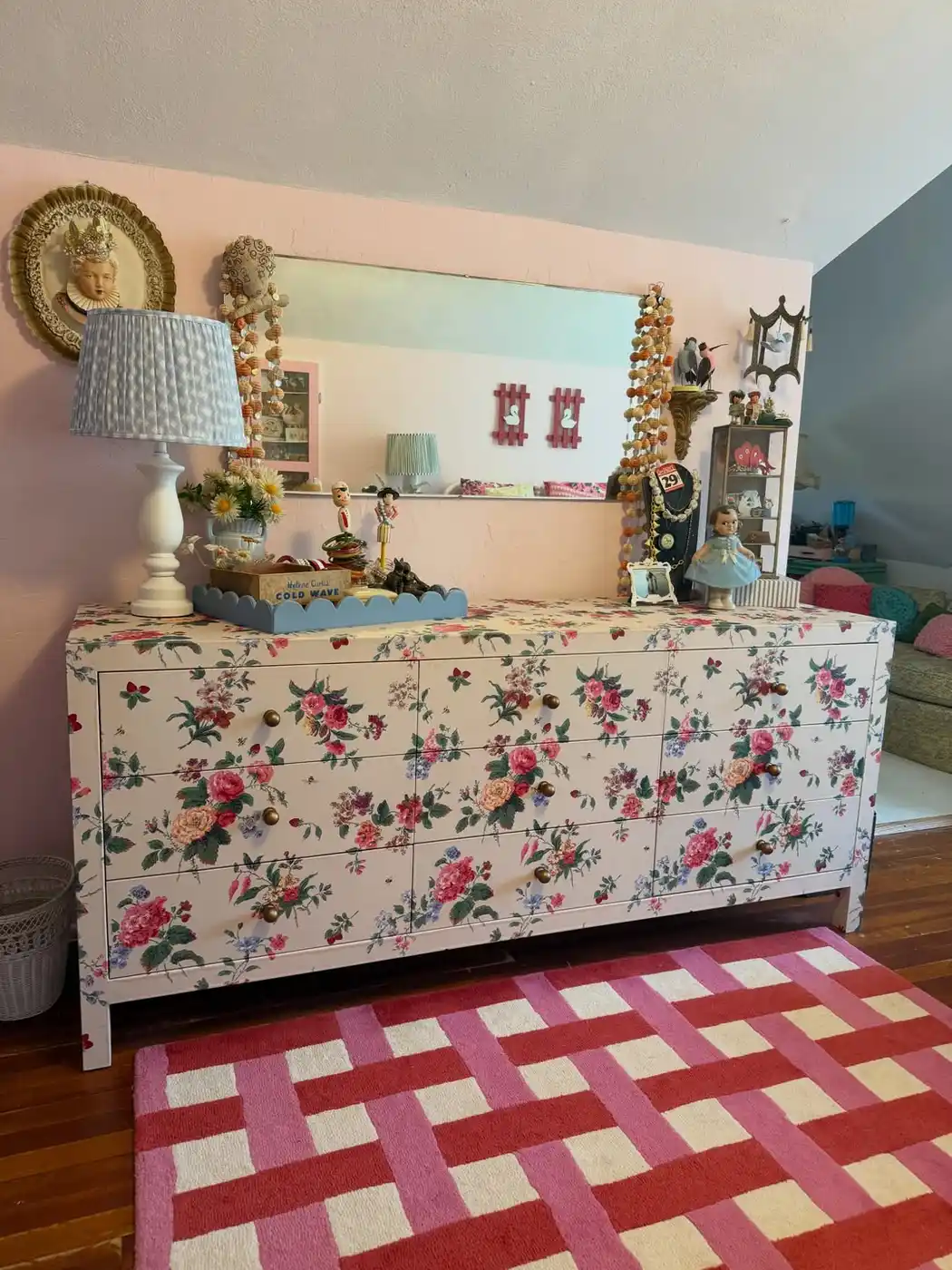
This floral dresser doesn’t need help becoming interesting. The color and pattern are already doing more than most tabletop arrangements ever could.
So I wouldn’t try to calm it down with a row of matching beige accessories.
The playful lamp, small objects, and decorative pieces suit it. So does the bold rug nearby. The room isn’t trying to be quiet.
Still, I’d keep the individual objects fairly small. The dresser itself should remain visible.
21. Put Bright Pieces On Navy
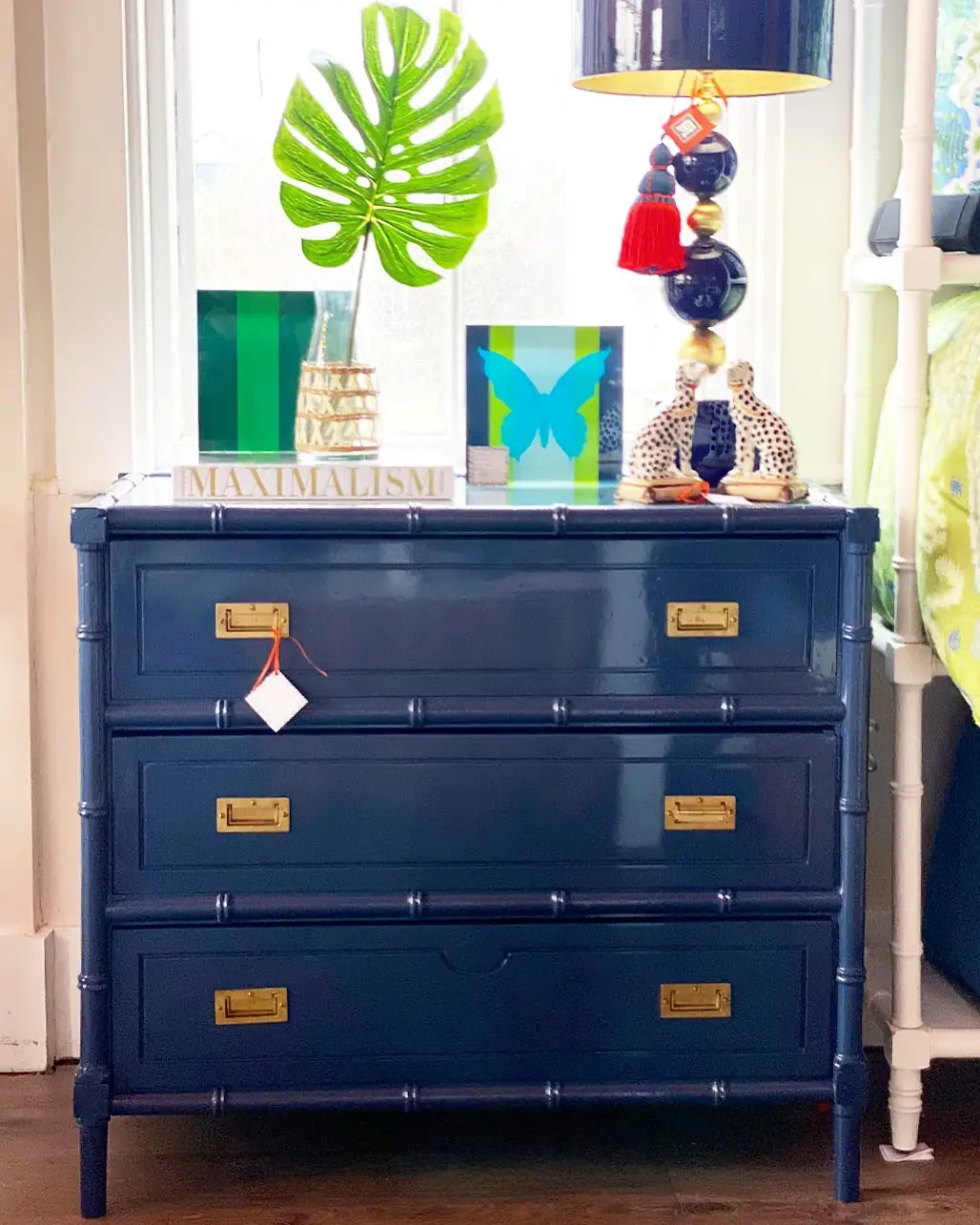
Deep navy makes the green leaf, colorful art, and lighter objects stand out immediately.
The dresser top isn’t packed either. The accessories sit in separate little groups, with enough navy showing between them to keep the color from becoming chaotic.
Probably my favorite detail is the large leaf. One bit of strong green does more here than several tiny plants would.
22. Stop At Three Pieces
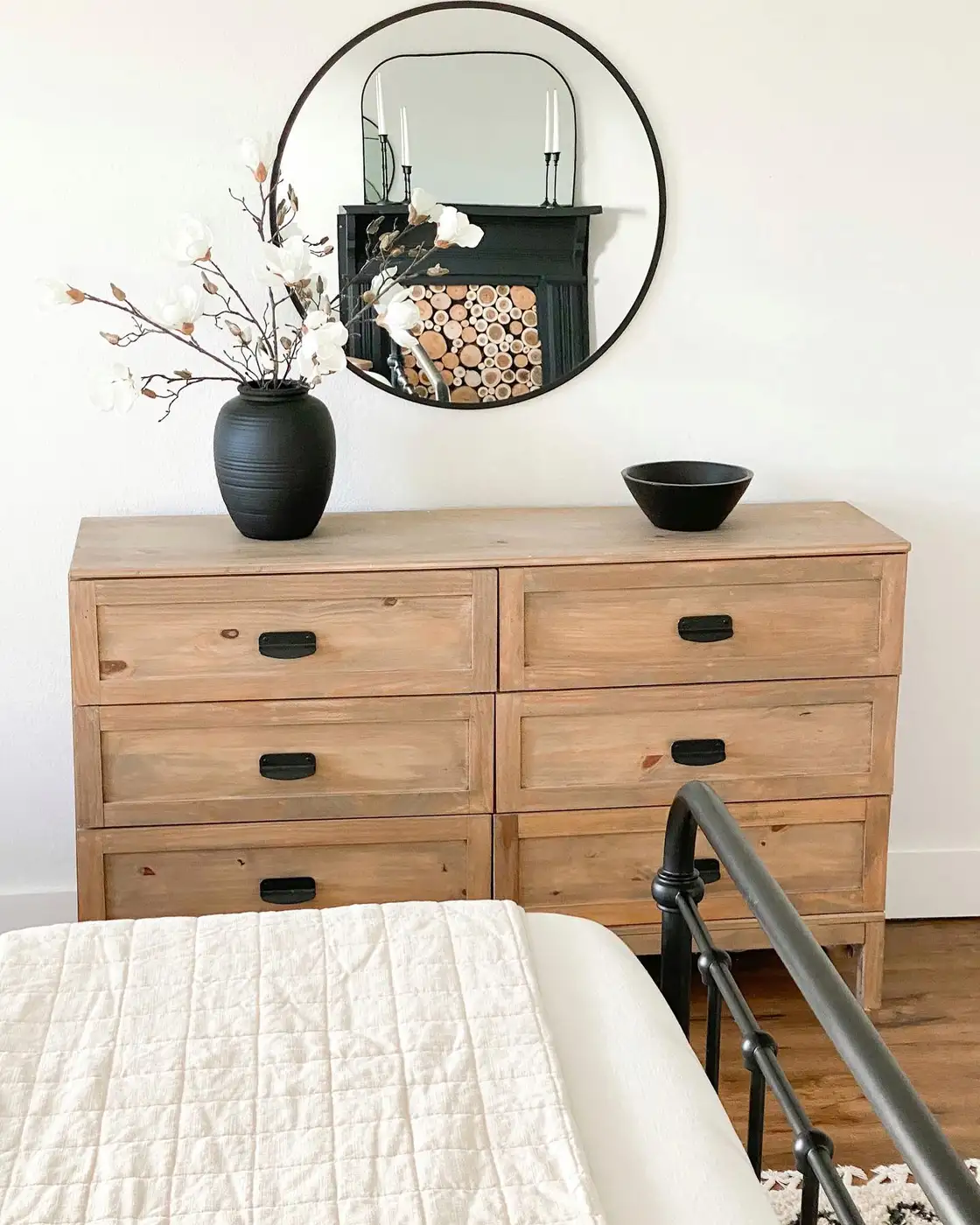
Round mirror. Tall vase. Low bowl.
That’s basically the whole setup, and I’d leave it alone.
The vase gives one side height, the bowl keeps the other low, and the mirror fills the wall above. There is a huge stretch of bare wood between them.
For anyone who keeps adding “just one more thing” to a dresser, this image is a good argument for stopping earlier.
23. Balance Flowers With Candlesticks
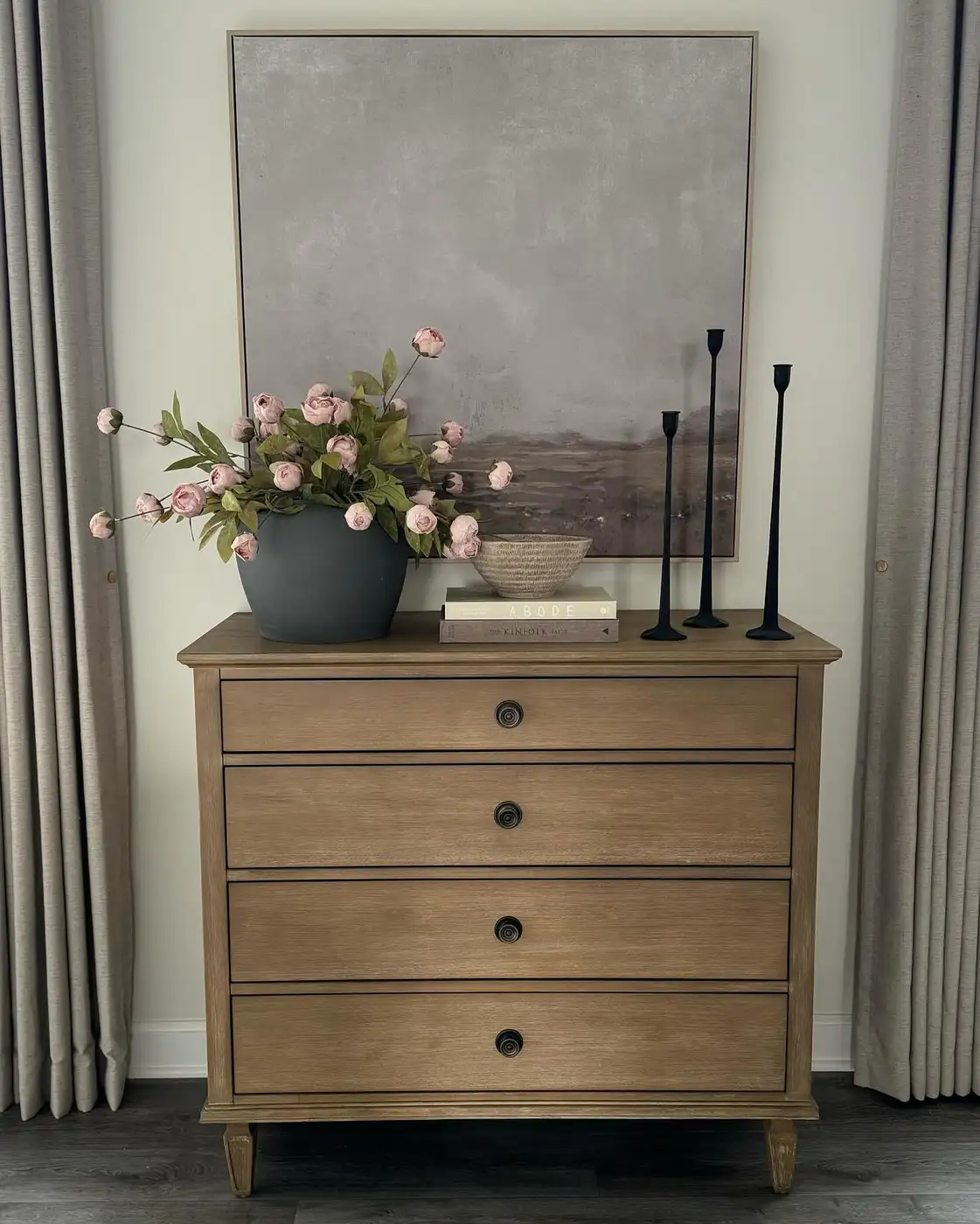
The pink flower arrangement is wide and full. Across from it, three black candlesticks are narrow and upright.
They aren’t matching in size, shape, or material, yet the two sides still feel balanced.
Books and a shallow bowl fill the lower space underneath the oversized artwork. I much prefer this to two identical lamps flanking the dresser. It feels less predictable, and the large artwork still gets plenty of room.
Final Thoughts
Before you add another candle, frame, or little decorative bowl, stand back and look at what’s already there.
Does the mirror need company, or is it big enough on its own? Is one side feeling empty, or does that empty space actually make the dresser look better? Could one tall branch do the job of five smaller accessories?
That’s really where good dresser styling gets interesting. It isn’t about filling the surface. It’s about knowing which pieces deserve the space.
So take one idea from these rooms, not five. Add the lamp. Try the oversized vase. Leave the middle empty.
Then walk away for a minute.
You might realize the dresser was finished before you thought it was.