25 Homework Station Ideas for Small Spaces That Fit Almost Anywhere
Finding room for homework can get tricky when bedrooms, living rooms, and shared spaces are already doing several jobs. The good news is that a useful study spot doesn’t need a huge desk or a separate home office.
These Homework Station Ideas for Small Spaces show how much you can do with awkward corners, narrow walls, window areas, built-ins, compact desks, and even a simple reading chair. Some are polished, some are very basic, and honestly, I like that mix.
The setups I’d pay closest attention to are the ones that keep the actual work surface clear. Put books beside the desk, move storage upward, hide loose supplies in drawers, and give everyday items an easy-to-reach home. That usually matters more than adding more decor.
1. Let the Wall Work Harder
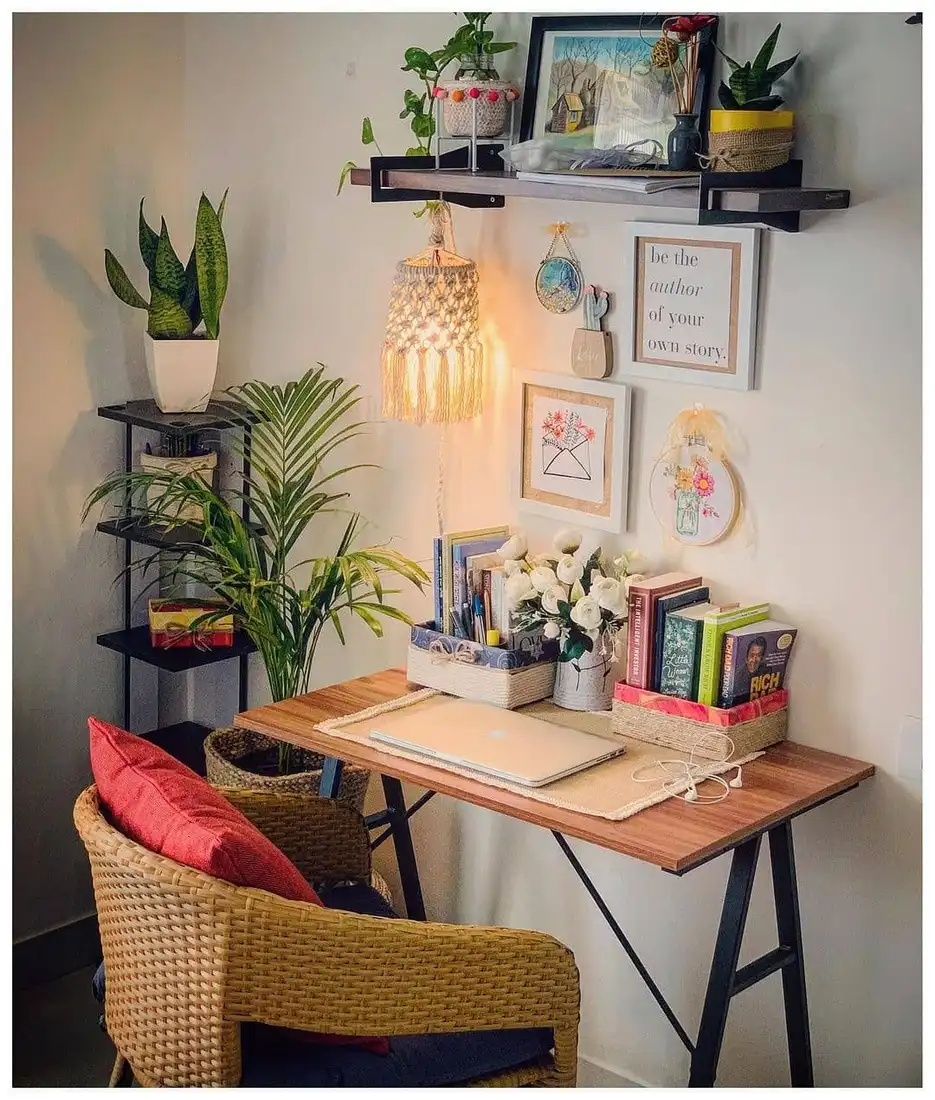
The desk itself isn’t doing much storage here. I like that.
Books and pens sit in baskets along the back, a floating shelf uses the empty wall above, and the narrow black unit slips into a corner that probably wouldn’t hold normal furniture anyway.
The plants are lovely, but I wouldn’t copy all of them in a truly tiny homework station. Keep one or two and give the rest of that space to school supplies. The part worth stealing is the vertical setup. Small desk below, useful storage above and beside it.
2. Give Each Kid a Side
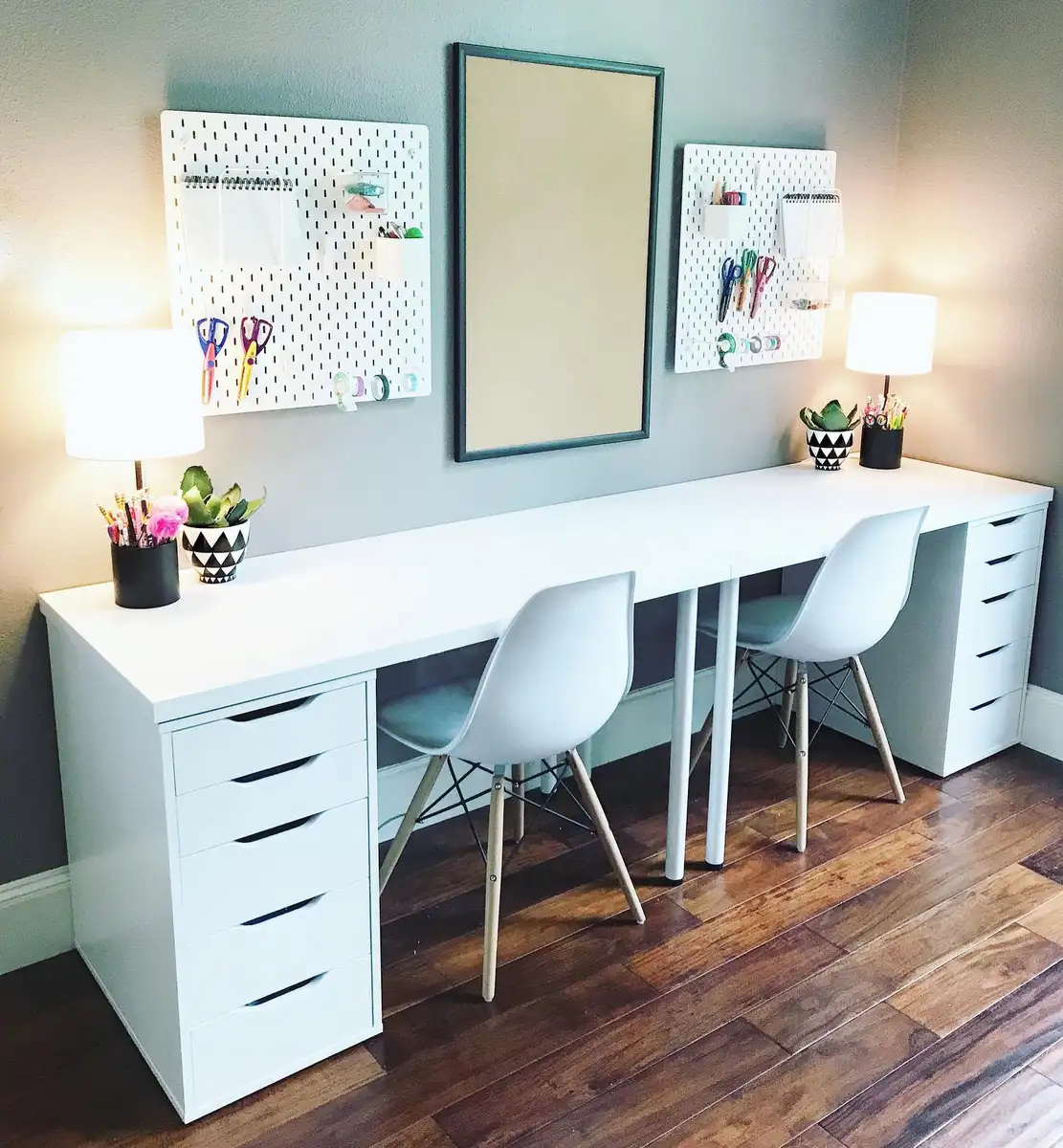
Two seats. Two pegboards. Two drawer units.
That separation is the useful part. Each child gets a place for scissors, pens, tape, and notes without turning the long desk into shared chaos.
I’d leave the middle almost empty.
3. Wrap Storage Around the Window
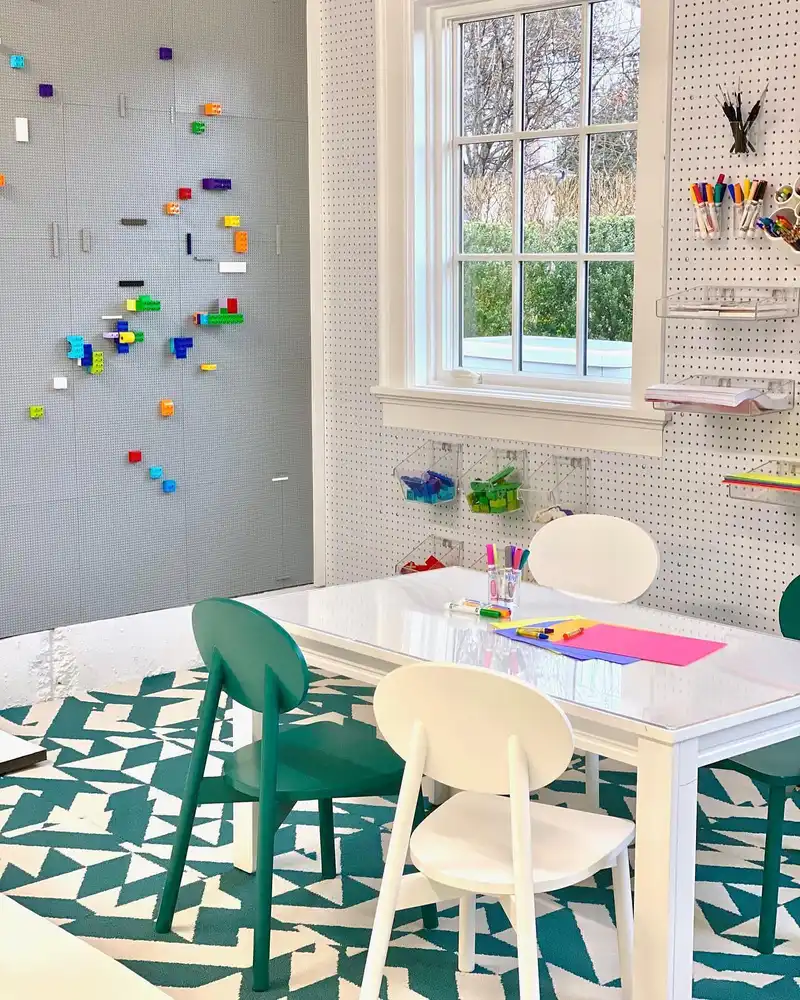
The window could have made this wall awkward. Instead, the storage simply works around it.
Pegboard covers the open wall space, clear containers hang low enough to reach, and paper trays sit off the work surface. That gives the table room for actual projects.
The low bins are probably my favorite detail. Kids can see exactly where small craft pieces belong, which makes cleanup less mysterious.
You don’t need to copy the whole pegboard wall either. Even one narrow section beside a window could hold markers, scissors, tape, and paper.
4. Claim an Awkward Little Niche
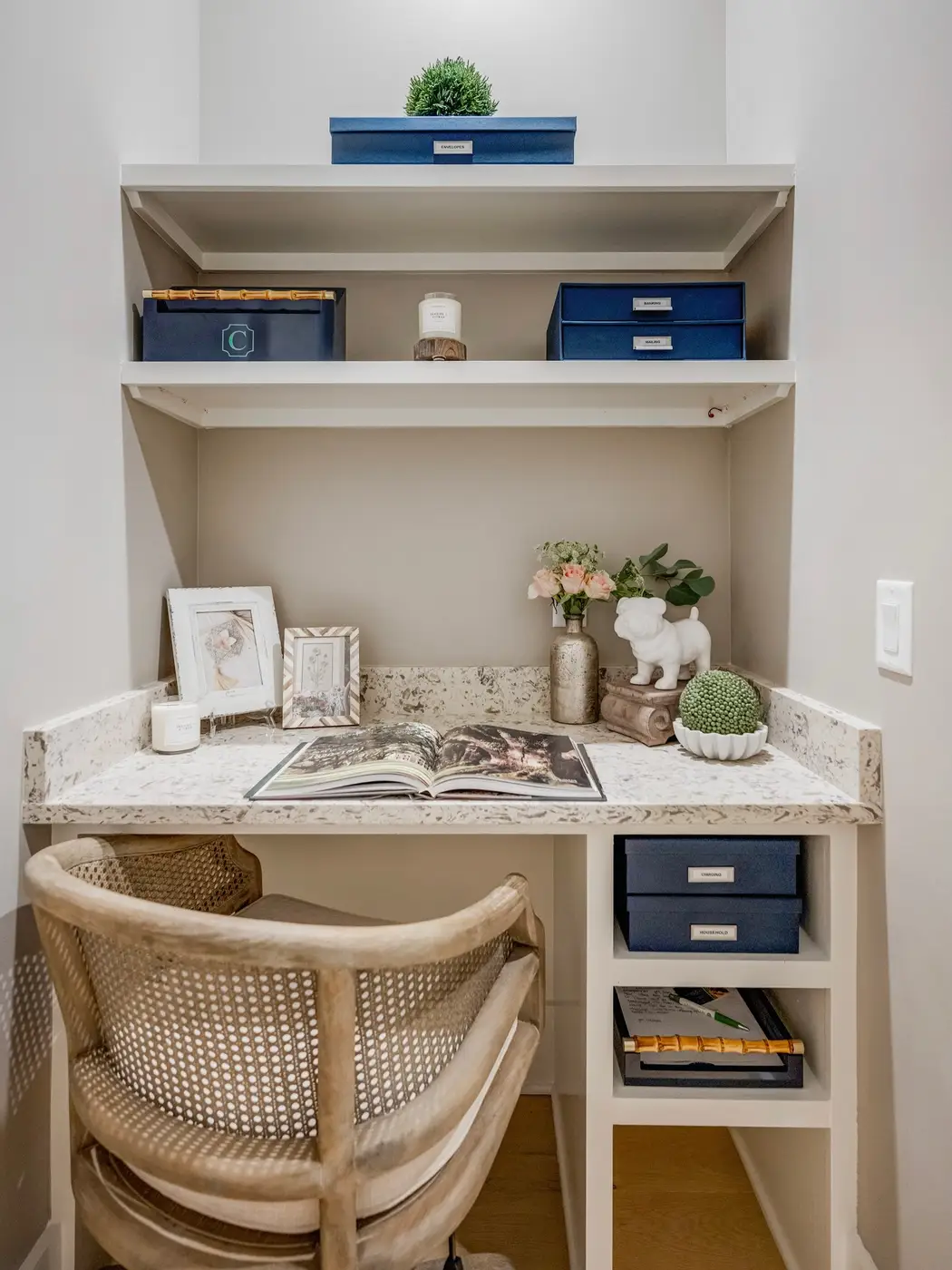
A narrow alcove can be enough.
The desk fits neatly between the side walls, shallow shelves go overhead, and small cubbies underneath handle papers and boxes. No extra furniture needed.
The built-in feel is nice, but the real win is using a spot that might otherwise sit empty.
5. Repeat the Setup for Everyone
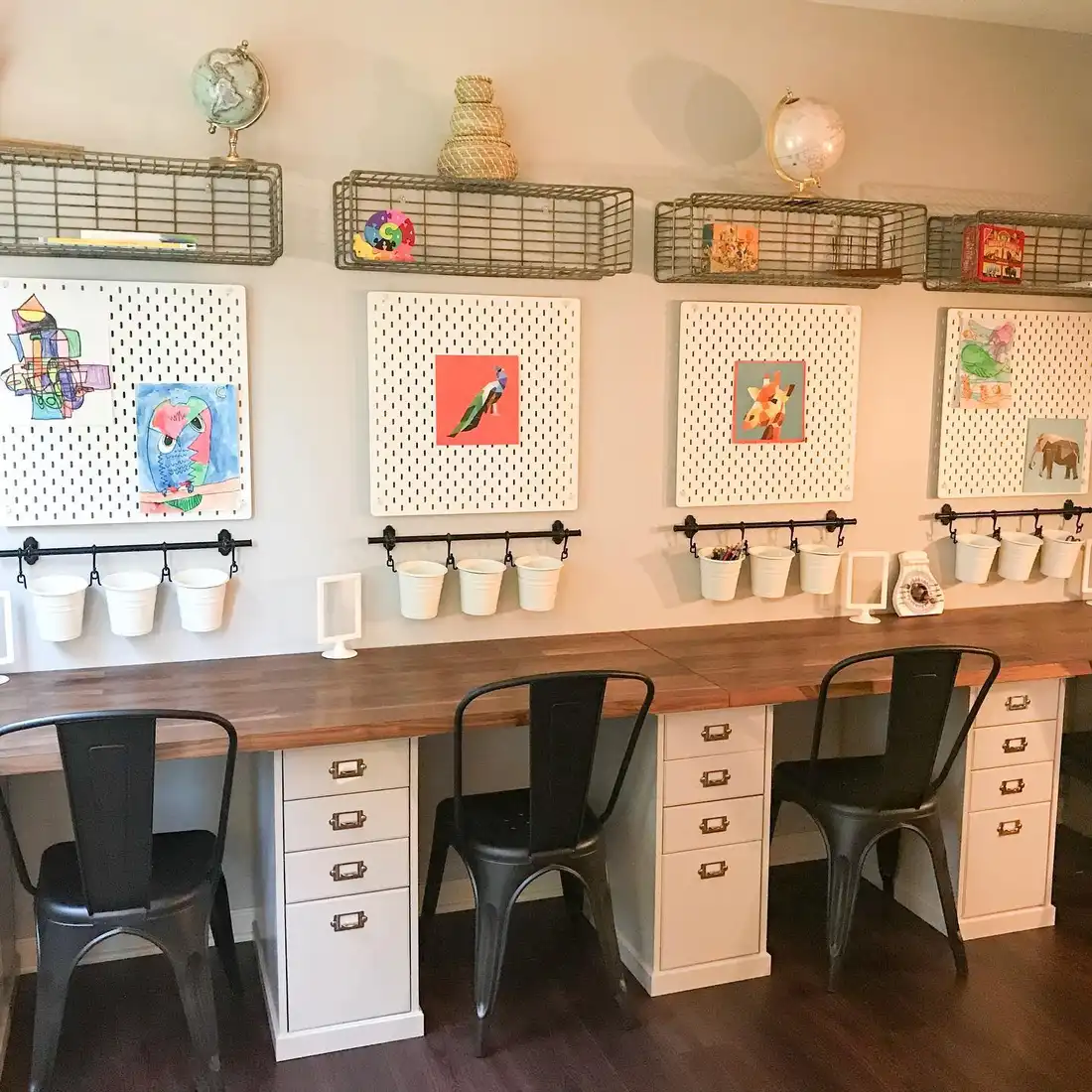
There’s almost a classroom rhythm to this wall. Pegboard, cups, seat. Pegboard, cups, seat.
That repetition makes sense when several kids use the same homework area. Nobody needs to ask where the pencils went because each workstation has its own little set.
I would use those high wire baskets for folders, extra paper, or supplies that only come out occasionally. Not more decor. There’s already plenty happening on this wall.
6. Build Shelves Around the Desk
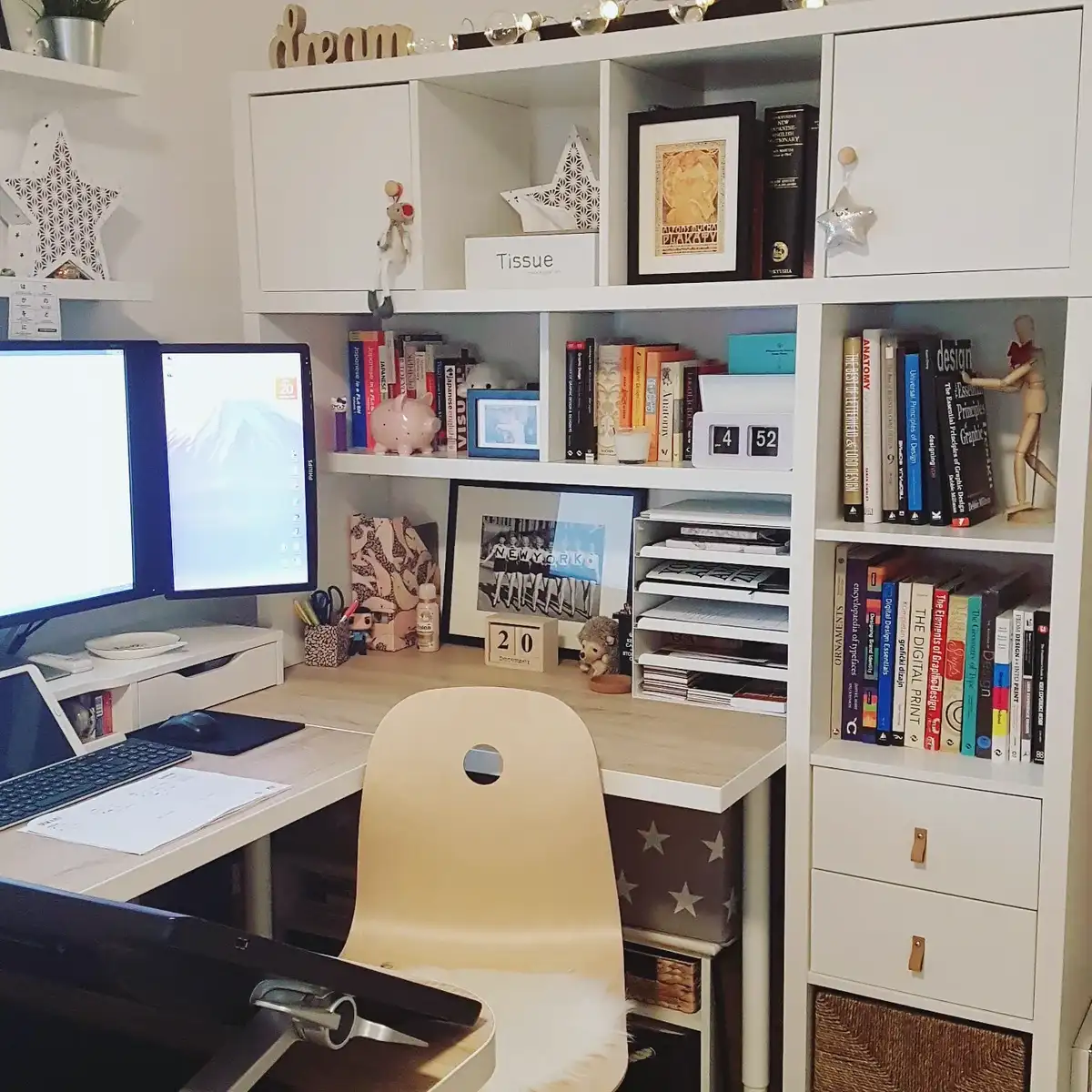
This setup is busy, but it solves one annoying problem really well: paper.
There are books above, cupboards higher up, baskets below, and a vertical paper sorter right beside the work surface. That sorter is the bit I’d copy first. Loose worksheets and unfinished projects are usually what bury a small desk.
Give paper a proper home and half the mess disappears.
7. Keep Everything on One Wall
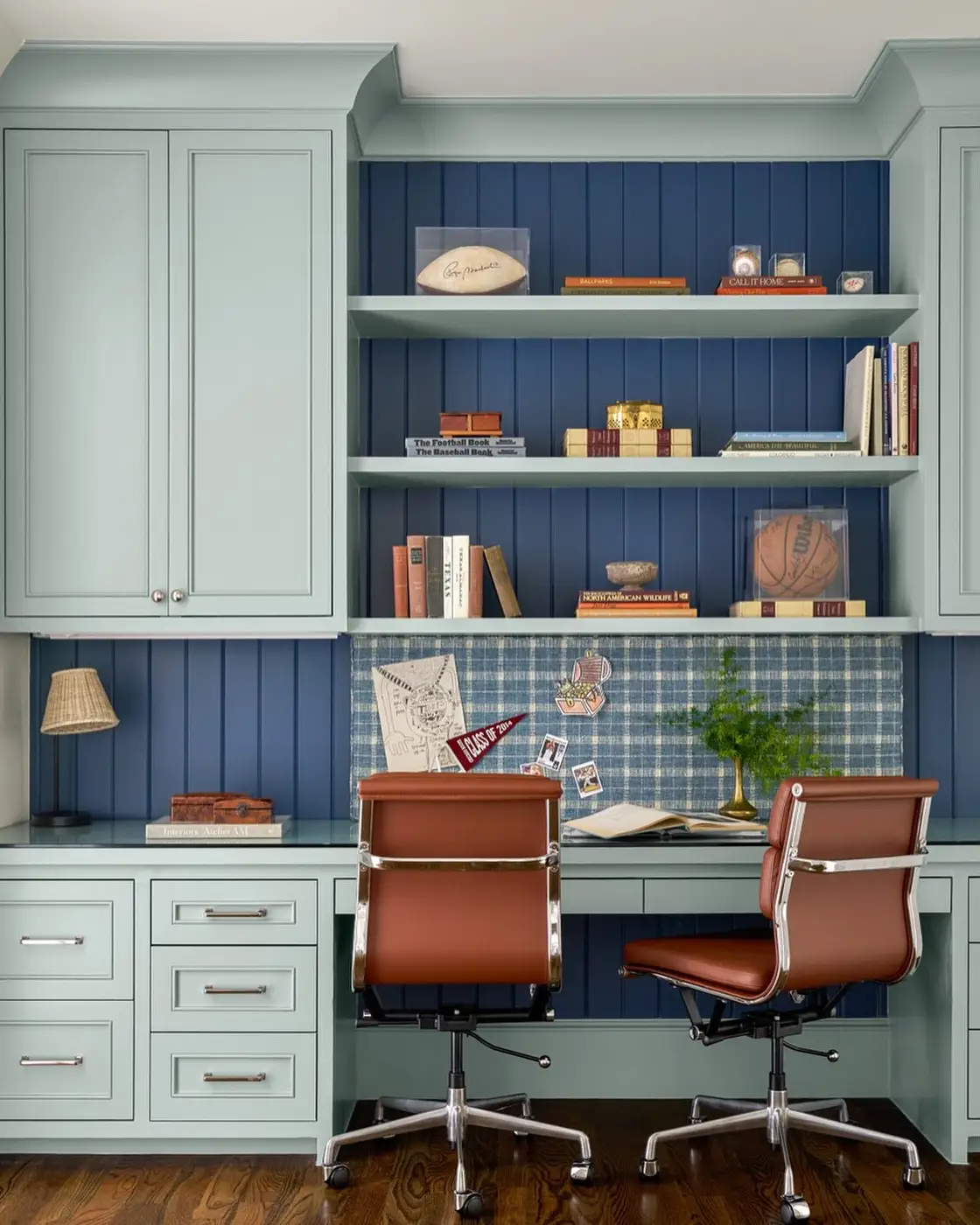
I wouldn’t call this a tiny setup, but the layout has a smart lesson for small rooms.
Desk, drawers, cabinets, shelves, and pinboard all stay on one wall. Nothing spills into the rest of the room.
The pinboard is especially useful for homework schedules and papers that need attention. I’d use that more heavily and cut back on some of the display pieces.
One wall doing five jobs is better than five pieces of furniture doing one job each.
8. Borrow Storage From Next Door
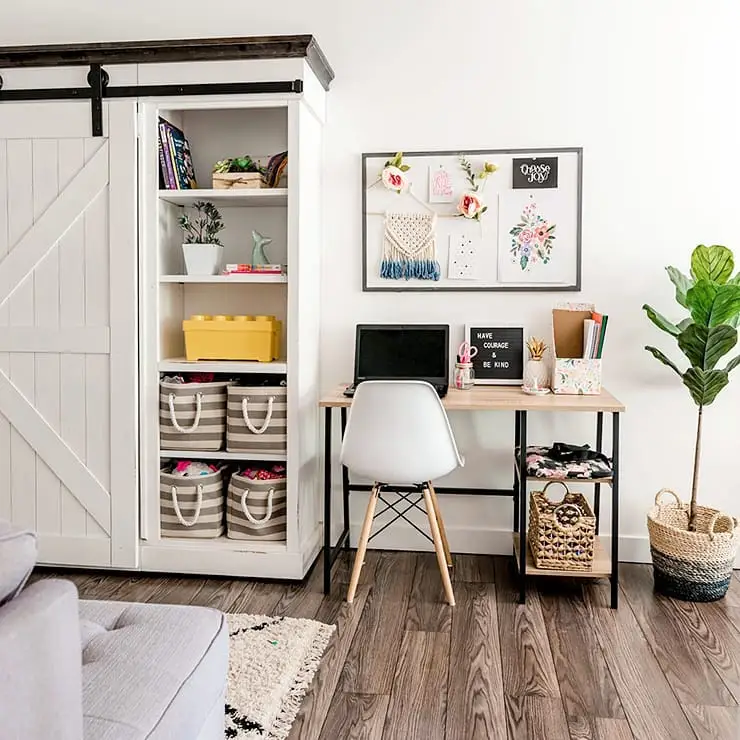
The desk is deliberately small because the tall cabinet beside it is doing the heavy lifting.
That’s a useful idea if your homework station sits in a living room or bedroom. Don’t force every school item onto one little desk. Let nearby furniture help.
Simple.
9. Put Drawers at Both Ends
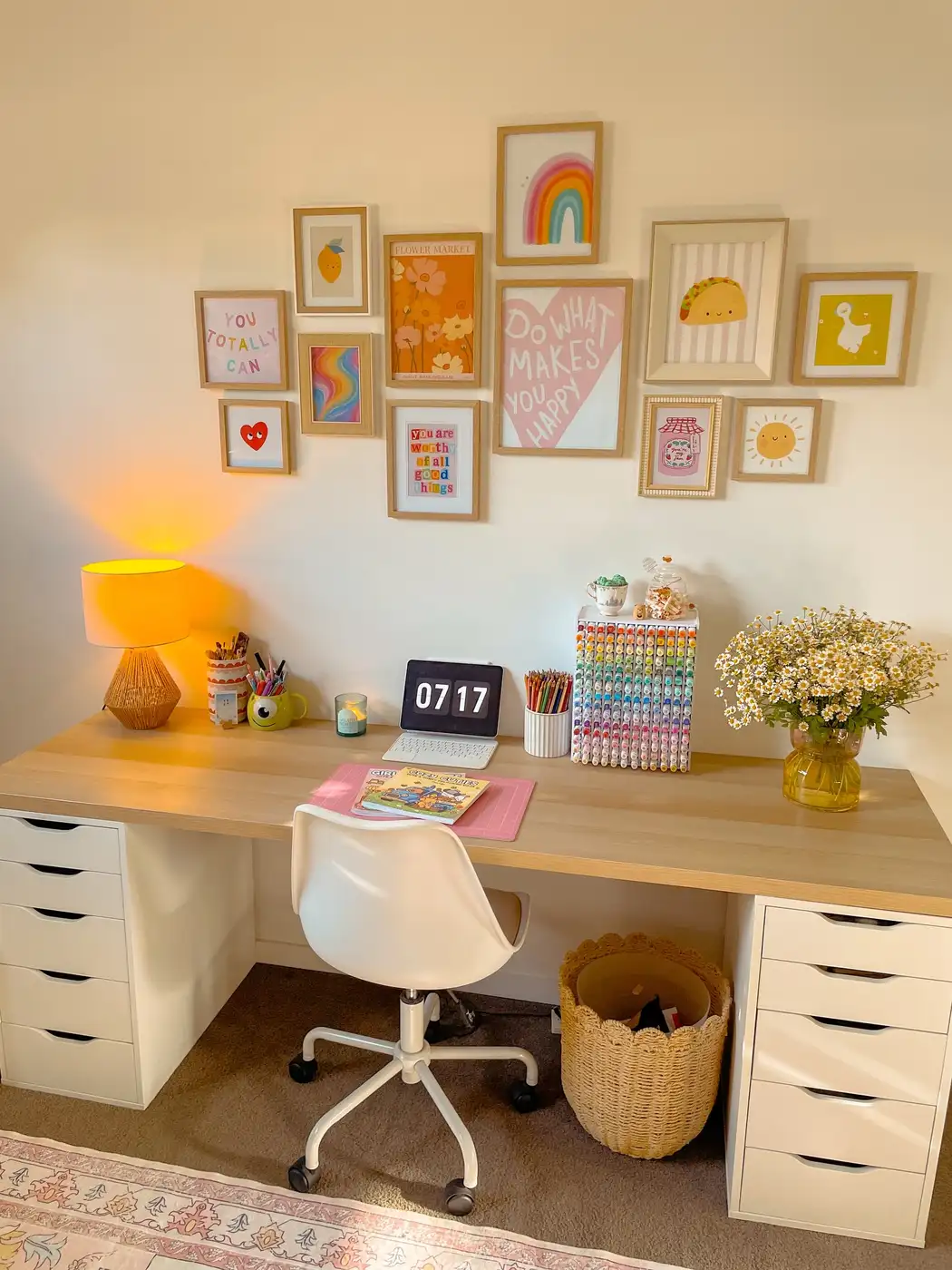
The wide top looks calm because the clutter has somewhere else to go.
Drawer units sit at both ends, leaving a generous open stretch in the middle. There’s still room for pencils and a few pretty things, but the desk doesn’t become storage itself.
I’d keep one pencil rack out and put the rest away. Once a work surface gets this wide, it’s very tempting to fill it.
10. Turn Supplies Into the Color
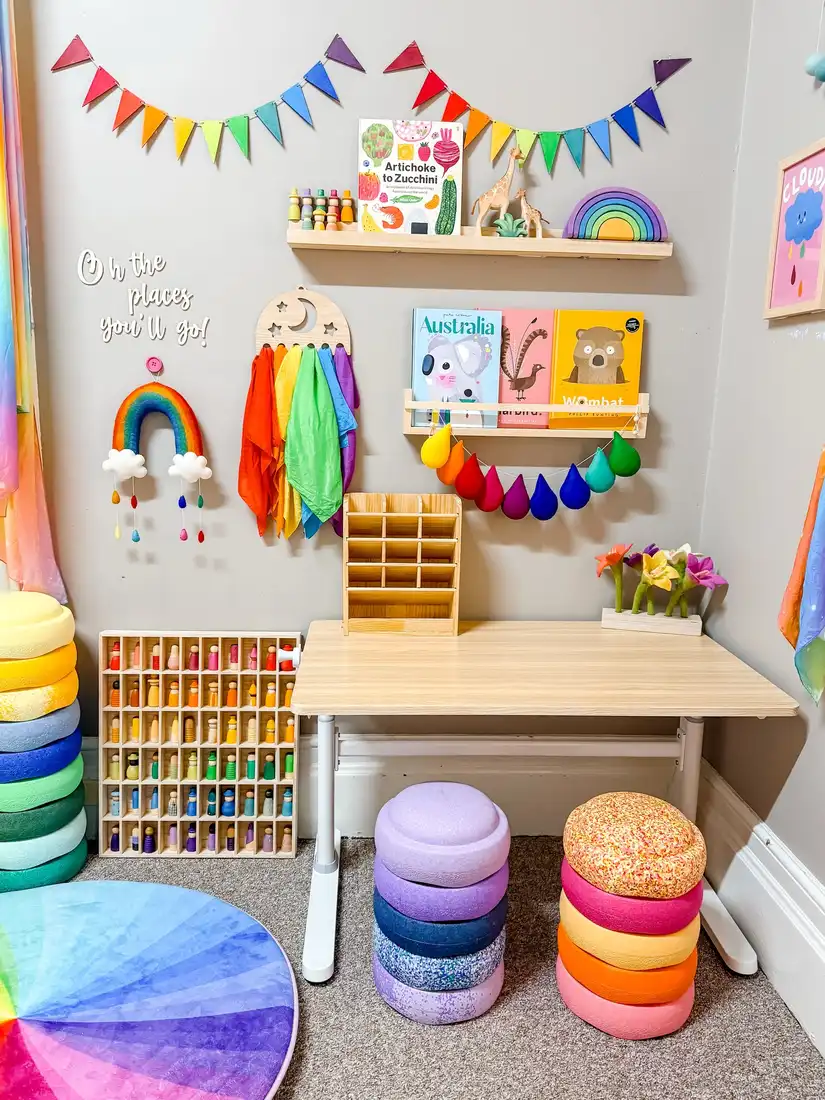
This corner doesn’t need colorful furniture. The supplies are already doing that job.
Paint bottles, books, cushions, and hanging pieces bring in all the rainbow color, while the desk stays plain wood.
That’s useful if you don’t want to repaint or buy special furniture. Let crayons, markers, books, and art carry the theme instead.
The tabletop itself? Almost empty. Keep that part.
11. Make a Reading Homework Corner
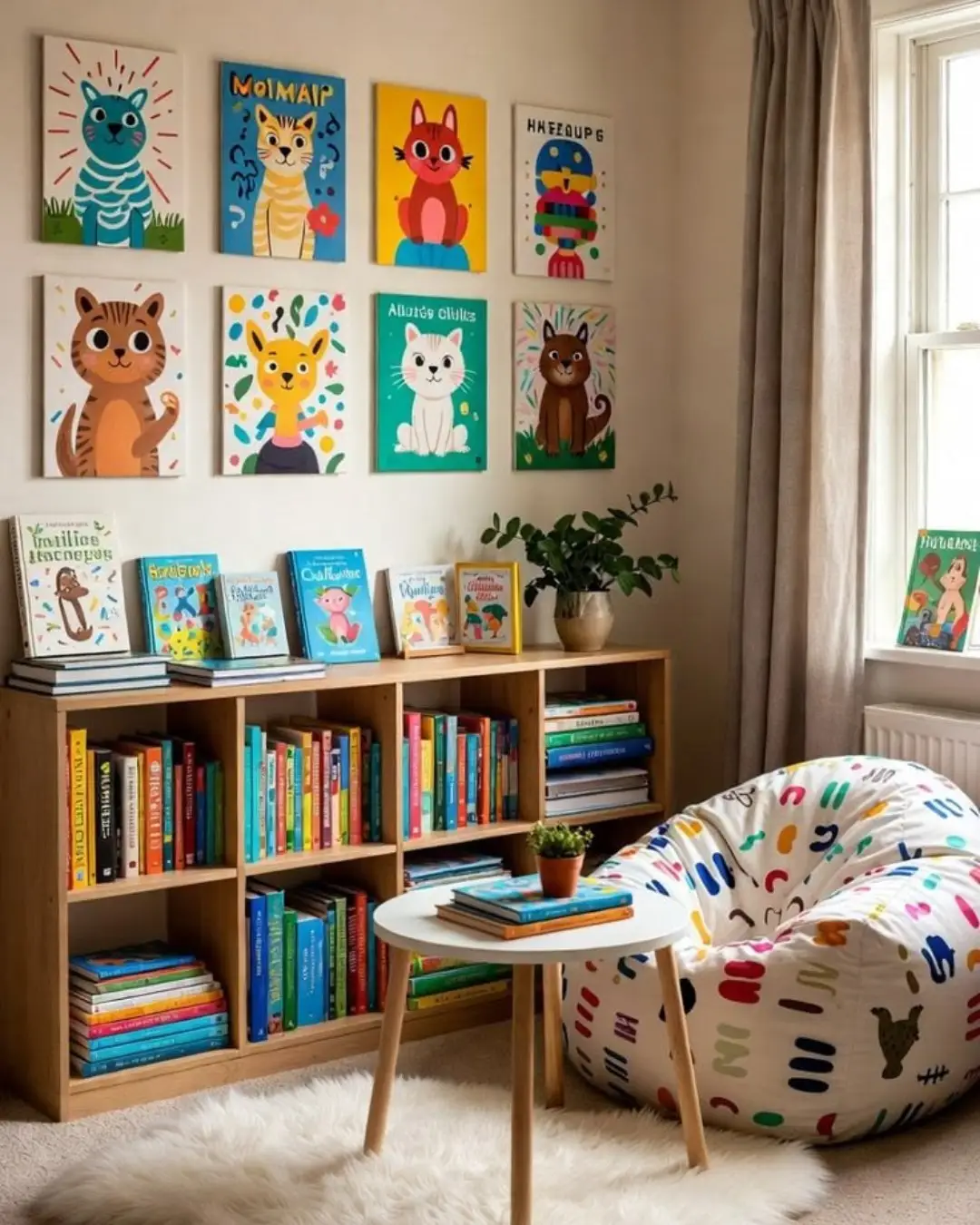
No proper desk here, and that’s okay.
A low round table, beanbag, and bookcase make more sense for reading, spelling practice, drawing, or flipping through school books. The chair is soft, the books are close, and the whole setup feels less formal.
I wouldn’t use this for long writing sessions, but not every piece of homework needs a desk chair and perfect posture.
Sometimes a comfortable reading corner is the better study spot.
12. Fit a Desk Into Recesses
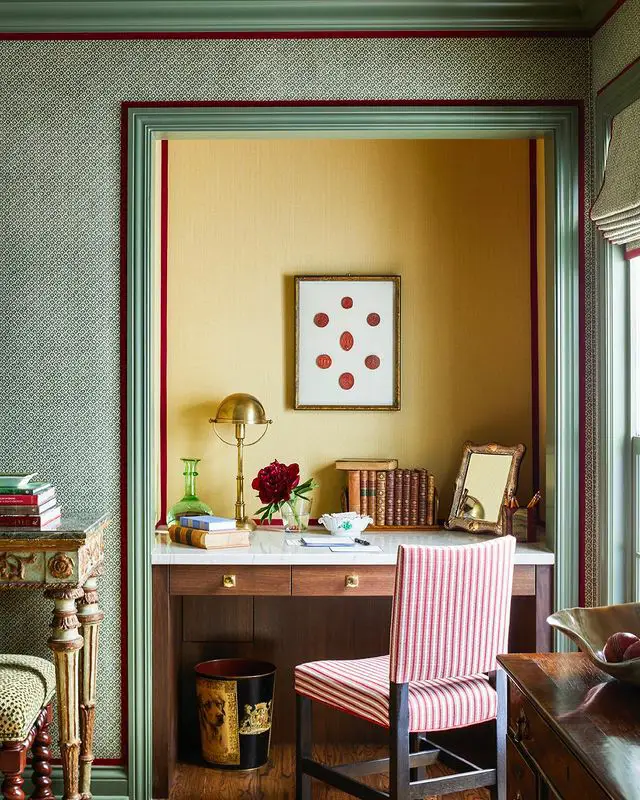
The desk sits deep inside the wall opening and barely touches the rest of the room.
That alone makes the setup worth noting.
A few drawers handle supplies, one lamp gives focused light, and the chair slides straight in. I wouldn’t add anything else above it.
13. Tuck Homework Into the Wardrobe
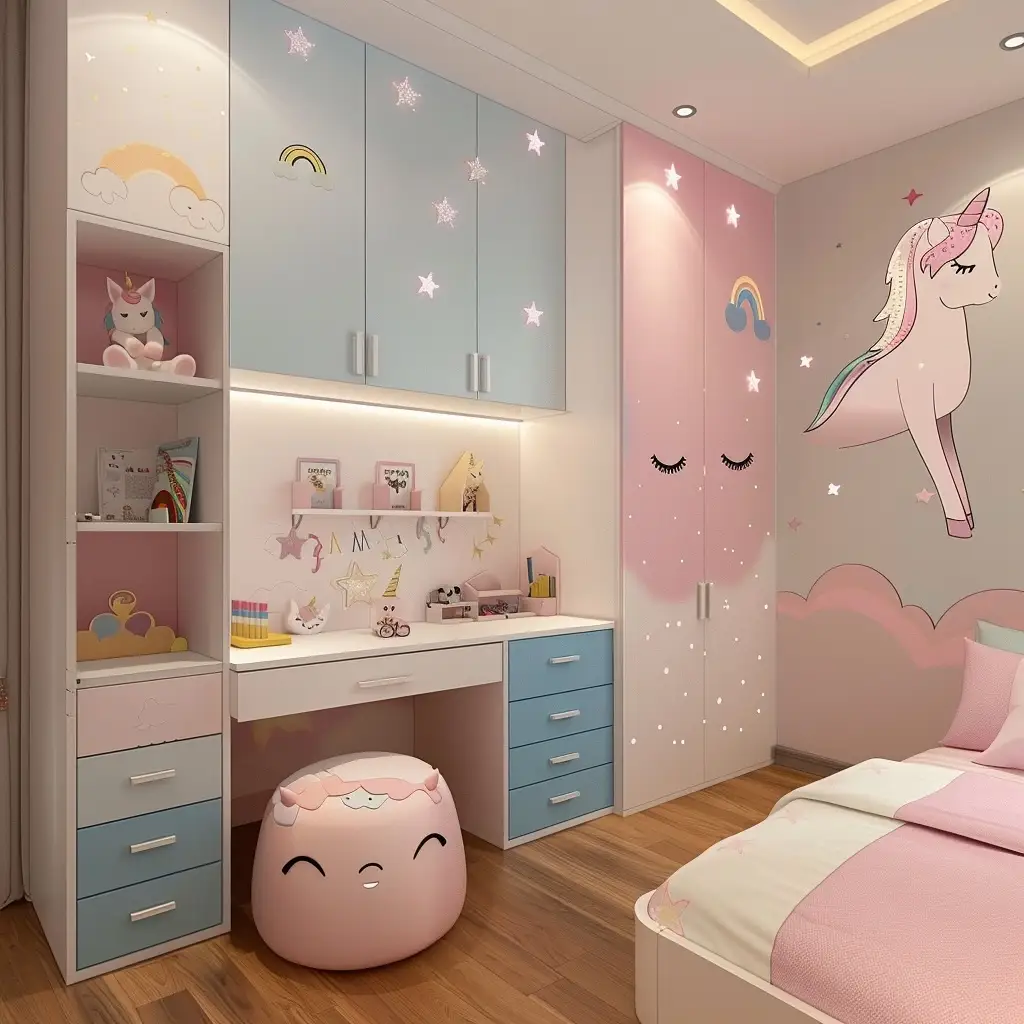
This bedroom already needs storage, so the homework station simply joins it.
The desk sits between tall cabinets, drawers fit underneath, and a tiny shelf holds the things that need to stay visible. The round stool tucks in fully once homework is done.
That’s important. In a bedroom, the chair can take up almost as much usable floor as the desk.
14. Cover the Back With Cork
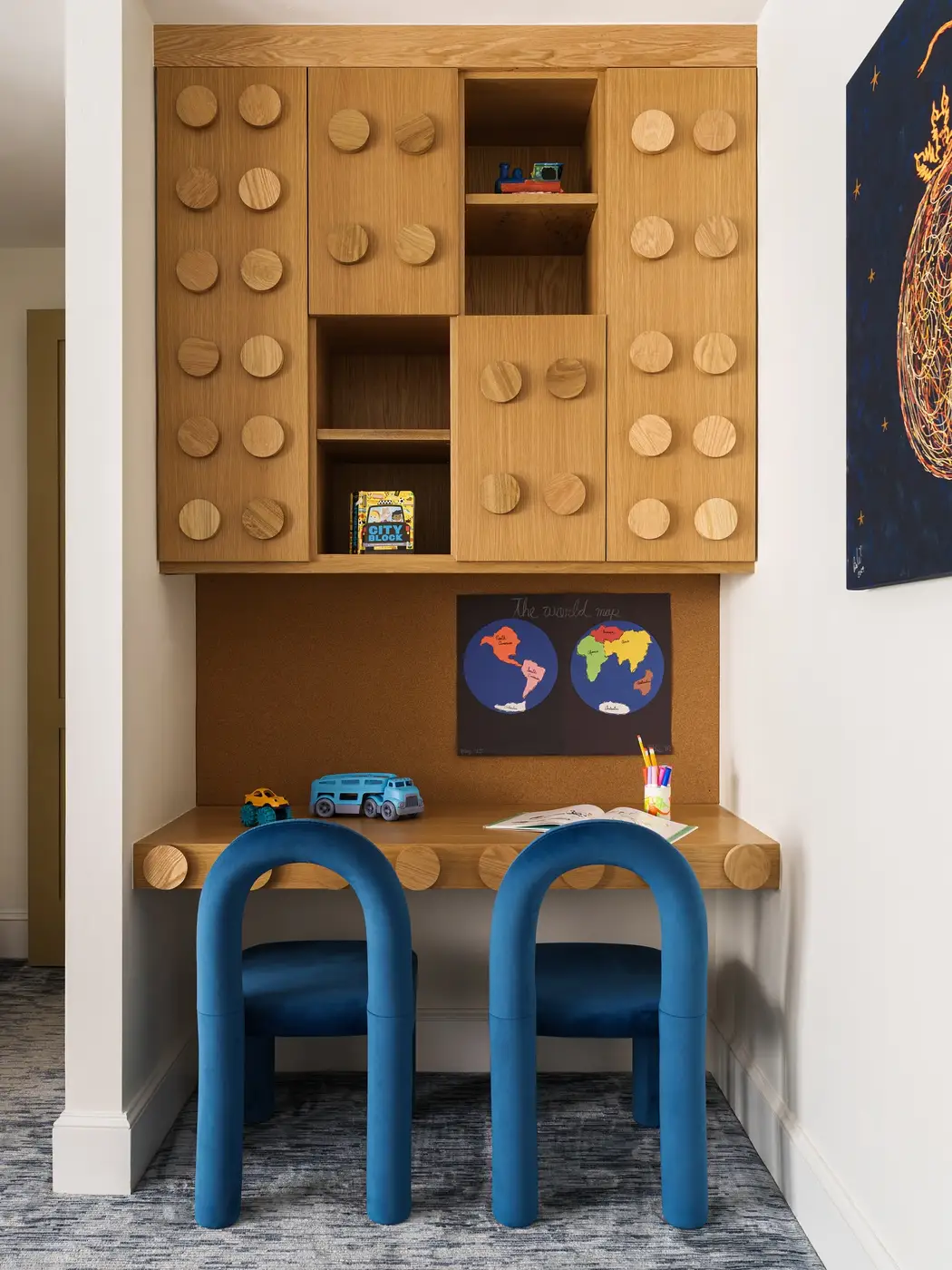
Forget the fancy cabinet doors for a second. The cork wall is the useful idea.
It turns the narrow strip behind the desk into a home for schedules, spelling lists, school notices, drawings, and reminders. Both seats can use it without losing any desktop space.
Way more practical than hanging another picture there.
15. Keep the Built-In Shallow
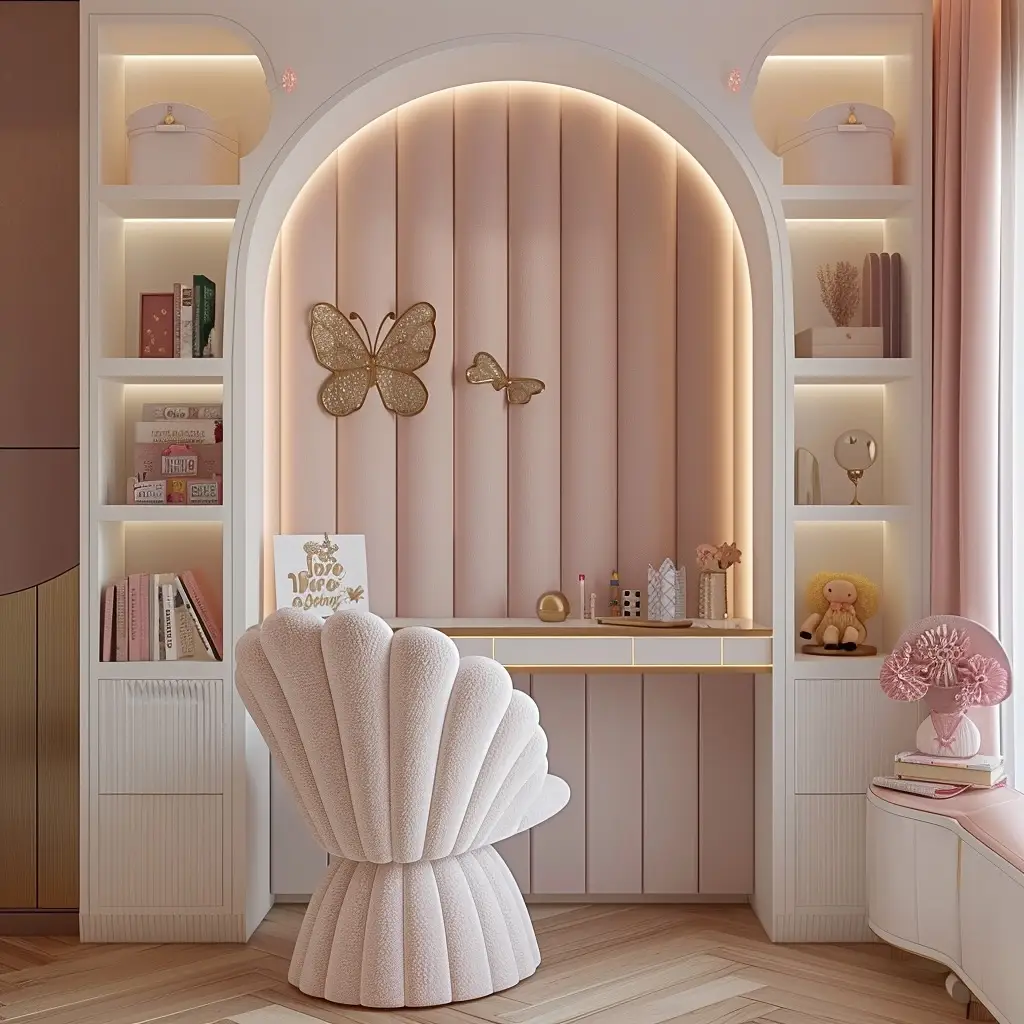
This one looks glamorous, but I wouldn’t copy all of it.
The useful part is the shallow desk running between two tall shelf towers. Books go to the sides. Tiny drawers sit under the worktop. The center remains narrow enough not to swallow the room.
I would definitely swap that huge chair for something slimmer.
16. Use the Window Sideways
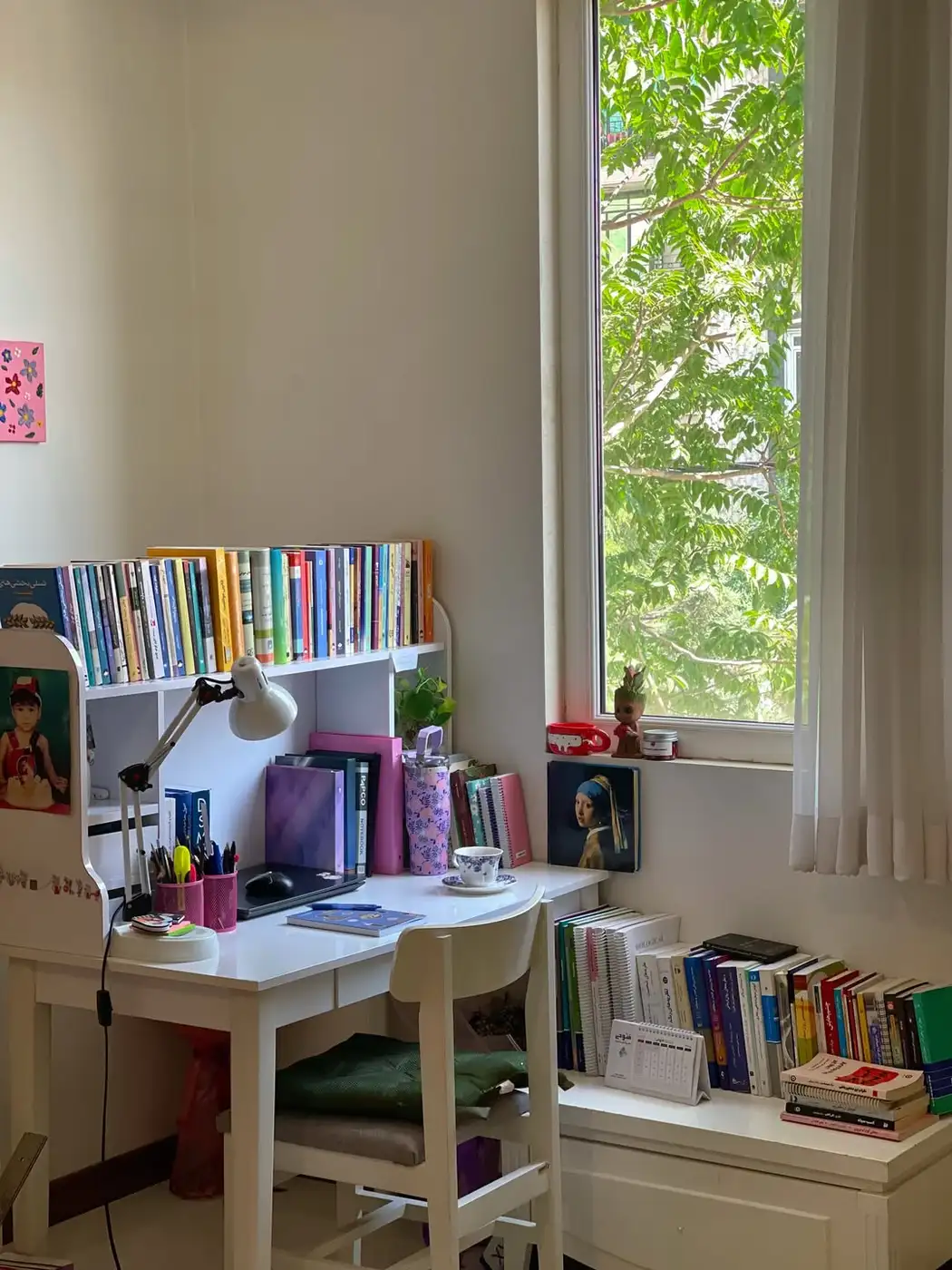
This feels like a real study corner, not a styled showroom. Books are everywhere. The laptop is open. Pens are within reach.
And it still works.
The clever part is the low storage under the window. Books that don’t fit on the desk shelf simply continue onto that nearby surface. No giant bookcase required.
I also like that the desk sits beside the window rather than directly in front of it. The daylight still comes in, but the work area doesn’t block the full window.
Messy enough to be believable. Organized enough to function.
17. Mix Homework Into the Built-In
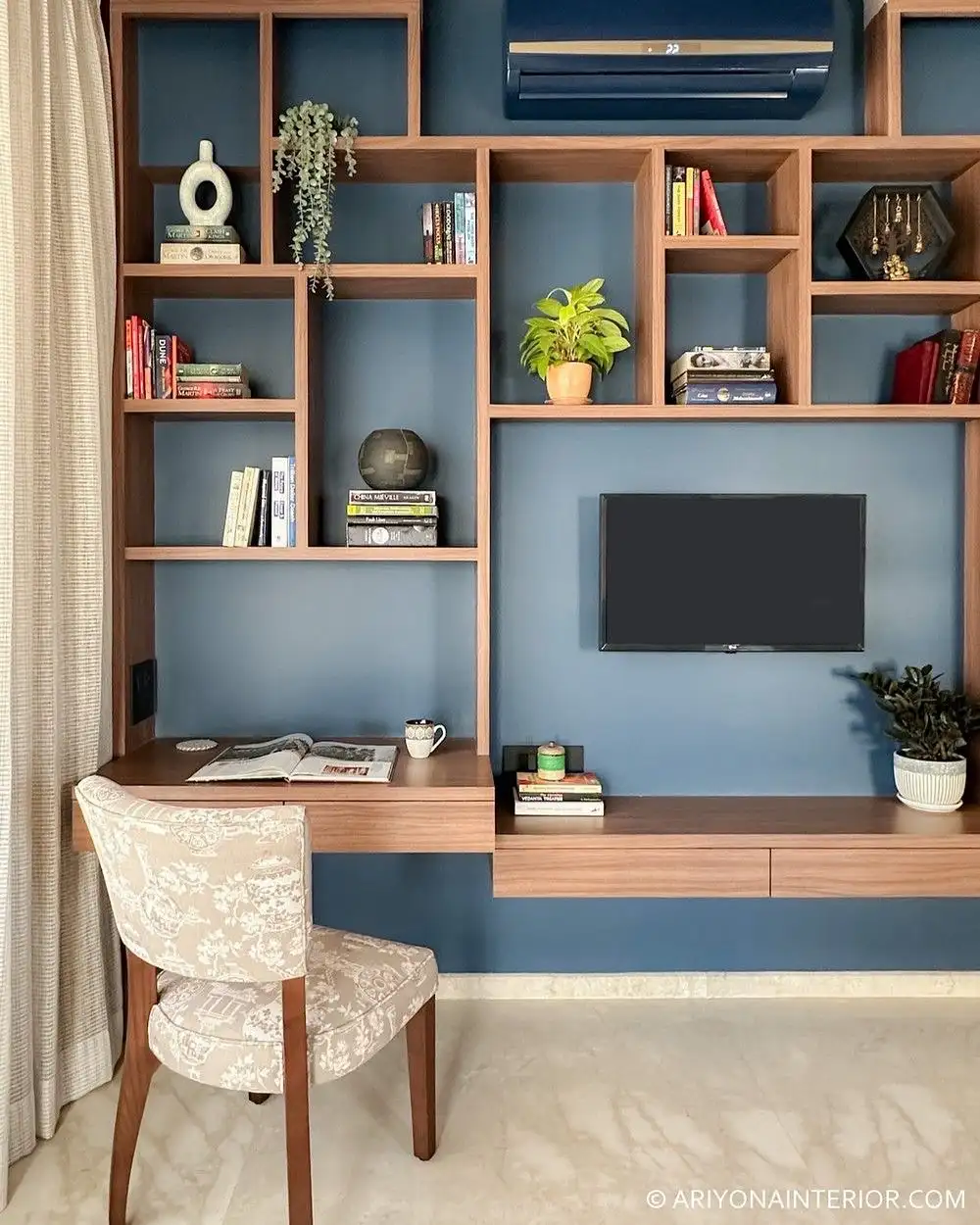
One side is clearly the desk. The rest is books, display shelves, and a wall-mounted screen.
That division matters.
A multipurpose built-in can work as a homework station without turning the whole room into a study room. I’d keep school supplies to the desk side and leave the rest alone.
18. Get the Lamp Off the Desk
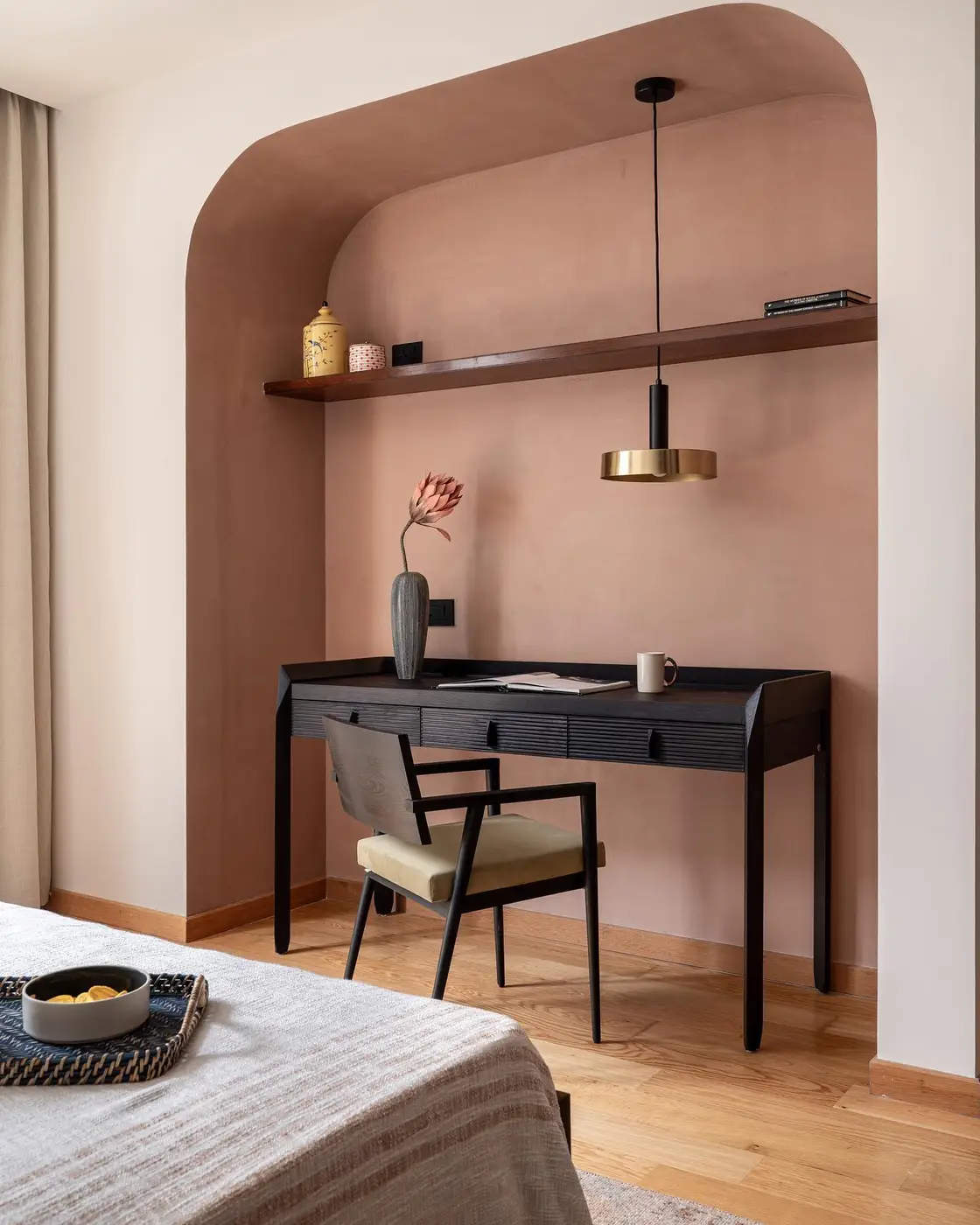
The hanging light is doing one simple thing really well. It leaves the entire desktop free.
That matters on a narrow desk where a normal lamp could eat up a big chunk of the writing area.
One shelf above. One pendant. Done.
19. Park the Bookcase Beside It
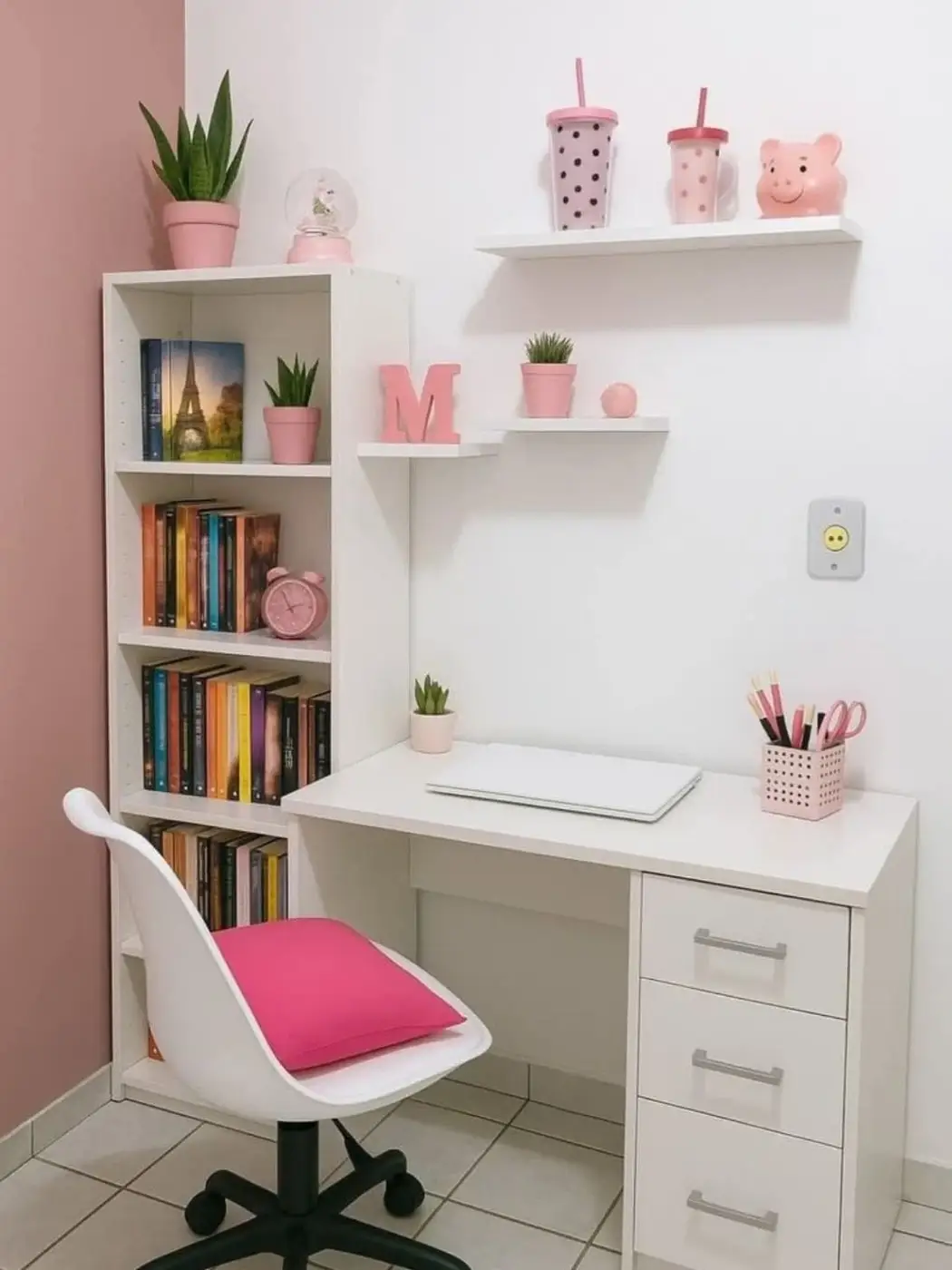
The desk doesn’t try to be clever. It’s small, white, and has three drawers.
Then the tall bookcase beside it handles the books.
That’s enough.
I’d rather have this simple setup than a tiny desk covered with organizers, baskets, and stacked textbooks.
20. Make Evening Homework Feel Softer
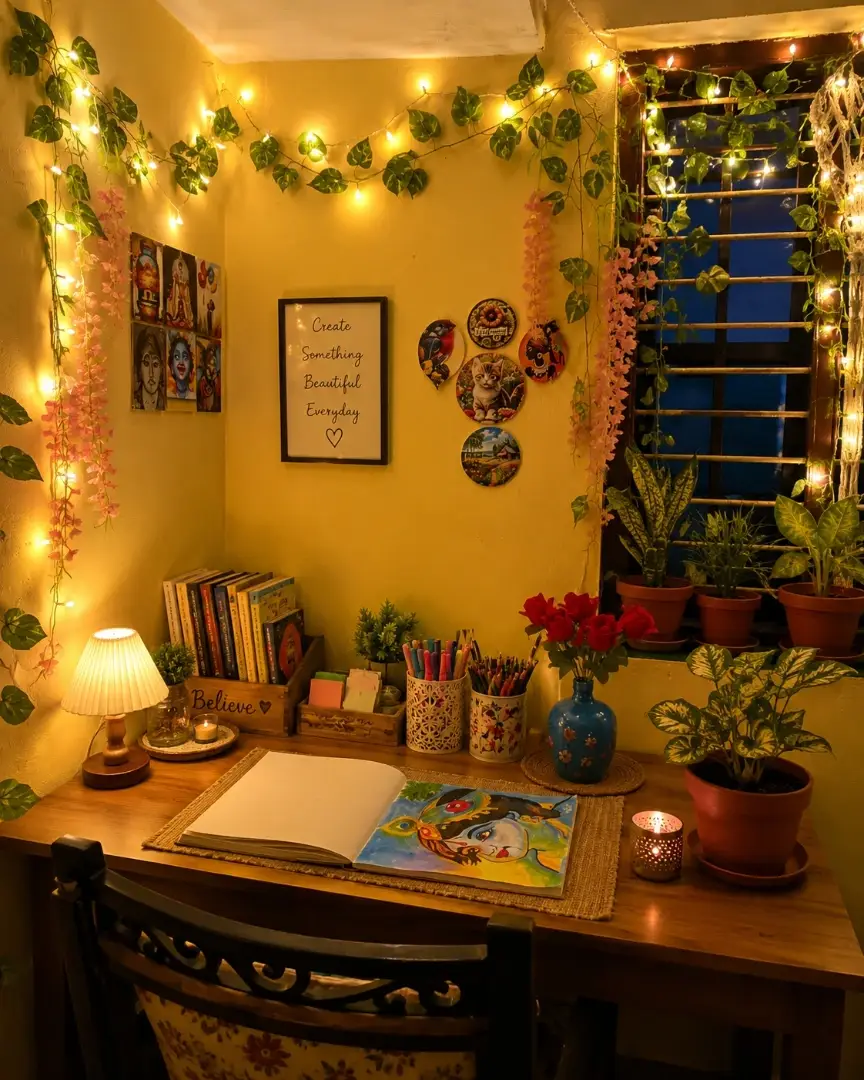
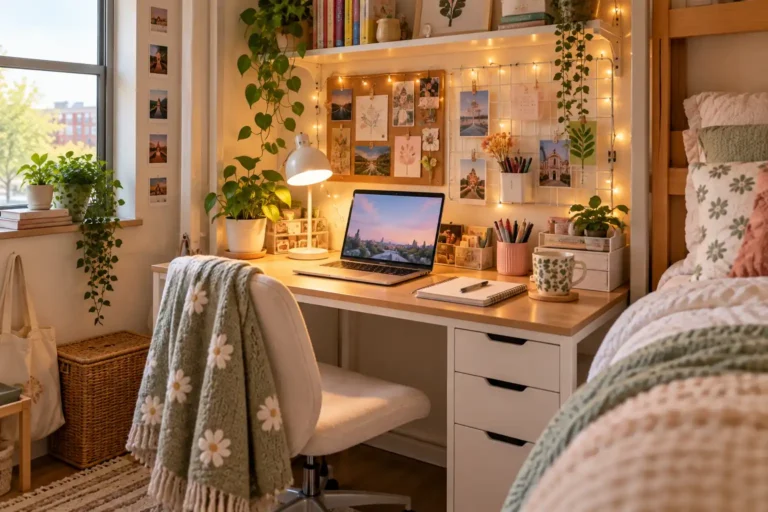
There’s a lot of decoration in this corner. String lights, vines, flowers, art, plants, candles, books.
I wouldn’t copy all of that.
What I would copy is the lighting idea. The warm table lamp gives the desk a proper pool of light, while the string lights stay up on the wall and make the whole corner less harsh at night.
The work surface still has a clear patch in the middle. That’s important because cozy can turn into clutter very quickly.
Start with one lamp. Add wall lights only if you still want more atmosphere. And keep anything delicate or distracting away from the main writing area.
21. Put Daily Stuff Within Reach
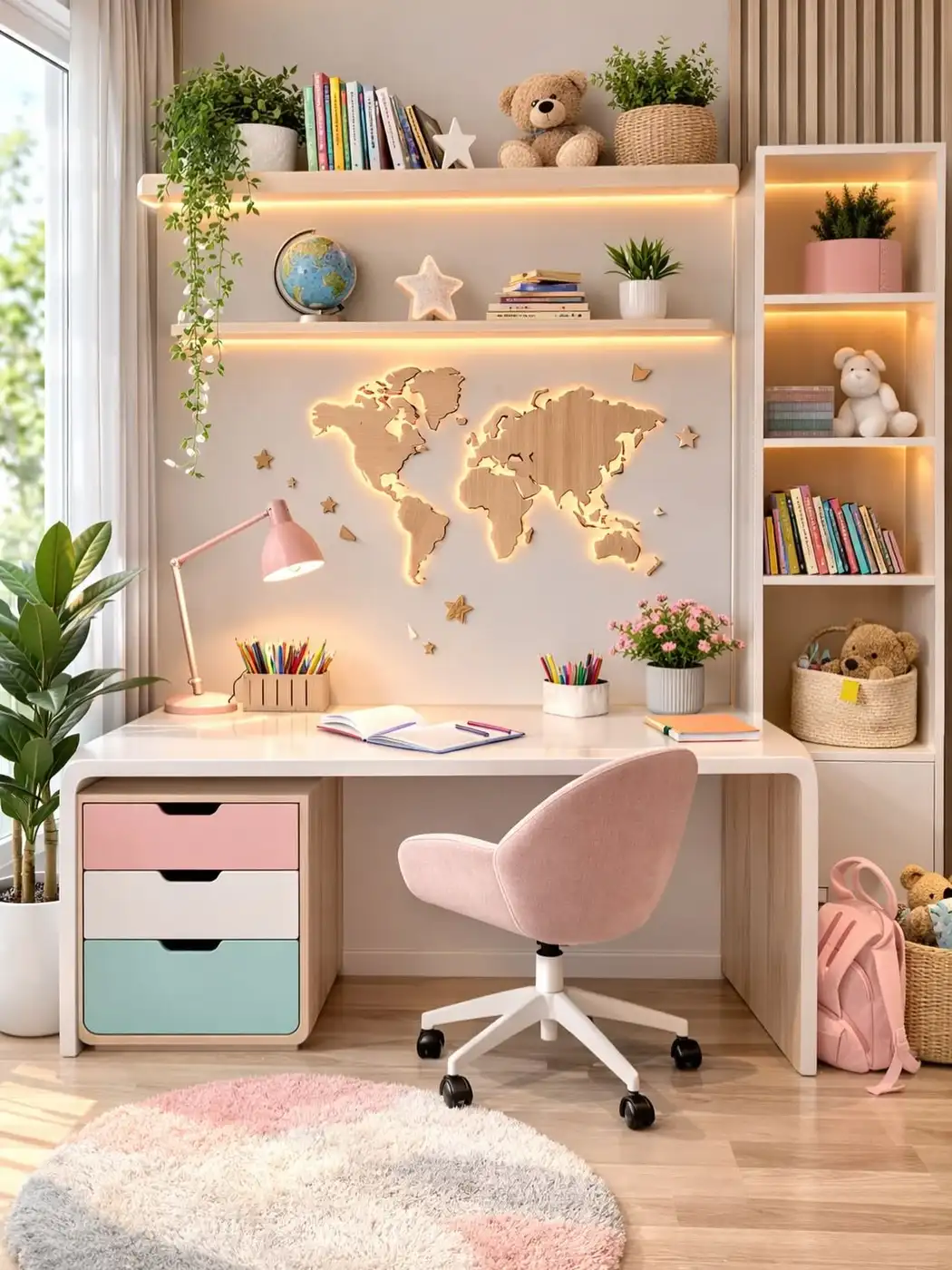
The pretty shelves aren’t actually where the homework happens.
Pens sit directly on the desk. Drawers live underneath. Books have a tall shelf beside the work area.
That order makes sense.
A child shouldn’t need to stand up every two minutes to grab the basics.
22. Keep the Middle Clear
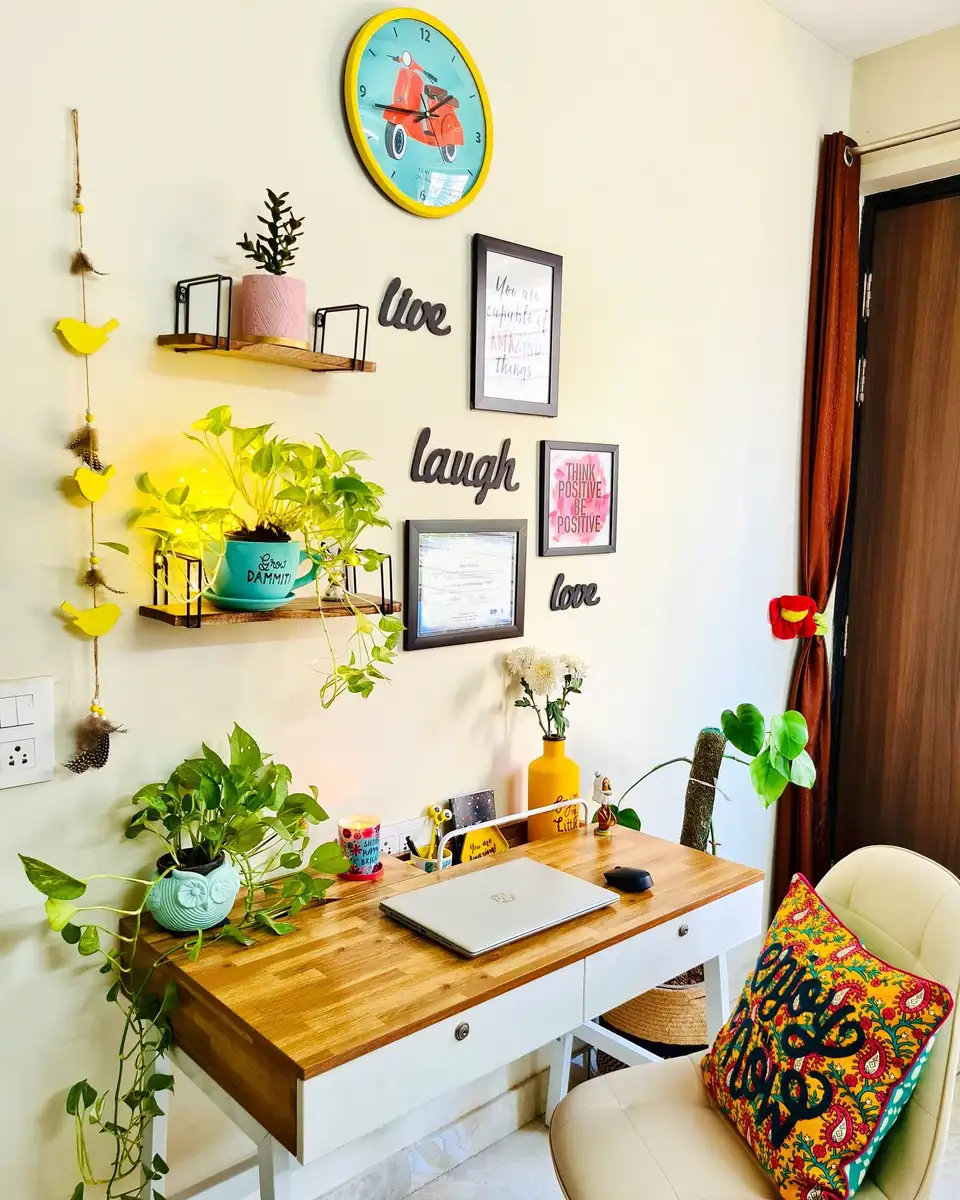
Plants everywhere, but somehow the laptop still has room.
That’s because most of the greenery stays at the edges or up on shelves.
I’d use the same rule with any decor. The middle belongs to homework.
23. Sometimes a Tiny Desk Wins
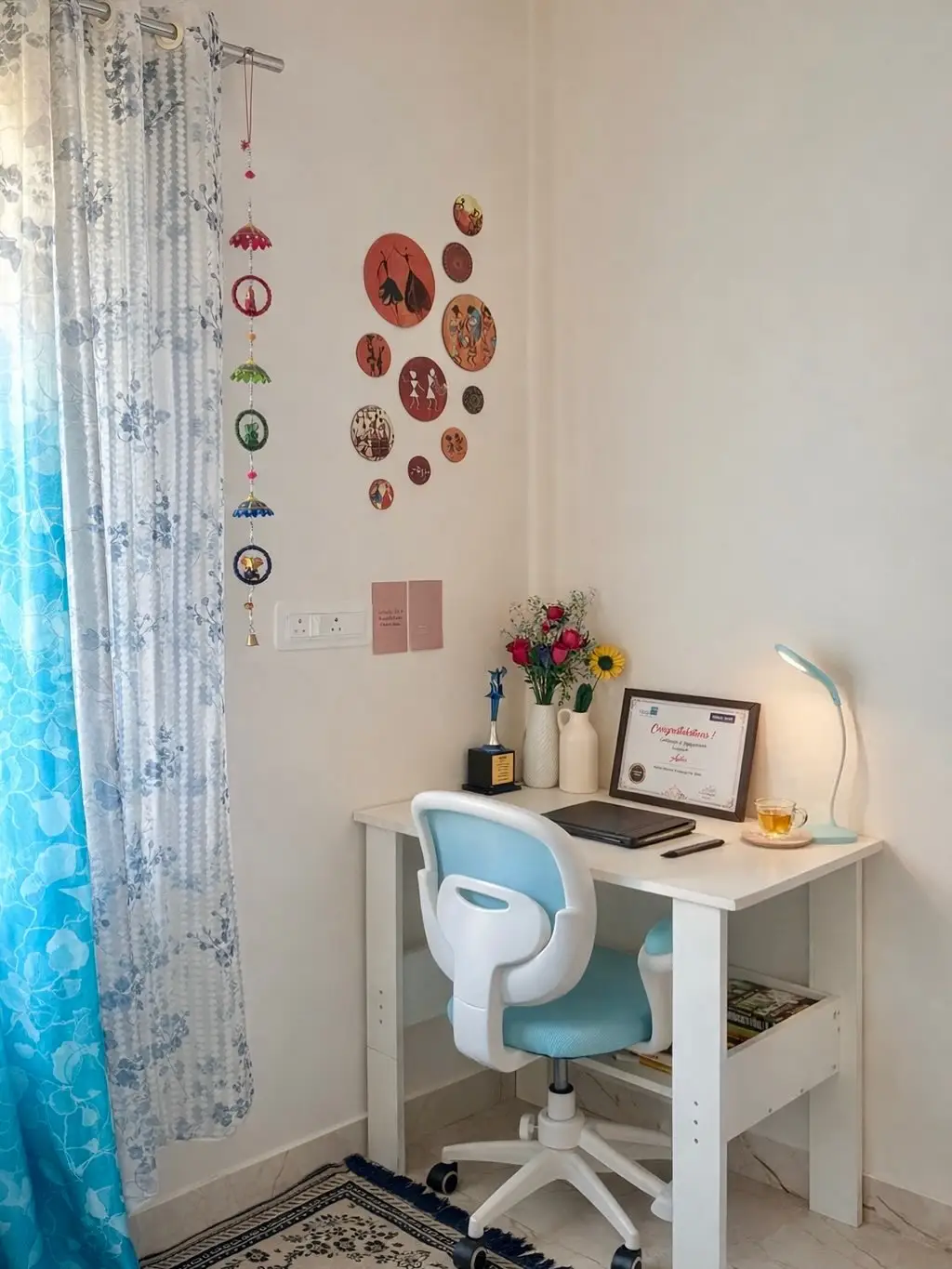
No built-ins. No giant shelves. No elaborate organizer wall.
Just a small desk in a corner, a lamp, a chair, and a few books tucked underneath.
Honestly, some small spaces need exactly this much and no more.
24. Add Somewhere Else to Read
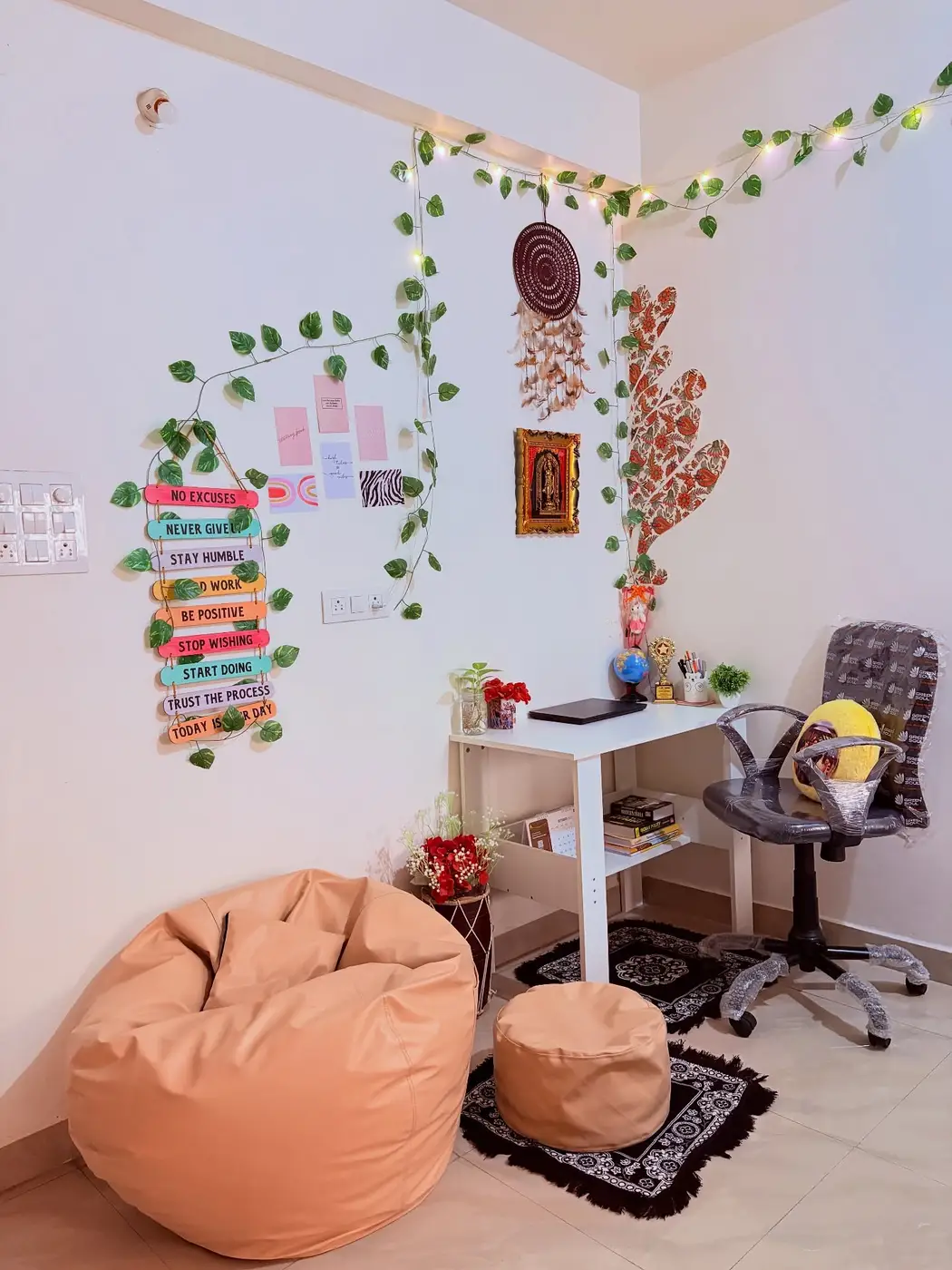
The desk covers writing and laptop work. The beanbag handles reading.
I like that split because it gives the corner two study positions without requiring a second table.
For a child who gets restless sitting upright for every task, this could be useful. Read a chapter in the beanbag. Move to the desk for written work. Same corner, different job.
The small ottoman is optional. I’d skip it first if floor space is tight.
25. Raise the Books, Not Clutter
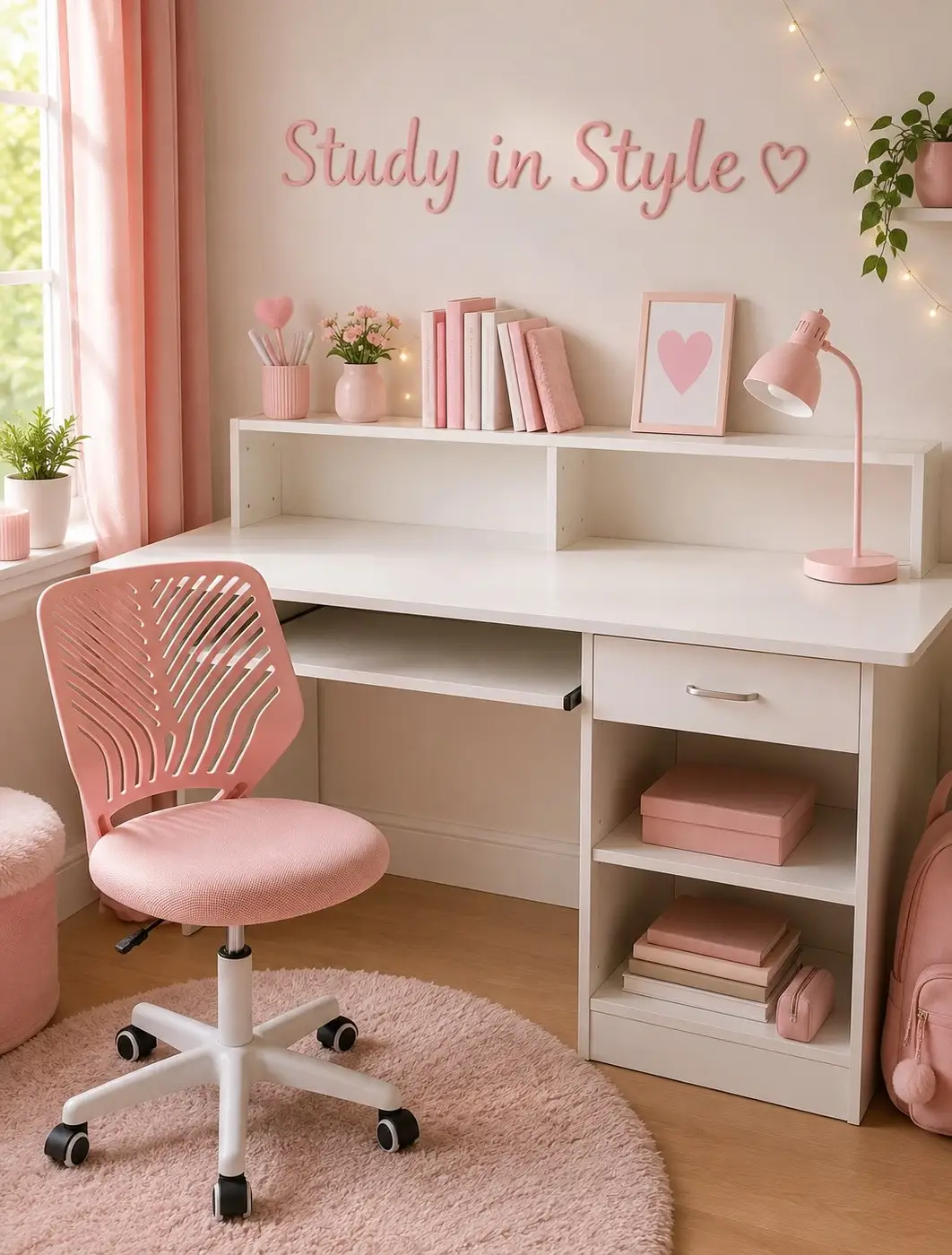
The raised shelf is doing more than decorating the desk. It creates a second level.
Books sit above. A drawer and open cubbies handle the side. The actual work surface stays mostly empty.
That’s the small-space lesson here. You don’t always need a taller bookcase. Sometimes one raised shelf across the back of the desk gives you enough extra room.
The pink theme can stay or go. The two-level setup is what matters.
Final Thoughts
A small homework station doesn’t need to hold every school supply your child owns. It just needs enough room to sit comfortably, work without shuffling piles around, and reach the things used most often. If the desk has to share a room with several other functions, these small studio apartment ideas have useful examples of dividing one compact space into zones.
When looking through these Homework Station Ideas for Small Spaces, copy the part that solves your actual problem. Maybe that’s a pegboard, a skinny bookcase, drawers under the desk, or simply a lamp moved off the work surface.
Start with that one change. You can always add more later.