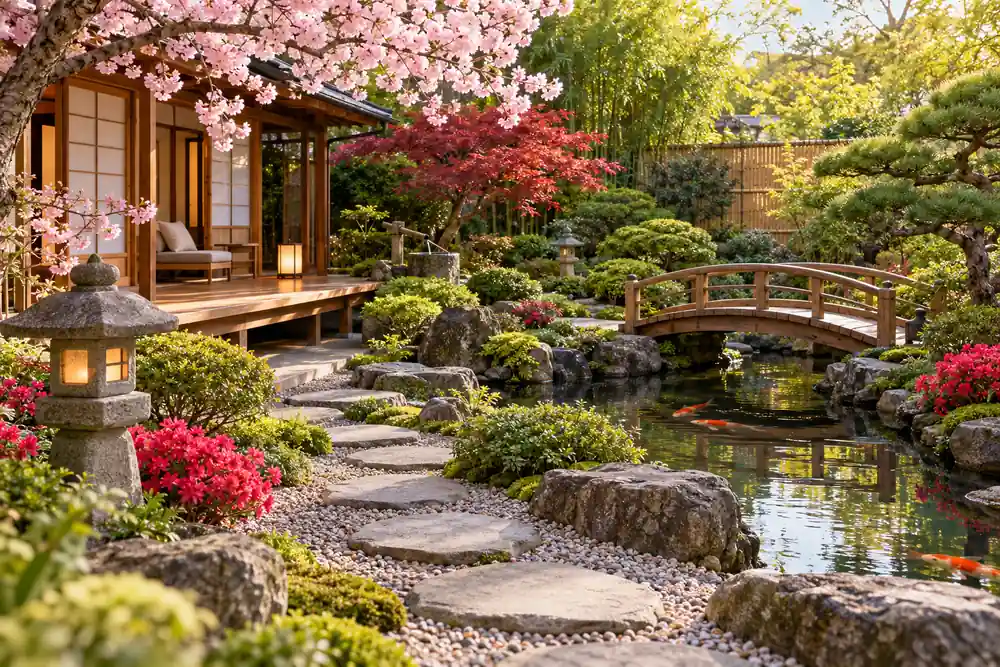
How to Create a Japanese Garden: 18 Ideas for a Peaceful Backyard
A Japanese garden doesn’t always need a koi pond, a fancy wooden bridge, or a backyard the size of a park. Sometimes, a few well-placed stones, a little greenery, and a winding path are enough to change the whole feel of a space. The secret is knowing what to leave out, too. Too many plants and decorations can make a peaceful garden feel crowded in a hurry.
These Japanese garden ideas cover everything from simple gravel gardens and stone lanterns to shaded retreats and small water features. Whether you’re working with a tiny courtyard or a roomy backyard, you’ll find plenty of inspiration to create a space that feels natural, thoughtful, and easy to enjoy.
1. Frame the Garden With Stone
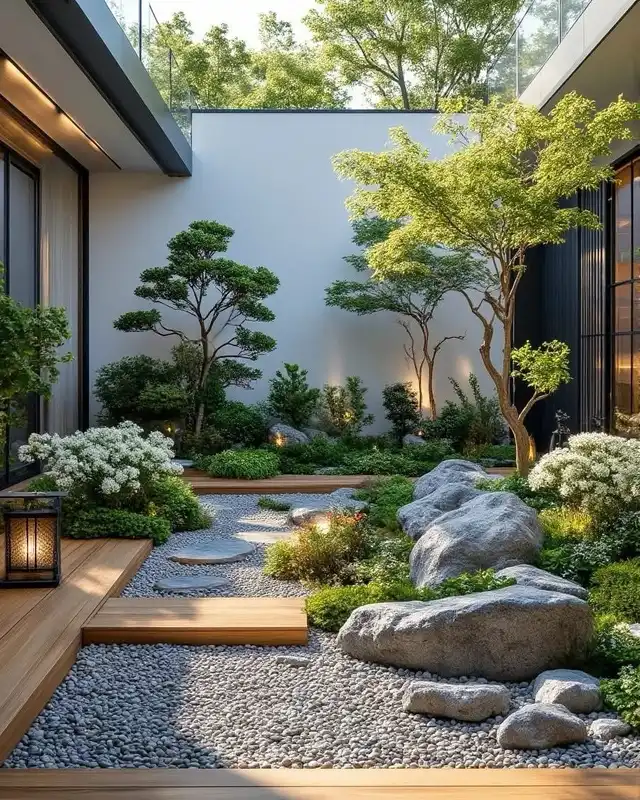
Large rocks, flat stepping stones, and a small Japanese maple give this courtyard its shape. The wooden deck sits right beside the gravel garden, leaving a clear place to sit without losing the natural feel of the space.
You don’t need rocks scattered everywhere to get a similar look. Choose two or three interesting stones, leave some open gravel around them, and add a small tree or a few low plants. The empty space matters just as much as the decorations.
2. Let a Red Maple Steal the Show
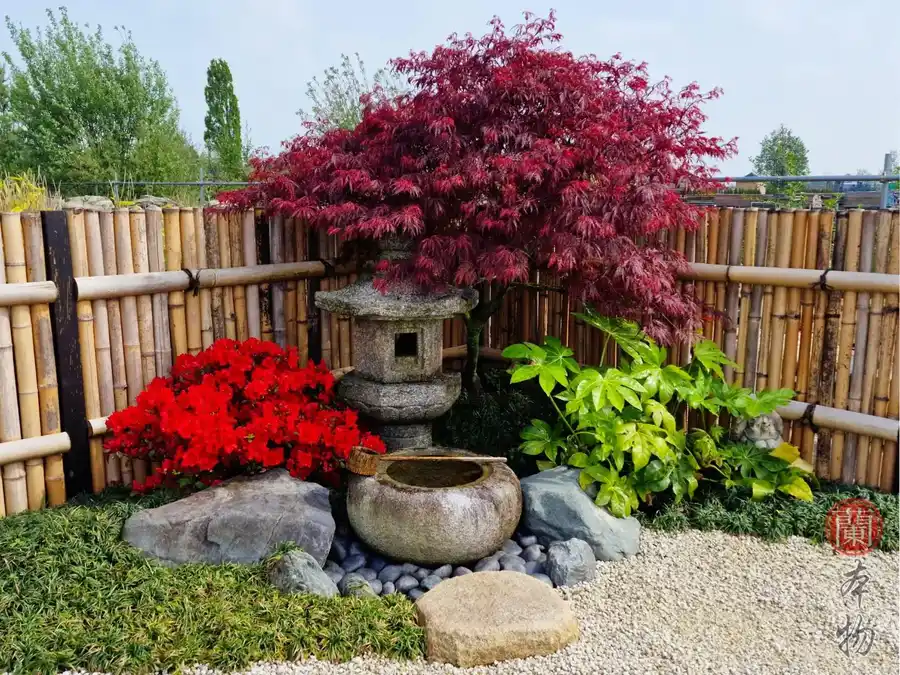
That deep red maple against the bamboo fence is hard to miss. The red flowers underneath pick up the same color, while the rounded stone basins keep the lower part of the garden from feeling too busy.
I’d keep the planting simple around a tree like this. A few green shrubs and natural stones are enough. You don’t need to add every flower color you can find. The maple already has plenty to say.
3. Make Room for a Shaded Retreat
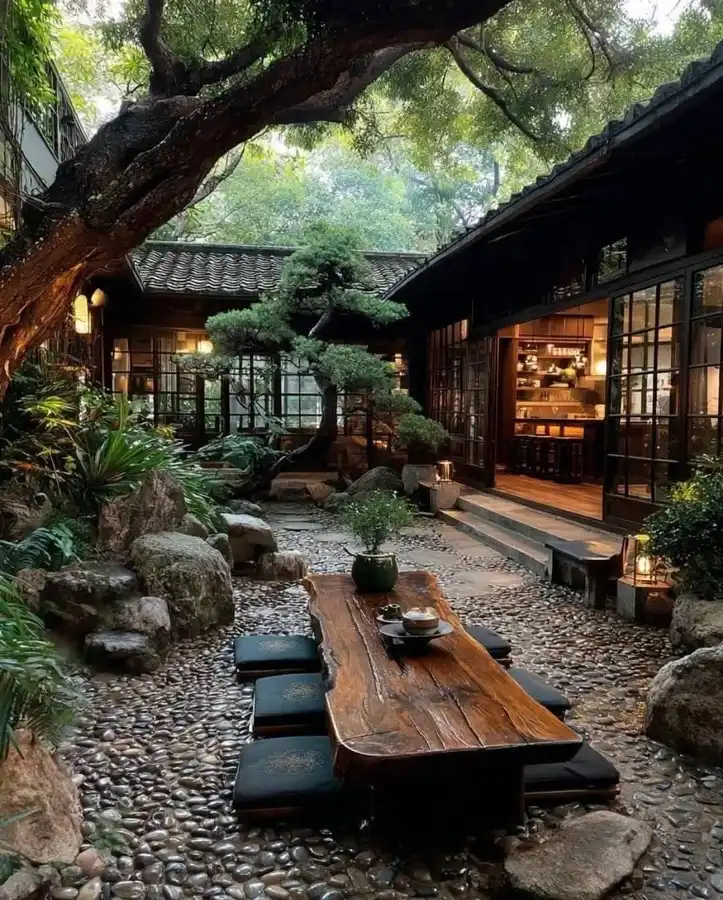
A mature tree spreads over the garden, shading the wooden seating area beneath a covered pavilion. Stones and greenery surround the space, giving it a woodland feel. The sheltered seating makes it somewhere to pause rather than just walk past.
If your backyard has a shady corner that never seems to work for flowers, consider putting a bench there instead. Add a few ferns and natural stones, then leave the rest fairly open.
A comfortable place to sit can be more useful than another crowded flower bed.
4. Add a Bamboo Water Spout
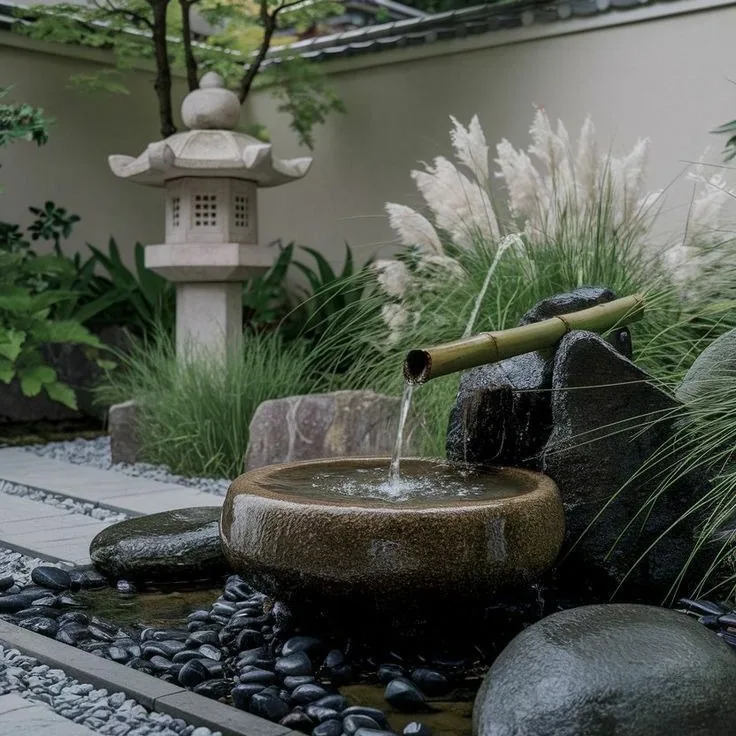
Water trickles from a bamboo spout into a rounded stone basin, with tall grasses and a stone lantern nearby. It’s a small arrangement, but each piece has room to stand out.
Start with the basin and build around it. A few pebbles, one or two plants, and a simple bamboo spout will do. Just make sure the water feature has proper drainage and a pump if you want the water to circulate.
5. Mix Tall Bamboo With Red Foliage
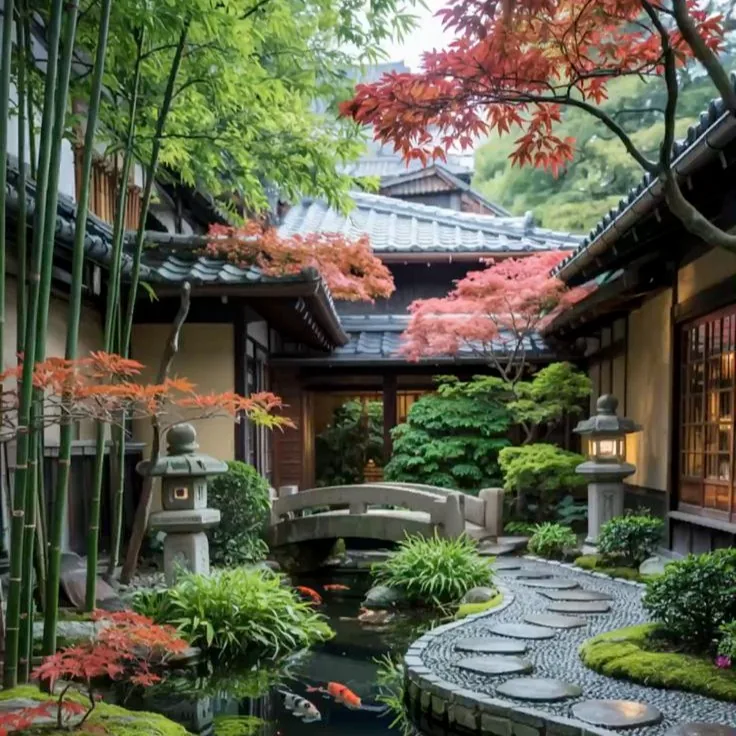
Tall bamboo rises behind the red maple, creating a layered garden with plenty of height. A stone path leads through the planting toward the wooden pavilion, so your eye naturally follows the route through the space.
This idea suits a yard that needs a little privacy. Tall planting along the back can screen a fence, while a smaller tree gives the middle of the garden some color.
Choose clumping bamboo or use a suitable root barrier. Spreading bamboo can quickly become a bigger project than expected, especially when it starts popping up where you didn’t plant it.
6. Keep the Deck Clear
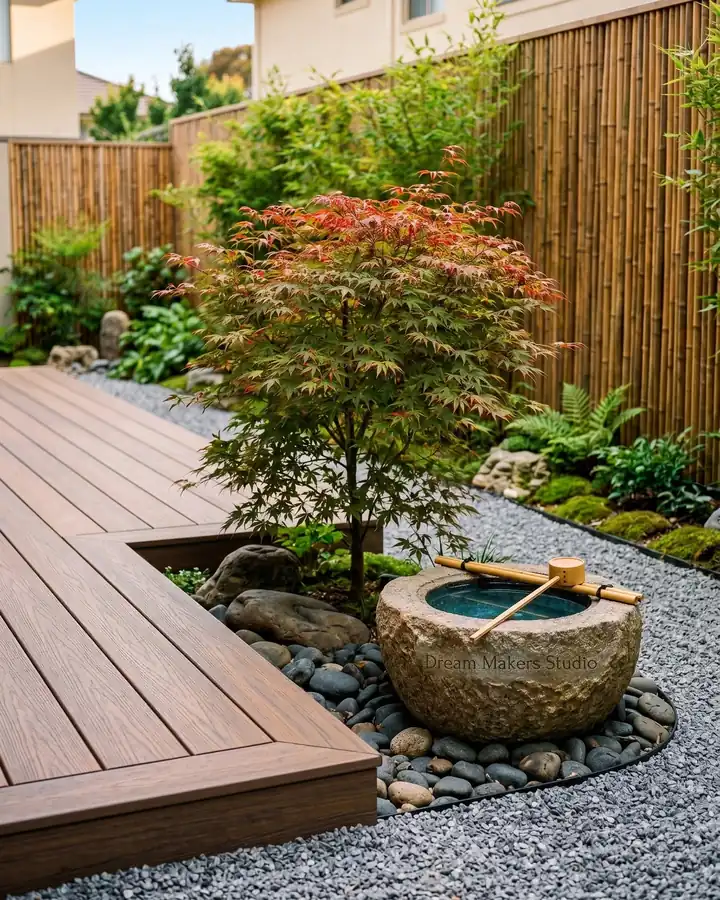
The wooden deck provides a simple seating area beside a gravel bed with a maple tree and stone water basin. The planting stays mostly to one side instead of surrounding the deck with pots.
That’s the part I’d keep. A clear deck gives you room to walk, sit, and move furniture without squeezing between containers. Let the tree do most of the decorating, and add a pot later only if the space needs it.
7. Follow a Curved Stone Path
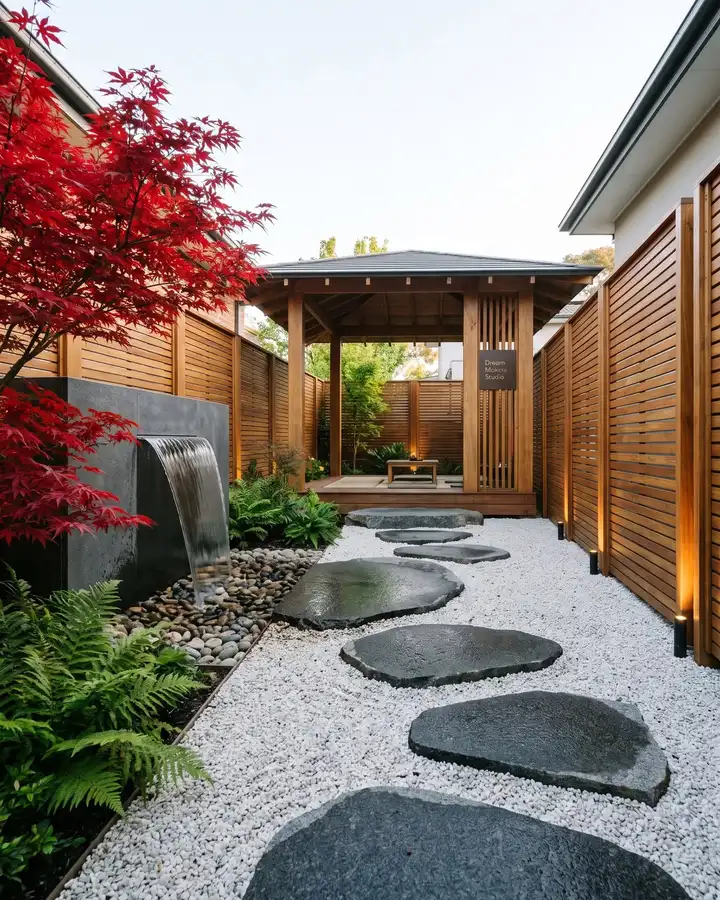
Round stepping stones lead through gray gravel toward a red maple, with a wooden fence running along the side. The irregular spacing keeps the narrow garden from feeling like a straight corridor.
When arranging stepping stones, think about walking before appearance. Place them at a comfortable distance, make sure each one sits firmly on a level base, and keep the gravel low around the edges. A few small plants beside the fence will soften the path without making it feel cramped.
8. Use Big Rocks Among Green Plants
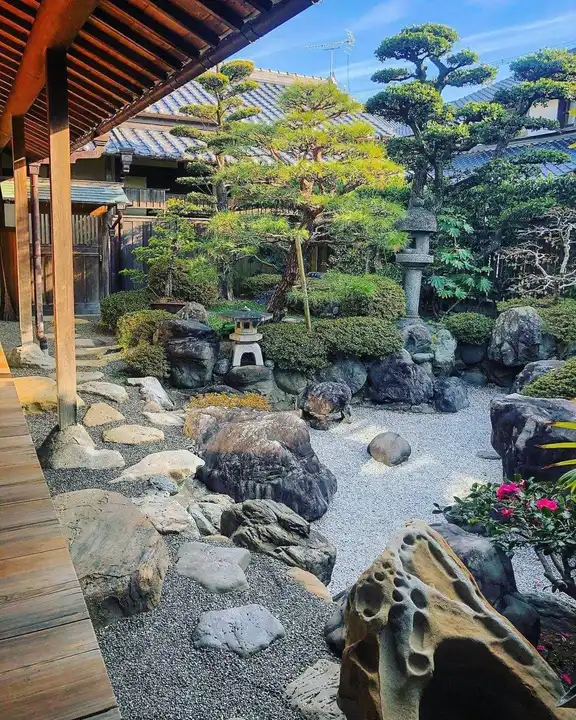
Large boulders sit among ferns and carefully shaped trees in this garden. The wooden veranda creates a clear edge along the house, while the rocks give the planting an uneven, natural appearance.
One substantial stone can do more than a dozen tiny ornaments. Choose rocks with different shapes, but group them thoughtfully rather than scattering them across the yard. Let greenery grow around their edges, and leave a few stones partly exposed.
For a shaded garden, ferns are worth considering if the soil stays moist enough for them to thrive.
9. Leave Space in a Gravel Zen Garden
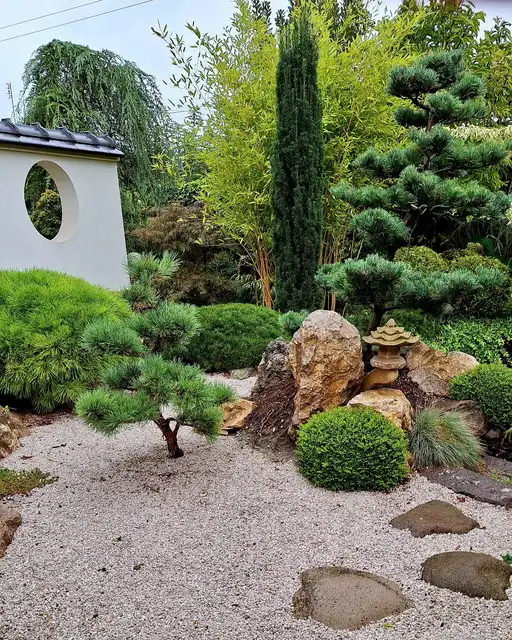
White gravel, dark rocks, and clipped evergreen shrubs give this garden a restrained look. There aren’t many colors competing for attention, and that’s exactly why the arrangement feels so calm.
Start with a small gravel area and a handful of stones. Rake simple lines into the surface if you enjoy maintaining that detail, but don’t feel obliged to fill every empty spot with ornaments. Empty space isn’t a decorating mistake here.
10. Give a Stone Lantern Its Own Spot
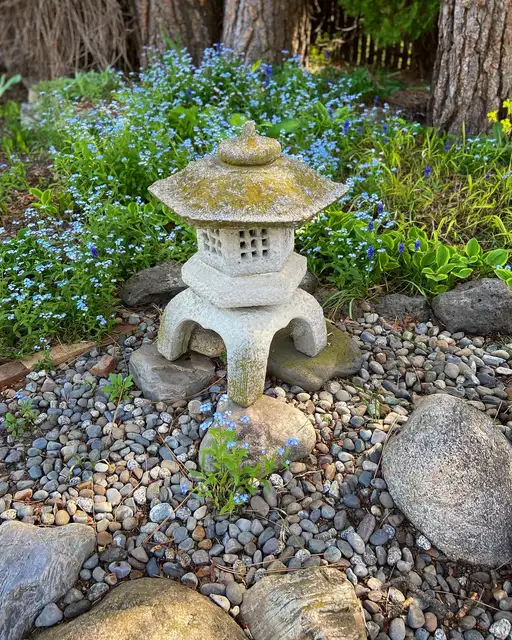
A traditional stone lantern sits among rounded pebbles, moss, and small blue flowers. The lantern rises above the low planting, so its shape remains easy to see.
I’d place a lantern slightly off-center instead of putting it dead center in a garden bed. Surround it with a few low plants and leave some ground visible. You want to notice the lantern, not spend five minutes looking for it behind a shrub.
11. Keep the Greenery Simple
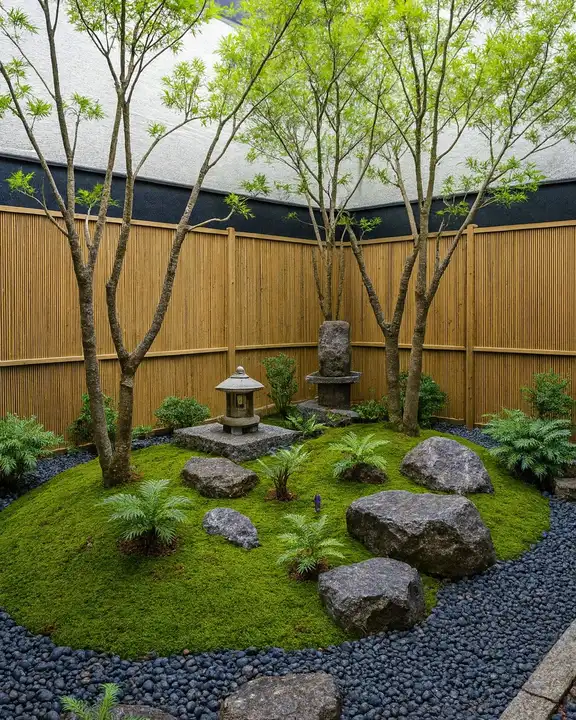
A few boulders, young trees, and low green groundcover fill this enclosed garden. The bamboo fence provides a backdrop, but the middle remains fairly open. No rows of colorful flowers or piles of decorative objects are needed.
This is a sensible starting point if you don’t want a garden that needs constant attention. Repeat a few plant varieties rather than buying something different for every corner.
Just choose groundcover suited to your conditions. Moss, for example, generally needs enough shade and moisture to grow well.
12. Fit a Garden Into a Tiny Courtyard
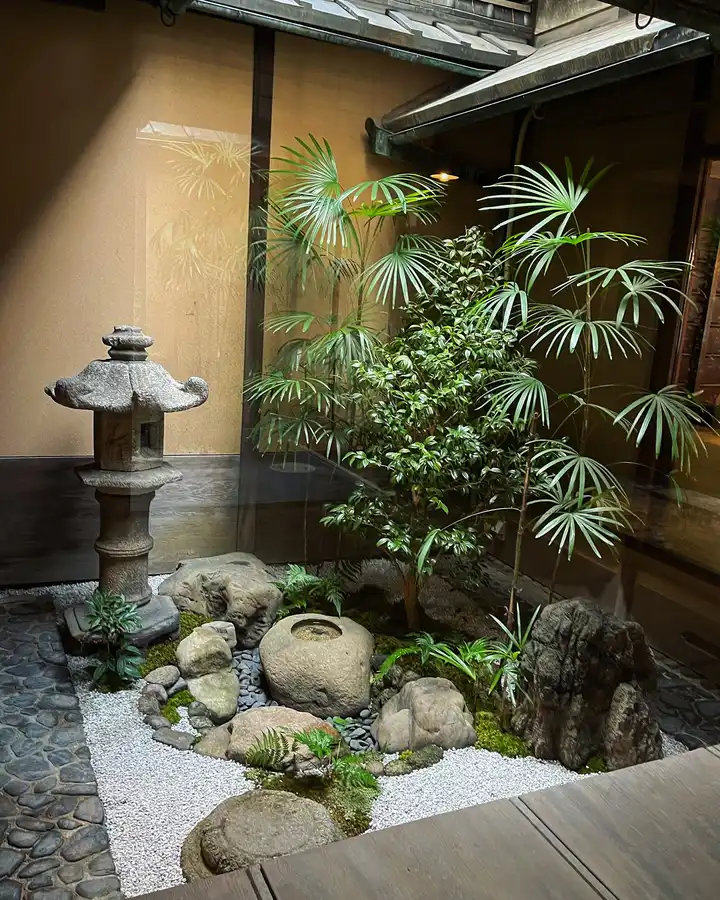
A slender bamboo plant, a stone water basin, and small pebbles make use of a compact courtyard. The warm wooden wall keeps the background simple, so the plant and basin have room to stand out.
Small spaces don’t need miniature versions of everything found in a large garden. One tall plant and one low stone feature can be enough.
If you’re working with a narrow courtyard or lightwell, check how much sunlight reaches it and make sure excess water has somewhere to drain.
13. Let Cherry Blossoms Meet the Veranda
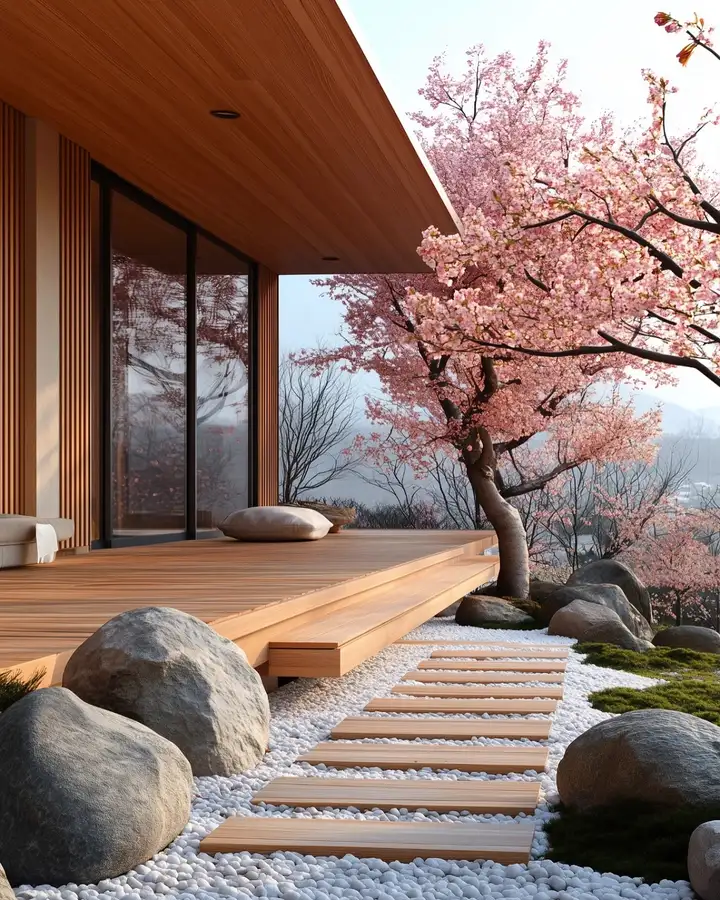
The wooden veranda opens toward a flowering cherry tree, with stepping stones connecting the house to the garden. Pink blossoms supply most of the color, while the surrounding greenery stays relatively quiet.
I wouldn’t add a row of brightly colored flowers beneath the tree. Let the blossoms have their moment. A simple path and a few low plants are enough to make the space feel connected to the house.
Before planting a cherry tree nearby, check its mature size, root requirements, and suitability for your local climate.
14. Shape a Pond Around the Path
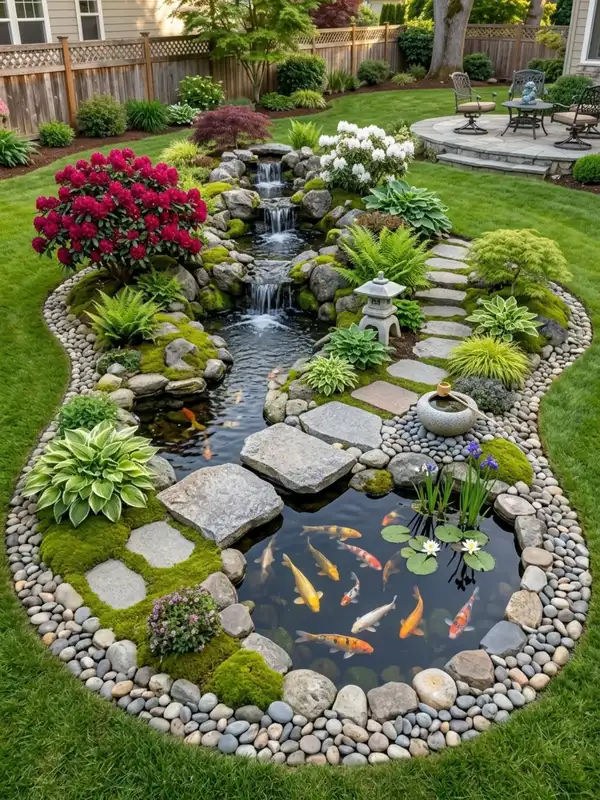
A curved pond sits beside flat stepping stones, with rounded shrubs, rocks, and red flowers around the water’s edge. The planting looks full, but the water remains visible instead of disappearing beneath leaves and branches.
If you’re planning a pond, decide where you’ll view it and how you’ll move around it before digging. Leave enough clear space along the edges to enjoy the water.
Fish need suitable water depth, filtration, and ongoing care, so a decorative pond without fish may be the simpler choice.
15. Let Moss Grow Between the Stones
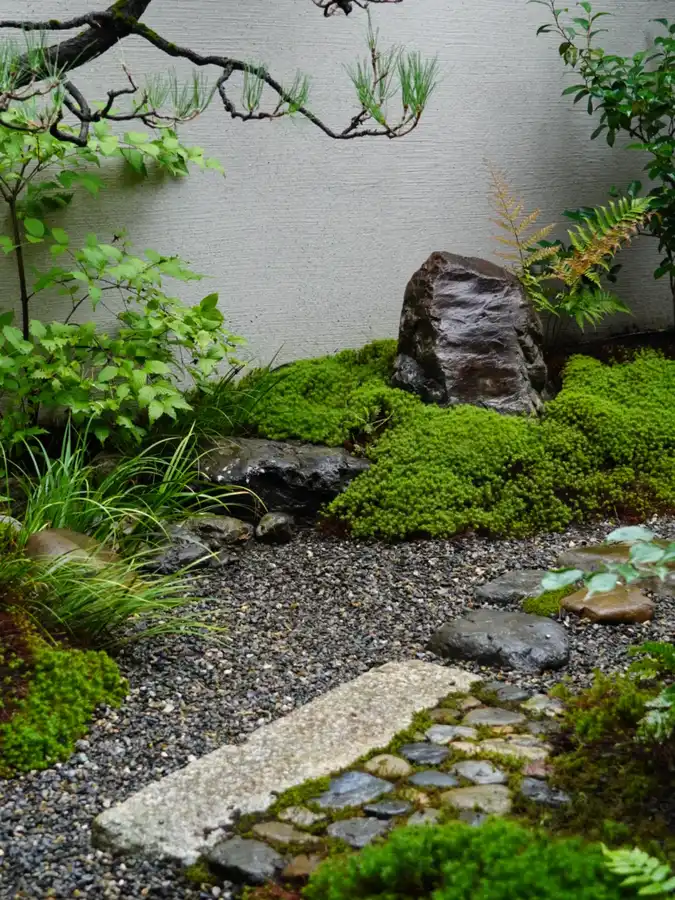
Flat stepping stones sit among moss, ferns, and irregular rocks in this shaded garden. The green groundcover softens the edges of the path, while a larger upright rock breaks up the lower planting.
This look depends more on growing conditions than on decorations. Moss won’t thrive in every sunny or dry yard, so don’t force it where it doesn’t belong. In a suitable shady spot, it can fill gaps between stones and give the ground a softer appearance.
16. Make a Simple Japanese Garden Border
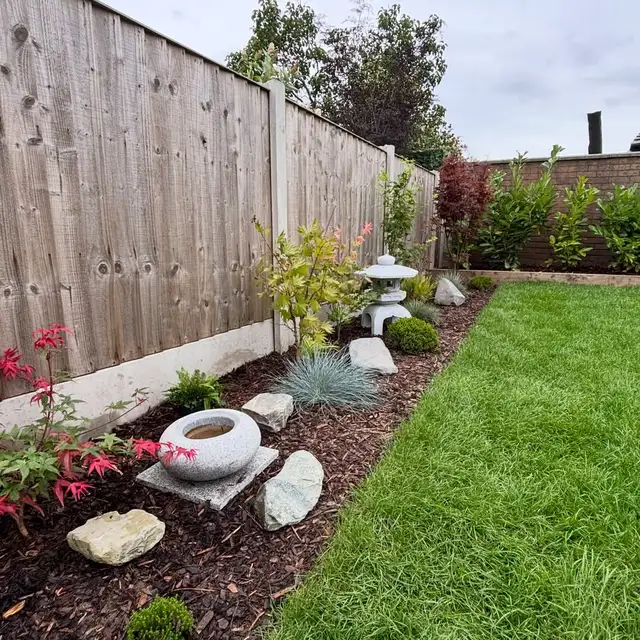
A narrow bed runs beside the lawn, with a stone lantern, pale gravel, low plants, and larger rocks marking its edge. The rest of the yard stays open, keeping this small feature from taking over the whole space.
You could recreate the arrangement without buying everything at once. Mark out the bed, position the largest stone or lantern, and add a few plants of different heights.
Repeat the same gravel and stone colors along the border. There’s no need to decorate every inch.
17. Create a Small Stone Stream
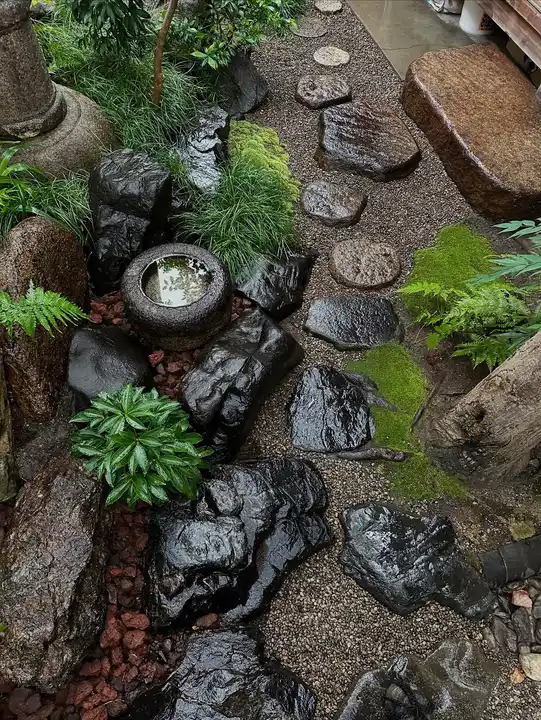
Dark rocks form the edges of a narrow stream, with small stone basins and leafy plants tucked beside the water. The irregular shapes make it feel like a natural watercourse rather than a straight channel built across the garden.
A recirculating stream needs a suitable pump, a water reservoir, and regular cleaning. If that sounds like too much maintenance, use a shallow bed of river stones to suggest a dry stream instead.
Add a few ferns nearby if the location suits them. You still get the winding shape without managing moving water.
18. Add a Wooden Bridge Over the Pond
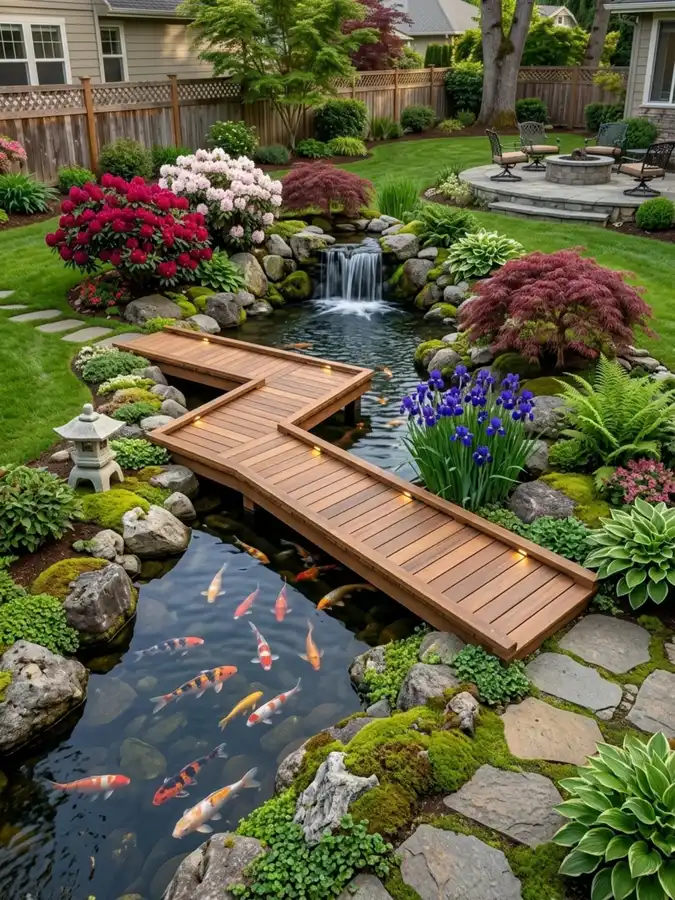
A small wooden bridge crosses the pond, while curved stone edges and clipped shrubs frame the water. Red flowers provide a brighter detail among all the green foliage. The bridge gives the garden a clear feature to look toward from the surrounding path.
A bridge doesn’t have to be large to be noticeable, but it does need proper support and a slip-resistant surface. For a smaller garden, a short wooden crossing over a dry gravel bed can suggest the same idea without the extra pond maintenance.
Keep the surrounding plants low enough that the bridge remains visible.
Final Thoughts
A peaceful Japanese garden doesn’t come from buying every stone lantern, bamboo screen, and water feature you see. It’s more about choosing a few details that suit your space and giving them room to breathe.
Start with one idea that feels manageable. Maybe that’s a winding stepping-stone path, a gravel bed with a few large rocks, or a small basin tucked into a quiet corner. You can always add more later. In fact, leaving something out might be the best decorating decision you make. Your garden should feel like a place you’d actually want to spend time in, not another project that never seems finished.