Fairy Garden Ideas That Make Tiny Spaces Feel Magical
A fairy garden doesn’t need a giant planter, a perfect yard, or a collection of expensive little decorations. Sometimes all it takes is an old pot, a few stones, some greenery, and one ridiculously tiny door.
That’s what makes fairy garden ideas so much fun. You can build a whole little world around a tree stump, tuck a village into a broken pot, turn a teacup into a garden, or let a winding path become the star of the container. Some are colorful and wonderfully over-the-top. Others are so simple that you could probably put one together in an afternoon.
I rounded up ideas that go in very different directions, too. There are woodland scenes, tiny ponds, treehouses, cottage gardens, hanging wreaths, and plenty of clever ways to use containers you may already have sitting around.
So grab a little corner of your garden, patio, balcony, or windowsill. These fairy garden ideas are small, but they have a surprising amount of personality.
1. Lead With a Tiny Stone Path
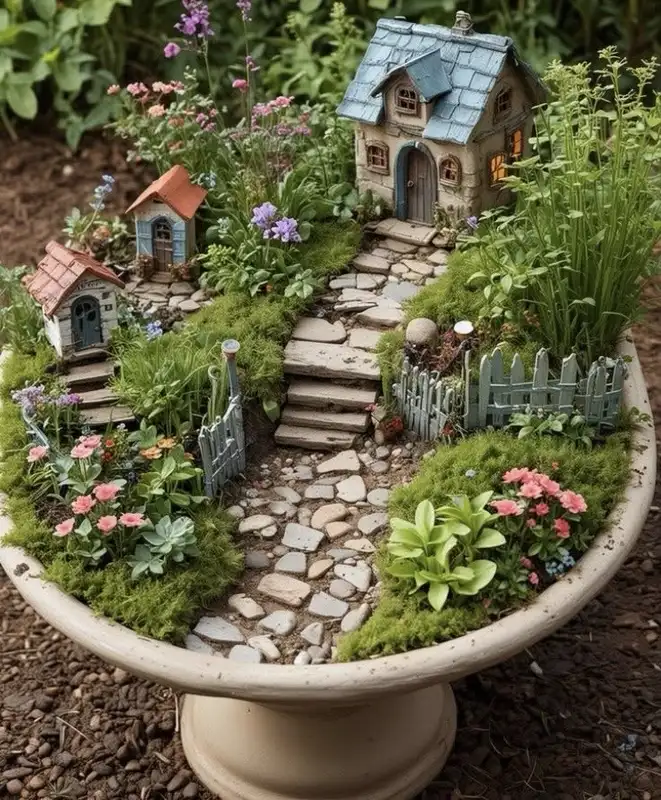
The little stone path is the first thing I notice here. It winds uphill through moss, flowers, and tiny houses, so the garden feels like a miniature place you could actually wander through.
A narrow path can do most of the storytelling. Add the biggest house toward the back, then tuck smaller pieces beside the path instead of scattering them randomly.
I’d keep the plants low near the walkway. The path deserves to stay visible.
2. Tuck a Village Against the Wall
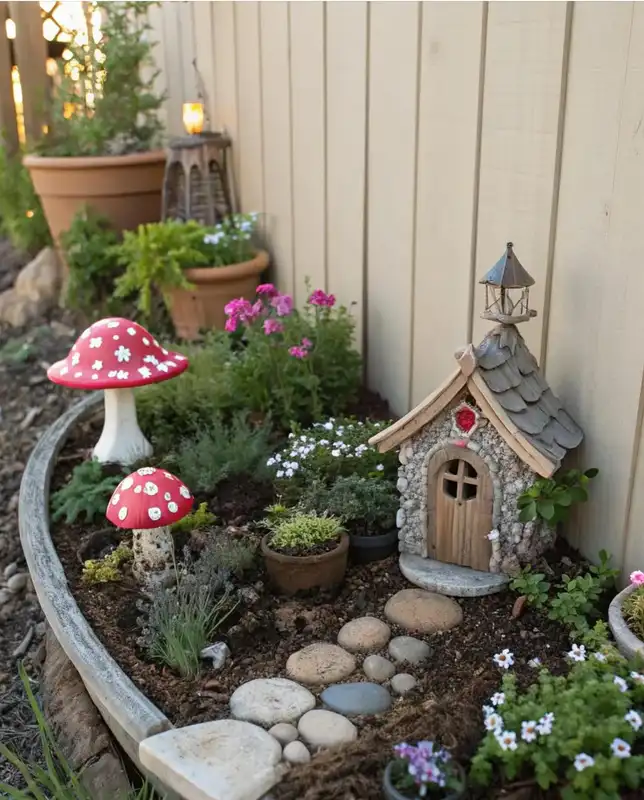
This container works because the fairy houses aren’t floating in the middle of the planting. They’re pushed toward the back, right against the pale wall, while flowers and stones fill the foreground.
That gives the miniature buildings a little more presence without needing a huge planter.
The red mushroom decorations are useful here too. They break up all the green and guide your eye toward the houses.
3. Let One Mushroom Steal the Show
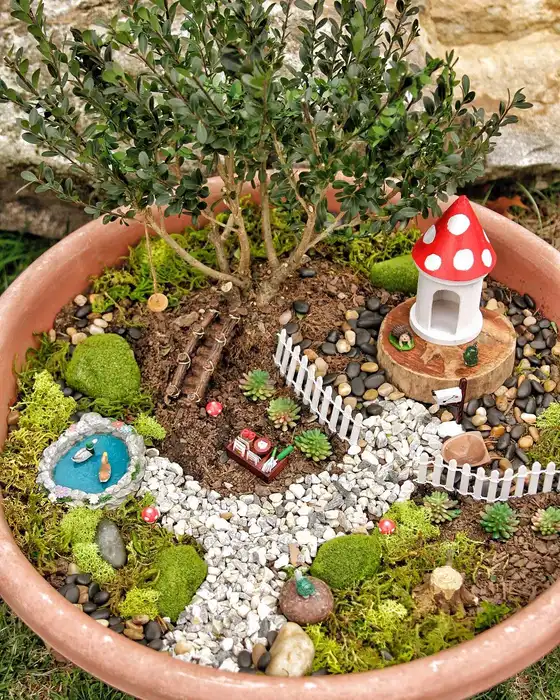
The red mushroom house is hard to miss, and that’s exactly why this little garden doesn’t need much else.
Around it are pale gravel, moss, tiny fencing, a miniature house, and a few bright details. The mushroom remains the playful part while everything else stays quieter.
If your fairy garden already has one unusual piece, resist the urge to surround it with more decorations. Give that odd little thing some room.
4. Go Bright With Tiny Details
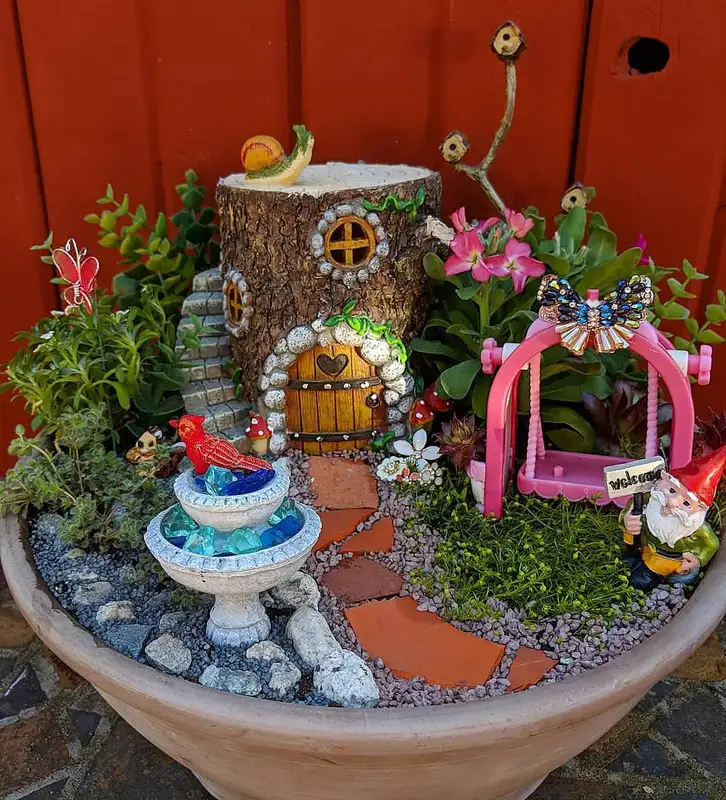
This one is unapologetically colorful. A red backdrop, blue accents, pink furniture, flowers, mushrooms, and several little houses all share the same small planter.
I wouldn’t try to tone it down by matching every piece. The mismatched colors are part of the fun.
Small color spots are easy to bring into a quieter garden too. A blue chair, red mushroom, or bright little door can stand out beautifully against mostly green planting.
5. Use a Broken Pot as Stairs
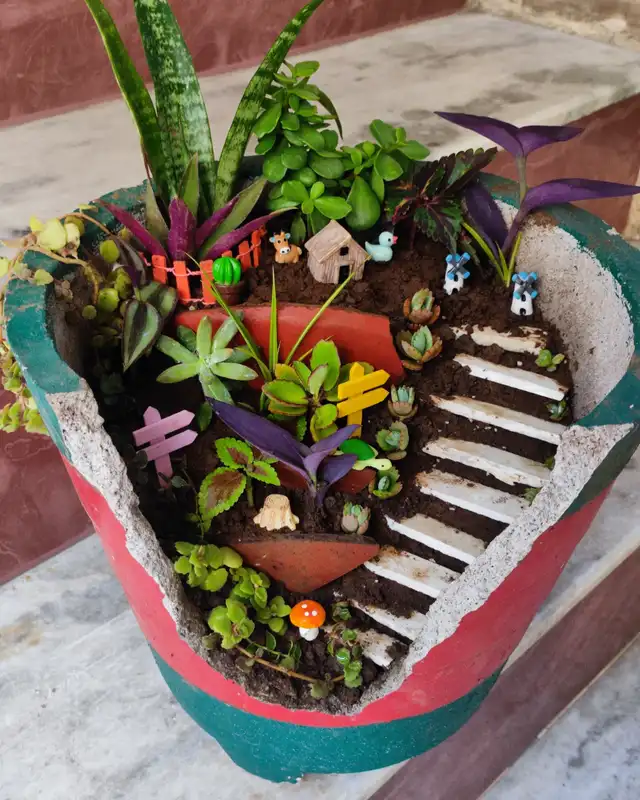
Now this is a clever use of an awkward container. The broken terracotta pot becomes a series of little levels, with a miniature staircase running between them.
Instead of hiding the broken edge, the design makes it part of the garden.
A cracked or chipped pot can work surprisingly well when the broken shape creates height or a ledge. Those uneven sections become extra places for plants and miniature scenes.
6. Fill a Metal Tub With Flowers
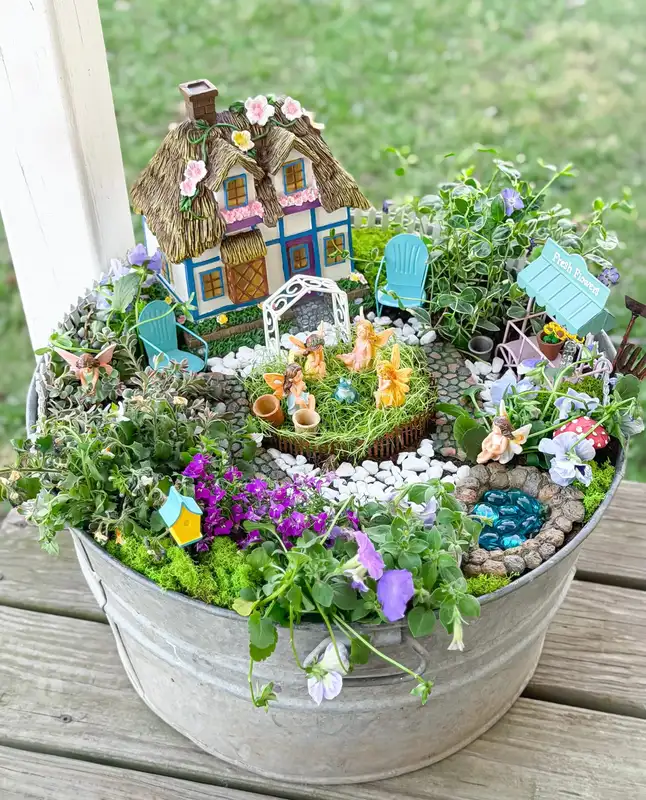
The galvanized tub gives this fairy garden a completely different feel from the terracotta examples. It looks more like a tiny cottage garden, with flowers spilling around the edges and miniature houses tucked inside.
The purple and pink flowers do plenty of the decorating already.
If you use a metal tub, I’d let the plants stay a little messy. A perfectly trimmed miniature garden would lose some of the relaxed country feel shown here.
7. Build Around an Old Tree Stump
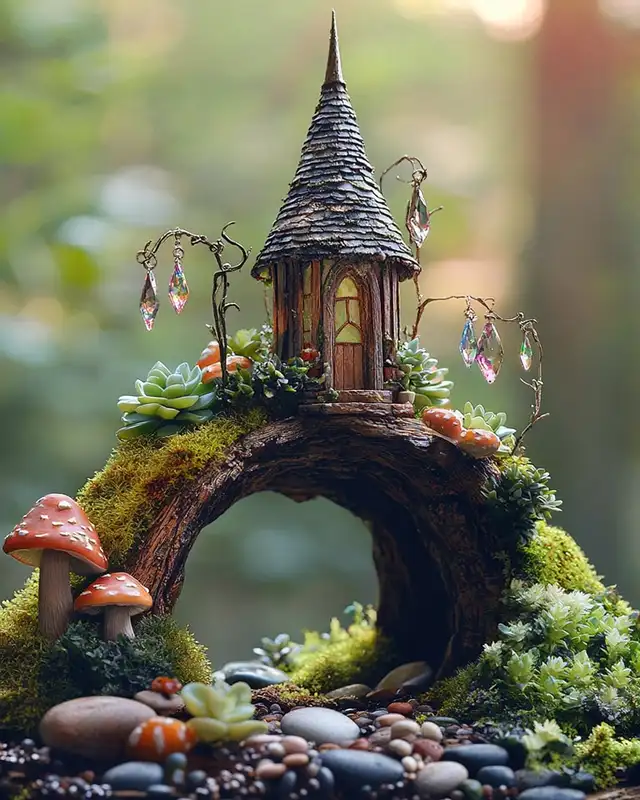
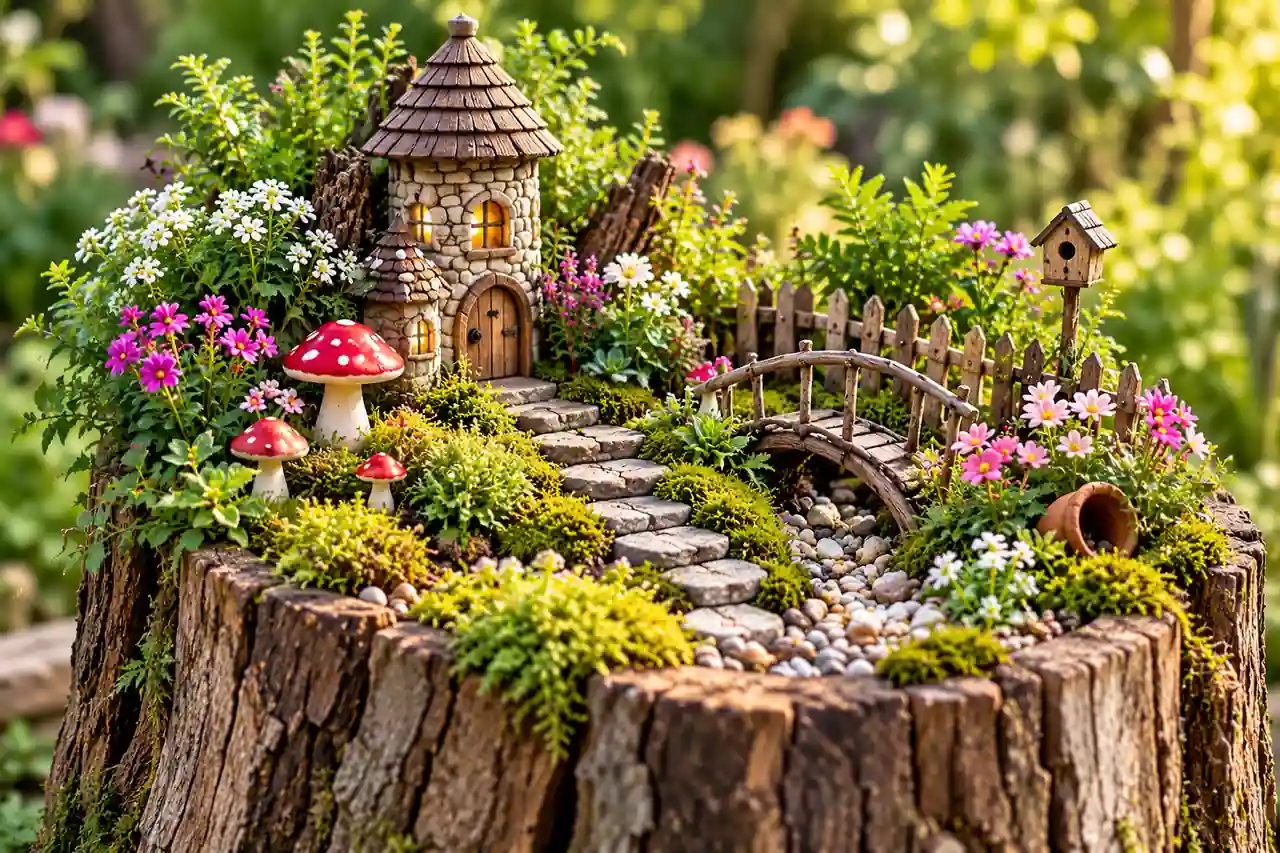
The tree stump does almost all the heavy lifting in this scene. A tiny tower rises from the top while moss, stones, mushrooms, and greenery gather around the base.
That makes the garden feel built into the landscape rather than simply placed on it.
An old stump, fallen log, or chunky piece of wood can give the miniature pieces somewhere to belong. One natural structure is often enough.
8. Spread the Garden Across Three Pots
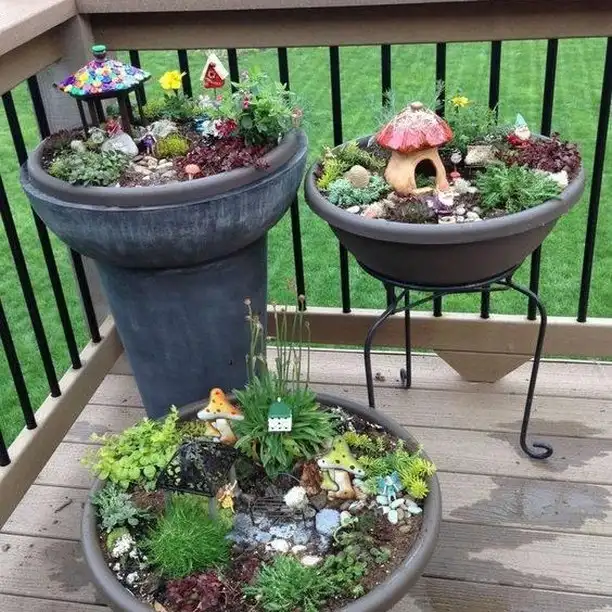
Three separate pots can tell one story without being physically joined together. Here, each planter holds its own little arrangement of plants, stones, houses, and fairy details.
This is much easier to manage than cramming everything into one large container.
It also works on a balcony or small deck. Leave a little space between the pots so each miniature scene can be seen.
9. Give the Fairies a Tiny Pond
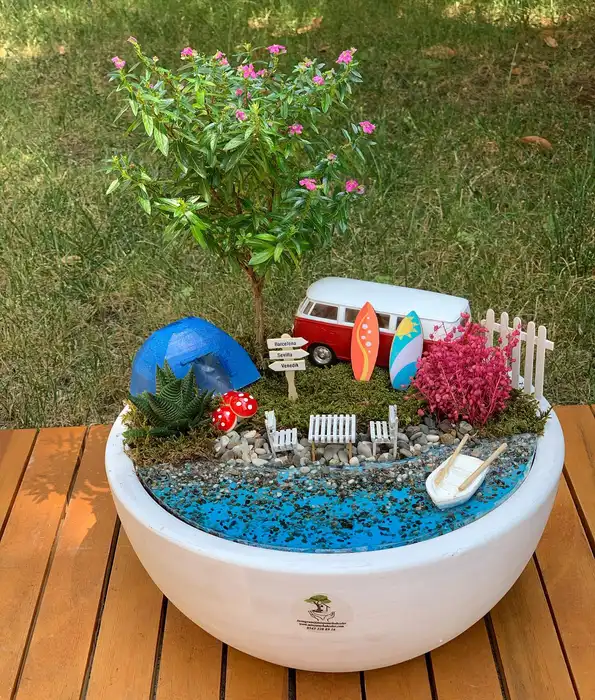
The blue section in this bowl changes everything. It reads like a miniature pond, complete with a tiny bridge, while the surrounding stones, flowers, and small figures form the garden around it.
A shallow bowl, some blue gravel or a water-like centerpiece, one small bridge, and a few plants could give you the same basic idea.
The open blue area matters. It gives all those tiny details somewhere to stop.
10. Make the Whole Garden Feel Woodland
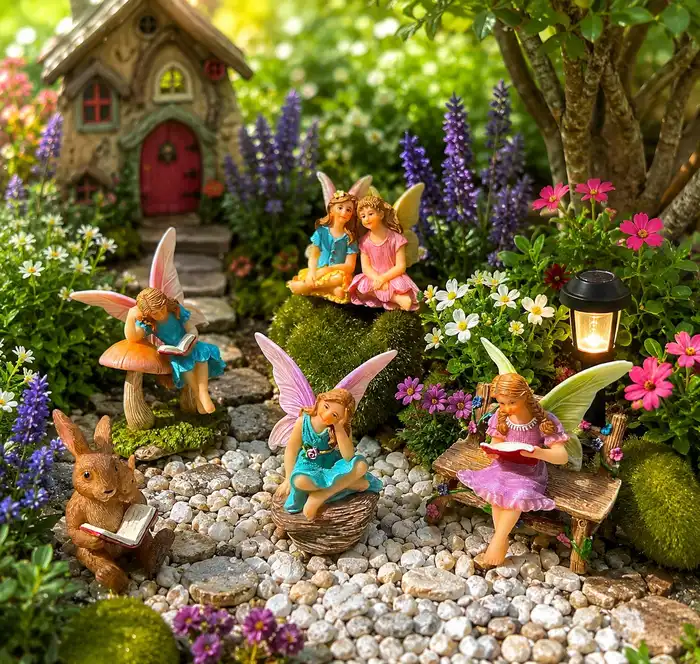
This one is crowded, but in a good way. Mushrooms, tiny people, flowers, a little house, lanterns, and stones fill almost every part of the scene.
I’d focus on the layering rather than trying to fit in every type of decoration. Put a house toward the back, add taller flowers behind it, then use mushrooms and small figures in the lower areas.
That mix of heights is what makes a modest container feel deeper.
11. Add a Little Garden Sign
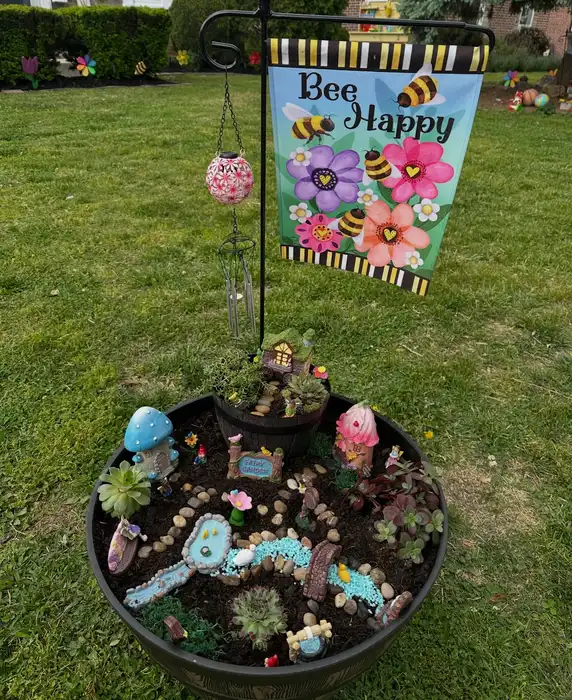
The sign is almost as noticeable as the plants in this arrangement. It gives the miniature garden a simple message without needing another fairy house or complicated structure.
That can be enough.
If your container already has plenty of flowers, one small sign might be the only extra decoration I’d add. Otherwise things can get crowded fast.
12. Keep the House Low and Surrounded
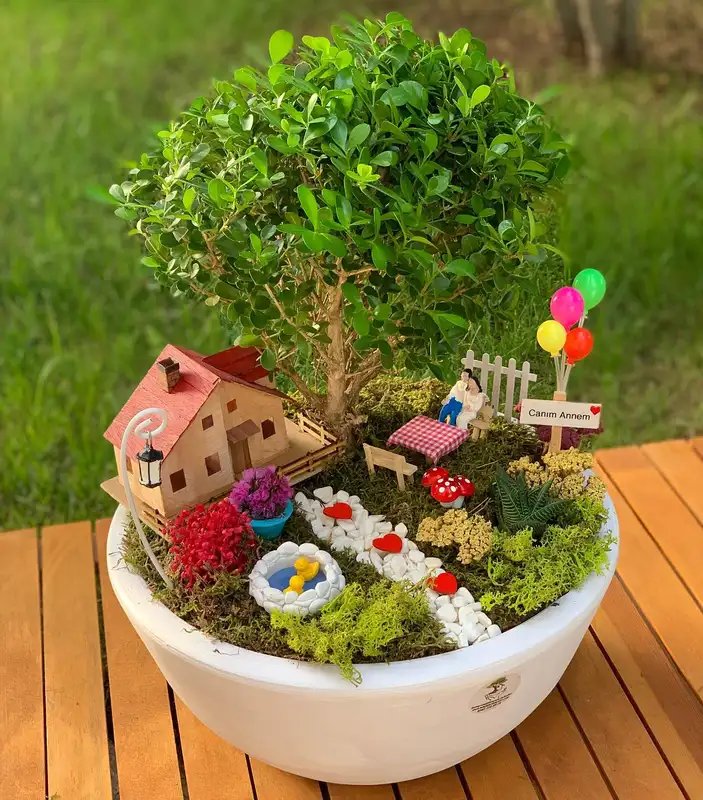
The small red-roofed house sits almost at ground level here, surrounded by mossy planting, white flowers, stones, and a few tiny decorations.
That’s a nice change from fairy houses that tower above everything.
If your miniature house is short, let the surrounding plants frame it instead of trying to make it taller with extra pieces. Keep the little doorway visible.
13. Make the Path the Main Feature
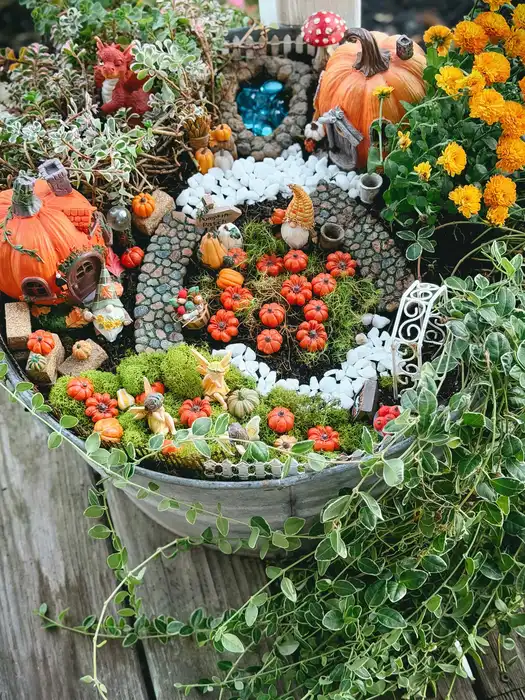
The orange and yellow flowers make this planter cheerful, but the winding white path is what gives the arrangement its shape.
It loops through the planting rather than running straight across it. That small choice makes the garden feel less like a collection of plants and more like a tiny landscape.
A path doesn’t have to be wide. In a miniature container, even a narrow strip of pale gravel can be enough.
14. Hide a Door in the Tree
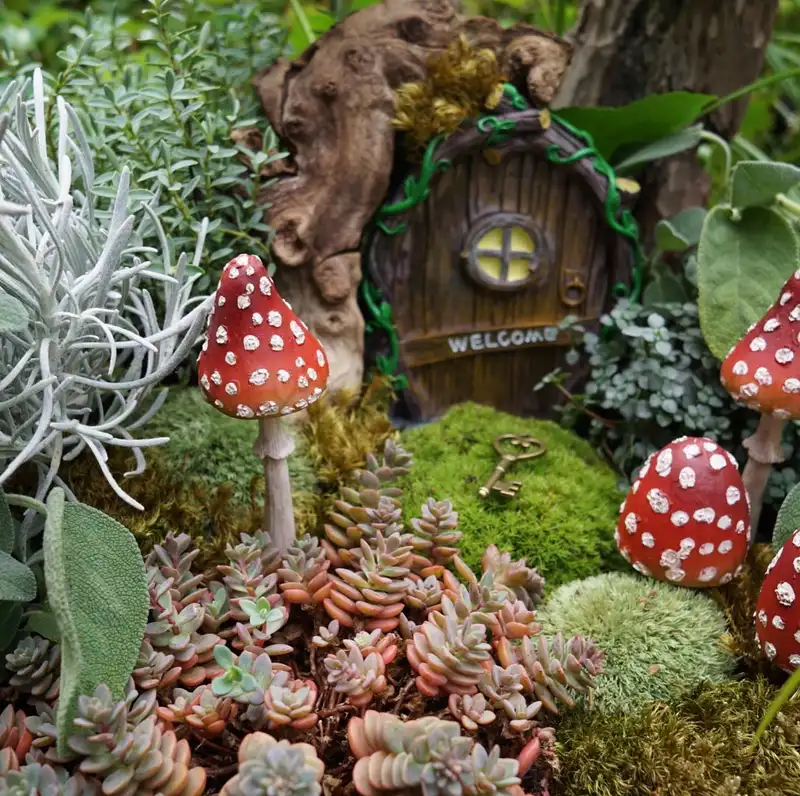
Here the fairy door is tucked into the tree instead of placed inside a planter. Succulents, moss, mushrooms, and other small plants gather around it, making the doorway look like part of a much larger little world.
The door itself doesn’t need to be elaborate. Its placement does most of the work.
A tree with rough bark is especially useful because the natural texture already looks a little woodland-like.
15. Turn a Broken Pot Into a Tower
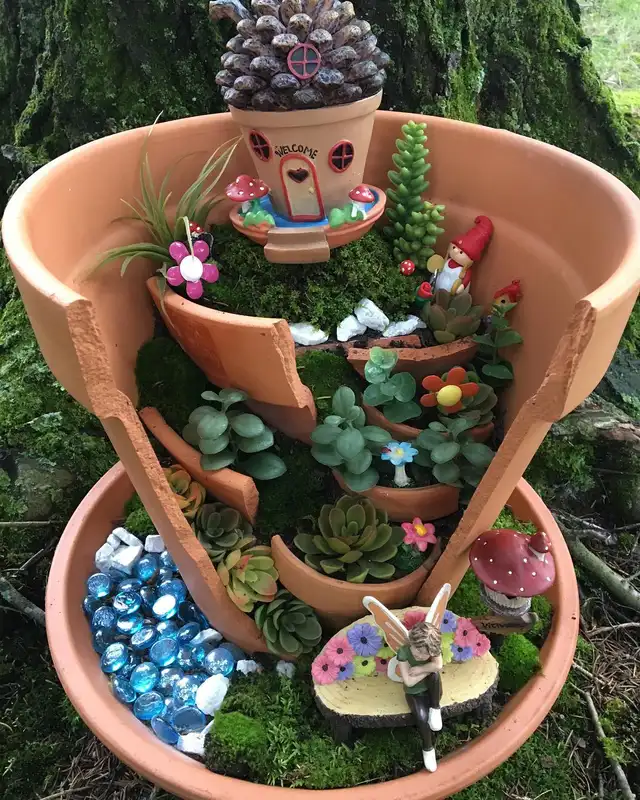
The stacked terracotta pieces here create several levels, and each level gets its own tiny scene. A little fairy figure sits among the plants while stones and blue decorative pieces fill the lower sections.
It’s a smart use of vertical space.
If you have a tall broken planter, don’t automatically cut it down to one level. The uneven sections may give you somewhere to place several miniature scenes.
16. Make a Whole Collection of Mini Gardens
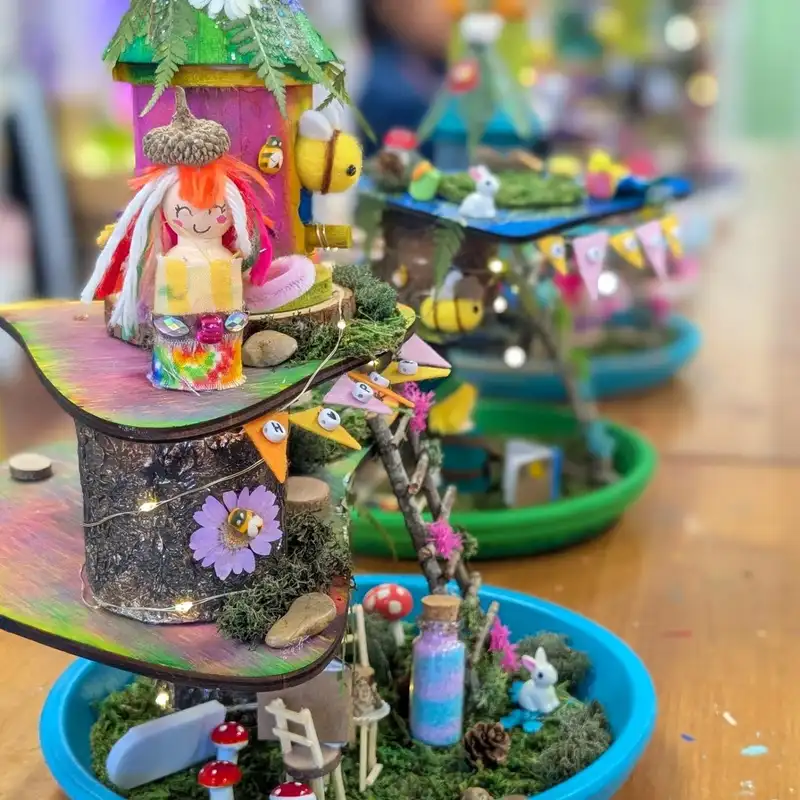
This image takes the idea in a different direction. Instead of one large fairy garden, there are lots of small colorful containers, each holding its own miniature arrangement.
Several small pots could line a shelf, windowsill, or garden table.
They don’t need to match exactly. In fact, the different colors and shapes are what make the collection feel playful.
17. Give the Fairies a Little Chair
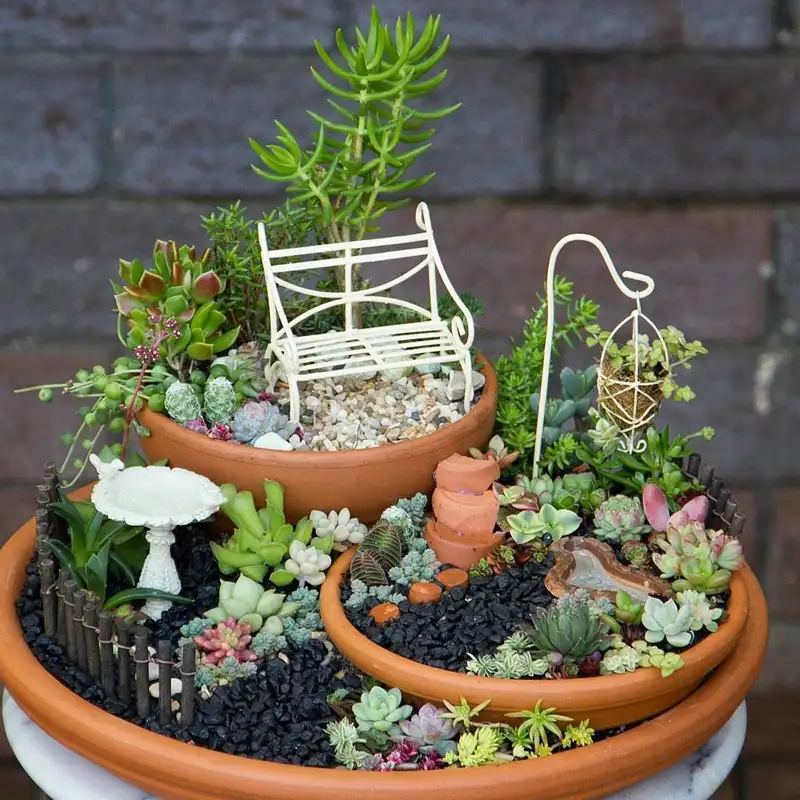
Probably my favorite detail in this image is the small white chair. It makes the garden feel like somebody actually uses the space, even though everything is miniature.
The chair sits among succulents, flowers, stones, and a tiny watering can, so the scene suggests a little garden corner rather than just decoration.
One piece of furniture can tell the story. A chair, bench, table, or wheelbarrow gives the miniature garden something to do.
18. Keep the Furniture Tiny and White
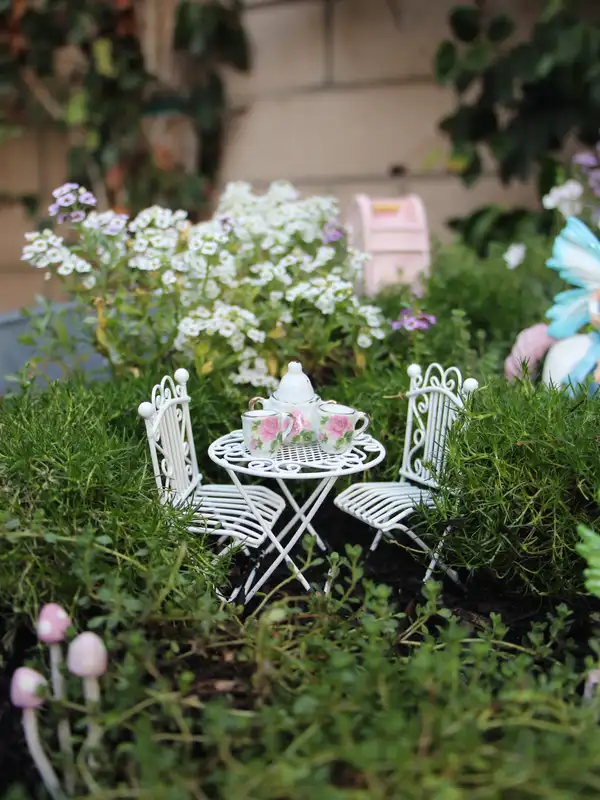
This scene is much quieter than the colorful fairy gardens. A small white table and chairs sit among pale flowers and greenery, with only a few miniature details around them.
The white furniture stands out without introducing another strong color.
I’d leave the rest of the container fairly calm if you use this idea. A bright mushroom, colorful house, and large figure could easily compete with the little table.
19. Build a Fairy Treehouse
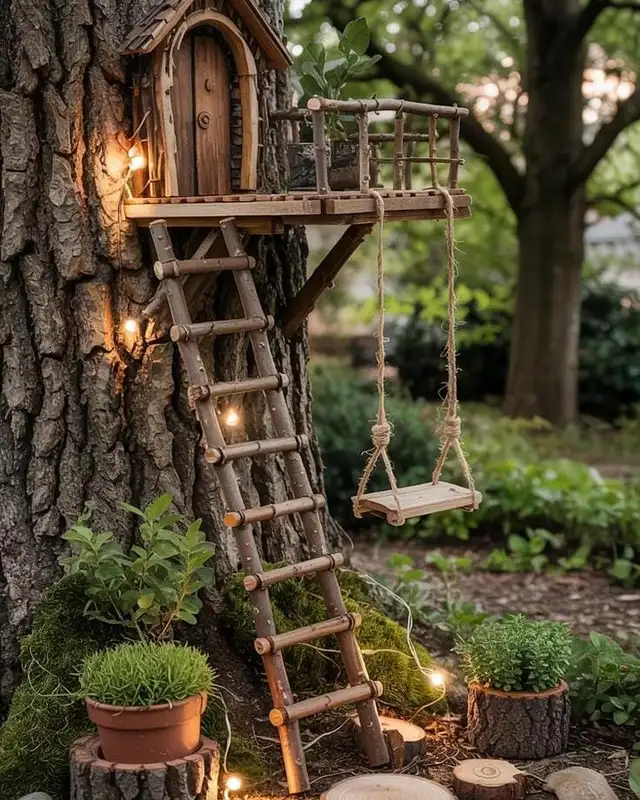
This is much more than a planter. A ladder climbs the tree trunk toward a little raised fairy house, with a tiny swing hanging below.
The vertical setup is the whole idea.
If you have a suitable tree, concentrate the miniature details upward instead of covering the ground around the trunk. Keep the installation secure and avoid damaging the tree.
20. Stack Pots Around a Fairy House
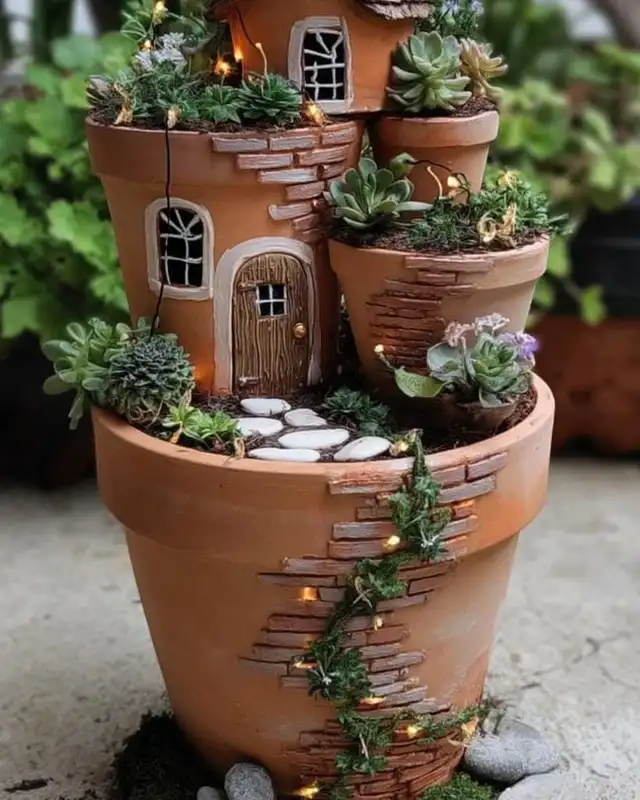
The tall terracotta planter becomes a miniature apartment building of sorts, with small houses and plants tucked into openings at different levels.
It’s unusual, but the idea is simple: use height when floor space is limited.
Terracotta is doing double duty here. It holds the plants while also giving the different levels one warm material to share.
21. Put Bright Doors on the Tree
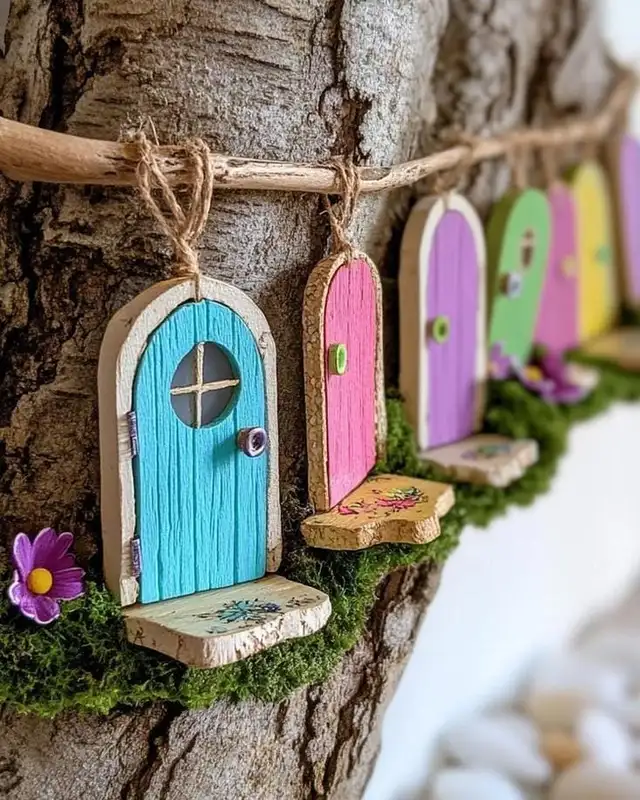
Forget the whole miniature house for a minute. This image proves that a few tiny doors can be enough.
The blue, pink, and green doors are attached directly to the tree trunk, with small steps and flowers underneath. The bark stays visible around them, which keeps the idea believable.
It’s a simple option for anyone who wants fairy-garden details without creating a planter at all.
22. Hang the Fairy Garden From a Wreath
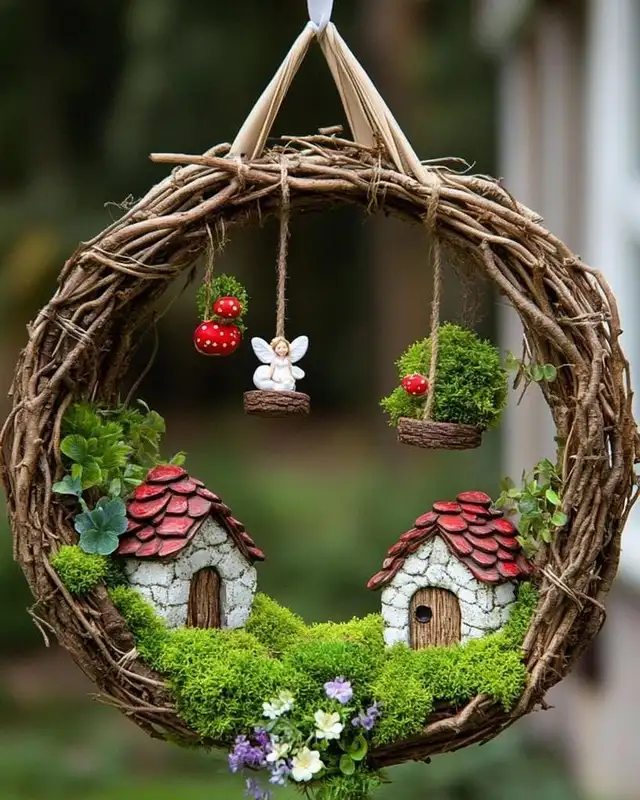
This one doesn’t need soil or a planter. A woven twig wreath holds several tiny houses, flowers, mushrooms, and greenery inside its circular shape.
That makes it a nice option for a wall, fence, shed, porch, or sturdy tree branch.
The wreath frame is important. Without it, the little houses would just look like separate decorations. Here, the branches give everything a clear boundary.
23. Let One Cozy Cottage Stand Alone
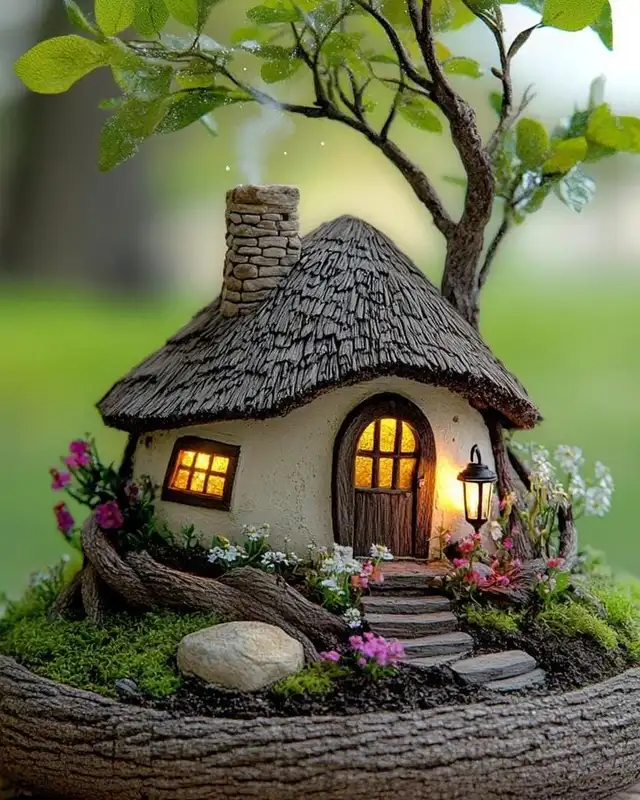
This little cottage doesn’t need a busy garden around it. The dark roof, rounded doorway, glowing-looking windows, stones, and low greenery are enough.
I’d actually resist adding more.
When a miniature house has this much detail, too many mushrooms, signs, figures, and furniture can hide the part that makes it special. Give the house a little open ground around it and let people notice the tiny windows.
24. Shrink the Whole Garden Into a Teacup
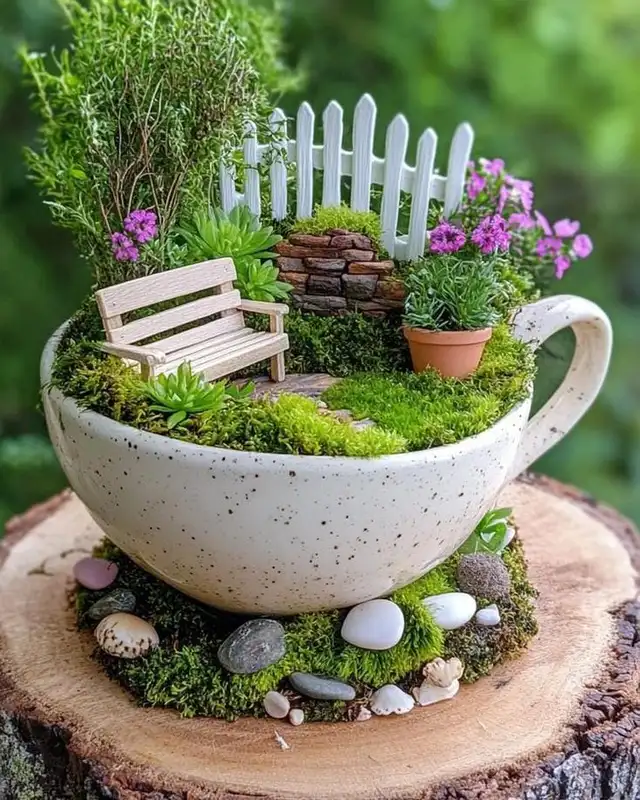
The teacup is what makes this last idea so useful. A large planter or garden bed isn’t necessary here.
The miniature bench, fence, greenery, flowers, and tiny stones all fit into one small container. That’s it.
For a tiny fairy garden like this, I’d choose fewer pieces rather than trying to squeeze in a complete village. One seat, a little greenery, and a few ground details can be plenty.
Final Thoughts
The best fairy garden isn’t necessarily the one with the most tiny houses, mushrooms, fairies, and furniture packed into it.
Sometimes one crooked path is enough. A little chair can tell the story. A bright door on a tree can turn an ordinary trunk into something completely different. Even a broken flowerpot can become the structure for an entire miniature garden.
Start with the space you already have and let its shape guide the idea. A stump wants to be a woodland scene. A tall pot can become a tower. A teacup is perfect for something tiny. You may already have the most interesting container sitting somewhere in the house or garden.
And honestly, that’s half the fun. Fairy gardens are supposed to feel a little unexpected.