19 Flower Bed Ideas In Front Of House For A Prettier Yard
The front yard doesn’t need to be covered in flowers to look good. Sometimes a narrow strip beside the walkway is enough. Other times, a few curved beds across the lawn can completely change the shape of the yard.
The fun part is that flower beds don’t all have to follow the same rules. Some of these ideas are neat and restrained, while others are packed with color and allowed to spill over the edges. There are small corner beds, rock gardens, porch borders, winding paths, and even simple patches of daisies.
So if your front yard feels a little plain, don’t assume you need a major landscaping project. One well-placed bed might be all it takes.
1. Layer Flowers Beside The Walk
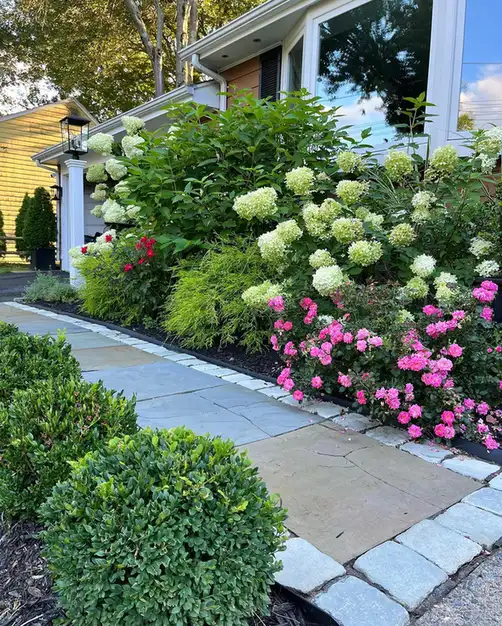
The first bed feels full without blocking the walkway. Rounded green shrubs sit closest to the path, pink flowers fill the lower edge, and taller white blooms rise behind them.
That height change is doing most of the work here. Keep the front plants low and let the taller ones sit farther back. It keeps the entrance open while still giving the house plenty of flowers.
2. Ring The Entry With Red
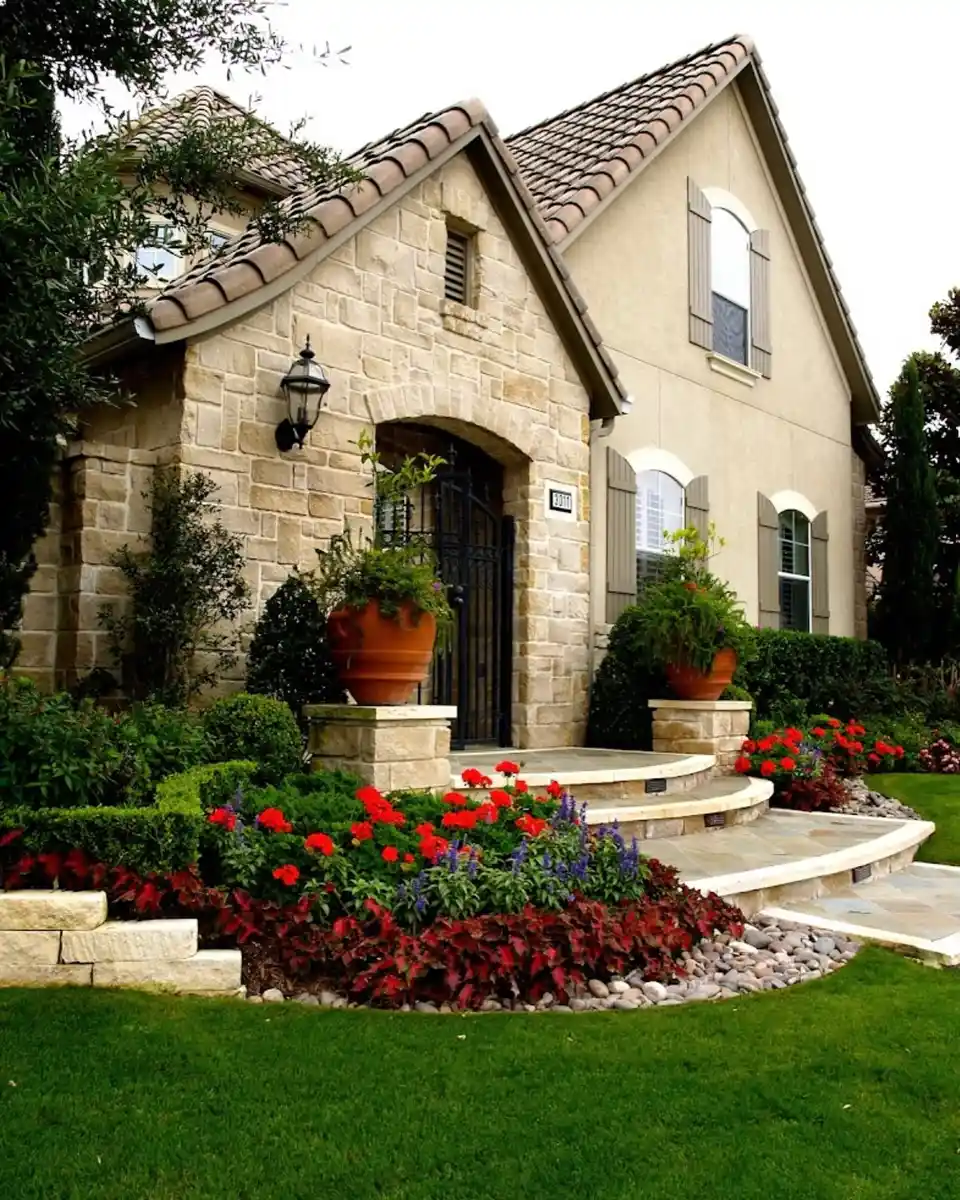
This stone house doesn’t need a complicated flower bed. A low band of red flowers follows the front steps and wraps around the entrance.
The rest of the lawn is left alone, which actually makes the flowers stand out more. I’d keep this kind of bed low too. The doorway is already the star.
3. Let The Path Wind Through
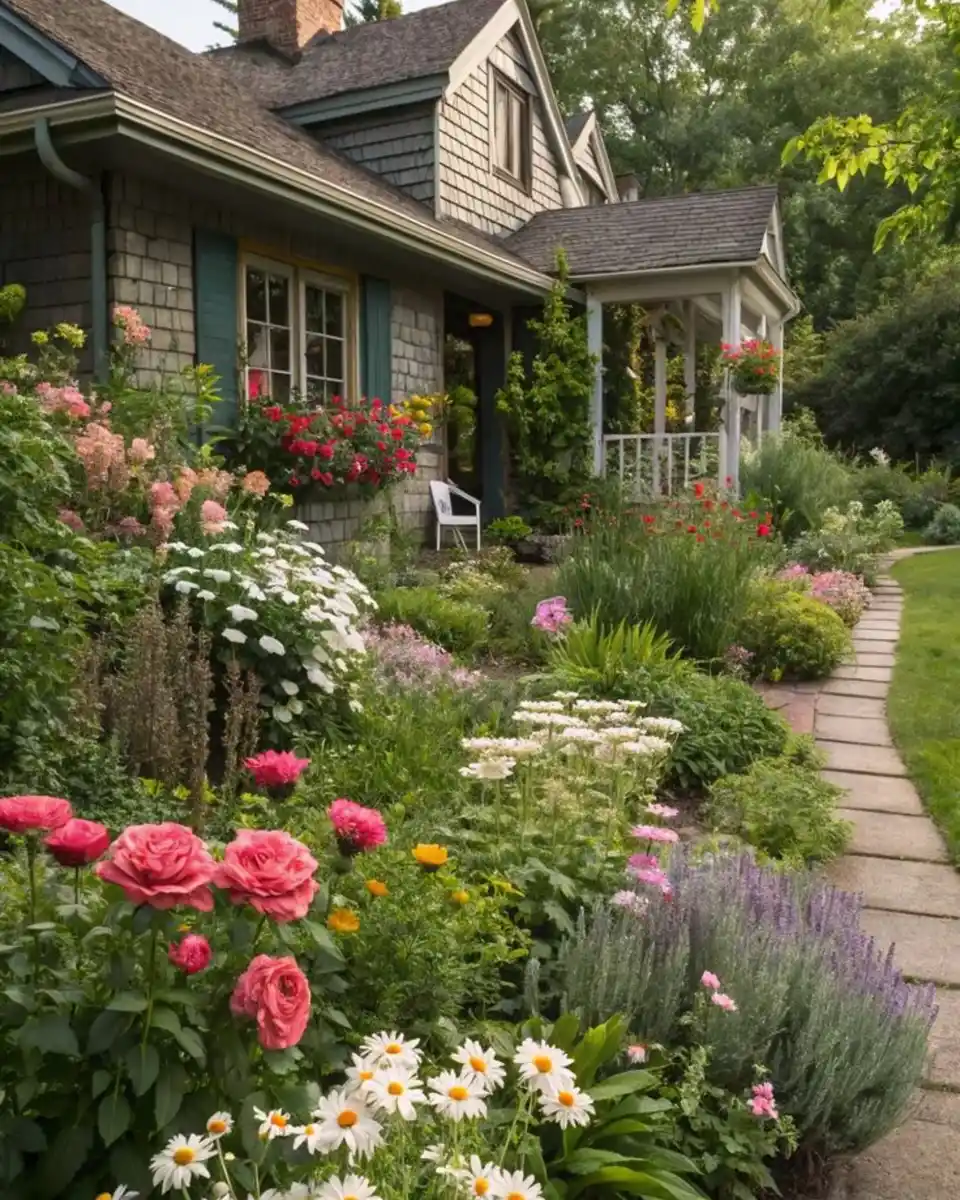
This one feels more like a garden than a planted border. Roses, daisies, lavender-colored flowers, and soft grasses crowd the edges of a winding walkway.
There isn’t a strict row of anything. That’s part of its charm. The path gives the planting a loose shape, so the flowers can spill out without making the yard look messy.
4. Mix Pots With Ground Plants
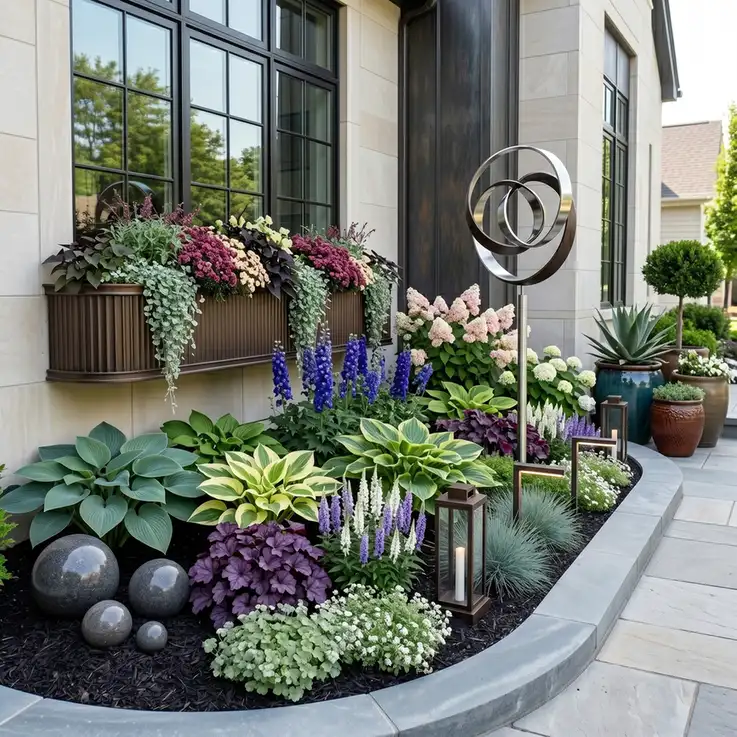
This modern front bed has a lot going on, but the dark edging keeps it under control. Hostas, purple flowers, pale ground cover, round stones, and potted plants all sit at different heights.
The pots are the useful detail. They break up a ground-level planting bed and give you another place for seasonal color.
5. Keep A Modern Bed Low
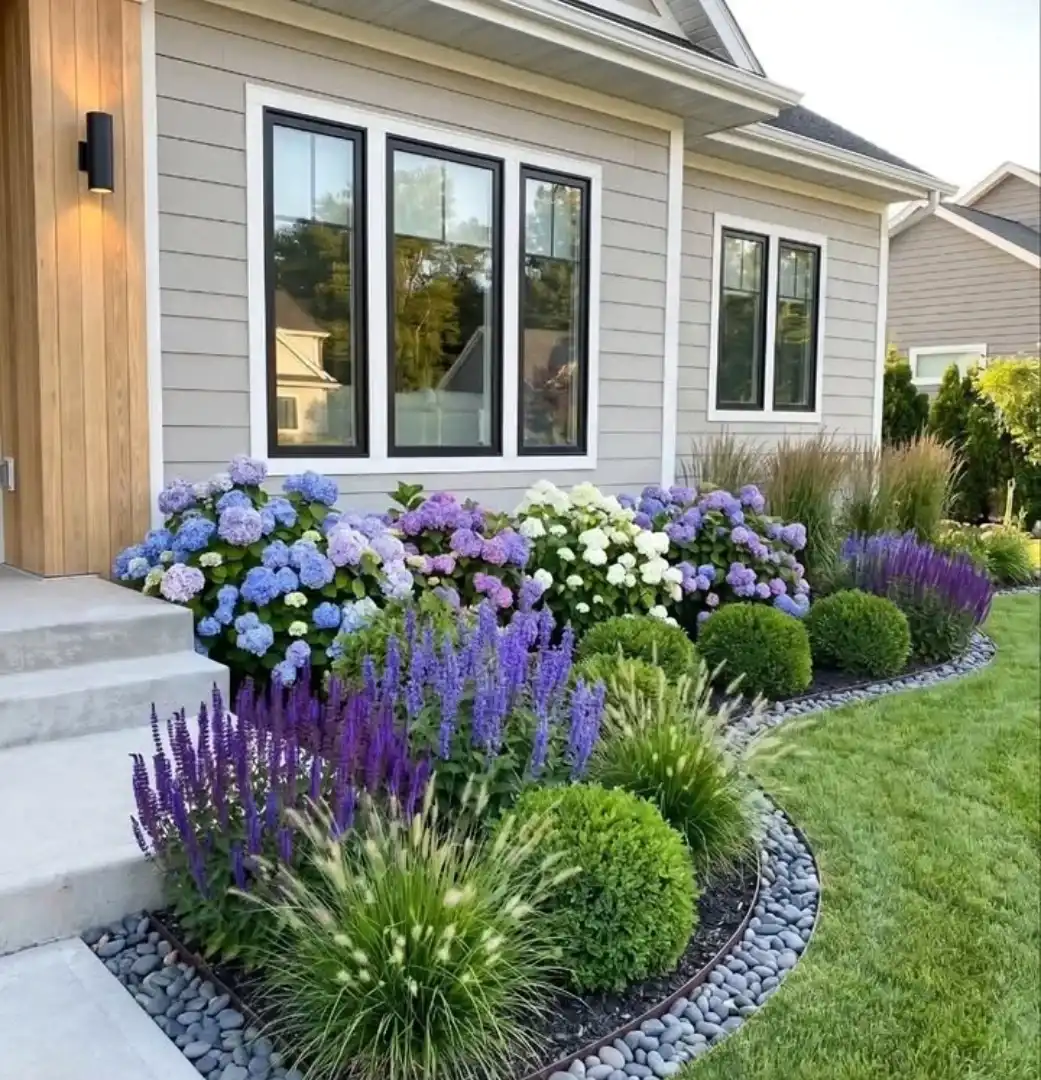
Purple and white flowers sit in rounded groups along this modern house. The plants stay fairly short, which keeps the big windows and clean lines of the building visible.
I like that the planting doesn’t try to compete with the house. For a newer home, low flowers and repeated shapes can look better than a crowded border of tall plants.
6. Repeat Small Flower Clumps
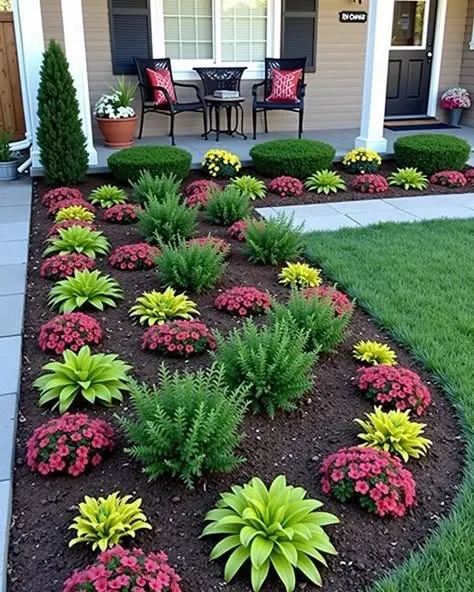
Instead of one big mass of flowers, this bed uses lots of little planting groups. Pink, purple, yellow, and green repeat across the dark mulch.
That makes the garden easy to read from the porch. You can see each little group instead of one giant blur of color.
7. Make The Border The Design
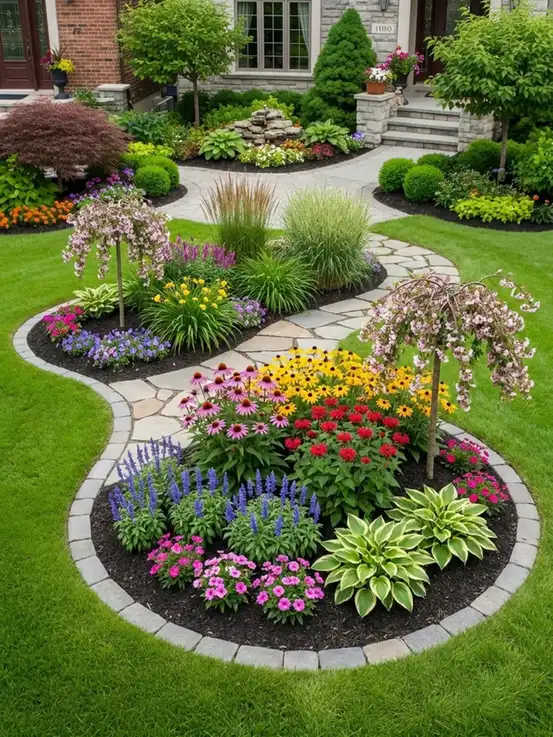
Look at the border before the flowers. The planting bed curls through the lawn in two rounded sections, with a narrow strip of pale stone following the edge.
That shape is what makes the yard interesting. The flowers could change completely and the basic idea would still work.
8. Let Stone Hold The Slope
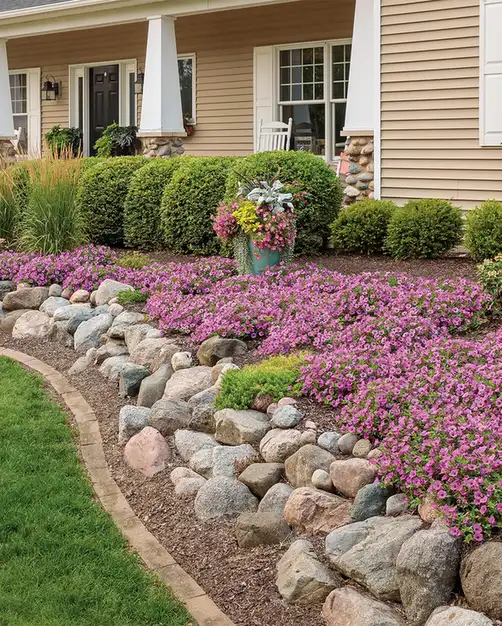
Here, large rounded stones form a low retaining edge beneath a carpet of tiny pink flowers. The flowers don’t need to be tall because the stone border already gives the bed a strong shape.
This is a smart-looking solution for a slightly raised front bed. The rocks aren’t just decoration. They help define the change in level.
9. Follow The Natural Curve
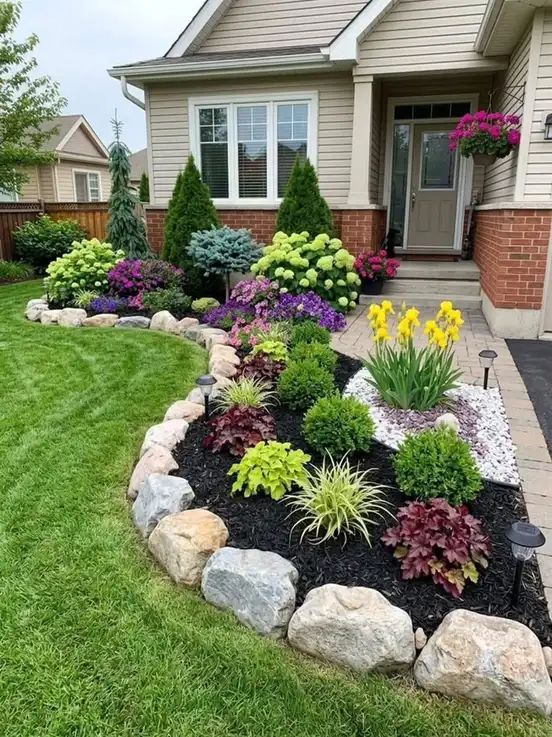
This front bed curves around the lawn instead of stopping at a straight line. White, purple, and yellow flowers are tucked between larger stones, while the grass remains open in the middle.
It’s a good layout for a corner of the yard that would look awkward with a square bed. Follow the shape of the space instead of forcing the planting into a rectangle.
10. Repeat Pink Along The Walk
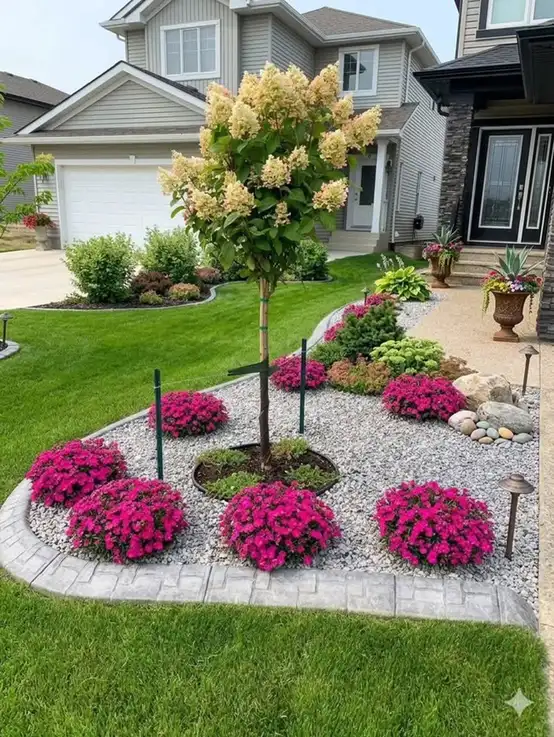
Small pink flower mounds are spaced beside a paved walkway, with a young tree rising from the middle of the bed.
The flowers don’t need to cover the entire area. Leaving dark mulch and pale paving visible between them gives each little mound some breathing room. Simple, but very neat.
11. Pack In The Color
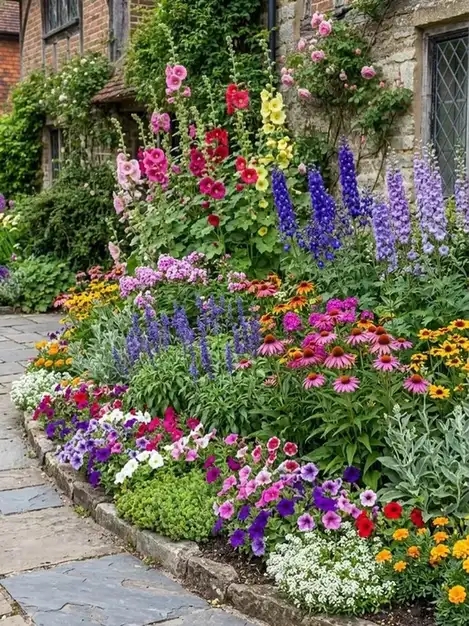
This is the wild one. Purple spikes, pink flowers, orange blooms, white flowers, and green leaves are all packed into a narrow strip beside the walkway.
It works because the bed has somewhere to go. The stone path gives all those colors a clean edge, so the planting can be a little unruly.
12. Try A White-Flower Border
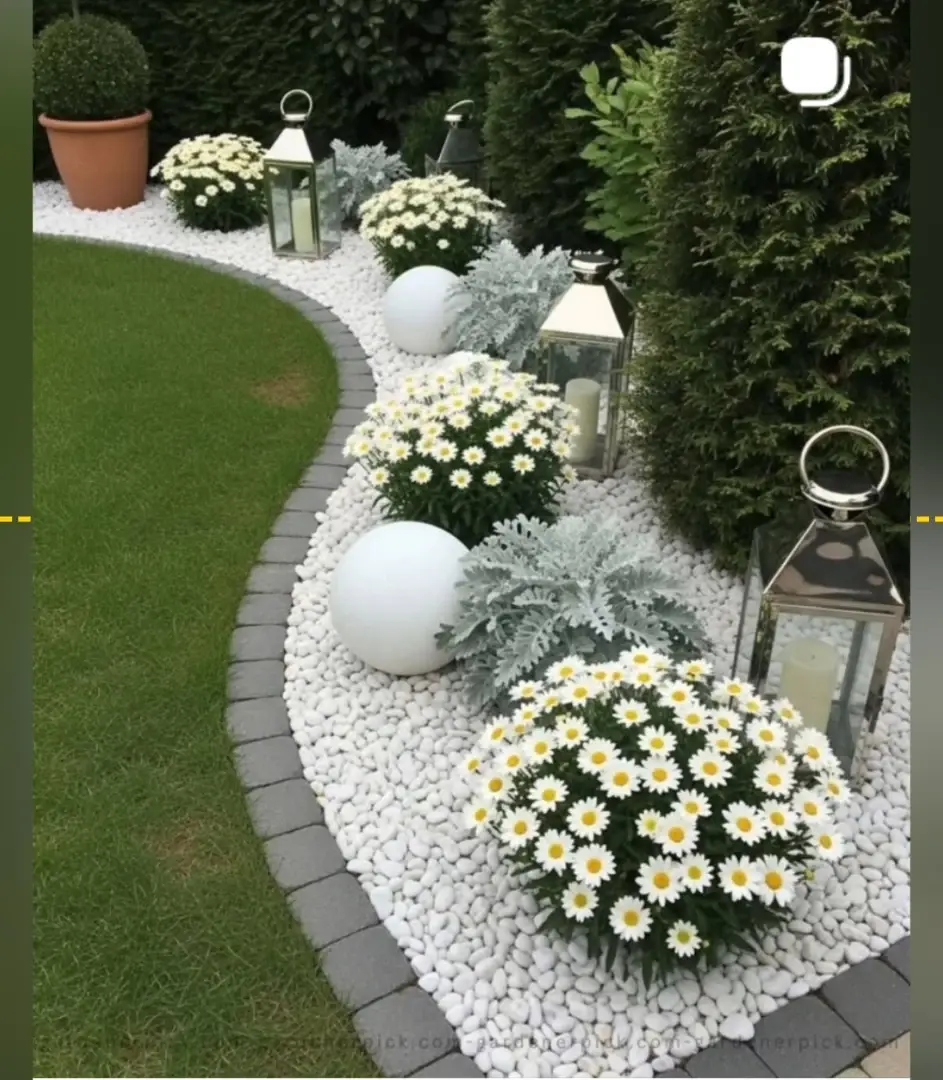
White flowers, silver foliage, and pale gravel give this curved bed a completely different feel. The round white stones repeat the flowers without adding another strong color.
I wouldn’t add much more here. The limited palette is the whole point.
13. Make A Narrow Flower Strip
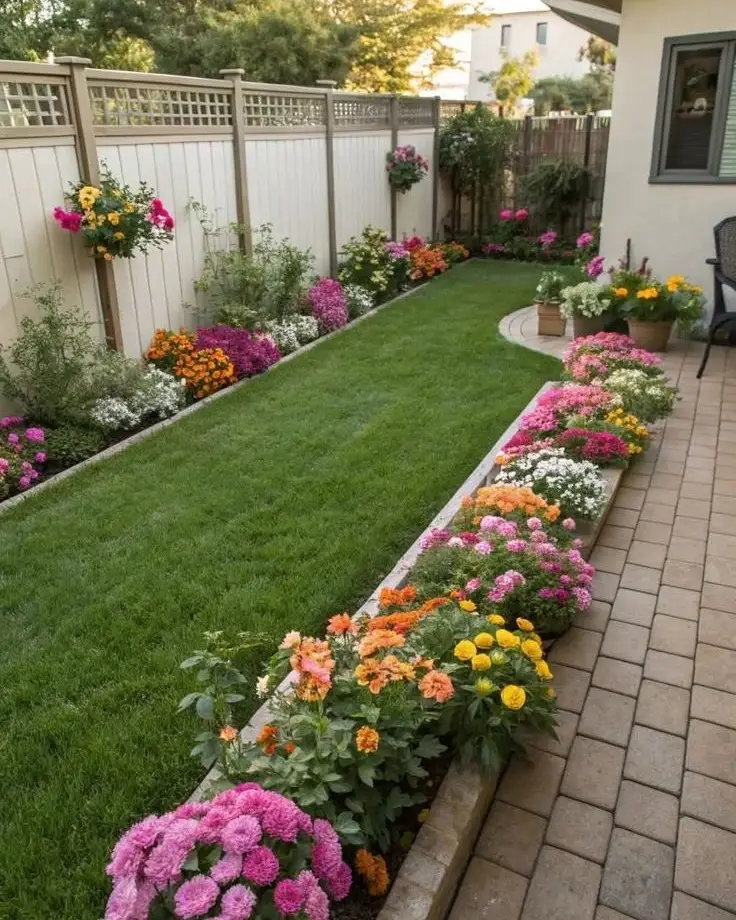
This is a useful idea for a front yard with very little planting space. Flowers run in a thin line beside the fence and paved walkway, while the center stays as lawn.
The important part is the width. You don’t need to carve out half the yard for flowers. A narrow strip can still hold plenty of color.
14. Repeat Lavender In Curves
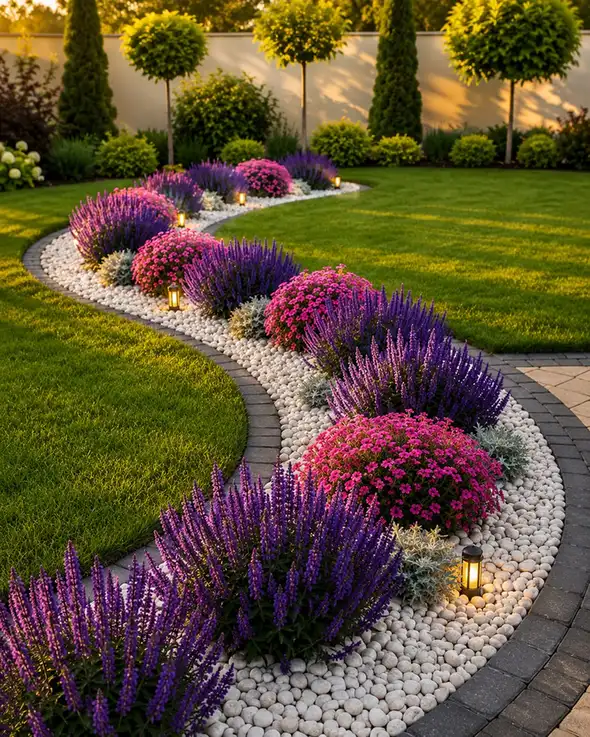
The lavender-colored planting is arranged in broad sweeping curves across the lawn. Pale gravel outlines each section, making the pattern easy to see from the front of the house.
This isn’t really about having a particular flower. It’s about repeating one plant in a bold shape. The same idea could work with another low, mound-forming flower.
15. Turn A Corner Into A Rock Garden
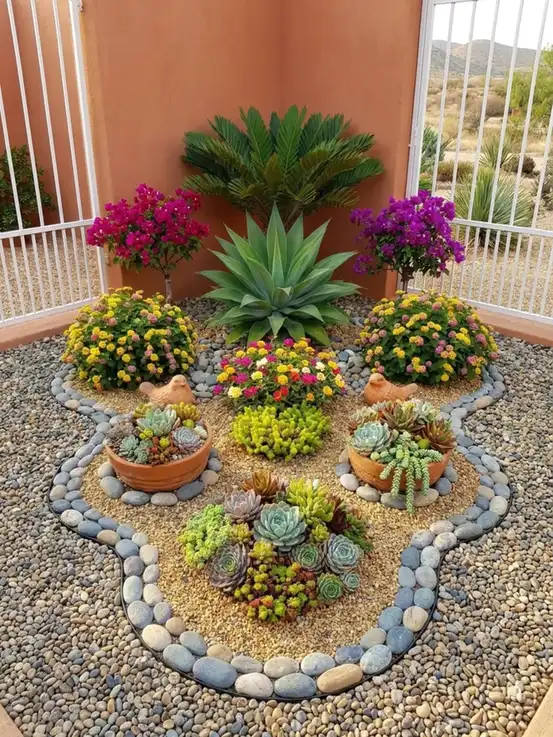
This tiny bed is almost its own little landscape. Succulents sit among small stones and gravel, with pink and yellow flowers tucked around them.
For a dry-looking, low-fuss corner, I’d take the shape more than the exact plant list. A few larger plants surrounded by smaller ones keep the little bed from looking flat.
16. Pack Flowers Around The Porch
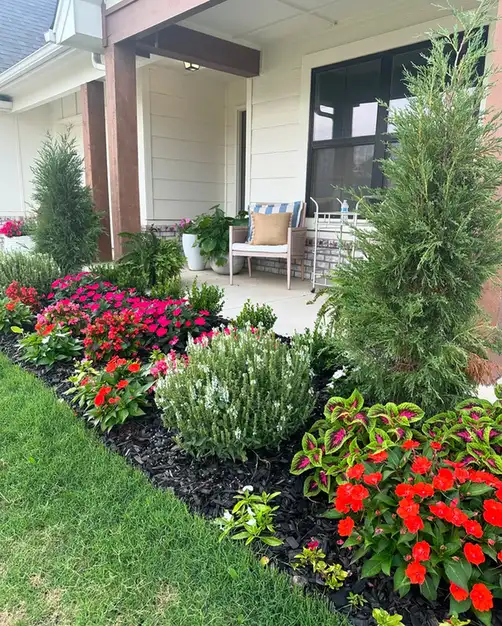
Red flowers spill along the front of this porch, while taller green plants mark the corner near the steps. The bed stays close to the house, leaving most of the lawn open.
That’s a useful layout when the porch already gives you a strong starting point. Follow its edge instead of creating a separate flower island in the middle of the yard.
17. Break Up The Lawn
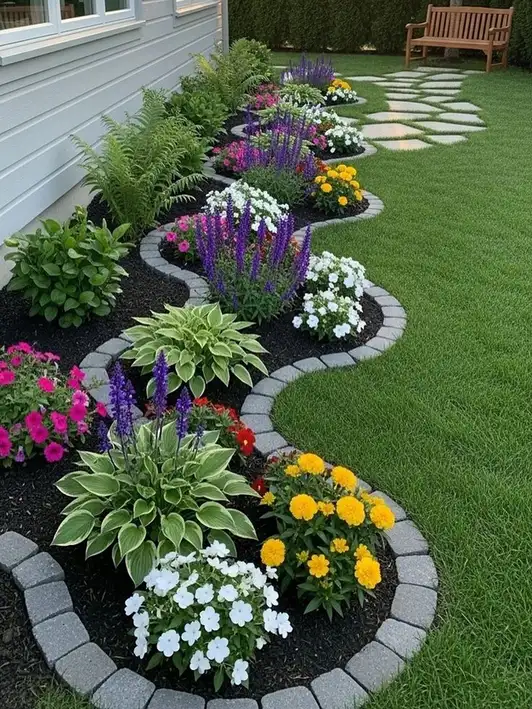
Here, small circular flower beds are scattered through the grass rather than pushed against the house. Each one has its own little mix of purple, yellow, white, and green.
It gives the lawn a very different job. Instead of being one big empty rectangle, it becomes part of the garden pattern.
18. Keep The Gravel Dark
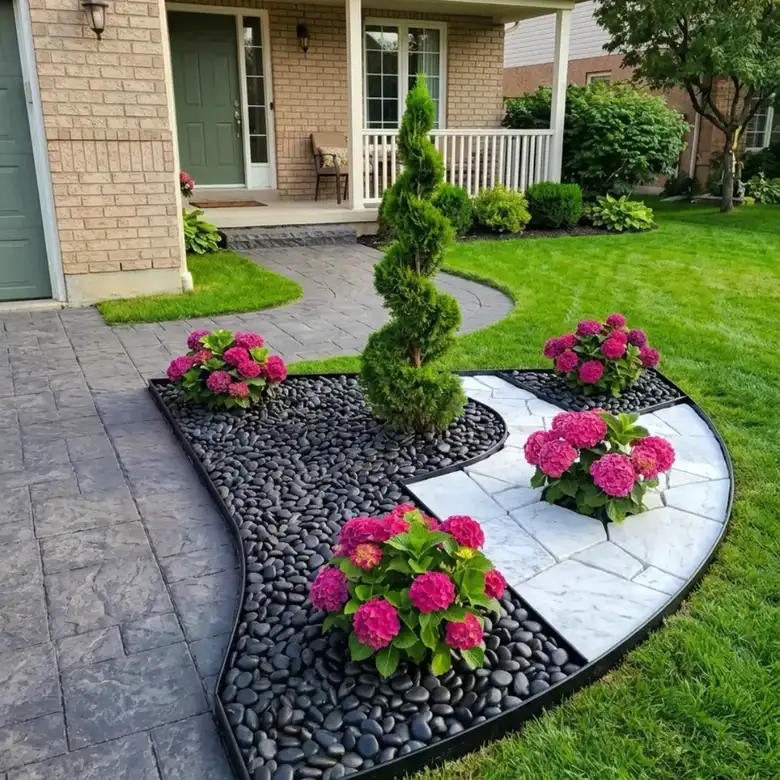
Dark gravel makes the pink flowers jump out in this front bed. The small sculpted evergreens add height, while pale stepping stones cut through the planting.
I’d resist adding more flower colors here. The pink already has plenty of contrast against the dark ground.
19. Fill It With Daisies
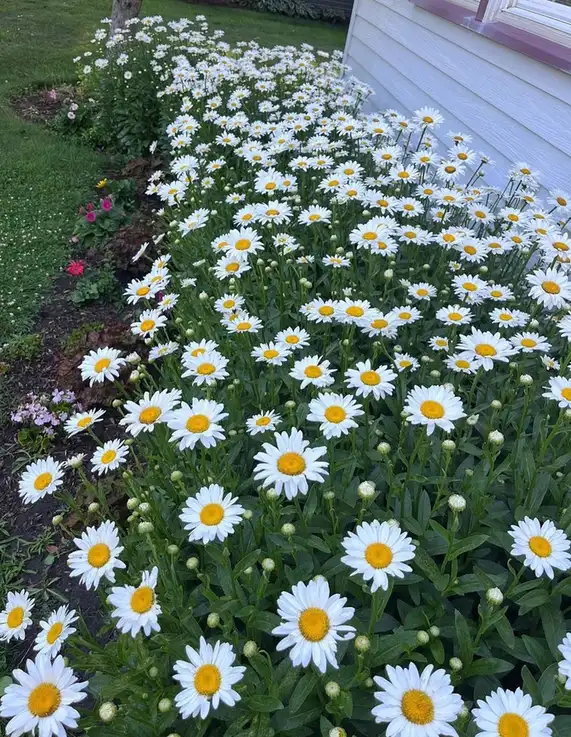
There is almost nothing complicated happening here. White daisies cover the bed beside the house, with just enough green foliage underneath to keep the flowers from floating visually.
Honestly, I’d leave it alone. No extra edging, no second flower color, no decorative objects. A big patch of one simple flower can be lovely precisely because it isn’t trying to do ten things at once.
Final Thoughts
A good front flower bed doesn’t have to be complicated. The strongest ideas here often come down to one clear decision: repeat one flower, follow a curve, keep the plants low, or give a small group plenty of room.
You also don’t have to recreate an entire photo. Maybe it’s the winding edge you like. Maybe it’s the dark gravel or the little cluster of daisies. Take that one detail and let it become the starting point for your own flower bed ideas in front of house. Sometimes one change is enough.