How to Make Your Back Porch Feel Like the Best Place Outside
A good porch doesn’t need to be packed with furniture to feel inviting. Sometimes it’s a long table under string lights. Sometimes it’s two rocking chairs facing the yard. Sometimes it’s just a sofa, a rug, and enough space to actually walk around without knocking your knee into something.
The trick is figuring out what your porch wants to do before you start decorating it.
A long porch might work better with separate dining and lounging areas. A small one may need nothing more than a comfortable seat and a little table. And if the house already has beautiful columns, brick, wood ceilings, or wide steps, you may have more decoration than you realize.
These porch ideas show how to work with the space you have instead of trying to fill every empty corner. There are ideas for dining, relaxing, adding color, handling awkward layouts, and making the whole thing feel finished without turning it into an outdoor furniture showroom.
1. Make Dinner the Main Event
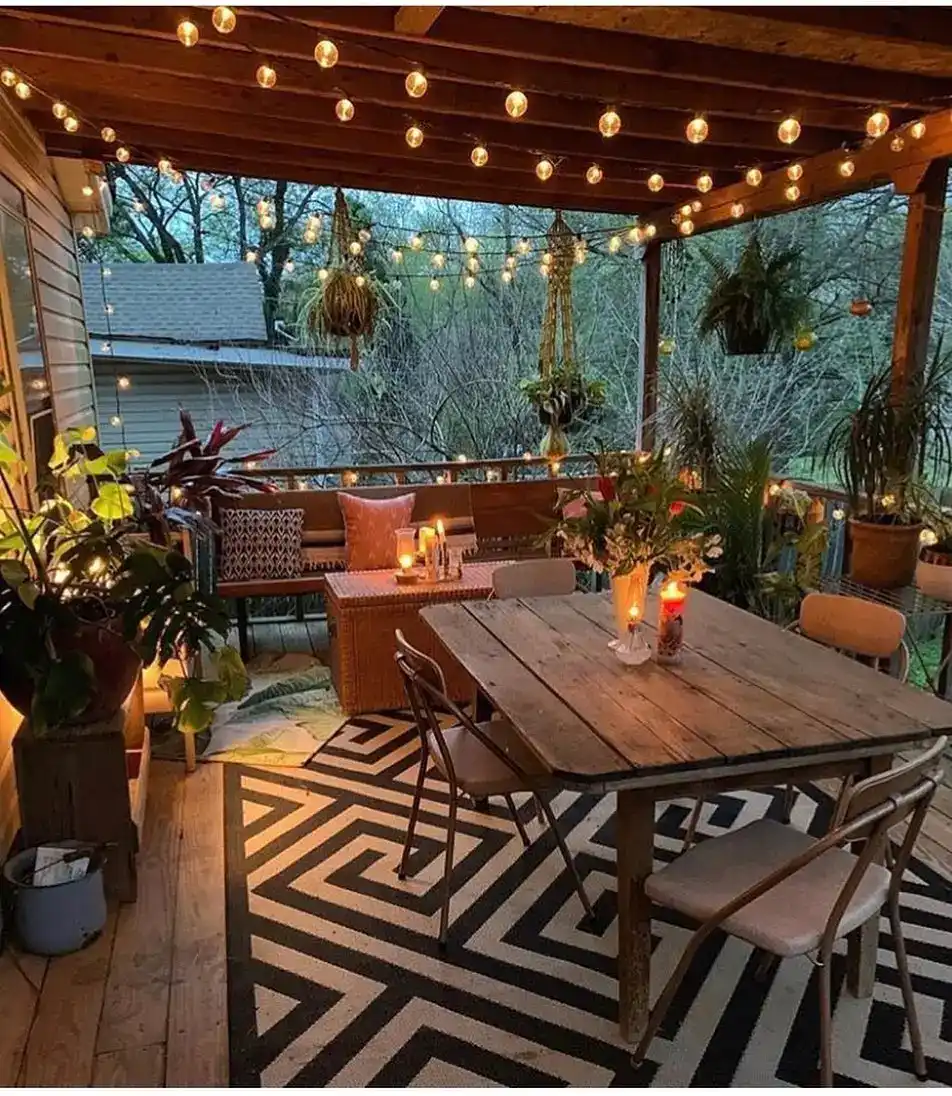
The long wood table is clearly the star here. String lights hang above it, plants fill the edges, and the patterned rug gives the dining area its own little boundary.
There isn’t much need for extra decoration when the table already gives the porch a job.
I especially like the rug because it keeps the dining area from feeling like furniture was simply dropped onto the floor. If you’re setting up an outdoor dining space, start with the table and chairs, then decide what belongs around them. Leave enough room to pull chairs out without bumping into everything else.
2. Keep the Sectional Low and Relaxed
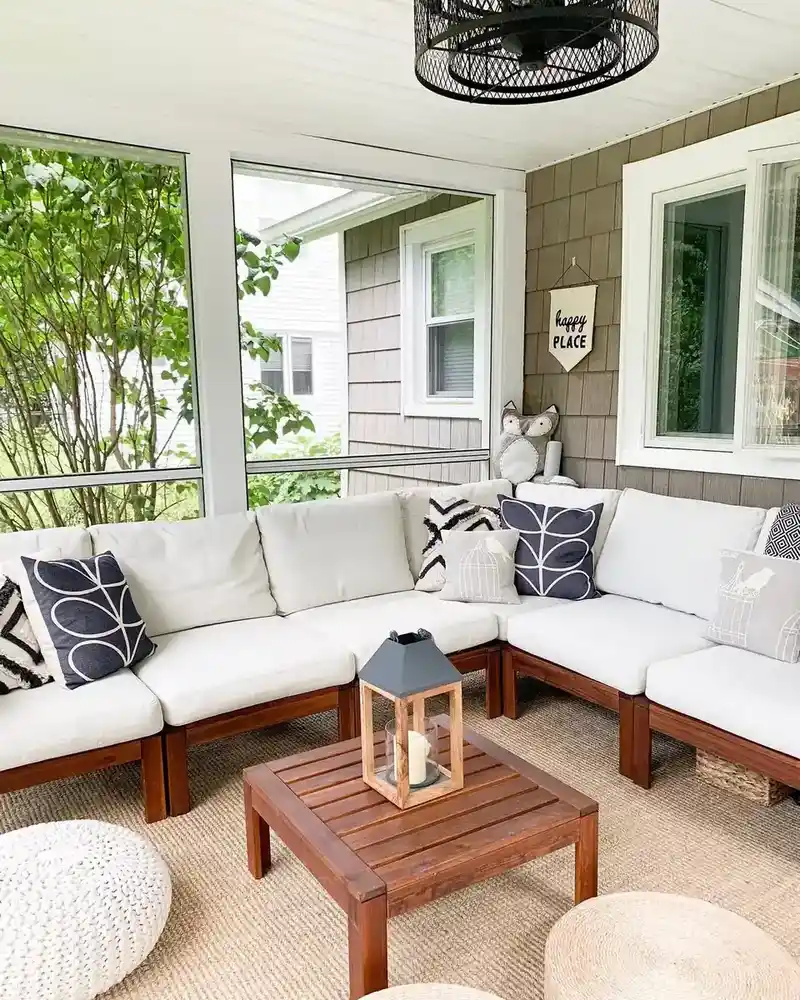
A pale sectional fills this porch without making it feel stuffed. The cushions stay light, while the darker patterned pillows give the seating a little contrast.
The simple wood coffee table works because it doesn’t compete with the sofa. A bigger or heavier table would make the whole arrangement feel more crowded.
For a porch like this, I’d start with the largest seating piece first. Once that’s in place, add a table that leaves people enough room to walk around it. The small details can come later. They don’t need to solve the whole room.
3. Mix the Cushions
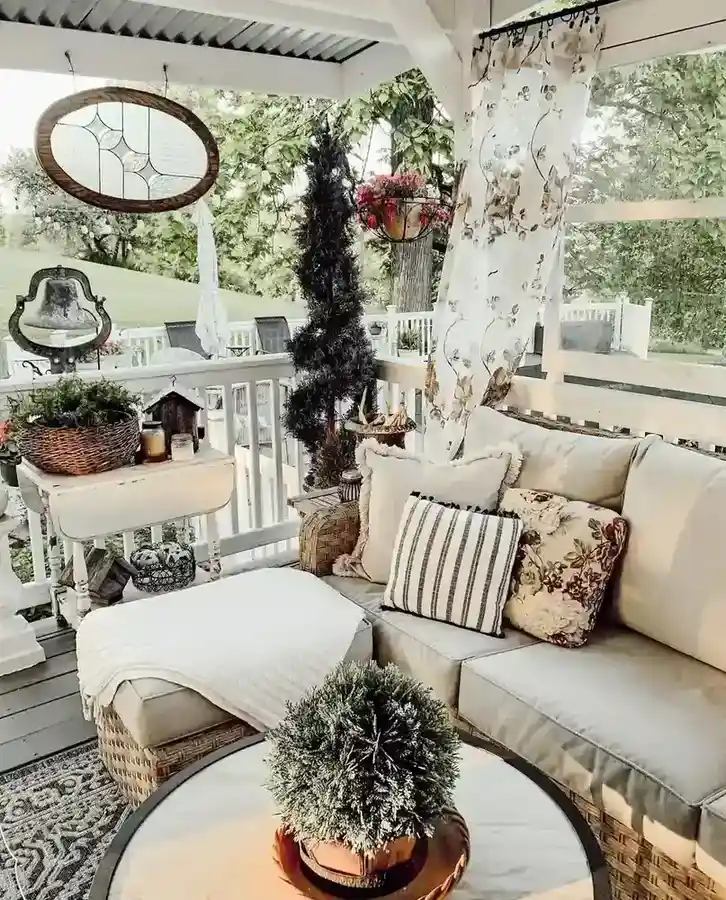
There are several patterns happening on this porch, but the pale furniture gives them somewhere quiet to sit. Plants and the round wall mirror add more detail without making the seating area feel chaotic.
You don’t need every pillow to match. In fact, a few different patterns usually look more relaxed.
Try keeping one thing consistent, such as the background color of the cushions, while changing the patterns. Florals, stripes, checks, or geometric prints can sit together surprisingly well when the larger furniture stays fairly simple.
4. Soften All That Brick and Wood
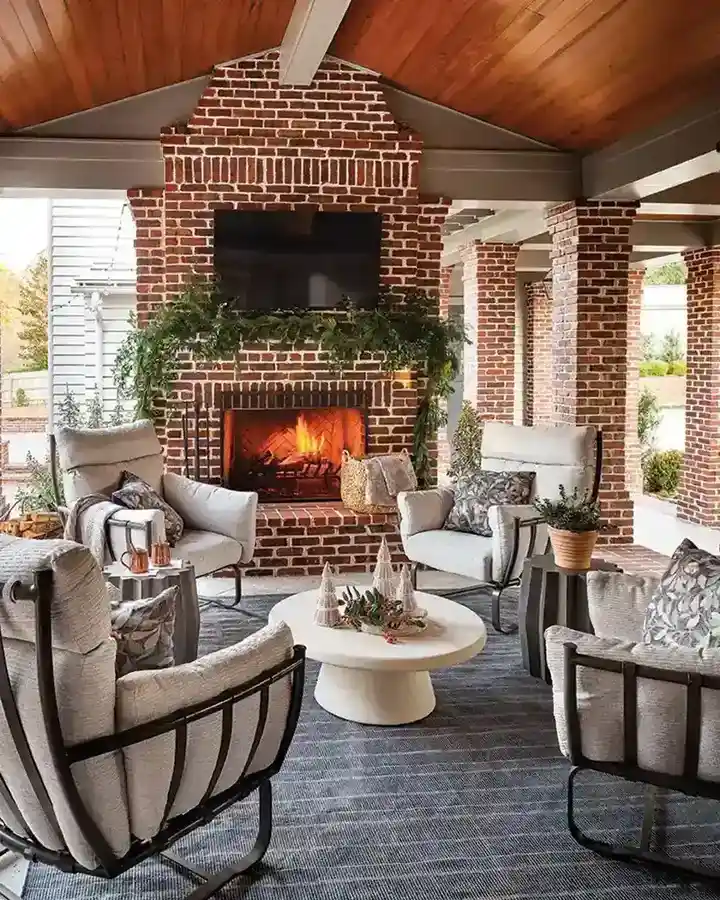
The brick fireplace and wood ceiling give this porch plenty of visual weight. Instead of adding more dark furniture, the room uses pale chairs, light cushions, and a soft rug.
That contrast is worth noticing.
If your porch already has brick, stone, dark beams, or lots of natural wood, lighter furniture can keep the space from feeling heavy. You don’t have to match the wood with more wood. Sometimes the better move is to let those darker architectural details stay in the background while the seating stays light.
5. Let the Lights Do the Decorating
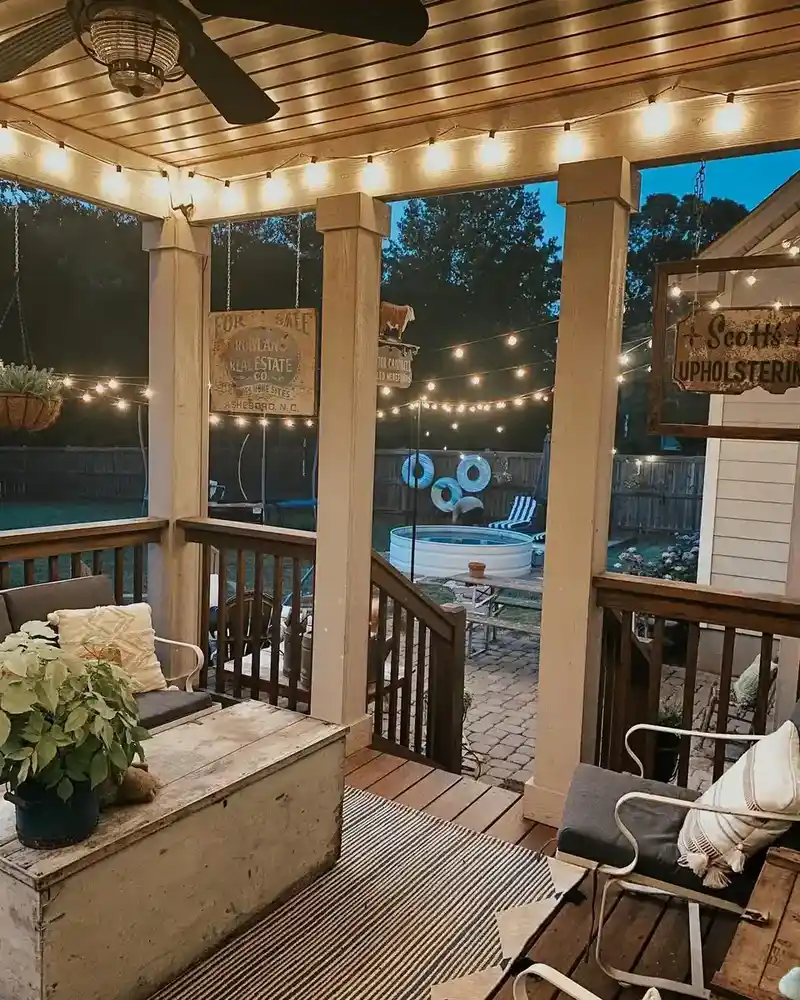
This screened porch doesn’t need a pile of accessories. The string lights running overhead already give the ceiling plenty of character, especially once the evening starts.
That’s where I’d spend the decorating attention.
If your porch feels a little plain but the furniture is already working, look up before buying another table decoration. A line of warm lights can change the feeling of the whole space without taking up floor space.
Keep the furniture fairly straightforward underneath them. Otherwise, you’ll have too many things competing for attention.
6. Decorate the Door, Not Every Corner
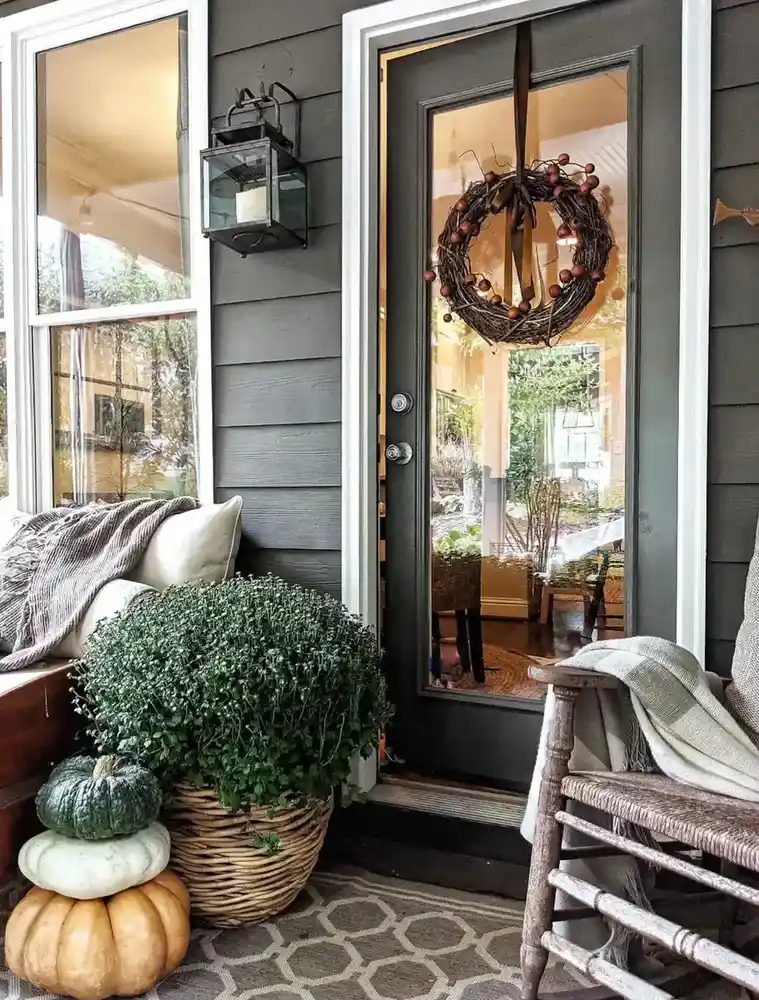
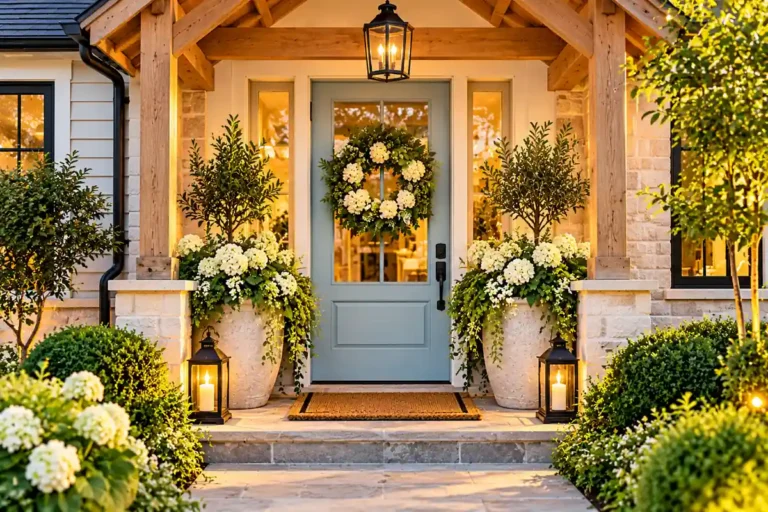
The dark exterior makes the front door stand out, and the wreath, pumpkins, flowers, and greenery are enough to make the entrance feel seasonal.
There’s no need to decorate every square foot.
A front porch can look finished with one strong area: the door. Add a wreath, a couple of plants, or a few seasonal pieces near the entrance and let the rest stay quiet. I wouldn’t add several signs and decorations just because there’s an empty wall nearby. Empty space isn’t always asking for something.
7. Leave a Real Walking Path
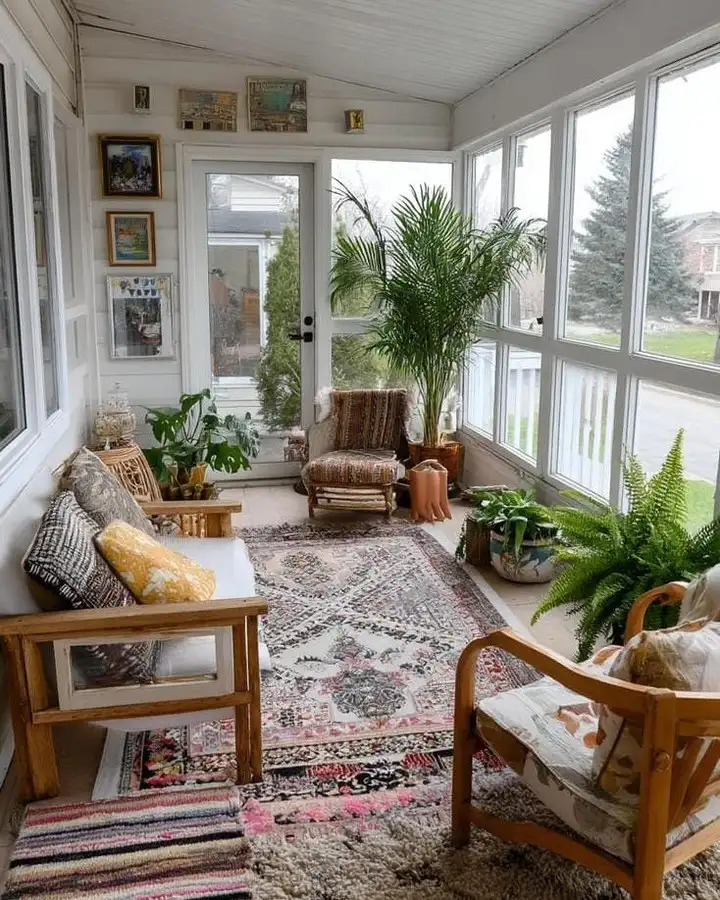
This long enclosed porch has seating arranged along the sides, which leaves a clear path through the middle.
That matters more than it sounds.
A porch can have beautiful furniture and still be annoying if everyone has to squeeze around it. Before adding another chair or table, walk through the space the way you normally would. Think about where you’ll enter, where you’ll sit, and where you might carry food or drinks.
The walkway isn’t leftover space. It needs to work too.
8. Make the Steps Part of the Porch
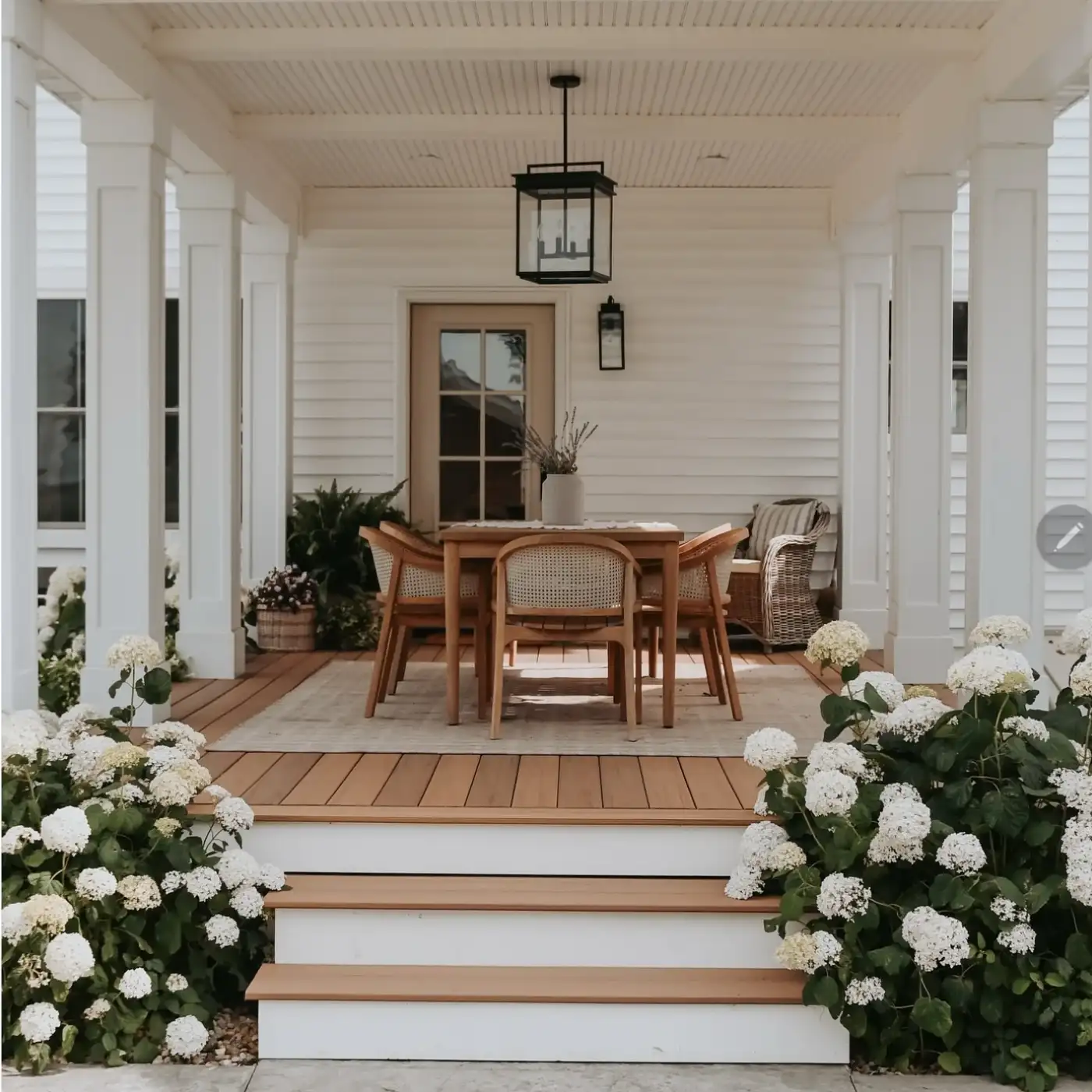
The broad wood steps and white flowers make the entrance feel finished before you even reach the door.
The symmetry is the part worth noticing. Matching or closely related plants on both sides of a staircase can make a plain entrance look more intentional without adding a lot of decoration.
You don’t need identical pots if that’s not your thing. Similar heights and colors can do enough.
And if the steps are already wide and attractive, don’t cover every inch with planters. People still need to use them.
9. Build the Seating Around the TV
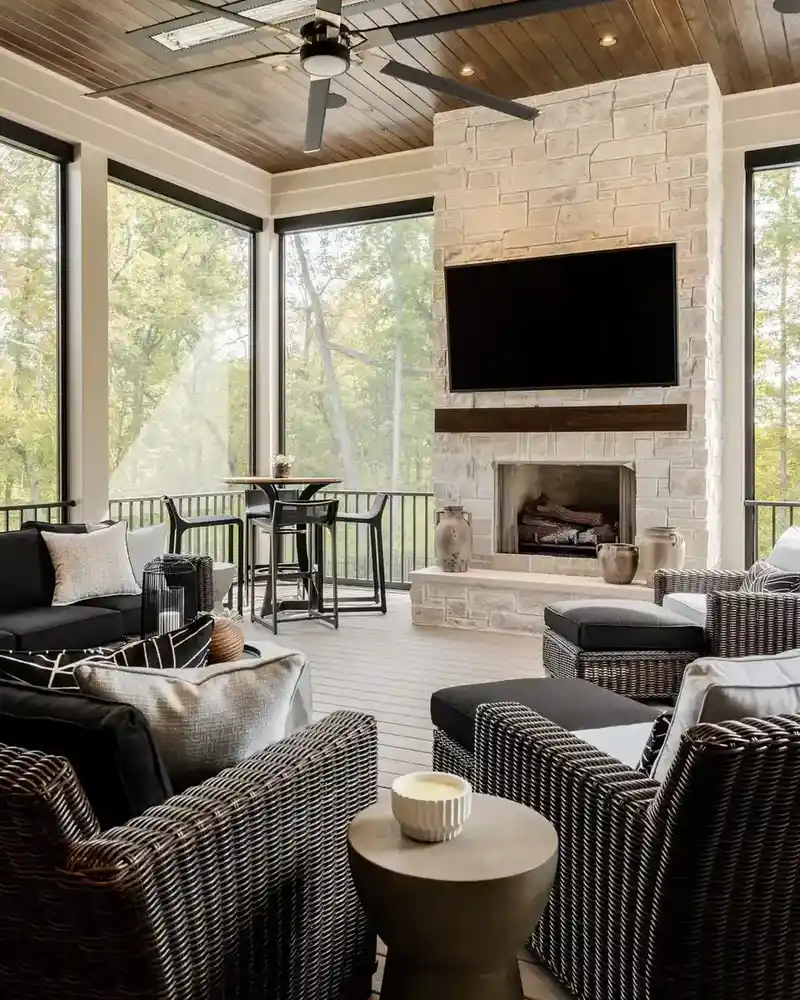
Here, the TV sits above a stone fireplace, and the seating faces it. That sounds obvious, but it saves a lot of frustration when you’re planning a porch with an outdoor screen.
Start with the viewing position.
Decide where people will sit comfortably, then place the coffee table and smaller pieces around that arrangement. Don’t build a beautiful seating group first and try to squeeze a TV into it afterward.
The fireplace also gives the room a strong center, so the furniture doesn’t have to work quite as hard.
10. Give One Corner a Hanging Chair
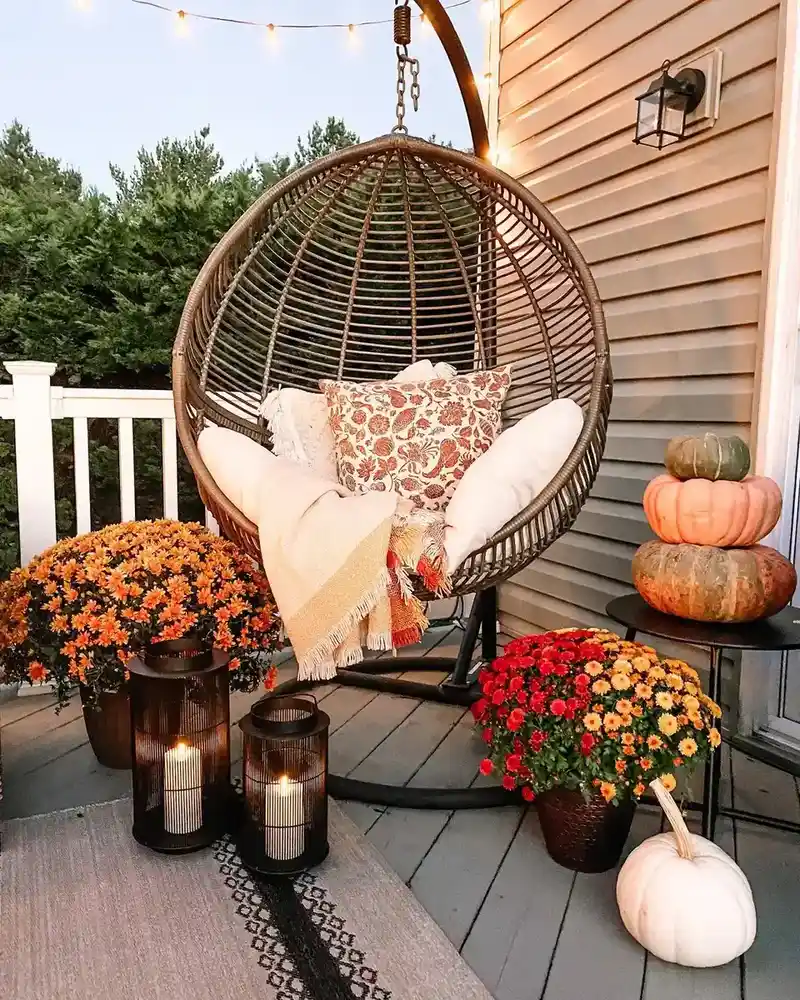
The hanging wicker chair immediately gives this porch a different kind of seating. It isn’t trying to replace the main sofa or dining area. It’s just a spot for one person.
That makes the idea especially nice for an unused corner.
Keep some open space around a hanging chair so it doesn’t feel squeezed between furniture. A cushion, a small side table, and a plant may be enough.
The pumpkins and flowers here add seasonal color, but the chair would still work without them. The seat itself is what gives this corner its purpose.
11. Use the Length of the Porch
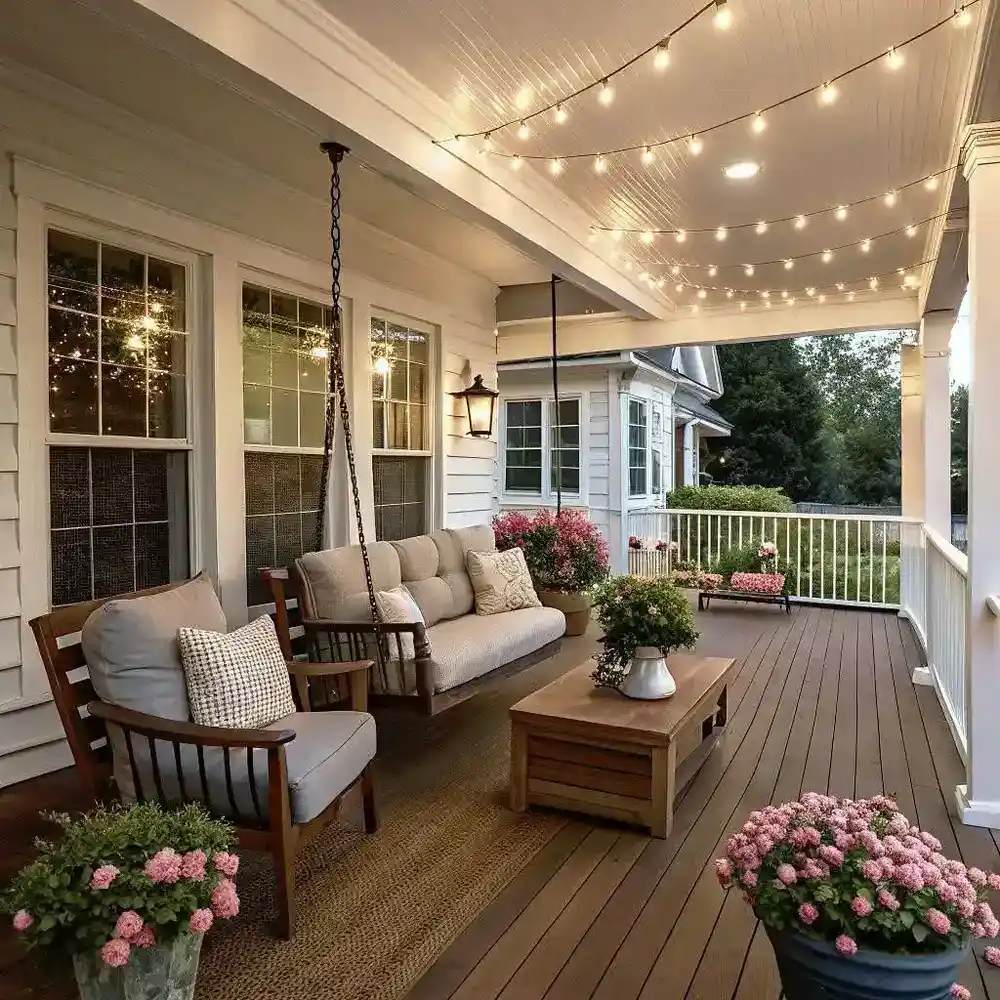
Long porches can be awkward because one huge furniture arrangement doesn’t always fill the space well.
This one stretches the seating along the length of the porch instead. Small tables break up the arrangement without making it feel like one enormous conversation area.
If you have a long porch, think about separate sections. One end might hold two chairs and a small table. Another could have a sofa. A dining table might make more sense closer to the house.
You don’t have to fill every section. Just give the long space a few clear jobs.
12. Put Flowers on the Railing
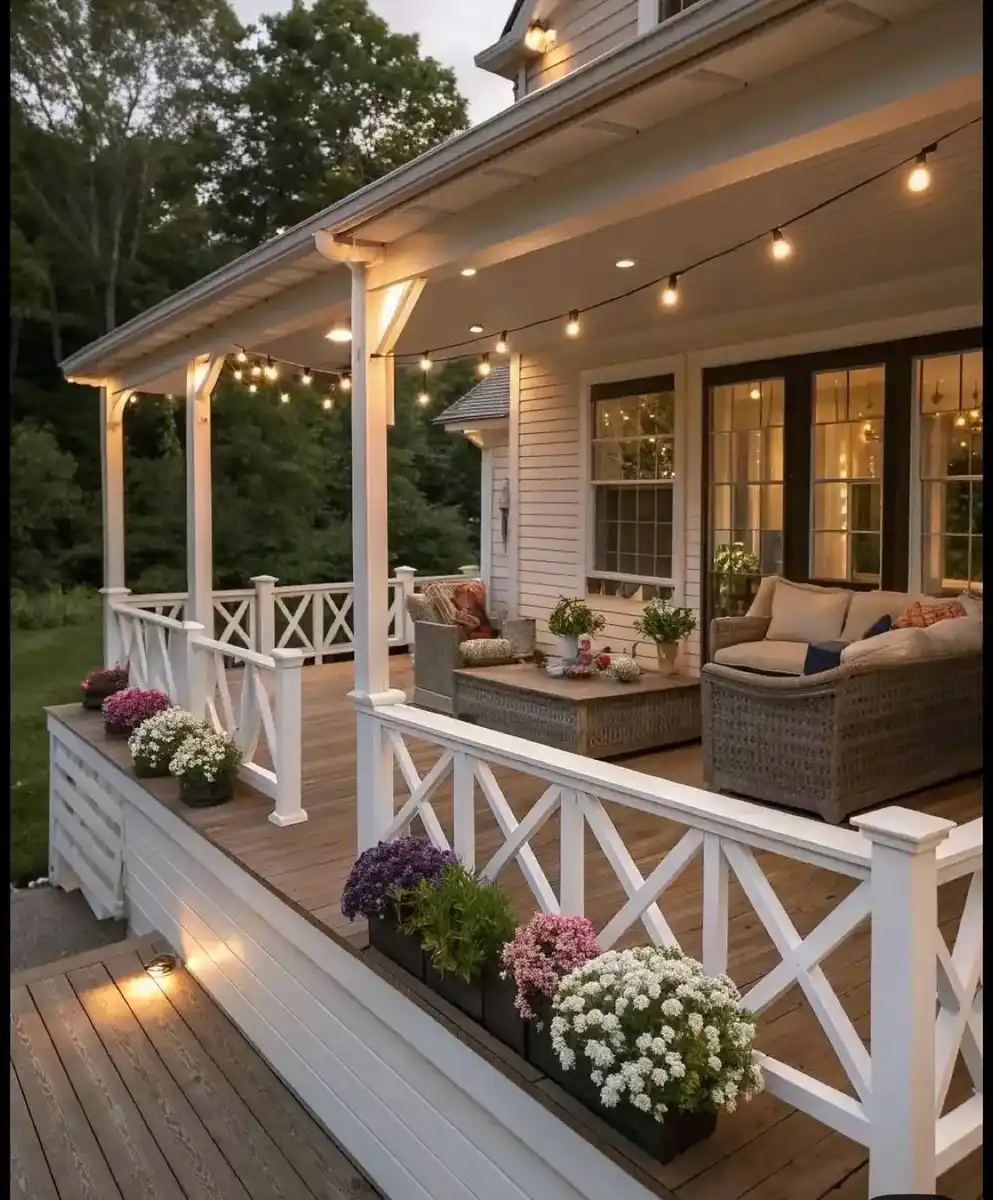
The flowers along the railing bring color to this porch without taking much room from the seating area.
That’s especially handy when the floor is already busy.
Instead of putting every plant beside a chair or table, look at the edges of the porch. Railings, steps, window boxes, and narrow ledges can sometimes hold flowers where floor planters would get in the way.
Keep the furniture where people actually need it. Let the railing handle some of the greenery.
It also gives a long porch a repeated line of color without adding another collection of furniture or accessories.
13. Don’t Forget the Ceiling
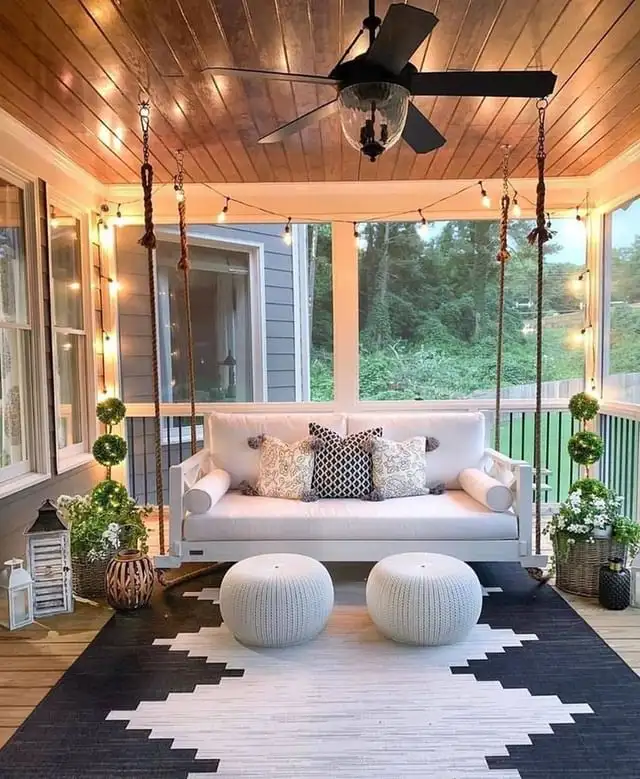
The wood ceiling and dark ceiling fan are easy to notice in this screened porch. The furniture underneath it is relatively simple, which lets that upper part of the room stay visible.
Ceilings are easy to ignore when decorating a porch. They’re also one of the biggest surfaces you already have.
If yours has wood boards, beams, interesting lighting, or a nice fan, you may not need much happening below it. Keep the furniture comfortable and let the ceiling be part of the design.
Sometimes the ceiling is doing more decorating than the coffee table ever could.
14. Keep Blue and White Simple
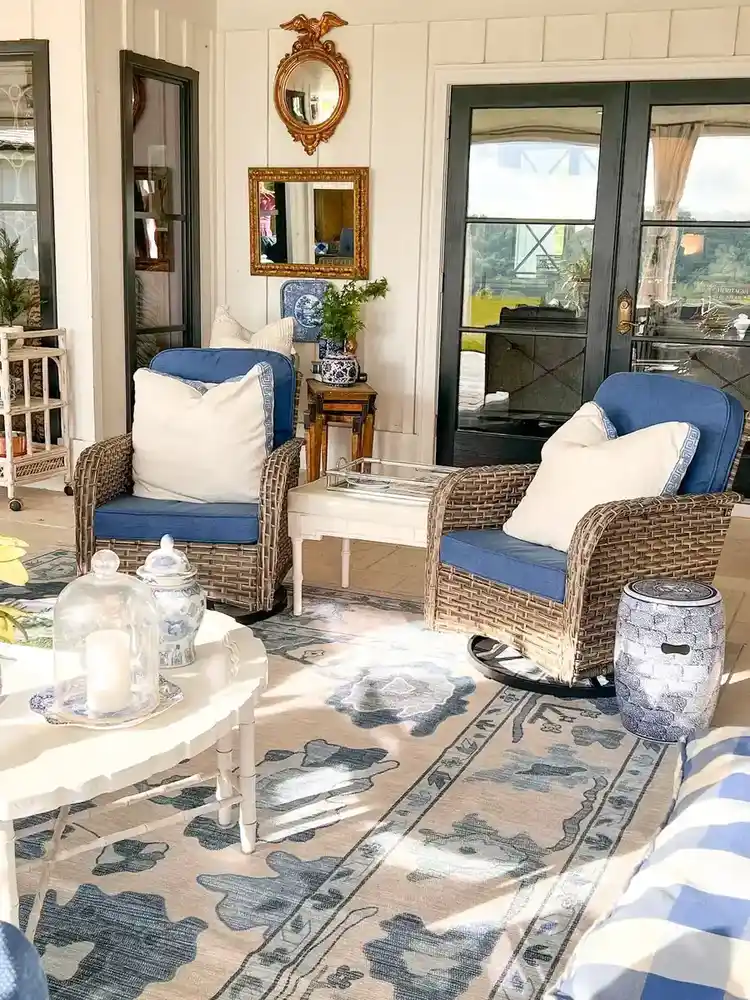
The blue cushions stand out against the pale furniture, while the patterned rug repeats some of the color without turning the whole porch blue.
That’s enough.
If you like a strong accent color, repeat it in two or three places and then stop. Here, blue shows up in the cushions and rug. The rest stays fairly quiet.
You don’t need blue planters, blue lanterns, blue curtains, and blue everything else. A little repetition helps the color feel intentional without making the porch look like it came as a matching set.
15. Make Evening Dining Feel Cozy
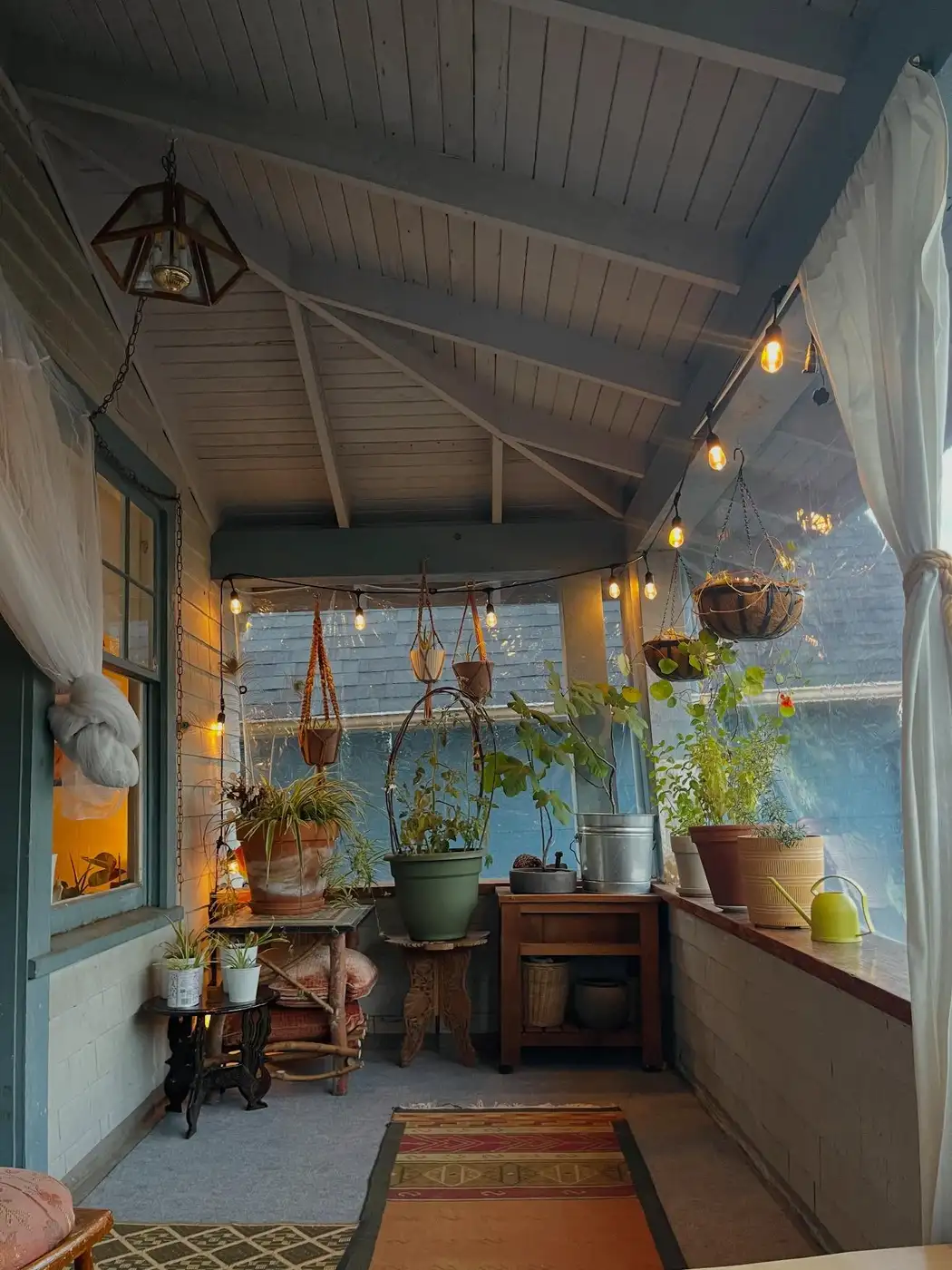
The long dining table looks especially inviting once the lights come on. The plants around the edges soften the darker background, while the warm lighting keeps the table from feeling too formal.
For an evening dining porch, lighting matters almost as much as the furniture.
You can use string lights, lanterns, wall lights, or a hanging fixture depending on what the porch allows. The goal isn’t to make every corner equally bright. A little glow around the dining area can be enough.
And keep the tabletop usable. Nobody wants to move six decorations just to put down a plate.
16. Let the House Do Some of the Work
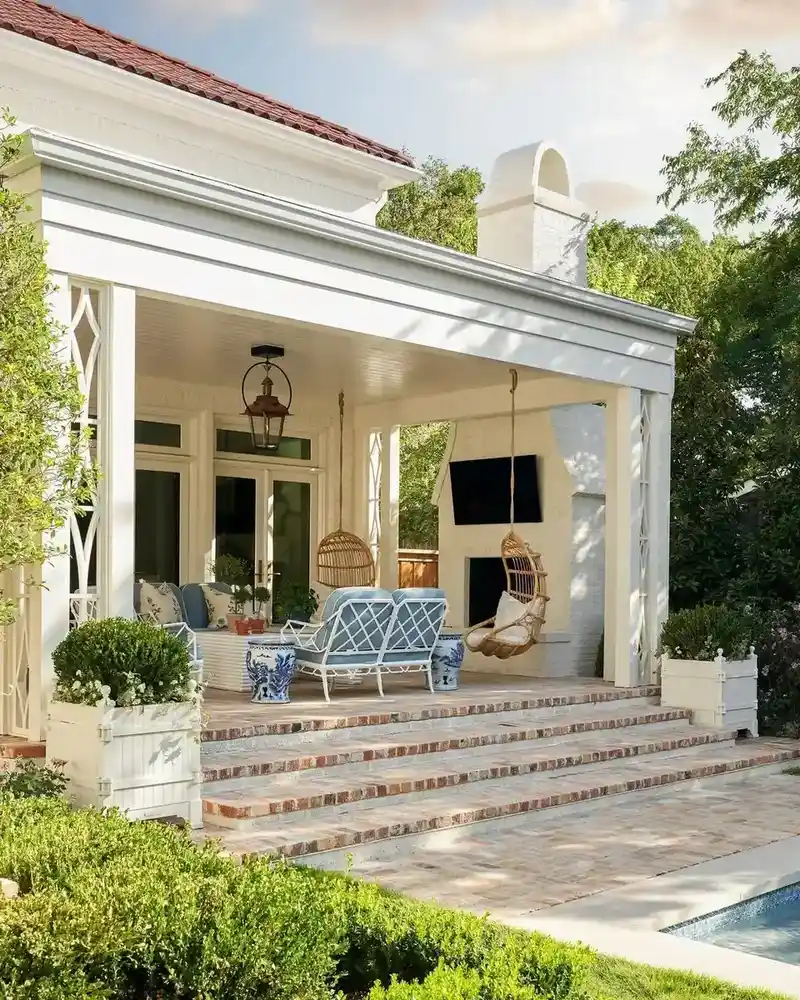
The white columns, broad steps, pale exterior, and simple planting already give this porch plenty to look at.
Adding more would probably make it worse.
When a house has strong architectural details, decoration doesn’t have to compete with them. A few plants can frame the entrance, while the columns and steps handle the rest.
I’d keep this kind of porch fairly open. Let the steps stay clear, use plants around the edges, and keep the furniture simple.
Not every empty spot needs a pot sitting in it.
17. Mix Wicker With Plenty of Plants
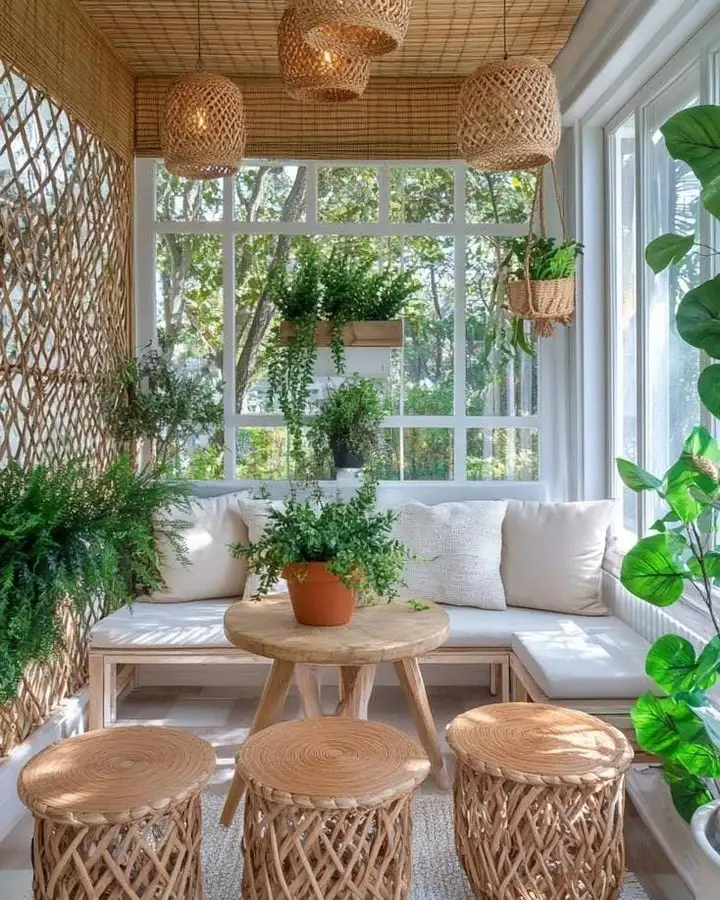
Wicker seating and greenery work naturally together here, but the porch doesn’t rely on plants alone. The pale upholstery and patterned ceiling keep the room from becoming one big collection of leaves and baskets.
If you like this look, vary the height of the plants. Put some on the floor, some on a small stand, and keep a few lower ones near the seating.
You also don’t need every piece of furniture to be wicker. One or two woven pieces can give the porch that relaxed texture while the rest of the furniture stays lighter and simpler.
18. Keep a Small Outdoor Sofa Simple
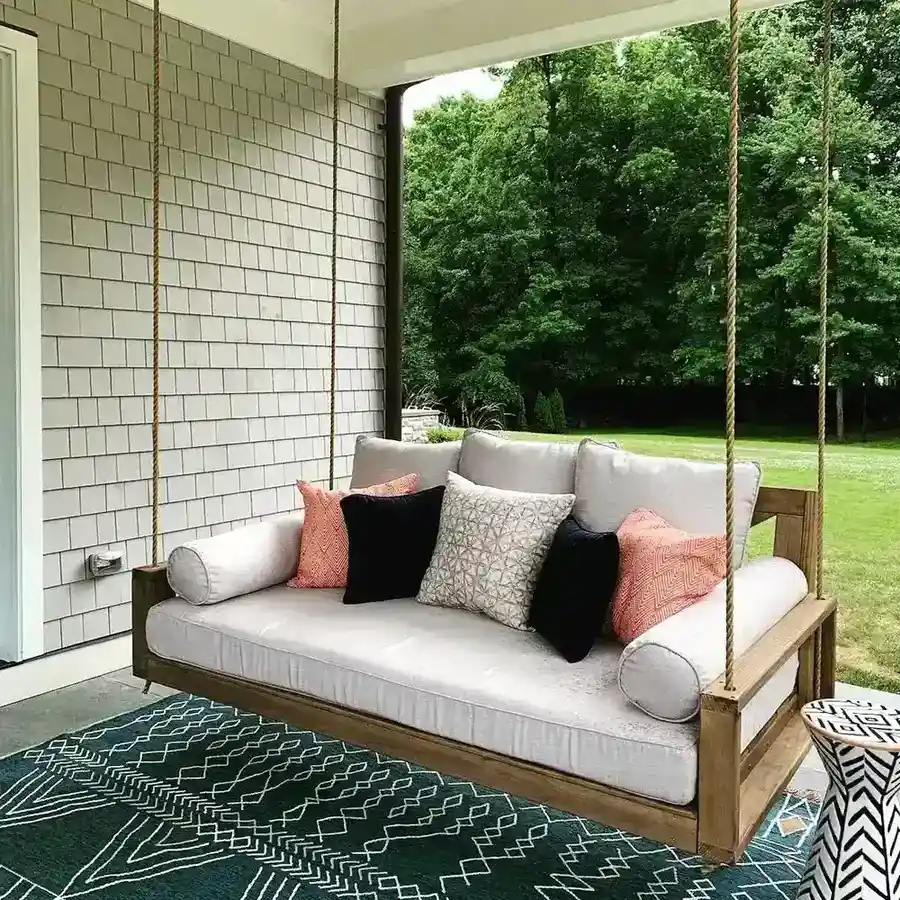
This little seating area proves you don’t need a huge porch to make room for a sofa.
The pale outdoor couch sits against the house, with a patterned rug underneath and a few cushions adding color. There’s still plenty of lawn visible around it, which keeps the setup from feeling cramped.
For a smaller porch or patio, start with the main seat. Add one table that fits beside it and leave enough space to move around.
One sofa, a coffee table, a rug, and a few cushions can be enough. Really.
19. Give a Large Porch More Than One Job
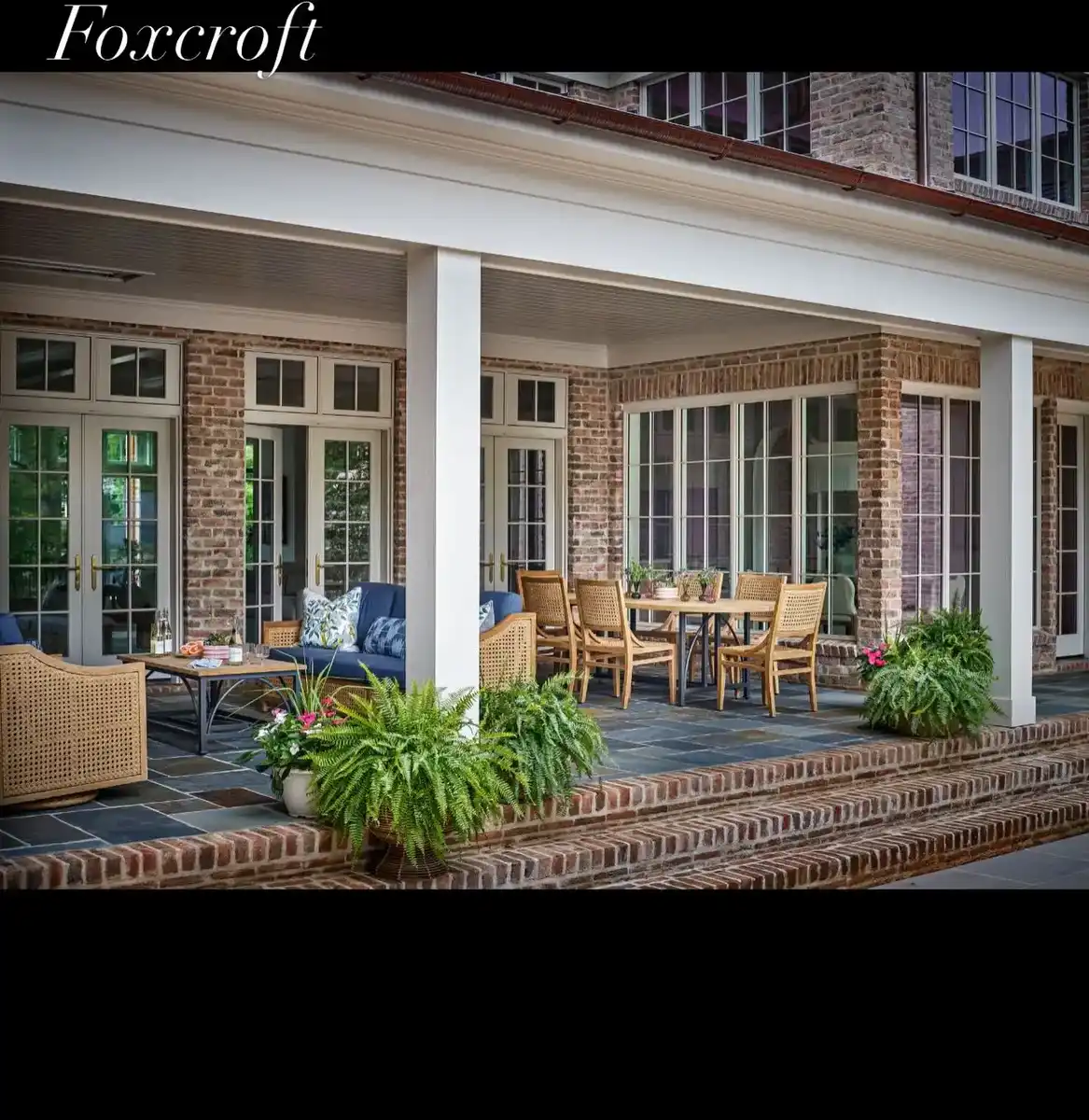
This porch has enough room for dining and lounging, so trying to squeeze everything into one furniture group would waste a lot of the space.
Large porches usually work better when the areas have different purposes.
You might place a dining table closer to the house, then use sofas or lounge chairs farther out for sitting. A smaller pair of chairs can fill an awkward corner without turning it into another full seating area.
Keep some relationship between the zones. The furniture doesn’t have to match perfectly, but using a few repeated materials or colors keeps the porch from looking like several unrelated rooms.
20. Let the Fireplace Decide the Layout
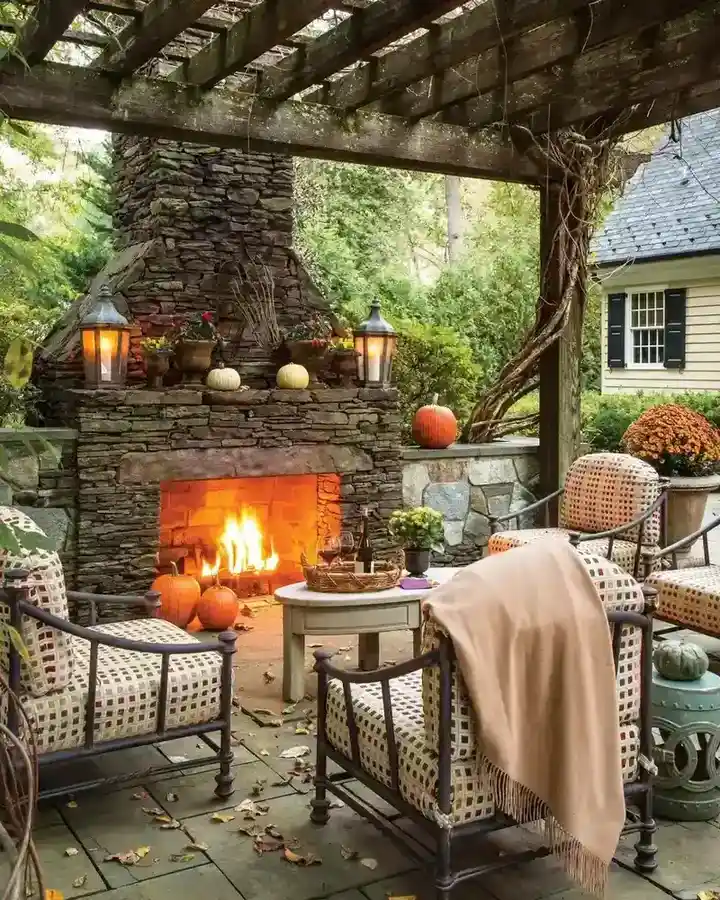
The stone fireplace is the strongest feature on this porch, so the chairs naturally face toward it. The fire gives the seating area a reason to gather in one place.
If your porch has a fireplace, large view, TV, or another feature that people will naturally look toward, start there.
Don’t place the furniture randomly and then try to make the fireplace fit afterward.
Think about the view from the chair. If someone is sitting down for an hour, what are they looking at? That answer can solve more of the furniture layout than another decorative pillow ever will.
21. Make an Outdoor Dining Table Feel Lived In
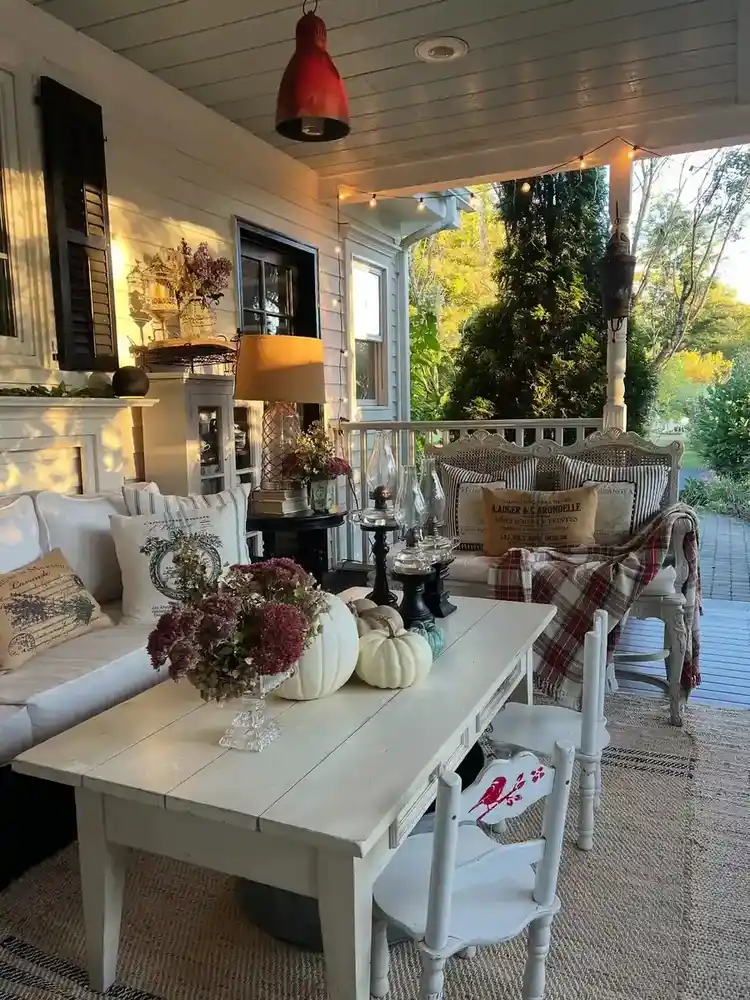
There’s a lot happening around this dining area—plants, lighting, chairs, and smaller decorative details—but the table still feels like the center of it.
That’s because the decoration supports the dining setup instead of hiding it.
Start with the table and chairs. Add lighting above, then bring in flowers, greenery, or a few seasonal details.
You don’t need something sitting on every surface.
Leave enough open table space for plates, glasses, food, and the inevitable bowl that somehow becomes everyone’s problem.
22. Use a Rug to Hold the Seating Together
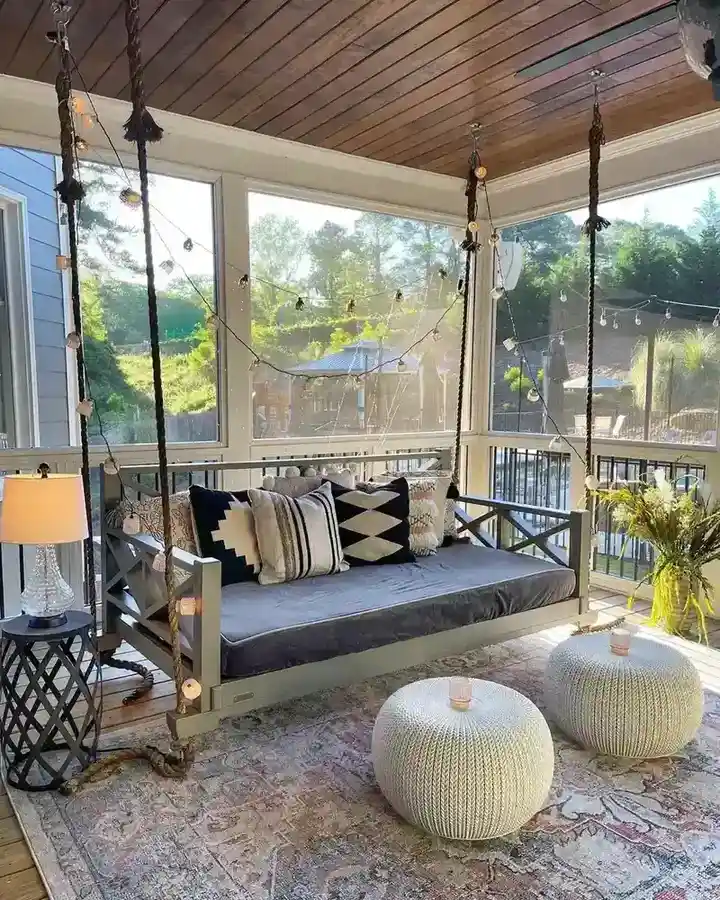
The patterned rug underneath this seating group gives the sofa and chairs a shared area without covering the entire porch floor.
That’s a good option when you want the furniture to feel connected but don’t want to carpet the whole space.
A rug can sit underneath the front legs of larger seating pieces or simply cover the center of the conversation area. Just make sure it doesn’t create a tripping point near the main walkway.
The rest of the porch can stay open. You only need enough rug to make the seating feel like one area.
23. Let Bright Cushions Carry the Color
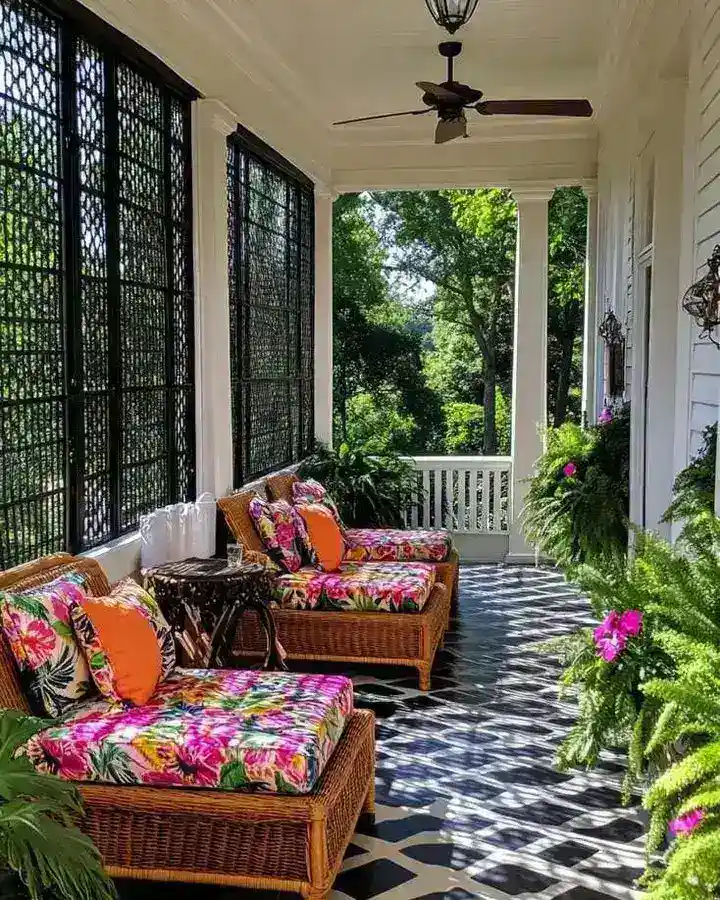
Orange and pink cushions stand out immediately against the darker floor and quieter furniture. The greenery around them gives the bright colors somewhere to sit without making the whole porch colorful.
If you’re nervous about strong colors, cushions are a less permanent place to use them.
Keep the sofa or chairs fairly neutral, then let the cushions handle the louder shades. When you get tired of orange or pink, changing a few covers is much less annoying than replacing the furniture.
The rest of the porch can stay quiet. Let the cushions have their moment.
24. Keep a Screened Porch Airy
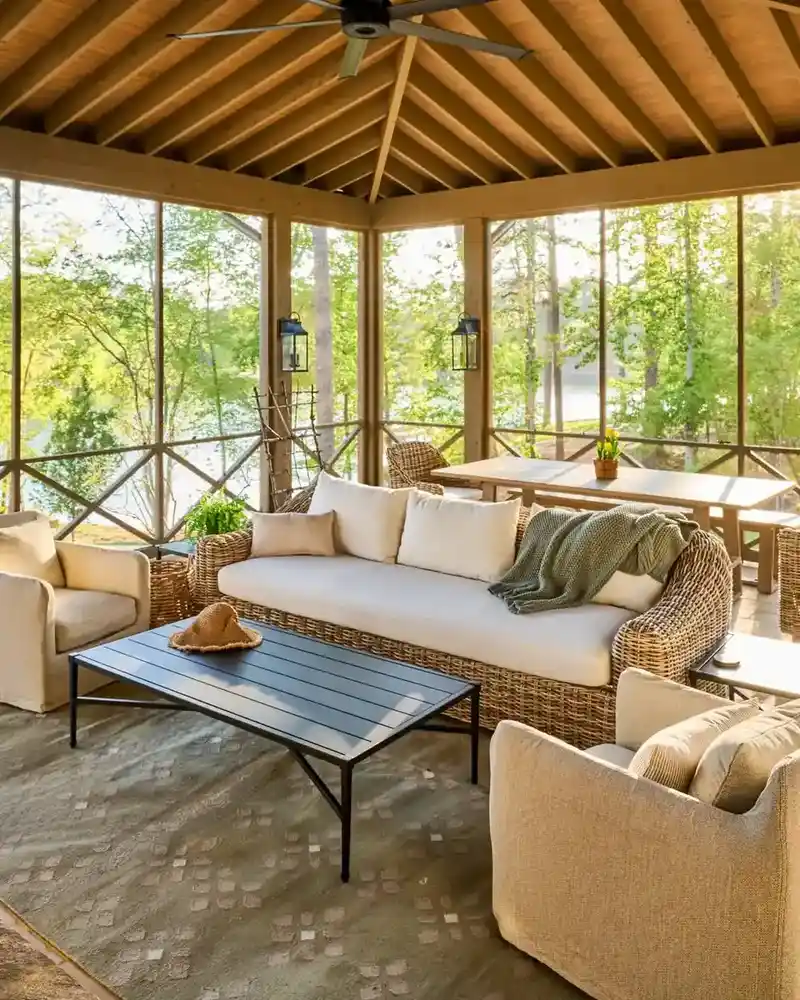
The pale furniture and open views make this screened porch feel spacious even though there are several seating pieces inside.
The windows and screens are doing part of the decorating here, so covering them with oversized furniture would take away from the room.
If your screened porch looks out onto a garden, trees, or a nice yard, keep the furniture low enough that you can still see through the openings.
And don’t feel pressured to fill every corner. A little empty floor can make the seating feel more comfortable, not unfinished.
25. Give Every Seat Somewhere to Set a Drink
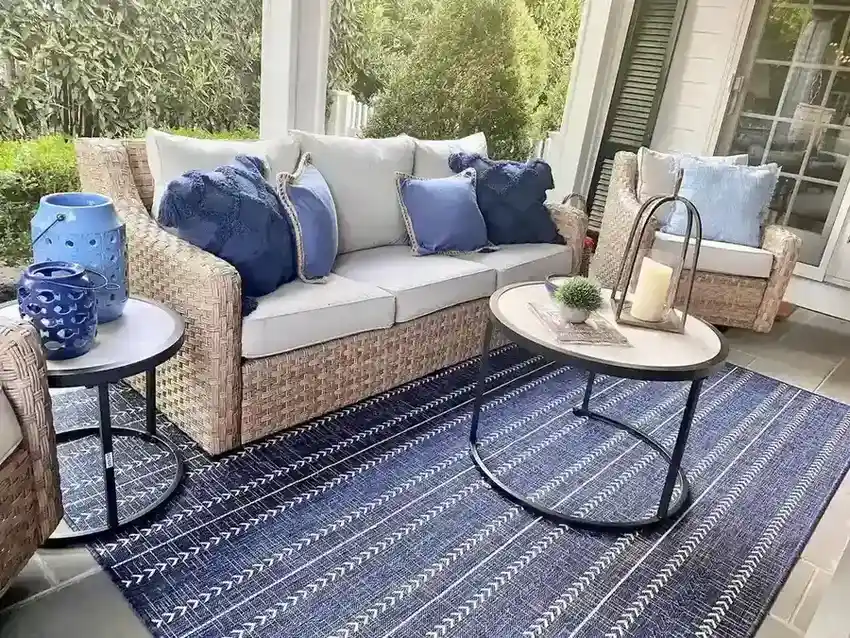
The blue cushions and patterned rug get most of the attention here, but the smaller round tables are doing an important job too.
They’re tucked beside the seating instead of taking over the middle of the area. That keeps the floor more open while still giving people somewhere to put a drink, book, phone, or plate.
This can work especially well when a large coffee table would make the seating feel crowded. A couple of small side tables can be moved around when needed, too.
Sometimes the least noticeable furniture is the stuff you end up using the most.
26. Repeat the Rocking Chairs
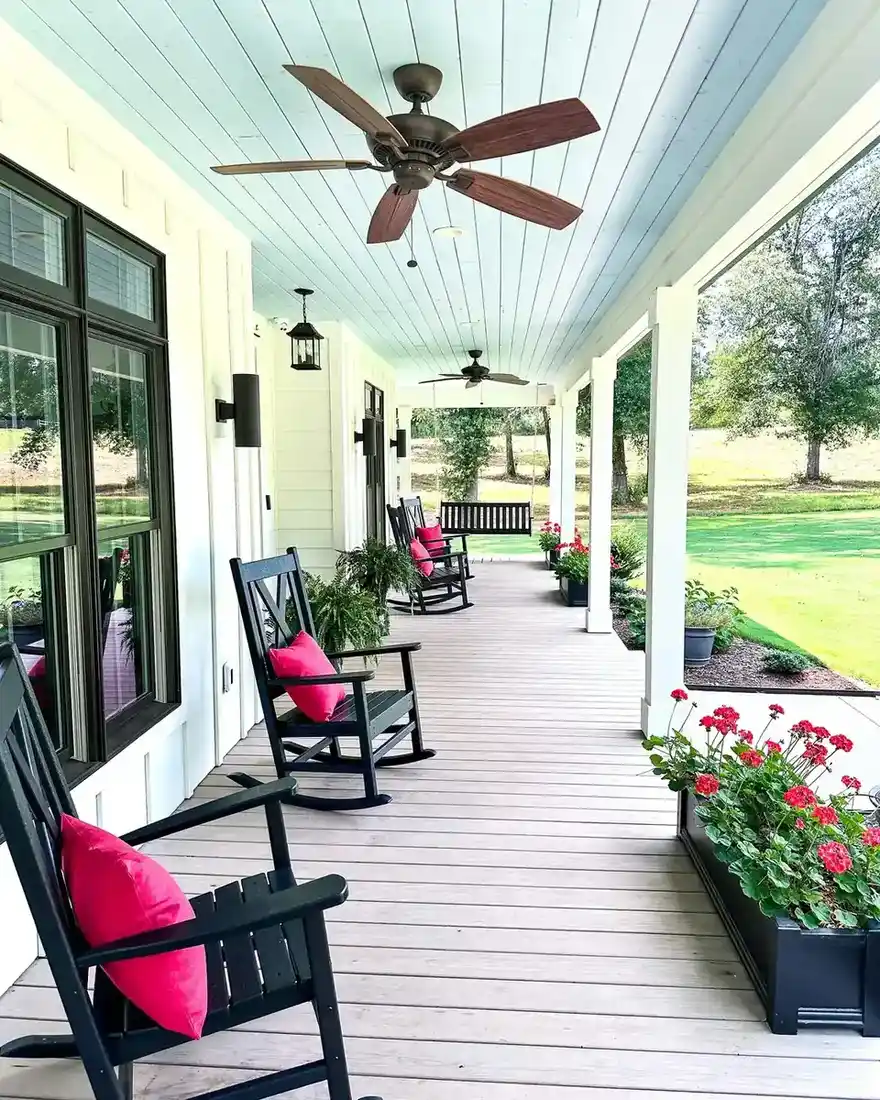
The row of rocking chairs gives this porch a strong rhythm. They don’t need to be identical down to every detail, but using the same general chair style makes the long row feel deliberate.
That’s different from filling a long porch with several unrelated seating groups.
Here, repetition is doing the decorating. The flowers near the steps add color, while the open lawn and simple architecture give the chairs plenty of room to breathe.
If you have a traditional porch with a lot of width, repeating one comfortable chair style can look much calmer than mixing sofas, benches, dining chairs, and loungers all together.
Final Thoughts
The nicest porches usually aren’t the ones with the most stuff on them.
They’re the ones where you can tell why everything is there.
A dining table makes sense because people actually eat there. A side table gives someone somewhere to put a drink. A rug separates the seating without blocking the walkway. Plants soften a hard edge. String lights make an evening table feel completely different once the sun goes down.
So before adding another chair, planter, sign, or decorative object, take a walk through your porch. Notice where people naturally sit, where they need to walk, what deserves attention, and what already looks good on its own.
You might find the porch doesn’t need much more. It just needs the right things in the right places.