24 Small Bedroom Decor Ideas That Make Every Inch Count
Small bedrooms have a funny way of making every decision feel bigger. A nightstand that is a little too wide suddenly matters. An empty wall starts looking like missed storage. Even the space under the bed feels too valuable to ignore.
The good news is that small bedroom decor doesn’t have to mean stripping the room down until it feels bare. Some of the best rooms here do the opposite. They add shelves around doors, tuck storage beneath beds, paint bold shapes on walls, hang greenery near the ceiling, and squeeze desks into places you wouldn’t expect.
The real difference is where everything goes. Use the walls. Let furniture handle more than one job. Keep the walkway clear. Then save room for the details that make the bedroom actually feel like yours.
1. Put Drawers Under The Bed
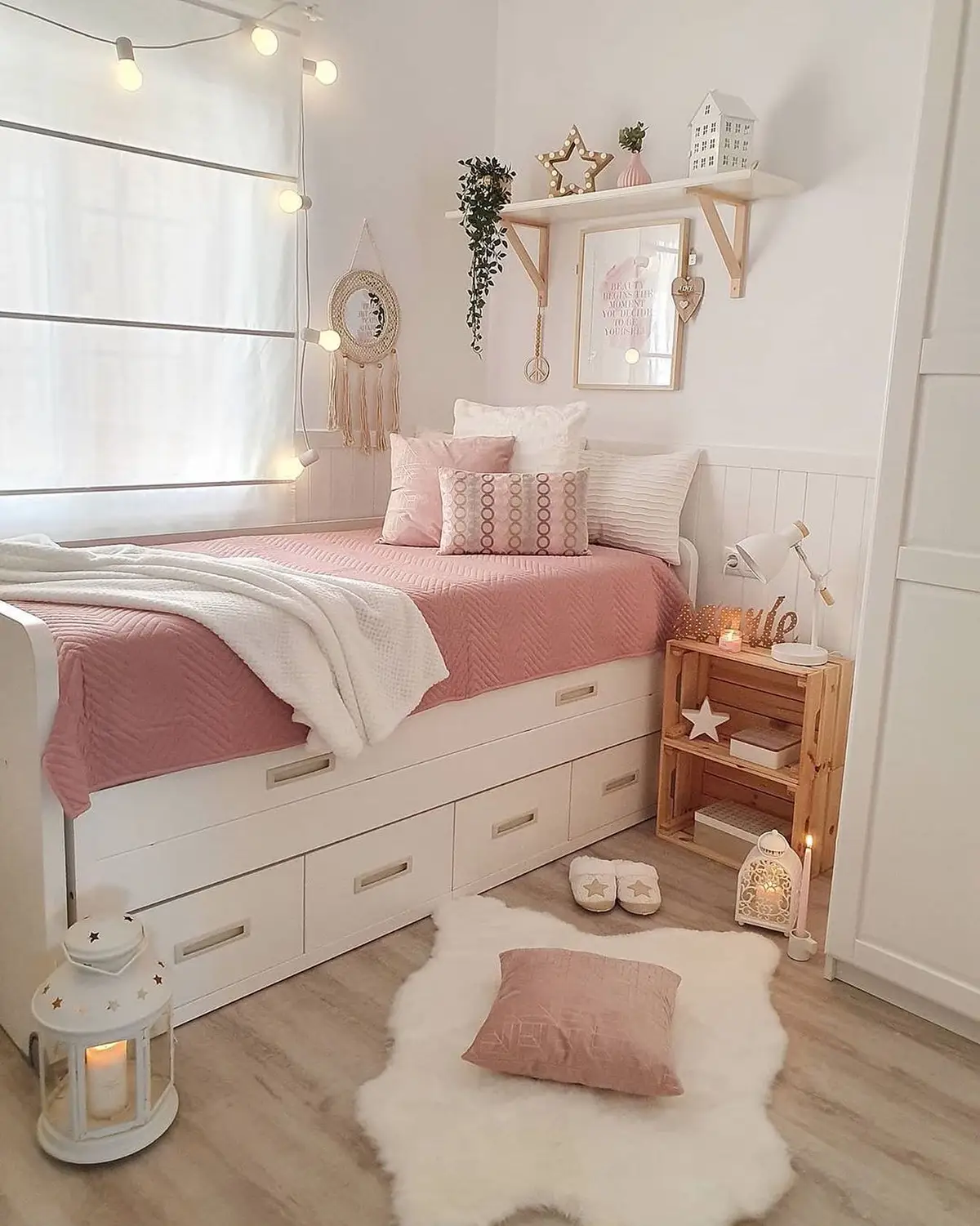
The bed already takes up most of the floor, so making the base work as storage makes sense. These deep drawers look much cleaner than loose boxes pushed underneath.
The pink bedding softens all that built-in storage, and the little wooden nightstand is enough beside it. I wouldn’t squeeze in a dresser as well. There isn’t much reason to when the bed is already doing that job.
2. Use Shelves As A Divider
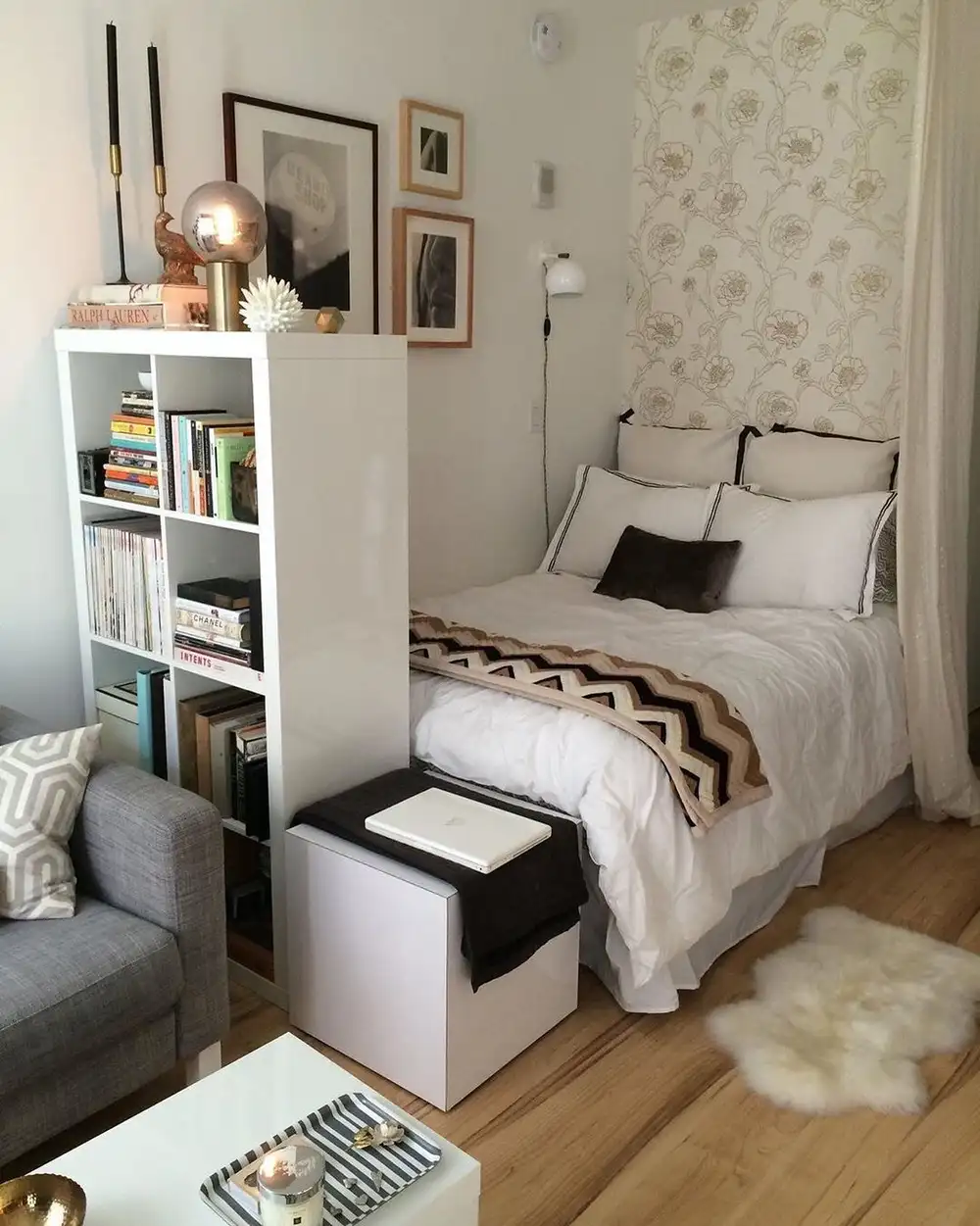
A white open bookcase separates the bed without shutting it behind a solid wall. You can still see through parts of it, so the room doesn’t suddenly feel chopped in half.
It also gives books, baskets and small decor somewhere to go. Much better than a divider that only divides.
Keep the shelves fairly edited, though. Filling every square would make this feel heavier fast.
3. Keep The Middle Floor Clear
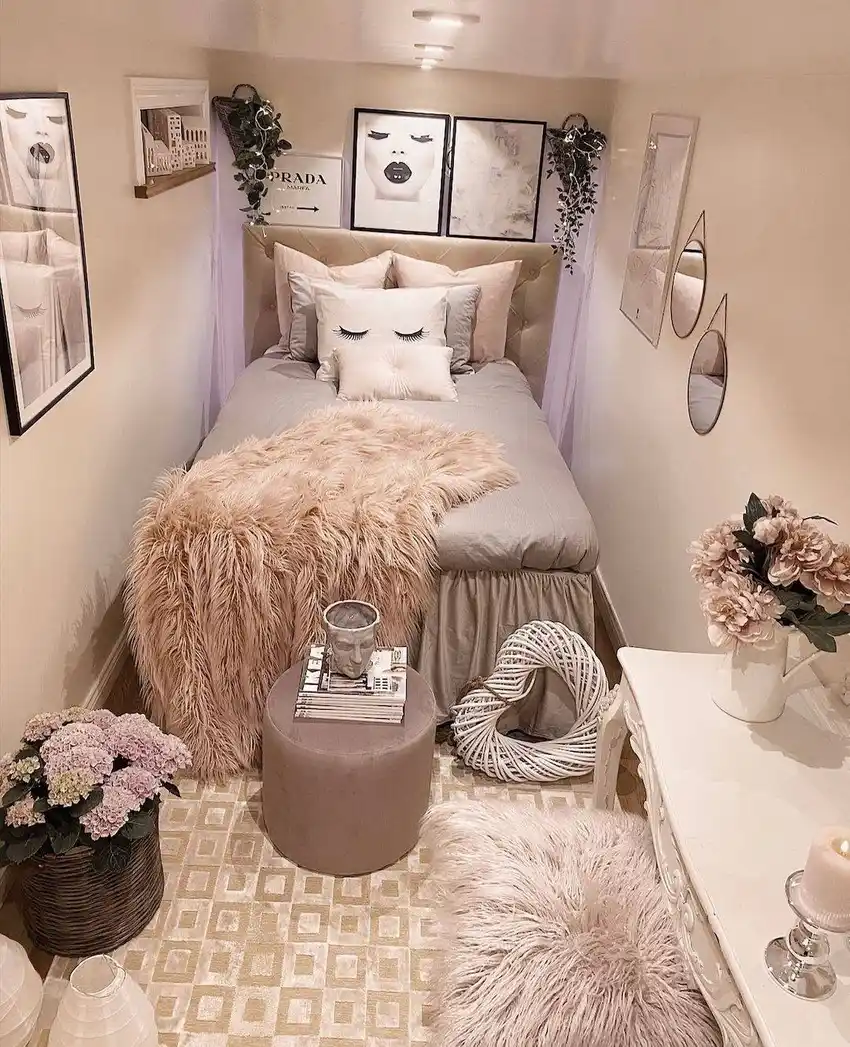
This bedroom is narrow enough that every piece sitting in the walkway would be noticeable.
Most of the decoration stays on the walls instead: mirrors, framed pieces and hanging greenery. Even the little stool is round and easy to tuck in.
That’s the direction I’d take with a long, tight room. Use the walls hard. Be picky about what earns floor space.
4. Pair Dark Walls With White
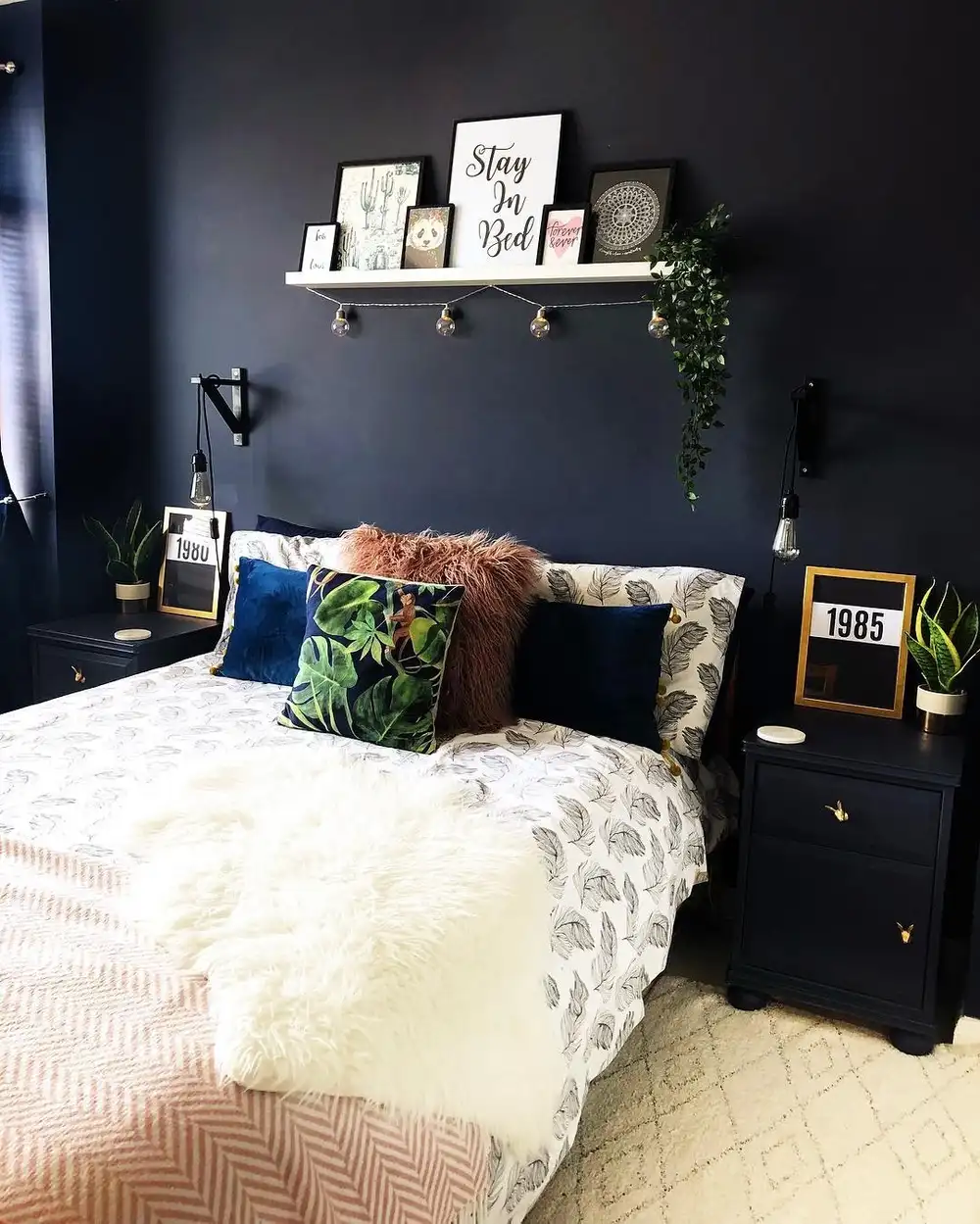
The charcoal wall could have made this small bedroom feel very closed in. The big area of white bedding stops that from happening.
Then the rust and blue pillows bring in color without turning the bed into a rainbow. Even the dark nightstands almost disappear against the wall.
I like that they didn’t try to brighten every single thing. The contrast is enough.
5. Line Everything Along One Wall
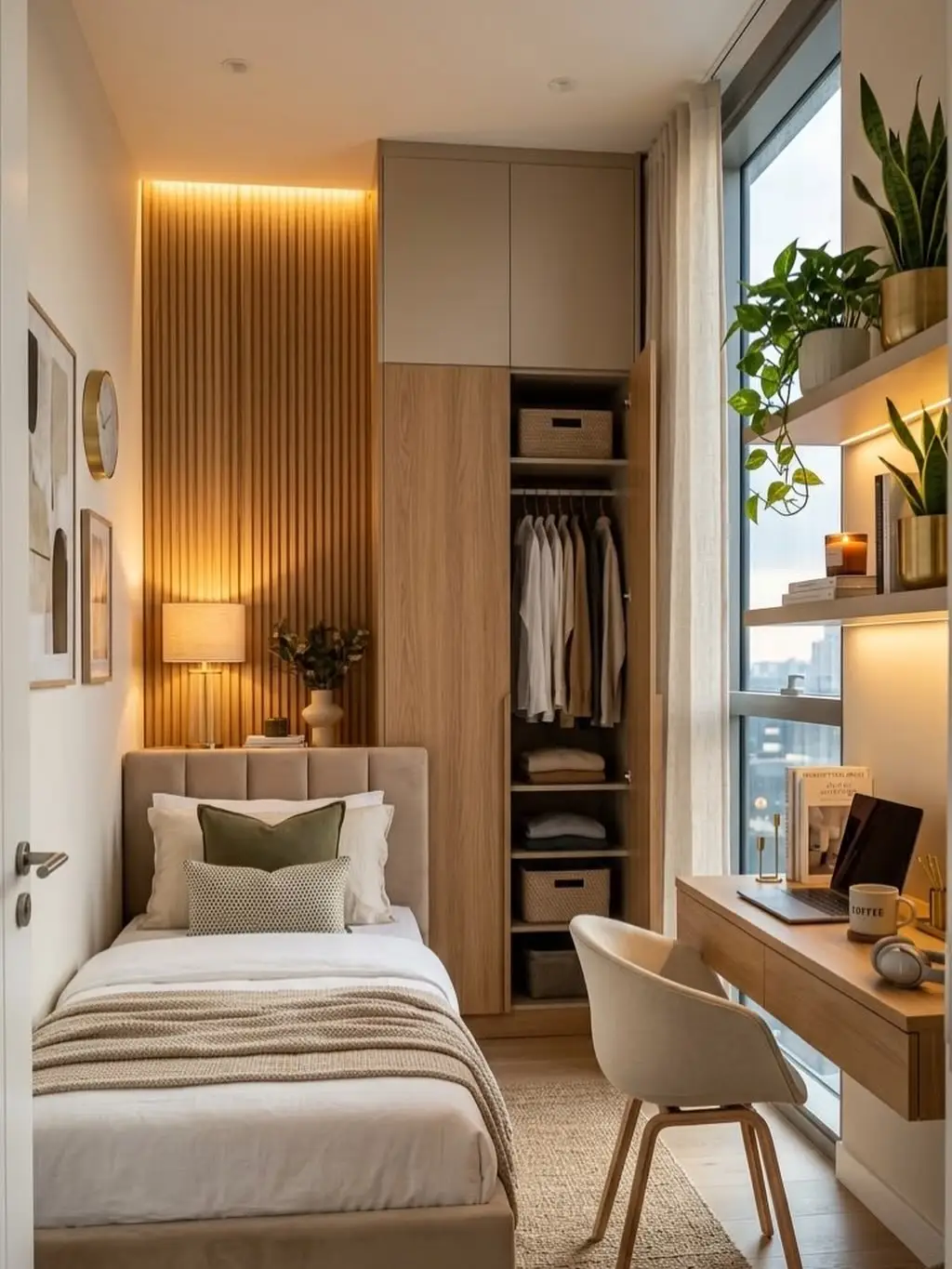
Bed, wardrobe and desk all sit along the same side of this room. That leaves a much cleaner path through the narrow floor space.
The tall wardrobe takes storage upward, while the desk stays slim rather than pushing far into the room. A warm vertical panel behind the bed gives that end a little definition.
For long bedrooms, this layout is worth considering before scattering furniture across both walls.
6. Turn The Window Into Seating
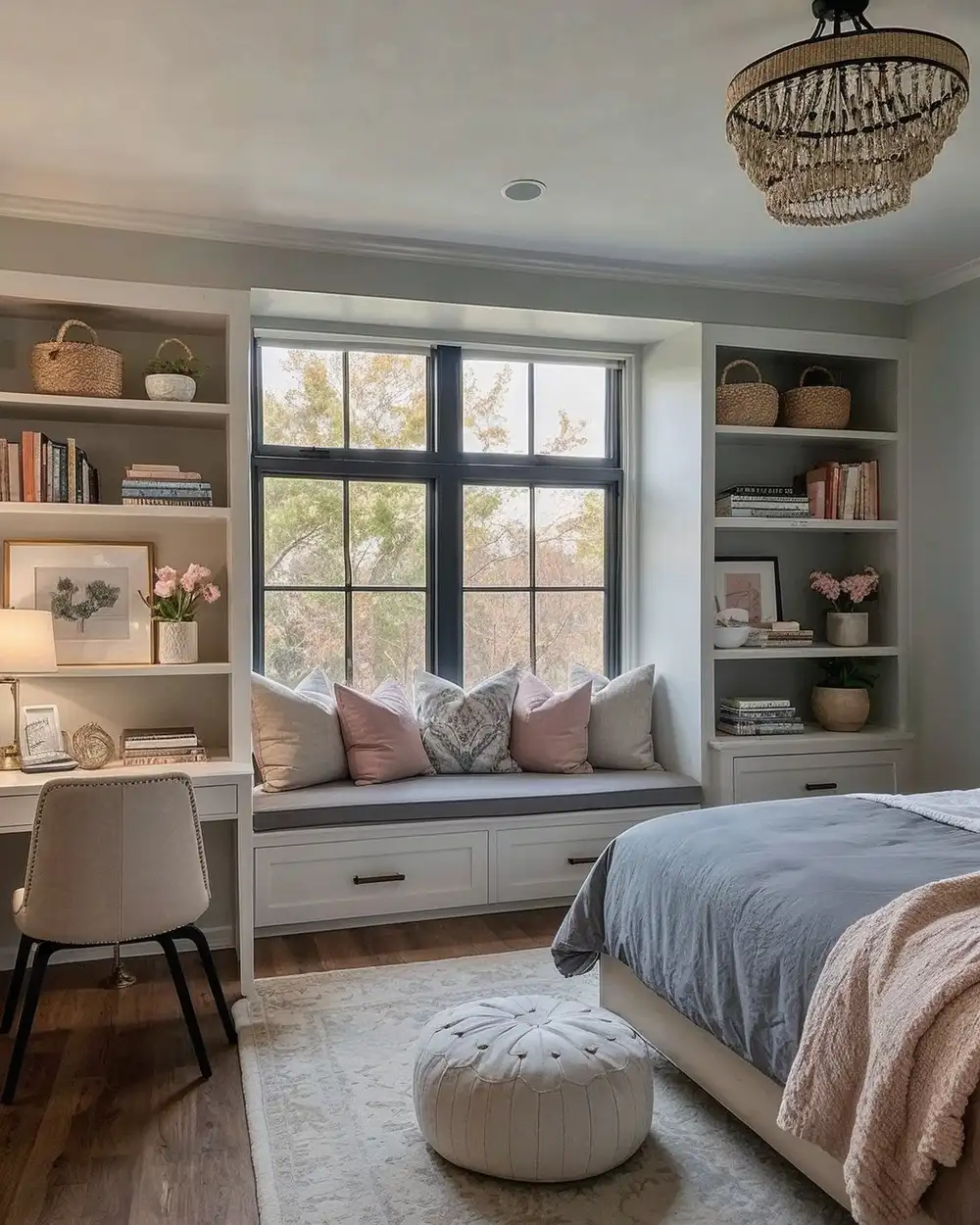
This window does far more than bring in light.
A cushioned seat sits underneath, drawers fill the space below, shelves frame the sides, and there’s even a small work surface nearby. It packs several jobs into one end of the room without feeling like a wall of furniture.
The window is still visible and bright, which helps. I wouldn’t cover much more of the glass than this.
7. Use The Wall Around Doors
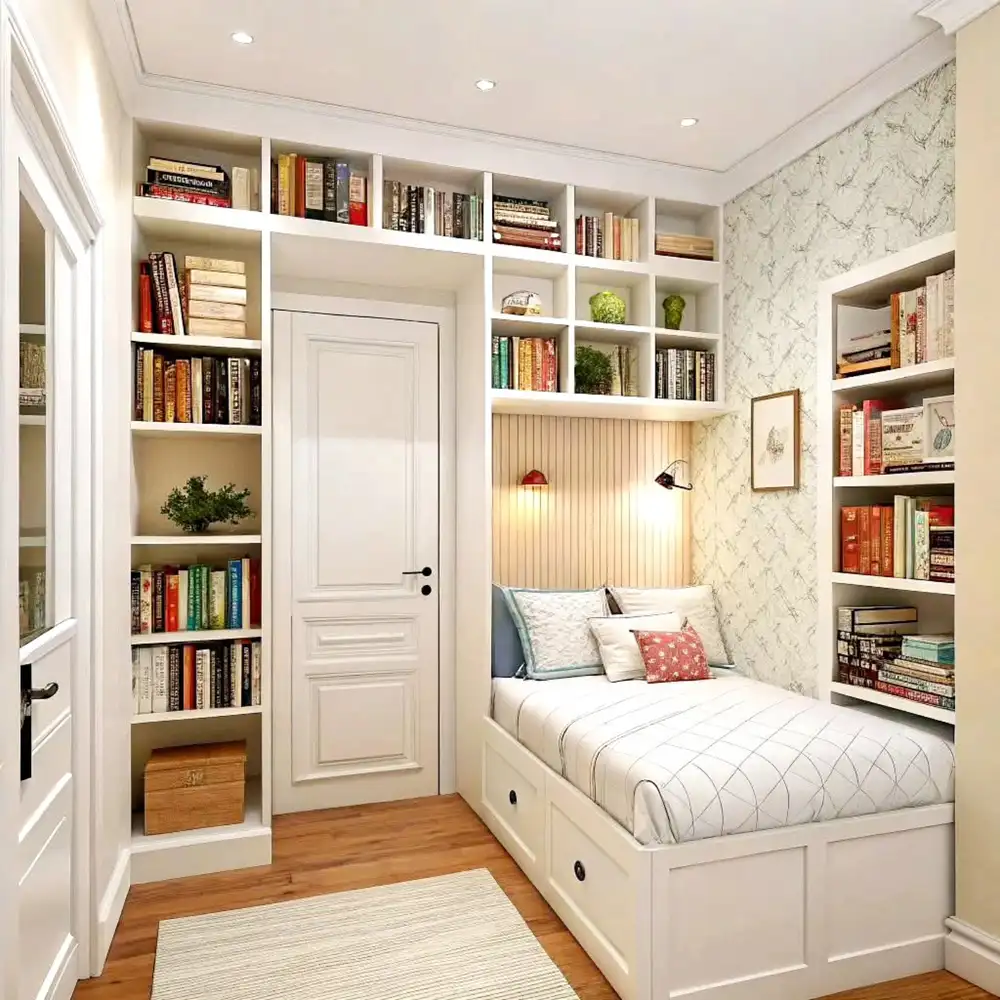
The shelves running around this doorway caught my attention first. It’s usually dead space, especially the strip above the frame.
Here, it becomes book storage without another freestanding bookcase taking over the floor. The light finish helps the shelving blend into the wall instead of turning the doorway into a heavy box.
The drawers under the nearby bed are a bonus, but the doorway storage is the idea I’d keep.
8. Curtain Off The Bed
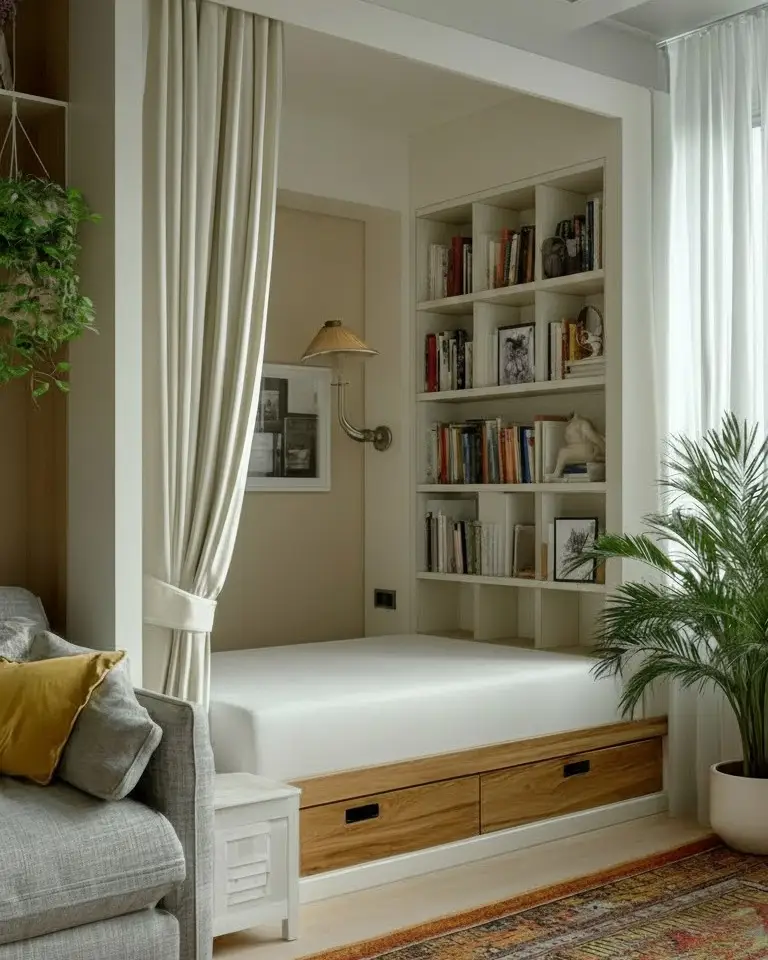
A curtain makes this raised sleeping nook feel private without building an actual wall.
Open it during the day and the room feels connected. Pull it across and the bed becomes its own little zone. The platform drawers underneath are especially smart because they use space that would otherwise be wasted.
I like the combination more than the curtain alone. Privacy above, storage below.
9. Slide Baskets Underneath
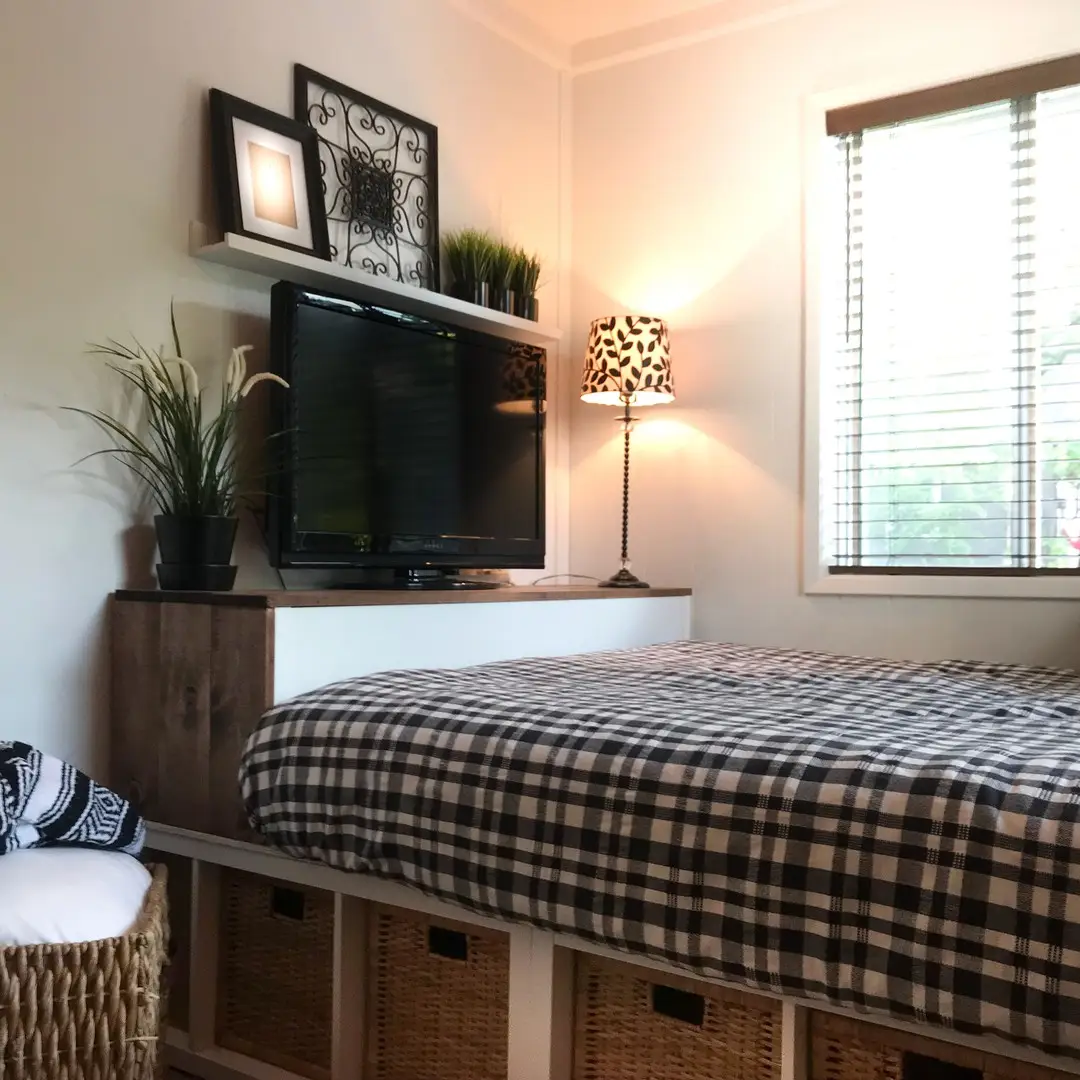
Nothing fancy here. Just a raised bed and a row of woven baskets underneath.
It works because the baskets match closely enough to look intentional, even though the storage is completely visible. They’d be handy for clothes, spare bedding or things you reach for often.
I wouldn’t mix six different basket styles under one bed. The repetition is what keeps this from looking messy.
10. Hang Storage Beside The Bed
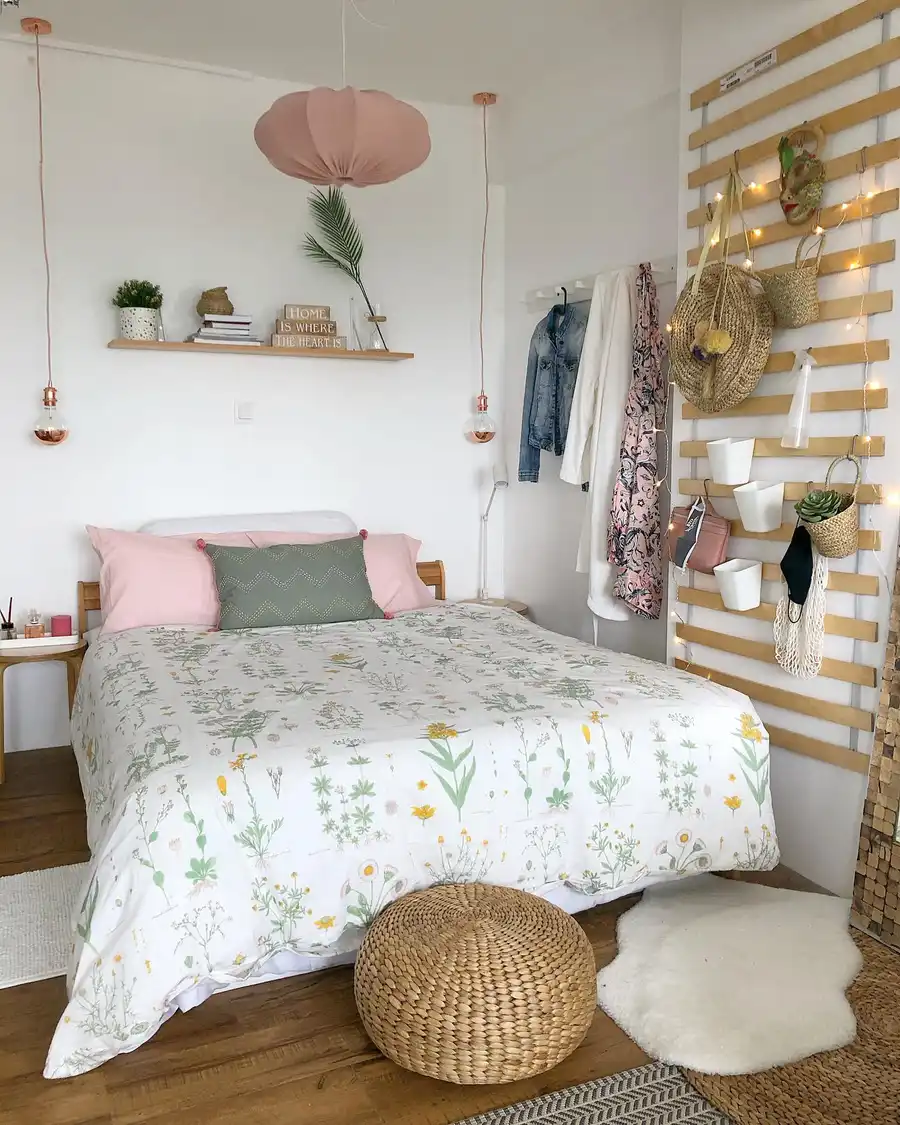
That tall slatted panel uses a very skinny piece of wall for clothes, bags, plants and smaller hanging items.
A cabinet would eat into the floor. This doesn’t.
It’s especially useful for things you grab all the time and don’t necessarily want hidden in a drawer. Just don’t overload every hook. A wall like this can go from practical to chaotic pretty quickly.
11. Use Two Different Mirrors
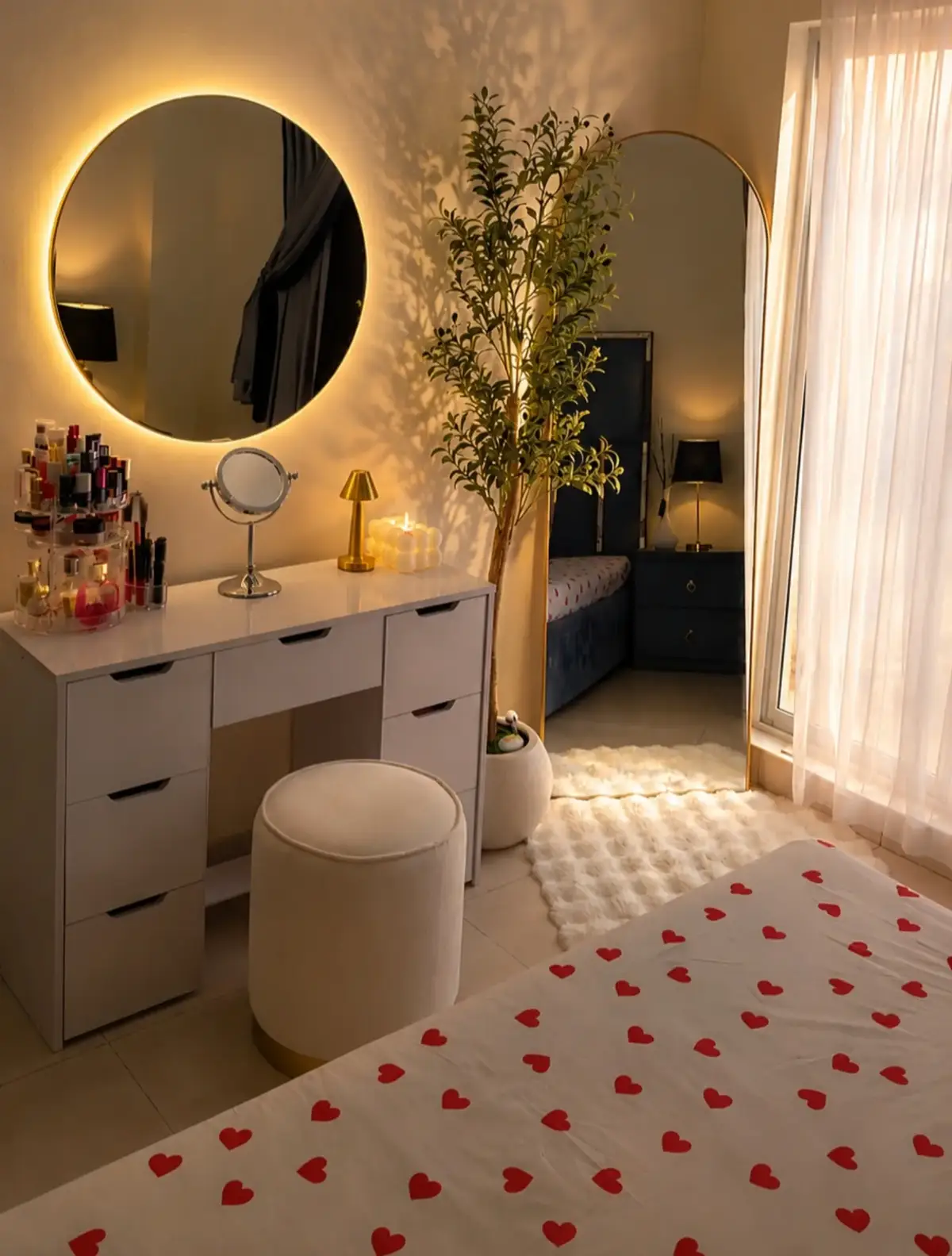
The vanity doesn’t rely on one oversized mirror.
There’s a round lighted mirror for getting ready and a taller mirror beside it that reflects a much bigger slice of the room. They do different jobs, which is why the pairing makes sense.
The plant between them is enough decoration for me. With the bottles, mirrors and lighting already there, I’d leave the rest of the surface alone.
12. Put The Desk Beside Bed
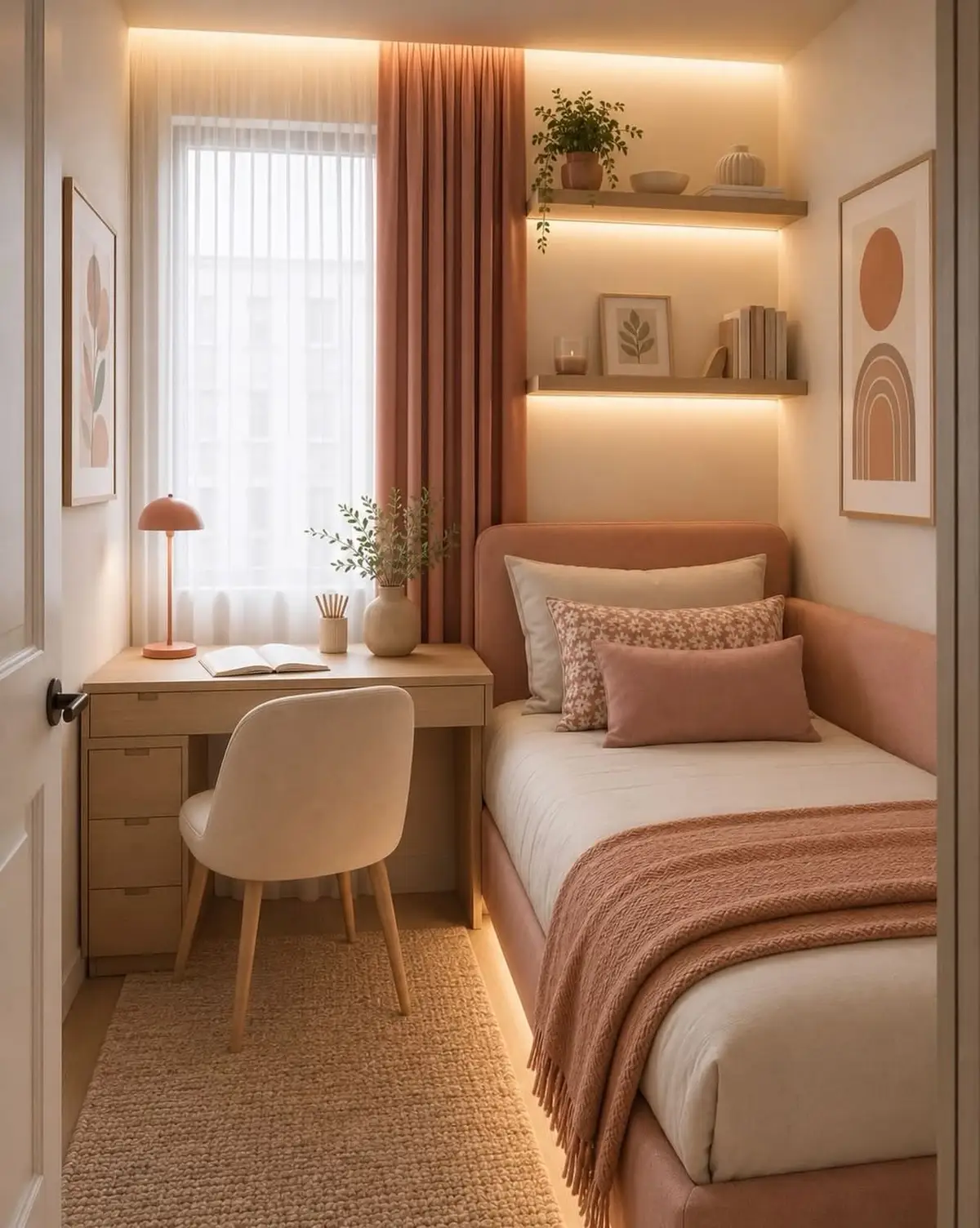
The desk isn’t given its own separate corner. It simply runs beside the bed, and that saves a surprising amount of room.
Matching wood tones help the two pieces sit comfortably together, while the floating shelves move books and small objects off the desk itself.
The muted pink curtains soften the setup too. It feels like one bedroom with a work spot, not a bedroom trying to squeeze in a home office.
13. Decorate Above Eye Level
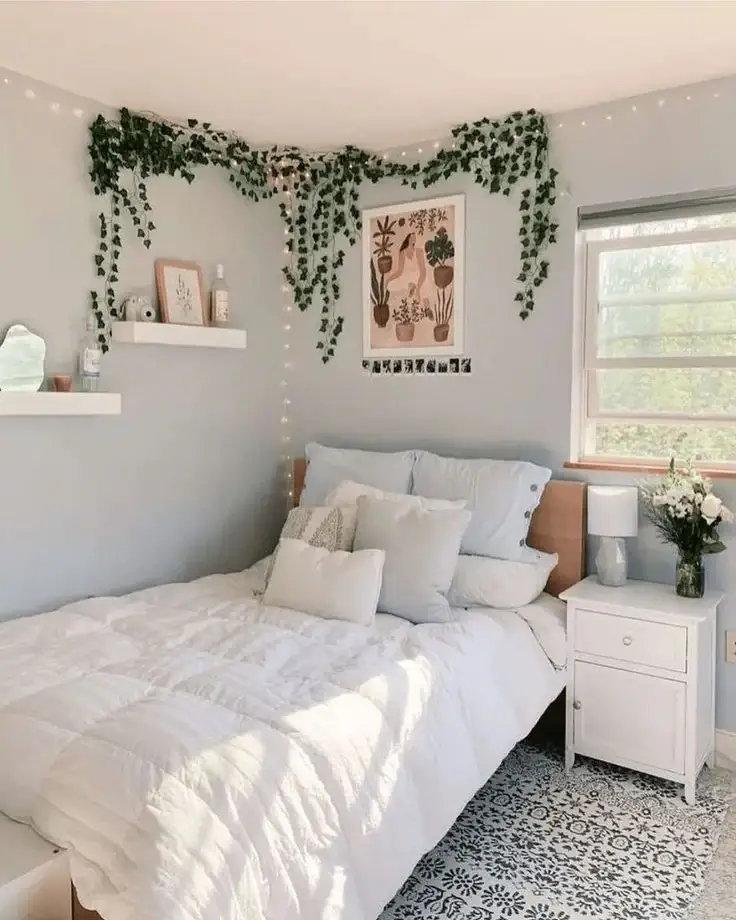
The floor is mostly left alone here. The fun happens near the ceiling with vines and tiny string lights.
That’s a good move when there isn’t much room for extra furniture or chunky decor. You still get plenty to look at, but nothing interferes with walking around the bed.
The pale bedding helps too. With that much greenery overhead, I wouldn’t make the lower half equally busy.
14. Let The Rug Do More
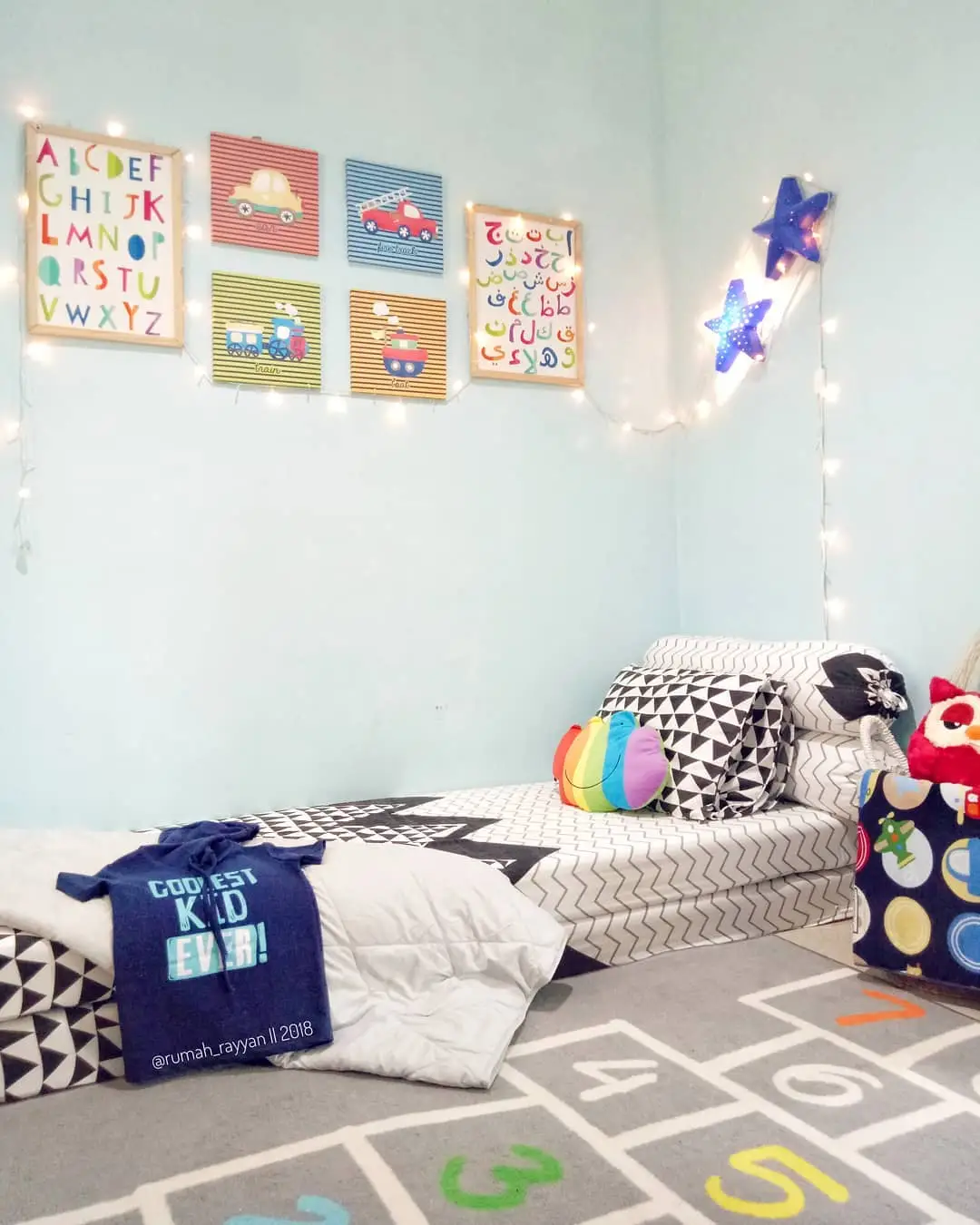
The hopscotch rug is doing most of the playful work in this kids’ room.
It adds color, pattern and something to actually use, while the rest of the furniture stays fairly simple. Wall prints and string lights take care of decoration without filling the floor with extra pieces.
For a small child’s bedroom, I’d rather have one fun rug and open play space than several decorative stools or tiny tables.
15. Cluster Plants By The Window
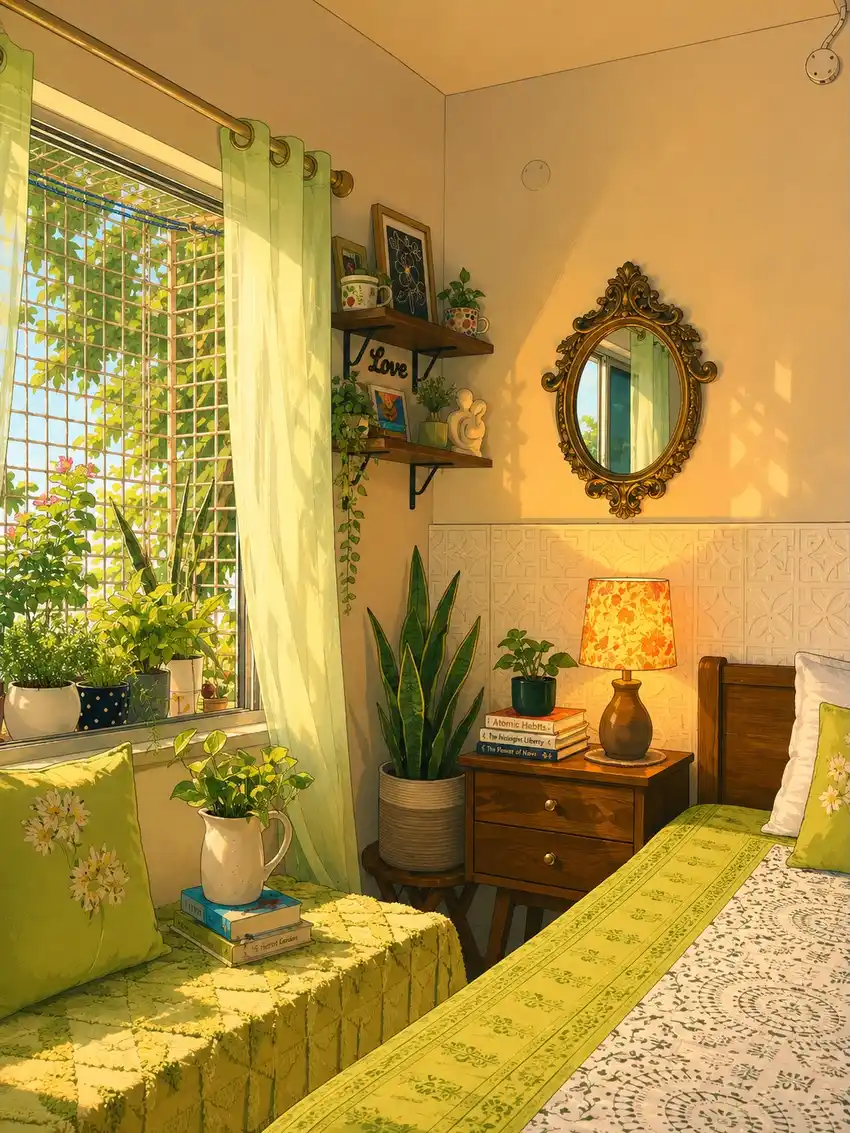
Instead of placing one plant on every available surface, this room concentrates most of the greenery around the window.
That feels more natural visually, and the plants are sitting where the room is brightest. A narrow bench fills the lower part of the window without blocking it completely.
The ornate mirror and warm lamp make the corner a little richer, but I wouldn’t spread that level of detail across the whole bedroom. One full corner is plenty.
16. Keep The Canopy Sheer
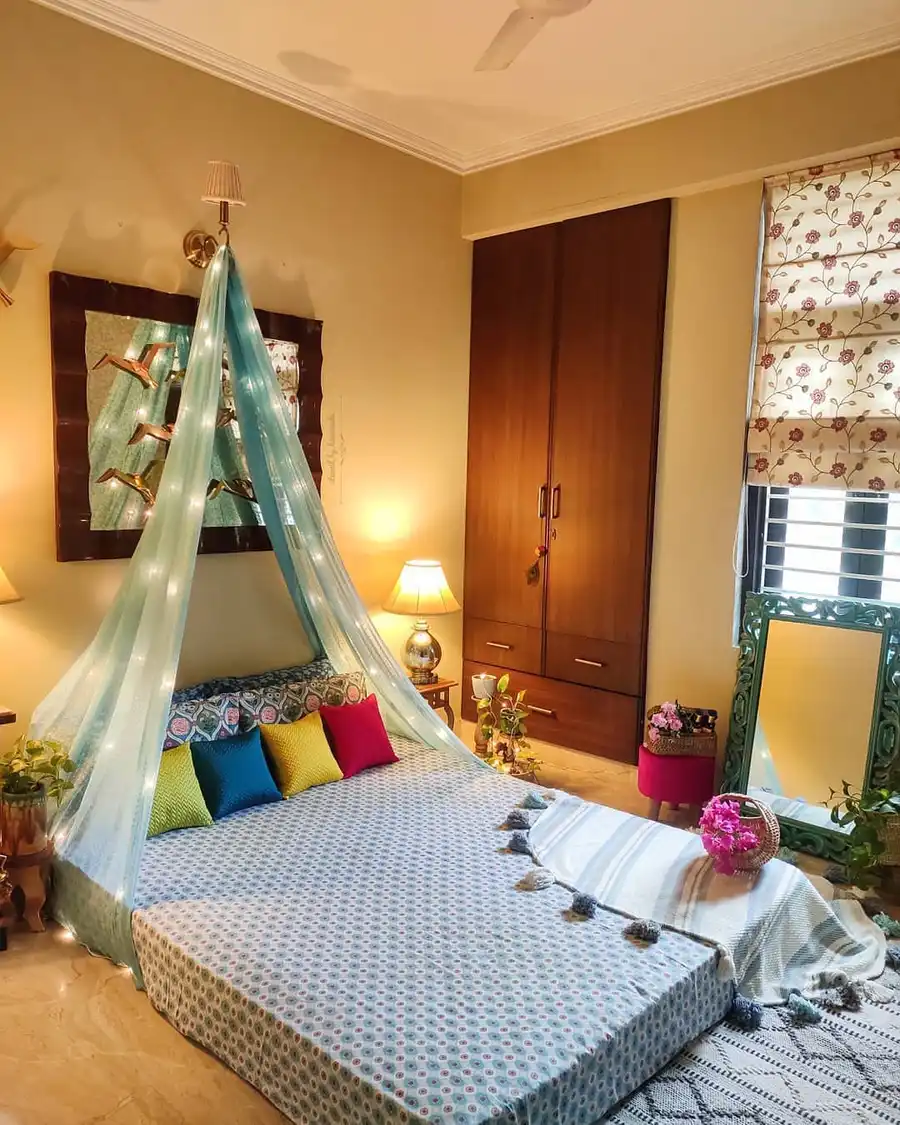
A canopy can get bulky fast in a small bedroom. This one stays light because the fabric is sheer and hangs from above rather than from a chunky four-poster frame.
The low bed helps as well. There is still plenty of open space above the mattress, even with fabric around it.
String lights give the canopy a soft outline at night. I’d stop there and let the bright cushions handle the color.
17. Choose A Smarter Nightstand
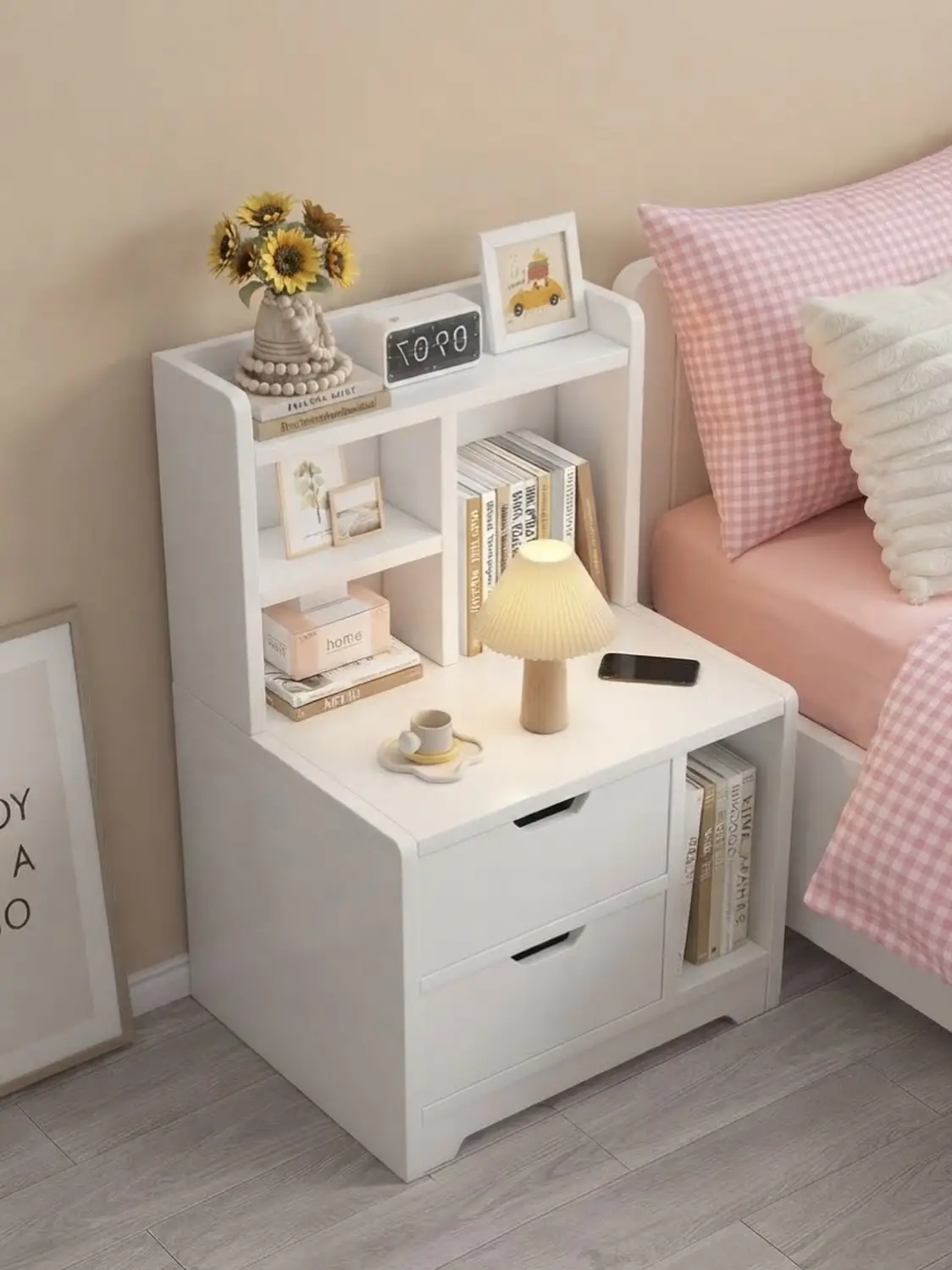
This little bedside unit is almost a mini storage wall.
There are drawers at the bottom, shelves higher up, a side slot for books and enough room on top for the things you’d actually want beside the bed. That’s a lot from one narrow footprint.
If your bedroom barely has room for a nightstand, this makes more sense than choosing one that gives you nothing except a tabletop.
18. Keep Big Fabrics Pale
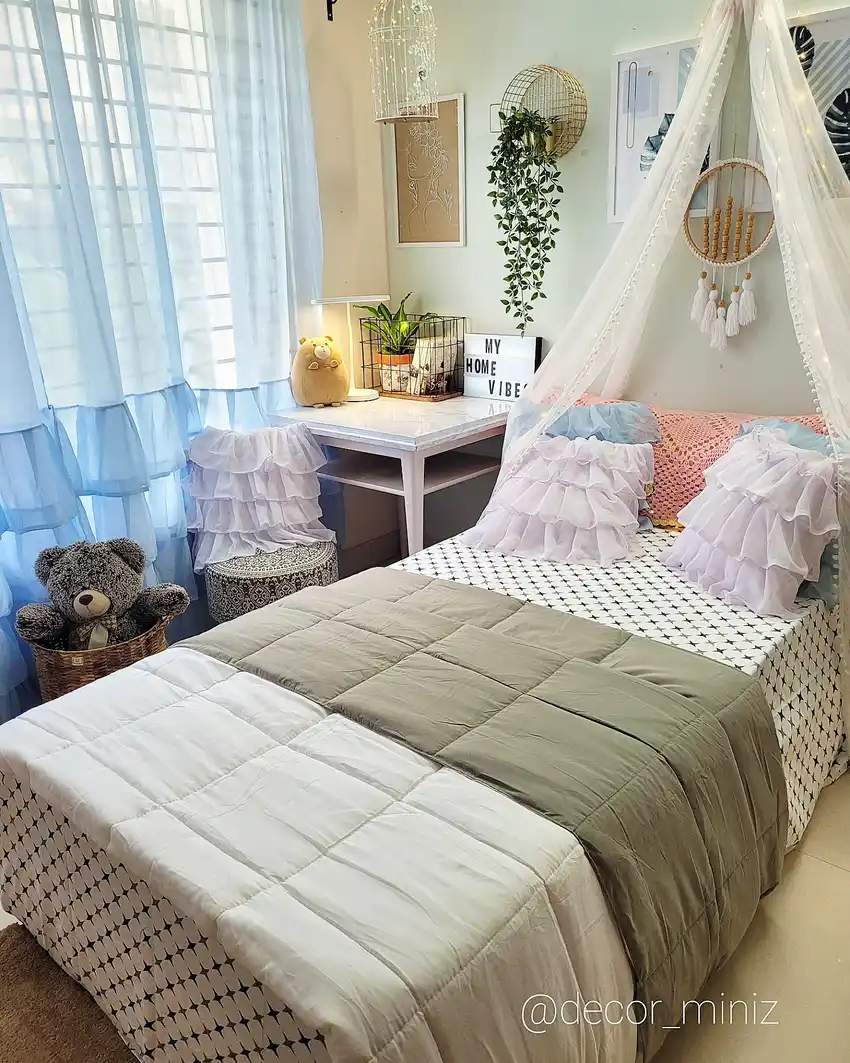
There are a lot of layers in this room: curtains, canopy fabric, pillows, plants and a small desk area.
It doesn’t feel as crowded as it could because the biggest fabric surfaces stay light and soft. The sheer canopy barely blocks your view across the room.
That’s the part I’d pay attention to here. A small bedroom can handle quite a few details when the largest pieces aren’t all visually heavy.
19. Stop The Paint Halfway
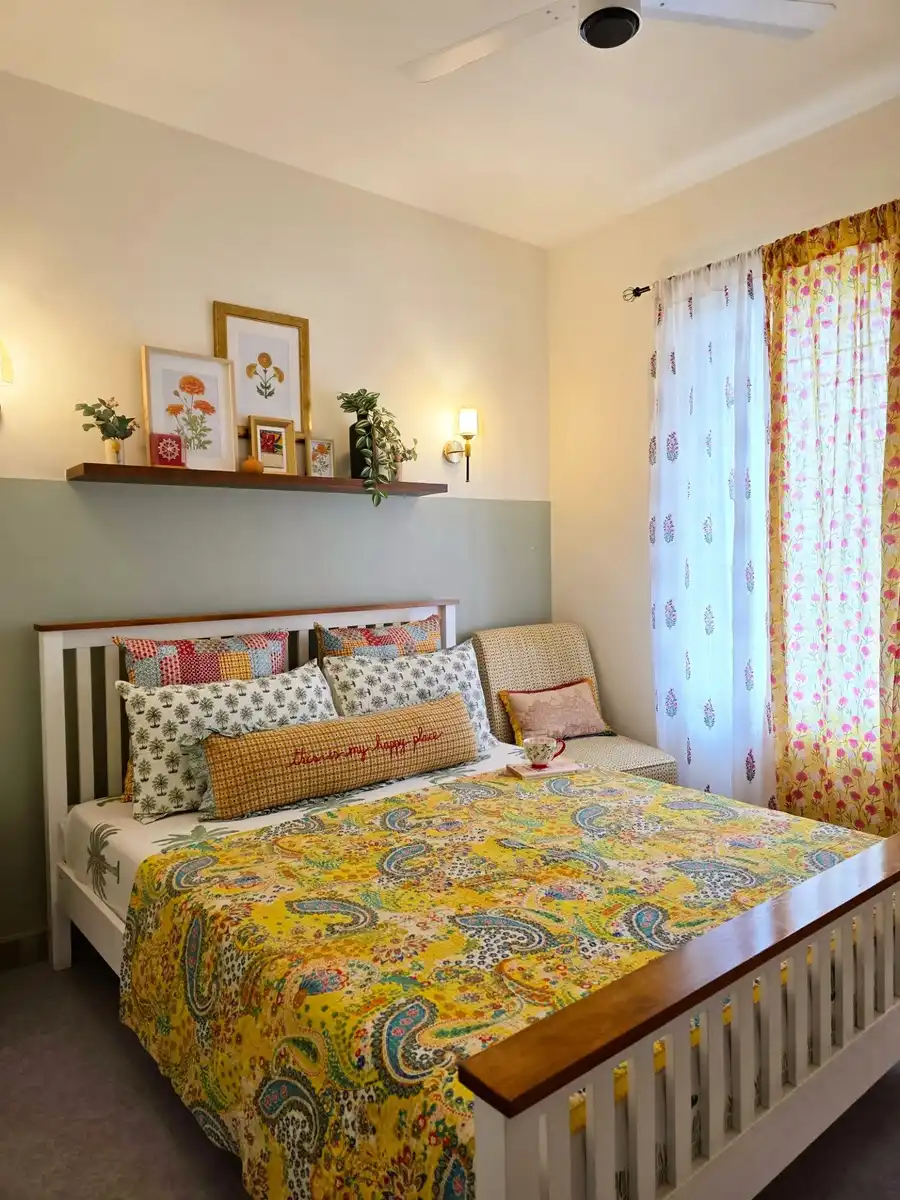
You don’t need to paint an entire wall to give the bed a colored backdrop.
Here, the muted shade only covers the lower section. The top remains light, so the room keeps some brightness while the bed still gets a clear frame around it.
A narrow ledge follows that line and holds a few pieces above the bed. Then the patterned bedding brings in the louder color.
Simple, and fairly easy to adapt.
20. Raise The Bed Higher
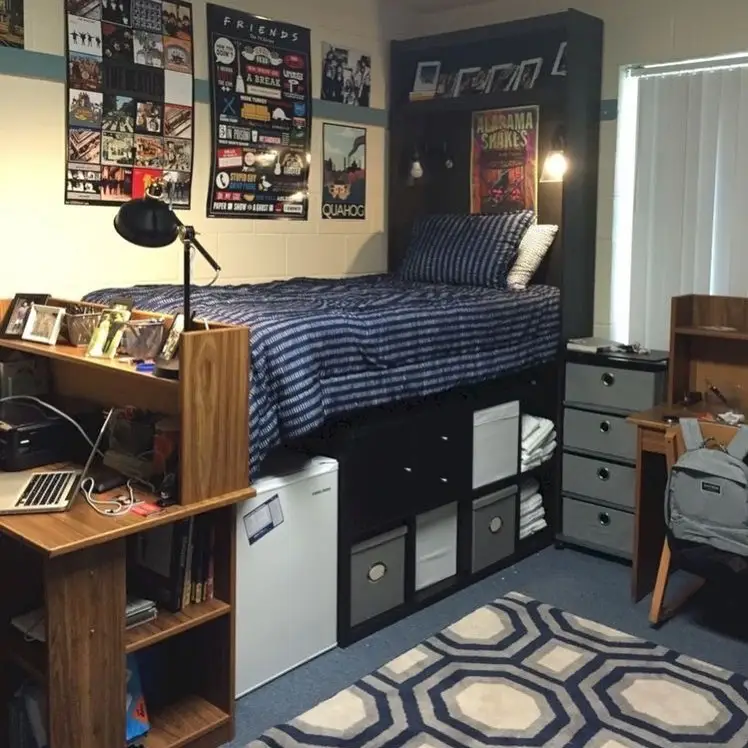
This bed isn’t just lifted a few inches for shallow boxes. It’s high enough to create real storage underneath.
Open cubbies, folded linens and larger items all fit below the mattress, while the nearby desk and shelves handle another part of the room’s storage.
It is definitely a stronger layout choice, and I wouldn’t use it just for the look. But when storage is the actual problem, gaining that much usable space underneath the bed can be worth it.
21. Frame The Window With Vines
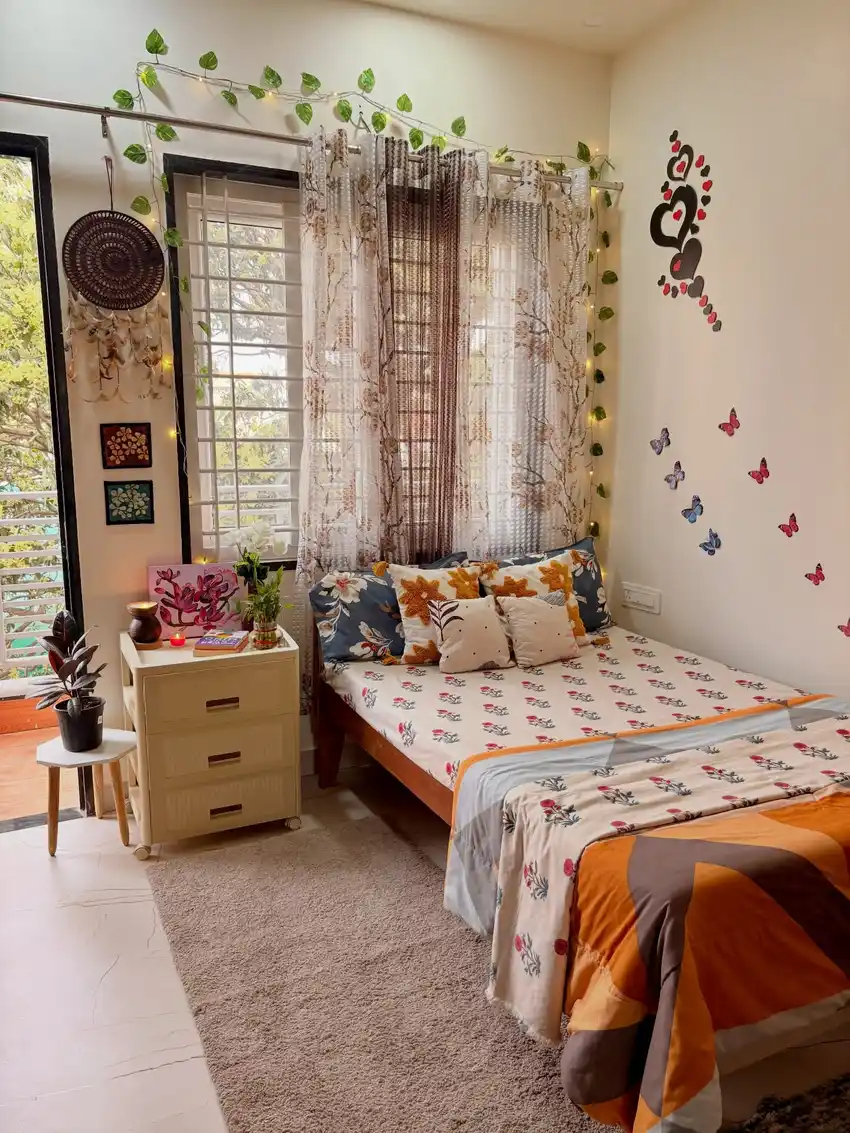
The greenery around this window gives the wall plenty of detail without using another shelf, cabinet or piece of floor decor.
Small butterfly shapes continue across the nearby wall, so the decoration feels loose rather than perfectly symmetrical.
The bedside cabinet is tiny, and I’d keep it that way. The narrow gap beside the bed doesn’t need a wider table just because one could technically fit.
22. Keep Furniture Low Under Slopes
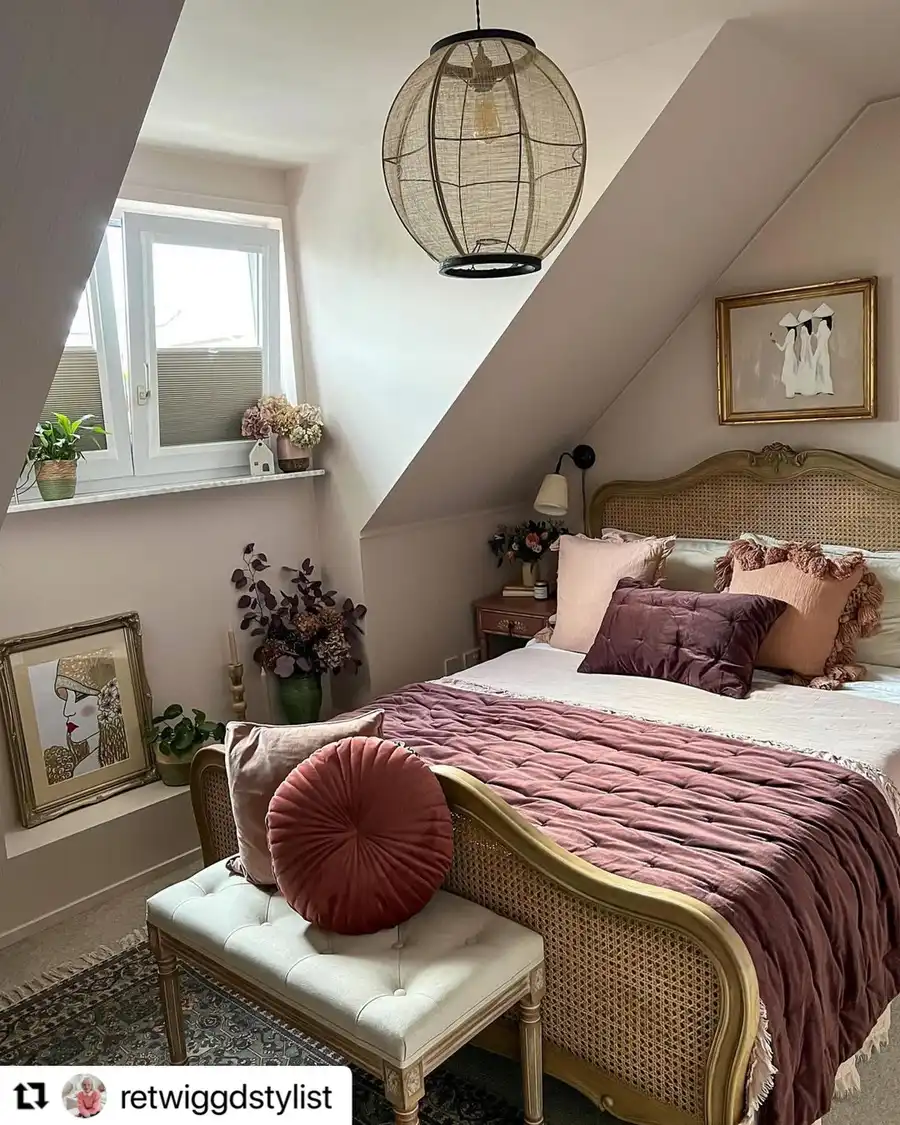
The sloped ceiling isn’t something this attic bedroom tries to hide.
The bed sits where the ceiling drops lower, while the more open center of the room stays under the tallest section. A low bench at the foot of the bed follows the same logic.
Tall cabinets under that slope would feel awkward. Low furniture looks much more at home there, and the dusty rose bedding gives your eye something else to focus on.
23. Paint A Wide Bed Arch
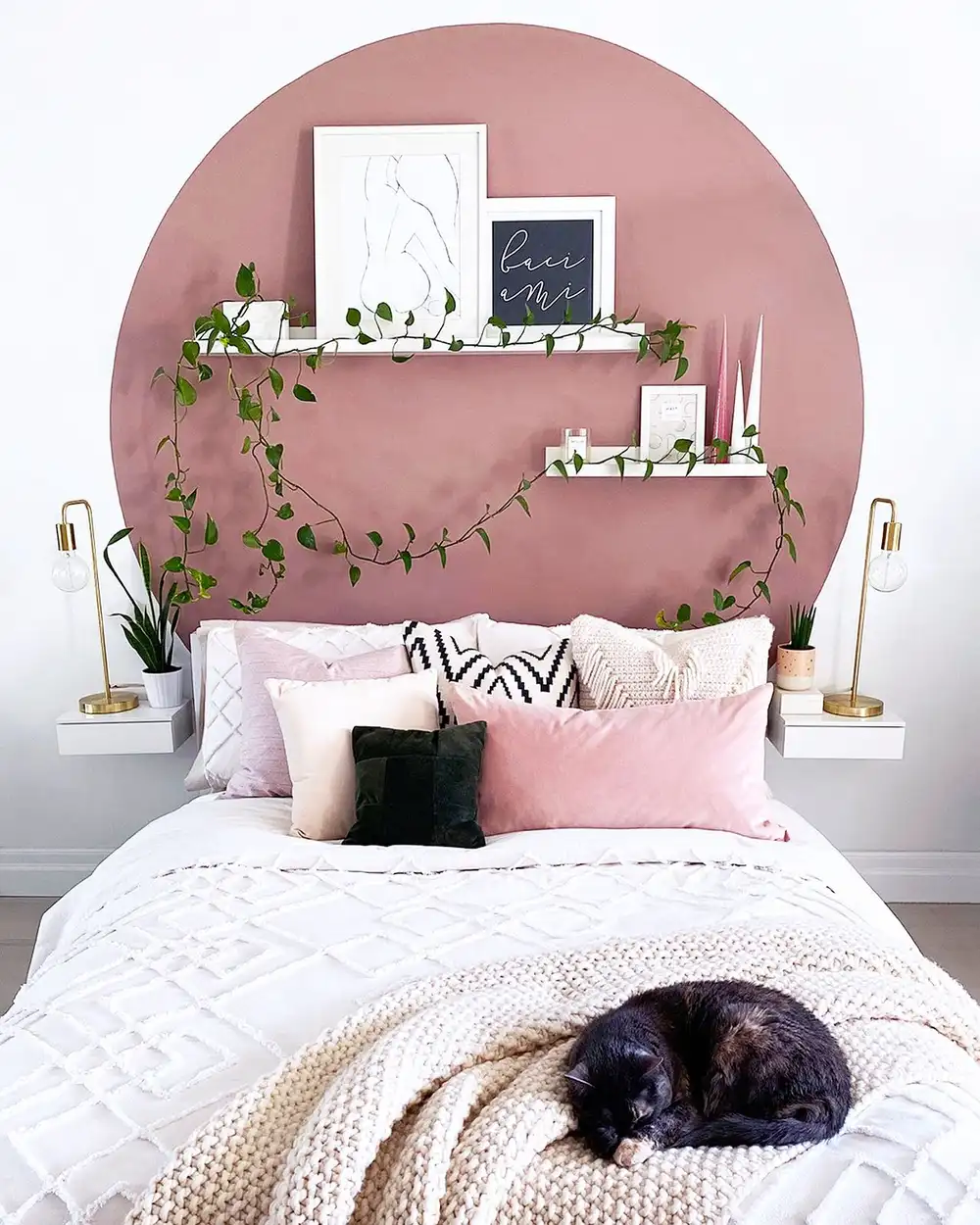
The blush arch is much bigger than a small decorative blob behind the pillows, and that’s why it reads almost like a headboard.
It stretches wide enough to frame the bed, shelves and trailing greenery as one area. No bulky upholstered headboard needed.
I would keep the shelves shallow and the paint shape large. Making both of them tiny would lose most of the effect.
24. Keep The Big Pieces Quiet
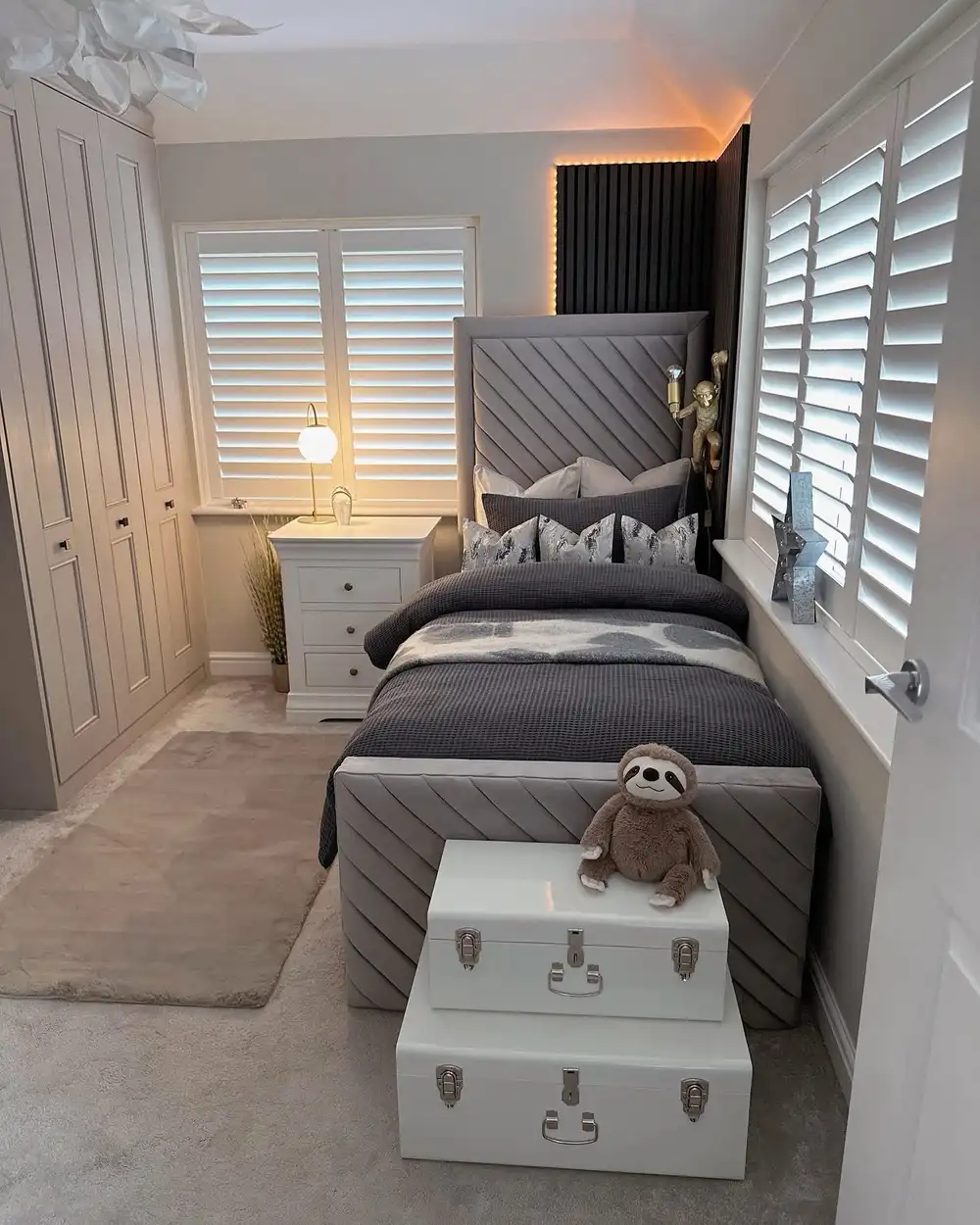
This room is extremely narrow, so the grey and white palette is doing useful work.
The wardrobes sit flat against one wall, the upholstered bed stays in a similar grey family, and the white shutters don’t compete with either one. Then the darker slatted section behind the headboard gives the far end some depth.
The room doesn’t need another strong color. In a space this slim, the restrained larger pieces are enough.
Final Thoughts
A small bedroom will always make you choose, and that isn’t necessarily a bad thing.
You don’t need the biggest nightstand, another chair, three baskets, and a shelf on every wall. Sometimes the room gets better the moment you decide what can go. Then the things you keep start working harder: drawers under the bed, one good lamp, a narrow desk, a shelf where wasted wall space used to be.
Start with the spot that annoys you most. The crowded bedside. The empty wall. The pile of clothes with nowhere to go.
Fix that first.
You might be surprised how different the whole room feels after one smart change.