17 Best Undersink Bathroom Organization Ideas That Actually Use the Space Well
Open the cabinet under your bathroom sink and there’s a good chance something is hiding behind something else. Half-used bottles, extra toilet rolls, hair products, cleaning supplies, all squeezed around a maze of pipes.
That awkward little cabinet can actually hold a lot more than it seems. These undersink bathroom organisation ideas use drawers, baskets, turntables, shelves, and a few clever layouts to make every useful inch easier to reach.
And no, you don’t need to recreate a picture-perfect cabinet. Sometimes one good bin or one small turntable is enough to fix the mess.
1. Sort Everyday Items Into Bins
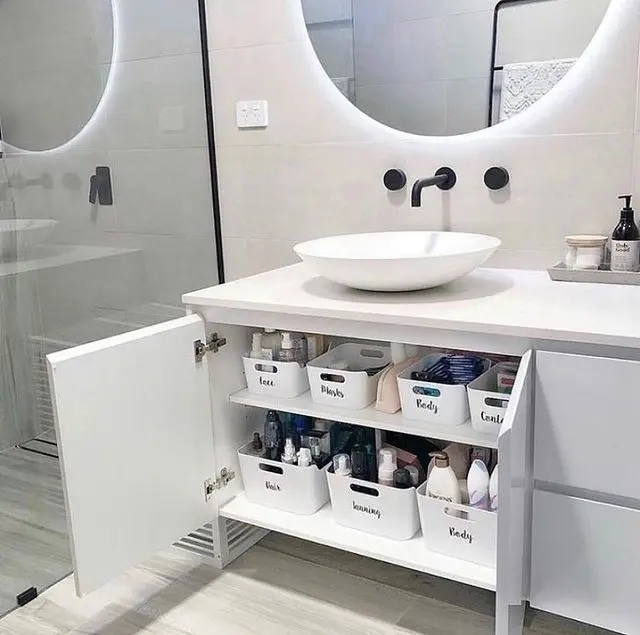
Small open bins make sense in this cabinet because there are a lot of bottles and tubes packed into a fairly shallow space. Instead of lining everything up individually, similar products are dropped into their own containers.
The shelf in the middle helps too. Smaller toiletries can sit above while taller bottles stay below. Nothing complicated here. Just enough separation to stop the cabinet becoming one big pile.
2. Mix Drawers With Open Storage
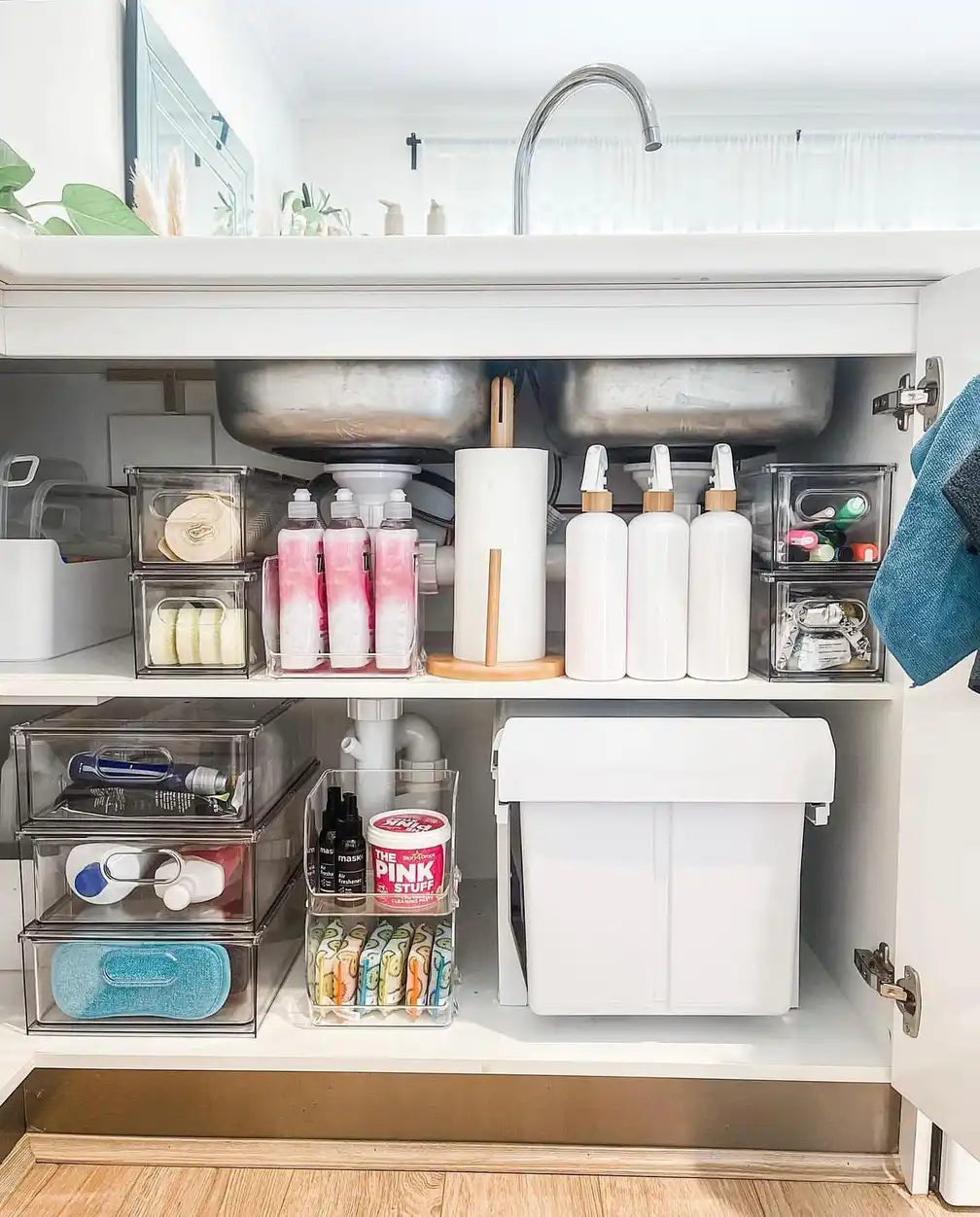
Clear drawers handle the small stuff in this setup, while tall bottles stay out in the open where they’re easier to grab.
I like that difference. Not every bathroom product benefits from being tucked inside a drawer. Spray bottles, pump bottles, and frequently used products are quicker to reach standing upright. Smaller items are another story. Give those a drawer before they disappear behind everything else.
The large bin at the bottom also gives bulkier supplies somewhere to live without chopping the entire cabinet into tiny compartments.
3. Build Around The Plumbing
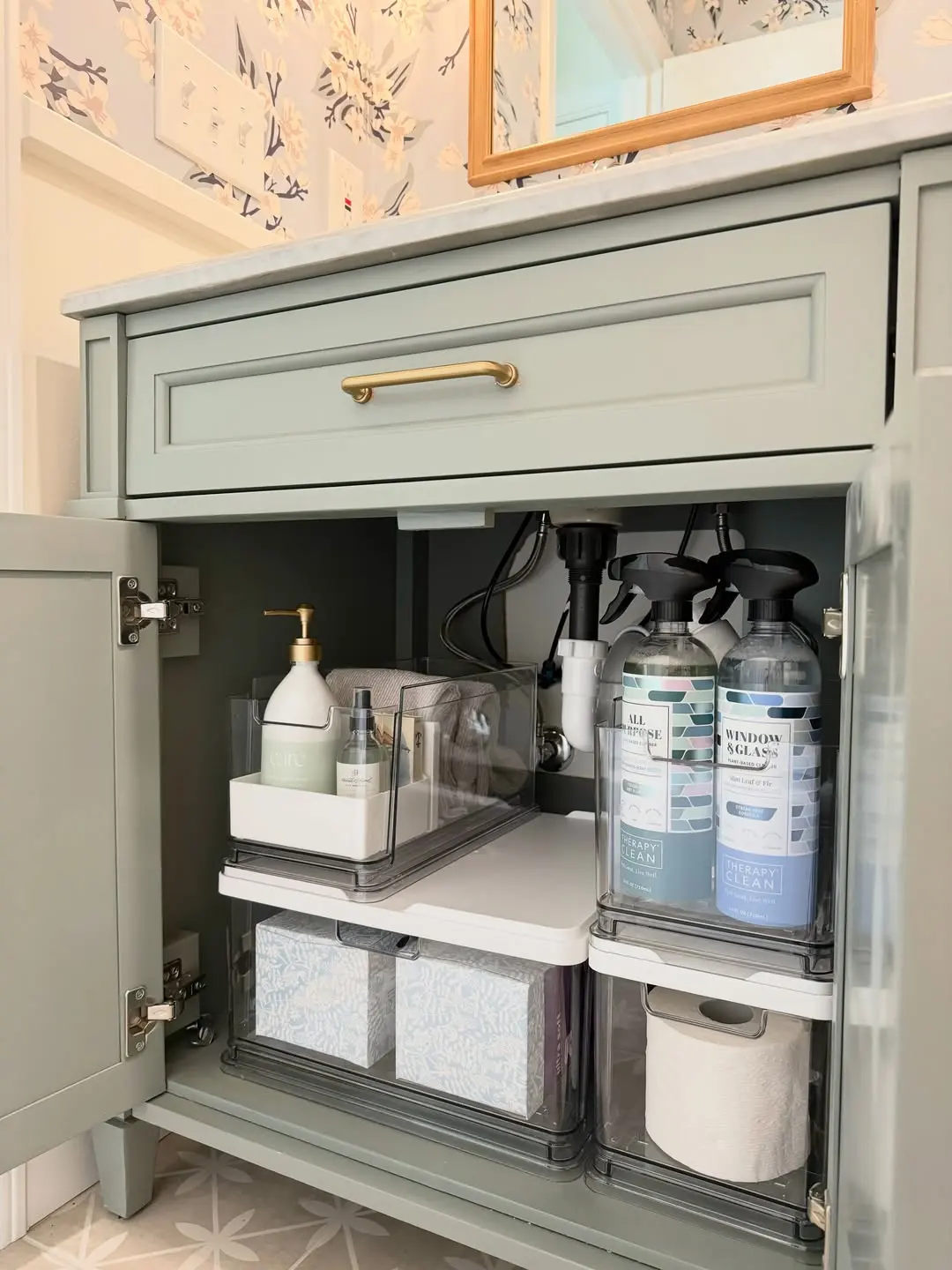
The pipes are right in the middle, so the organizers simply go around them.
That sounds obvious, but it’s often where undersink storage goes wrong. A wide shelf or oversized bin can look efficient until it blocks a valve or leaves a strange unusable gap behind it.
Here, narrow pull-out containers sit to the sides and the plumbing stays exposed. Cleaning bottles fit on one side, while tissues and other supplies use the lower storage. I’d keep that clear space around the pipe rather than trying to squeeze another container into it.
4. Frame The Pedestal With Shelves
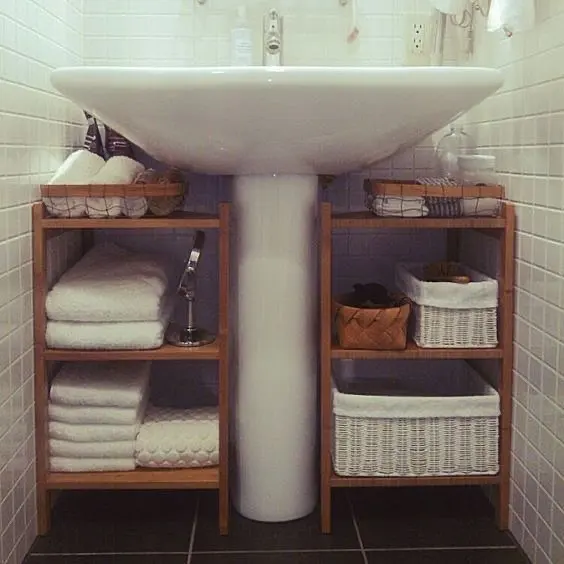
No cabinet? Two slim shelving units can still turn the space beside a pedestal sink into storage.
The matching wood shelves fit on either side rather than trying to hide the pedestal itself. Folded towels fill most of the shelves, with baskets taking care of smaller items.
It’s a nice example of leaving the awkward part alone. The pedestal stays visible. The useful space beside it gets used.
5. Use The Cabinet Door
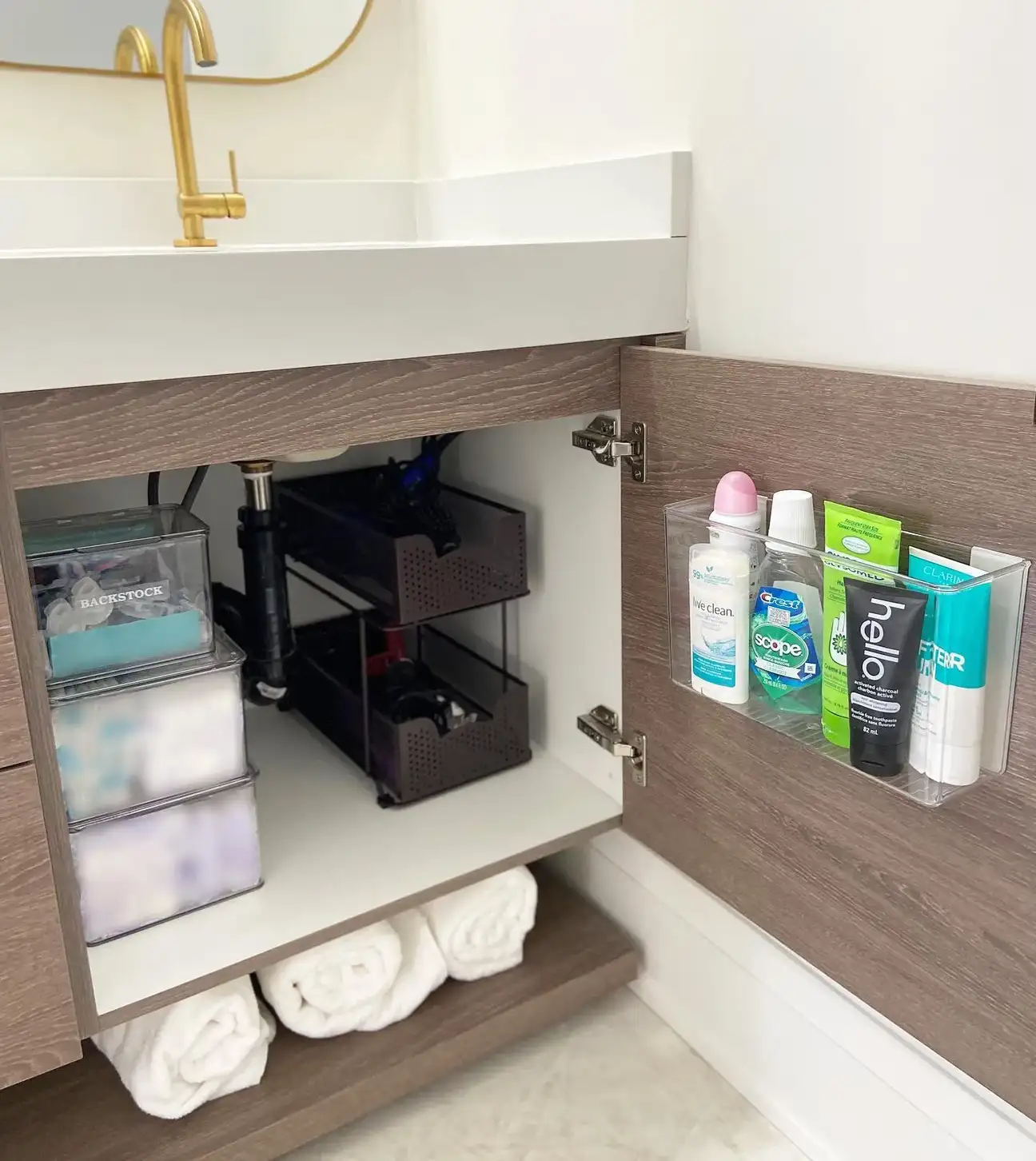
The clear organizer attached to the inside of this cabinet door is the detail I’d notice first.
Toothpaste, mouthwash, and other narrow toiletries can live there instead of taking another chunk out of the main shelf. They’re also right in front of you when the door opens.
Inside, the cabinet still has room for drawers, pull-out baskets, and plumbing. A shallow door bin isn’t huge storage, but for the right five or six items, it earns its space.
6. Add Baskets To Open Shelves
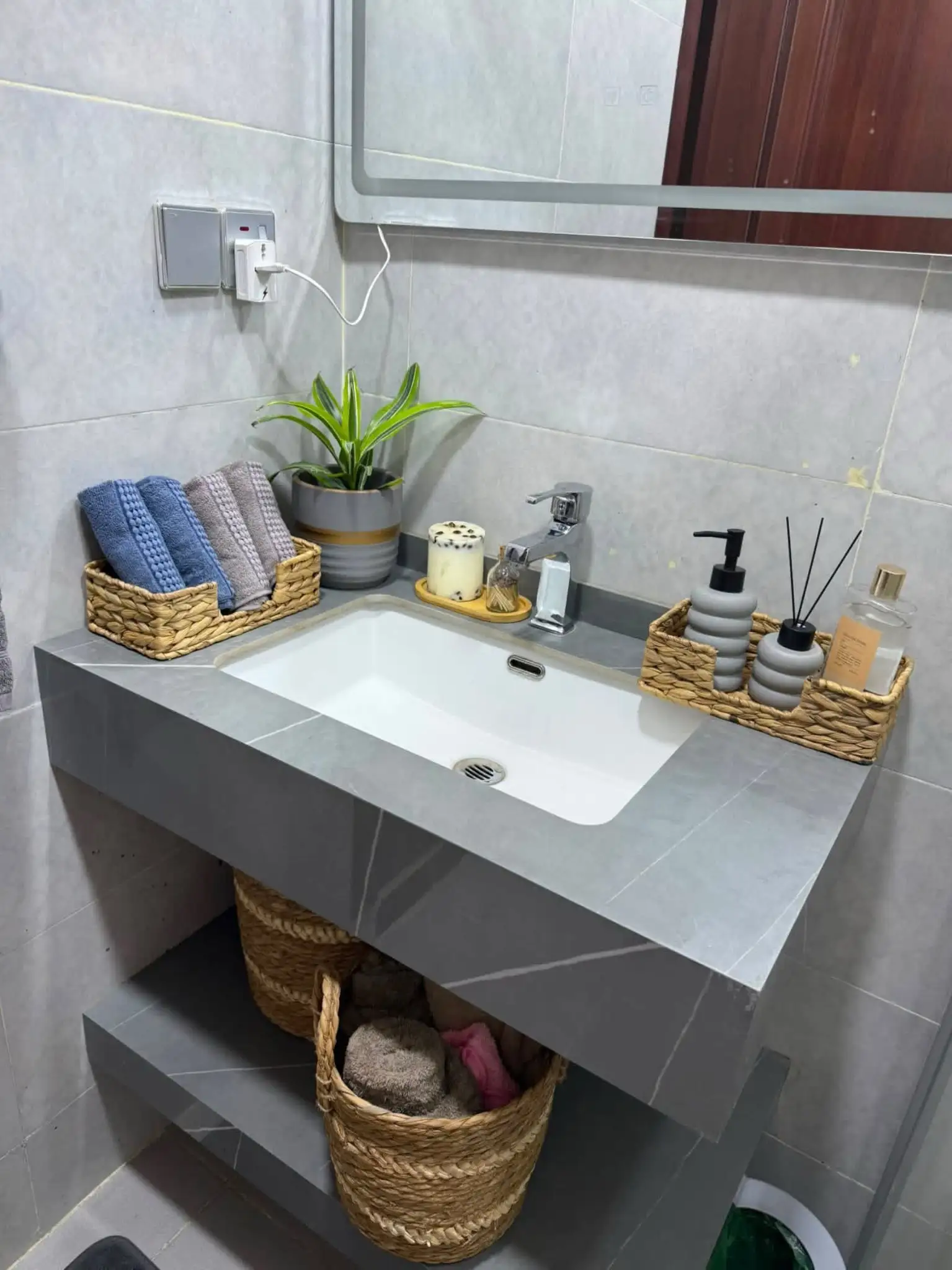
Open storage under a sink can get visually busy very quickly. These woven baskets solve that without filling the shelf with matching plastic containers.
Towels and soft bathroom items can be dropped inside, and the baskets themselves look fine left on display.
I wouldn’t add more than this. Two roomy baskets already fill the lower shelf nicely. Packing several smaller baskets beside them would probably make the area feel busier, not more organized.
7. Turn The Vanity Into Drawers
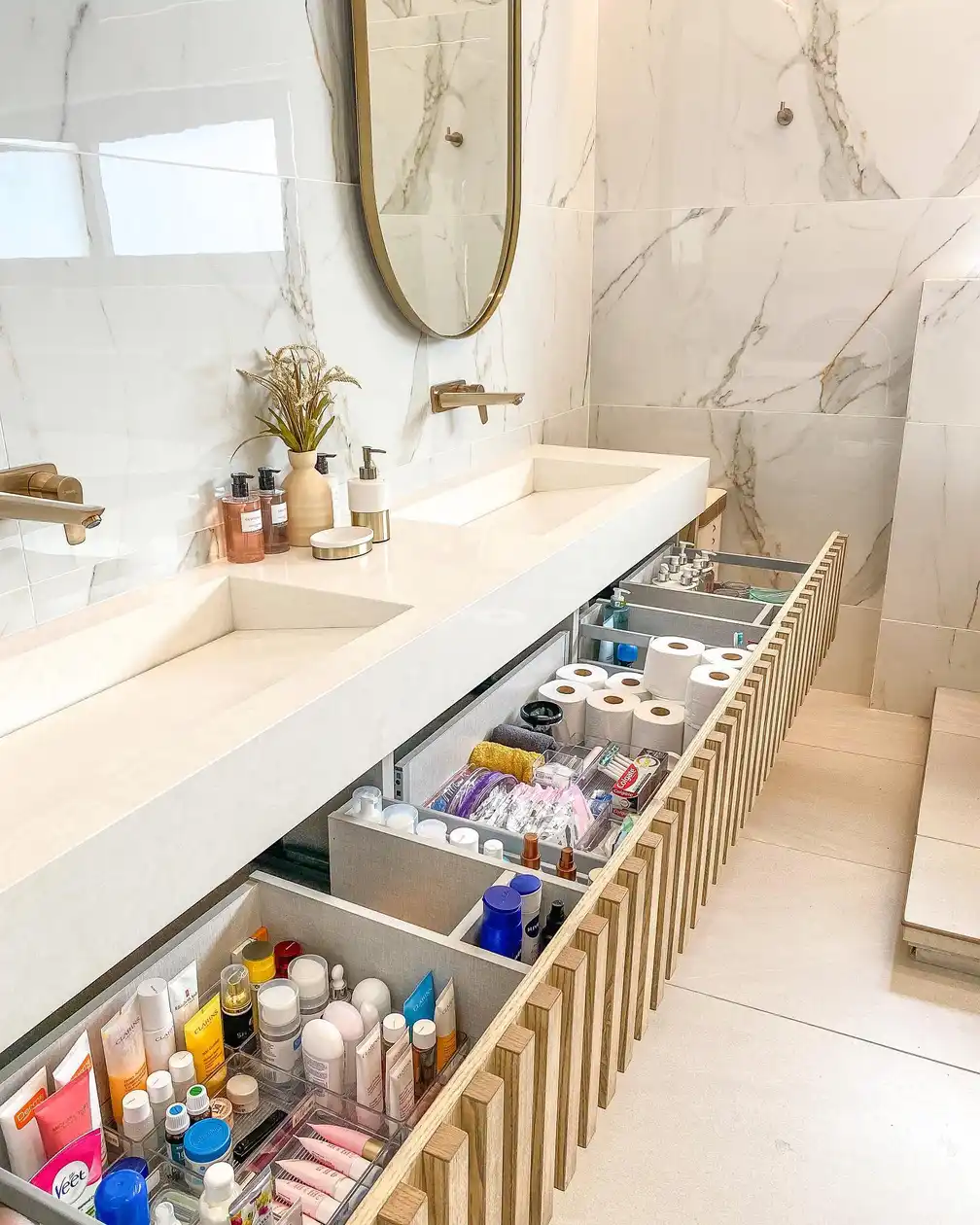
Deep drawers completely change how undersink storage works.
Instead of reaching into the back of a cabinet, you pull the whole storage area toward you. In this vanity, clear dividers separate bottles, skincare, toothpaste, smaller toiletries, and spare toilet paper across the long drawer.
This setup makes the most sense when you have lots of small products. Without dividers, one giant drawer can become just as messy as a cabinet. Here, each section is narrow enough to keep things standing in roughly the right place.
8. Add A Turntable Between Racks
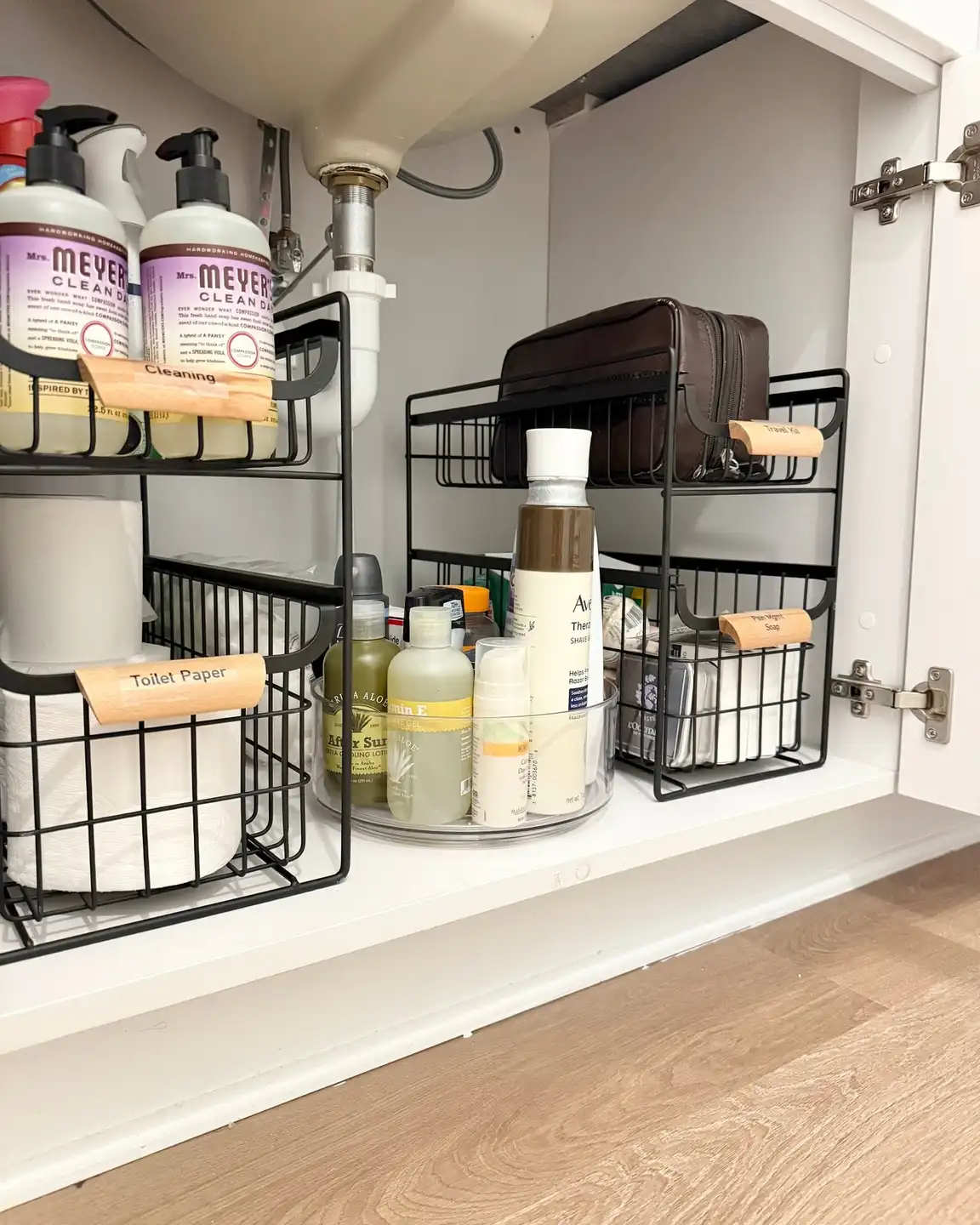
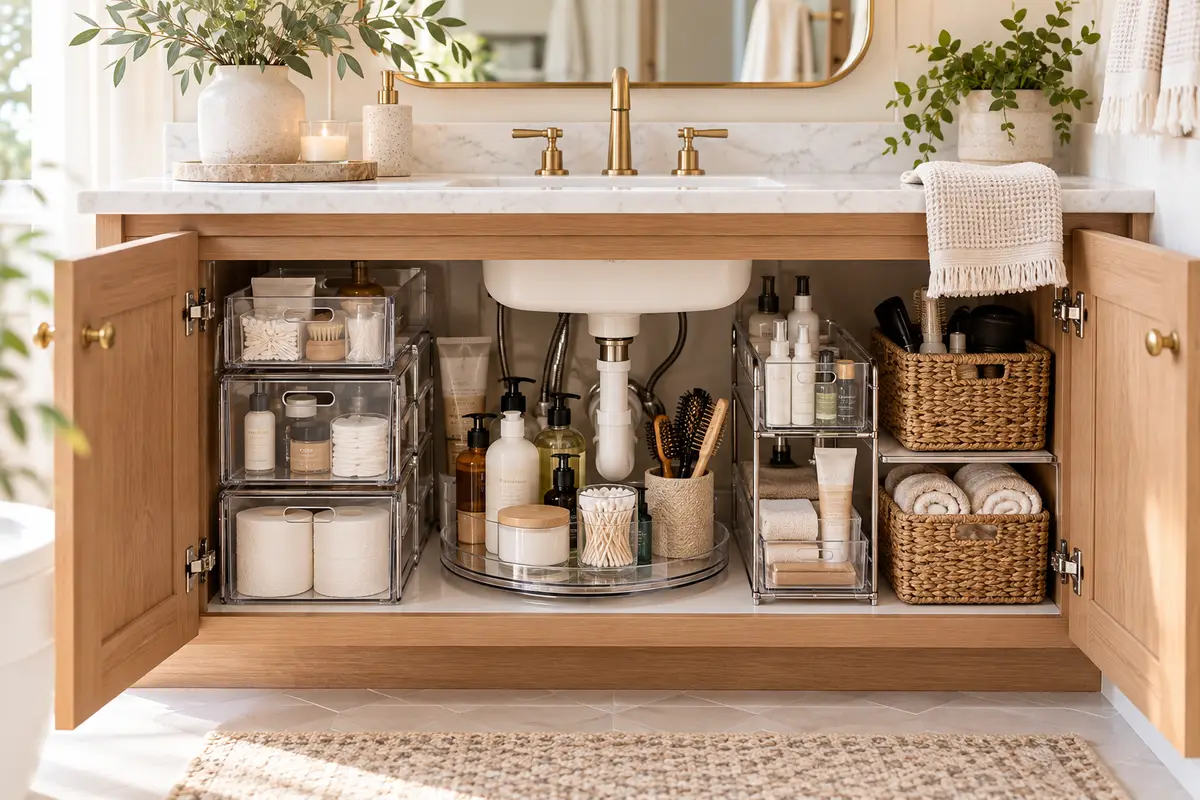
There’s a turntable sitting right between two taller storage racks here, and that middle section is probably the easiest part of the setup to recreate.
Tall bottles can be annoying under a sink because the ones at the back disappear. Put them on a rotating tray and the back row comes to you.
The racks on either side handle paper goods, cleaning products, and smaller bathroom supplies. Three separate zones, with the drainpipe still running through the cabinet. It uses the shape of the space instead of pretending it’s a normal rectangular cupboard.
9. Stack Clear Bins By Category
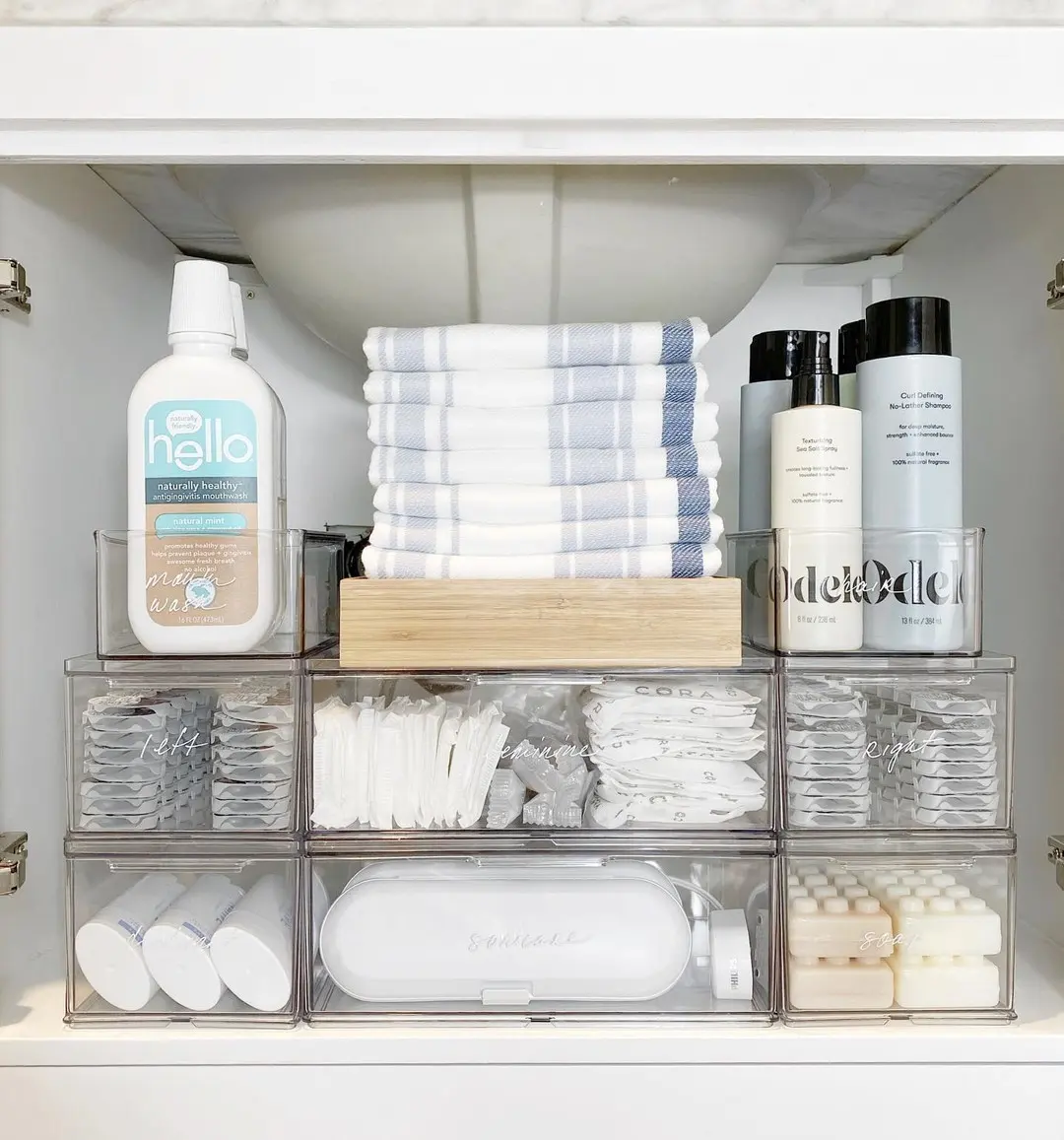
This one is packed. Still, you can see where almost everything belongs.
Shallow clear bins keep packets, soap, bottles, and other supplies separated without hiding what’s inside. Folded towels sit across the top in the gap below the sink bowl.
I’d take the category idea from this setup rather than trying to match the number of containers. If you only need four bins, use four. The useful part is being able to glance inside and know which container to pull.
10. Pair A Drawer With Turntable
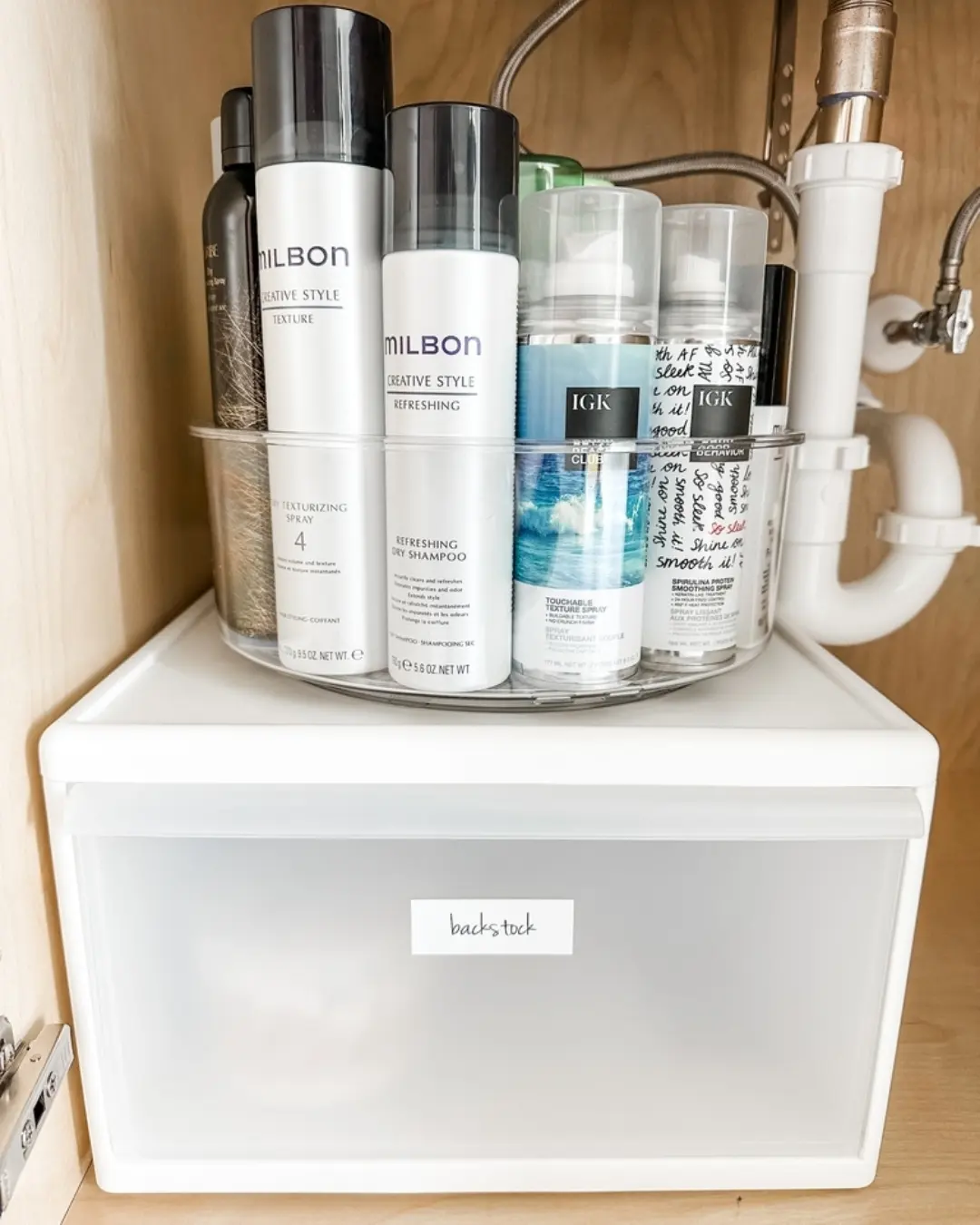
One drawer. One turntable. That’s enough to make this little corner work.
The frosted drawer hides backup products, while the round tray on top holds tall hair bottles that would be awkward inside it.
It also creates two levels without installing a shelf. That’s handy when the pipe layout leaves you with one decent patch of floor space but plenty of empty height above it.
11. Leave The Middle Open
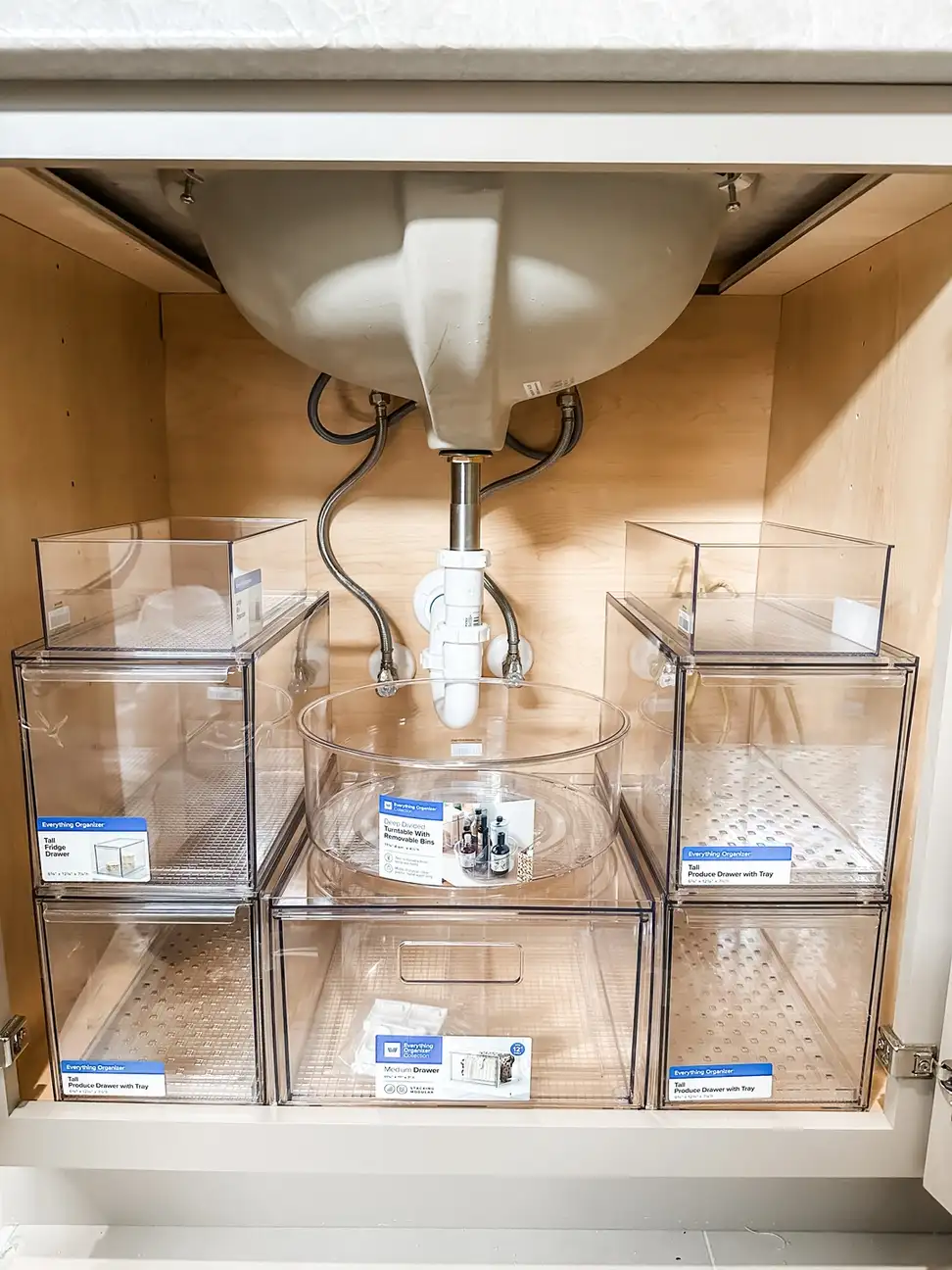
There’s a lot of unused-looking space around the drainpipe here, and I’d leave it that way.
Tall clear drawers sit against both cabinet walls. A lower round organizer occupies the center without covering the plumbing connections.
You still get plenty of storage, but there’s room to see what’s happening under the sink. A slow leak is much easier to notice when it isn’t hidden behind a packed row of bottles. It also means you won’t have to empty the entire cabinet just to reach a shutoff valve.
12. Divide Storage By Category
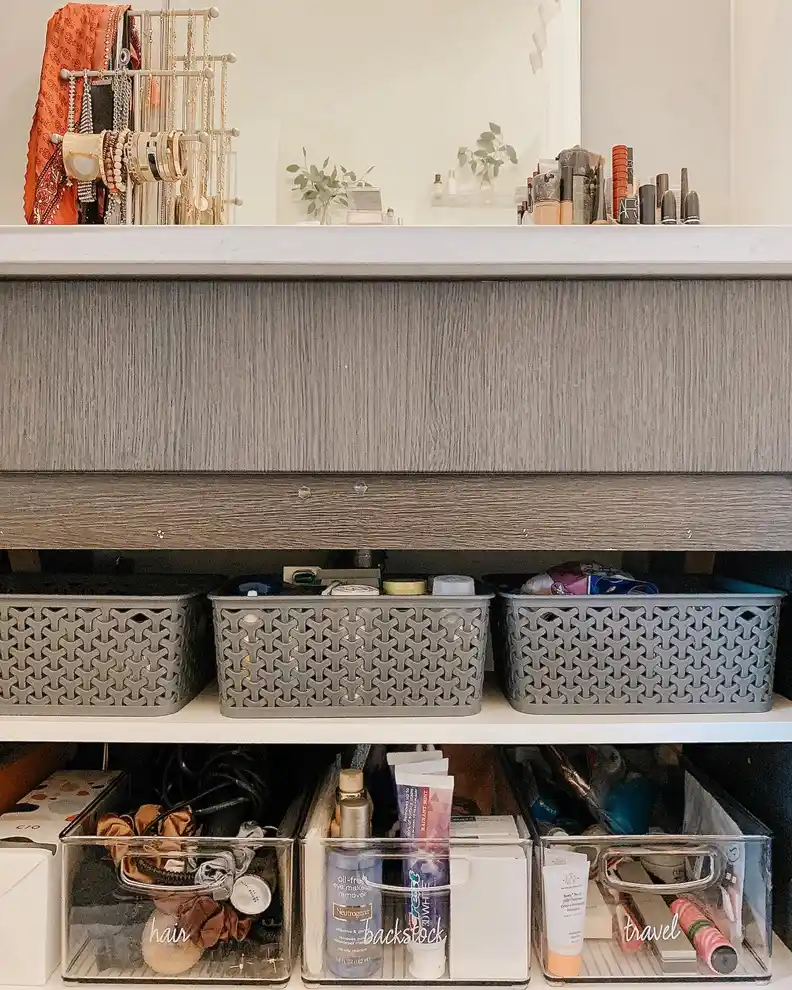
Not everything here is stored the same way, which is exactly why it feels manageable.
The patterned baskets on the upper shelf hide loose odds and ends. Down below, clear bins hold categories that are more useful when visible, including hair items, backups, and travel products.
There’s no reason every container in an undersink cabinet needs to match. Use opaque storage when you want to hide clutter. Use clear storage when seeing the contents saves you from opening three bins first.
13. Use Drawers Around The Sink
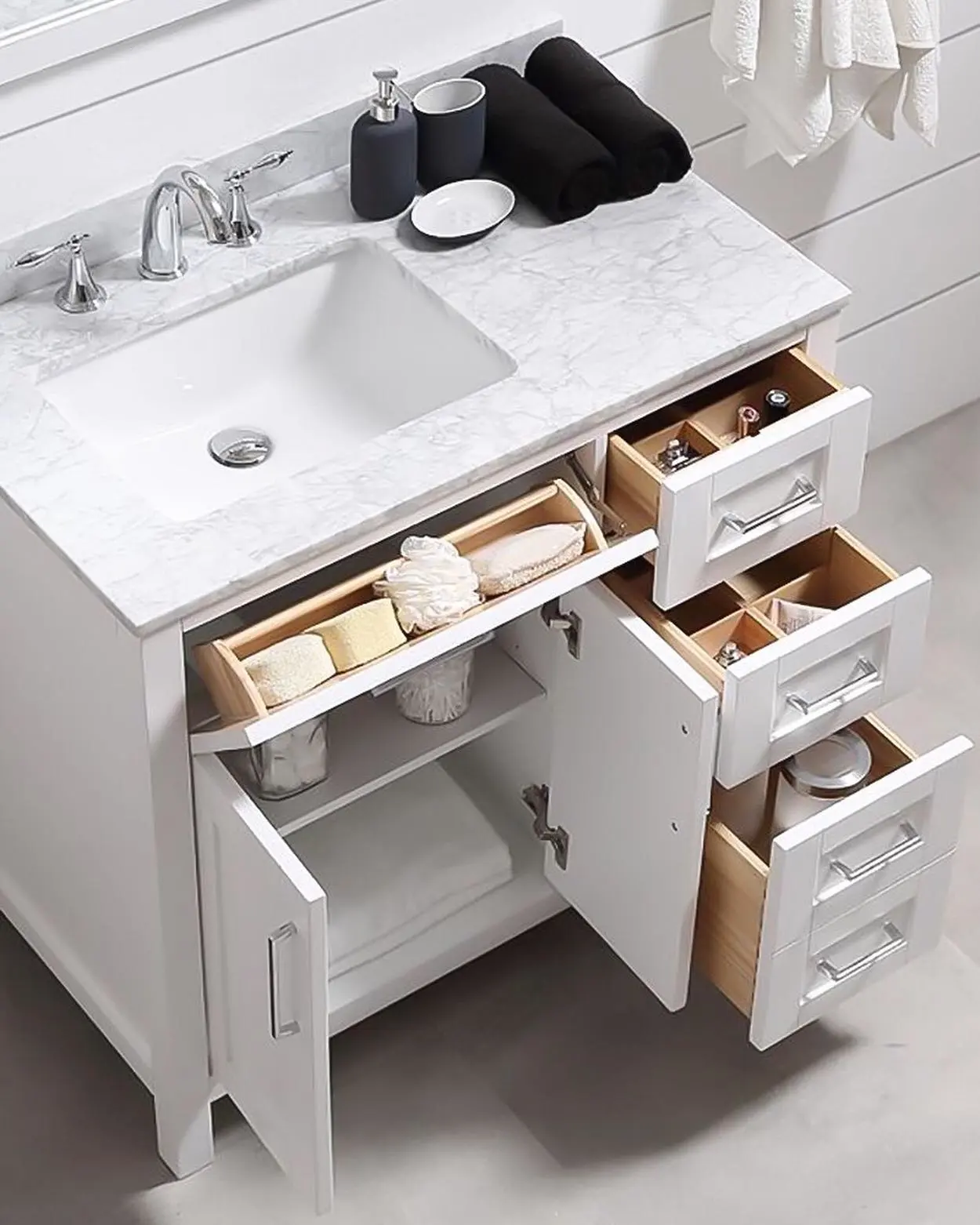
The shallow drawer directly beneath the sink is doing something a deep cabinet usually can’t. It gives little bathroom items their own narrow layer.
Loofahs, brushes, bottles, and smaller pieces can sit side by side instead of dropping to the bottom of a tall cupboard. The slim drawers along the right side take that idea further with divided sections for even smaller products.
The big cabinet underneath can then stay relatively open. I’d rather keep bulky things down there and let the drawers handle anything that tends to wander.
14. Use Matching Two-Tier Baskets
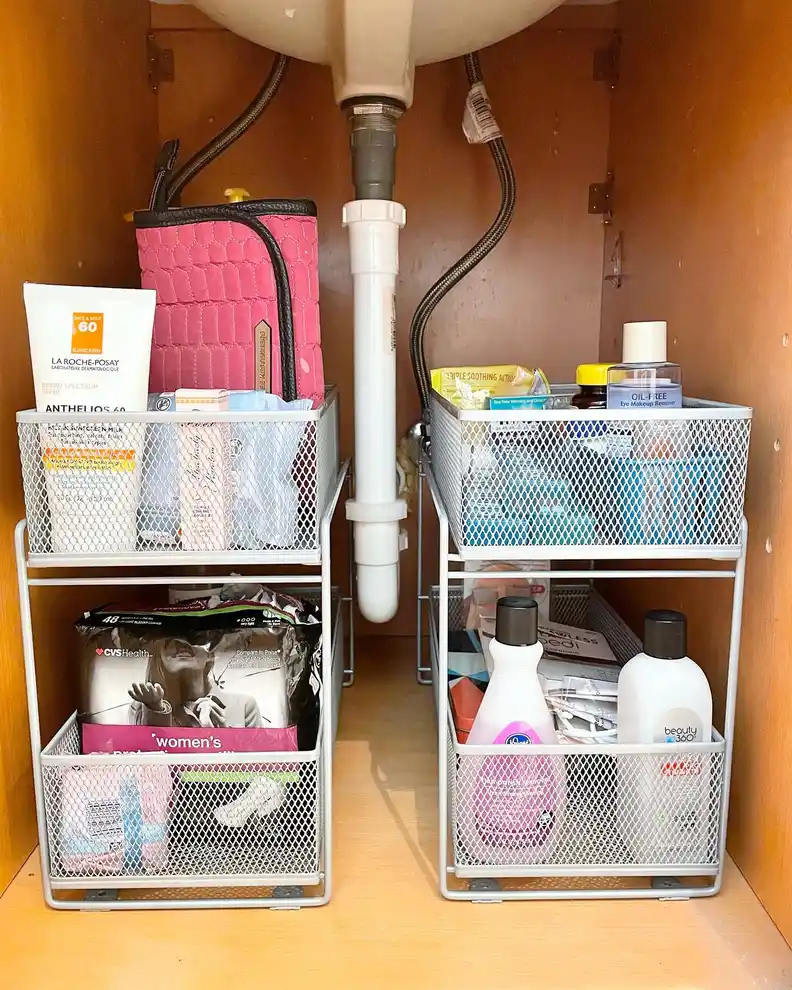
Two simple racks sit on opposite sides of the plumbing, and that’s pretty much the whole system.
It works because the baskets are narrow enough to leave the drainpipe alone. Each rack also gives you an upper and lower level, so loose packages, bottles, skincare, and other bathroom supplies don’t all land on the cabinet floor.
You could also skip the labels completely here. The mesh sides already make the contents easy to see.
15. Mix Trays With Labeled Drawers
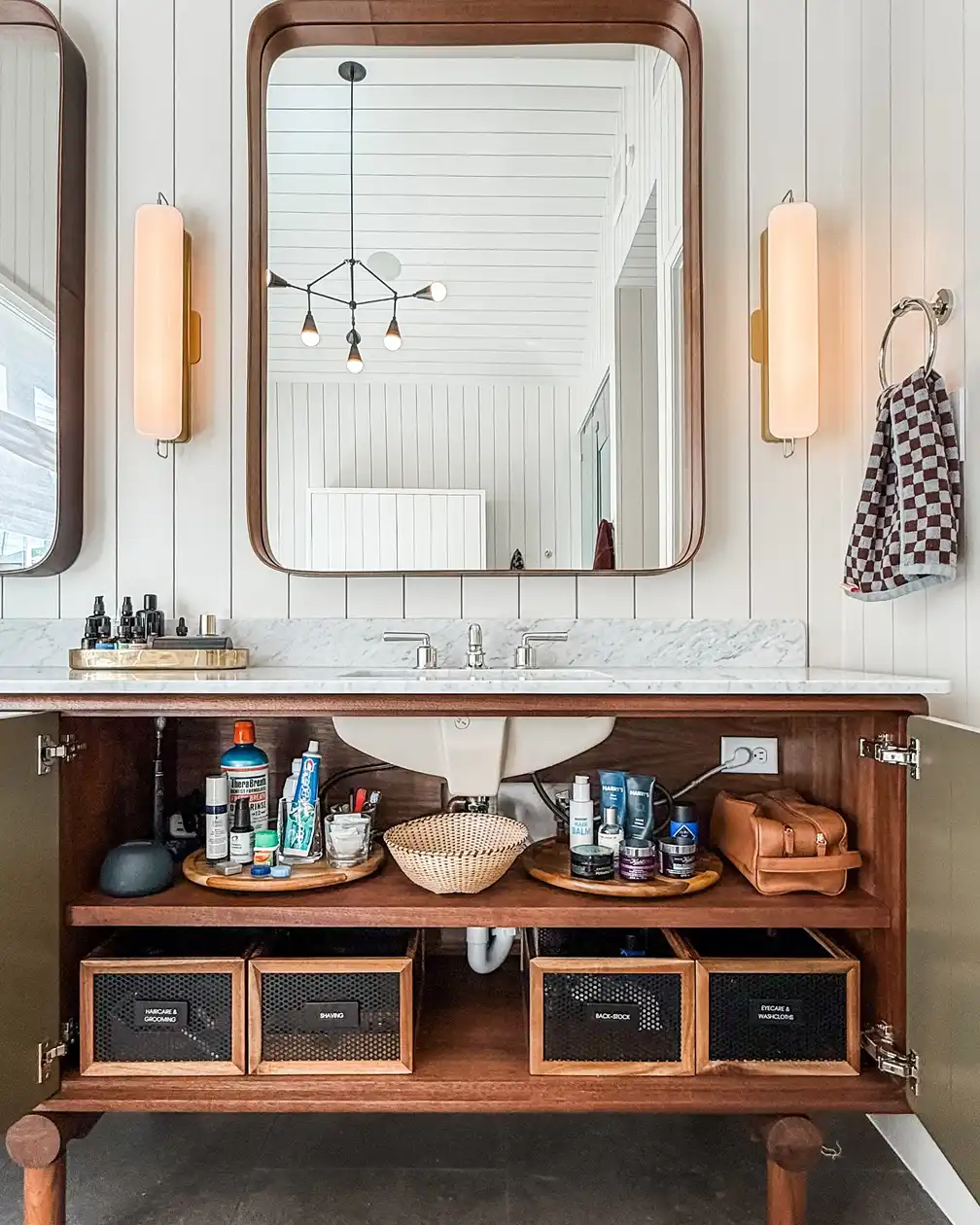
The top shelf feels almost like a small grooming station. Bottles and jars are grouped on round trays, while a woven basket takes the center.
Then the lower shelf switches approach completely. Four labeled drawers hide categories such as grooming, shaving, backups, and eye care.
That separation makes sense to me. Keep the products you actually reach for visible. Let the less attractive backup stock disappear below.
The trays are also easier to lift out than a dozen individual bottles when the shelf needs cleaning.
16. Use Matching Pull-Out Towers
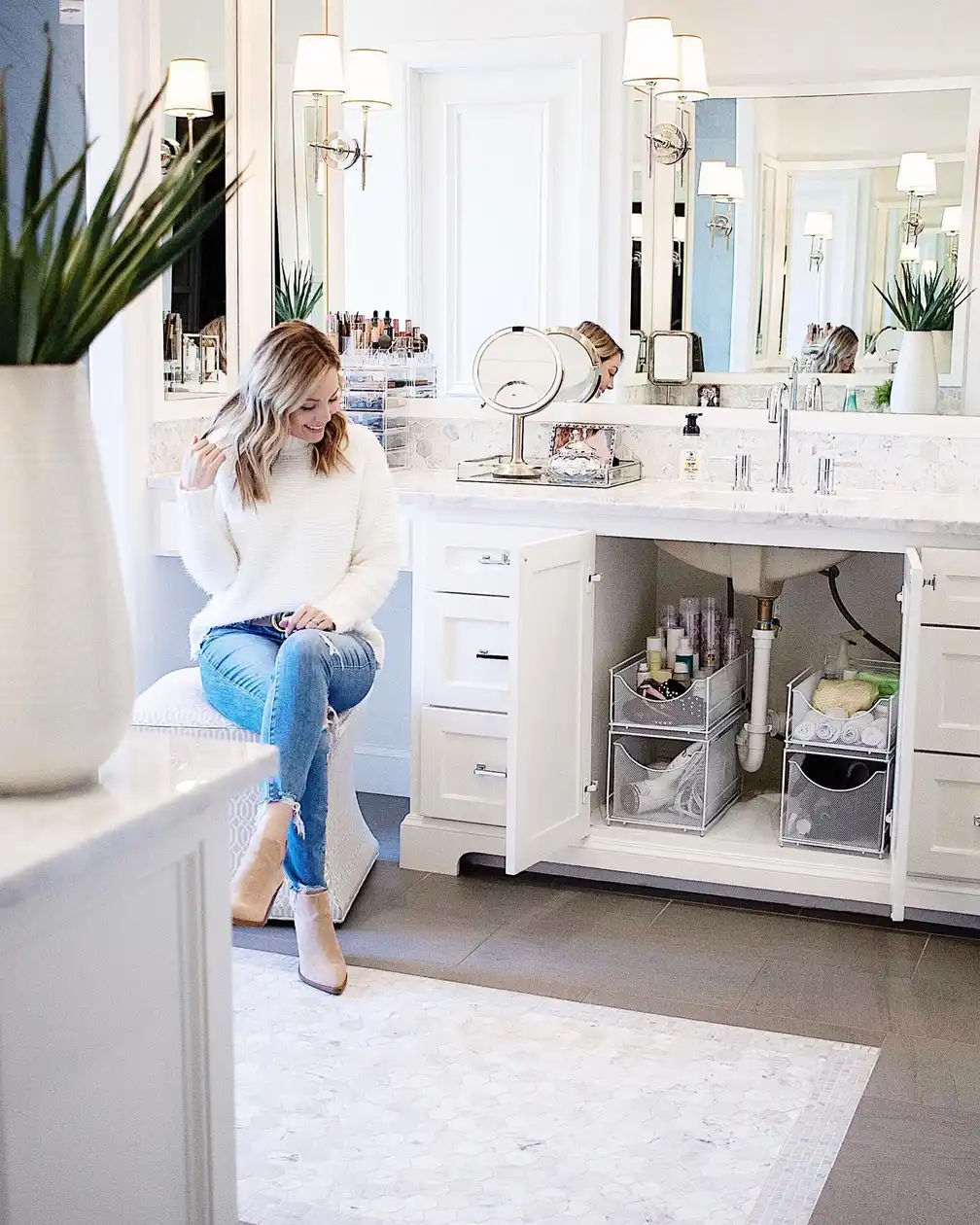
Instead of filling the whole cabinet floor, this setup uses one narrow storage tower on each side of the pipe.
The upper sections are open enough for tall bottles and rolled towels. The lower sections pull out for items that would otherwise end up hidden behind the front row.
This would be especially handy in a shared bathroom. Give each person one side, or split the towers into everyday products and extras. Either way, the categories stay physically separated rather than blending together by the end of the week.
17. Give Each Shelf A Job
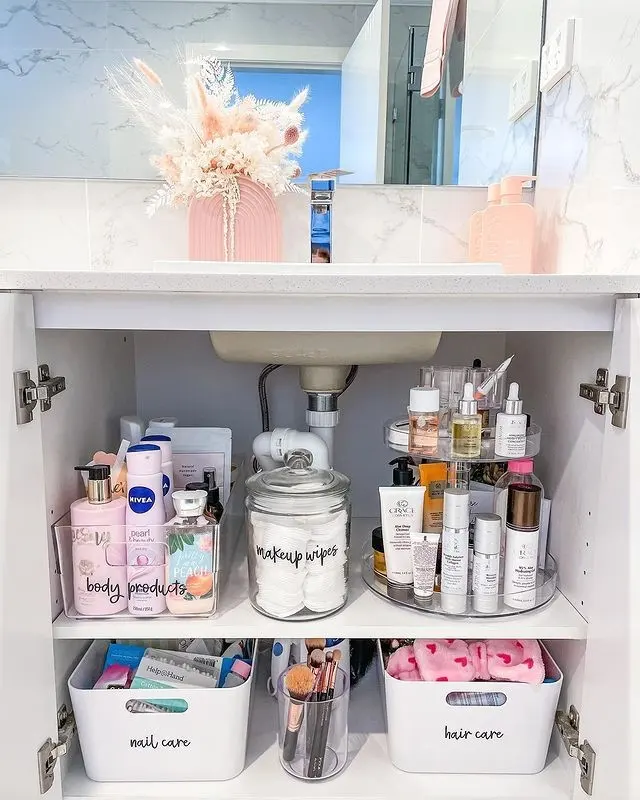
The top and bottom shelves have completely different jobs here.
Daily products stay visible above. Body care sits in one container, skincare goes onto the round turntable, and a clear jar keeps makeup wipes together.
Down below, bigger white bins hide nail care and hair products. Brushes stand upright in the middle instead of being tossed into either bin.
That’s the idea I’d keep from this one: don’t organize both shelves the same way. Put grab-and-go products where you can see them and use the lower level for larger categories that don’t need to be on display.
Final Thoughts
You don’t need to fill every inch under the sink for it to count as organized. In fact, leaving a little breathing room around the plumbing can make the cabinet easier to use and much easier to check for leaks.
Pick the problem that bothers you most. Add a turntable if bottles keep disappearing, drawers if small things get lost, or a couple of baskets if everything looks messy the second you open the door. If the cabinet still cannot hold all the backups, these bathroom closet organization ideas can take care of the overflow elsewhere.
Good undersink bathroom organization should make finding things faster. Anything beyond that is optional.