29 Best Back to School Entryway Ideas to Tame Backpack Clutter
Back-to-school season can turn the entryway into a pile of backpacks, shoes, lunch bags, papers, and jackets before the week even gets started. A simple drop zone gives everything a place to land and makes busy mornings easier for the whole family.
These Back to School Entryway Ideas include everything from basic wall hooks and narrow cubbies to personalized mudroom bays, command centers, benches, baskets, and hidden cabinet storage.
There are options for large families, small hallways, unused corners, and even the wall beneath the stairs. The goal is simple: keep everyday school gear easy to find, easy to grab, and much easier to put away.
1. Build Personalized Backpack Cubbies
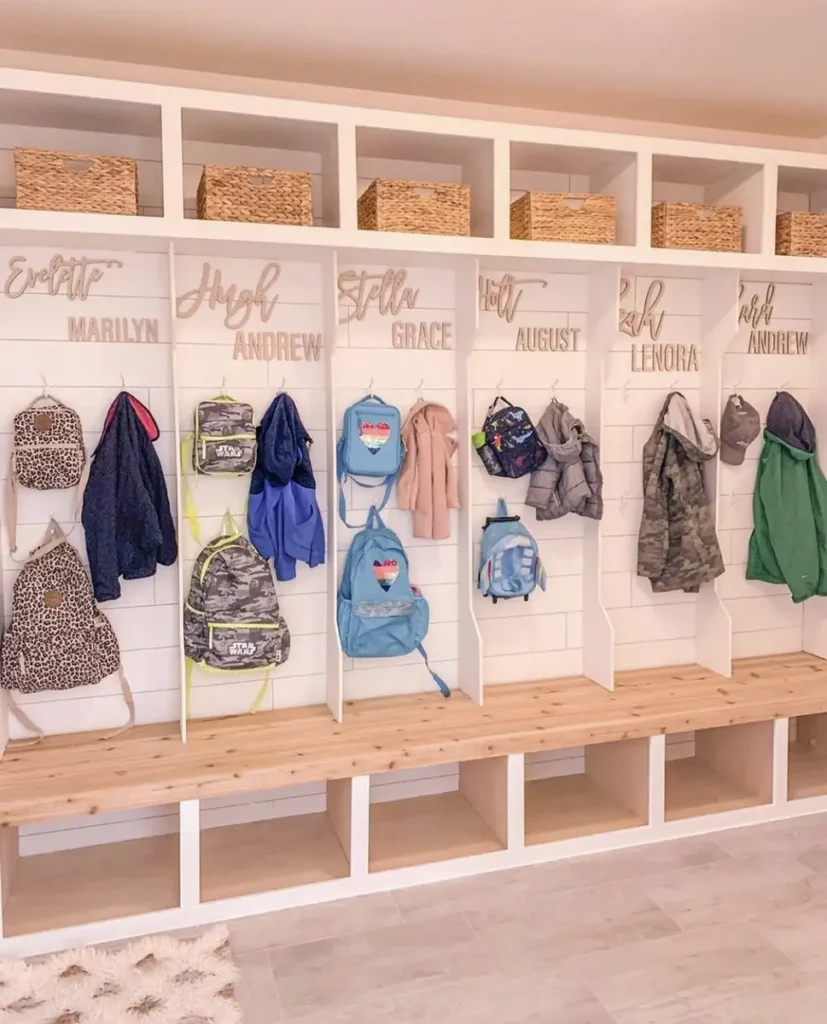
Give every child a clearly defined drop zone so backpacks and jackets never have to compete for space. These tall divided cubbies use individual hooks, name labels, and open storage to keep school gear easy to spot.
- Hang backpacks at a child-friendly height.
- Reserve nearby hooks for coats or hoodies.
- Use the upper baskets for less-used supplies.
The long wooden bench also creates a handy place to sit while putting on shoes, while the lower cubbies can hold bins, footwear, or sports gear.
2. Hang Backpacks on Wall Hooks
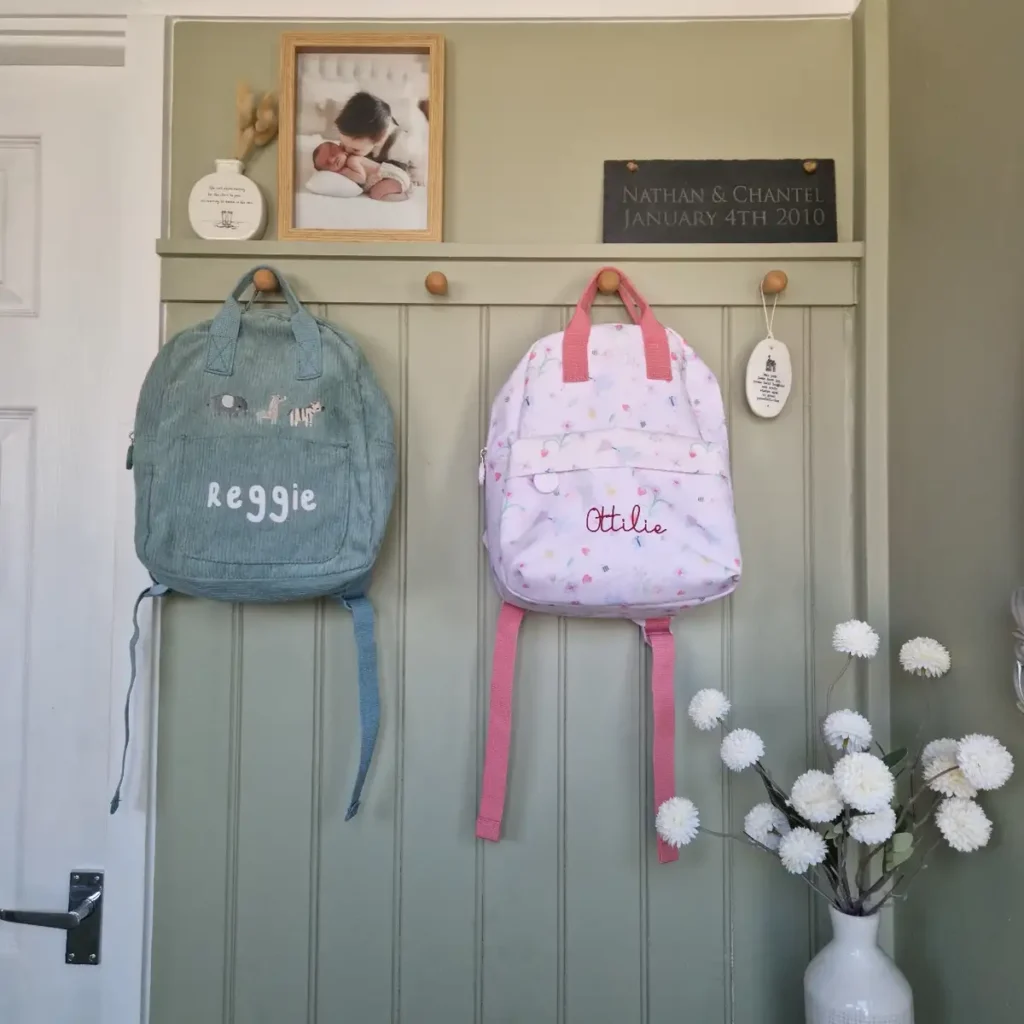
A narrow entryway does not need bulky storage furniture. Here, simple wall hooks turn an unused stretch of paneling into a tidy backpack station for two children.
The personalized bags make each spot easy to recognize, while the shelf above gives the wall a more finished look without stealing floor space. Mount the hooks low enough for kids to reach on their own, then leave a little room between bags so straps do not tangle. This setup works especially well beside a door or in a small hallway.
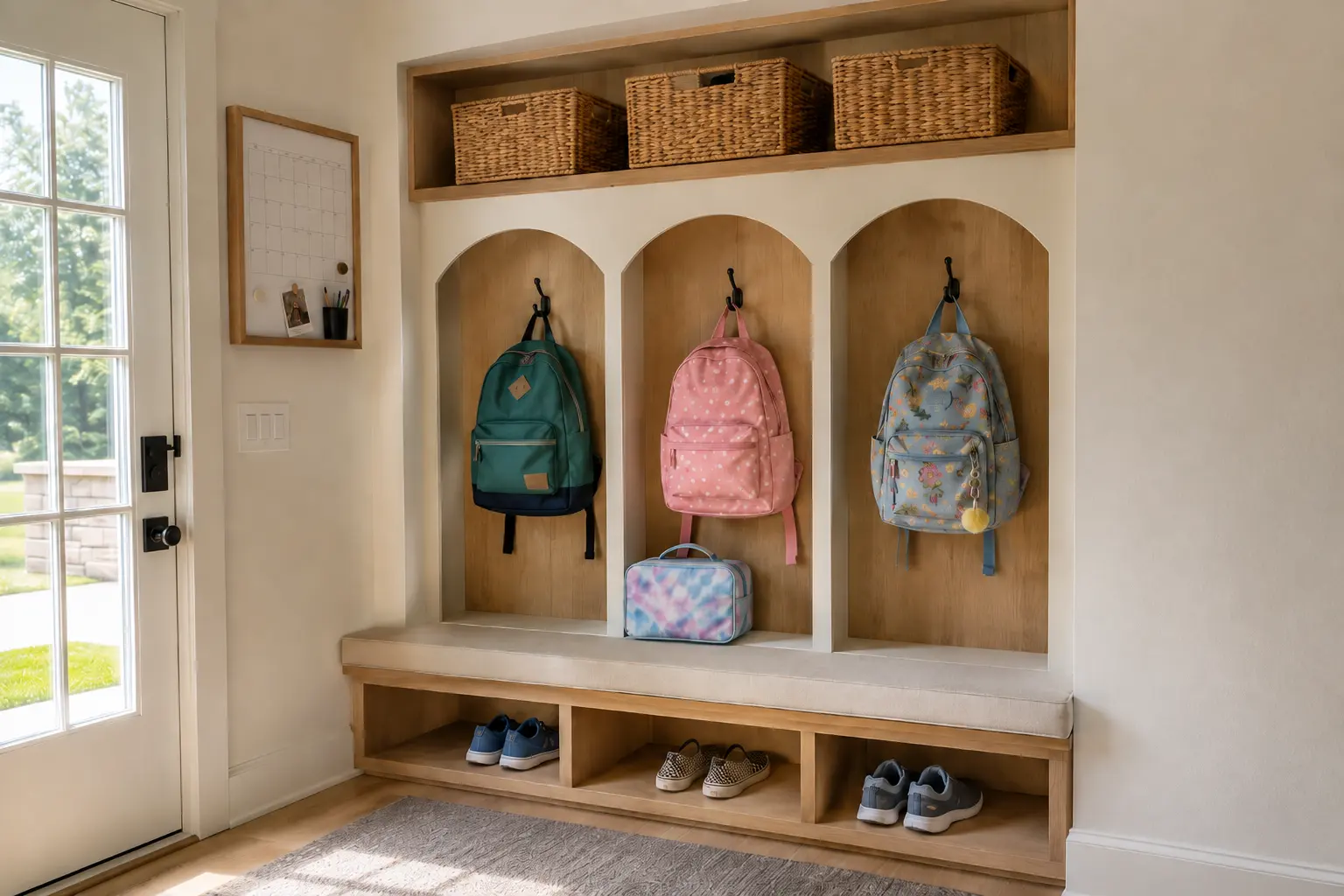
3. Use Tall Backpack Storage Cubbies
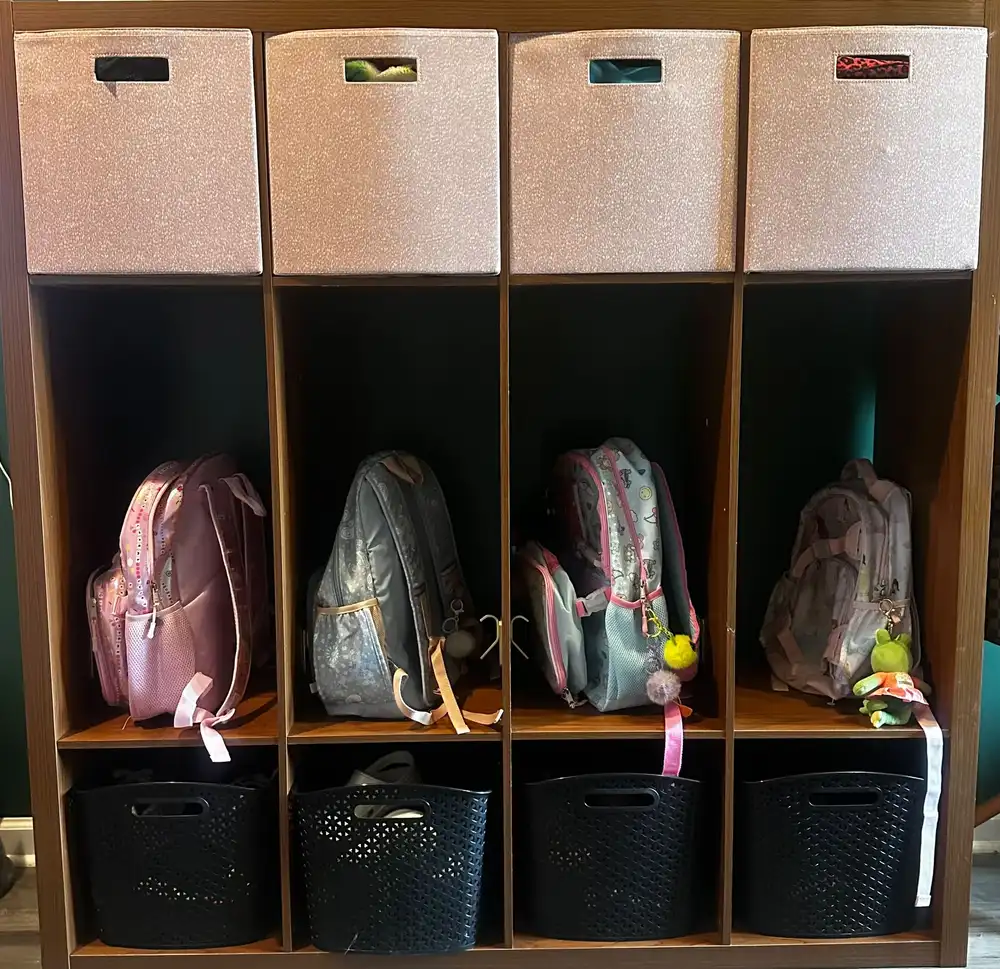
Separate vertical compartments keep backpacks upright instead of letting them pile across the floor. Each child gets a clearly defined section, which makes busy school mornings much easier to manage.
There is useful storage at three levels:
- Top bins can hold smaller school extras.
- Middle cubbies give backpacks their own parking spot.
- Lower baskets provide room for shoes, sports gear, or other grab-and-go items.
The dark wood also helps everyday clutter look more contained, even when the backpacks themselves are colorful.
4. Pair Hooks With Family Calendar
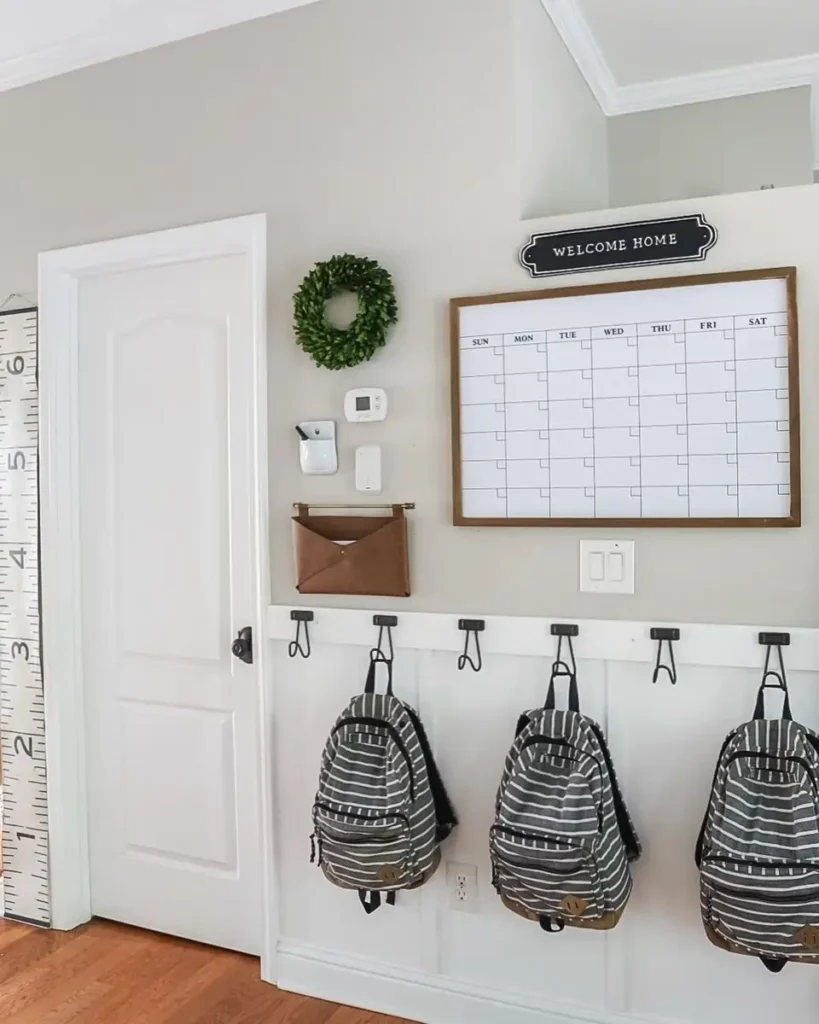
Turn the backpack drop zone into a small command center by adding a large calendar above the hooks. It keeps school gear and family plans in the same place, which can make rushed mornings easier to manage.
What works especially well here:
- Backpacks stay lined up on individual hooks.
- The calendar keeps upcoming school dates visible.
- A small wall pocket can catch notes or papers.
- Extra hooks leave room for jackets, lunch bags, or activity gear.
5. Use Double-Row Backpack Hooks
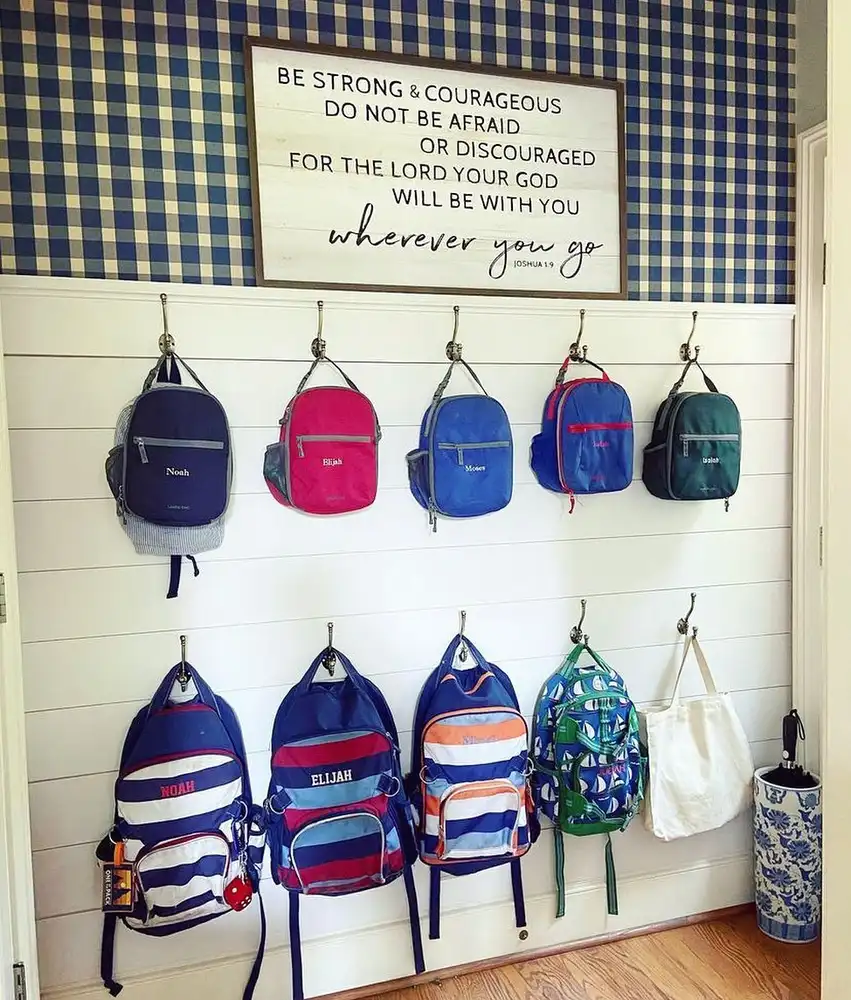
If you have several kids, a single row of hooks can fill up fast. This setup solves that problem by using two levels, with smaller bags on top and larger everyday backpacks below.
That split does two useful things. It keeps the wall from looking too crowded, and it makes it easier to sort bags by size or age group. The labeled backpacks also help each child spot their own things quickly, which can cut down on morning mix-ups.
6. Add Bench Storage Below Hooks
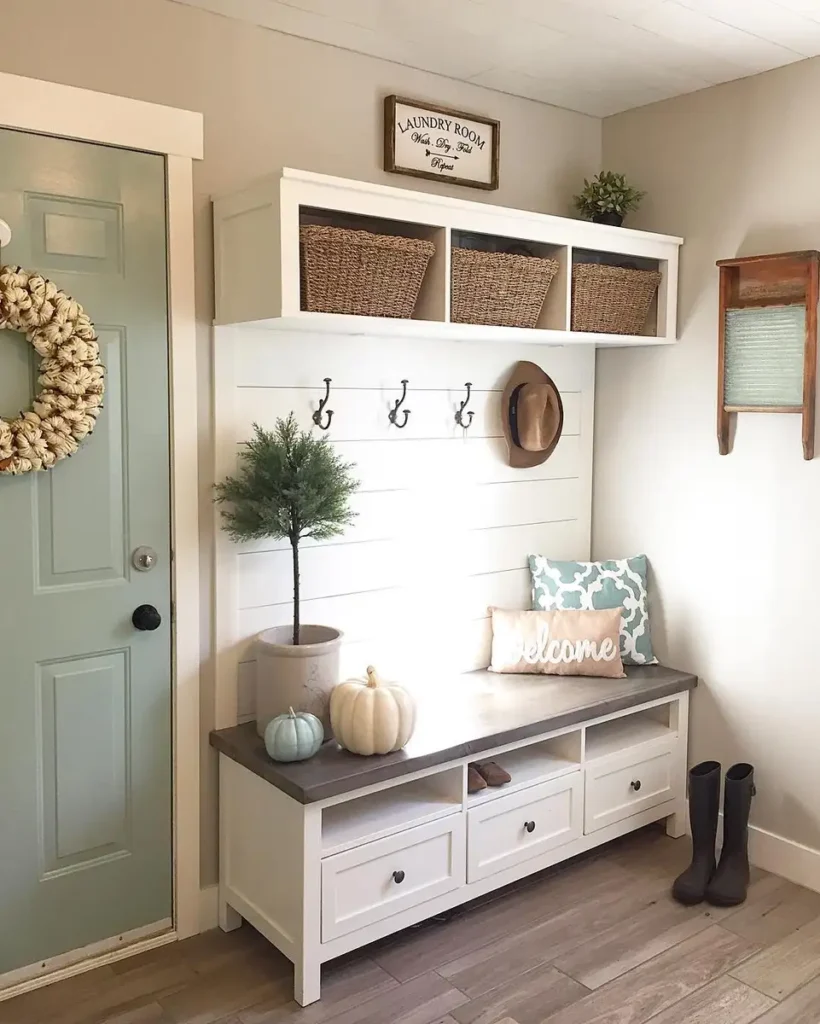
A storage bench gives the backpack zone a useful landing spot without taking over the entryway.
Use the hooks for backpacks and jackets, then let the bench handle the smaller things that usually end up scattered near the door. Drawers can hide school papers, hats, gloves, or spare supplies, while the open slots work well for shoes.
Up top, woven baskets make good homes for items you need less often. The bench also gives kids a comfortable place to sit while getting ready.
7. Try a Freestanding Backpack Rack
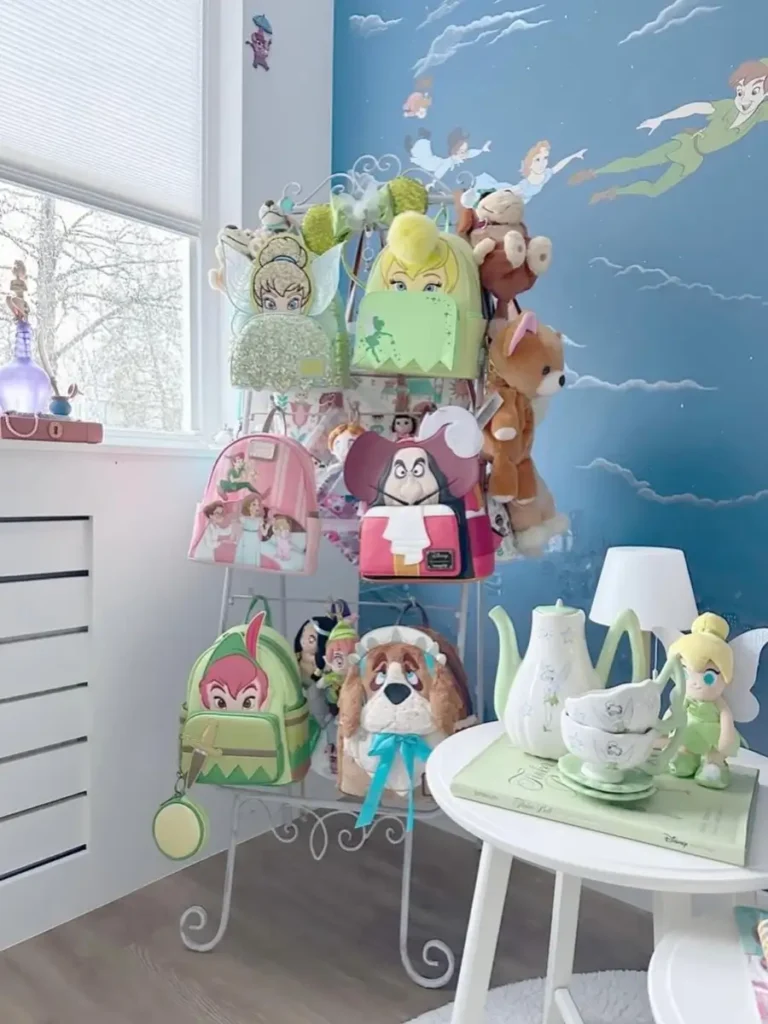
Not every backpack station needs to be attached to the wall. A tall freestanding rack like this one can hold several bags at different heights, making it a flexible choice for a rental or a small entryway.
The open design keeps backpacks visible, while the vertical layout uses less floor space than a wide bench or cabinet. For school use, place everyday backpacks on the easiest-to-reach hooks and keep lighter extras higher up.
8. Build a Homework Command Wall
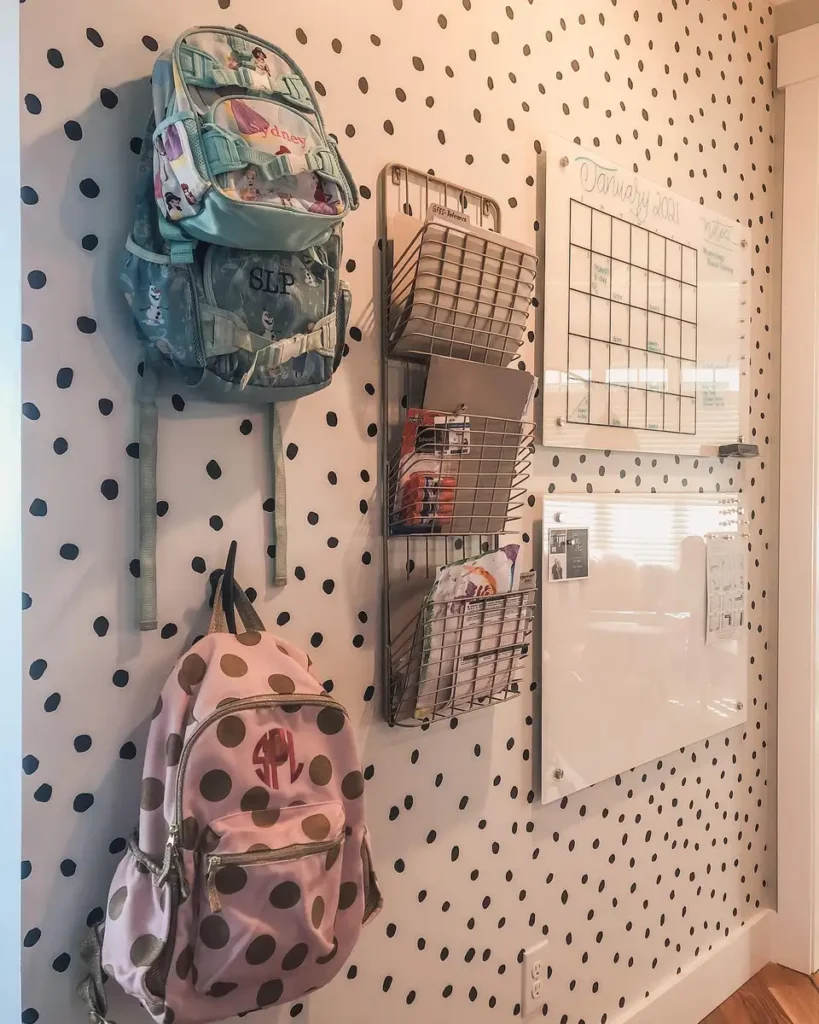
This setup does more than hold backpacks. It turns one wall into a full school station with bag hooks, paper storage, and a place to track the month.
What makes it useful is the mix of functions in a small footprint. Backpacks stay off the floor, the wire baskets hold worksheets and folders, and the calendar plus whiteboard give school reminders a clear home. It is a smart option for families who need one spot for both morning drop-off and after-school paper clutter.
9. Create a Full Entryway Command Center
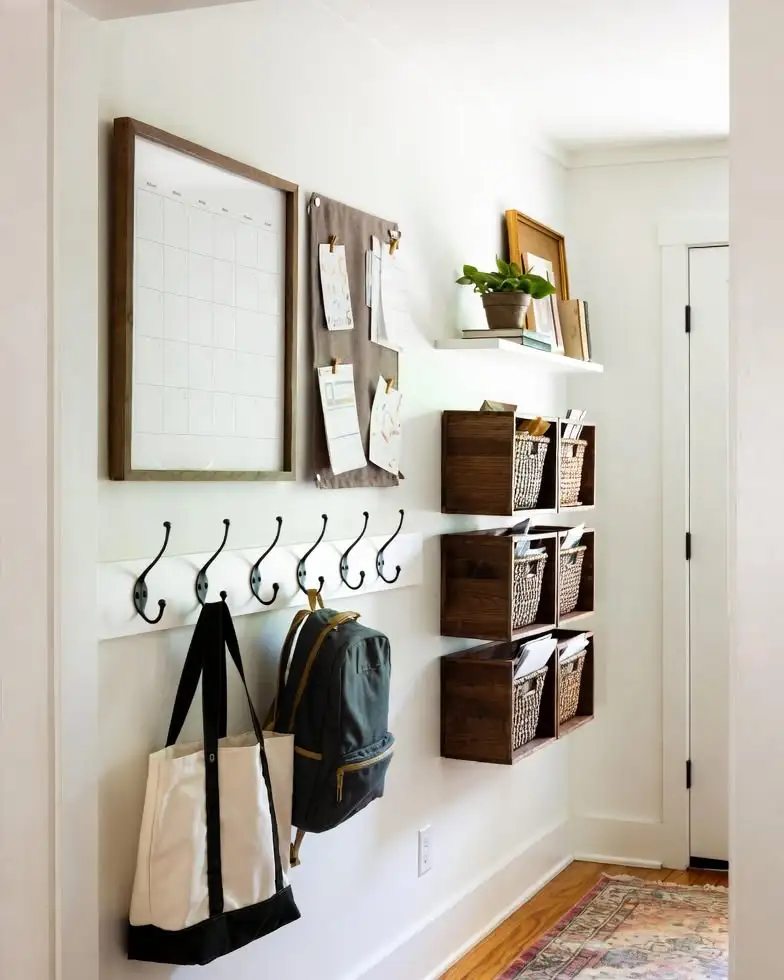
School clutter becomes much easier to control when everything has a nearby home. Here, backpack hooks sit below a calendar and memo board, while wall-mounted cubbies handle papers and smaller supplies.
The open hooks keep daily bags ready to grab. Baskets inside the wooden cubbies can sort homework, permission slips, or activity folders without covering a counter. Adding a calendar above the station also keeps important dates visible, so the entryway works as both storage and a simple family planning zone.
10. Stack Gear in Narrow Cubbies
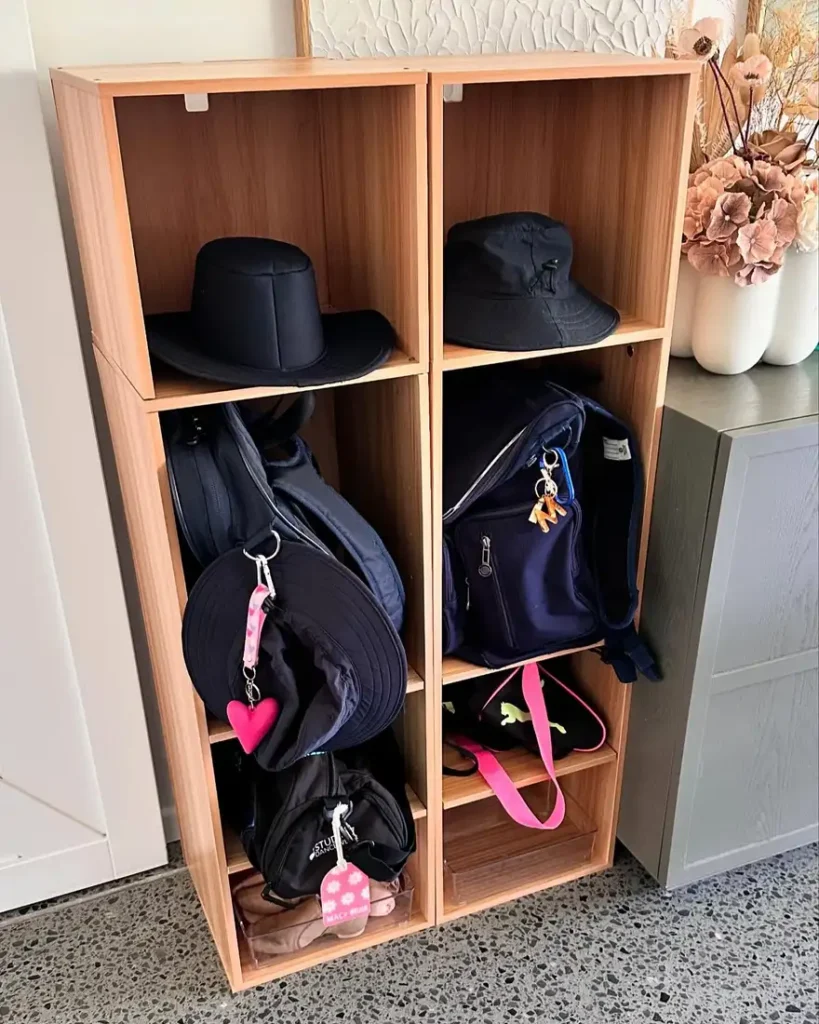
A slim cubby tower can organize school gear without needing a wide mudroom wall. This one uses two vertical columns, so each child can have a clear side for their everyday things.
Keep the most-used backpack around waist height, then use the upper compartments for hats and the lower spaces for smaller bags or accessories. Because everything stays open and visible, kids can quickly see what they need before heading out. It is especially useful beside a cabinet or in a tight entryway corner.
11. Label Each Backpack Drop Zone
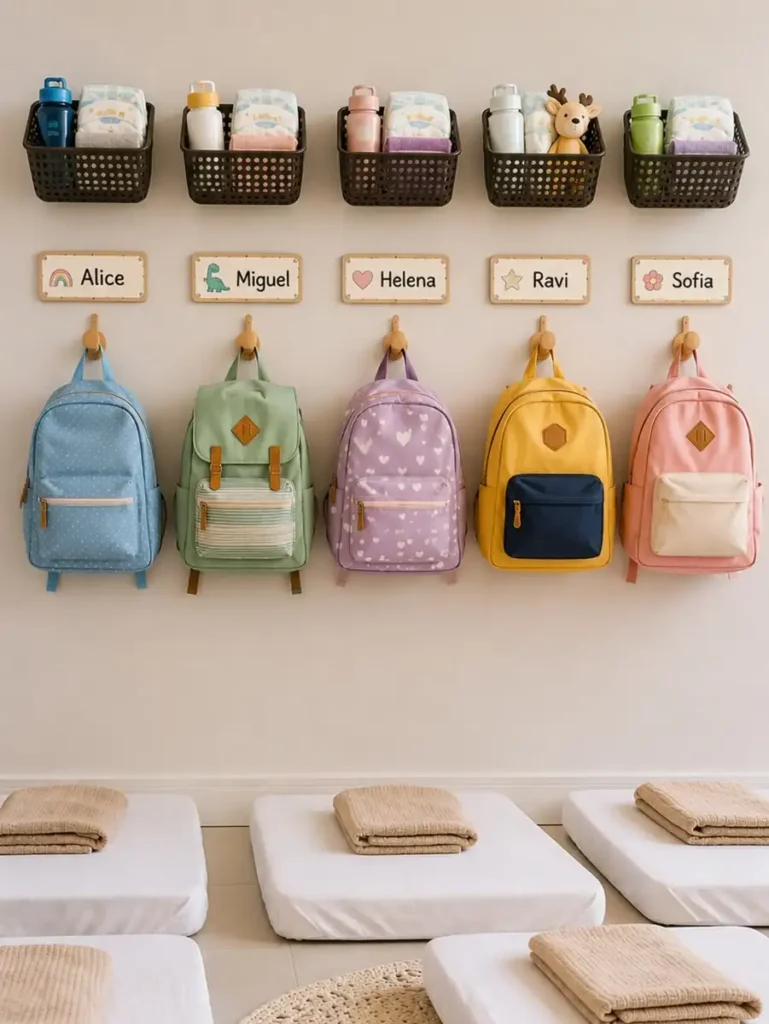
Clear name signs make this shared wall easy for kids to understand at a glance. Each backpack hangs directly below its assigned label, so there is less chance of bags getting mixed up during busy mornings.
The matching baskets above add another layer of storage without using floor space. Give each child one basket for their own grab-and-go extras, then keep the backpack hook directly underneath. The simple top-to-bottom layout makes putting things away feel almost automatic.
12. Combine Backpacks With Paper Storage
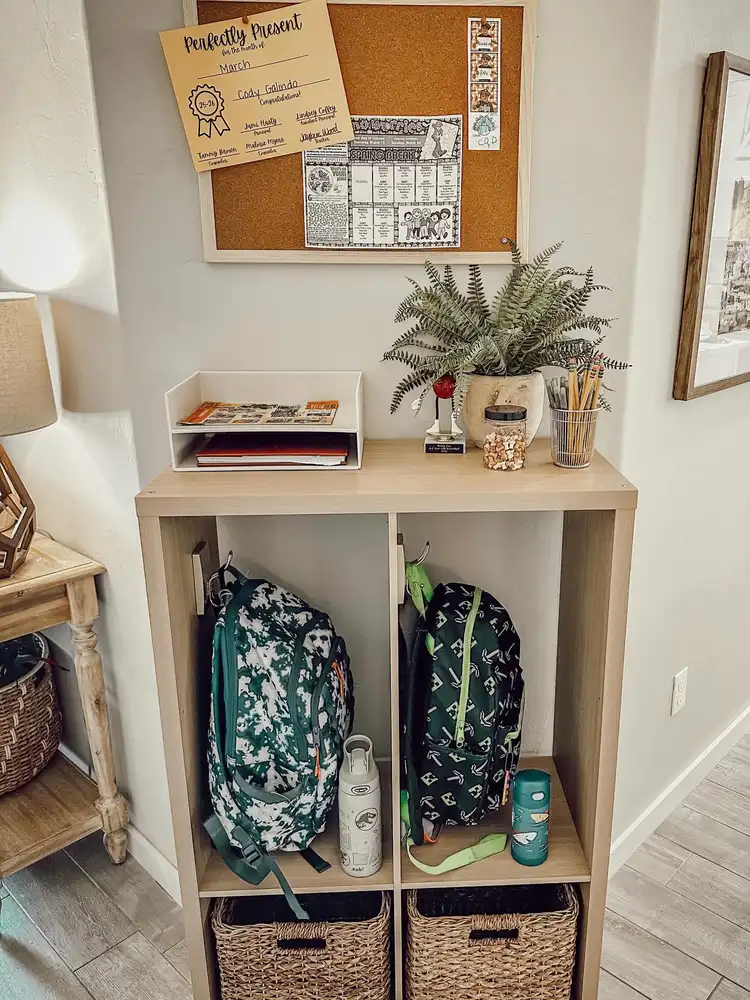
This compact station handles both school bags and the papers that come home inside them. Two open compartments give each backpack its own hook, with enough shelf space for water bottles and other daily essentials.
Above, a desktop sorter keeps notebooks and loose papers from spreading across the surface, while the corkboard puts school notices where everyone can see them. Woven baskets below are useful for less attractive extras, so the main drop zone stays easy to scan and quick to reset.
13. Add Art Above Backpack Cubbies
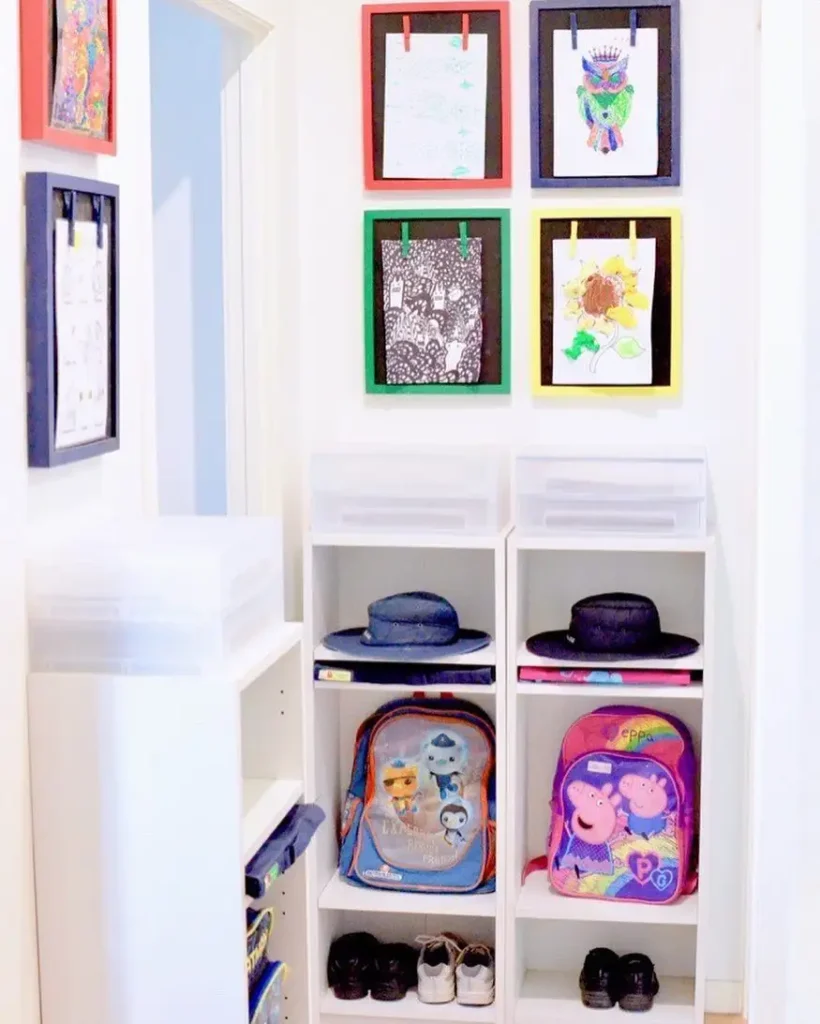
Backpack storage can still feel cheerful and personal. These narrow white cubbies keep the practical pieces at kid height, with backpacks in the middle, shoes below, and hats tucked onto an upper shelf.
The framed artwork above brings color into the setup without using any valuable storage space. Clips make the display easy to update whenever new drawings come home from school.
A nice bonus: each child can have one cubby and one art frame, making the whole station feel clearly theirs.
14. Pair Backpacks With Lunch Crates
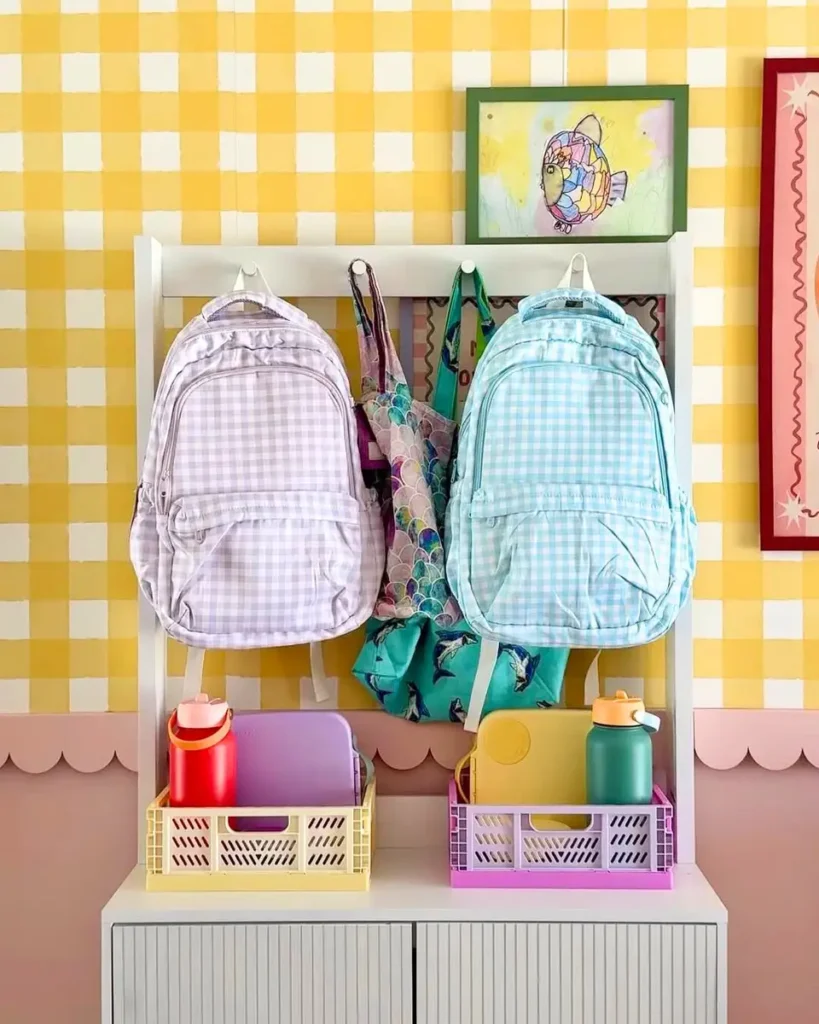
Keep the morning essentials together instead of storing lunch gear in another room. This cheerful station hangs backpacks and tote bags on the upper rail, then gives each child a small crate underneath for a lunchbox and water bottle.
That simple split makes packing easier. Bags stay ready at eye level, while food and drink items have their own easy-to-check spot below. A narrow cabinet underneath can hide extra supplies, so the colorful everyday pieces remain organized without making the entryway feel cluttered.
15. Personalize Hooks With Kids’ Names
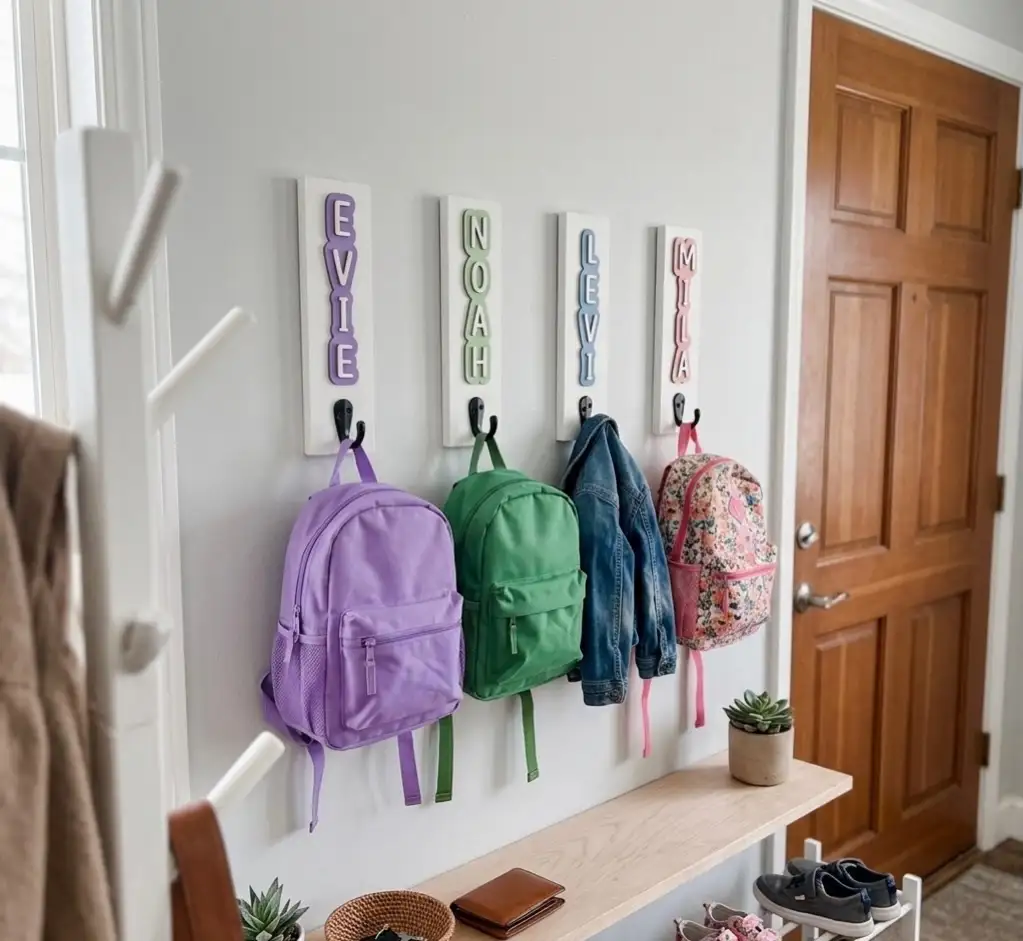
Give each child a clearly marked spot with a name plaque placed right above their hook. The vertical signs make the setup easy to read while adding a playful detail to an otherwise simple wall.
Backpacks, jackets, and other school-day gear can all hang in the same row without getting mixed up. Keep the hooks spaced far enough apart so fuller bags do not overlap. A slim bench underneath also gives kids somewhere to sit while putting on shoes or checking their bags before leaving.
16. Use a Peg Shelf Drop Zone
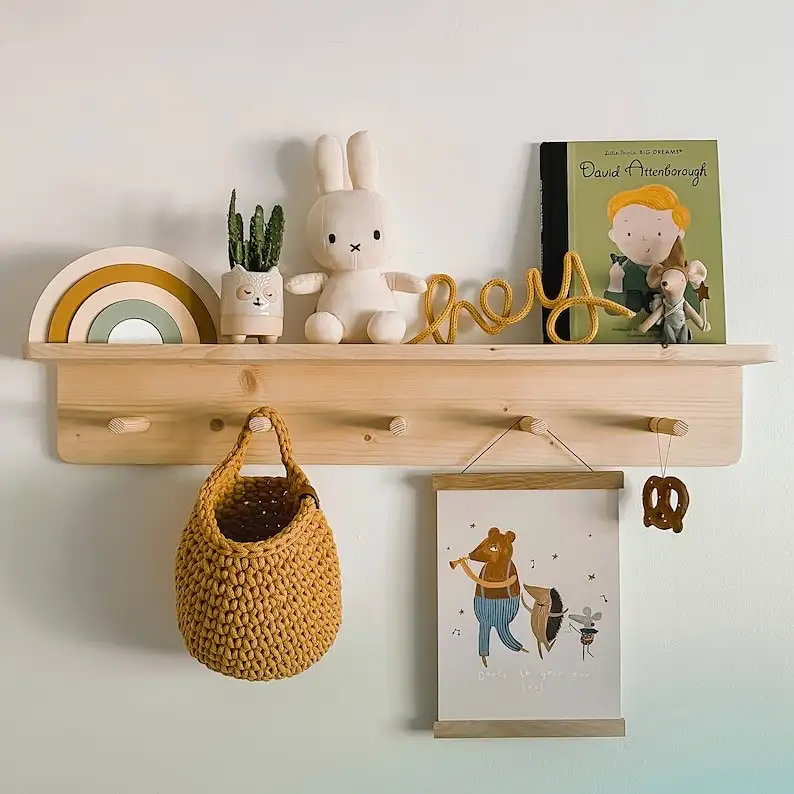
A simple wooden peg shelf can turn a small entryway wall into useful school storage without adding bulky furniture. The pegs give you flexible hanging space, while the ledge above can hold a few lightweight everyday items.
For a back-to-school setup, use it like this:
- Hang a small basket for keys or school accessories.
- Reserve sturdy pegs for light bags or hats.
- Keep the shelf itself mostly clear so the area stays easy to manage.
It works especially well where floor space is limited.
17. Hide School Gear in Cabinet
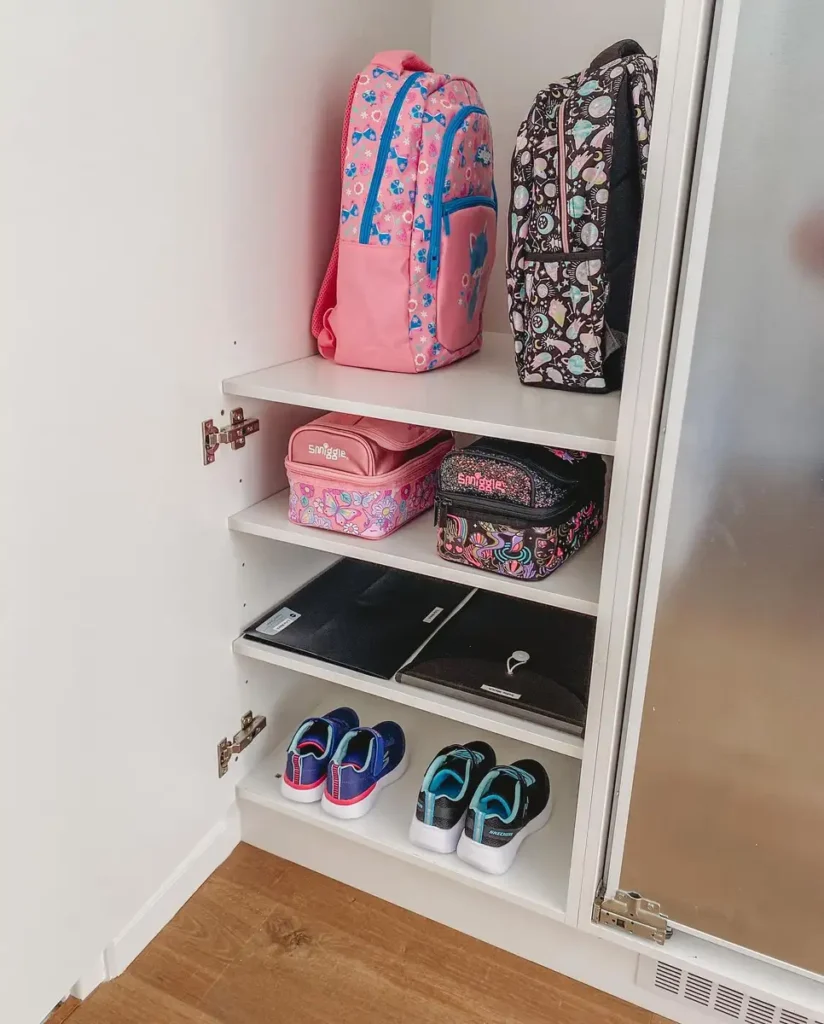
Closed cabinet storage is a smart choice when you want the entryway to look calm even during a busy school week. Inside, the shelves can separate everything by type instead of letting bags and shoes pile together.
Here, backpacks take the upper shelf, lunch bags sit just below, school folders stay flat in the middle, and shoes are kept near the floor. When the doors close, all that everyday gear disappears from view while still staying together in one easy-to-reach spot.
18. Turn Entry Closet Into Zones
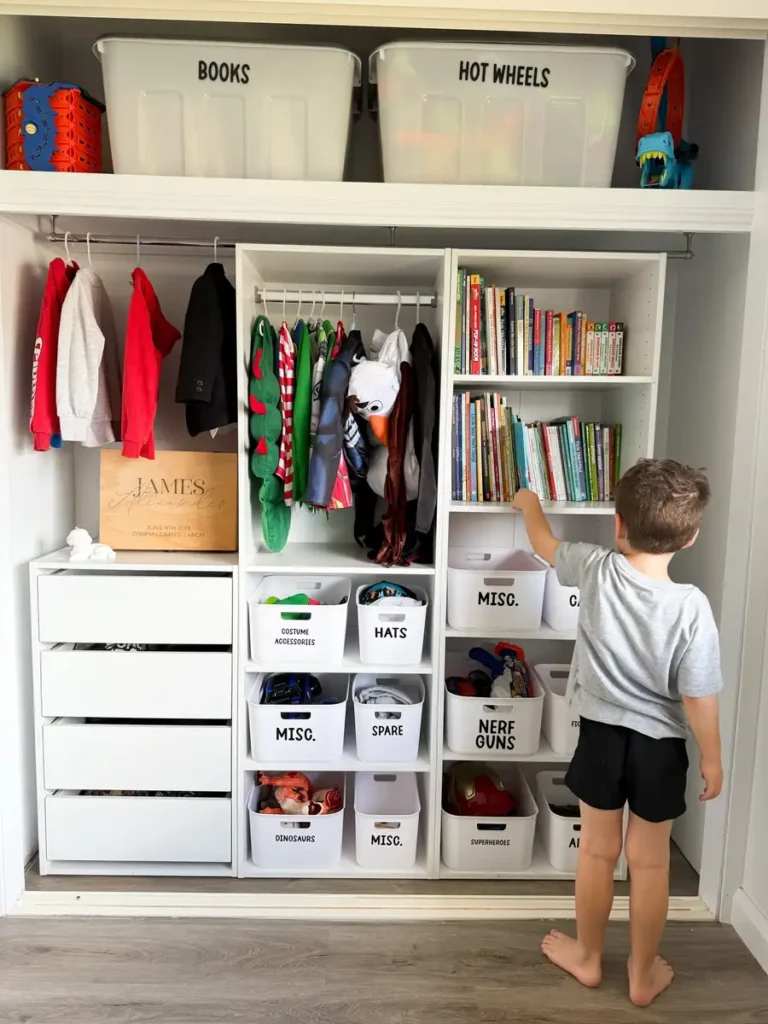
An entry closet can handle much more than coats when the inside is divided by purpose. Borrow this setup by combining hanging space, open shelves, drawers, and labeled bins.
For school mornings, dedicate separate zones to jackets, books, sports gear, hats, and smaller accessories. Keep frequently used items at child height, while bulky or occasional supplies can go into the large bins up top. Clear labels make it easier for kids to return everything to the right place without help.
19. Create a Grab-and-Go Station
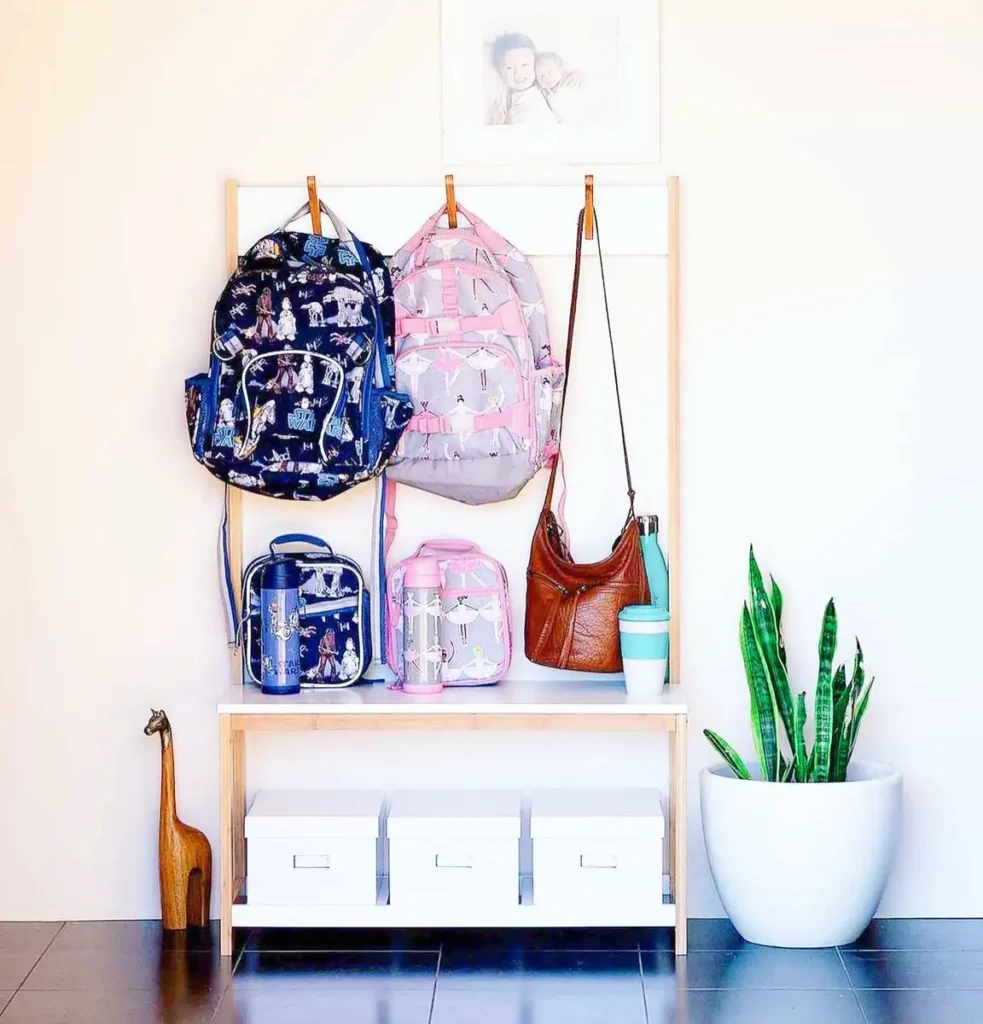
When backpacks, lunch bags, and water bottles are stored together, the morning routine gets much easier to manage. This setup keeps the most-used school items in one narrow zone, so kids and parents can quickly check that everything is ready before heading out.
A setup like this works well because each layer has a job:
- Top hooks hold the main backpacks.
- Bench surface keeps lunch bags and drink bottles visible.
- Lower boxes store backup supplies, spare snacks, or smaller school extras.
It is a simple way to make the whole entryway feel more prepared and less rushed.
20. Keep the School Drop Zone Minimal
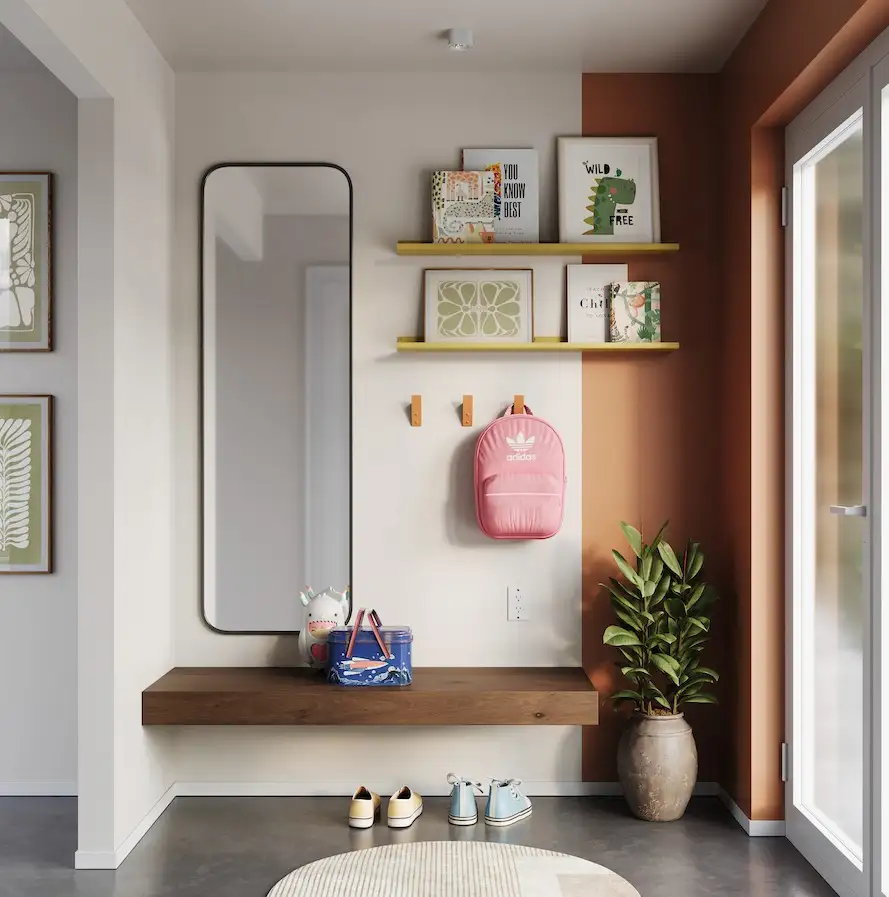
A backpack station does not need lots of cubbies to work well. This pared-back setup uses just a few hooks, a floating bench, and open wall space to keep the entry feeling calm.
The backpack hangs where it is easy to grab, while the bench gives lunch gear a temporary landing spot. Shoes can stay neatly underneath instead of spreading across the doorway. A tall mirror is useful for last-minute checks, and the slim shelves above add storage without making the wall feel crowded.
21. Use the Wall Under Stairs
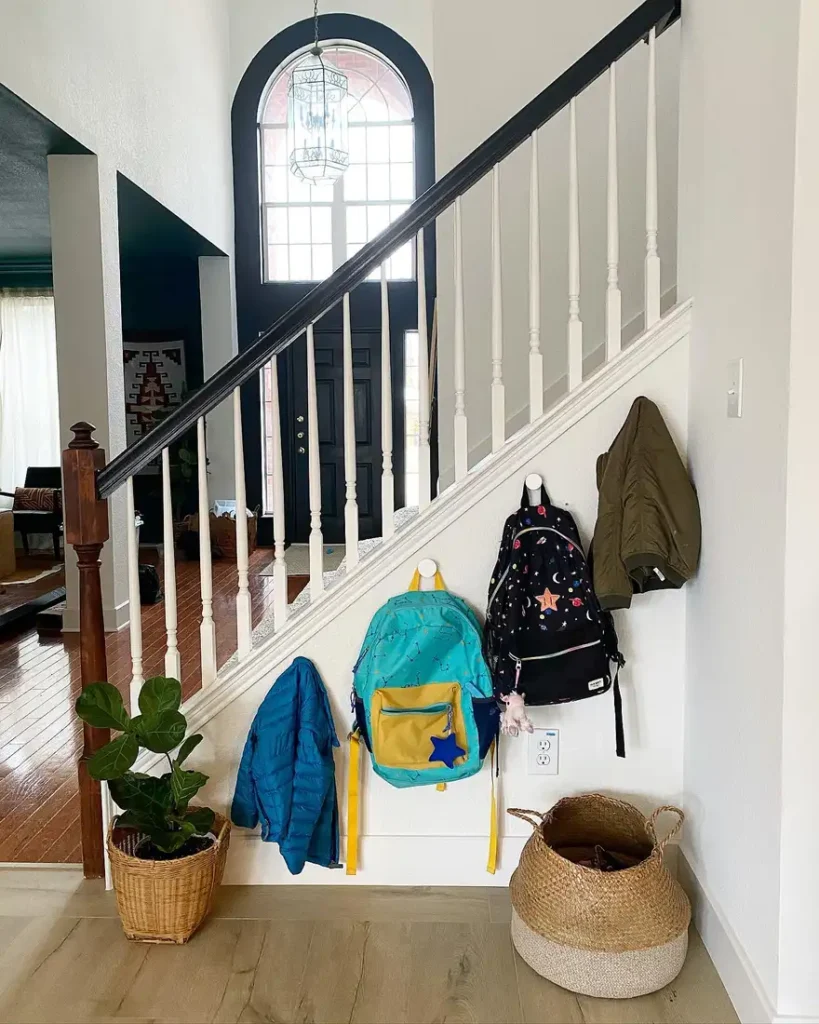
The wall beneath a staircase is easy to overlook, but it can make a practical backpack drop zone without taking up extra floor space. A few sturdy hooks are enough to hold backpacks and jackets where kids can reach them.
Keep heavier school bags on the stronger center hooks, then use the outer spots for coats or lighter gear. A floor basket nearby can catch hats, gloves, or other loose items that do not hang neatly.
22. Turn a Nook Into Mini Mudroom
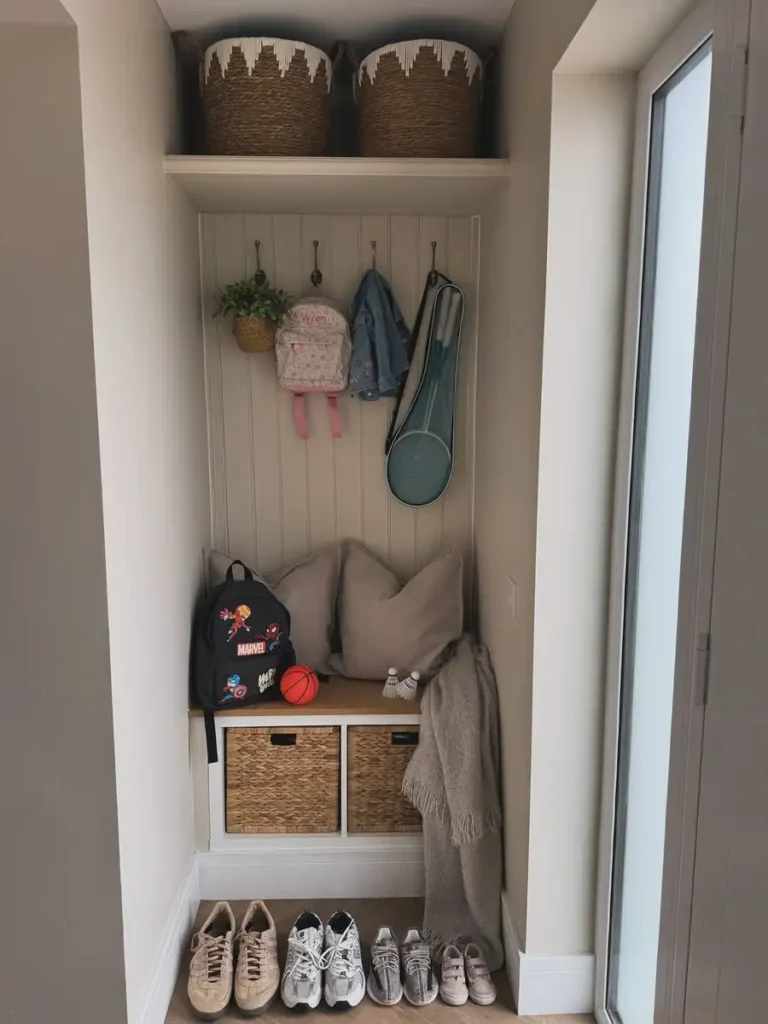
A shallow entryway nook can become a surprisingly complete school drop zone. This setup fits hooks, a bench, woven baskets, and shoe storage into one narrow recess without spreading clutter across the hallway.
Backpacks and jackets stay on the wall, while the cushioned bench gives kids a place to sit and get ready. Lower baskets can hide smaller accessories, and the large baskets overhead are useful for items you do not need every day. Keep shoes lined up underneath to finish the station.
23. Make a Kid-Height Entry Zone
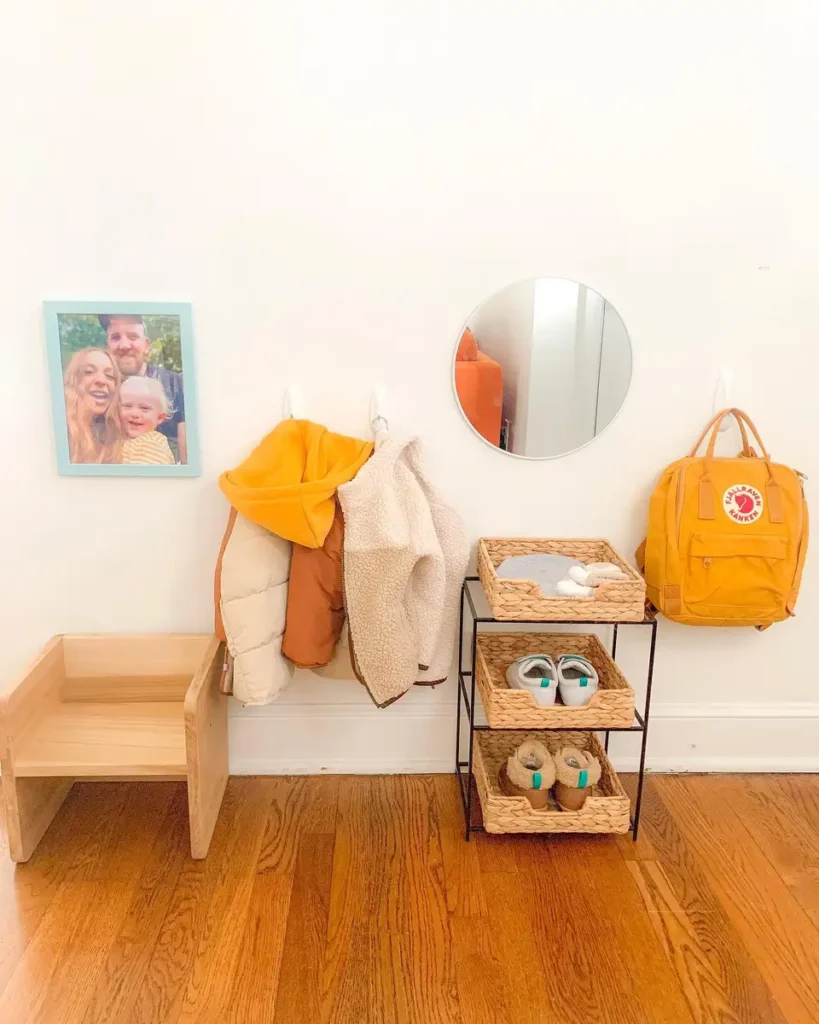
Bring the whole setup down to a child-friendly height so kids can handle more of the getting-ready routine themselves. Here, wall hooks keep the backpack and coats within reach, while a small seat gives little ones somewhere to sit.
The narrow basket rack is especially useful for shoes because each pair gets its own open spot. A round mirror above adds function without taking up storage space. Keep the layout simple enough that children can quickly see where everything belongs.
24. Mix Open Hooks With Baskets
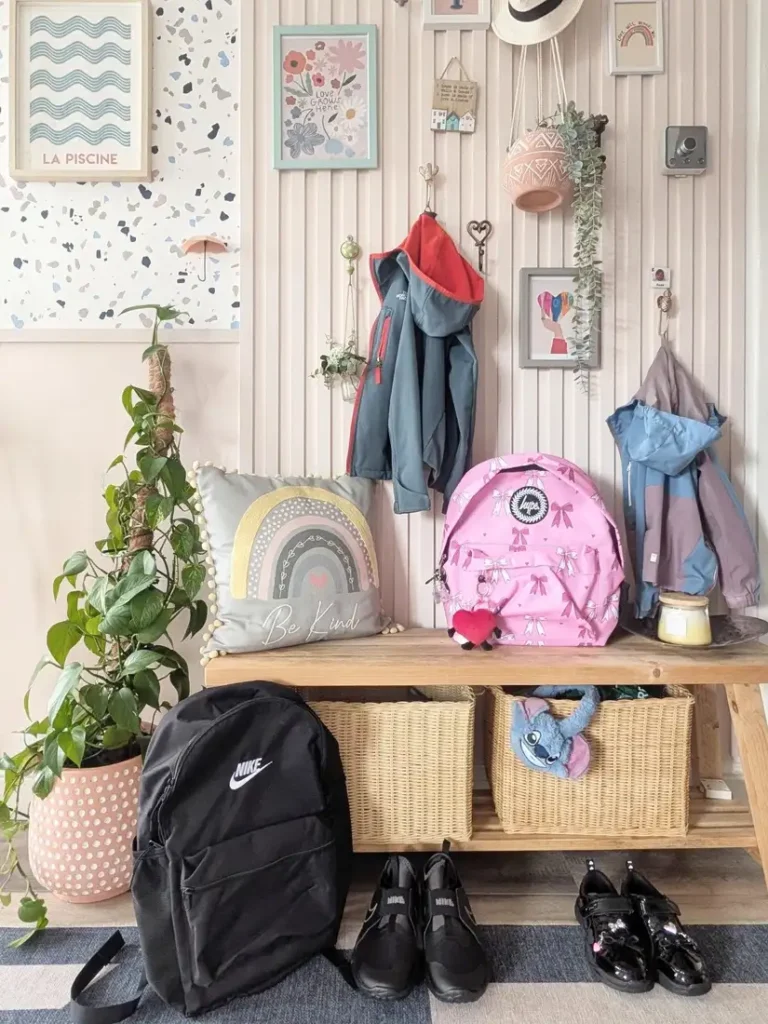
Open storage works best when the messier pieces have somewhere to disappear. Here, wall hooks keep jackets easy to grab, while woven baskets under the bench hide smaller school and entryway items.
The bench surface can act as a quick landing spot for a backpack before it is packed for the next day. Shoes stay lined up underneath, keeping them out of the main walkway. This mix of visible and hidden storage gives kids easy access without making the whole entry feel overloaded.
25. Add a Shoe-and-Gear Bench
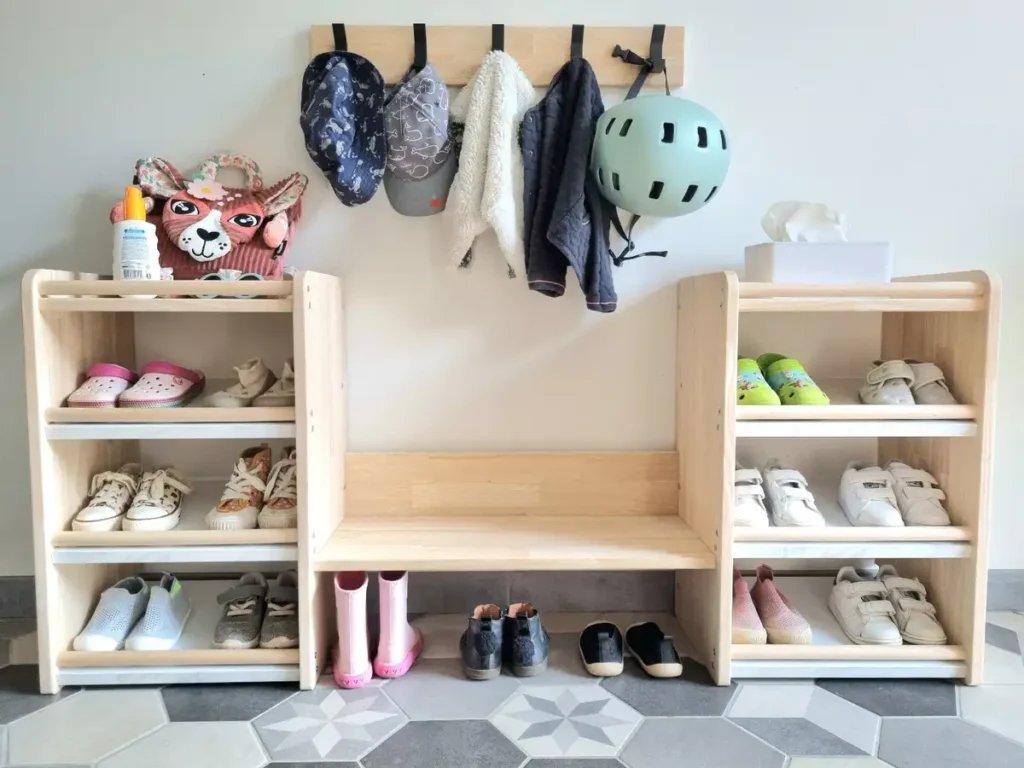
School mornings run more smoothly when shoes have an assigned place beside the rest of the grab-and-go gear. This setup puts a simple bench between two open shoe racks, giving kids a clear spot to sit while getting ready.
Hooks above handle hats, scarves, jackets, and even a helmet, so the floor stays open. Keep everyday school shoes on the easiest shelves and move less-used pairs higher up. The open layout also makes it easy to spot missing shoes before you are rushing out the door.
26. Build a Full School Gear Wall
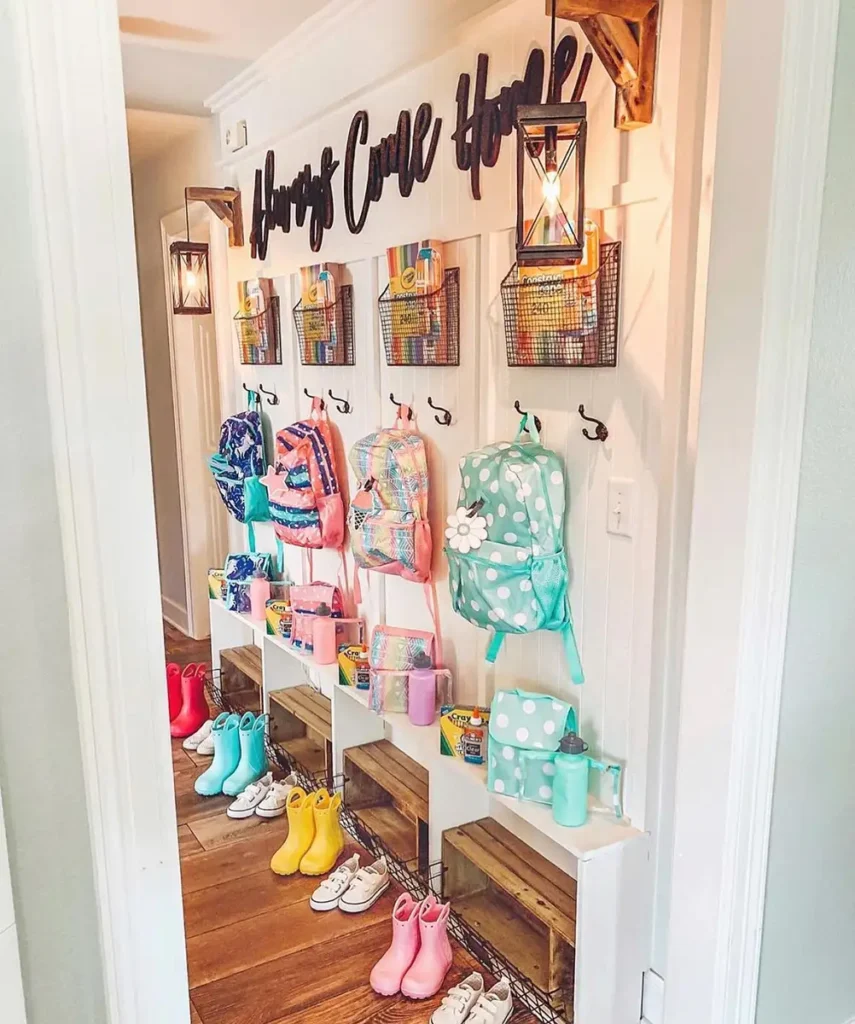
Use one long wall to organize everything children need before heading out. Backpacks hang on individual hooks, while wire baskets above keep books and school supplies easy to see instead of buried in drawers.
Below, separate bench sections create a natural spot for lunch bags, water bottles, and other daily extras. Shoes line up underneath, keeping the walking area clearer. This works especially well for larger families because each child can have a repeated section of hooks, storage, and floor space.
27. Use a Freestanding Hall Tree
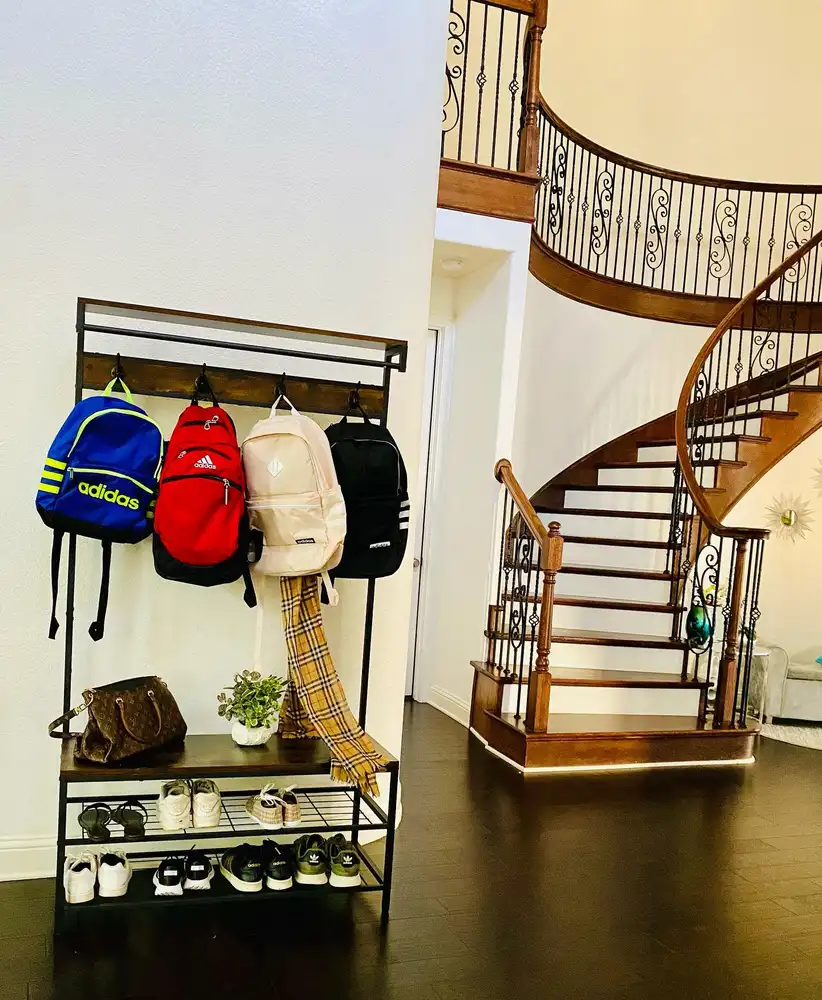
A freestanding hall tree gives you backpack and shoe storage without building anything into the wall. Several hooks across the top can handle school bags, jackets, or scarves, while the lower racks keep everyday shoes neatly lined up.
This is especially handy in an open entryway where permanent cubbies would feel too bulky. Keep the heaviest backpacks toward the center hooks, then reserve the bench surface for items that need to leave with you that day.
28. Give Each Child a Mudroom Bay
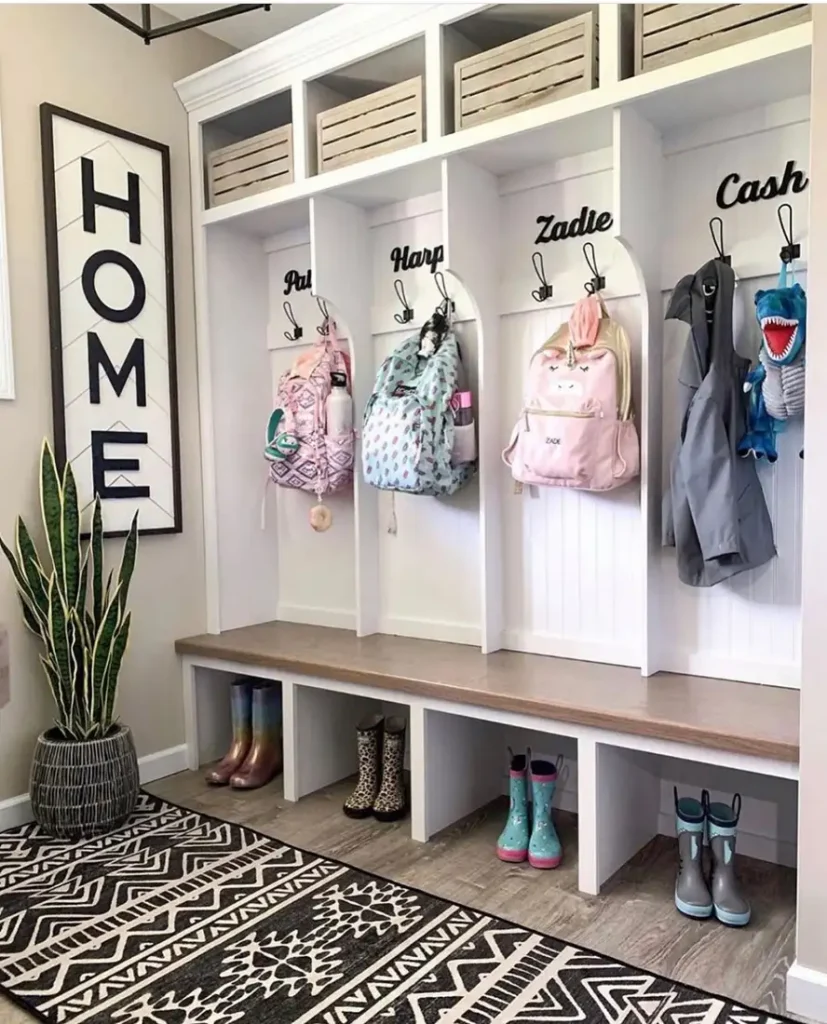
Separate bays make a busy family entryway much easier to manage. Each child gets a named section with hooks for backpacks and jackets, plus a shoe cubby directly underneath.
The bench connects the whole setup and gives kids somewhere to sit while changing shoes. Upper baskets are useful for seasonal gear, backup supplies, or items that do not need to stay within reach. Because every section repeats the same layout, children can quickly learn exactly where their school things belong.
29. Hide Clutter Behind Mudroom Cabinets
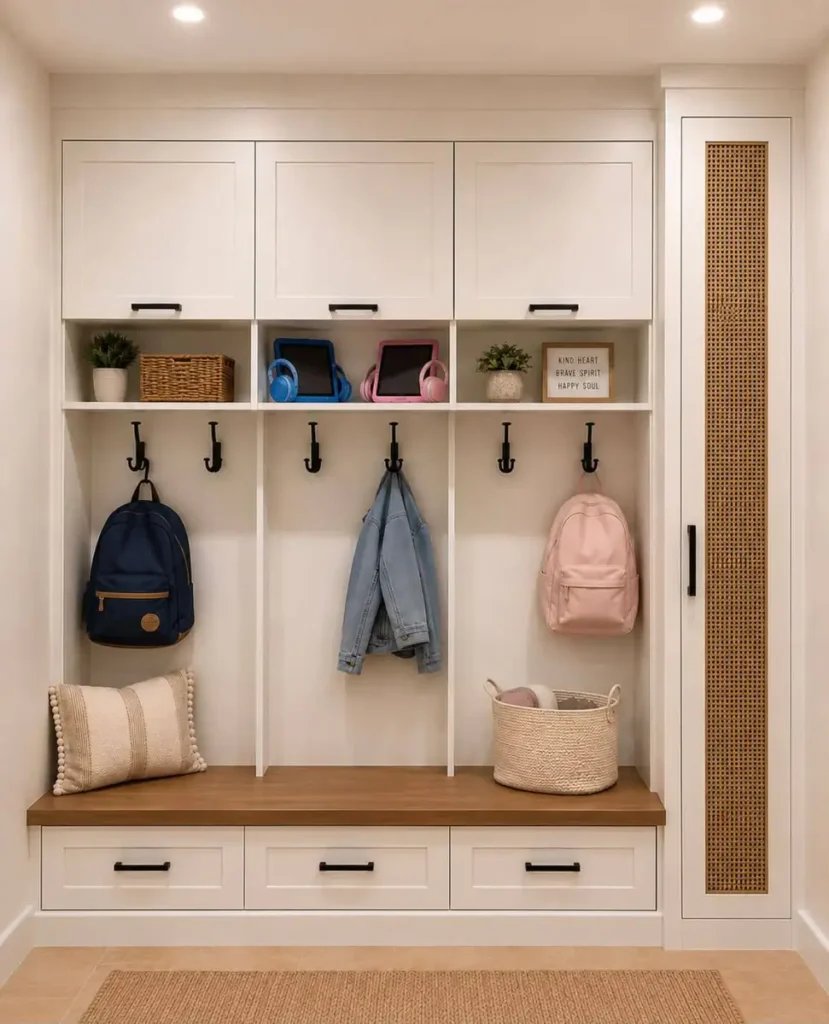
Mix open and closed storage so the entryway stays practical without putting every school item on display. Backpacks and jackets hang in the open middle section, where kids can grab them quickly, while the upper cabinets hide supplies that are used less often.
The long bench adds a comfortable getting-ready spot, and the drawers underneath can hold smaller items such as gloves, activity gear, or extra school supplies. Open shelves above also give everyday tech or accessories a visible home.
Final Thoughts
The best school entryway is not necessarily the biggest or most expensive one. It is the setup your family can actually use every day. Start with easy-to-reach backpack hooks, then add shoe storage, baskets, labels, or a calendar where they will genuinely help. For a setup that works beyond the school year, these drop zone ideas have more everyday storage options.
Even a narrow wall or forgotten nook can become a useful drop zone with a little planning. Pick the back to school entryway ideas that fit your available space and daily routine, and save your favorites for your next entryway refresh.