How to Make a Narrow Living Room Feel Bigger: 12 Smart Ideas to Try
A narrow living room can look perfectly fine until you start placing furniture. Then suddenly the coffee table feels too big, the walkway disappears, and every piece seems to be in someone’s way.
The fix usually isn’t to empty the room. It’s to make smarter choices with shape, scale, and placement. A round table instead of a bulky rectangle. A sofa that follows the wall. Storage that goes up instead of out. Small changes, but they can completely change how the room feels.
These narrow living room ideas are all based on real layouts, so you can see what actually helps a tight space feel more open, comfortable, and easier to live in.
1. Let The Mirror Do More
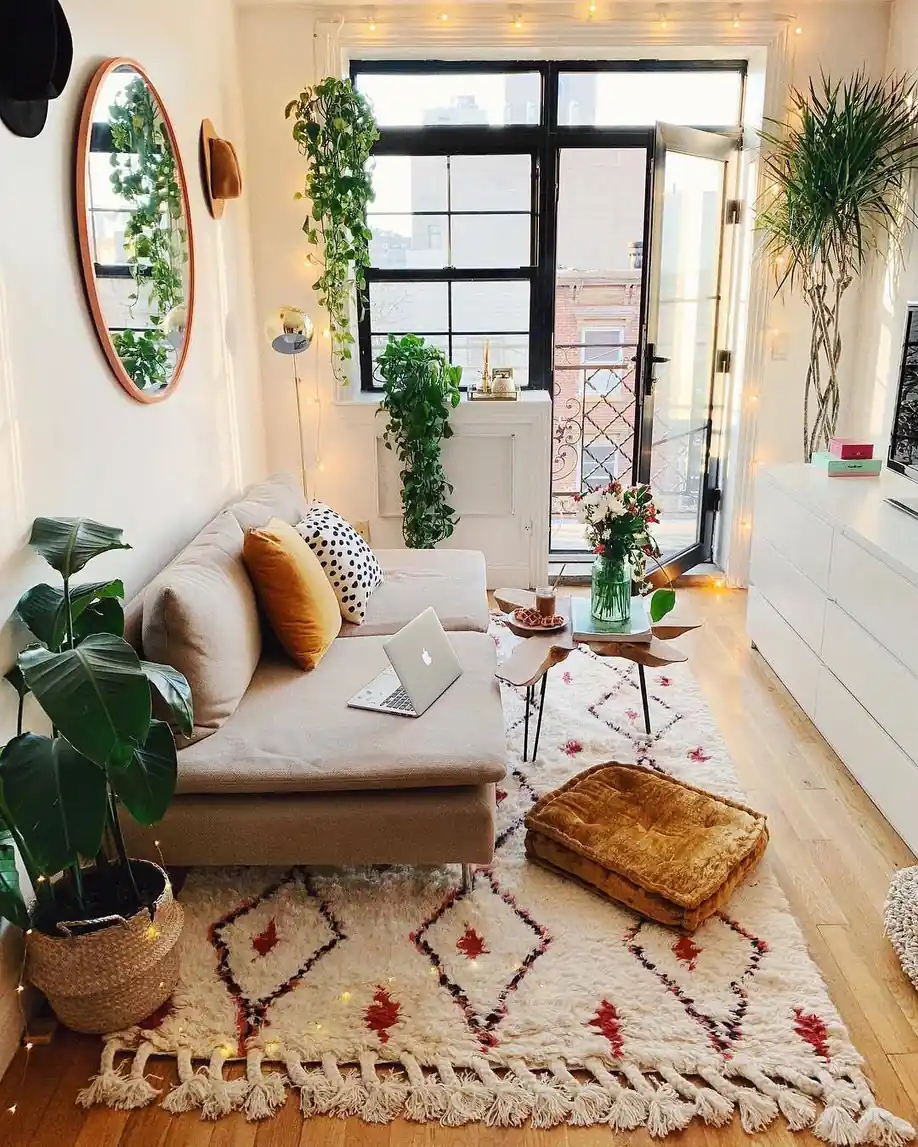
Right beside the sofa, the tall oval mirror catches the bright window across the room and throws some of that light back onto the wall. In a long space, that extra reflection helps the room feel less closed in.
Most of the greenery grows upward too. Hanging vines and tall plants bring in plenty of life without blocking the walkway.
I wouldn’t squeeze in another chair here. The open strip through the middle matters more.
2. Aim Toward The Window
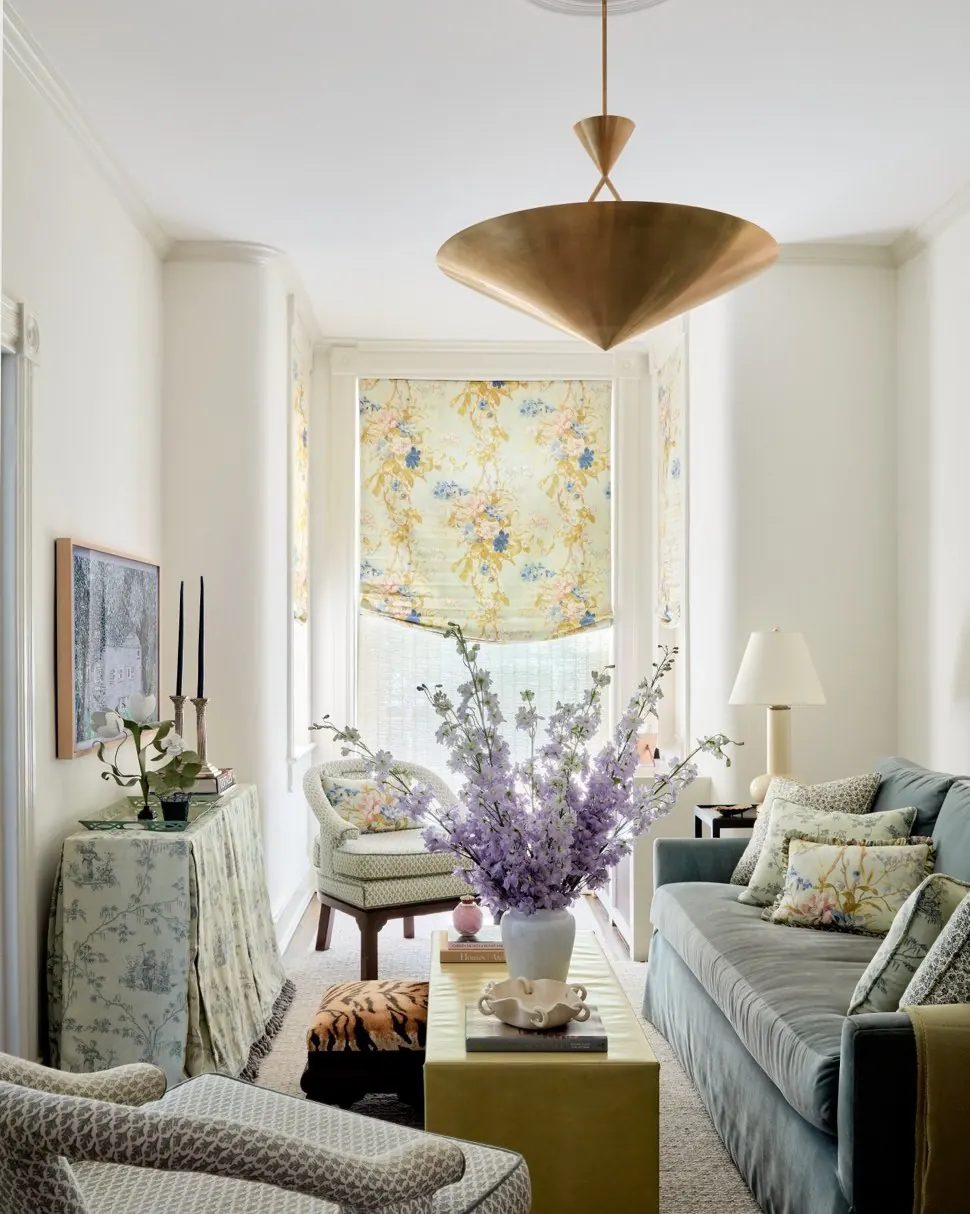
Walk into this room and your eye goes straight toward the bright window at the end. That’s no accident.
A long sofa hugs one wall, while the coffee table follows the same direction. Even with floral shades, patterned pillows, flowers, and a large pendant, nothing interrupts that long sightline.
For a narrow layout, keeping the furniture pointed the same way can be more useful than trying to make everything perfectly symmetrical.
3. Skip The Big Coffee Table
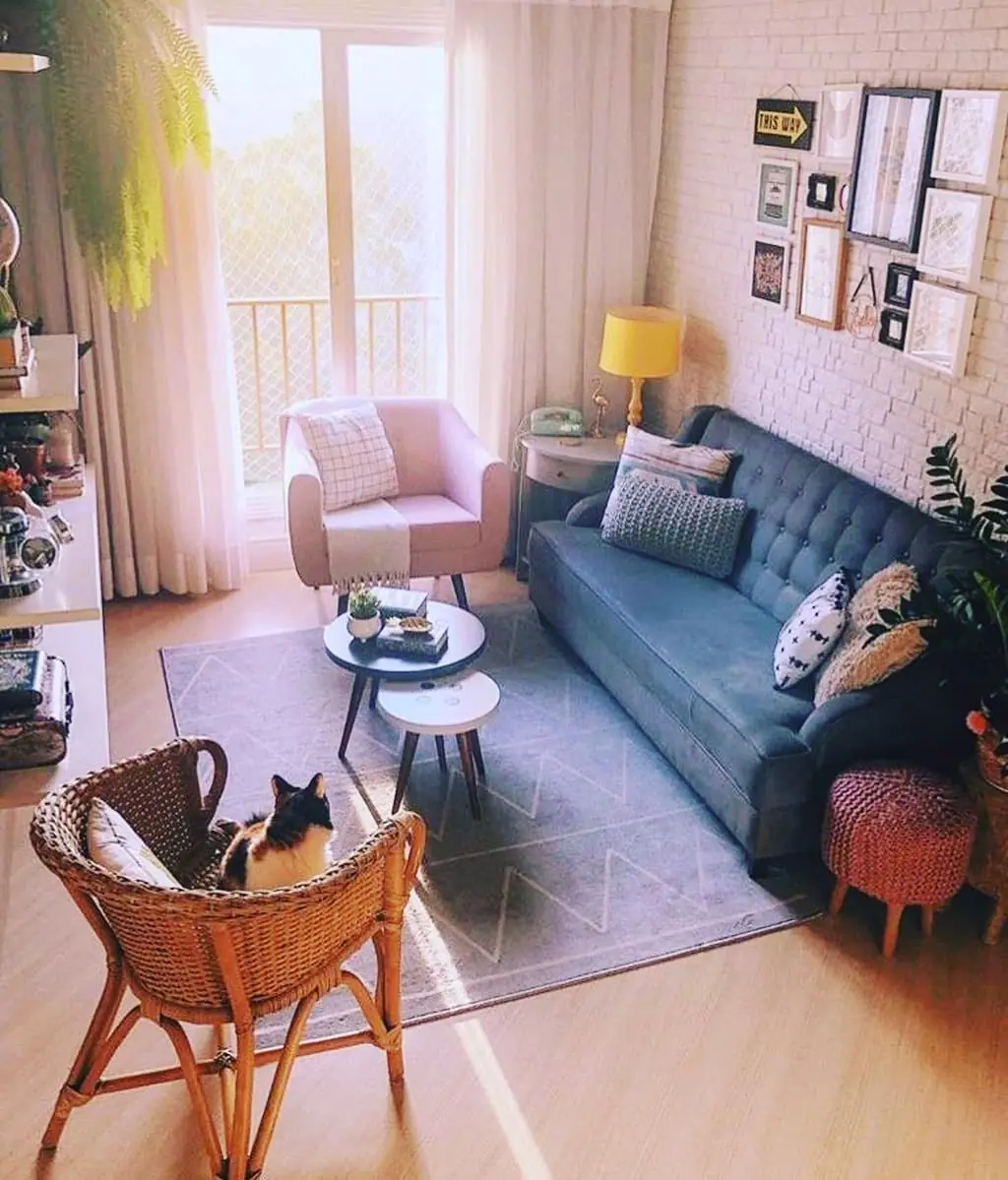
Two little round tables are enough here.
They can sit together when drinks or books need a spot, then move apart when someone needs more room to walk through. A pale pink chair and woven chair add extra seating without the weight of another sofa.
Flexible furniture makes sense in a tight room. Not every piece needs a permanent address.
4. Let One Dark Piece Anchor
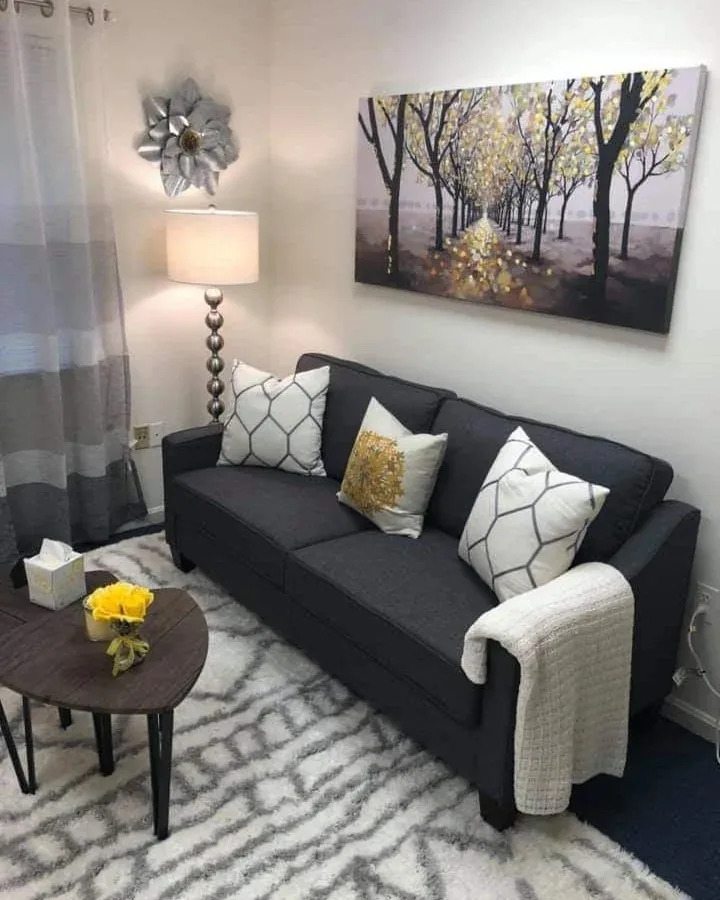
Charcoal upholstery could easily overpower a small room, but here it doesn’t.
Pale walls, a light rug, white pillows, and a slim-legged coffee table take some of the visual weight away from the sofa. Nothing around it tries to compete.
Already own a dark couch? I wouldn’t rush to replace it. Just avoid surrounding it with a dark rug, chunky table, and heavy storage too.
5. Float The TV Storage
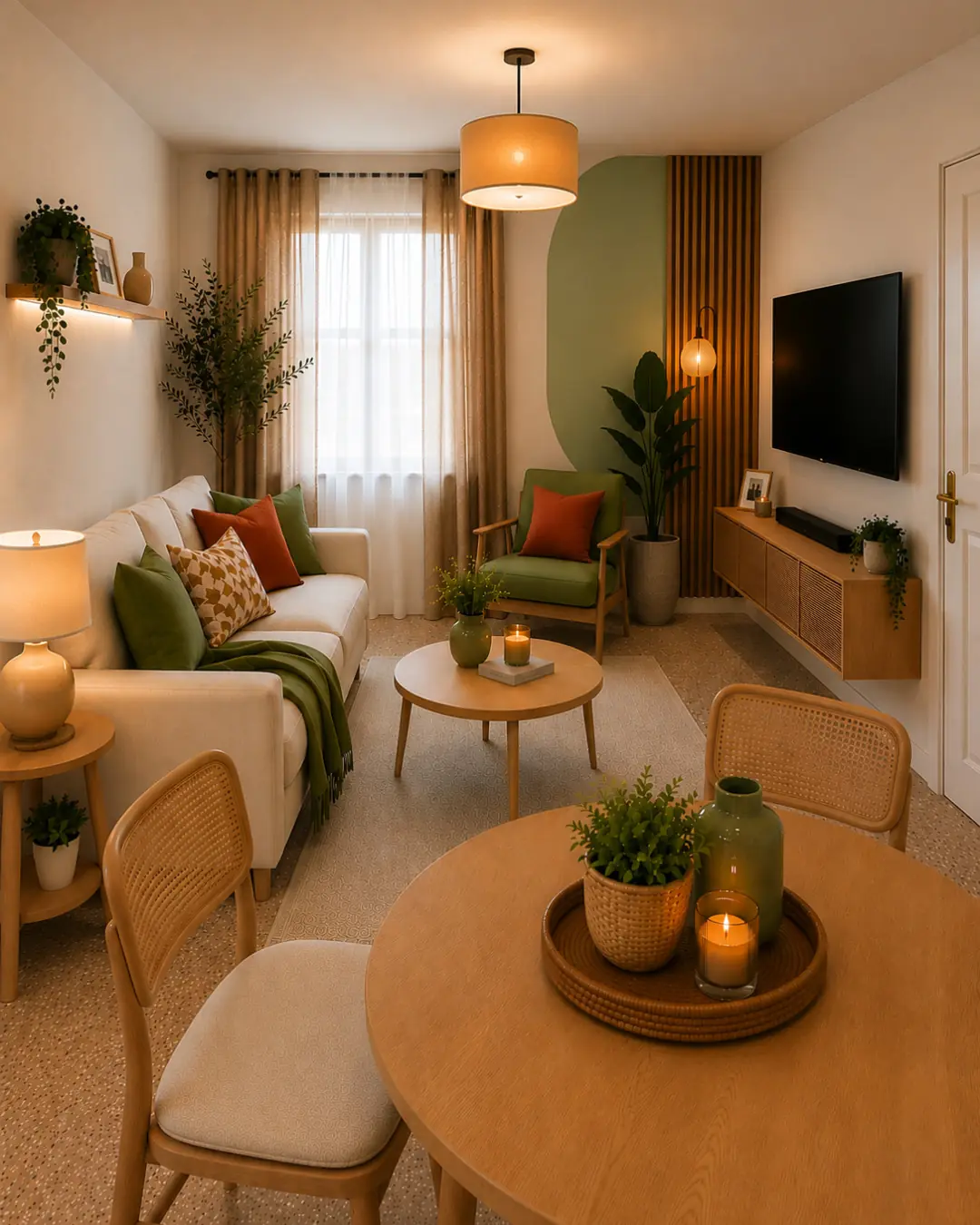
Probably the smartest detail here is the media cabinet sitting above the floor.
Storage is still there, but you can see the flooring running underneath it. Even a few inches of visible floor can make a wall of furniture feel less bulky.
A round coffee table helps in another way. No sharp corner sticking into the walkway.
Green wall paneling and wood slats are optional. The floating cabinet is the part worth copying first.
6. Move Decor Off The Floor
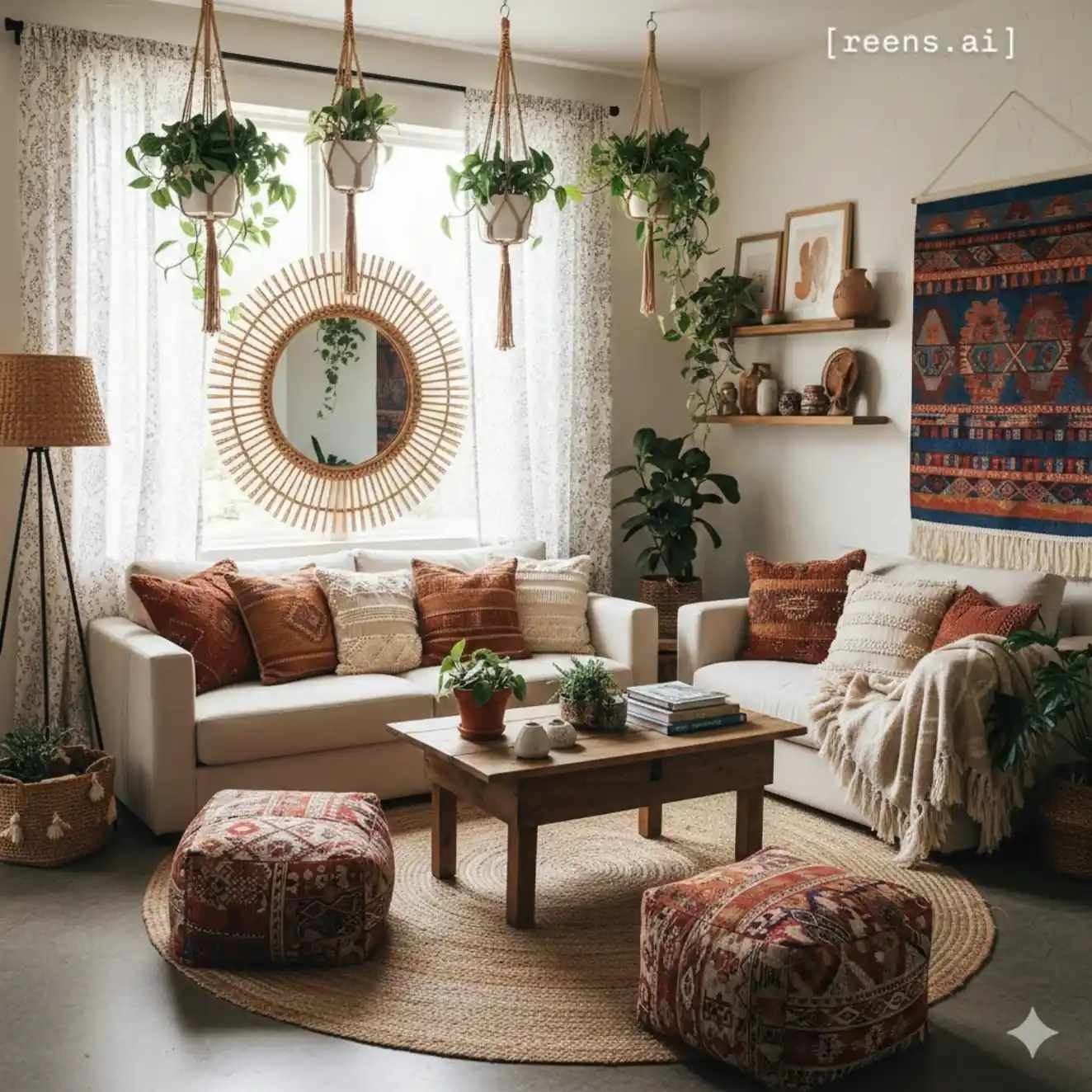
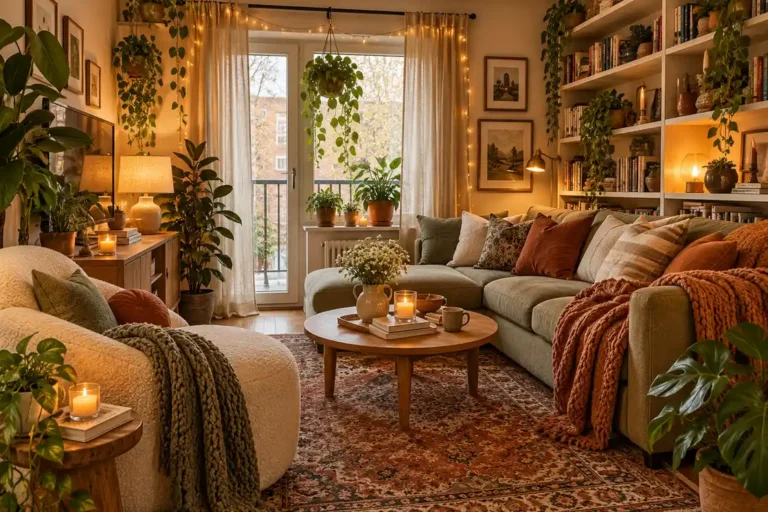
Plants are everywhere, yet surprisingly little floor space gets sacrificed.
Several hang above the sofa. Others sit on shelves. Larger pots stay pushed toward the outer edges instead of wandering into the middle of the room.
Anyone who likes a fuller boho look can borrow that idea. Use the ceiling. Use the walls. Let vines trail down.
I’d stop before copying every basket, cushion, shelf, and wall hanging. The vertical greenery is already doing plenty.
7. Use The Sofa As Divider
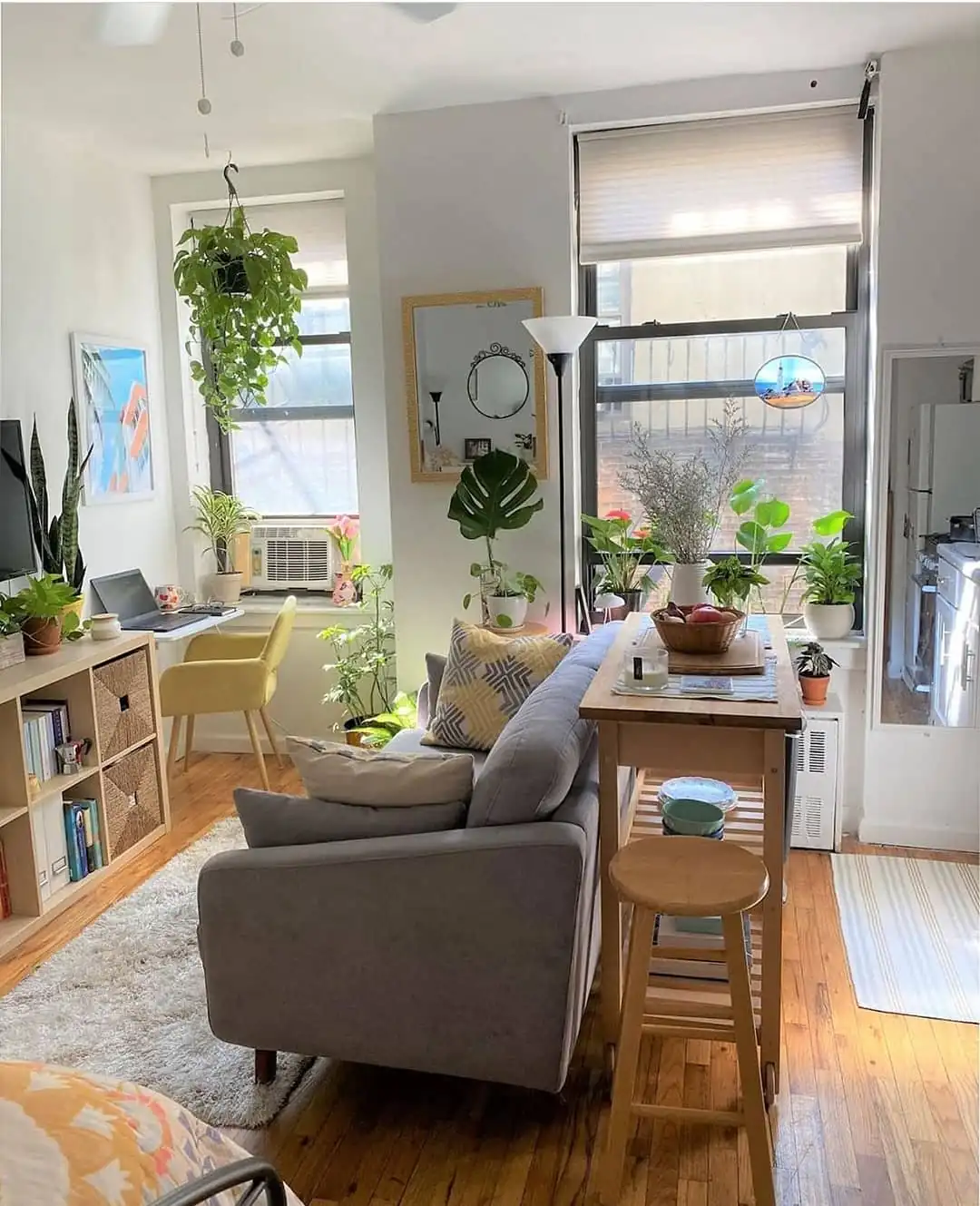
No partition needed here.
Turning the sofa away from the space behind it naturally marks where the living area begins. A slim console pressed against its back makes that divide useful instead of decorative.
There’s even room to tuck a stool underneath.
In a long apartment where one area runs straight into another, furniture can define zones without making the whole place feel chopped up.
8. Protect The Middle Path
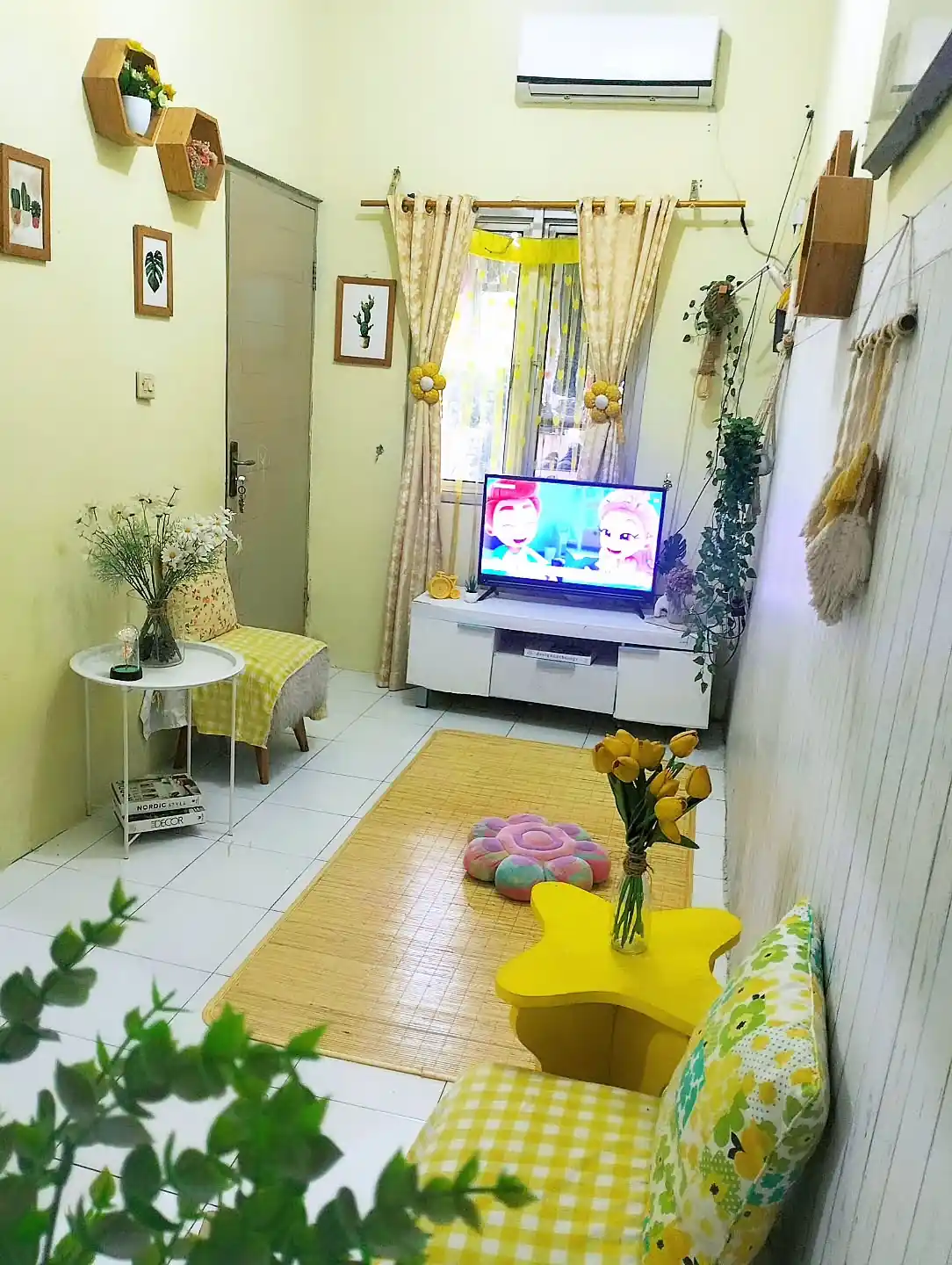
Really tight rooms need a different priority: somewhere to walk.
Most of the furniture here stays close to the walls, while the center remains fairly clear. A long yellow rug emphasizes that open path and pulls your eye toward the window and TV.
One tiny table does the job.
Empty floor can look unfinished in a big room. Here, it’s exactly what the space needs.
9. Give Storage One Wall
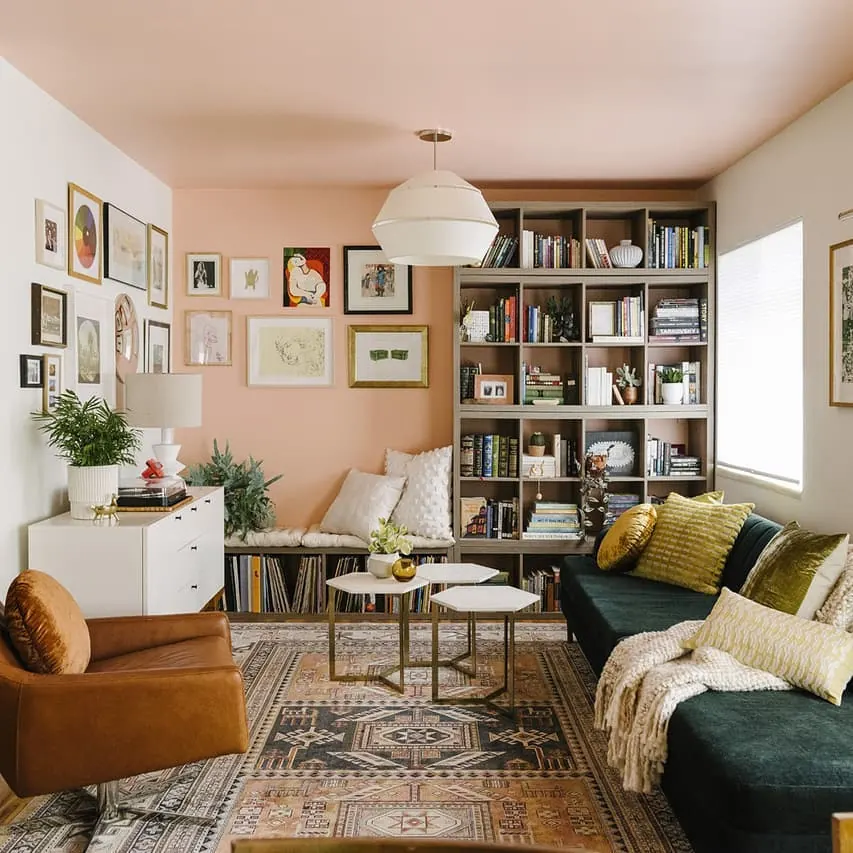
Books, records, plants, framed pieces, and small objects all land in roughly the same part of the room instead of being scattered around.
That makes a big difference.
Tall shelving uses the far wall from low to high, while a bench below adds another seat without eating into the center. Seating then gets its own side of the room.
There’s plenty of pattern elsewhere, especially in the rug and gallery wall, but storage has a clear home. Less visual wandering.
10. Round Off The Center
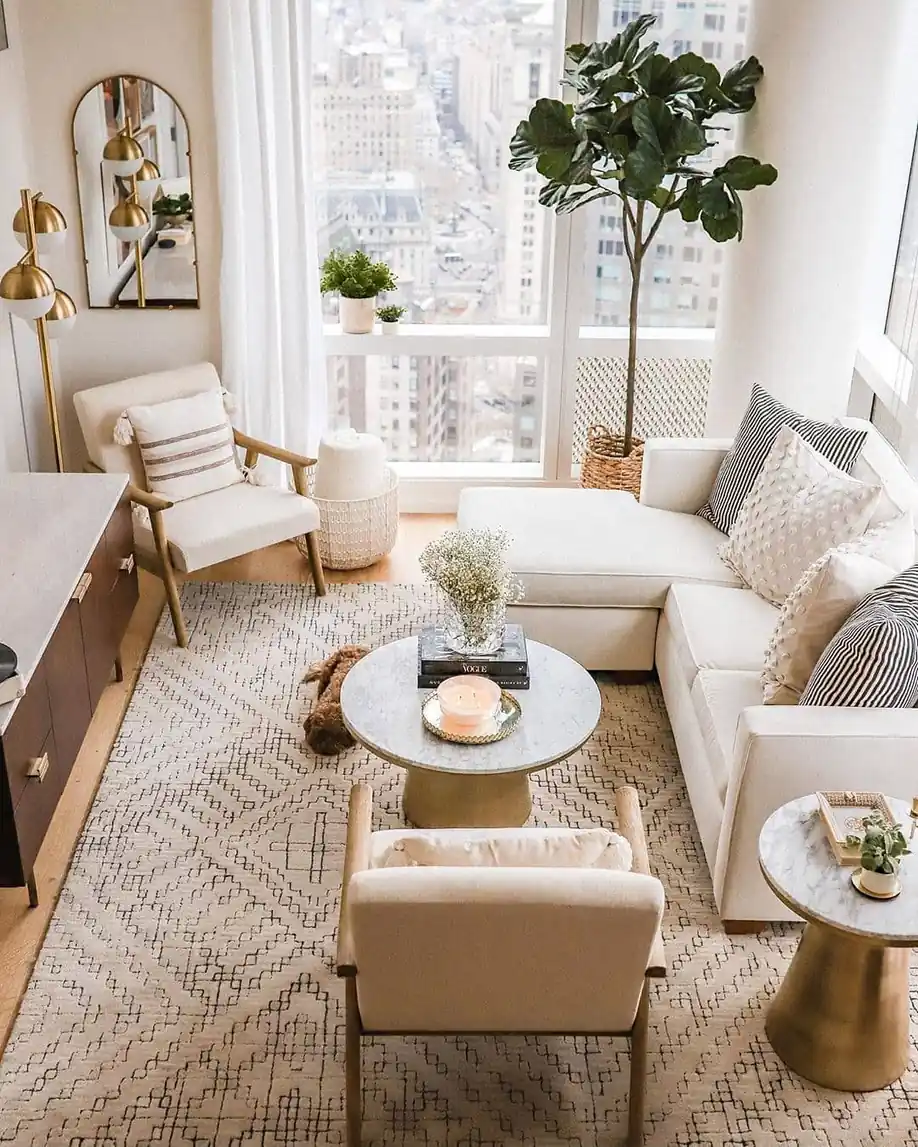
My first copy from this room would be the round coffee table.
Seats face it from several angles, so a rectangular table would leave corners right where people need to pass. A curved edge is simply easier to move around.
Notice the pale rug underneath too. It defines a generous seating zone without creating a dark block across the floor.
Nothing fancy. Just a better shape for a busy center.
11. Keep The TV Wall Shallow
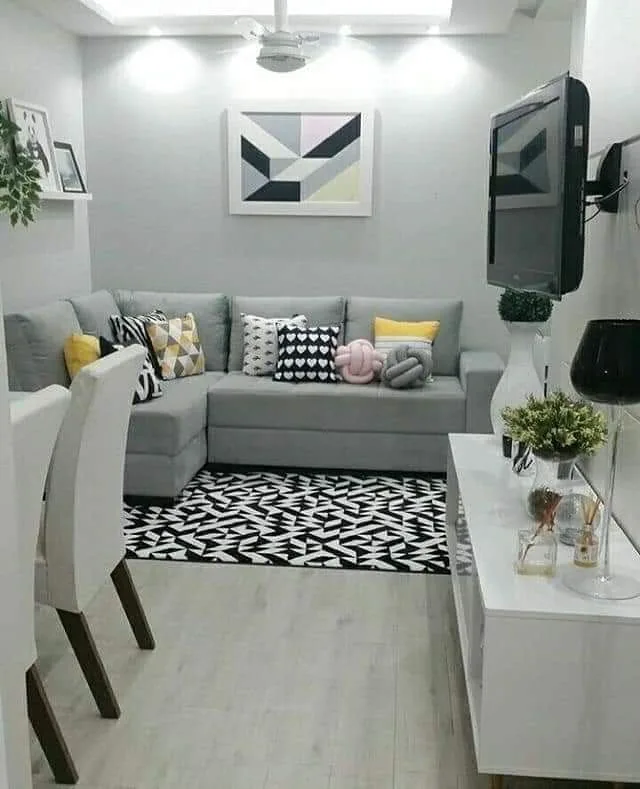
Every inch matters when the sofa and TV face each other across a slim room.
Mounting the screen keeps one bulky item off the floor, and the console underneath stays fairly shallow. That leaves more breathing room between both sides.
Seating is also pushed toward the far end rather than drifting into the walkway.
I’d skip a coffee table here unless it was actually needed. Open floor is more valuable.
12. Let The Walls Carry Pattern
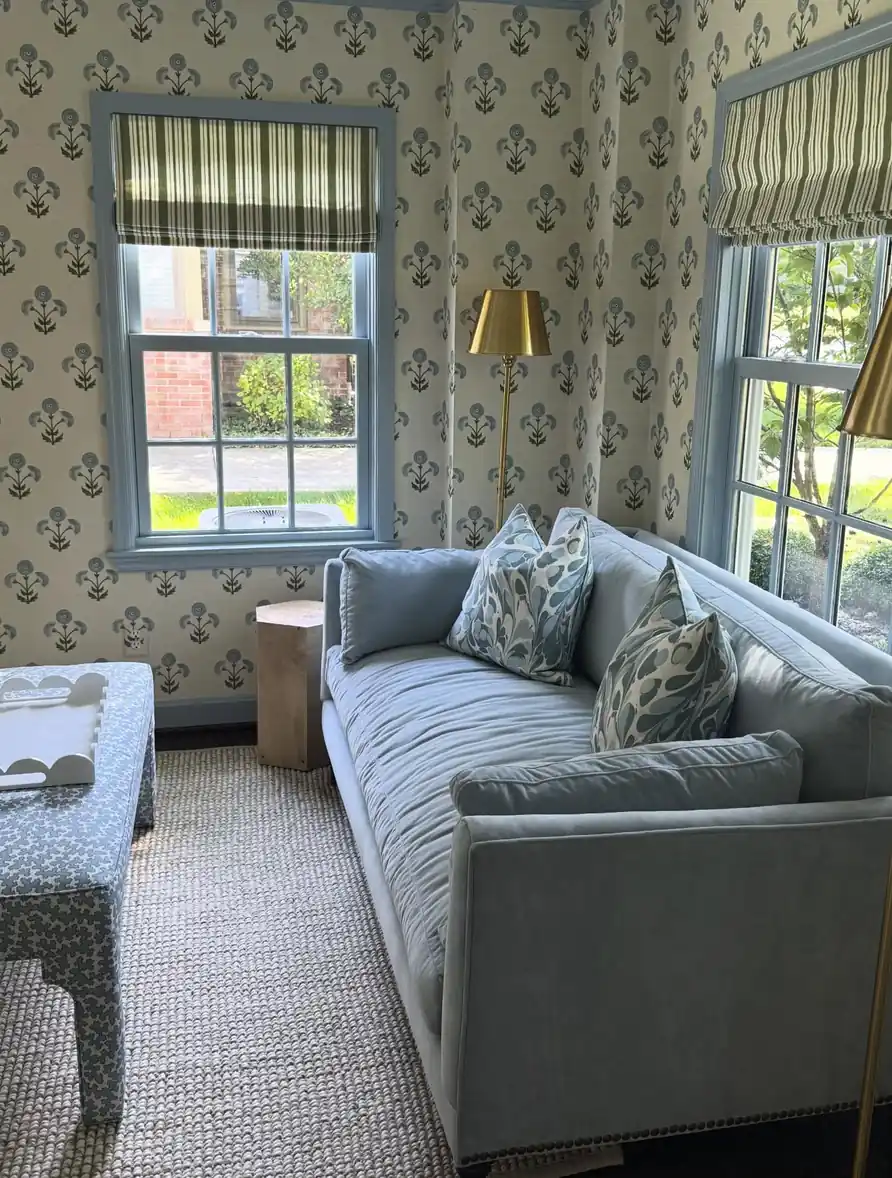
A small living room doesn’t have to mean plain.
Floral wallpaper covers nearly every wall, yet the room still has space to breathe because most of the decoration stays vertical. A neutral rug, simple sofa, tiny side table, and narrow lamp keep the floor from getting busy too.
Love pattern? Put more of it on walls, shades, or art instead of introducing another decorative cabinet.
The brass floor lamp deserves a mention too. It slips into the corner without asking for a table underneath.
Final Thoughts
You don’t need to copy an entire room to make yours feel better. Start with the thing that bothers you most. Maybe the walkway feels cramped, the TV wall sticks out too far, or the room just feels dark.
Fix that first.
In a narrow living room, a few inches of open floor, one better-shaped table, or furniture moved closer to the wall can make a noticeable difference. Keep the path clear, let some surfaces breathe, and don’t add furniture just because there’s technically room for it.
Frequently Asked Questions
How do you make a narrow living room look wider?
Keep the center path open, use furniture with slimmer profiles, and avoid pushing too many pieces into the room. Mirrors, pale colors, and visible floor space can also help the room feel less closed in.
Where should a sofa go?
In most narrow living rooms, placing the sofa along one long wall works best. It keeps the walkway clearer and stops the room from feeling chopped up.
What coffee table works best?
Round or oval coffee tables are often easier to move around in a tight room. Slim nesting tables can work well too if you need more flexibility.
Should furniture touch the walls?
Not always, but in a very narrow room, keeping larger furniture close to the walls can free up useful walking space. Just avoid cramming every piece against every wall.
What colors make the room bigger?
Soft whites, creams, pale beige, light gray, and gentle natural shades can make a narrow room feel brighter. You can still use darker colors, but they usually work better in smaller doses.
Are mirrors good for narrow rooms?
Yes. A well-placed mirror can reflect light and make the room feel more open. Tall mirrors are especially useful because they also draw the eye upward.
How do you arrange a narrow living room with a TV?
Mounting the TV on the wall or using a shallow media unit can save floor space. Keep the sofa opposite or slightly angled toward it while protecting the main walkway.
Can a narrow living room still feel cozy?
Definitely. A rug, soft lighting, a few plants, and comfortable seating can make the room feel cozy without making it crowded. The goal is to add warmth without filling every empty spot.
For more examples that focus on warmth in a compact room, these cozy living room ideas for small spaces are worth browsing too.