20 Cozy Living Room Ideas for Small Spaces That Feel Warm, Not Crowded
A small living room can feel cozy very quickly. The harder part is making it comfortable without filling every corner with furniture and decor.
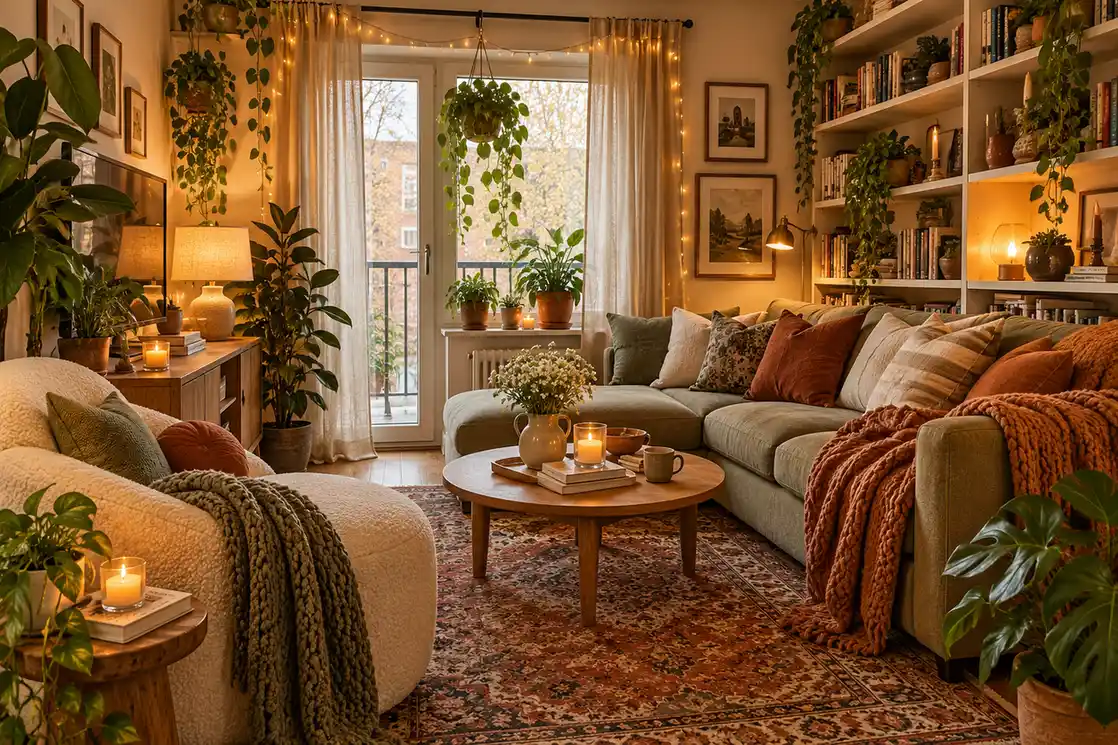
These cozy living room ideas for small spaces show that warmth can come from simple choices: a sofa tucked against the wall, plants hanging overhead, one good rug, books stacked upward, soft lighting, or a blanket that looks like it actually gets used. Some of these rooms are colorful and packed with personality. Others are much quieter.
You definitely don’t need to copy an entire room. Pick the part that solves your problem, whether that’s an empty corner, poor lighting, limited storage, or a sofa that still feels a little bare.
1. Let Plants Fill The Corners
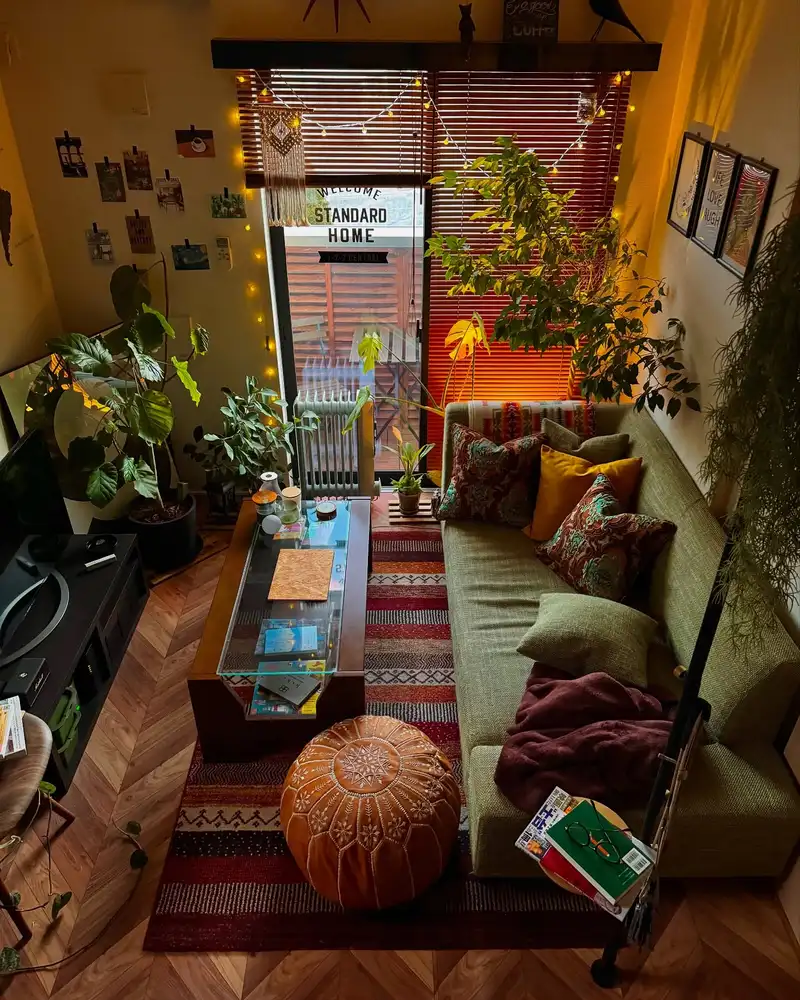
The plants are doing more than decorating this room. Most of them sit around the edges, especially near the window, which means the middle stays usable.
That’s a good move in a narrow living room. Go tall rather than wide. One large floor plant can fill an awkward corner without needing another table, basket, or stand underneath it.
The tiny string lights against the dark blinds are a nice extra, but I wouldn’t add much more. There’s already plenty happening.
2. Hang Greenery Near The Windows
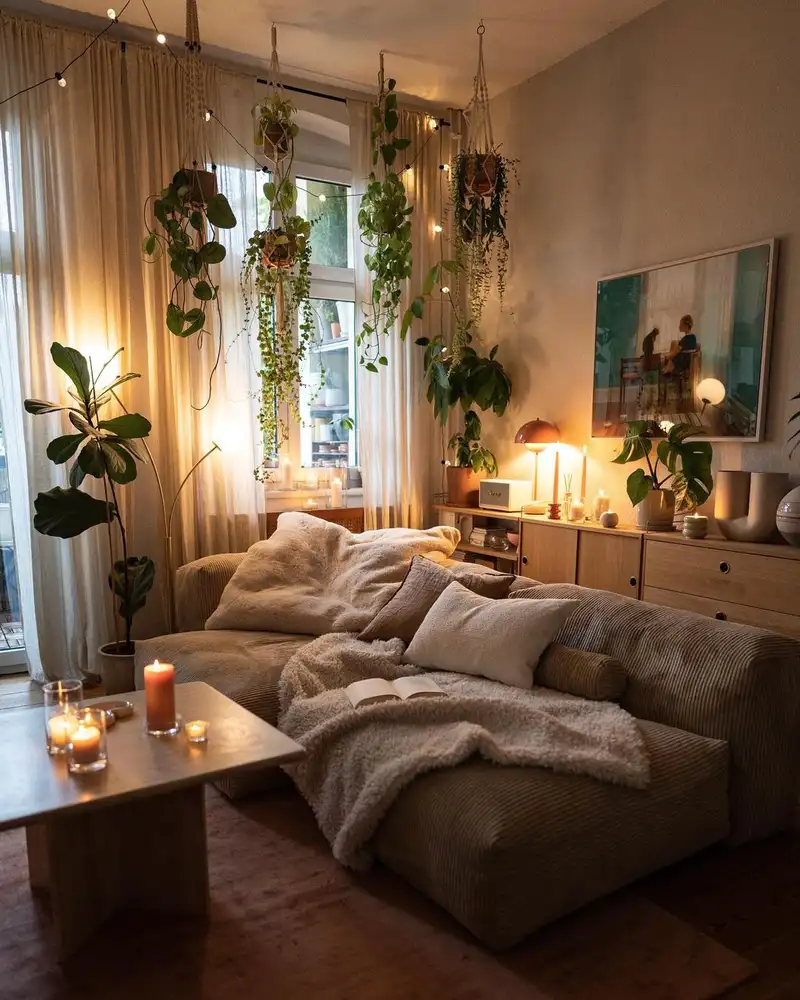
Hanging plants make sense here because the floor is already busy with a large sofa and other furniture.
Several pots sit overhead at different heights, with vines hanging down in loose uneven lengths. That stops the window wall from looking too neat or staged.
The best part to copy is simple: move some greenery upward. Especially if every spare corner in your living room already has furniture in it.
3. Let One Rug Define It
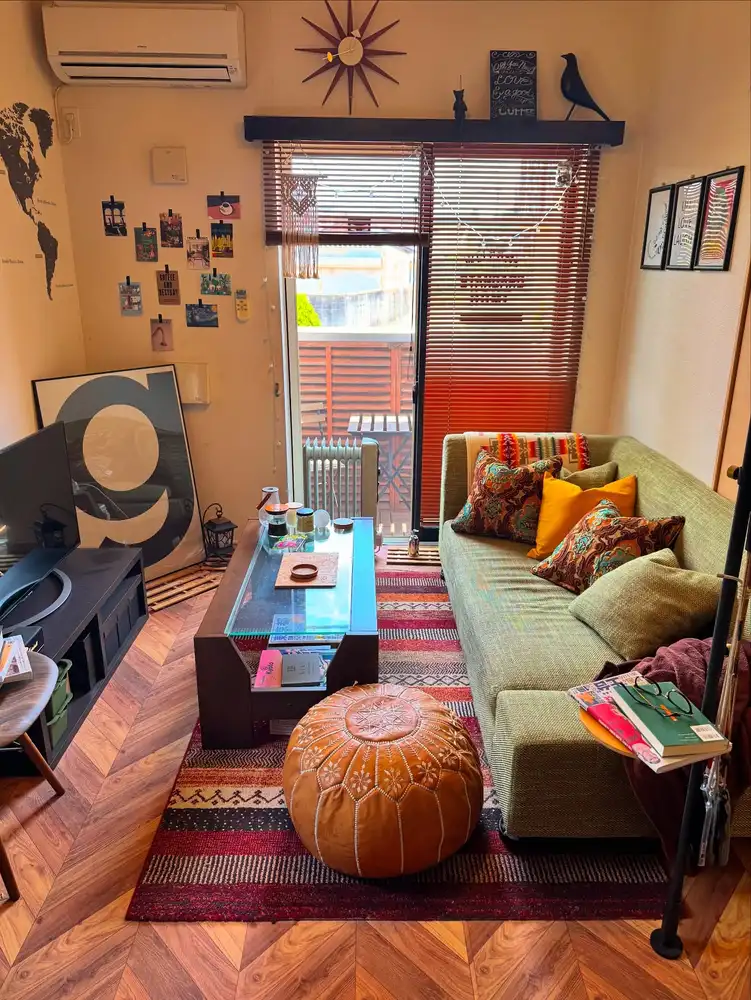
A long patterned rug gives this narrow room a clear seating zone.
It sits underneath the coffee table and pouf, then leaves the outer floor visible. That little border matters. The rug feels generous without making the whole room look carpeted.
I’d stick with one strong rug here. Adding another smaller one nearby would only break the floor into more pieces.
4. Use The Wall Above
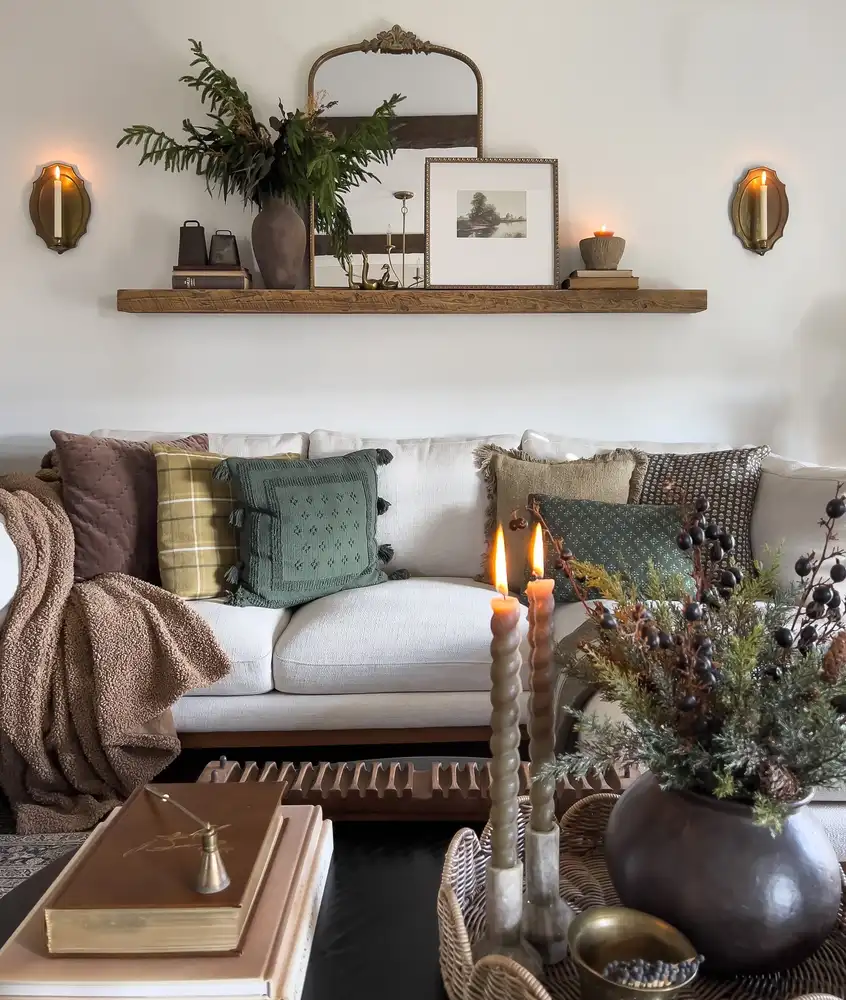
That long shelf above the sofa is doing the job of several smaller pieces of furniture.
A mirror, framed artwork, greenery, books, and candles all sit on one shallow ledge. Nothing needs floor space, and there’s no extra console squeezed behind the couch.
The uneven heights are worth noticing too. The large mirror sits behind smaller pieces instead of everything being arranged in a straight row.
Very easy to borrow from this room.
5. Build A Cozy Chair Corner
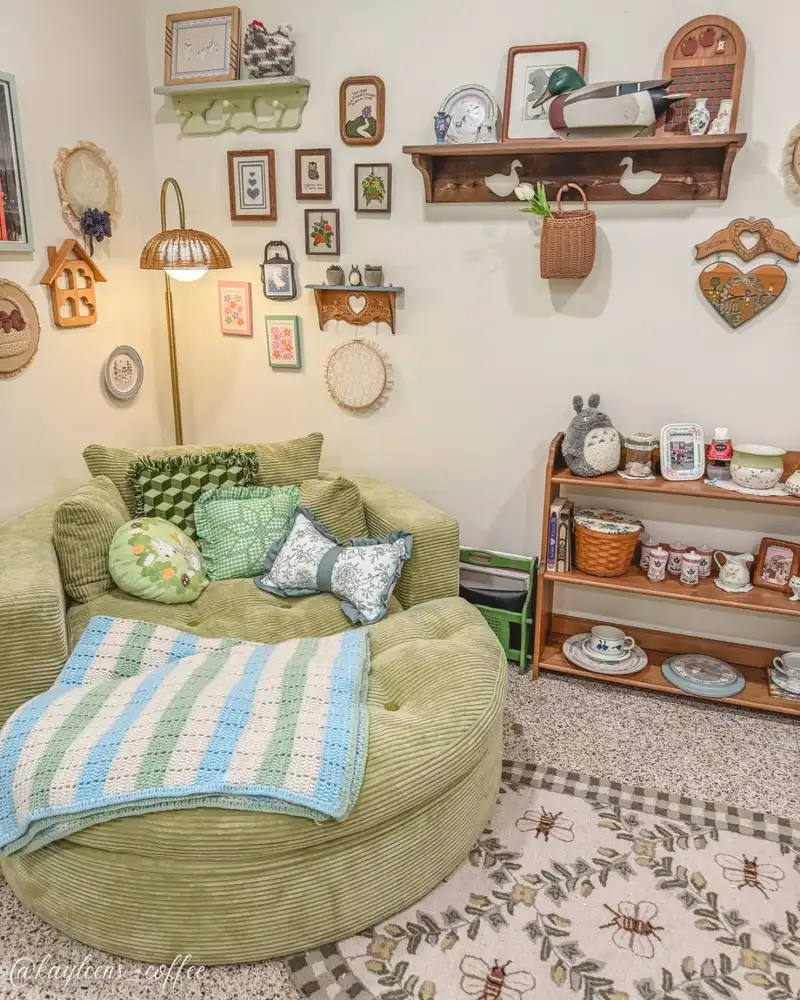
You don’t always need another sofa.
This oversized green chair turns one corner into a proper lounging spot, with a crocheted blanket, mixed cushions, and a lamp close enough for reading.
The wall behind it is busy, but the furniture footprint is actually pretty simple.
If you have an unused corner, I’d start with one genuinely comfortable chair and one lamp. Add the wall decor afterward.
6. Repeat Colors Around The Room
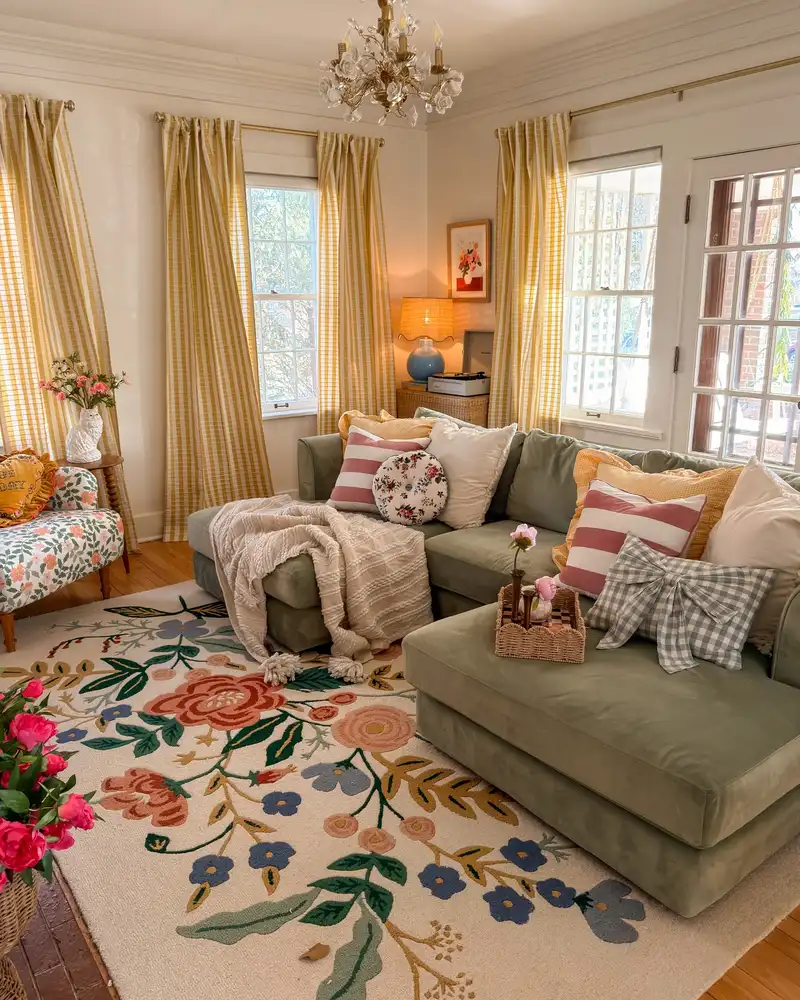
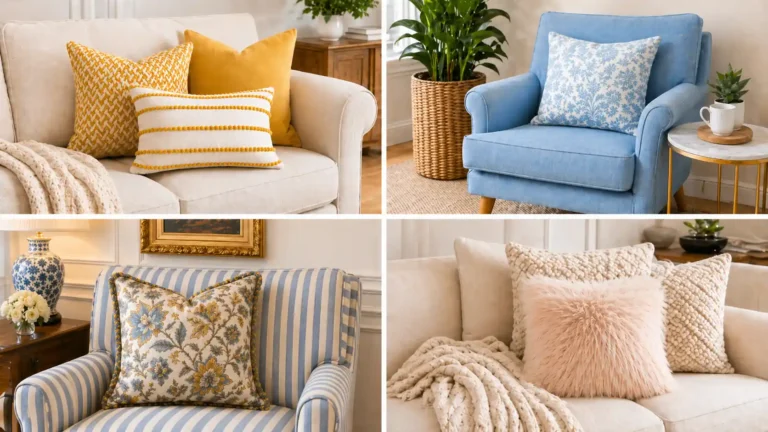
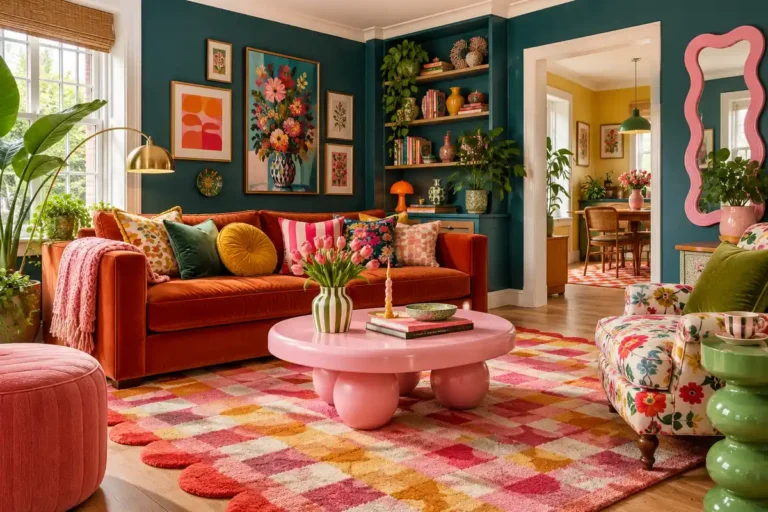
There are florals, checks, stripes, solids, and several different pillow shapes here. It could easily feel chaotic.
It doesn’t, mostly because the same colors keep showing up again.
Sage green appears in the sectional and rug. Pink repeats in the cushions and flowers. Mustard shows up in the curtains and smaller details.
You don’t have to match patterns. Matching a few colors is enough.
7. Go Bold With Mustard
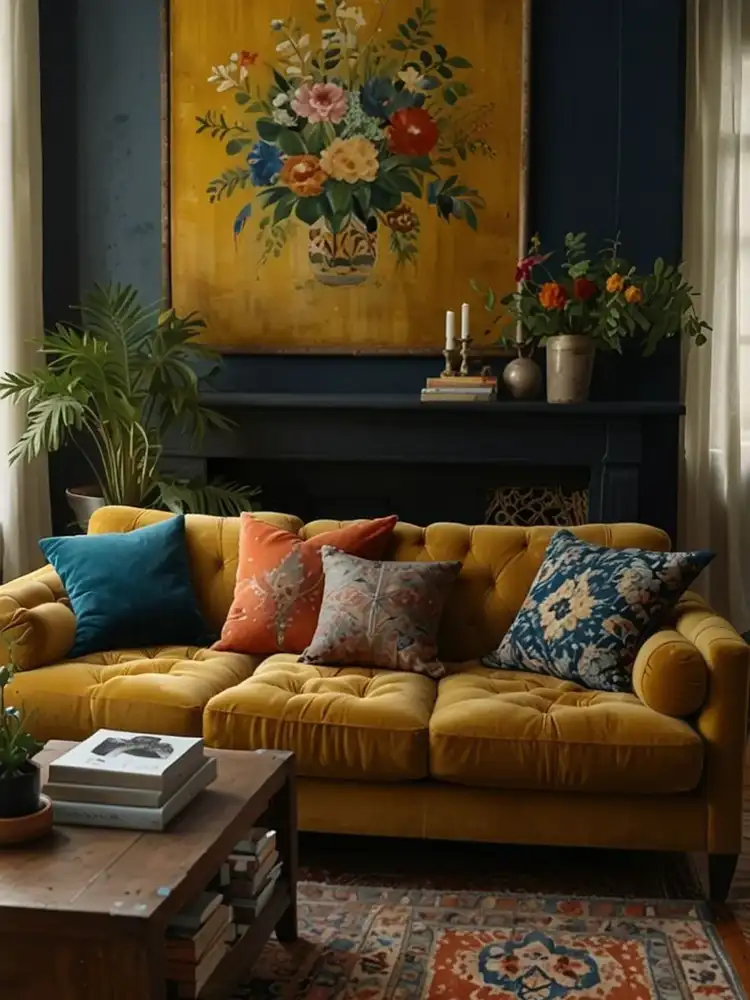
This mustard sofa doesn’t need much help.
Against the dark wall, the color already feels rich, so the pillows only need to pick up a few shades from the large floral artwork above.
The dark blue cushion is probably my favorite addition. It connects the sofa back to the wall without turning everything yellow and orange.
One bold sofa. A few supporting colors. Done.
8. Spread Light Around The Room
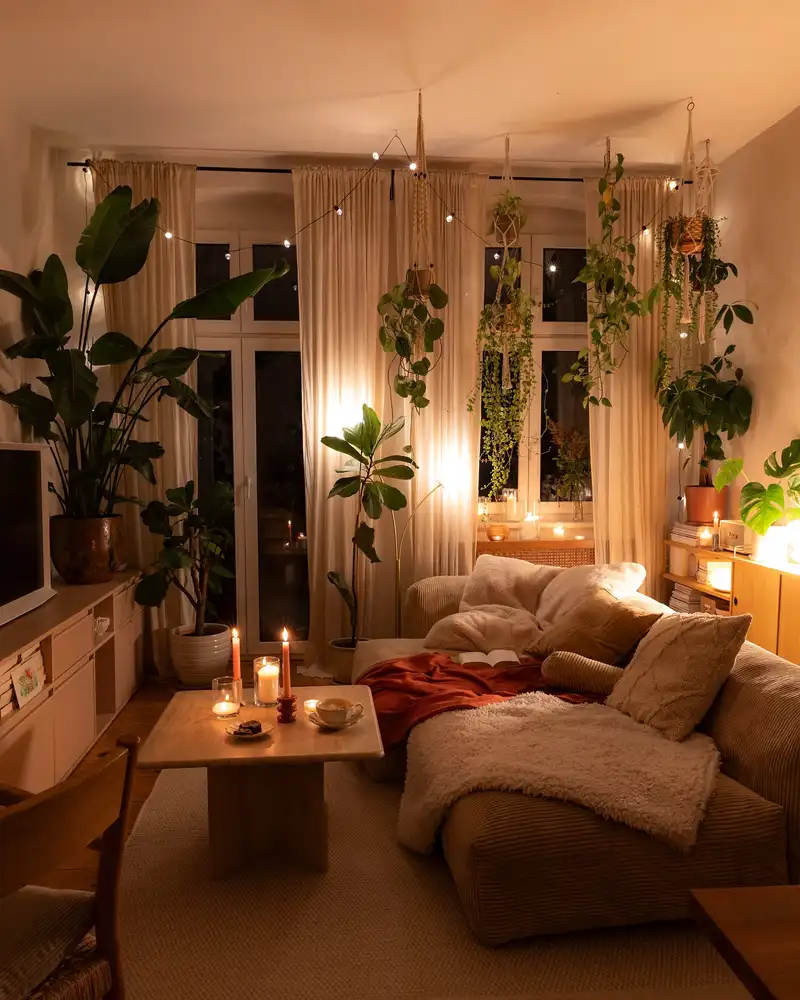
The cozy feeling here comes from lots of small pools of light rather than one bright source overhead.
Candles sit on the table and window ledge. Small lamps glow near the sofa. String lights sit higher up. Each one lights a different part of the room.
You don’t need this many to get the same effect. Even two lamps placed at different heights will feel softer than relying on a ceiling light alone.
9. Keep Seasonal Decor Small
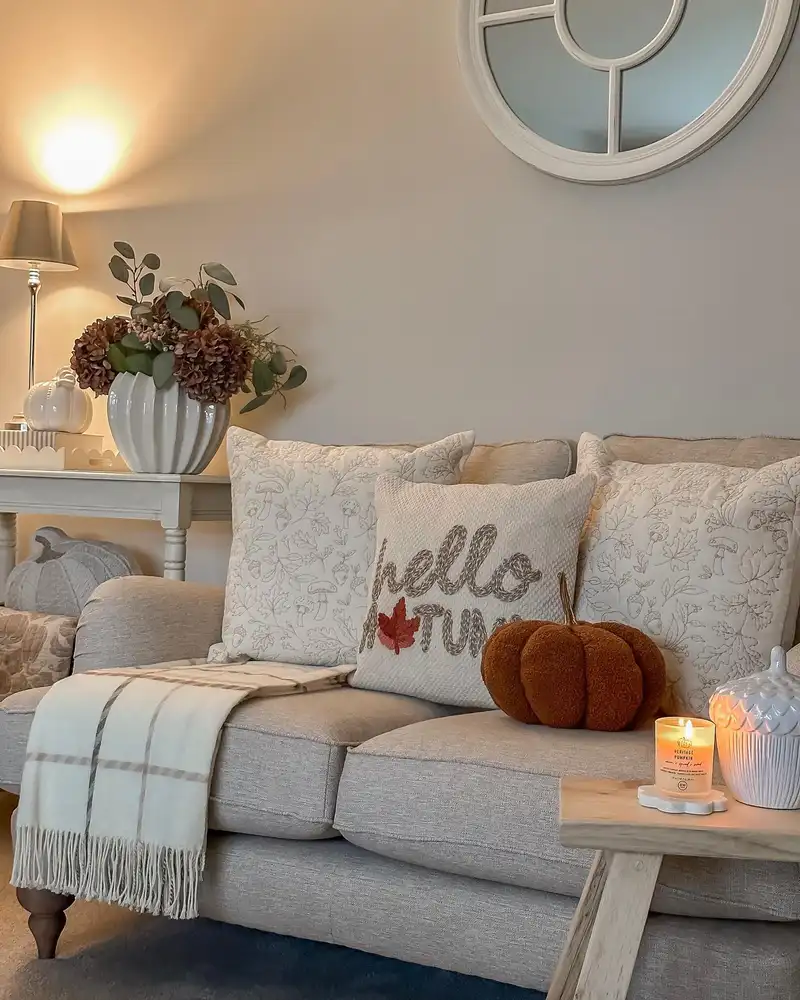
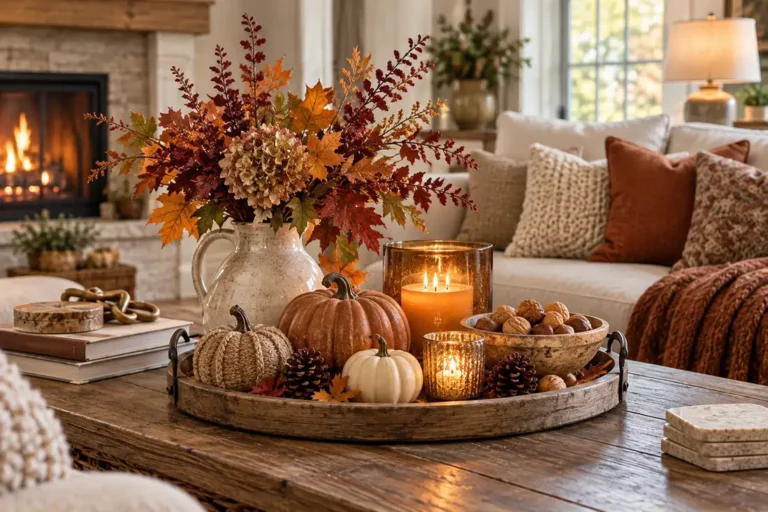
The sofa stays cream. The throw stays neutral. Most of the larger pieces could work all year.
Then a rust-colored pumpkin, warm candle, autumn pillow, and brown florals bring in the season.
That’s the useful part here. Seasonal decor doesn’t need its own furniture.
In a small living room, I’d rather swap a pillow cover and add one pumpkin than fill every table with fall decorations.
10. Take Books Up The Wall
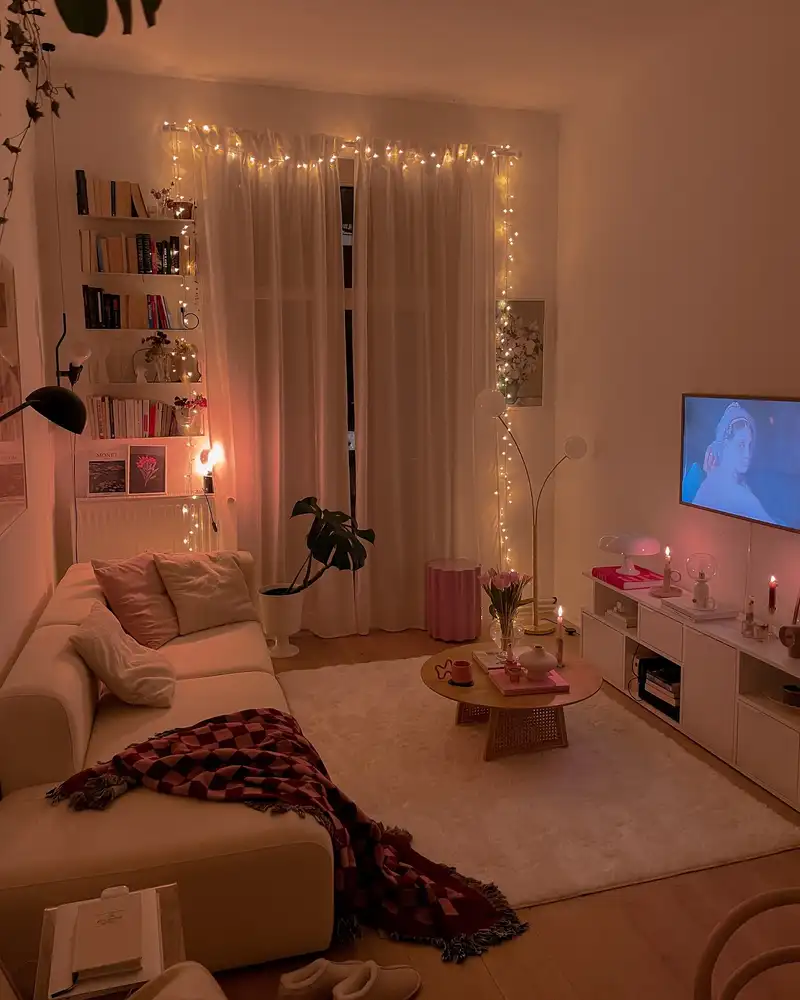
The slim shelves beside the window use a strip of wall that might otherwise sit empty.
Books go upward instead of spreading across a wide bookcase, and the floor underneath stays mostly clear.
It’s not complicated. If you have a narrow wall between a window and another piece of furniture, shallow shelves can be far more useful than trying to fit another cabinet there.
11. Build Up The Gallery Wall
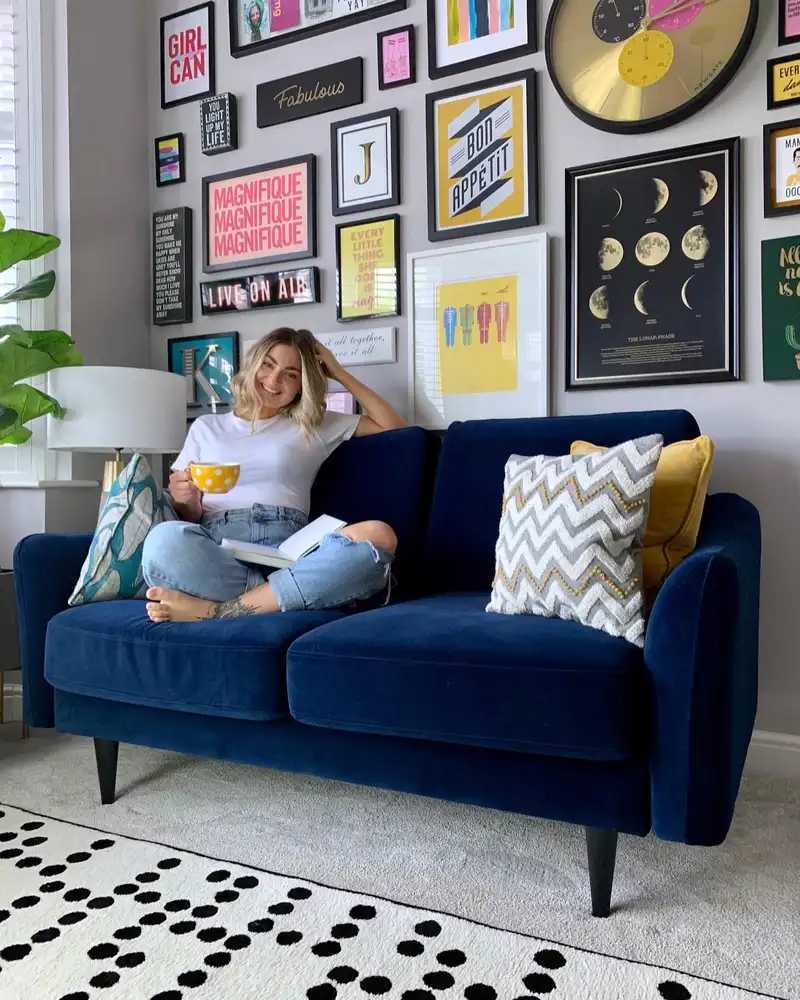
This gallery wall is unapologetically busy, and I think that’s why it works.
Small prints sit beside large ones. There are words, graphics, photographs, and different colors. The repeated black frames keep all of it from flying apart visually.
Below it, the blue sofa is solid and simple.
That contrast is worth copying. If your wall is loud, your largest piece of furniture doesn’t need to be.
12. Wrap Lights Around The Art
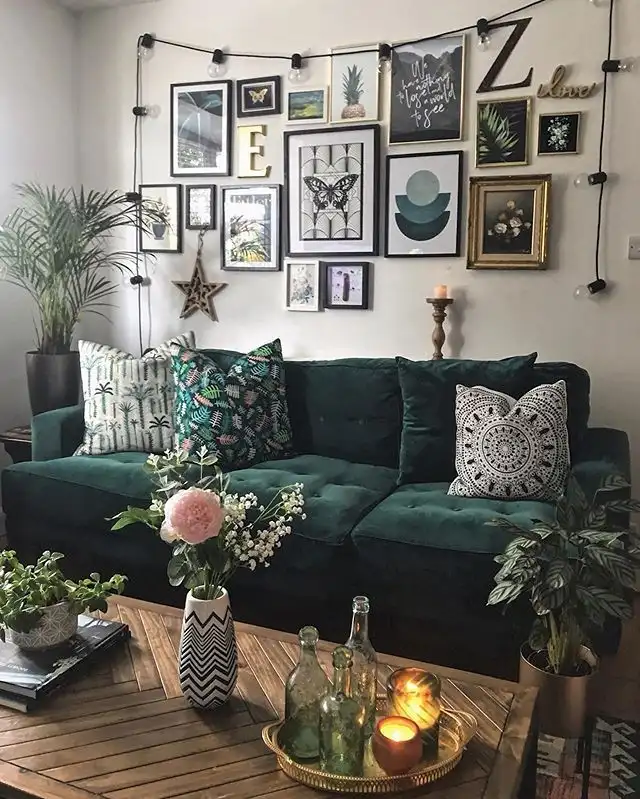
The string lights don’t zigzag through every picture. They mostly run around the outside of the gallery wall.
Small difference, much cleaner result.
It gives the whole collection a soft border after dark while letting the art stay readable.
I’d copy the lighting idea, not necessarily every frame. The wall already has plenty of detail.
13. Turn An Alcove Into Nook
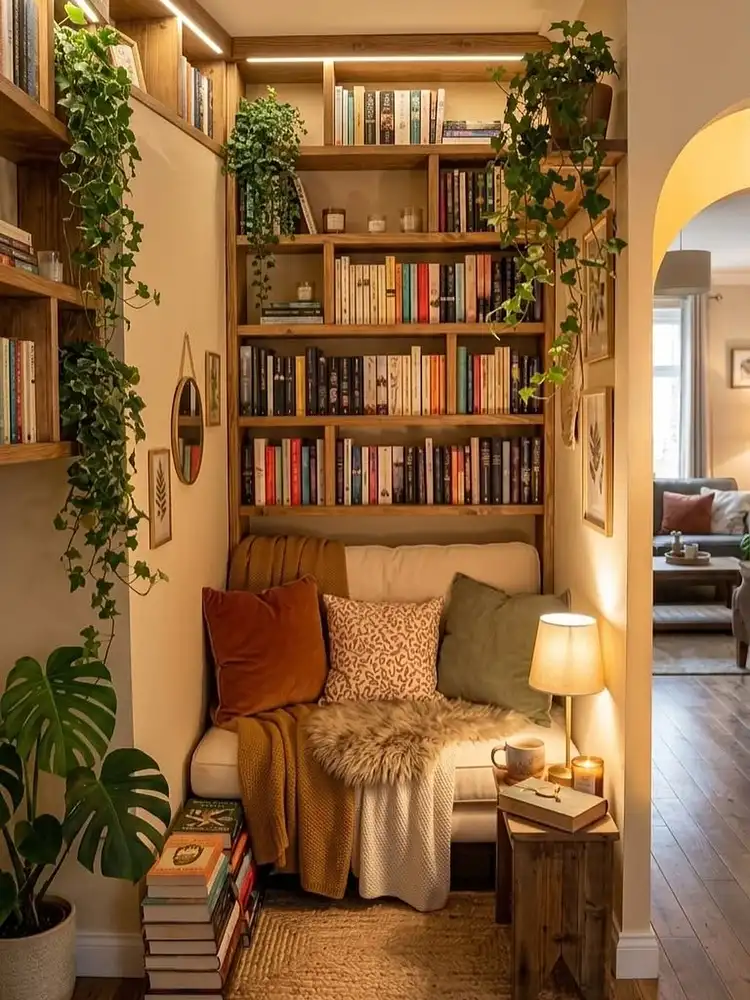
This tiny alcove could have been wasted hallway space.
Instead, a small loveseat fits beneath shelves that run almost to the ceiling. Books stay above, plants spill down from the upper shelves, and a little lamp sits beside the seat.
Nothing is oversized.
That’s the lesson here. When a space is narrow, build upward first and keep the furniture underneath compact. The result feels tucked away rather than squeezed in.
14. Make The Ottoman Work Harder
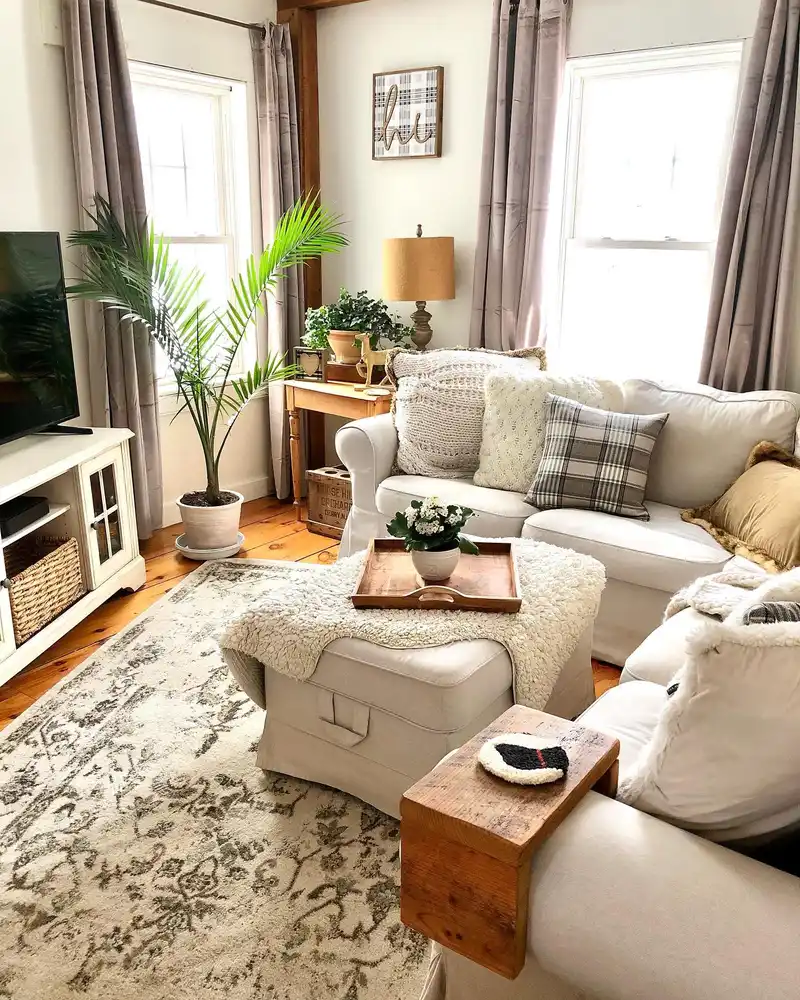
A large ottoman can be easier to justify in a small living room when it does two jobs.
Here it works as a place to put your feet up, but a wooden tray gives it a firm surface for flowers or drinks when needed.
No separate coffee table required.
And when you want the whole ottoman back, move the tray. Simple.
15. Pile On Chunky Throws
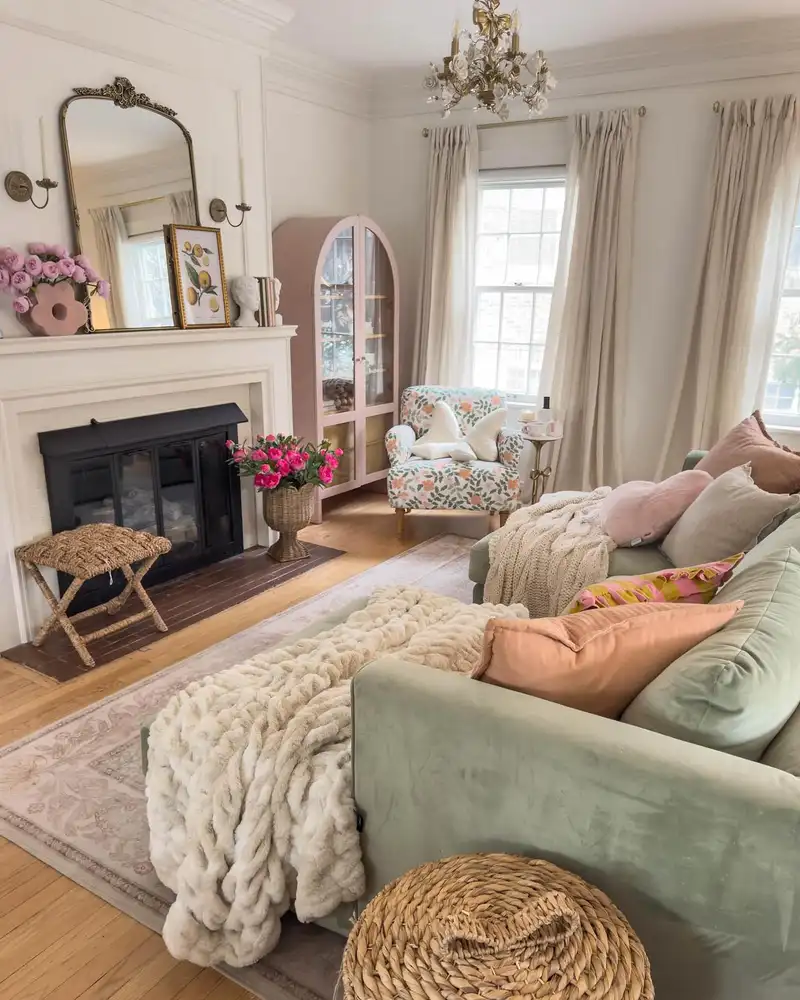
The thick cream blankets are what make this sage sectional look inviting.
One falls over the arm. Another stretches across the seat. Neither is folded into a perfect little rectangle.
That casual drape matters.
If your sofa feels a bit plain, I’d try a heavier throw before buying more cushions. One good blanket can change the whole seat.
16. Let The Sectional Hug Corners
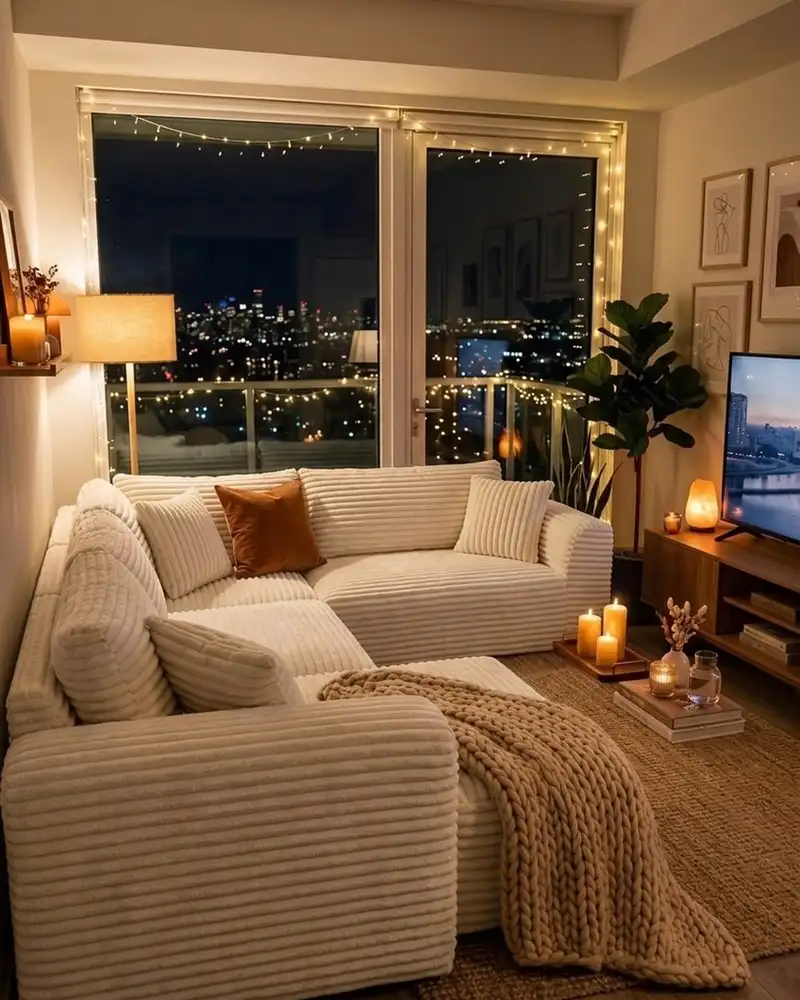
Large furniture isn’t automatically wrong for a small room.
This sectional works because it follows the walls and keeps the center relatively open. The pale upholstery helps too. A dark, bulky sectional in the same spot would feel much heavier.
There’s also no huge coffee table fighting for space in front of it.
If you want a sectional in a tight room, the footprint matters more than the label. Measure the walking path first.
17. Let Books Warm The Room
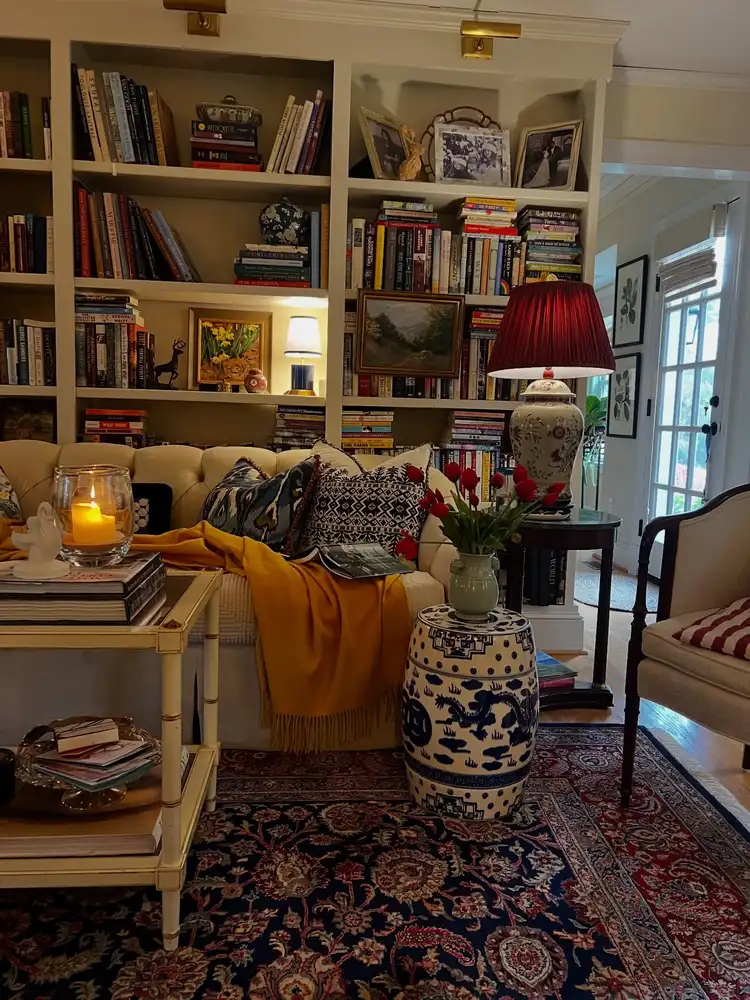
The shelves are packed. That’s fine.
Not every small room needs empty surfaces and perfectly spaced objects.
What keeps these bookcases from feeling flat is the mix between books and a few larger breaks, like framed photographs, artwork, lamps, and pottery.
The red lampshade is especially good. It gives your eye somewhere to stop among hundreds of book spines.
I wouldn’t thin the books out much. The fullness is part of the room.
18. Repeat Wood Across Both Zones
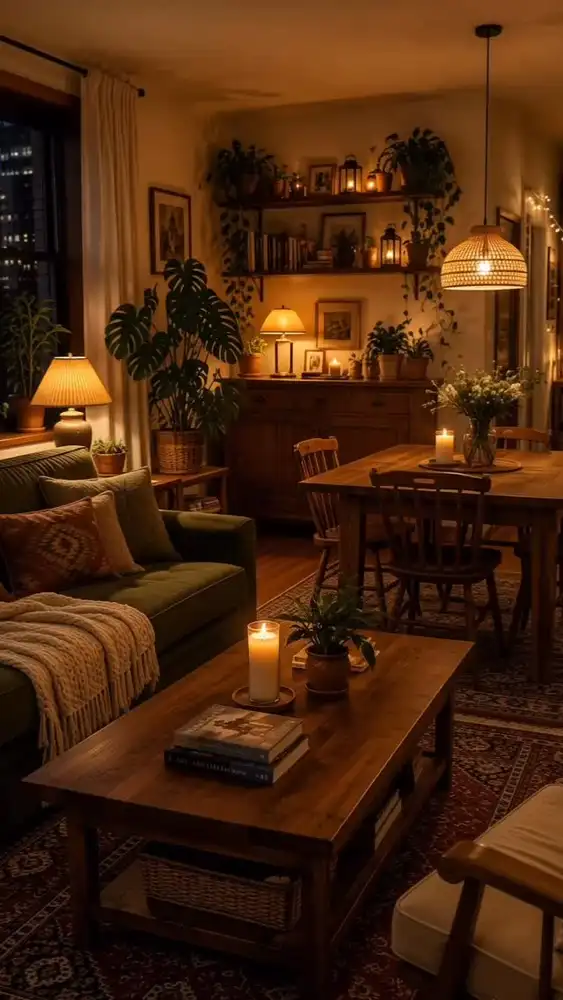
This living room runs straight into the dining area, yet the two spaces don’t feel disconnected.
The coffee table, dining table, chairs, shelving, and cabinet all use warm wood tones. They’re not exact matches, which is important.
You can still tell where the living area ends and dining area begins because the furniture placement and rugs do that job.
In a small open-plan room, repeating materials is often calmer than giving every zone its own completely different look.
19. Choose One Oversized Chair
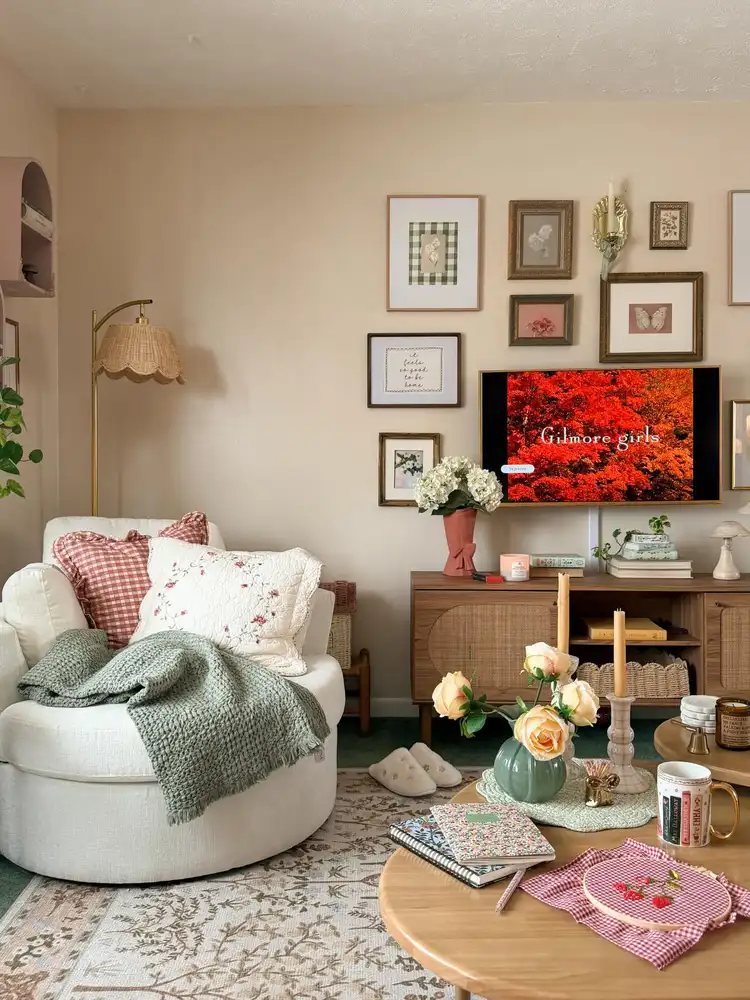
That round cream chair takes up a decent amount of space, but it gives something back.
It’s large enough to curl up in, so there’s no need to squeeze two smaller accent chairs into the same corner.
The gingham pillows and sage throw make it feel even more like its own little retreat.
Sometimes one big comfortable piece is the better small-space choice.
20. Warm Green With Rust
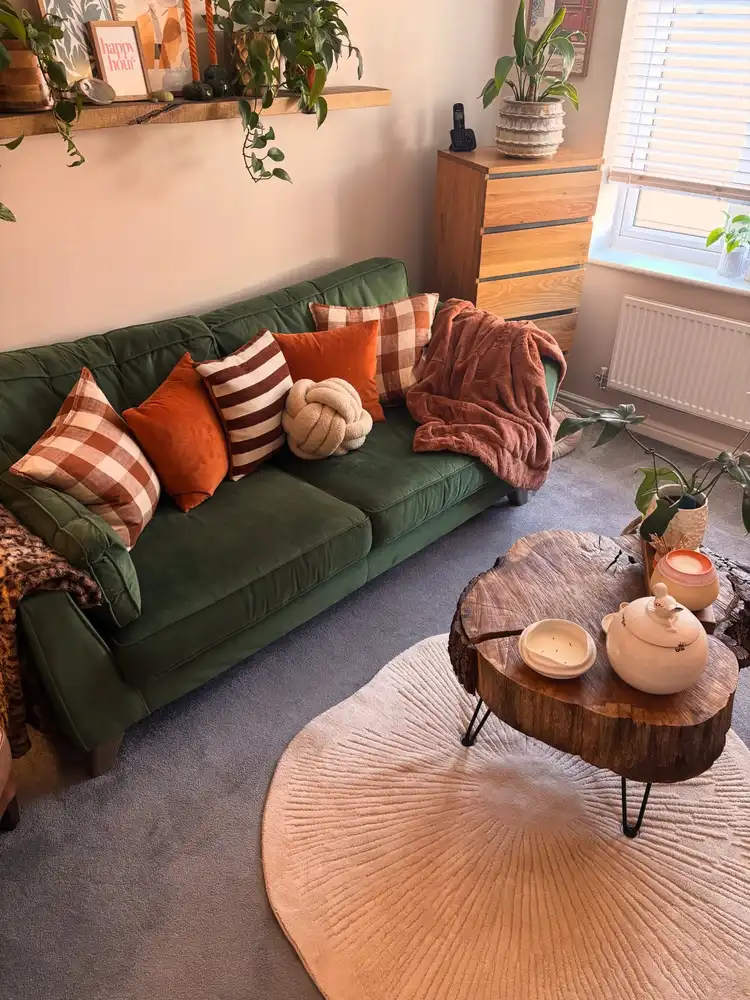
Dark green and rust are doing most of the work here.
The sofa brings depth, while the burnt orange pillows and blanket stop the green from feeling too cool. A couple of checked cushions break up the solid blocks of color.
Then the rough wooden coffee table adds another warm brown without introducing a new bright shade.
I wouldn’t add another color. Green, rust, cream, and wood are enough.
Final Thoughts
The best cozy living room ideas for small spaces don’t necessarily involve buying more stuff. Often it’s about using what you have better.
Move plants upward. Let one rug define the seating area. Choose an ottoman that can double as a table. Add a lamp instead of another decorative object. And if one chunky blanket makes the sofa feel finished, stop there. If the room is also long and tight, these narrow living room ideas focus more on layout and keeping the walkway clear.
A small room can still feel layered, colorful, and lived in. It just needs a little breathing room.