20 Small Entryway Organization Ideas That Save Space
By the time everyone is heading out the door, a small entryway can turn into a mini traffic jam. Shoes in the walkway, bags hanging from random knobs, keys nowhere to be found. I have learned that adding more storage is not always the answer. Using the right kind of storage is.
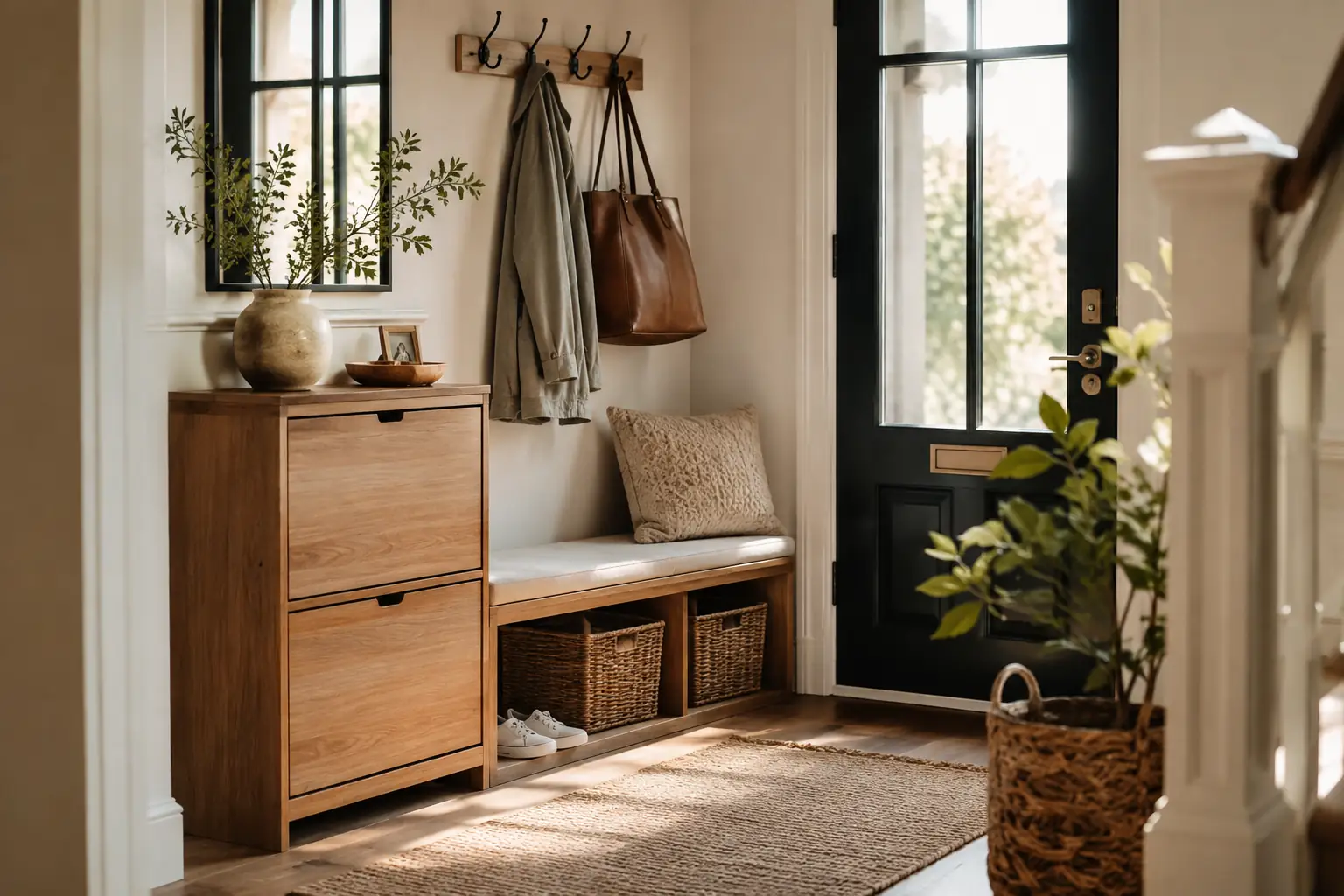
These small entryway organization ideas make the most of spaces that barely seem big enough to organize. Think slim shoe cabinets, wall-mounted hooks, baskets tucked under consoles, benches with hidden storage, and clever ways to use the wall all the way up.
Some ideas are wonderfully simple, others give you inspiration for a bigger makeover. Either way, the goal is the same: make coming home feel less like stepping over everything you dropped there yesterday.
1. Slim Cane Shoe Cabinet
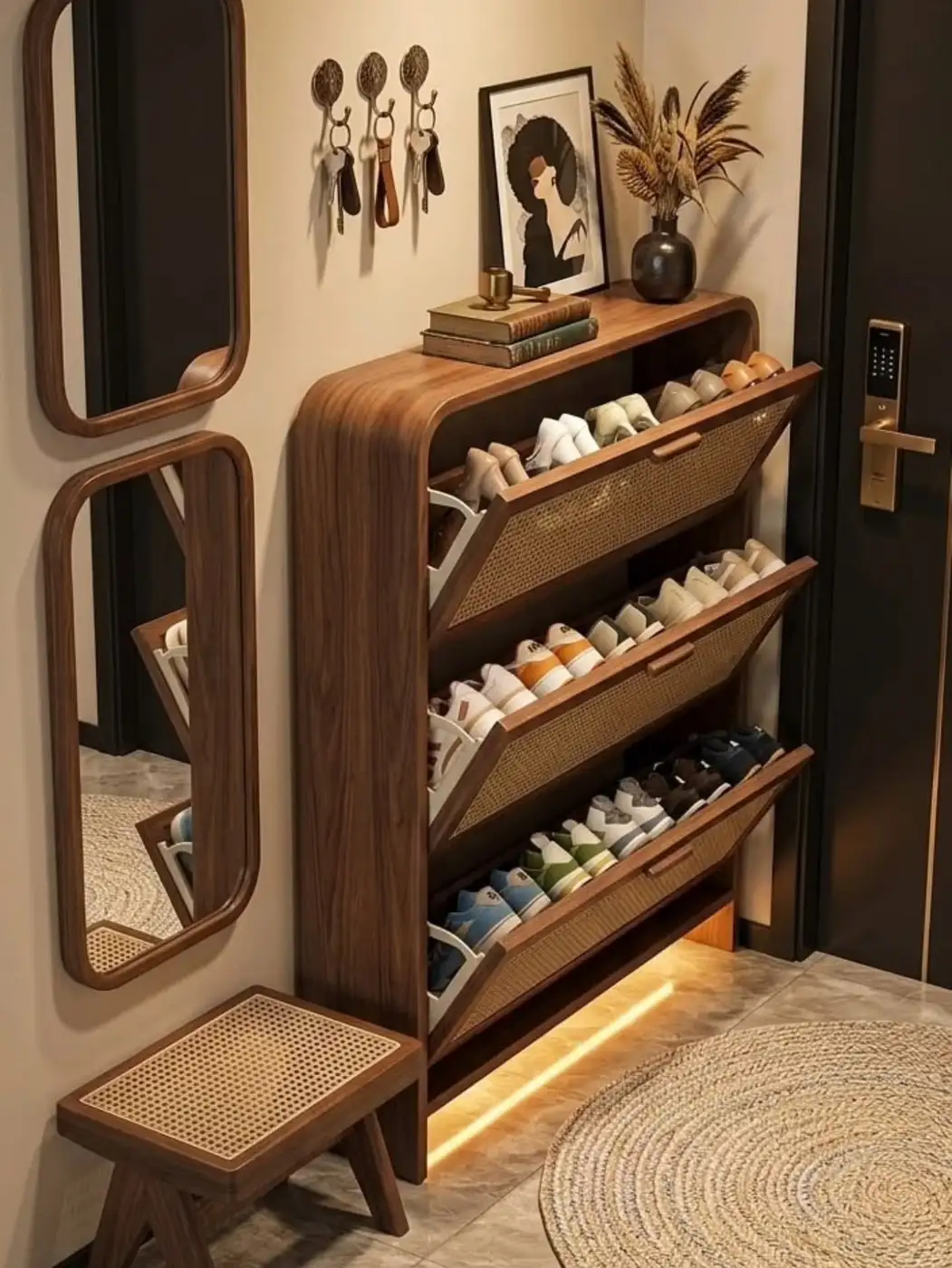
This is the kind of entryway piece I love in a small home because it works hard without looking bulky. The cabinet stays narrow, but the flip-down sections give you room for a surprising number of shoes while keeping the floor clear.
What makes it stand out:
- The vertical shape uses wall space instead of eating up the walkway.
- The closed fronts hide visual clutter, which makes the whole entry feel calmer.
- The top ledge gives you a landing spot for keys, a small vase, and a framed print.
- The wall hooks and mirrors turn one tight corner into a full drop zone.
If your shoes usually end up in a messy row by the door, this is a smart fix that still looks warm and pulled together.
2. Turn One Wall Into a Mini Mudroom
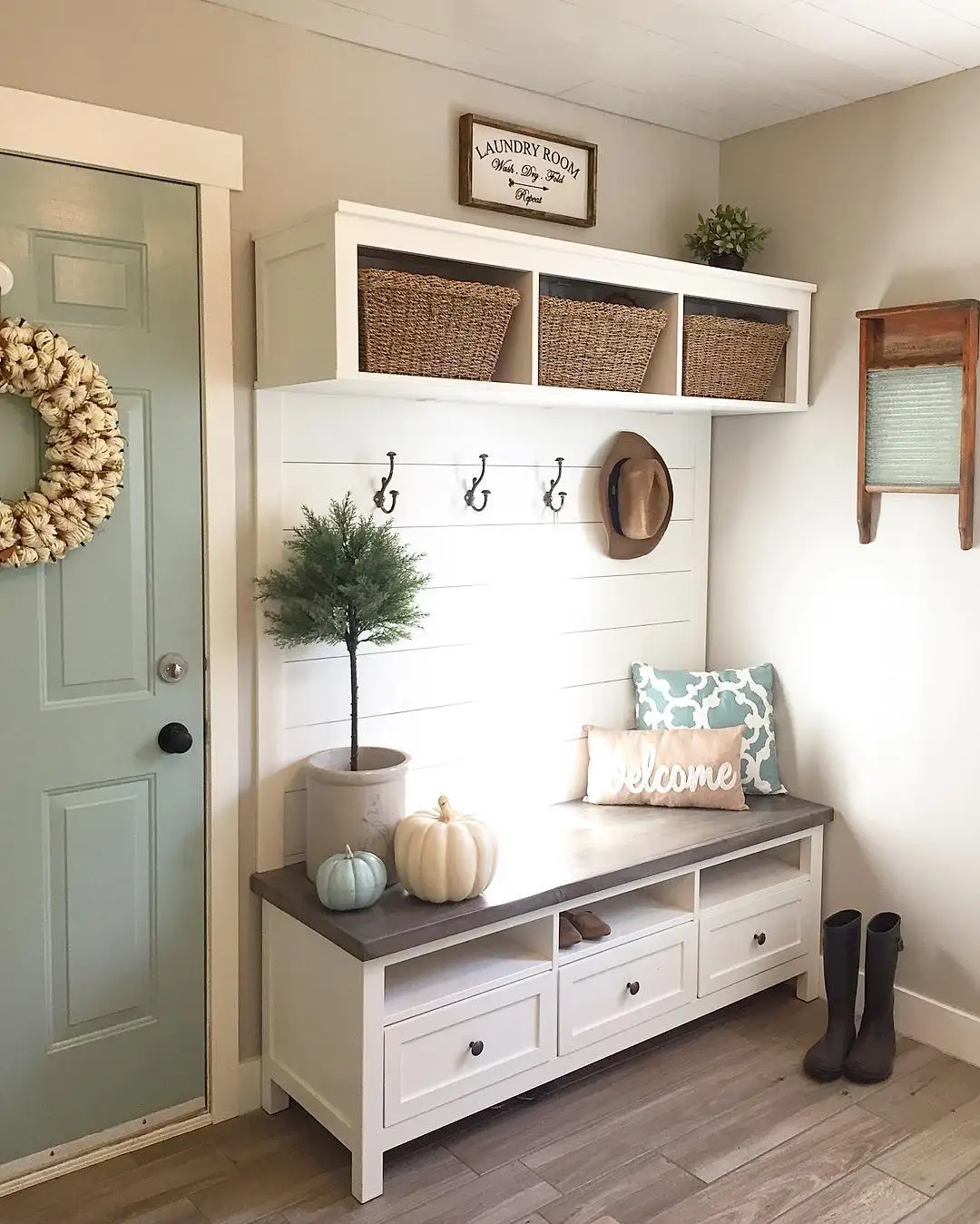
Not every small entryway needs a full closet. Sometimes one well-planned wall does the job better. I like this setup because it gives you a place to sit, a spot to hang everyday grab-and-go items, and plenty of hidden storage without making the room feel crowded.
Why this layout works so well:
- The bench handles two jobs at once. It gives you a seat for shoes and adds drawers underneath for things that usually float around, like gloves, pet gear, or shopping bags.
- The hooks keep daily clutter off the bench. Coats, hats, and a tote can hang in plain reach instead of piling up in a corner.
- The top cubbies make use of dead wall space. Woven baskets up high are great for extras you do not need every hour but still want close by.
- The open cubbies break up the bulk. That small detail matters. Closed storage alone can feel heavy, but a few open sections keep it lighter.
For a busy household, this is the kind of entryway setup that helps everyone drop things in the right place instead of all over the floor.
3. Hang Cubbies Above the Floor
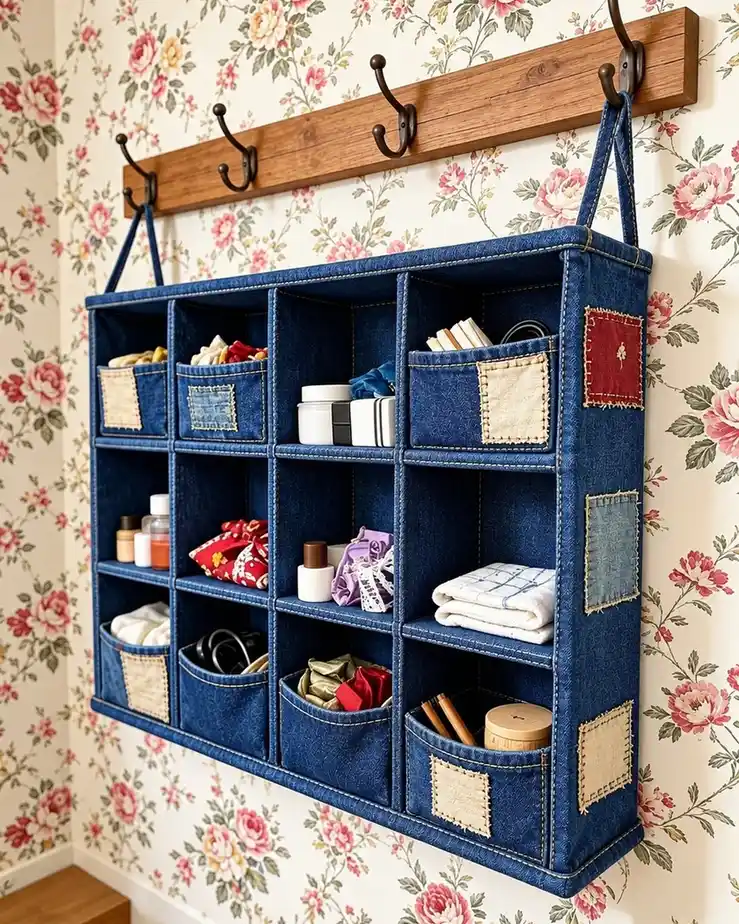
Tiny entryways often have one thing going for them: unused wall space. This hanging cubby organizer takes advantage of it without adding another piece of furniture to squeeze past.
Each pocket can have its own job. Keep scarves in one, sunglasses or keys in another, and small grab-and-go items in the rest. The mix of open cubbies and front pockets also makes it easy to see what is running low or missing.
I especially like this idea for renters because the whole setup feels useful without taking over the room. And the floor? Still completely free.
4. Mix Open and Closed Storage
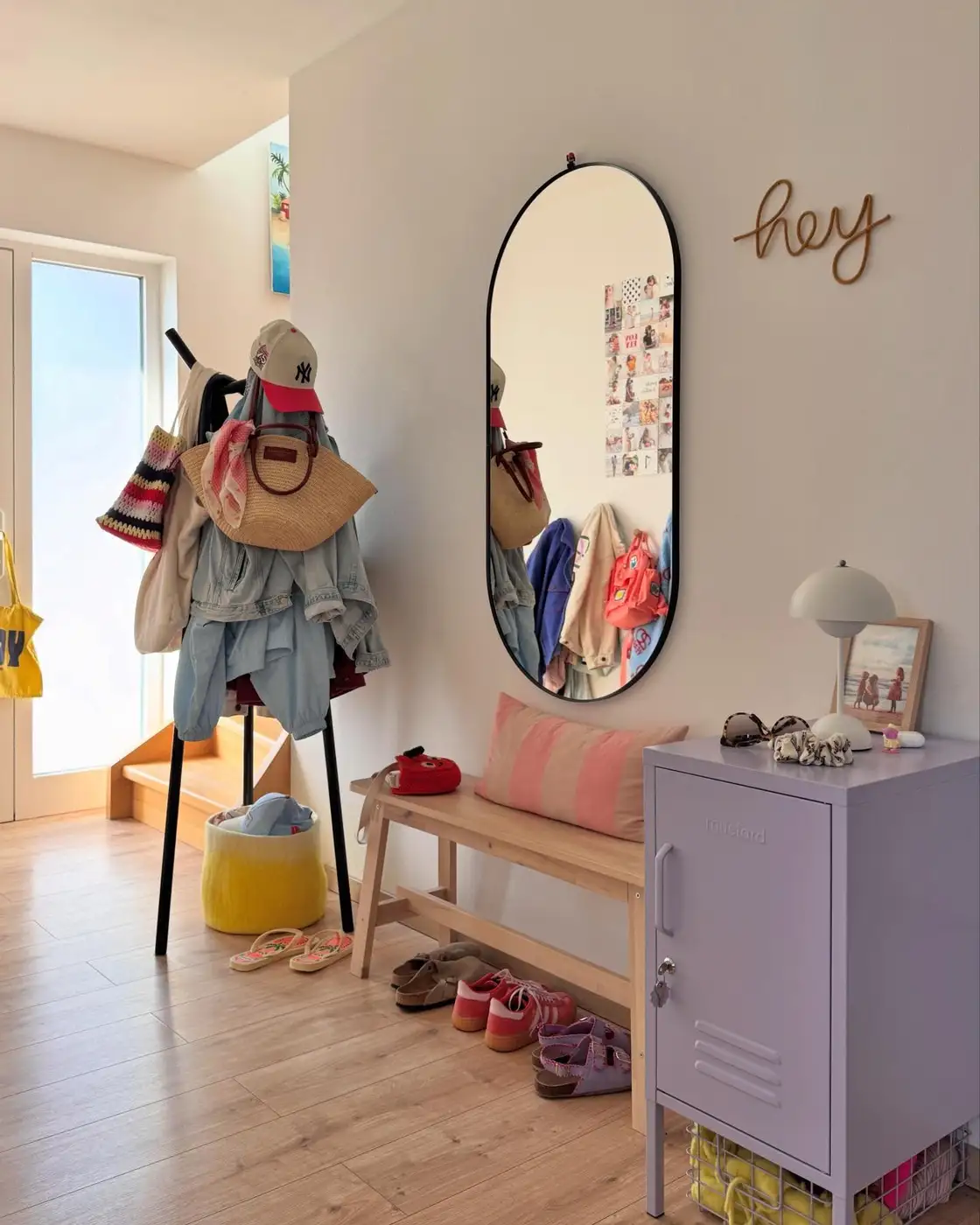
A small entryway does not have to hide every single thing. In fact, I think this setup works because it does the opposite.
The coat stand keeps daily pieces out in the open, where jackets, hats, and bags are easy to grab. Shoes tuck beneath the slim bench, while the tall cabinet gives less attractive clutter somewhere to disappear.
Then there is the full-length mirror. It earns its wall space twice by helping with last-minute outfit checks and bouncing more light around the entry.
The trick is balance. Let everyday items stay visible, but give the loose little stuff a door, drawer, or basket of its own.
5. Use a Tall Shoe Cabinet
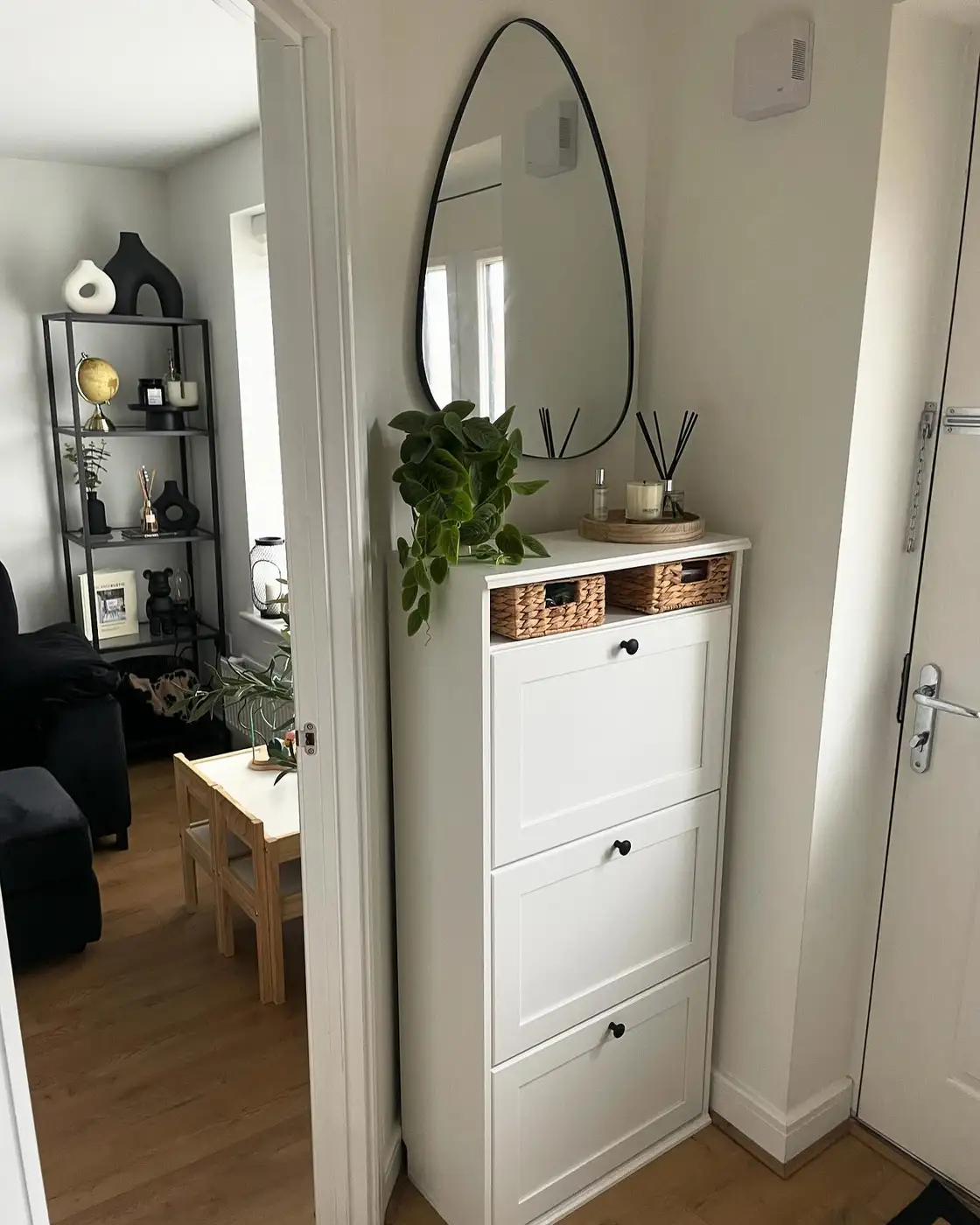
Narrow hallway? Go up, not out. A tall shoe cabinet like this uses a thin slice of floor while giving several pairs of shoes somewhere to disappear.
What I’d copy here is the little bit of storage above the drawers too. The two woven baskets can catch keys, sunglasses, or other small things that are easy to lose on the way out. An oval mirror fills the wall above without making the corner feel heavy, while the cabinet top works as a tiny drop zone.
For awkward spaces beside the front door, this is far more useful than a wide console.
6. Float Storage Along One Wall
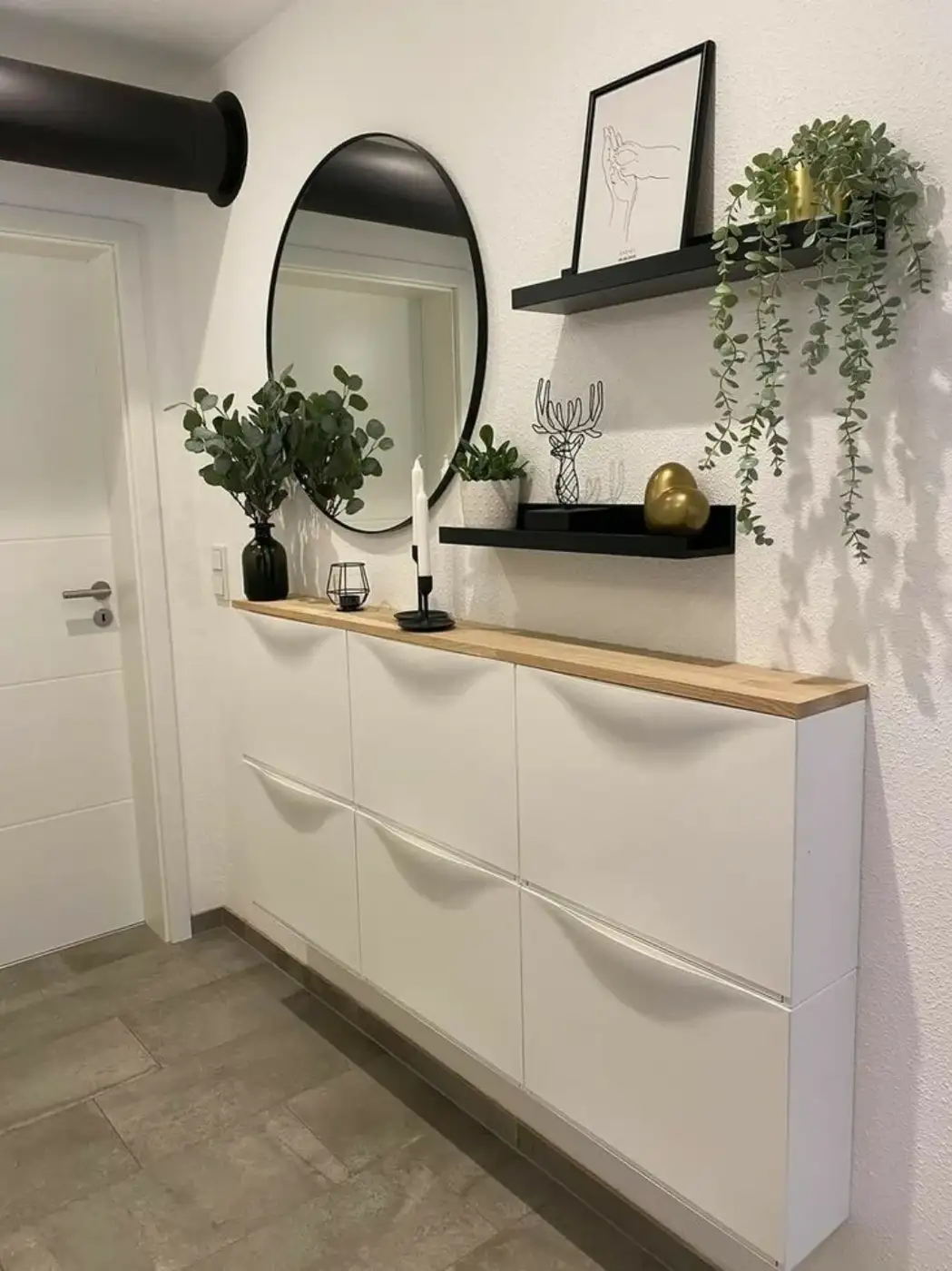
Here’s a smart move when the hallway is long but not very wide: keep the storage shallow and off the floor.
The wall-mounted cabinets create a clean run for shoes and everyday clutter, while the wood top gives you somewhere to set keys or a small tray. Because the units barely project into the walkway, the entry still feels open.
Above them, the oval mirror and two slim shelves use the remaining wall without adding visual bulk. I’d keep the styling this simple too. Once a narrow hallway gets overloaded with decor, it starts feeling smaller very quickly.
7. Build Storage Into a Slat Wall
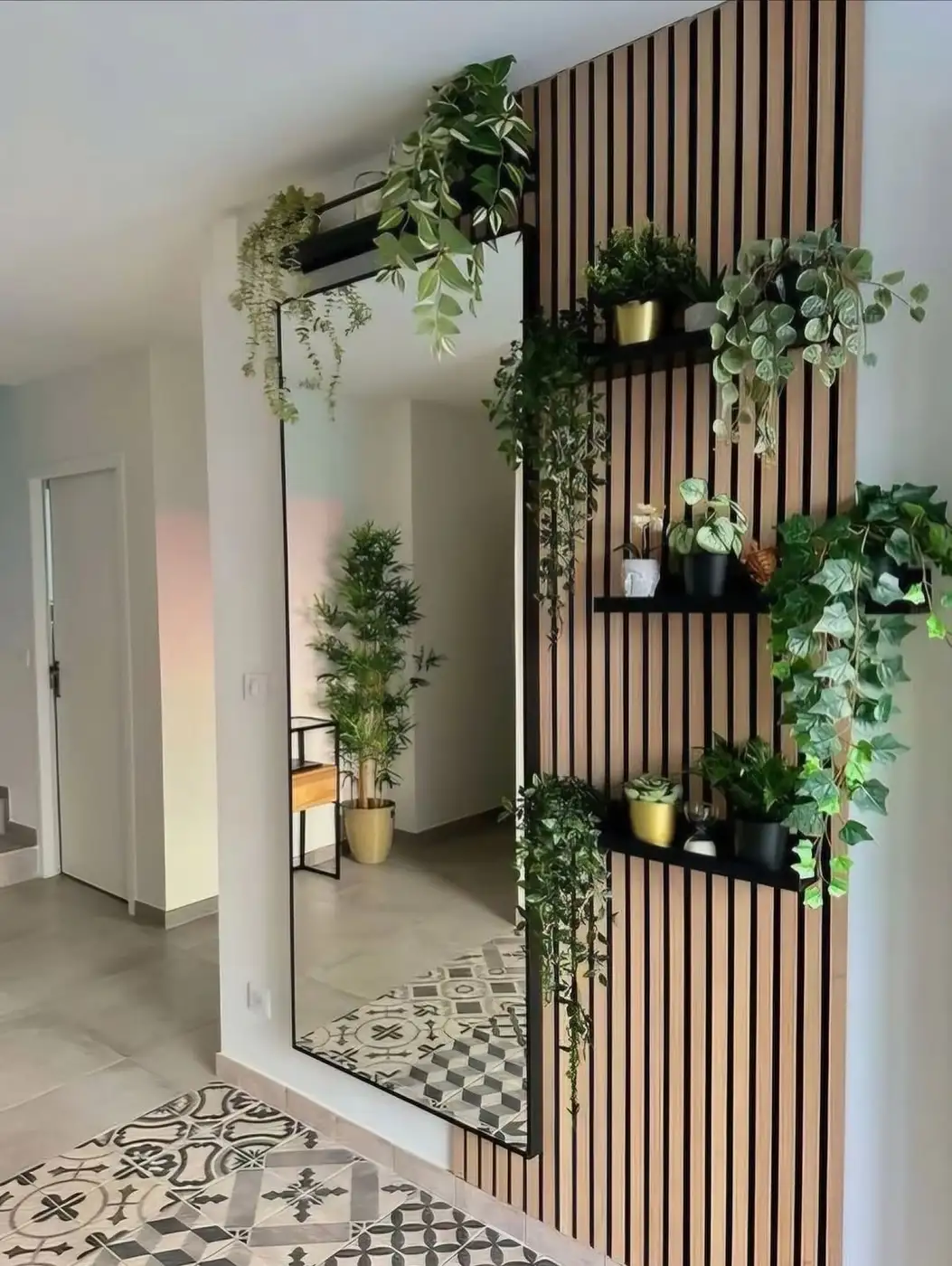
A blank entryway wall can do a lot more than hold a mirror. Here, the wood slat panel turns the wall itself into useful vertical space, with narrow shelves tucked alongside a full-length mirror.
Most of the shelves are styled with greenery, but I’d steal the layout and give one shelf a practical job for keys, sunglasses, or outgoing mail. Everything stays lifted off the floor, so the walkway remains wonderfully open.
The mirror helps too. In a slim entry, that extra reflection keeps a tall feature wall from feeling boxed in.
8. Add Hooks to Wall Paneling
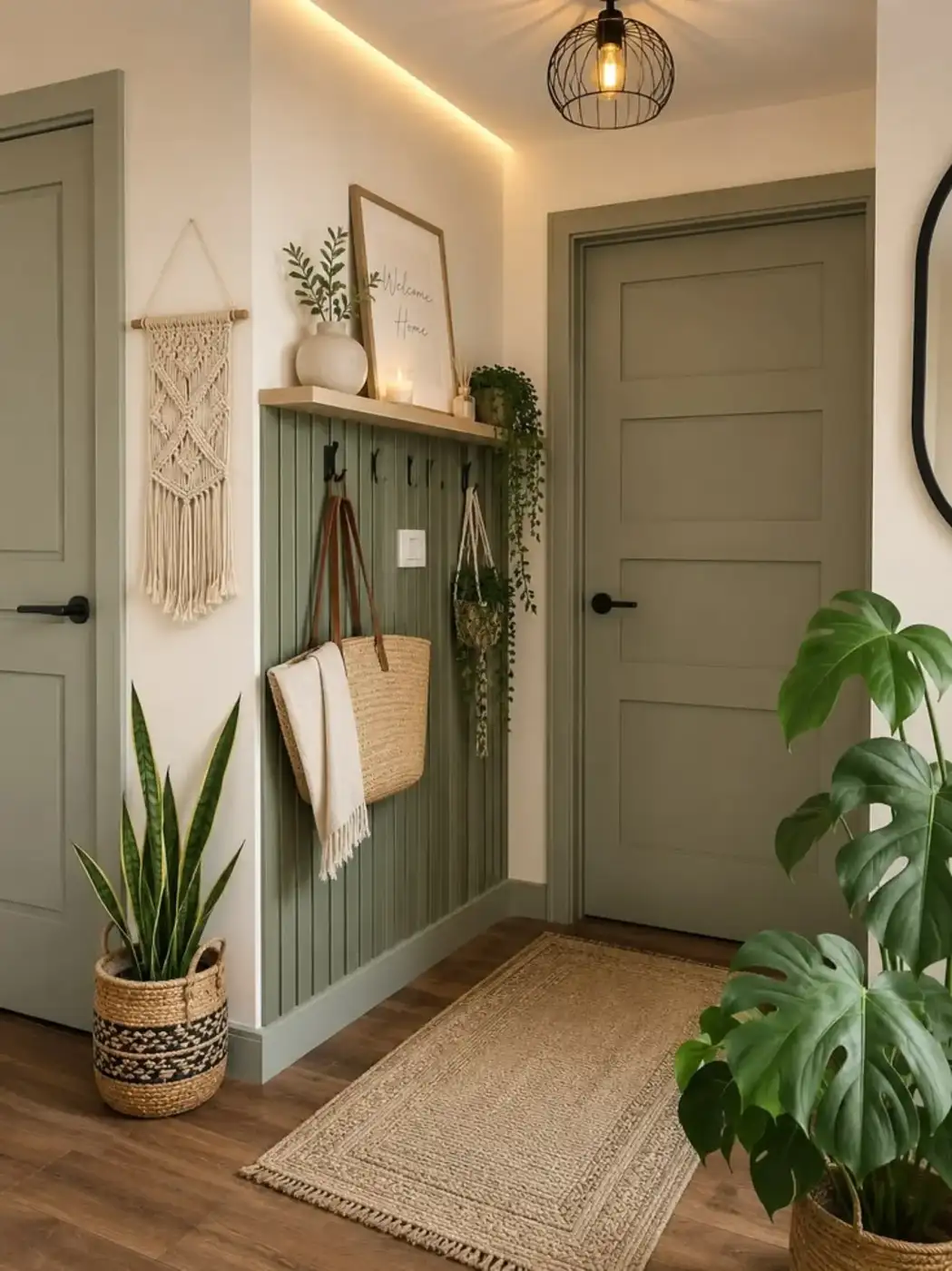
This little wall earns its keep. Instead of squeezing in another cabinet, the entry uses vertical paneling, a slim ledge, and a row of hooks to organize the things that need to leave the house with you.
Bags and scarves can hang at arm’s reach, while the ledge above gives decor and smaller items a home. I also like how the muted green paneling marks out the drop zone without closing anything in.
For a really narrow entry, that is often enough. You do not need deep storage everywhere, just a clear spot for the things you grab most.
9. Tuck Baskets Under a Console
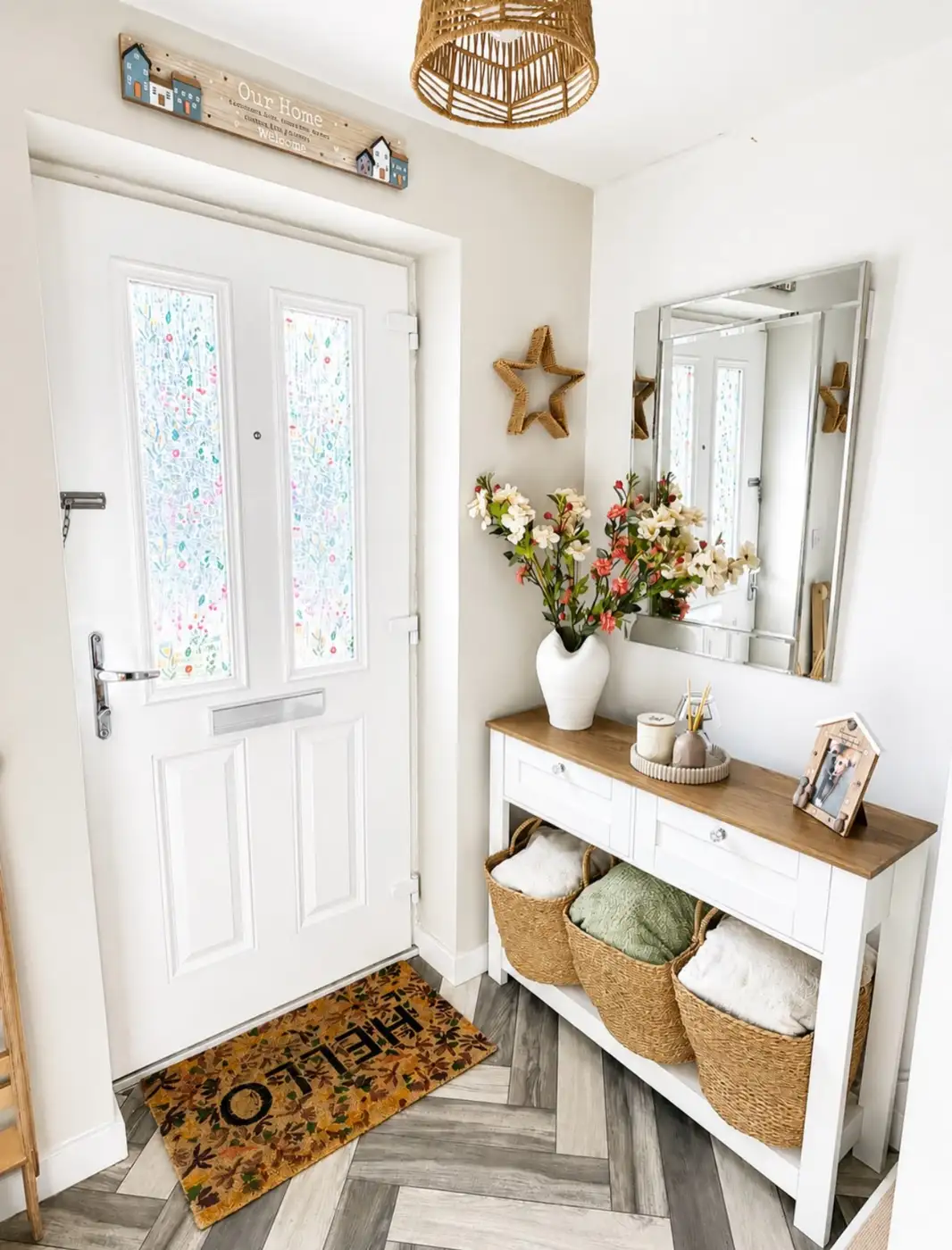
I have a soft spot for entryways that hide clutter without looking like storage rooms. This slim console does exactly that.
The drawers take care of tiny things like keys and sunglasses, while the open shelf below fits three large woven baskets. Those baskets are the real workhorses. Use them for shoes, reusable bags, scarves, or anything that tends to land by the front door.
What keeps the setup feeling light is the open base and narrow frame. You get useful storage without blocking the walkway, and the mirror above makes the little corner feel brighter and wider.
10. Build Storage Around a Bench
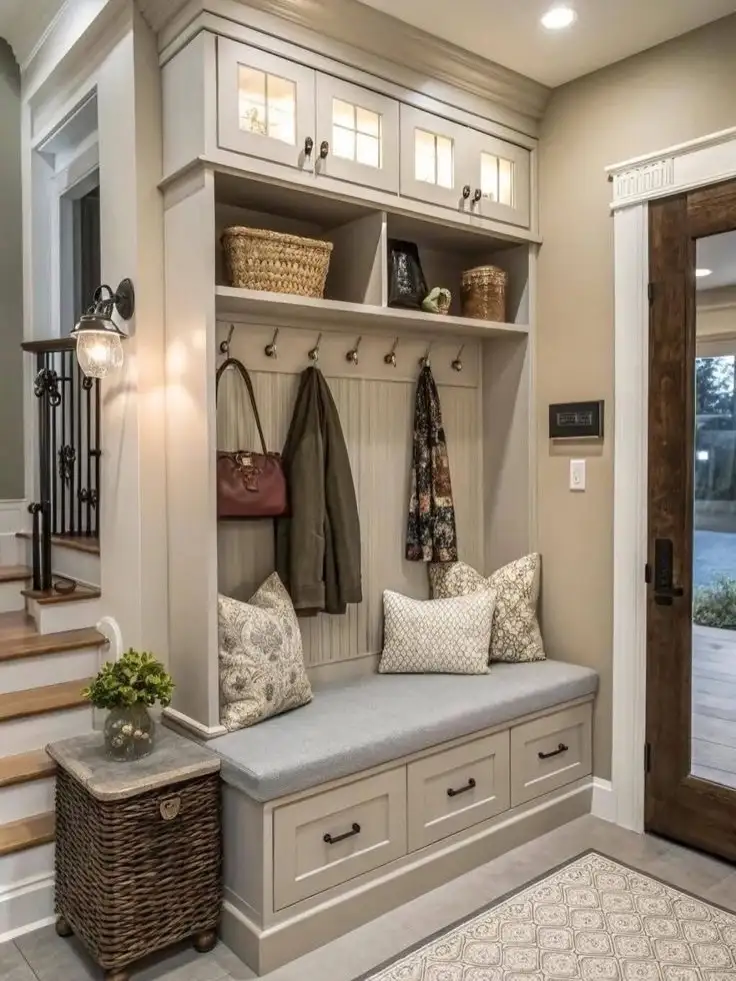
Built-ins earn their space when every inch has a job, and this one is doing plenty without spilling into the walkway.
The cushioned bench gives you a proper place to sit while putting on shoes. Drawers underneath hide smaller everyday clutter, hooks keep coats and bags within reach, and the upper cabinets take care of things you do not need every day.
My favorite detail is the open shelf between the hooks and cabinets. Baskets can hold seasonal extras, while a little decor stops the whole setup from feeling too much like a locker room.
11. Slide Baskets Under a Console
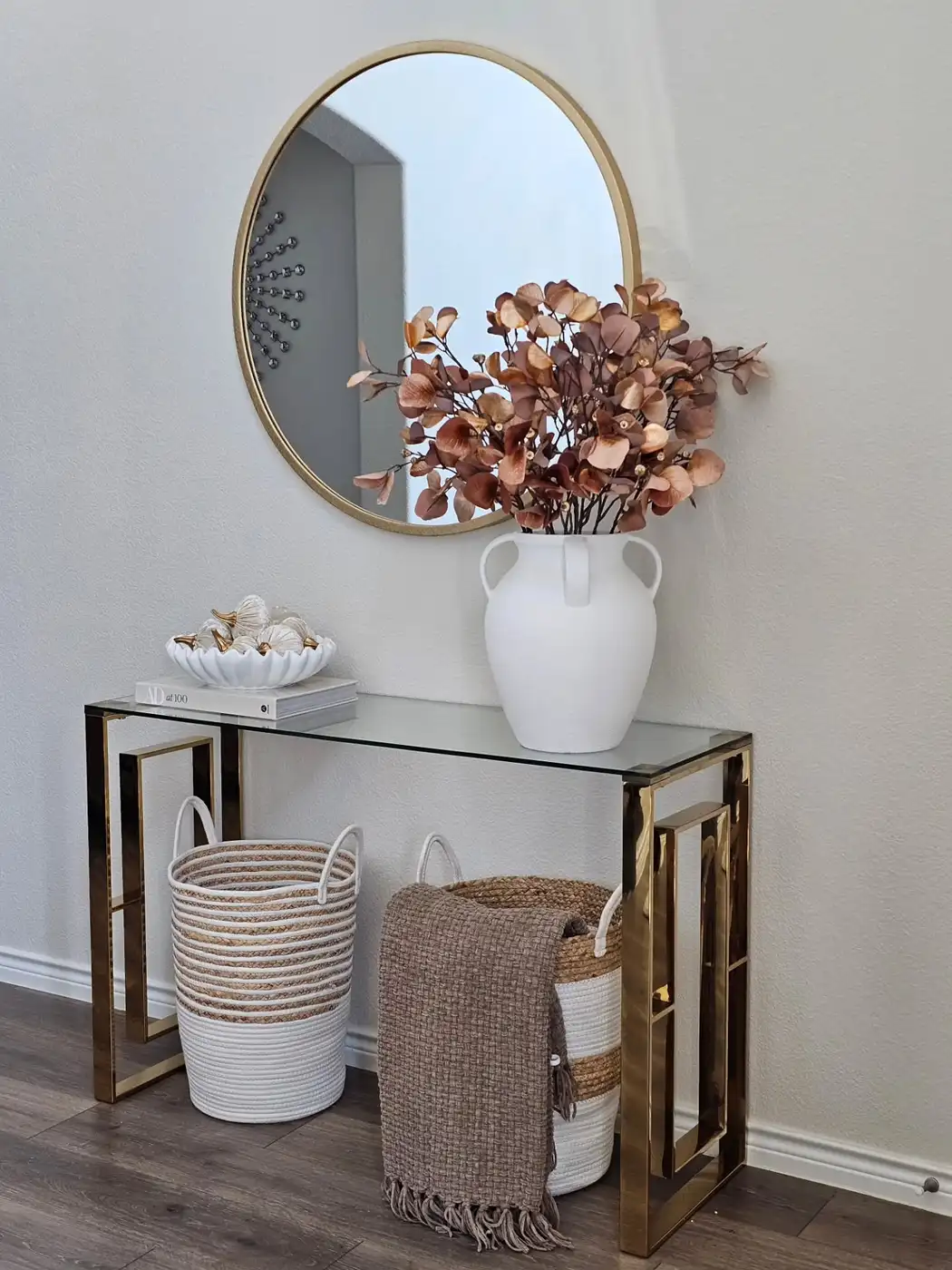
Pretty consoles are nice, but I like them much more when the empty space underneath actually works for you.
Here, two tall woven baskets tuck neatly below the slim glass table without making the corner feel packed. That gives you an easy place for scarves, reusable bags, slippers, or other soft items that tend to wander around the entryway. The open metal frame keeps everything looking light, while the round mirror uses the wall without needing extra furniture.
A simple rule I use: if the console has open legs, make that floor space earn its keep.
12. Divide the Wall Into Zones
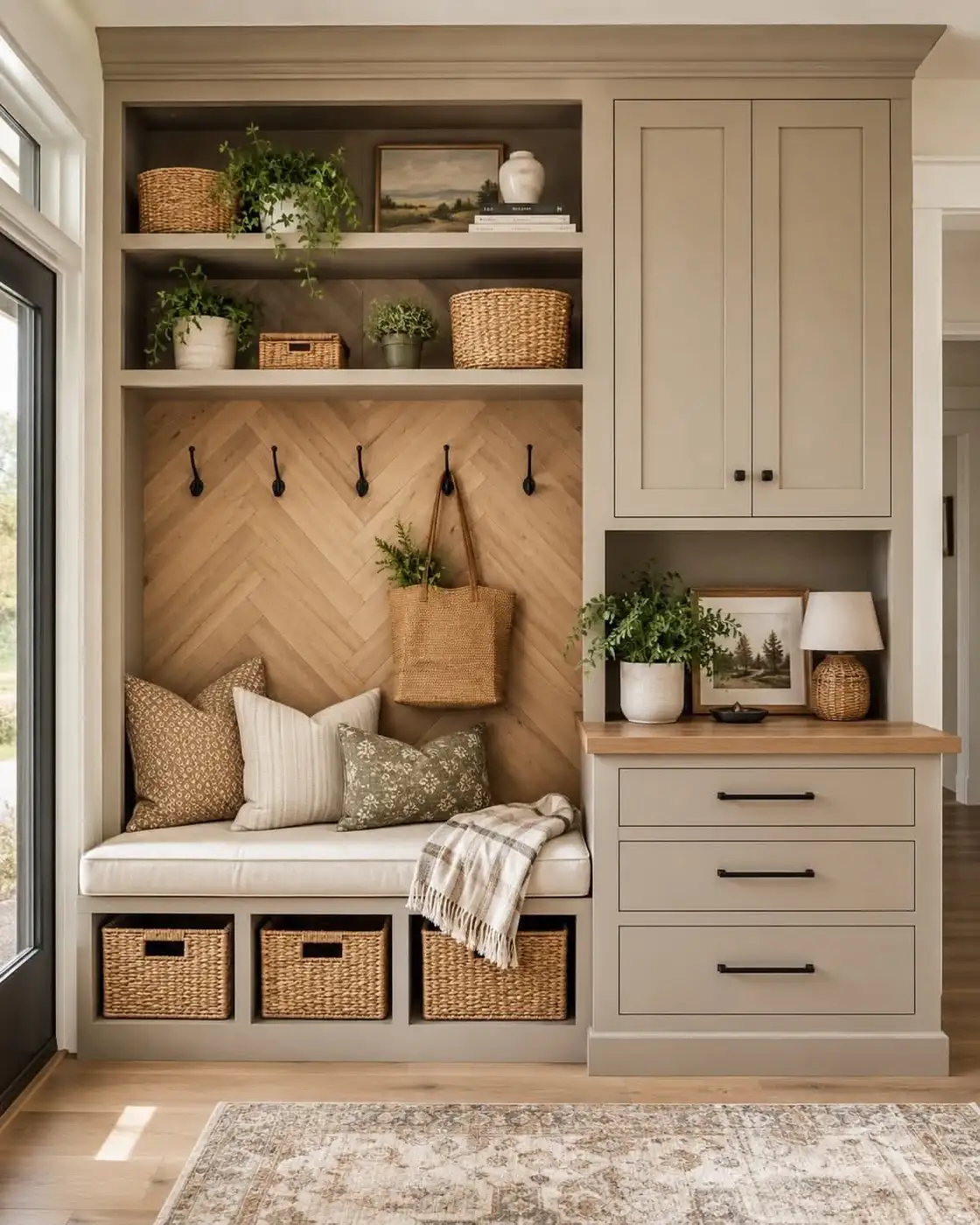
What I’d steal here is the layered storage, not just the built-in look. The wall is split into clear zones, so nothing has to fight for the same little patch of space.
- Down low: three woven baskets catch shoes and loose everyday items.
- At hand level: hooks keep bags and jackets ready to grab.
- Up high: open shelves hold baskets and less-used extras.
- Off to the side: drawers and closed cabinets hide the messier stuff completely.
You still get a comfortable bench in the middle, but almost every inch around it is working too. That is exactly what a small entryway needs.
13. Hide Clutter, Display Favorites
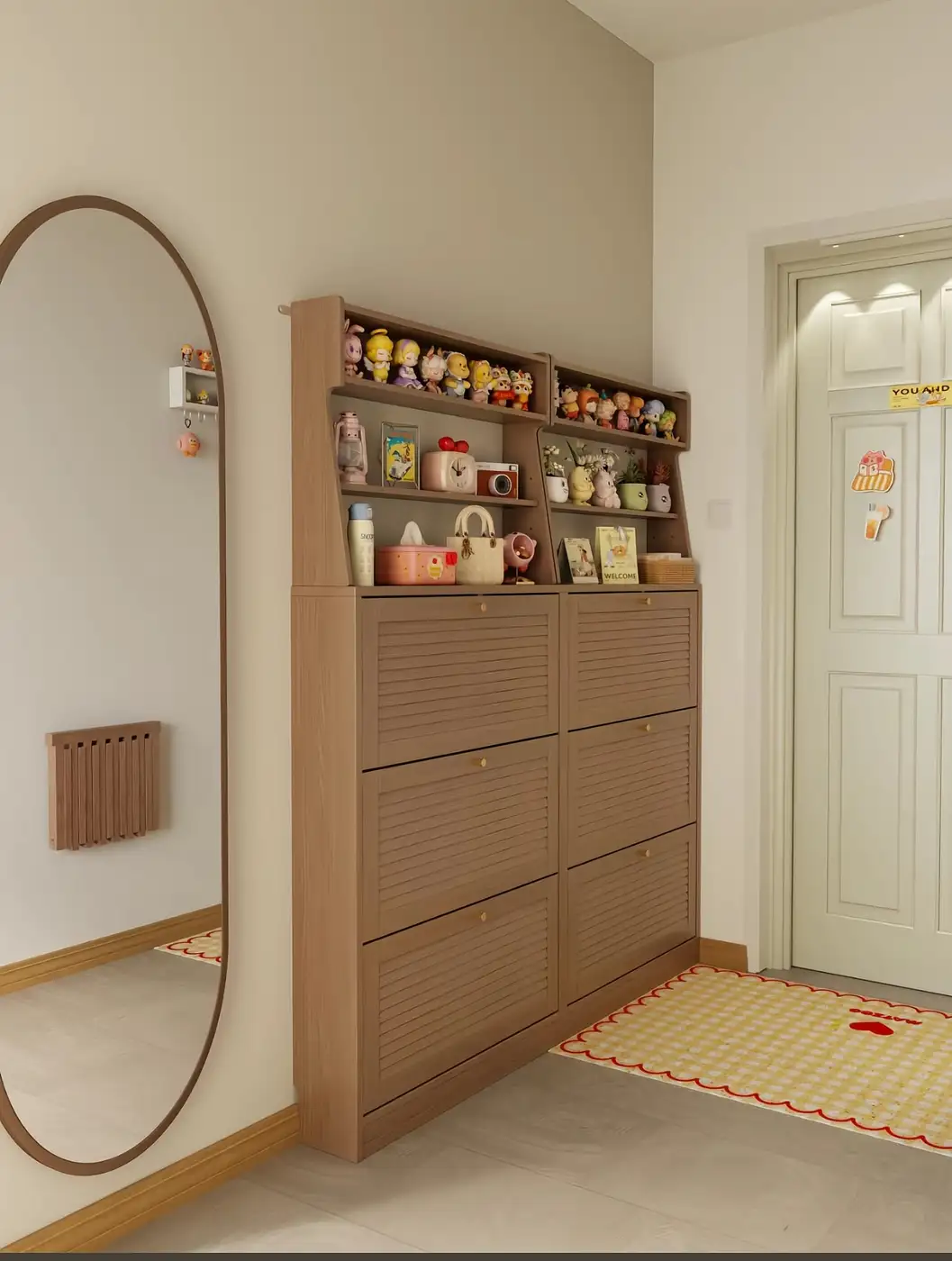
There is a smart little contrast happening here. The lower half hides the mess, while the upper shelves get to be fun.
The tall cabinet gives everyday entryway clutter a closed home, so the room does not feel busy the second you walk in. Above it, shallow shelves hold smaller decorative pieces without taking up extra floor space.
I’d also copy the full-length mirror beside it. It fills an otherwise awkward strip of wall and gives you a quick head-to-toe check before heading out.
Closed below, open above. Simple, but very effective in a small entry.
14. Frame a Wall-Mounted Key Station
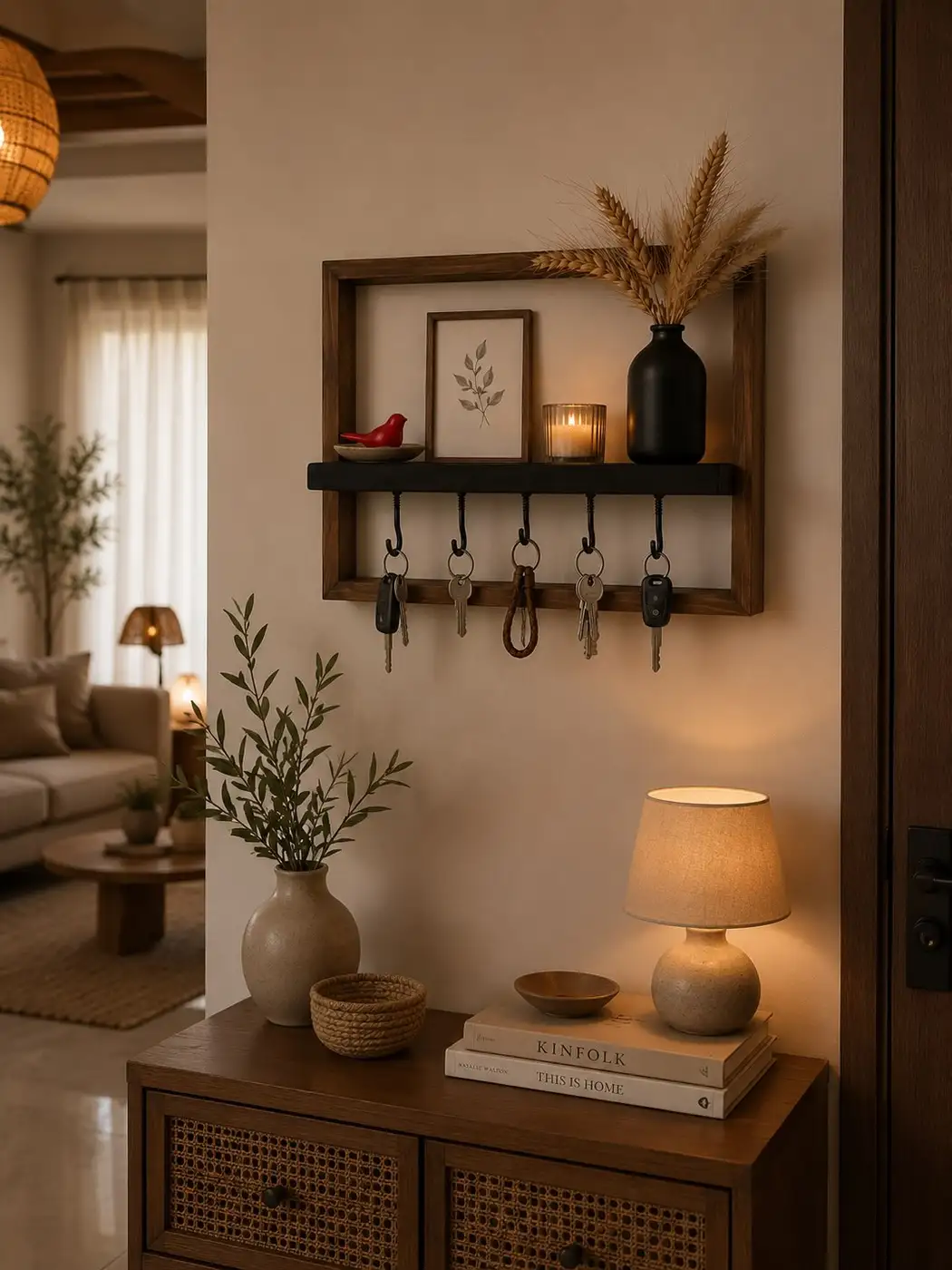
Keys are tiny, but somehow they can make an entryway feel messy fast. I like how this setup gives them a dedicated spot on the wall instead of letting them collect on the cabinet below.
The slim shelf adds just enough room for a few decorative pieces, while the row of hooks keeps keys easy to see and grab. Underneath, the cane-front cabinet can handle the less attractive everyday stuff.
Best part? The organizer barely uses any space at all. It turns one small stretch of wall into a proper leaving-the-house station.
15. Build a Wall Command Center
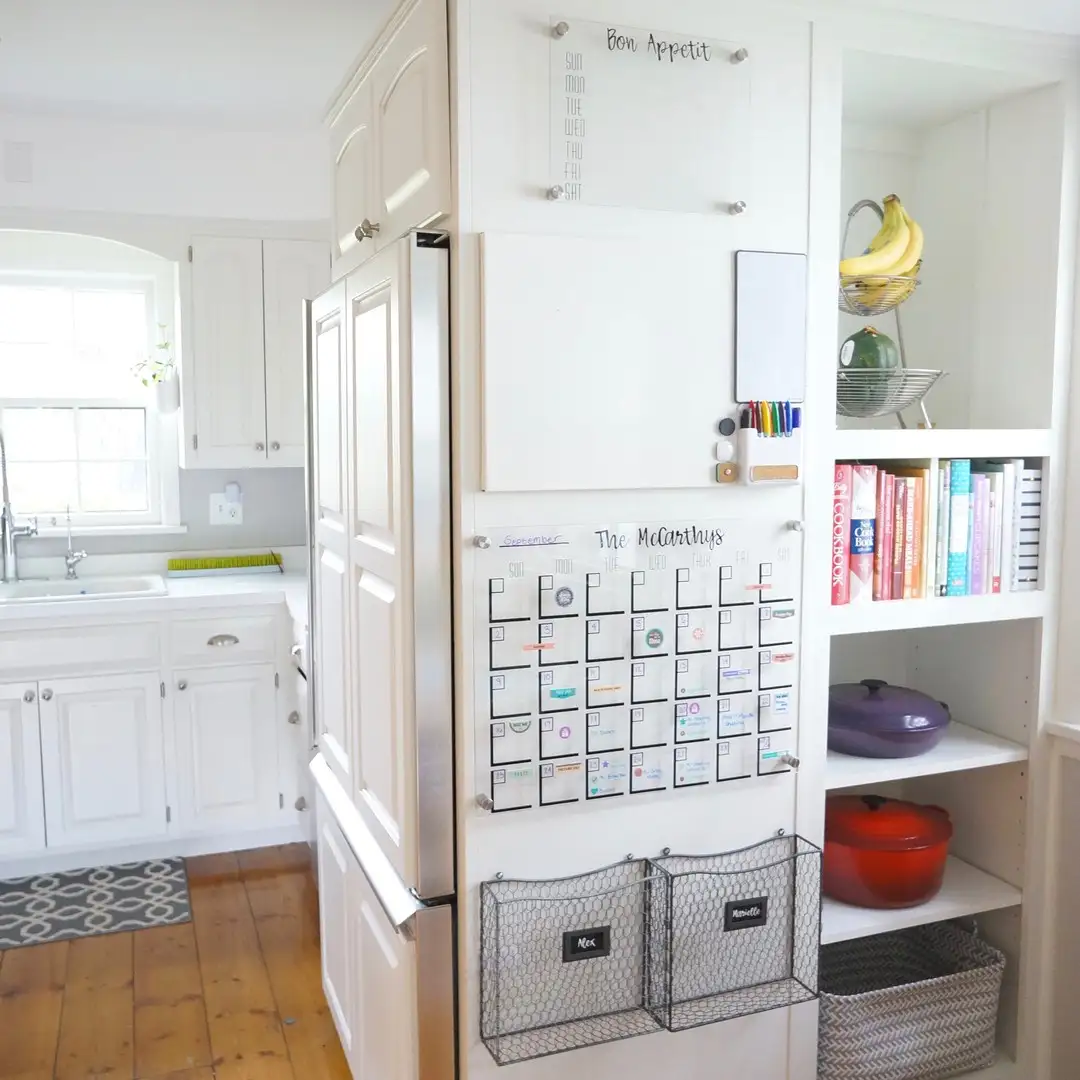
Some entryway clutter is not shoes or coats. It is paperwork, reminders, school notes, and all the little things nobody remembers until they are already late.
This wall-mounted setup gives that mess a proper home. The large calendar keeps schedules visible, the small writing board handles quick notes, and the wire baskets below can catch papers for different family members. I’d use one basket for incoming mail and another for anything that needs to leave the house.
Because almost everything sits on the wall, you get serious organization without sacrificing precious floor space.
16. Choose a Narrow Closed Cabinet
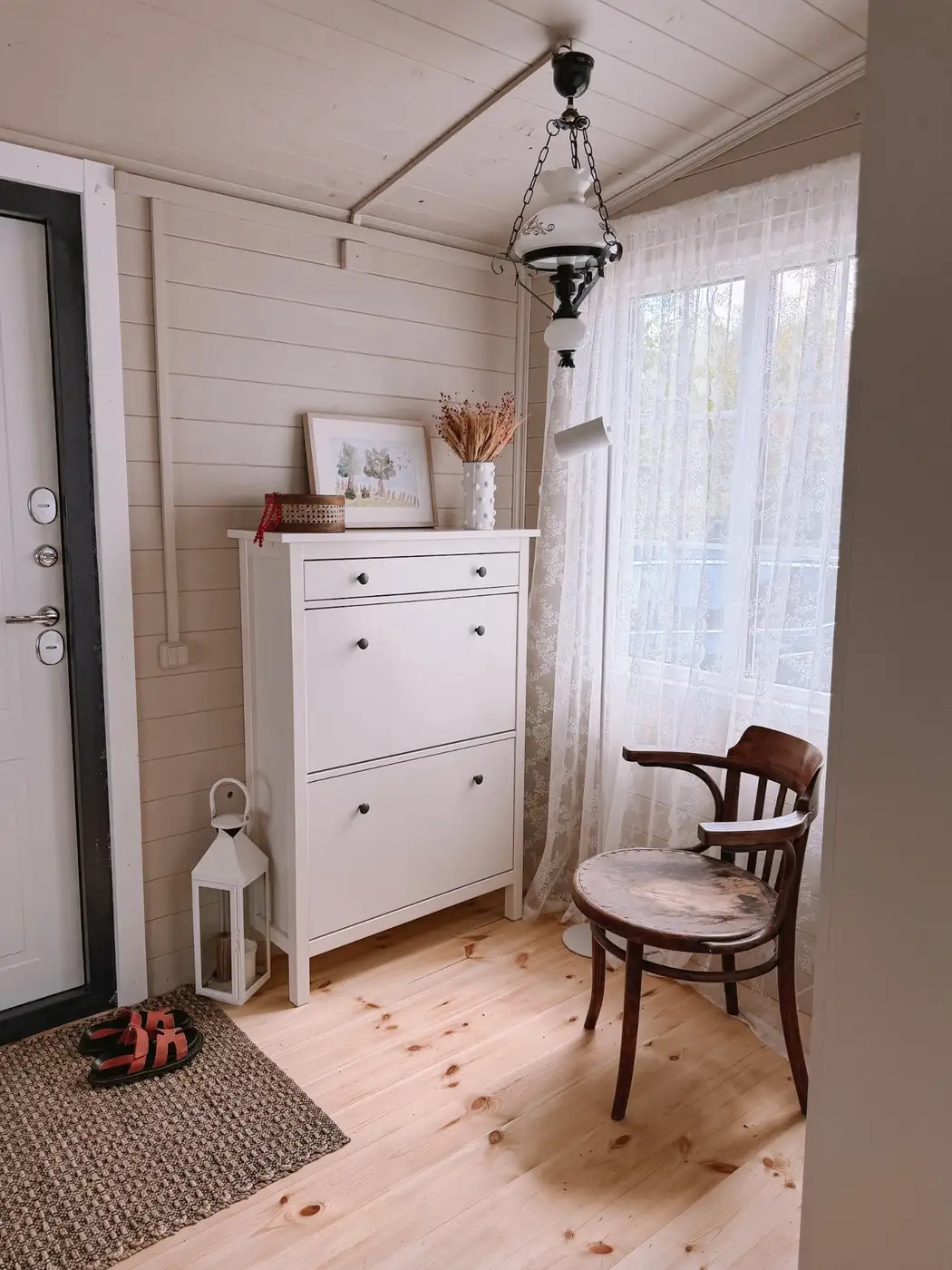
Sometimes the best small-entryway fix is the least flashy one. This tall white cabinet quietly holds a lot without making the room feel crowded.
Because the storage is closed, shoes and everyday clutter can disappear behind the doors instead of staying on display. The slim shape also leaves enough floor space for a chair, which is handy when you need somewhere to sit and pull on shoes.
I like the small drawer at the top too. It is just right for keys, gloves, or anything you want within quick reach before heading out.
17. Pair a Slim Cabinet With Hooks
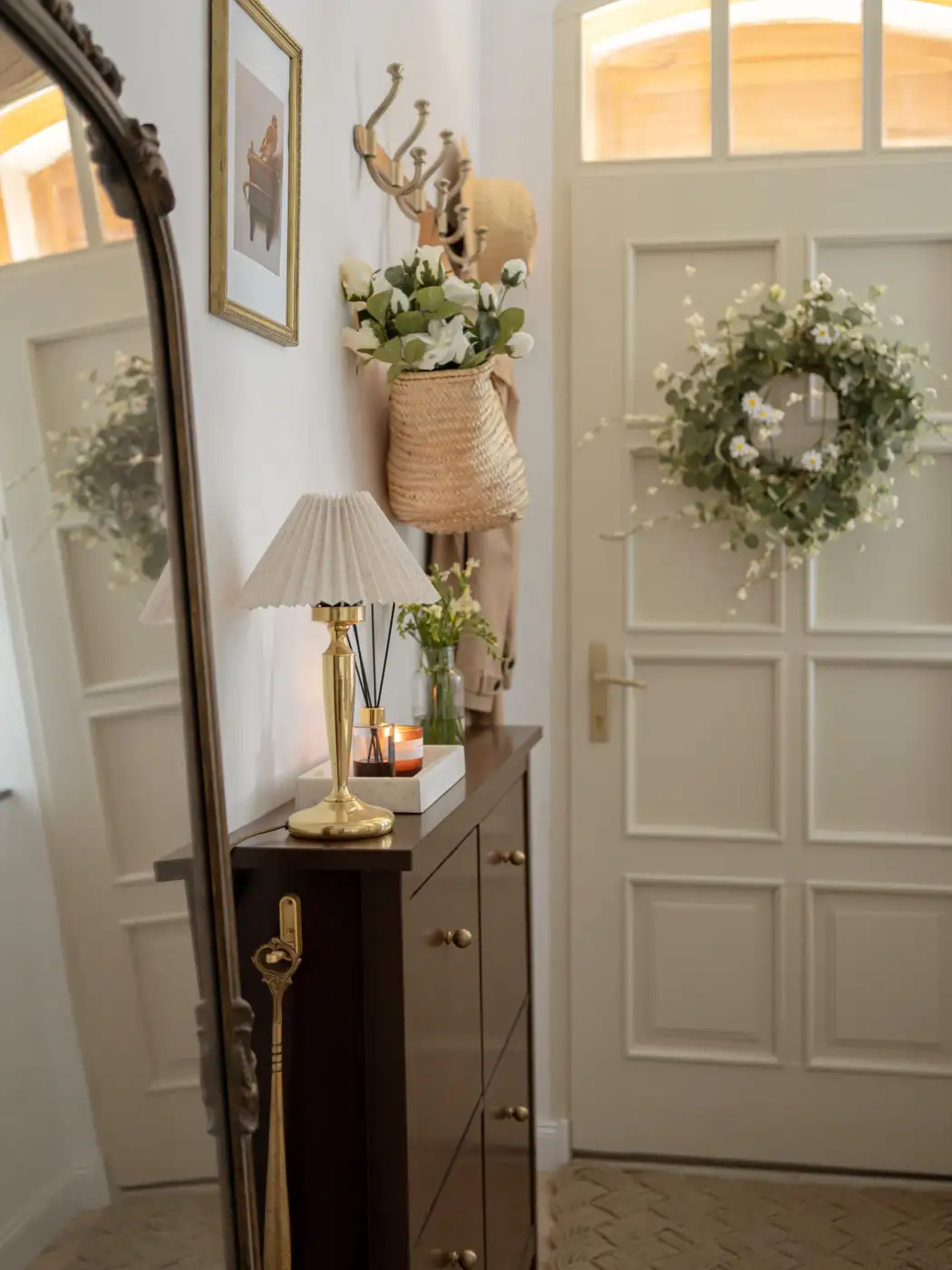
There is barely any spare floor space here, yet the entry still fits storage, lighting, a mirror, and a drop zone. That is the part worth copying.
The narrow dark cabinet handles the hidden clutter, while the hooks above catch a bag or light jacket before they end up on a chair somewhere else. A tall mirror leans beside it, making that last sliver of wall useful too.
I’d keep the cabinet top mostly clear. A small tray for keys plus one lamp is enough to make it practical without turning it into another clutter magnet.
18. Stretch Storage Along the Wall
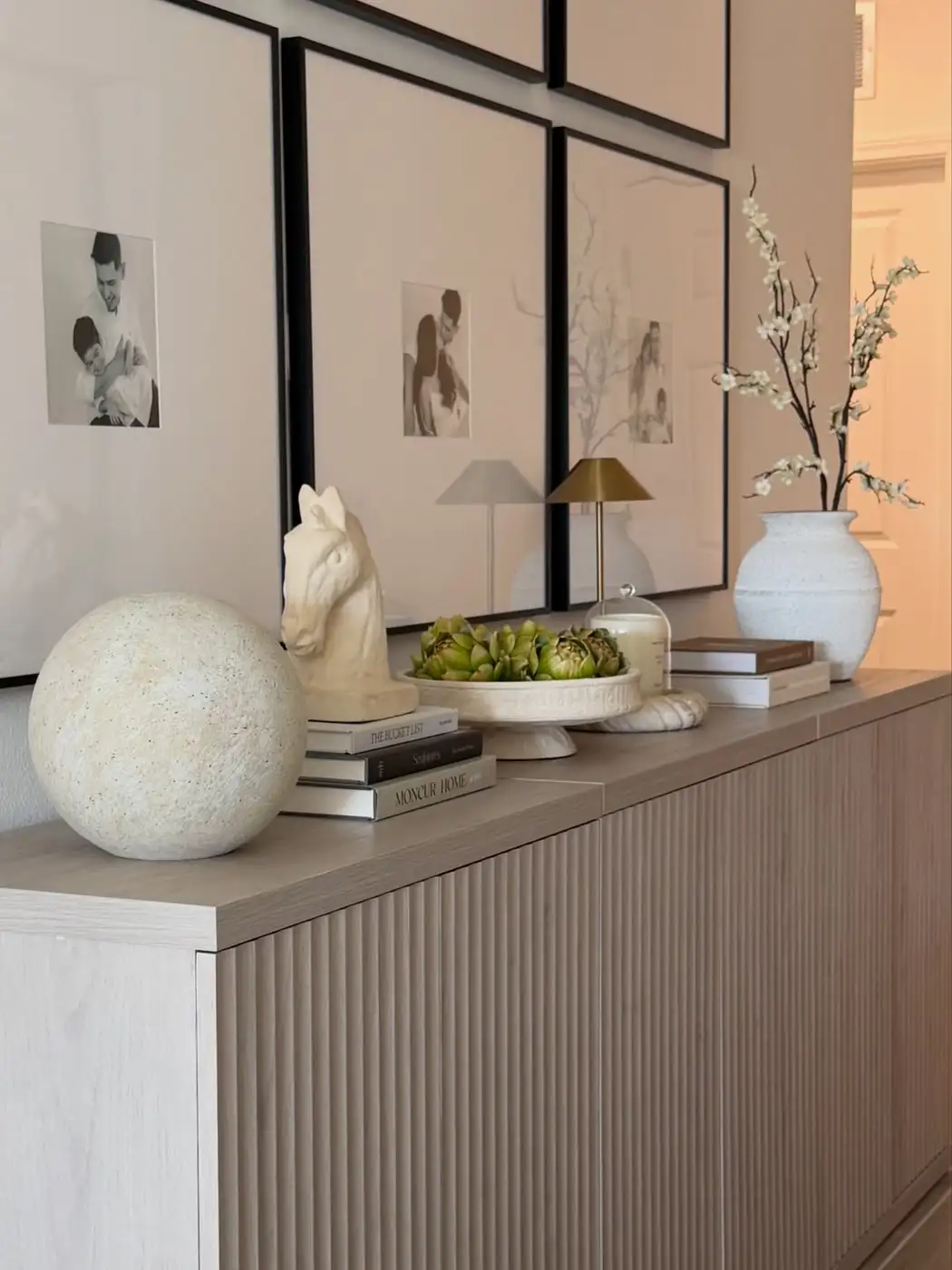
A long cabinet can be a better choice than several small pieces, especially when you have one uninterrupted entryway wall to work with.
The closed fluted doors hide shoes, bags, paperwork, or seasonal extras, while the wide top gives you room for a tray, lamp, or a few favorite objects. What I like most is how one continuous piece keeps the wall looking calm, even when plenty is stored inside.
The framed photos above pull everything together without using another inch of floor space.
19. Turn a Cube Shelf Into Storage
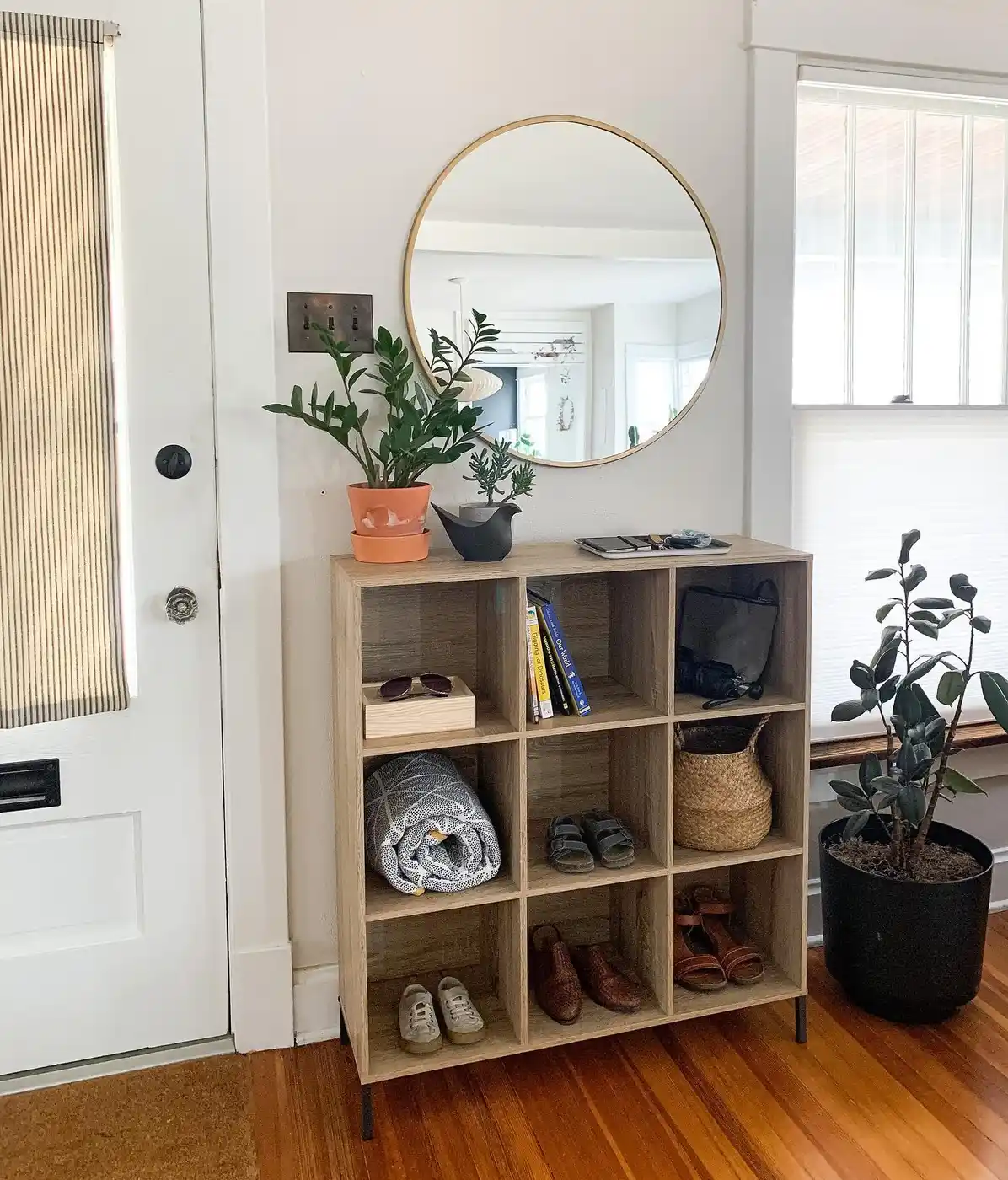
I like this one because it proves you do not need custom built-ins to get a tidy entryway. A simple cube shelf can handle shoes, bags, books, and baskets all in one compact footprint.
The open cubbies make everyday items easy to grab, while a small basket hides anything you would rather not look at. Up top, a tray keeps keys and little essentials from wandering, and the round mirror makes the whole setup feel more finished.
For a rental or first home, this is such an easy idea to copy.
20. Make Hooks Do the Heavy Lifting
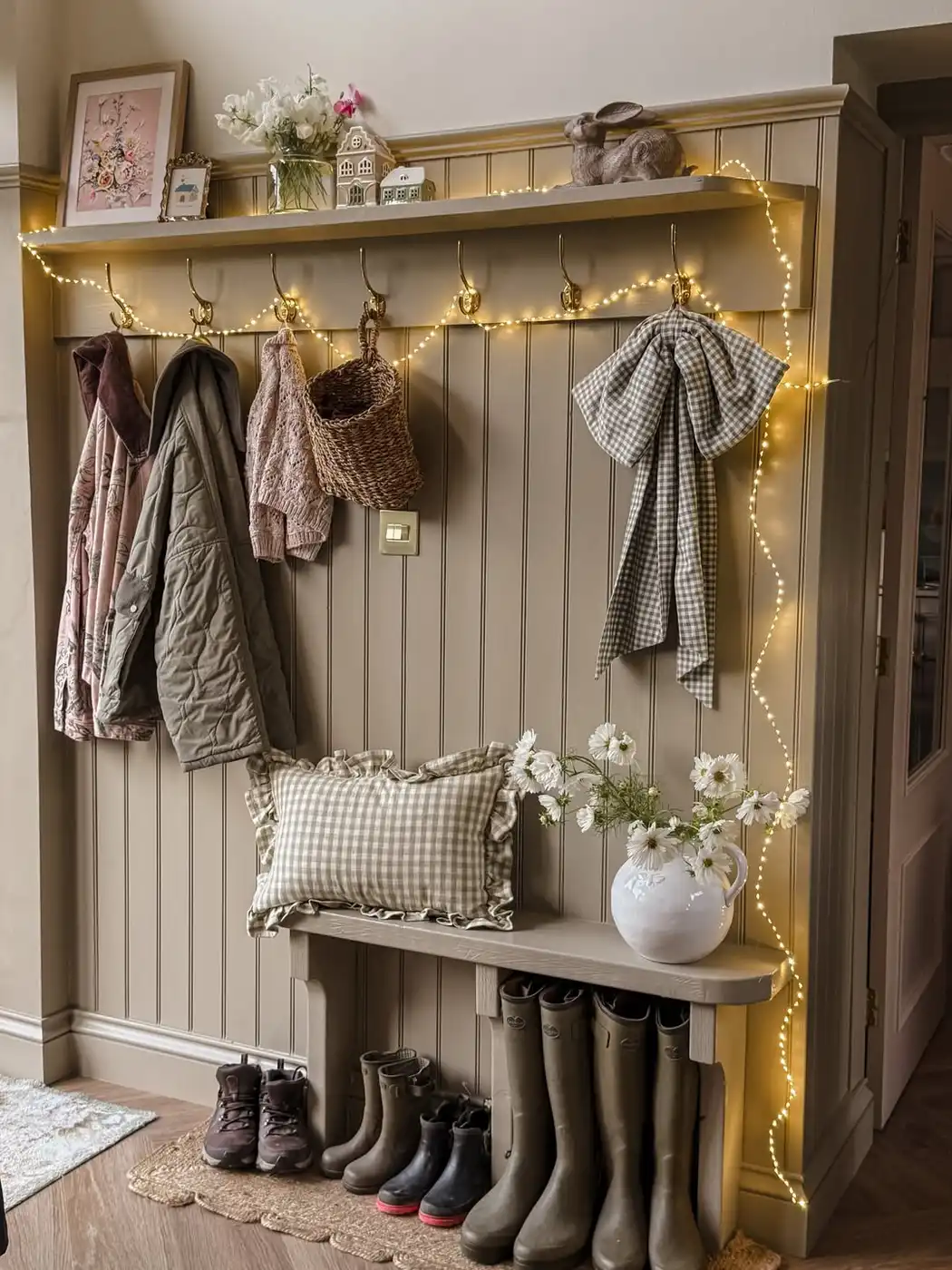
No cabinet, no bulky cubbies, and still plenty of function. That is what I like about this setup.
A long row of hooks gives coats, bags, and scarves a clear home, while the slim bench underneath keeps the floor from becoming a shoe pile. The shelf above adds one more layer for decor or small baskets without stealing walking space.
The soft wall paneling helps everything feel intentional too. In a narrow entryway, sometimes hooks plus a bench are all you really need.
Final Thoughts
After seeing all these entryways, one thing stands out to me: the best storage does not always mean adding more furniture. Sometimes a row of hooks, a basket under a console, or one narrow cabinet is enough to stop the daily pileup. If bags and shoes still tend to land in the same spot, these drop zone ideas can help turn that spot into something intentional.
I would start with whatever causes the most mess near your own front door, then give that one thing a proper home first. Shoes for me would win that contest easily.
Keep it simple, leave yourself some breathing room, and save these ideas for the next time your entryway needs a little rescue.