White Kitchen Cabinets Flooring Ideas Worth Saving
White cabinets can handle a lot. A floor covered in blue flowers? Yes. Dark wood, soft checkerboard, even worn red brick? Those work too, but they give you very different kitchens.
That’s the part worth looking at before you pick a floor. You might love pale oak in one photo and terracotta in the next, while only one feels right beside your own counters.
These white kitchen cabinets flooring ideas give you 12 looks to compare. Some barely add color. Others do most of the decorating, so the cabinets can stay exactly as they are.
1. Keep The Oak Natural
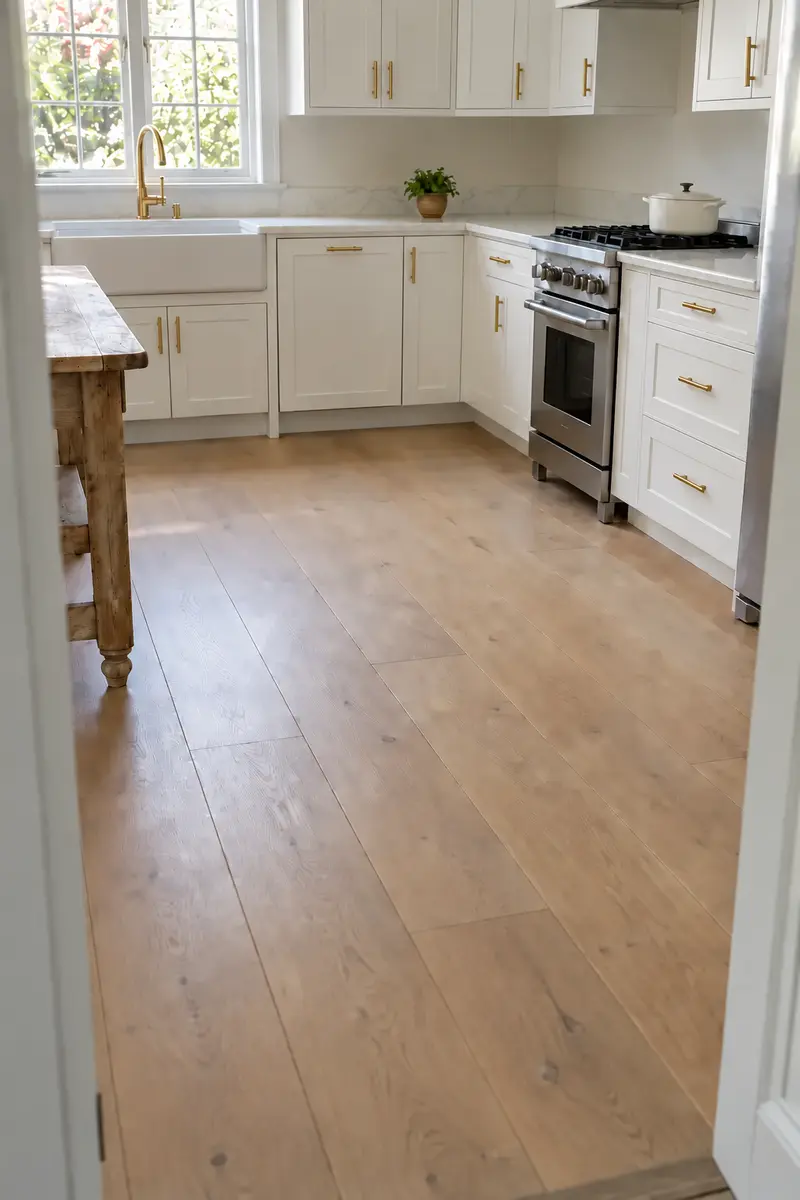
The pale boards have visible knots, faint grey streaks, and enough grain to separate them from the white cabinets. I’d avoid an almost-white wood finish here. It could make the floor look washed out instead of warm.
The aged brass handles are a good fit for the pale wood. I’d leave the counters this quiet rather than adding another warm-toned decoration.
2. Try A Softer Checkerboard
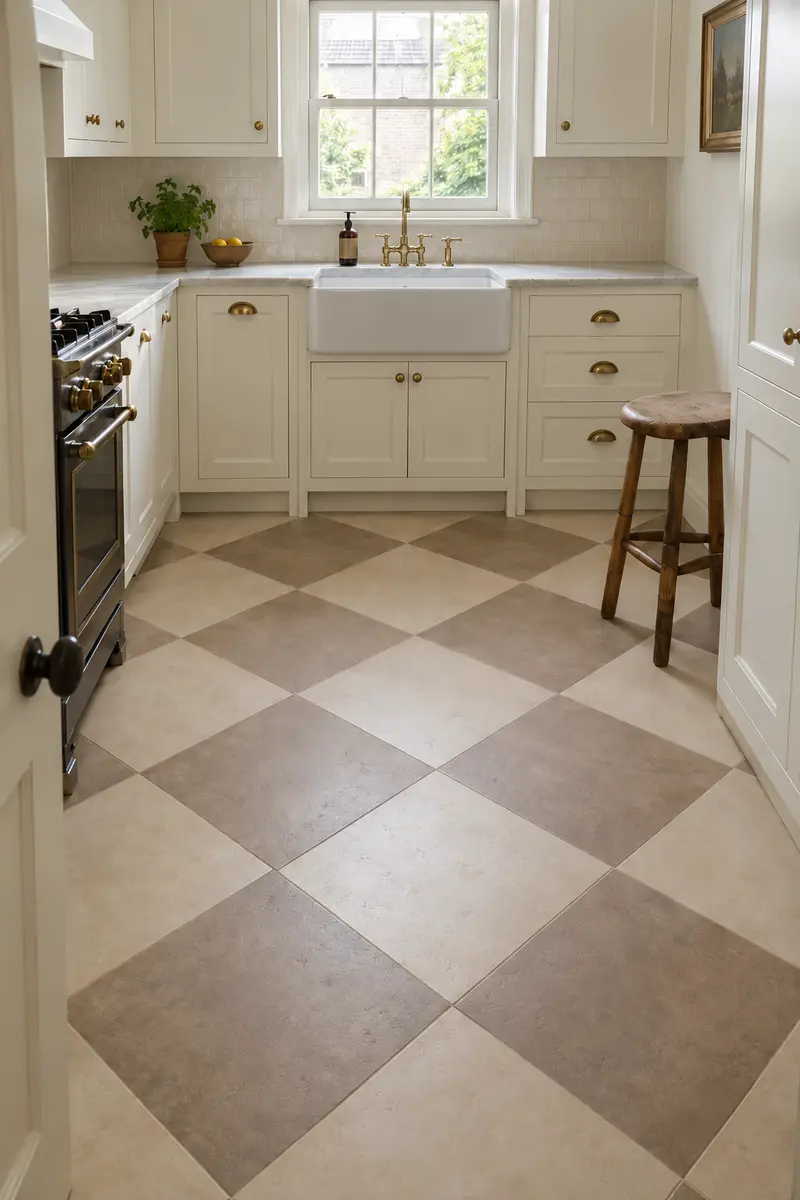
Cream and taupe feel much gentler than black and white, but the oversized squares still get plenty of attention.
The diagonal layout is worth copying. It opens up the view from the doorway and stops the grout lines from following every cabinet edge. Skip the runner. This floor doesn’t need one.
3. Let Terracotta Take Over
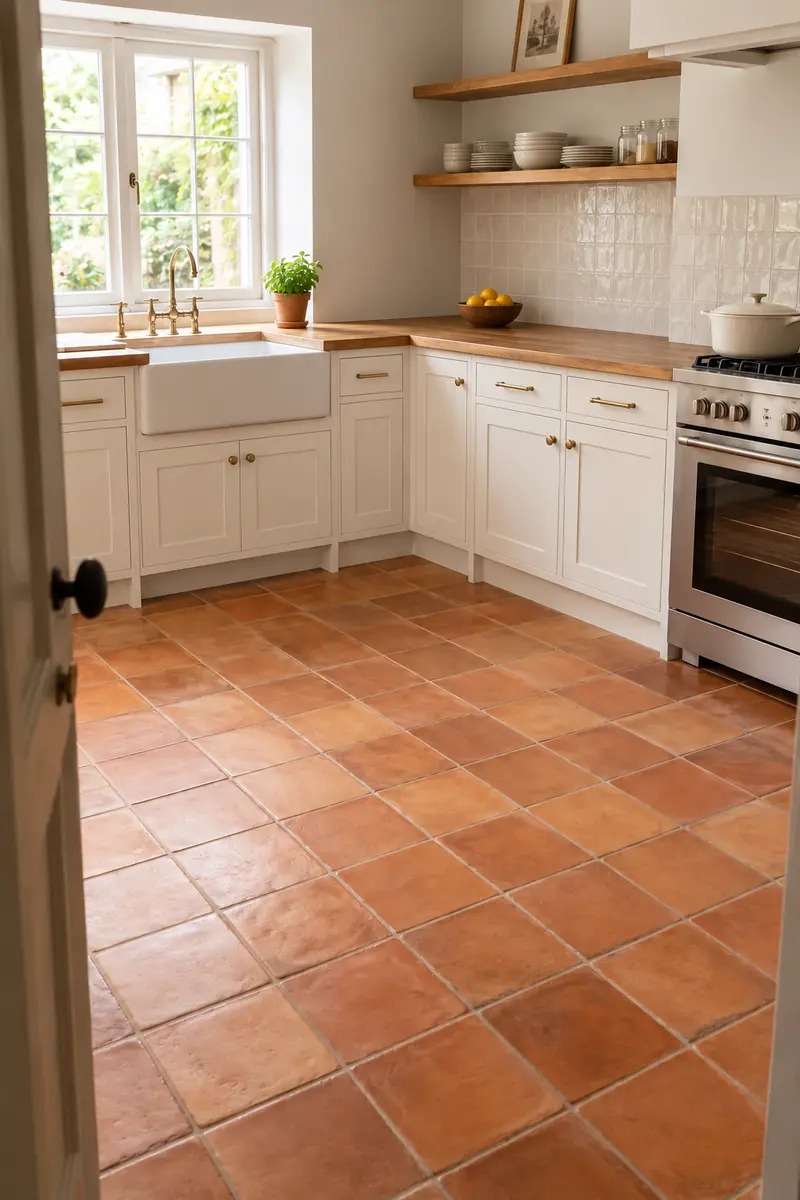
There’s no single orange shade in these tiles. Some are peachy, some rusty, and several have darker edges. That uneven color is the best part.
White cabinets keep the kitchen from becoming a sea of brown, while the wood counters sit comfortably between the pale doors and the warm floor. One leafy plant beside the window is enough green. You don’t need to copy all the dishes, pots, and open-shelf styling.
4. Charcoal Can Stay Simple
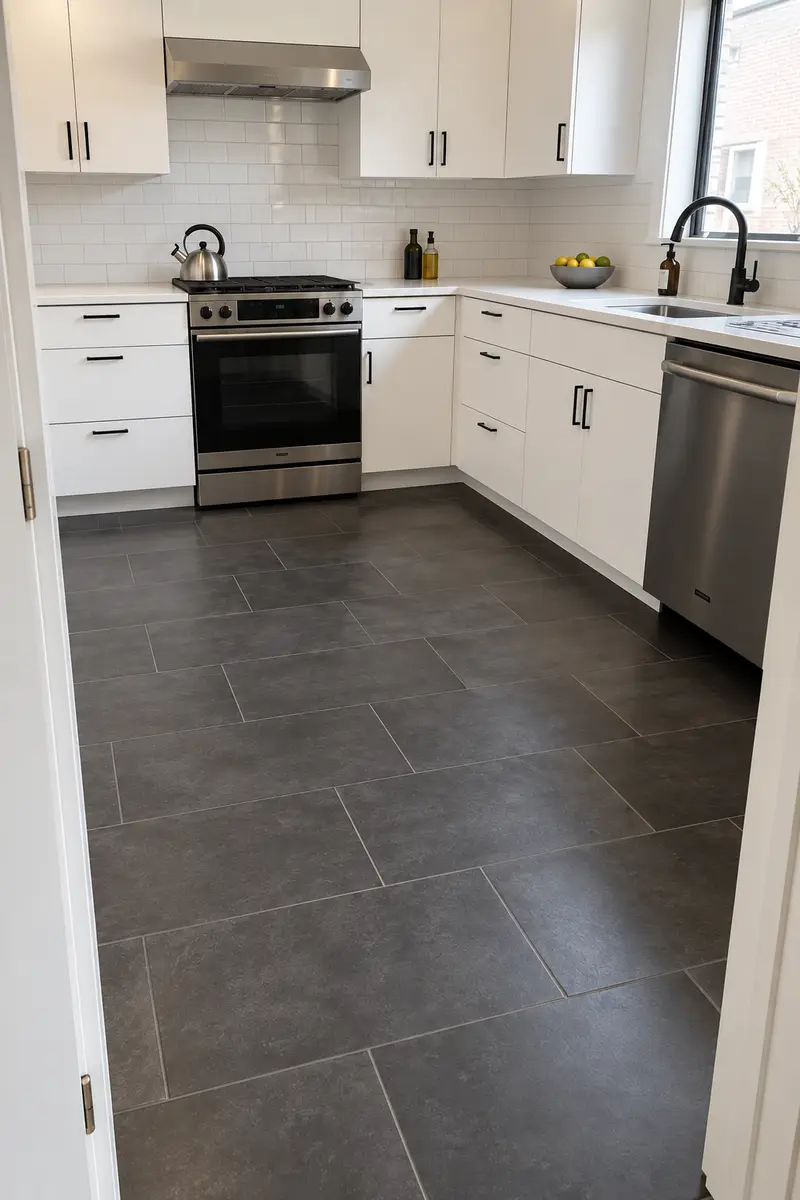
Dark flooring doesn’t always need dramatic styling around it. Here, the large charcoal rectangles sit below plain white doors, a white backsplash, and light counters. Nothing fancy.
The black handles and faucet are enough to repeat the floor color.
Check a sample at night before committing. This kitchen has a large window, and charcoal tile can feel much heavier in a room with weak daylight.
5. Point The Pattern Forward
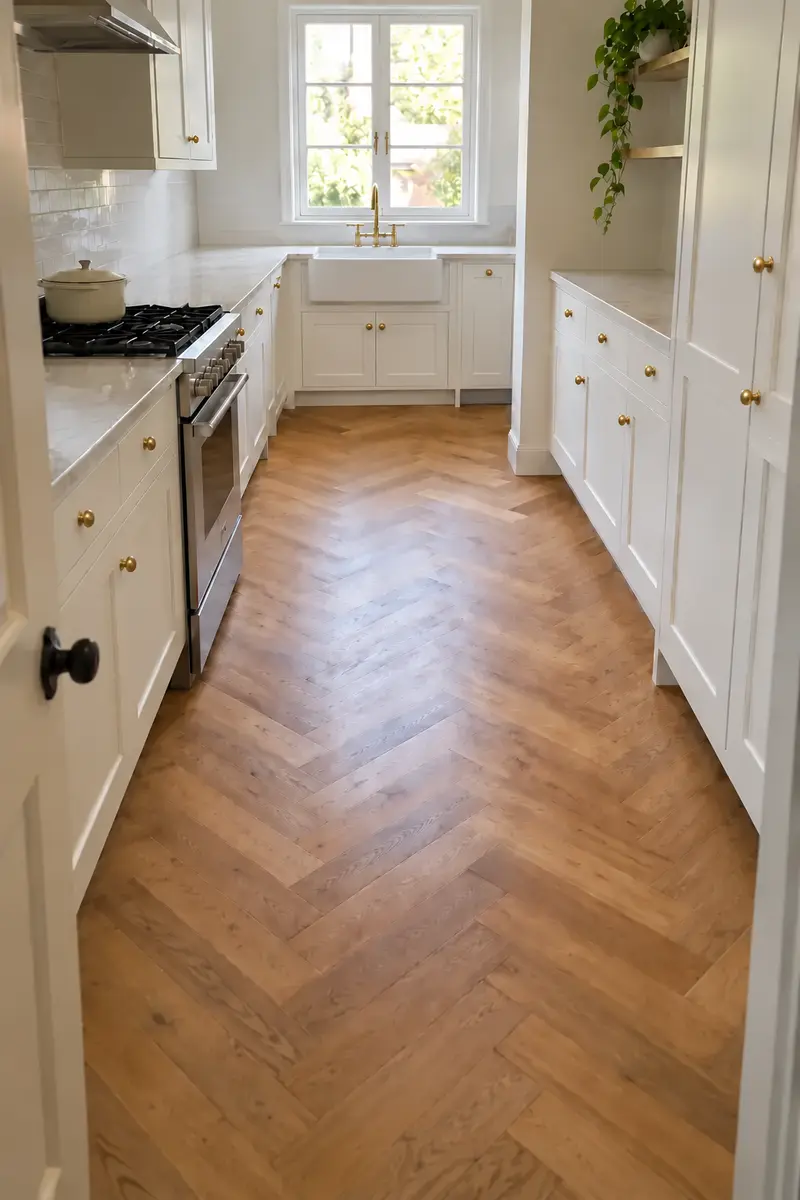
The herringbone runs straight toward the sink and makes this narrow kitchen feel less like one long corridor. It also breaks up all those straight cabinet lines.
Don’t judge this floor from one tiny wood sample. Lay several pieces together so you can see how often the direction changes. Shorter boards create a busier zigzag; longer ones give you fewer, wider turns.
And leave most of it uncovered. A long runner would miss the point.
6. Break Up All That Cream
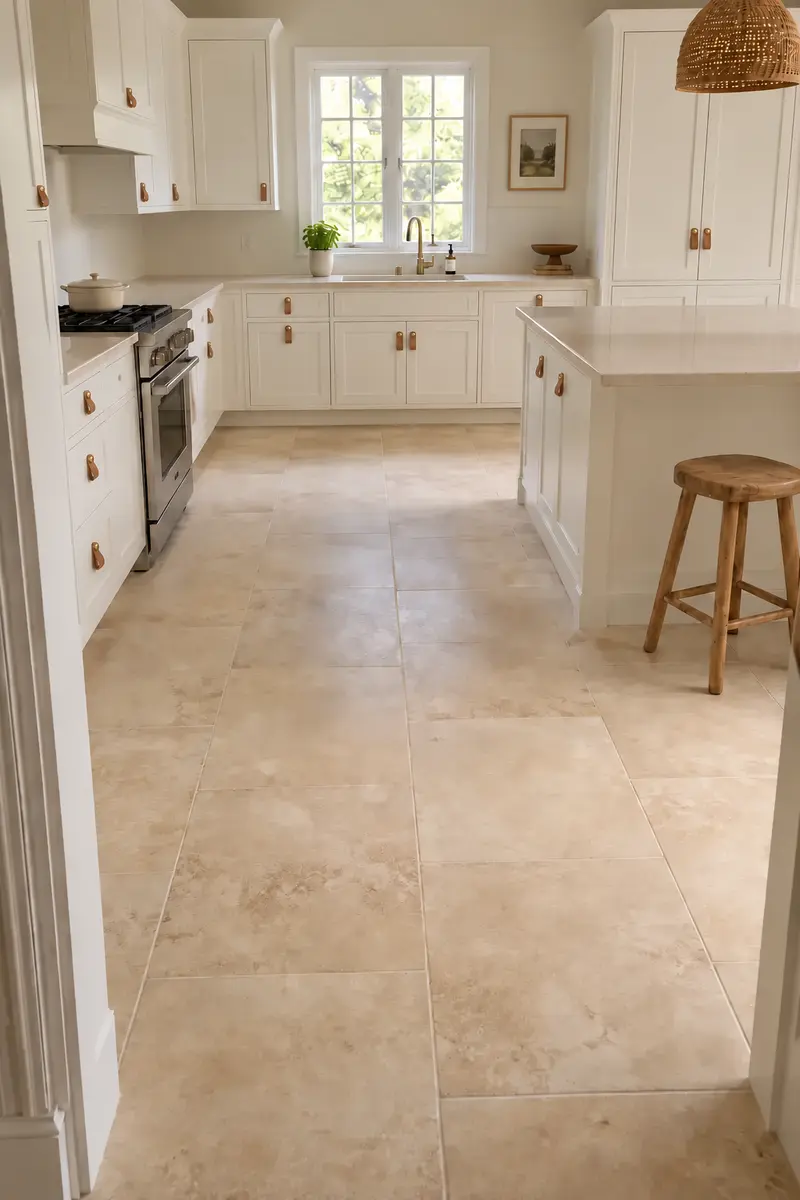
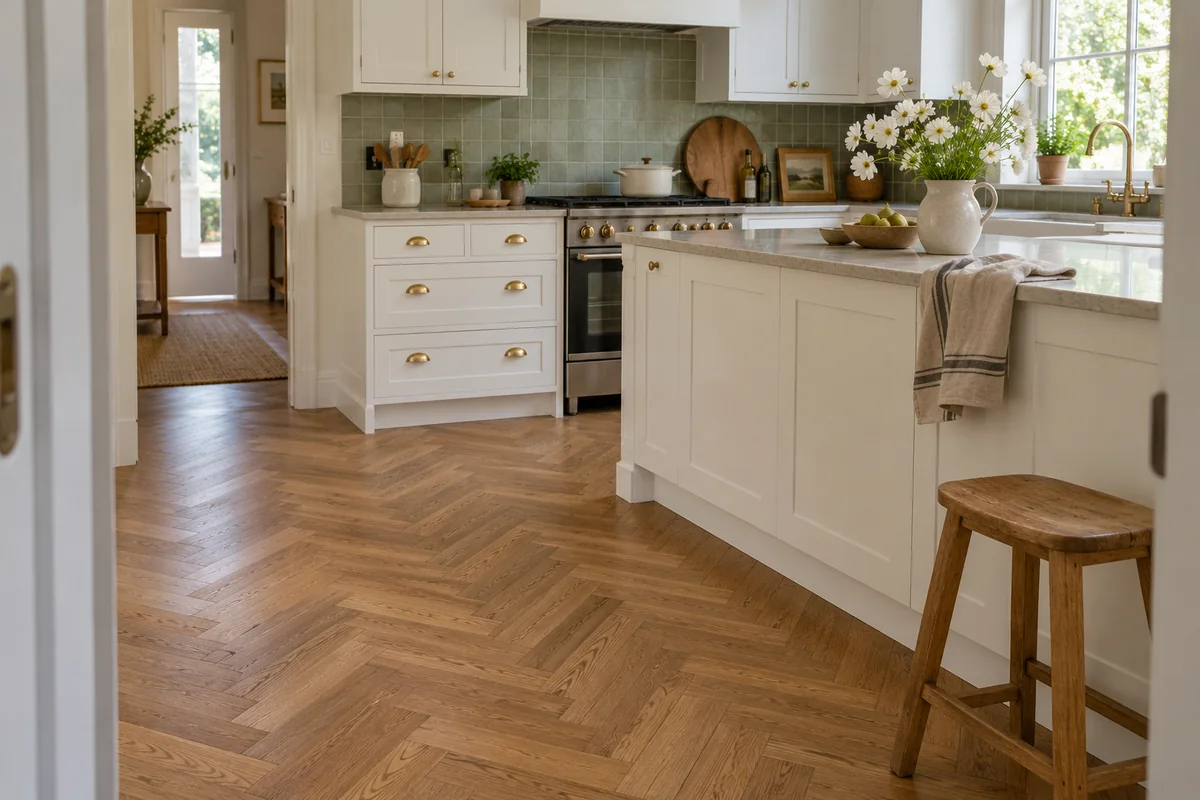
The floor, cabinets, counters, and island are all pale. The worn wooden stool keeps them from melting into one another.
Probably the easiest detail to copy in the whole article. If your kitchen already has ivory stone-look tiles, bring in one darker wooden stool or chair. You don’t need to change anything else.
7. Grey Looks Better In Hexagons
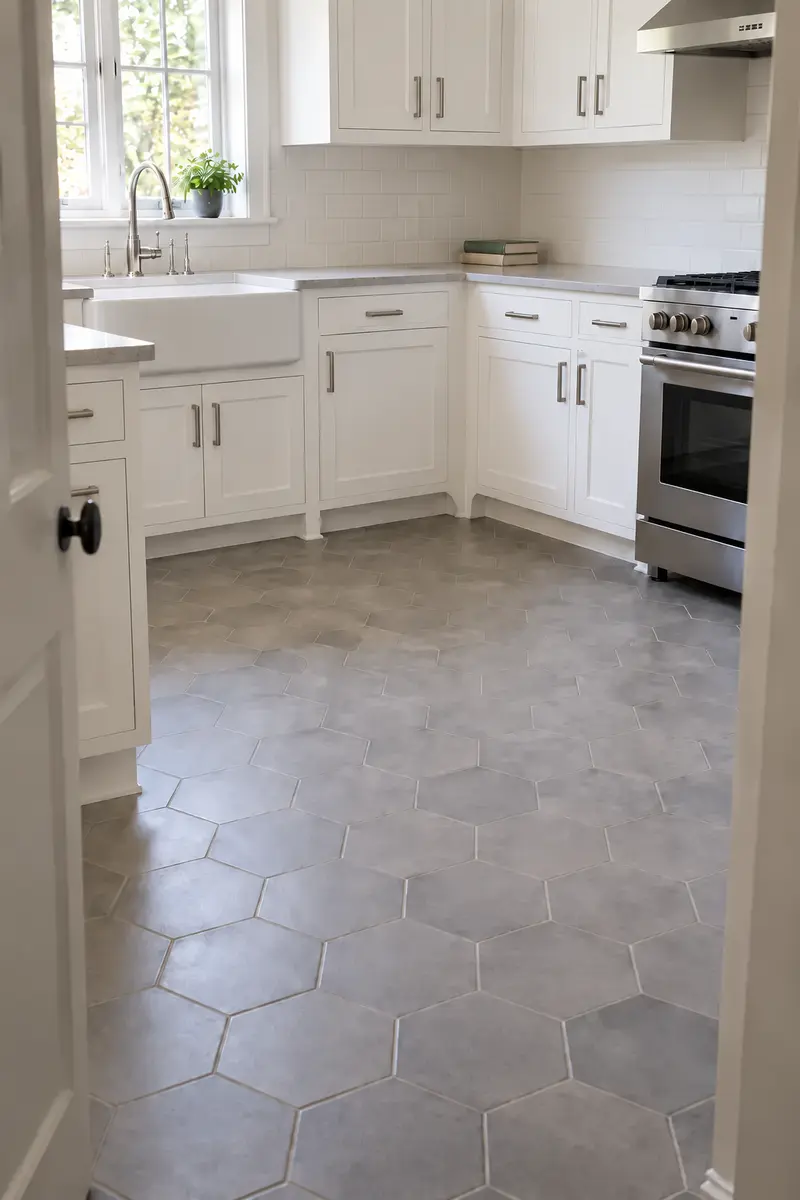
These large hexagons give the floor a pattern without introducing another color. The pale grout matters too. It shows each six-sided tile, but only just.
I wouldn’t choose dark grout for this room. Every outline would become stronger, and the floor could start competing with the shaker cabinet doors.
The two cookbooks on the counter are enough. The grey floor doesn’t need another color competing with it.
8. Give Walnut Some Space
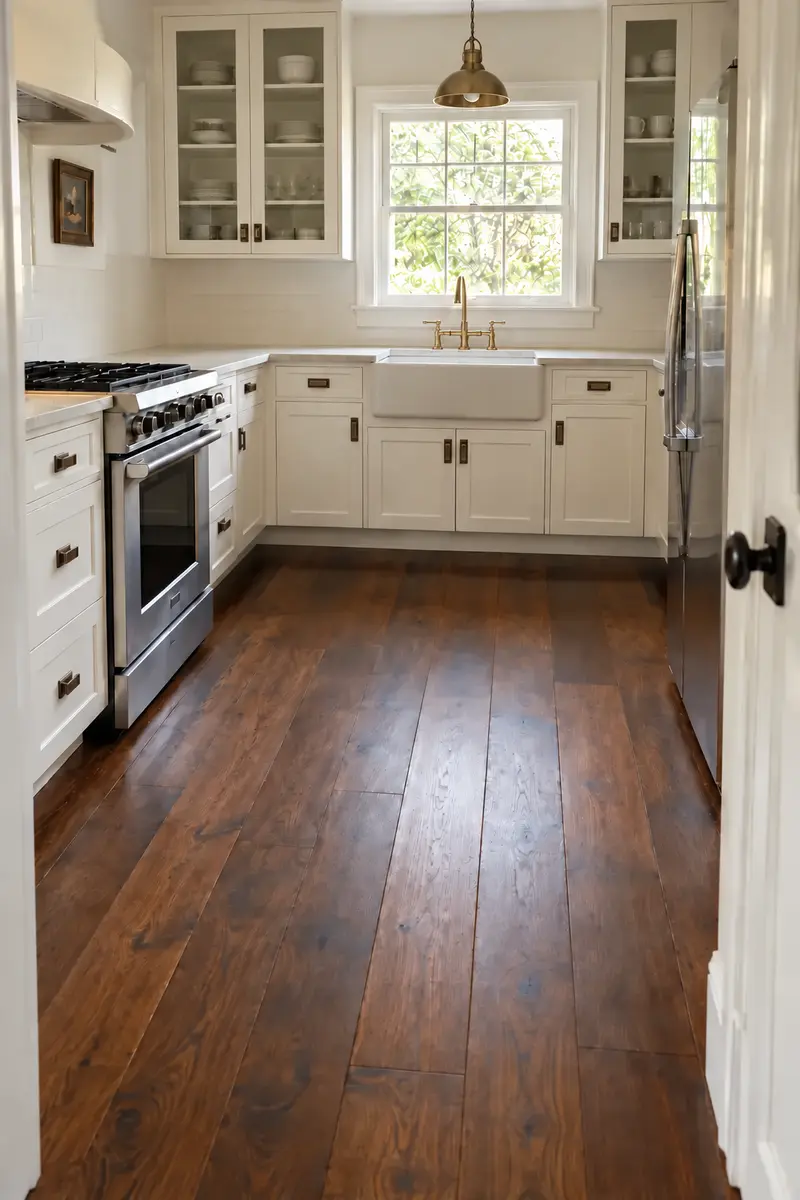
This is a properly dark floor. Some boards are deep brown, while the knots and grain drop close to black.
The glass-front cupboards help because they replace a few solid white doors with stacks of pale dishes. Still, I wouldn’t add a heavy dark dining set nearby. The walnut already fills most of the lower half of the room.
Choose lighter furniture and let the boards be the deepest color.
9. The Floor Is Enough
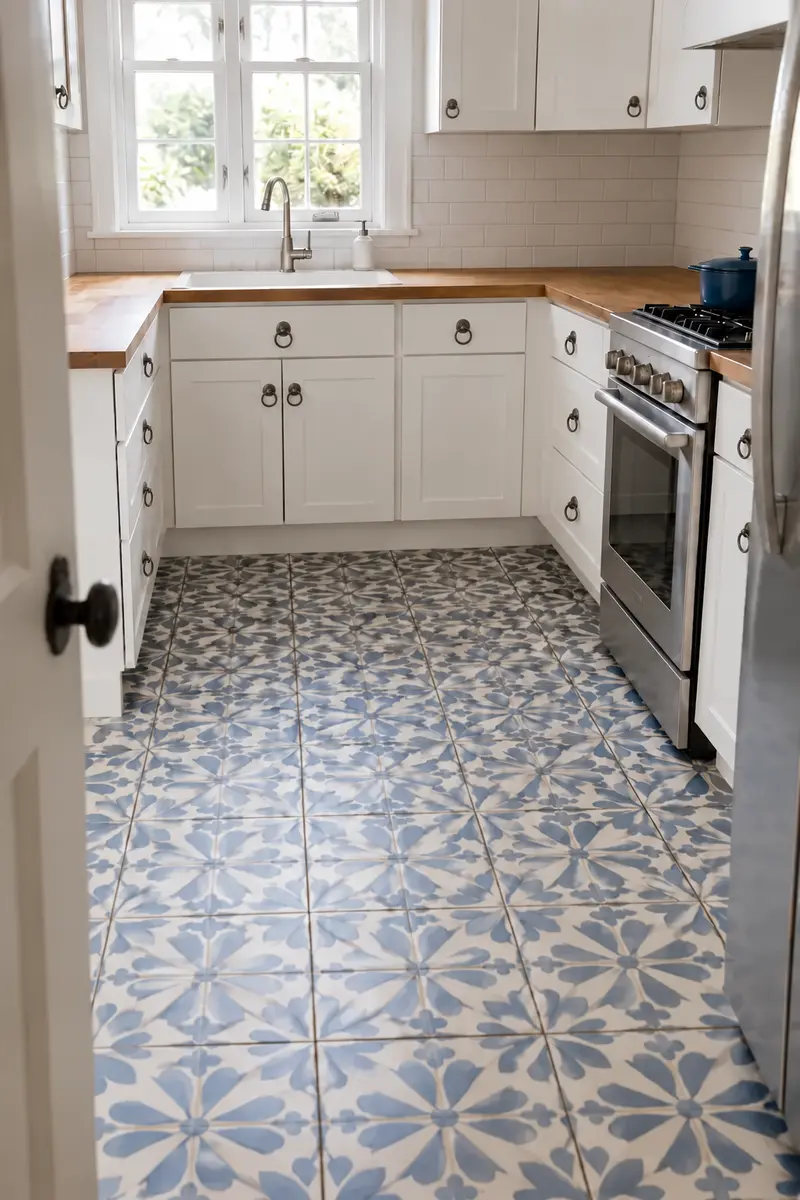
Blue flowers stretch from the doorway to the sink. You notice them before the cabinets, counters, or little blue pot on the stove.
That’s fine.
Keep the backsplash plain, as it is here. Avoid patterned curtains and don’t add a busy runner. When the floor is doing this much, the rest of the kitchen can be very ordinary.
10. Look Closely At The Flecks
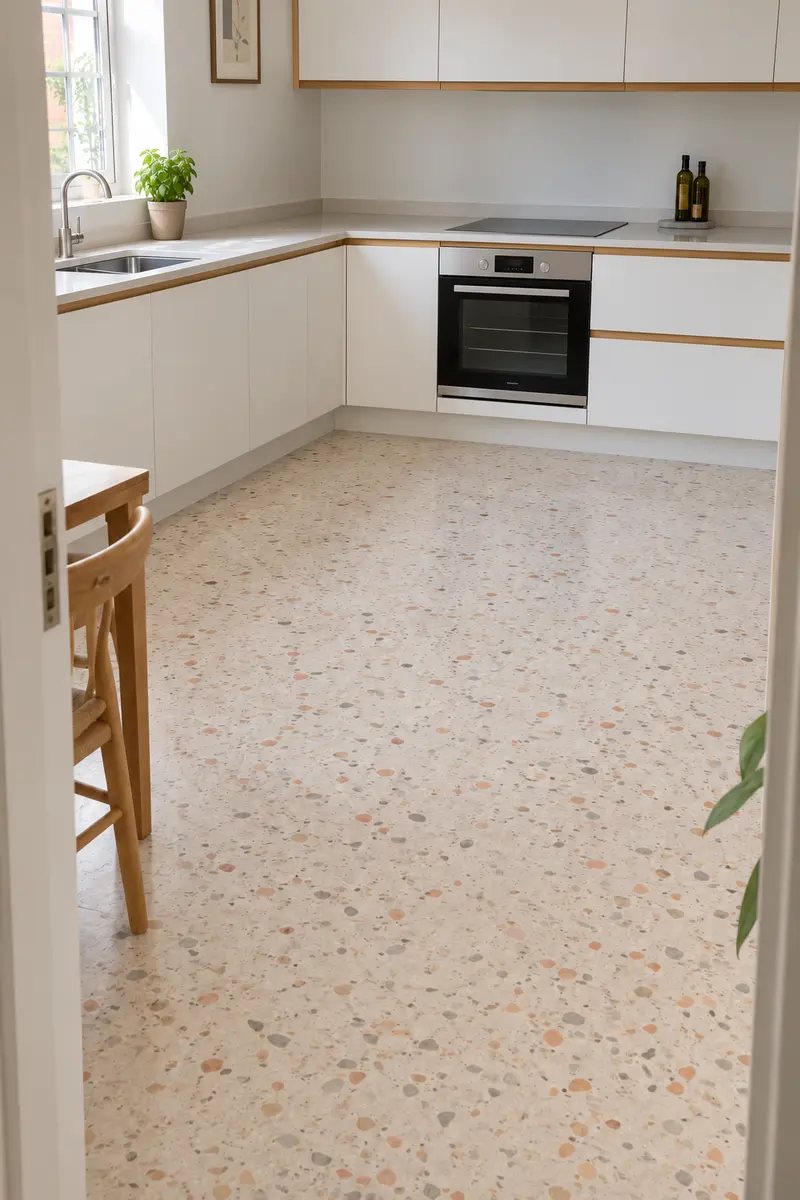
From the doorway, this terrazzo reads as a soft cream floor. Move closer and you’ll see tiny peach, grey, tan, and brown pieces scattered through it. The flecks are small enough that they don’t fight with the thin wood strips around the cabinet fronts.
When comparing samples, don’t check color alone. Chip size can change the entire feel. Large black or rust pieces would be much bolder than this fine mix.
A useful option if plain cream flooring feels a little too flat.
11. Don’t Overdo The Farmhouse Look
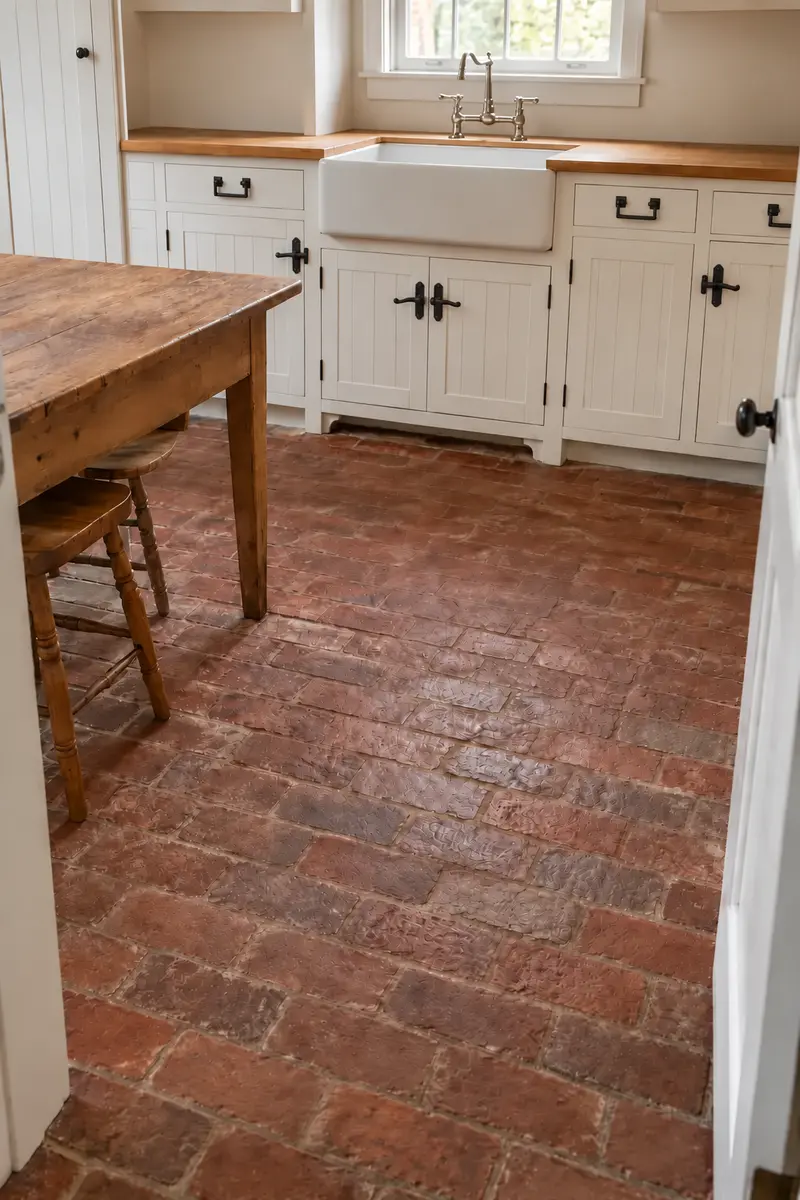
The brick is already worn, uneven, and full of dusty red-brown color. Then there’s the scratched wooden table beside it. Those two pieces have the rustic side covered.
The white beadboard cabinets keep the room from getting muddy.
I would stop there. No distressed crates. No extra wooden signs. Definitely no rug hiding the brick.
12. Keep The Veins Thin
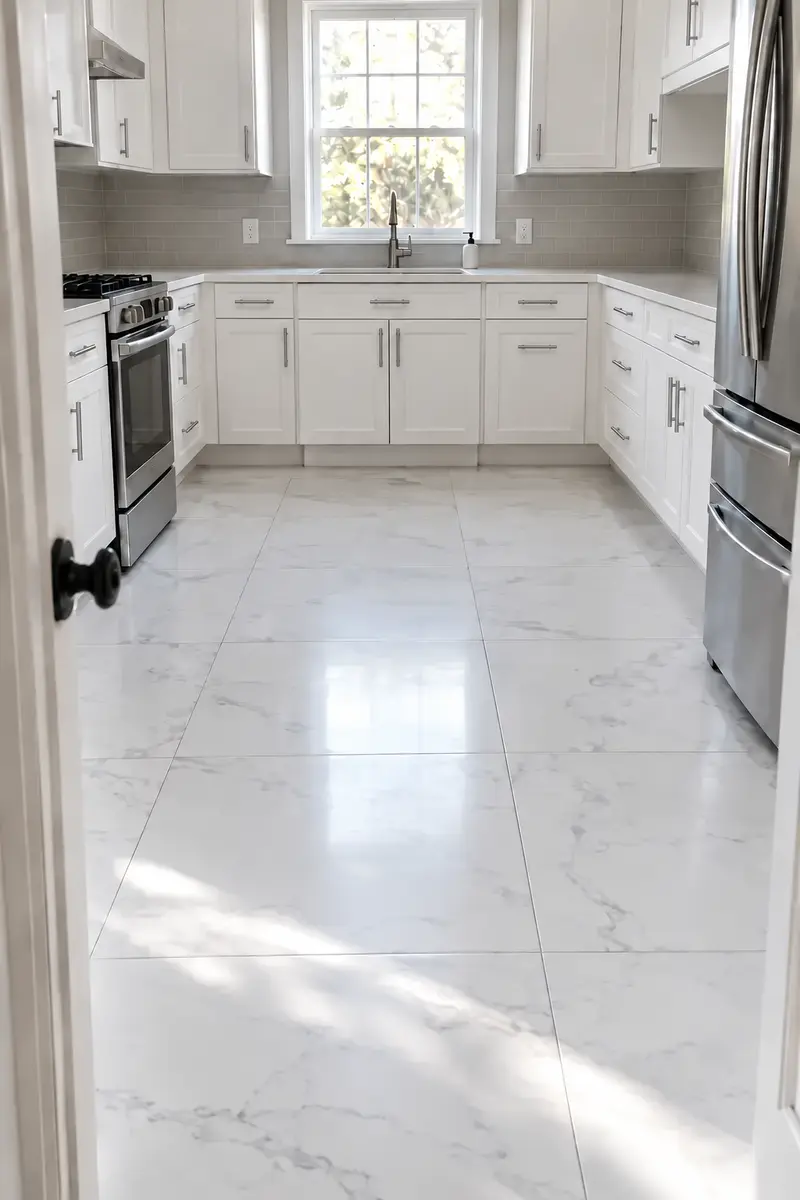
Large white tiles make this kitchen look brighter, while the fine grey veins stop the floor from disappearing below the cabinets.
Already have a strongly patterned countertop? Hold its sample beside the floor before buying. Two busy marble effects can look messy together. Here, the open white areas matter more than the grey lines.
Final Thoughts
The floor you keep noticing is a good place to start. Maybe it’s the soft checkerboard, maybe it’s those blue flowers. You don’t have to copy the whole kitchen around it.
Once you’ve narrowed down these white kitchen cabinets flooring ideas, bring home a few samples and put them beside your cabinet doors and counters. Check them in daylight and under your kitchen lights. Then choose the combination you actually like seeing together. After the floor is settled, these kitchen counter styling ideas can help you finish the room without adding too much visual clutter.