26 Cozy Neutral Bedroom Ideas That Feel Warm and Inviting
Neutral bedrooms can go wrong in two directions. Too little detail and the room feels unfinished. Too much beige everywhere and everything starts blending together.
The rooms below handle that balance in very different ways. Some rely on chunky bedding. Others bring in wood, sage green, black trim, soft checks, wall paneling, or warm lighting. A few are almost completely cream and still have plenty going on.
These cozy neutral bedroom ideas are worth looking at for the small details more than the full rooms. You might only need a better throw, a darker pillow, a wood nightstand, or a softer lamp to get the feeling you want.
1. Layer White With Soft Taupe
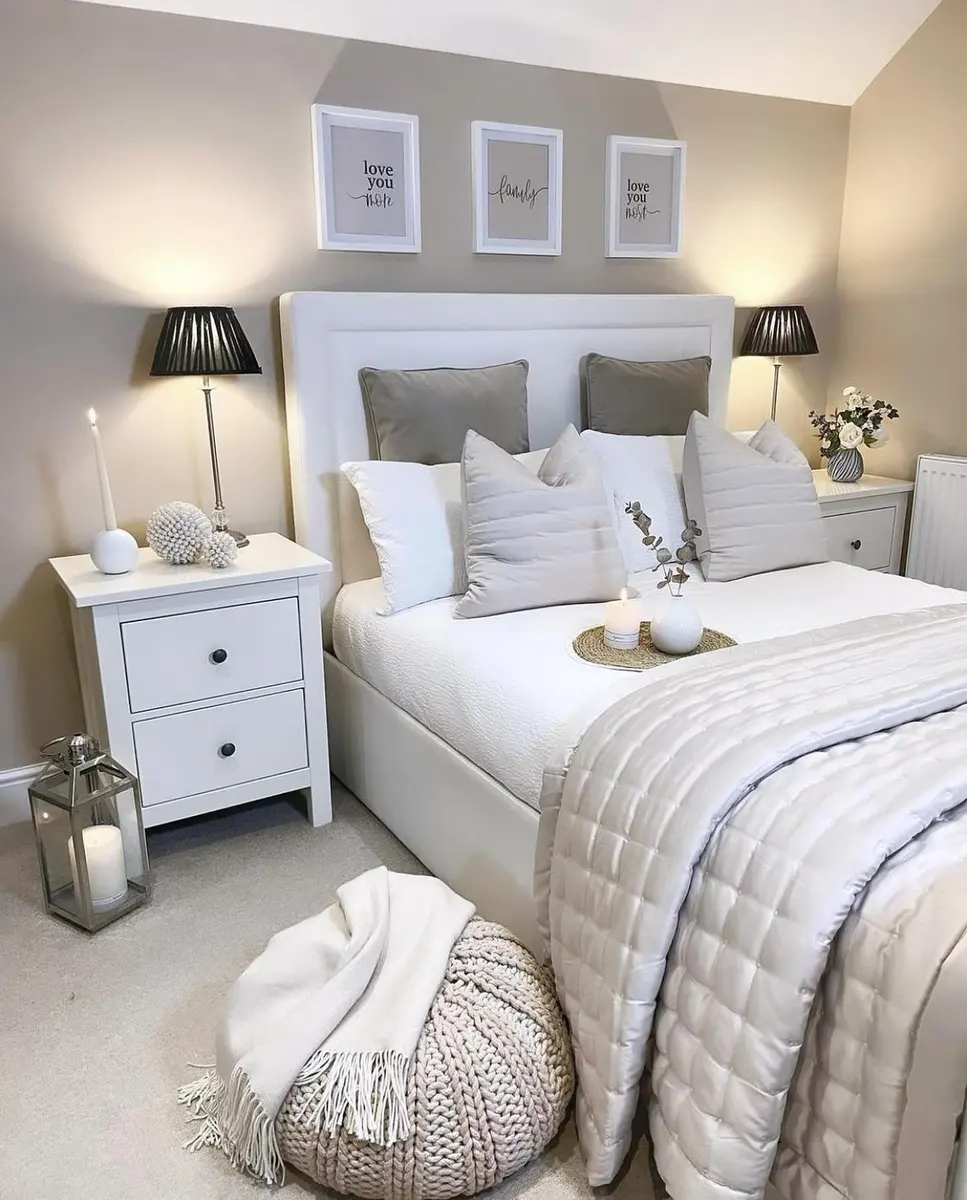
White does most of the heavy lifting here. The bed, furniture, and larger pillows are all very light, then the taupe wall and deeper gray-beige cushions stop the room from disappearing into one big block of white.
The black lamps are important too. Small detail, big difference.
I wouldn’t add another strong color. The contrast already feels finished.
2. Mix Florals With Soft Checks
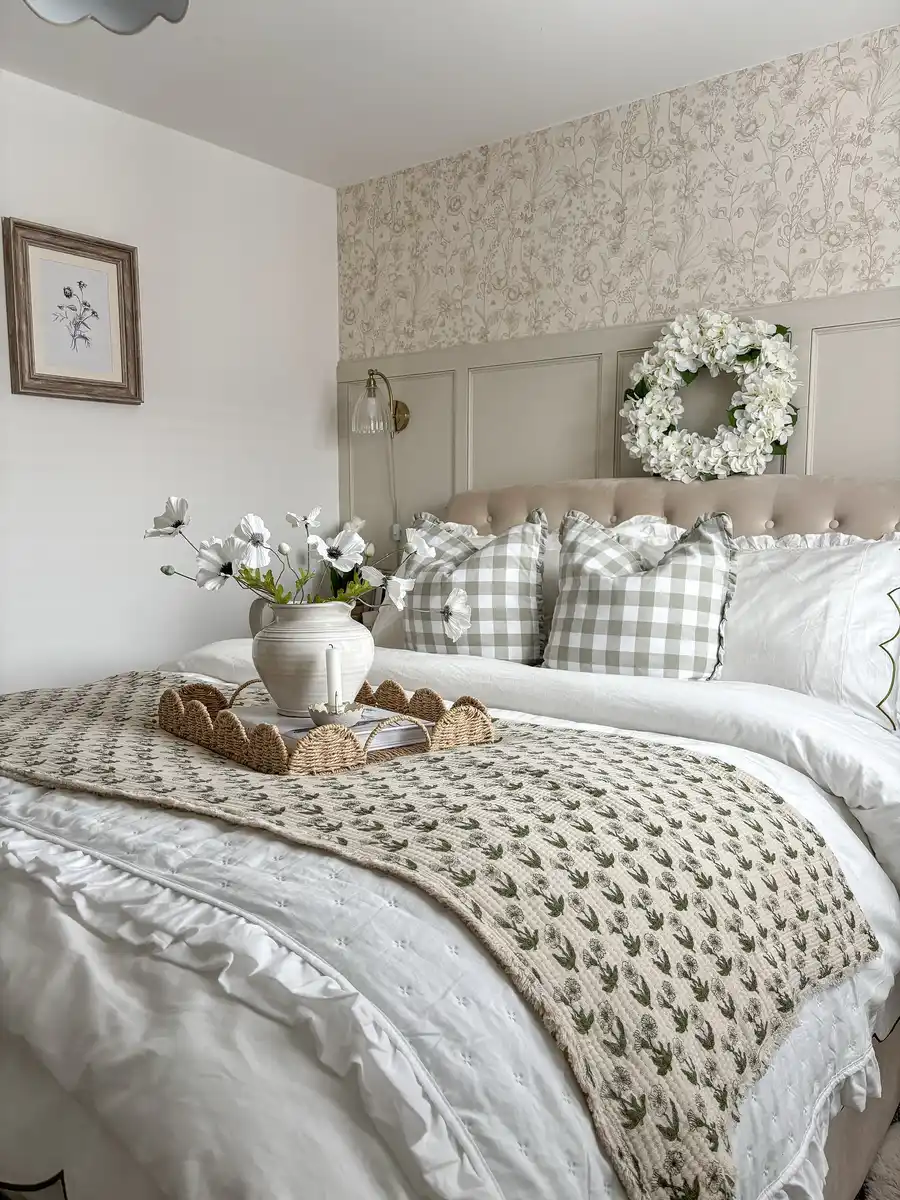
There are several patterns in this room, yet none of them fight for attention.
The floral wallpaper is very fine and faded. The checked pillows use a soft gray-green. Then the quilt at the foot of the bed brings in another small botanical print.
That works because the colors stay quiet.
If you like patterned bedrooms but don’t want them to feel busy, this is a useful combination to study: different prints, similar softness.
3. Let Texture Do More
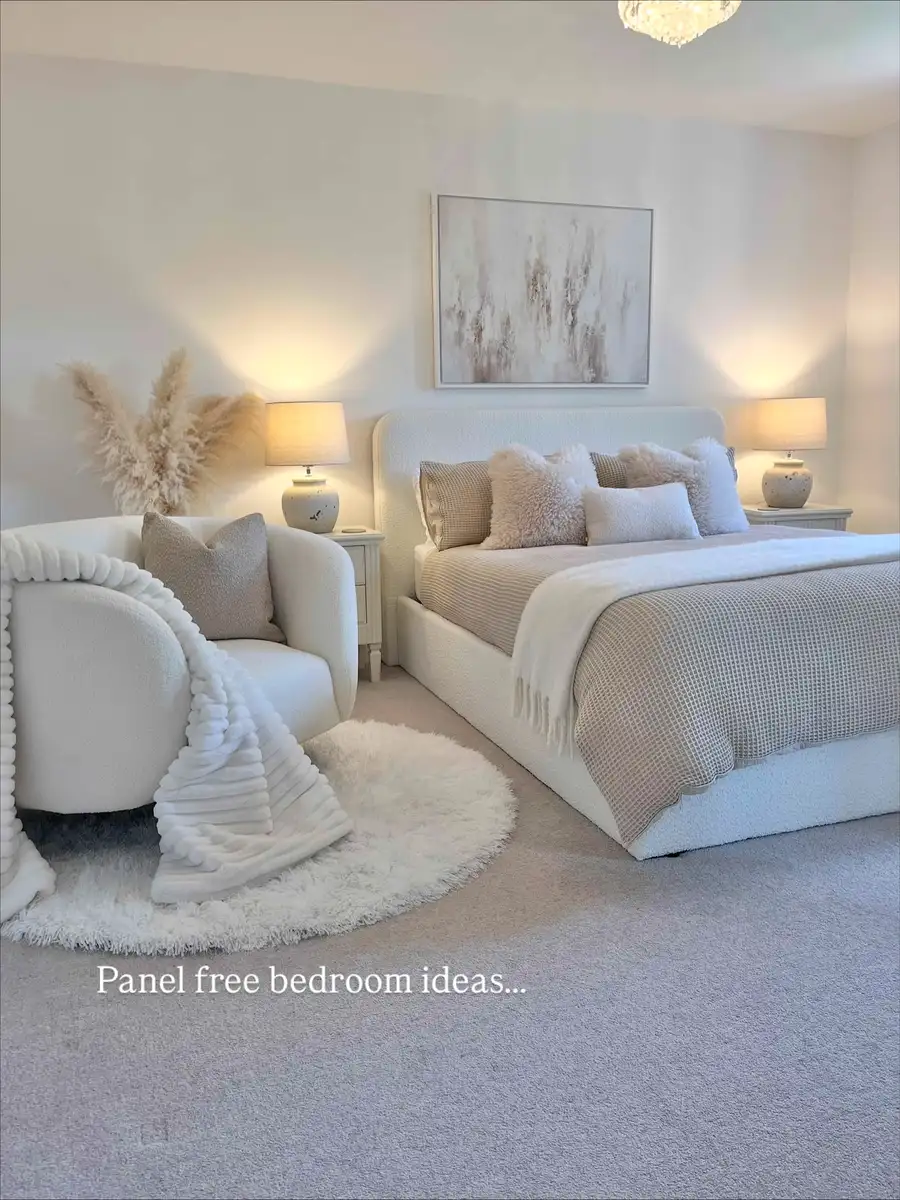
This bedroom barely needs decoration.
A fluffy rug, soft upholstered bed, fuzzy cushions, nubby bedding, and a rounded chair already give the room enough detail. Even the pampas grass fits because it’s more about texture than color.
That’s probably the easiest lesson here. If everything is beige and white, don’t immediately reach for wall decor. Add another fabric first.
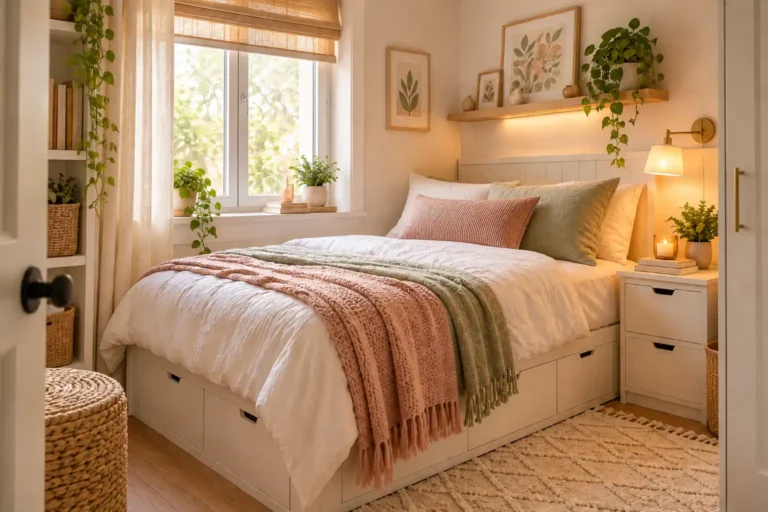
4. Repeat One Chunky Knit
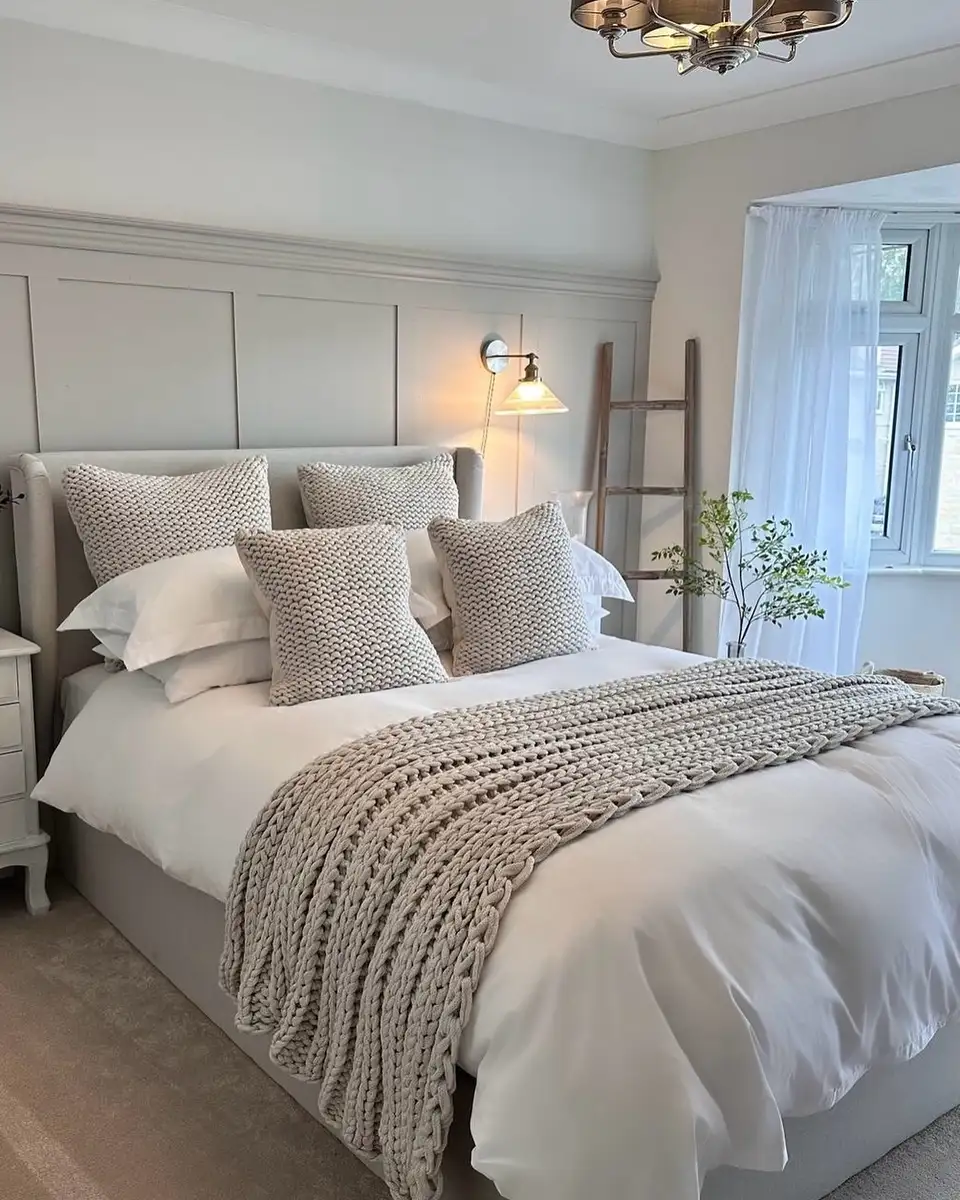
The chunky knit is repeated across the pillows and the long throw at the foot of the bed. That’s enough.
Against plain white bedding, the thick loops stand out far more than another patterned cushion would.
I especially like that the rest of the room isn’t trying to compete with them. Pale wall paneling. Simple greenery. One small wall light.
Let the knit be the feature.
5. Use Gingham Without Going Cute
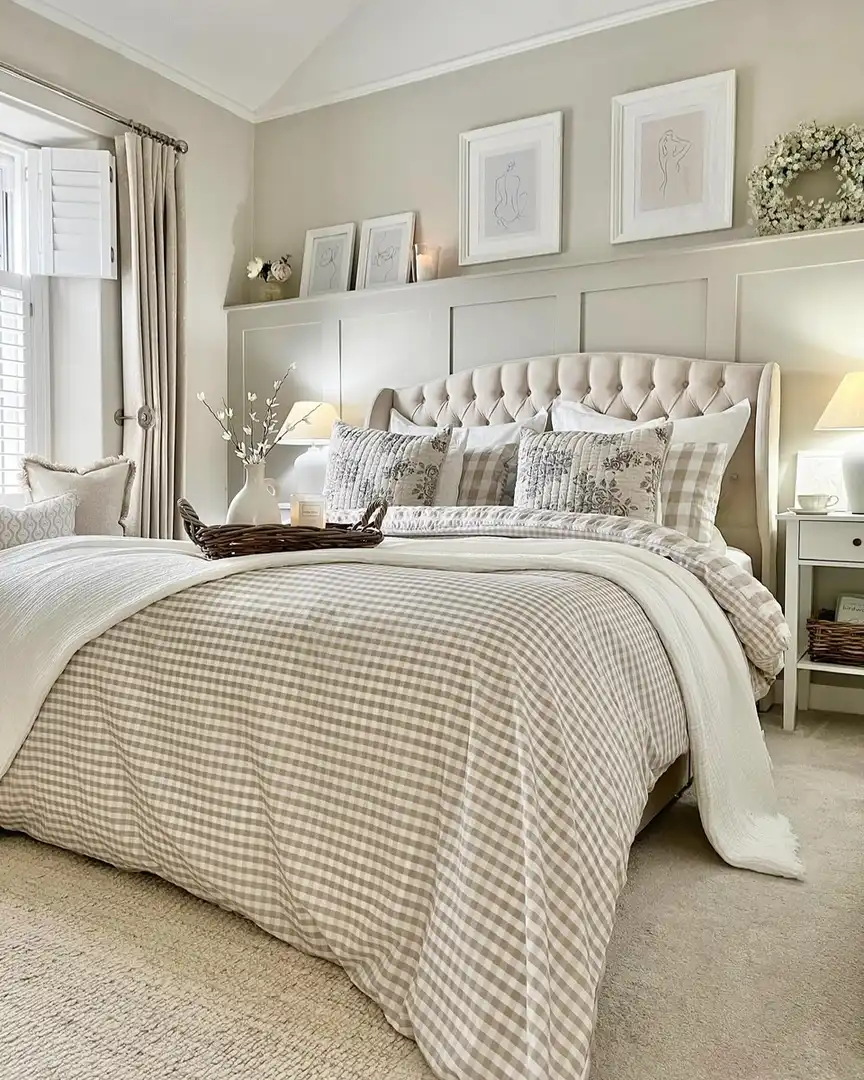
Gingham can easily push a bedroom toward cottage or overly sweet. Here, the taupe color keeps it grown up.
The duvet carries most of the pattern, with smaller checked pillows behind the floral cushions. Because everything sits within cream, taupe, and faded gray, the bed still looks calm.
I wouldn’t add patterned curtains to this room. The bedding has enough going on already.
6. Add Black In Small Doses
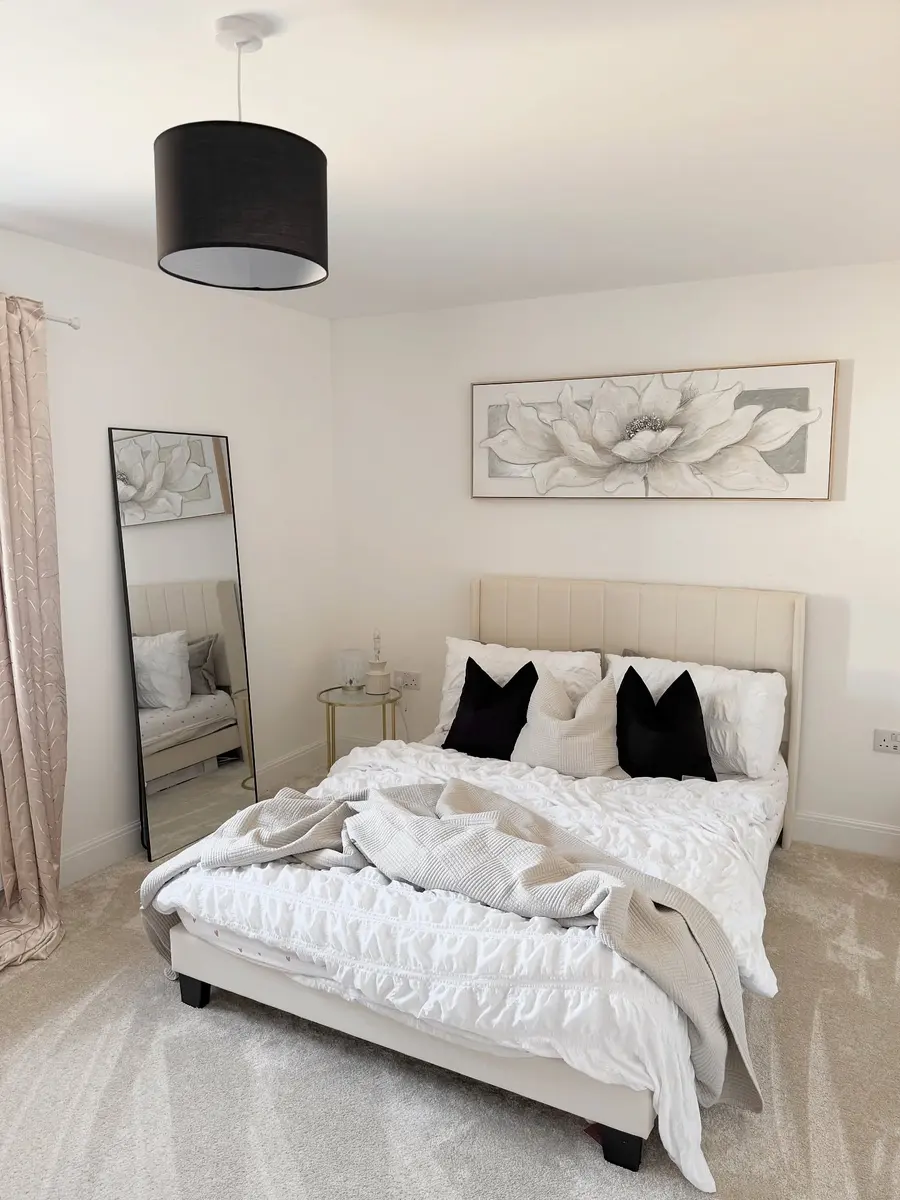
Two black pillows make a surprisingly big difference against all the cream.
Then the color appears again in the tall mirror frame and ceiling shade. That’s all it needs.
The room doesn’t become black and white. It still reads soft and neutral because most of the surfaces stay warm and pale.
A useful move if your beige bedroom feels a little too sweet.
7. Bring In Dusty Sage
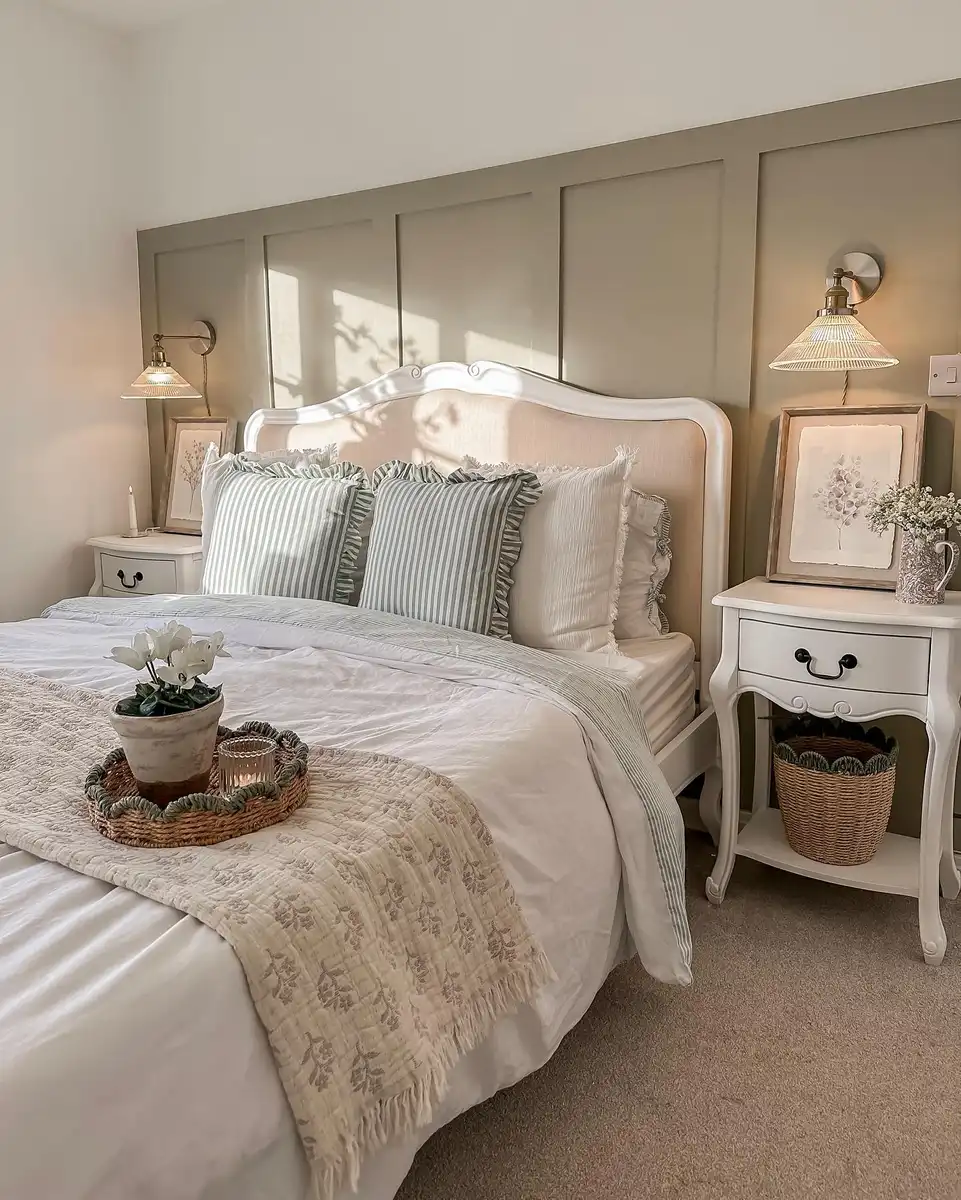
The green here is so muted that it almost acts like another neutral.
It’s used mainly in the striped pillows and bedding details, with a few leafy accents elsewhere in the room. Nothing bright. Nothing emerald.
That matters.
For a bedroom that’s mostly white, beige, and warm gray, dusty sage is an easy way to bring in color without changing the whole mood.
8. Use One Darker Throw
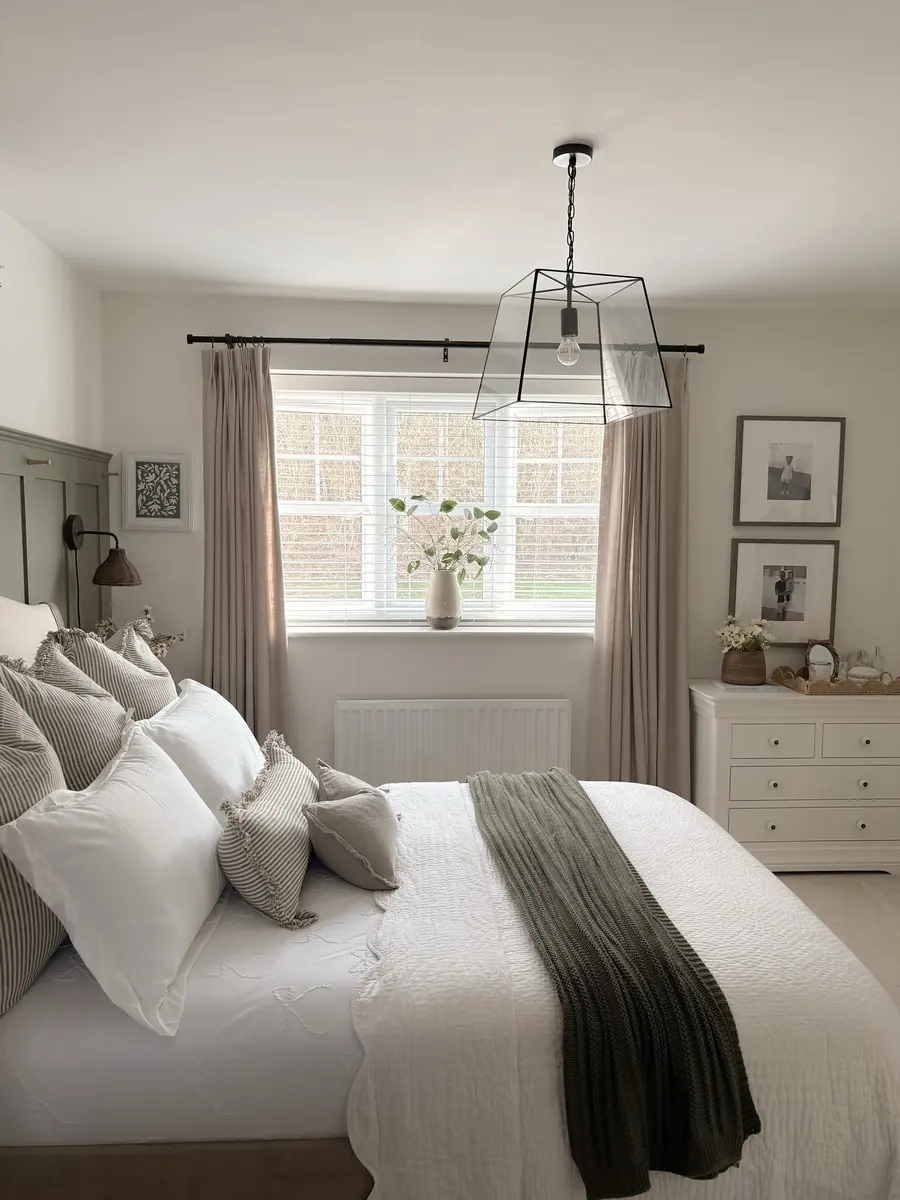
Most of this bedroom is light. White bed. Pale curtains. Cream furniture. Soft striped cushions.
Then there is that dark olive throw.
It gives the bed somewhere for your eye to land and stops the room from looking washed out. The nearby greenery makes the color feel intentional without needing matching green decor everywhere.
One strong piece is enough.
9. Go Almost All Cream
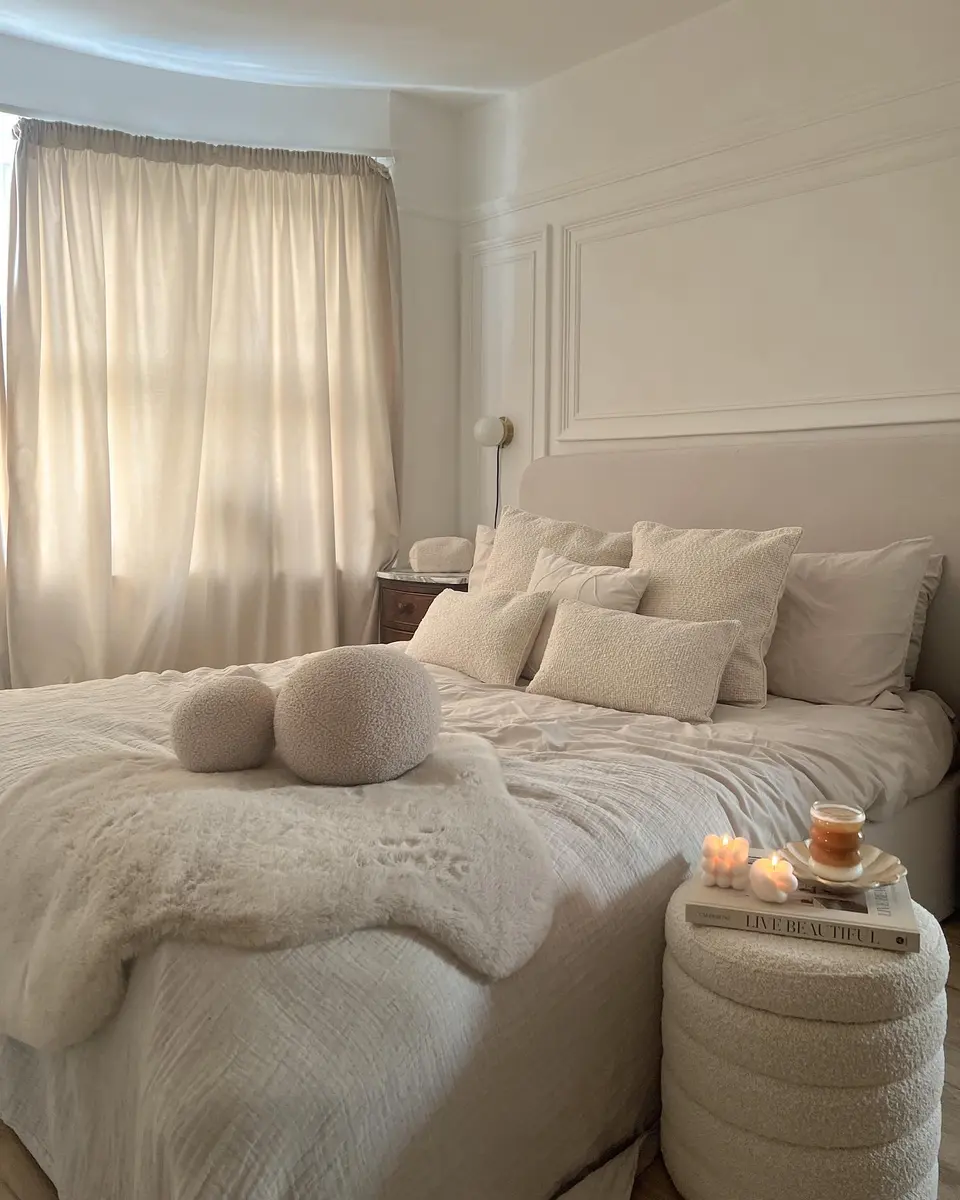
This room doesn’t really use contrast at all.
Instead, it moves through slightly different versions of cream: warm curtains, an upholstered headboard, textured pillows, white bedding, a fuzzy throw, and a boucle-style ottoman.
It works because those surfaces catch the light differently.
If you’re going monochrome, that’s the part I would focus on. Change the texture before changing the color.
10. Pair Stripes With Warm Wood
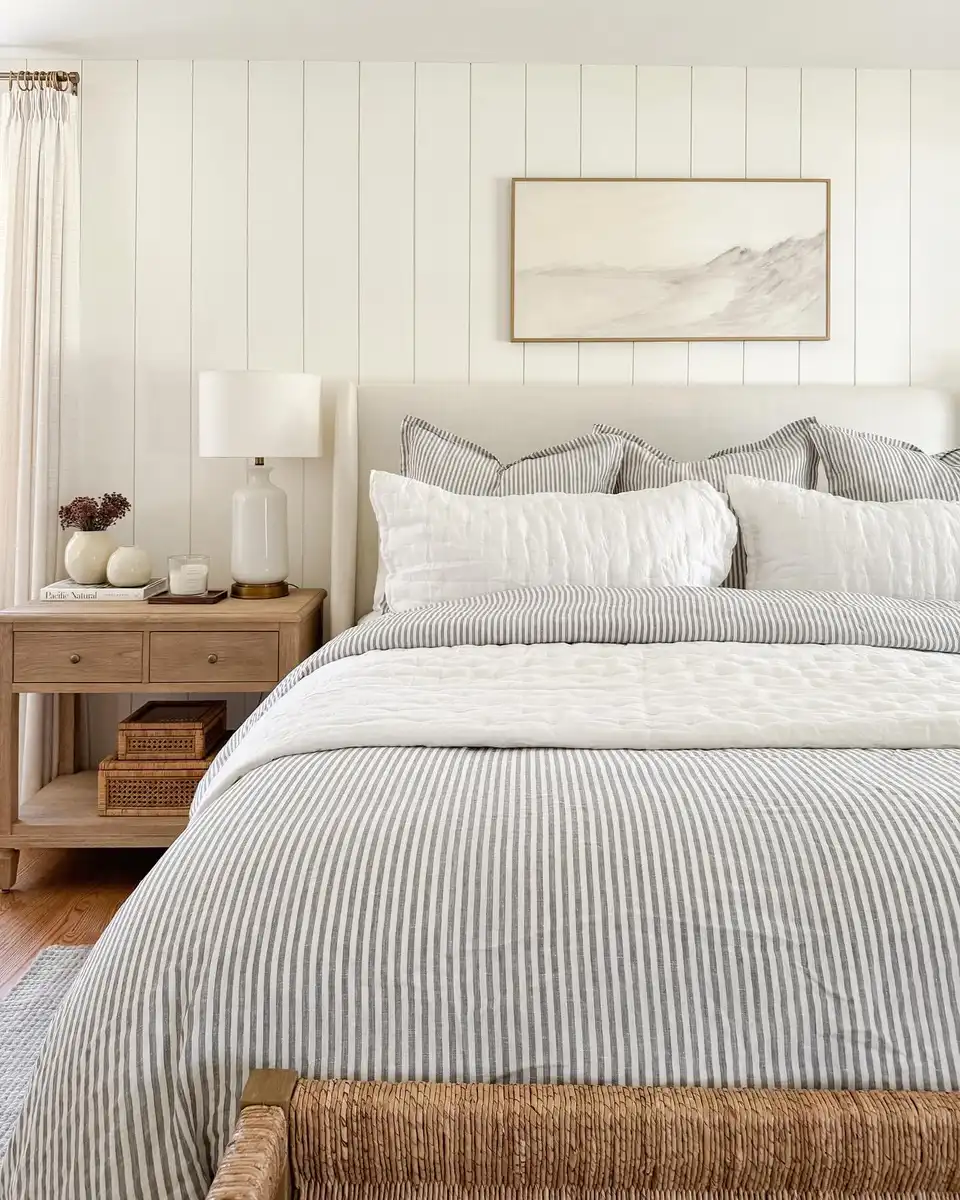
Thin gray stripes give this bed just enough pattern.
The warmer part comes from the wood nightstand, woven baskets, and the natural bench at the end of the bed. Without those pieces, the gray and white palette could feel much cooler.
Nothing fancy here, which is why it’s easy to use.
Striped bedding plus light wood furniture. Done.
11. Outline Pillows In Black
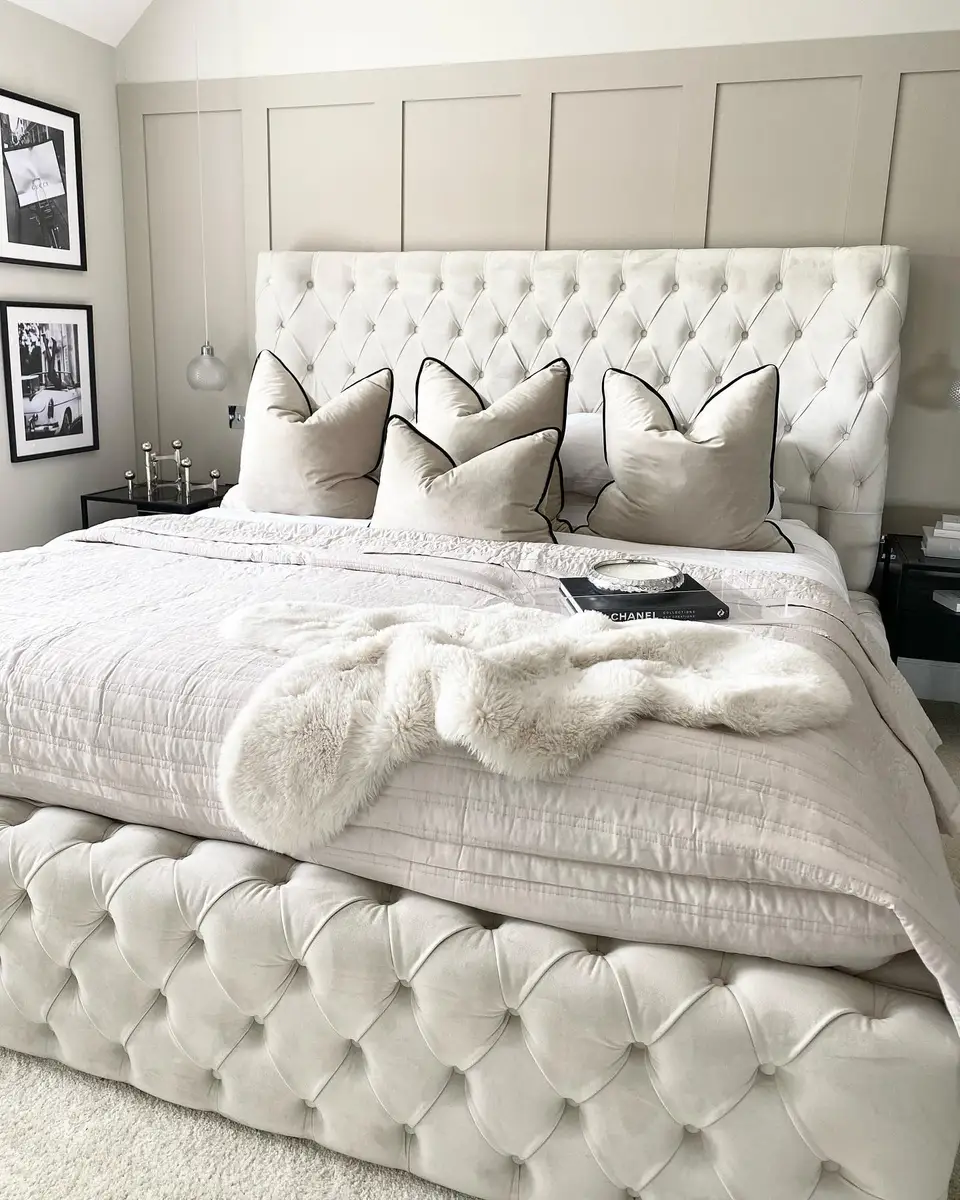
The black piping around these pale pillows is a tiny detail, but it makes every cushion look more defined.
That same black shows up again in the bedside furniture and picture frames. The rest stays cream.
I prefer this over adding a big black blanket or dark headboard. You get the sharper contrast without losing the softness of the room.
12. Add One Warm Wood Piece
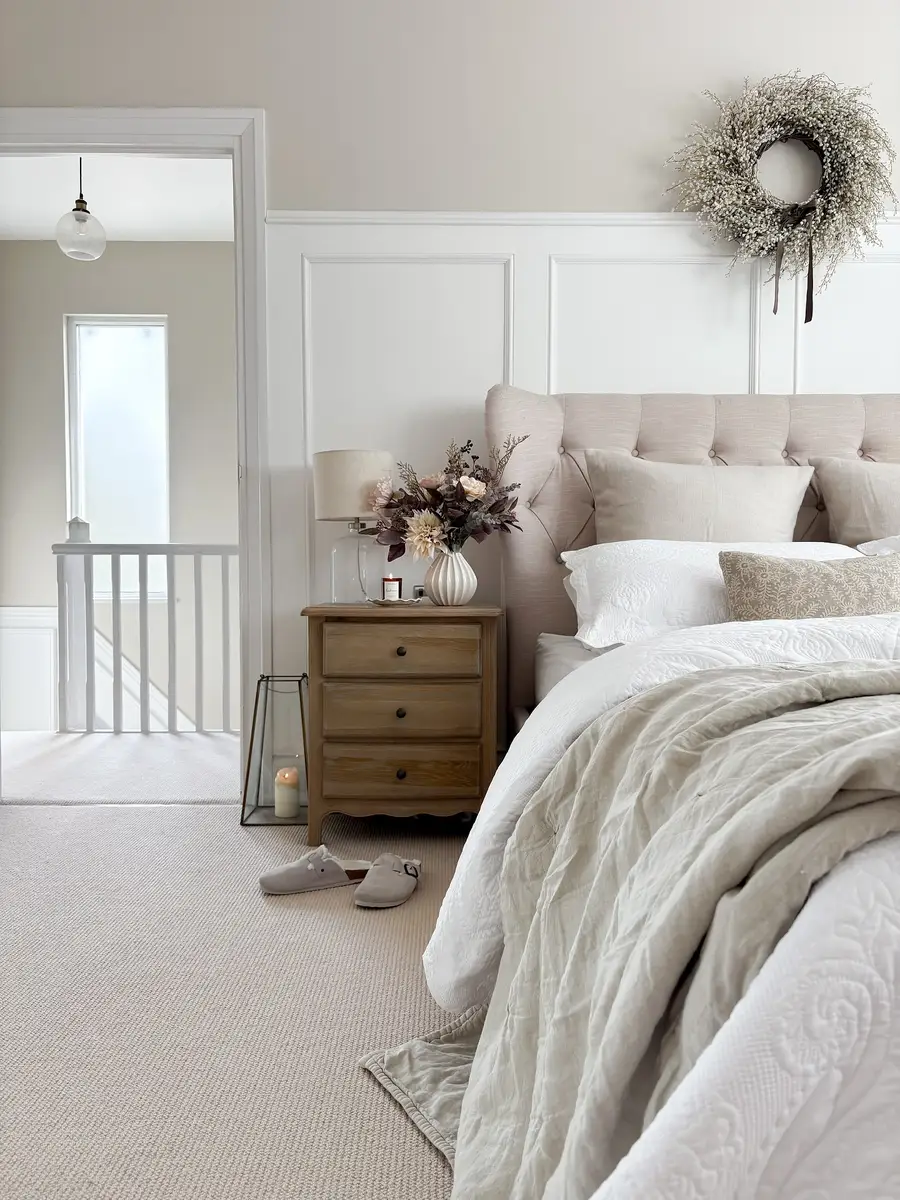
The bedside table earns its place here.
Everything around it is pale: white bedding, cream upholstery, white wall paneling, beige carpet. The medium wood tone breaks that up without becoming a feature color.
The muted flowers add another earthy layer, but I wouldn’t copy every accessory from this corner.
The wood nightstand is the part worth taking.
13. Let Daylight Do The Work
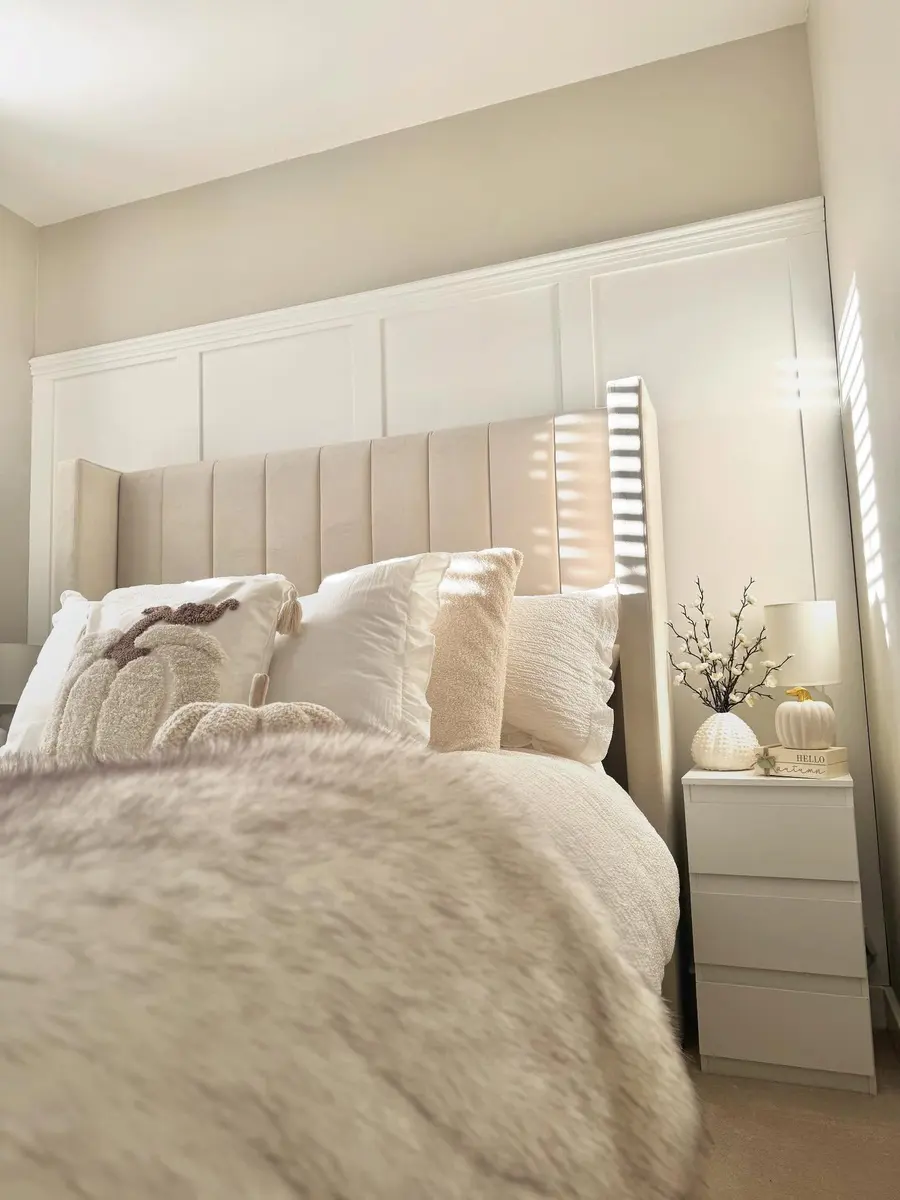
Warm sunlight across the upholstered headboard makes this room feel much softer than the color palette alone would suggest.
You can see it especially on the textured pillows and fluffy blanket. The shadows make every cream surface look slightly different.
A neutral bedroom with good daylight doesn’t need much color.
I’d keep the window treatment light enough to let that happen.
14. Use Raw Wood Beside Beige
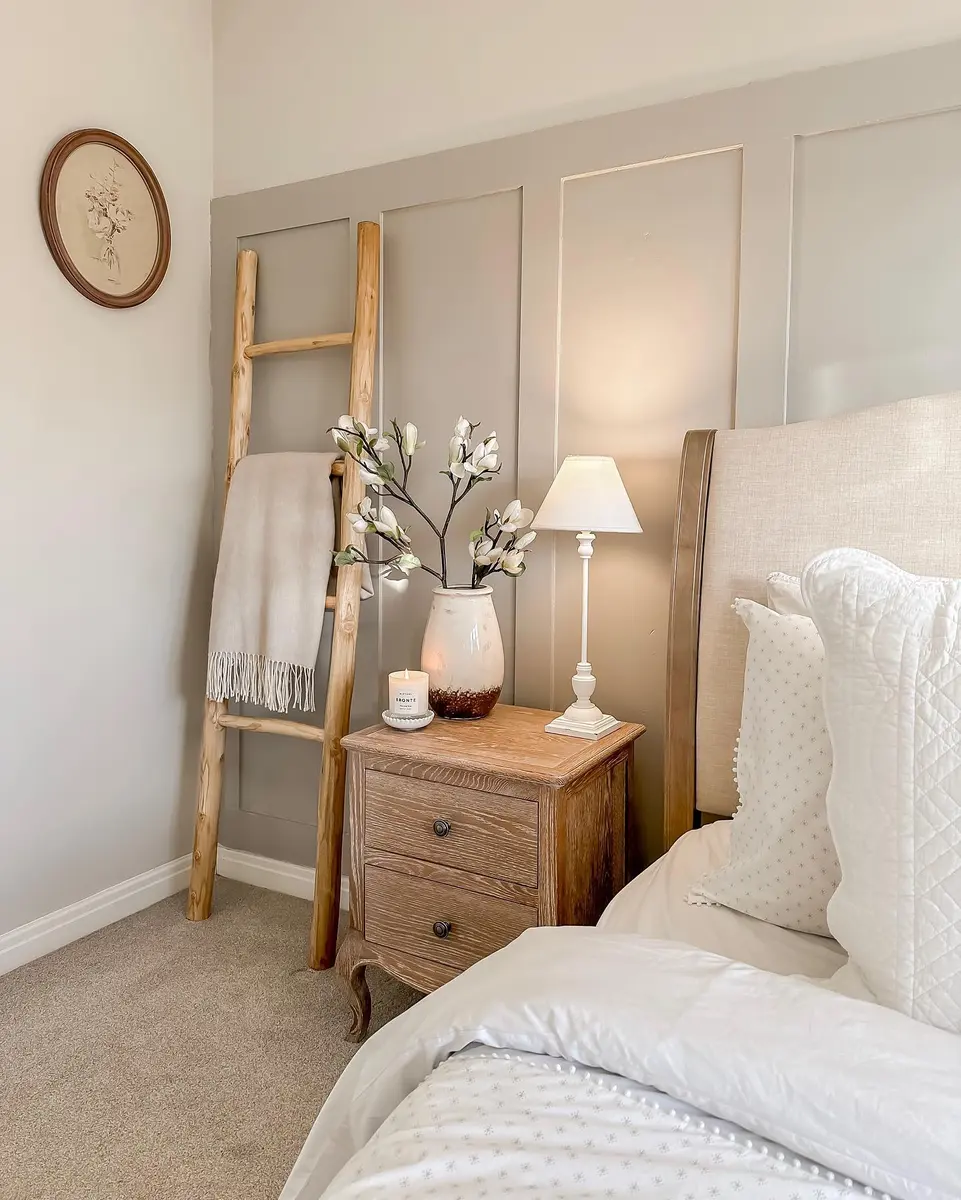
The wooden ladder and bedside table have a rougher, more natural look than most of the other furniture we’ve seen so far.
That’s what makes this corner interesting.
They sit against smooth beige wall paneling, a soft upholstered bed, white bedding, and a very simple lamp. The contrast isn’t about color. It’s rough versus soft.
One rustic piece can be enough. You don’t need the whole farmhouse package.
15. Stay Inside One Beige Family
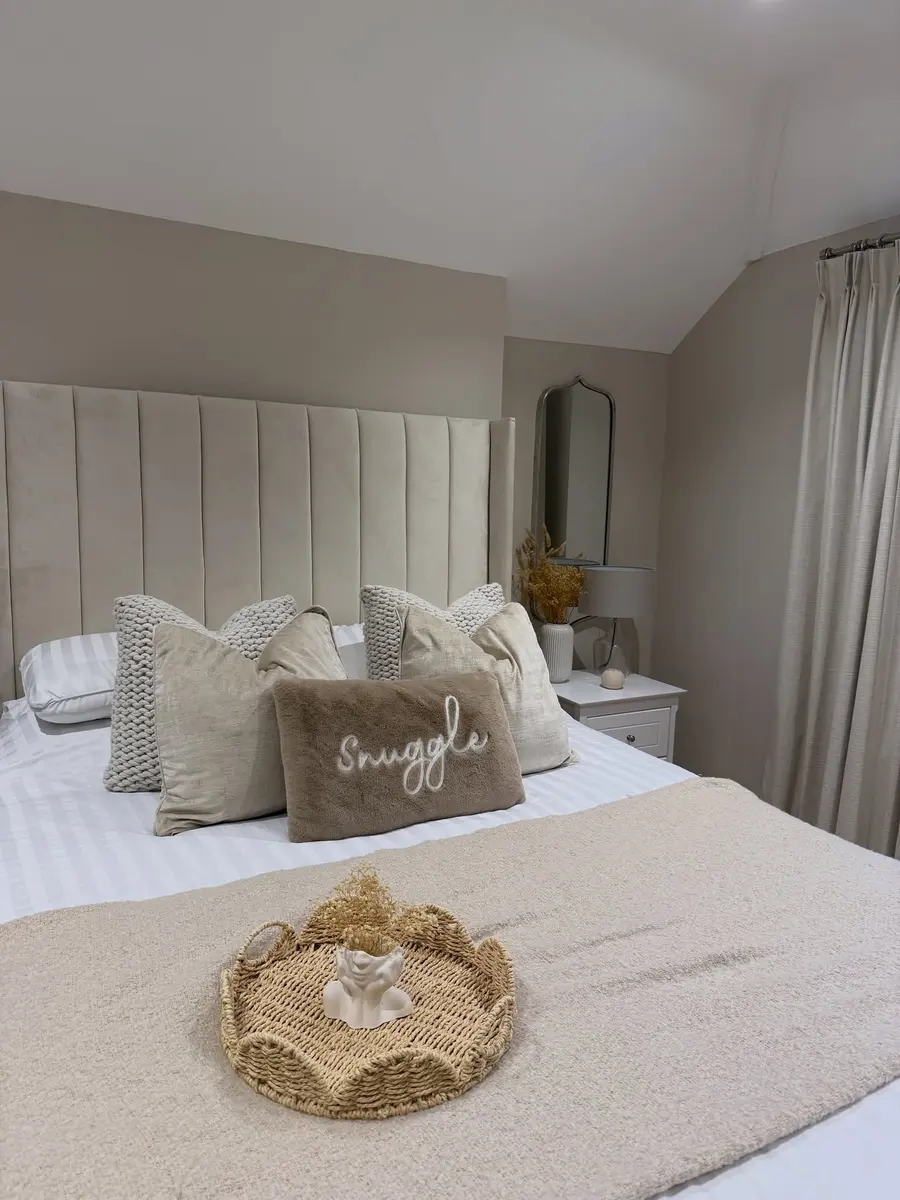
This room barely moves outside beige and cream.
What changes instead is the finish. Smooth upholstery. Chunky knit pillows. A fuzzy bed throw. Woven tray. Dried stems. Soft curtains.
It feels fuller than a plain beige room because each layer has its own surface.
I’d avoid introducing a random blush or green accent here. The tight palette is the whole point.
16. Balance Straight Lines With Curves
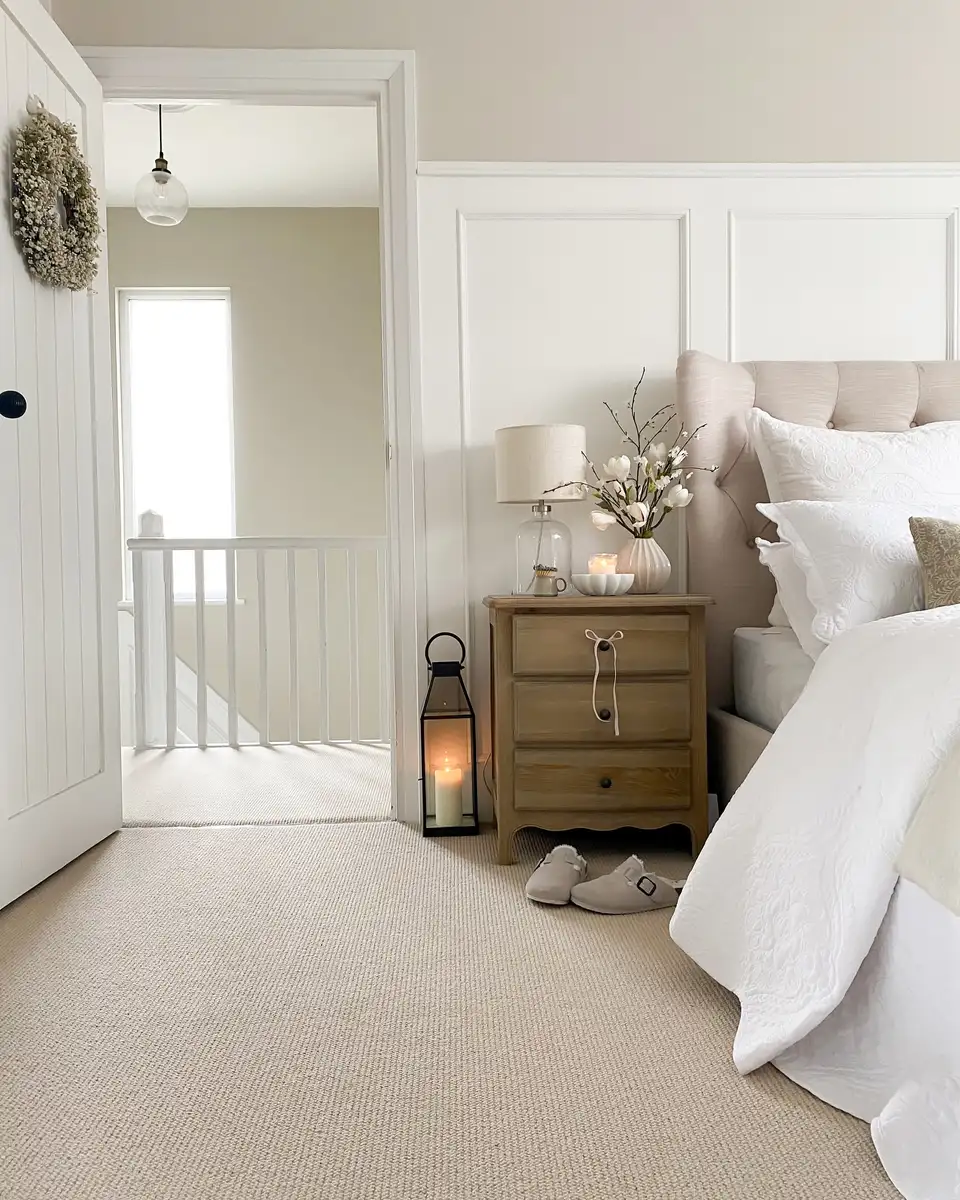
Wall paneling gives this room a lot of rectangles.
The softer pieces help break that up: the rounded lamp base, curved vase, loose flowers, cushioned headboard, and small lantern on the floor.
That’s an easy detail to miss when you’re choosing neutral decor.
If your room has lots of square furniture and panel molding, a few round or irregular shapes can stop it from feeling rigid.
17. Spread Rustic Details Around
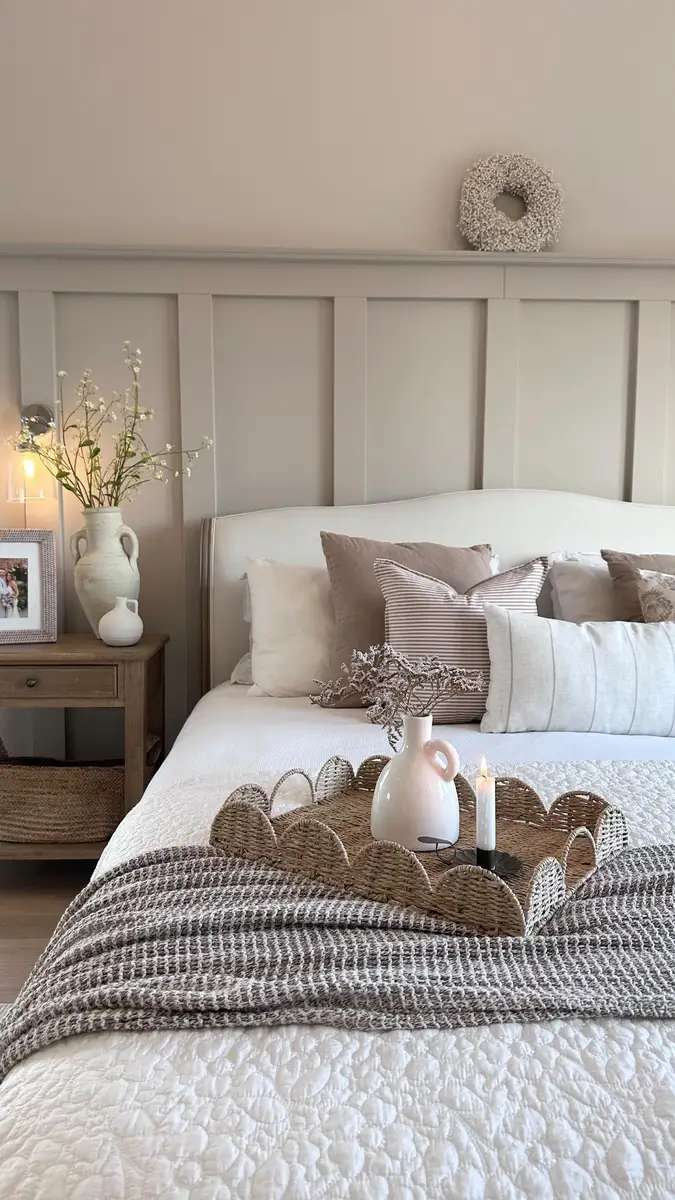
The rustic pieces aren’t all sitting in one corner.
There’s wood beside the bed, a woven tray on the bedding, textured pottery, baskets underneath the nightstand, striped pillows, and a chunky throw.
Because those details are spread out, the room feels relaxed rather than themed.
I’d copy that distribution more than the individual objects. One basket, one wood piece, one woven piece. No need for ten of each.
18. Keep The Main Layout Symmetrical
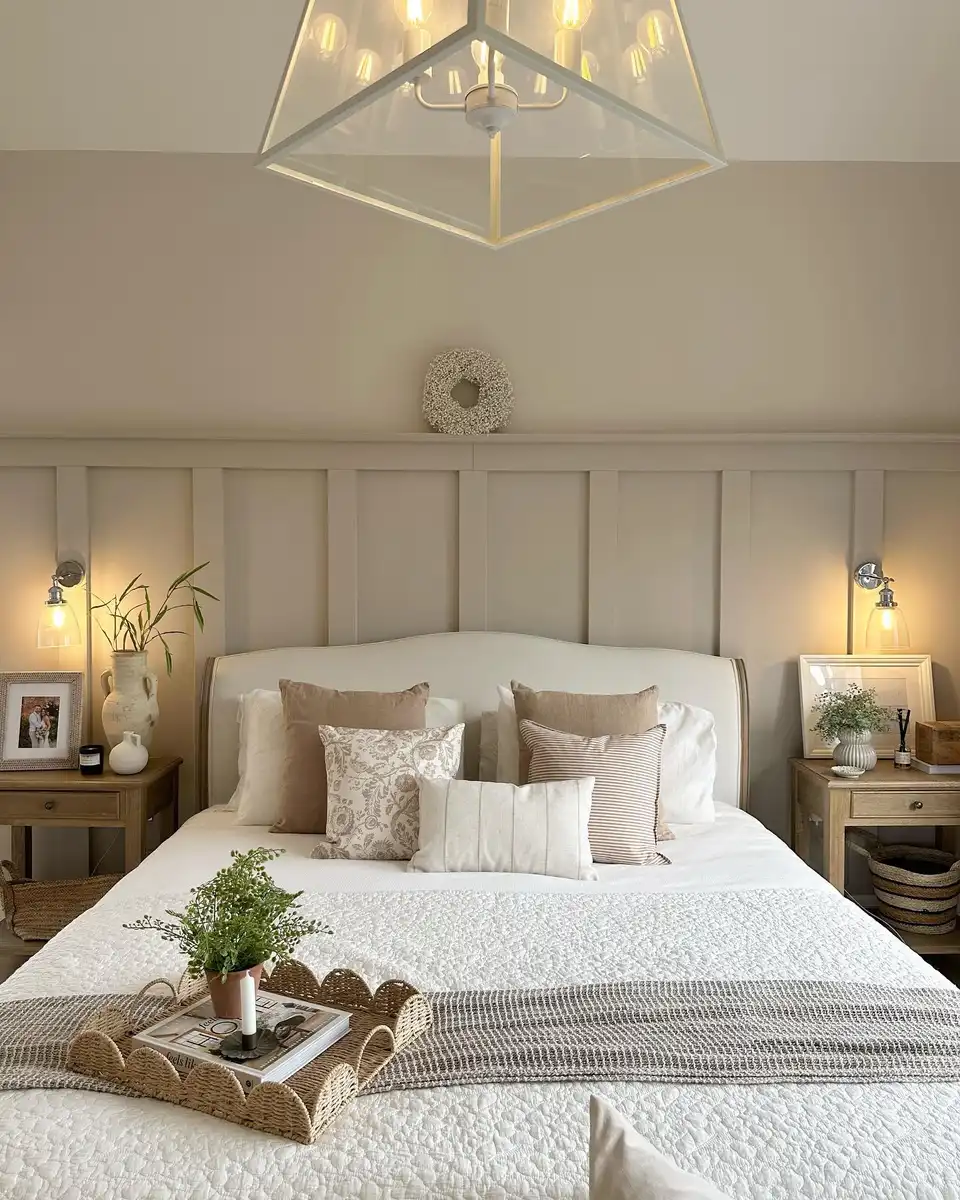
Matching lights on either side of the bed make this room immediately feel settled.
The nightstands are similar too, and the pillows are arranged fairly evenly. Then the smaller details loosen things up: different prints, plants, baskets, and that woven tray.
Good balance.
If everything matched perfectly, it might feel too formal. The little mismatches keep it comfortable.
19. Use Chocolate Brown On The Bed
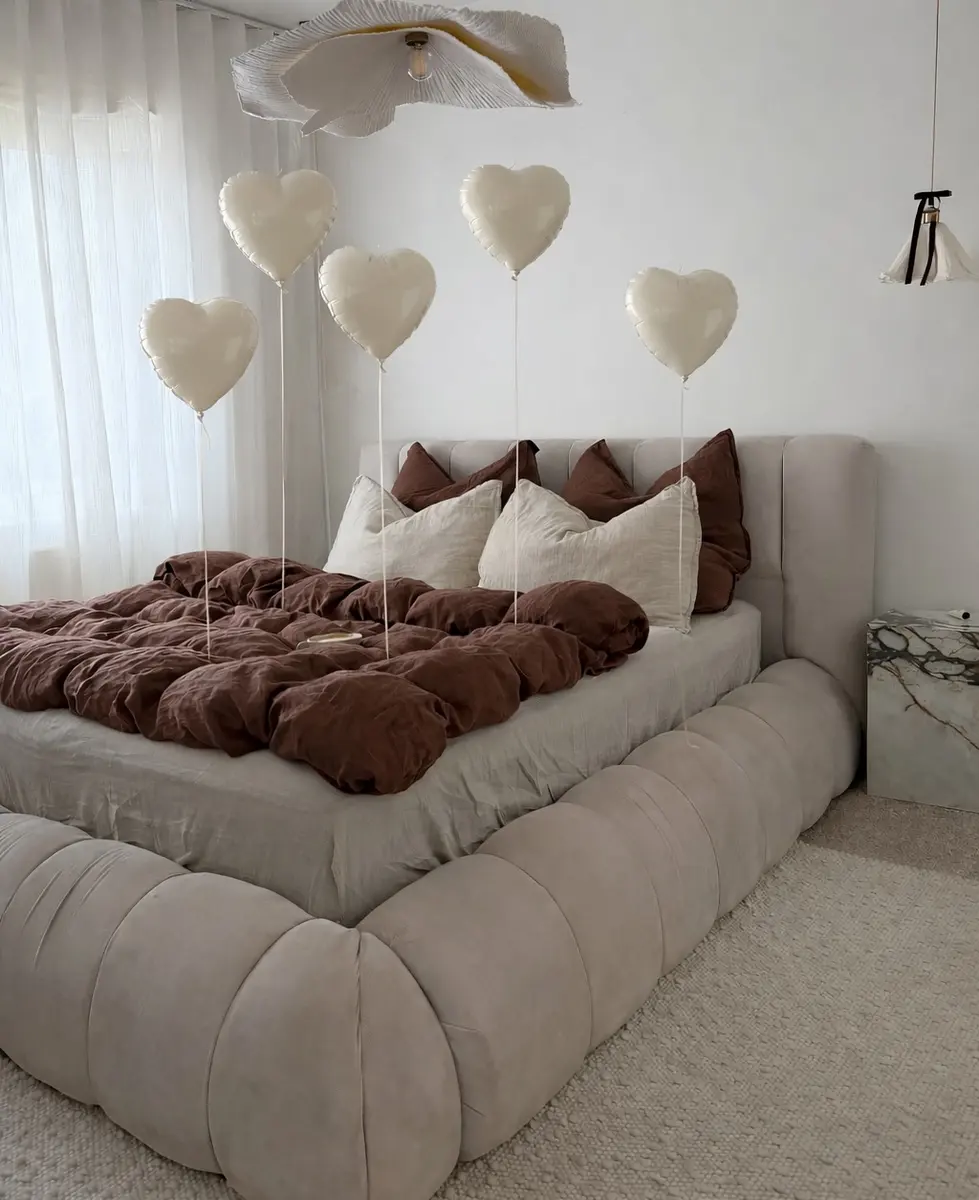
This one is different from the softer taupe rooms because the brown bedding is much deeper.
Against the pale upholstered bed and white walls, it looks rich without making the room gloomy.
I wouldn’t repeat the brown all over the room. The duvet and pillows already give you plenty.
The white heart balloons aren’t something you need to copy either. The useful idea here is simply deep brown bedding against a very pale room.
20. Hang One Large Woven Piece
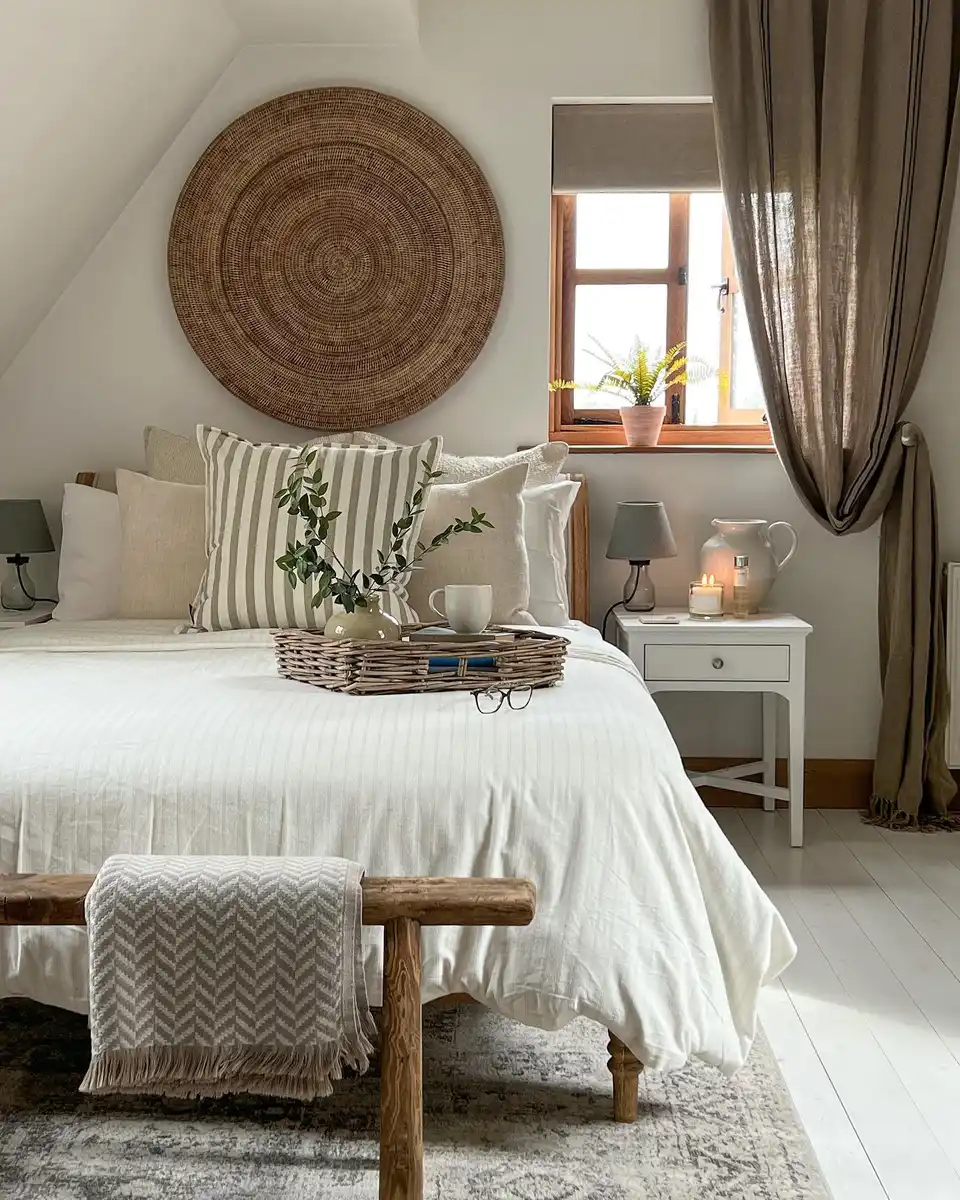
That oversized round wall piece does nearly all the decorating above the bed.
And that’s why it works.
Its warm brown color connects nicely with the wood window frame, bench, tray, and darker curtains. The rest of the wall can stay blank.
If you have one good oversized piece, resist the urge to build a gallery wall around it.
21. Lean A Large Curved Mirror
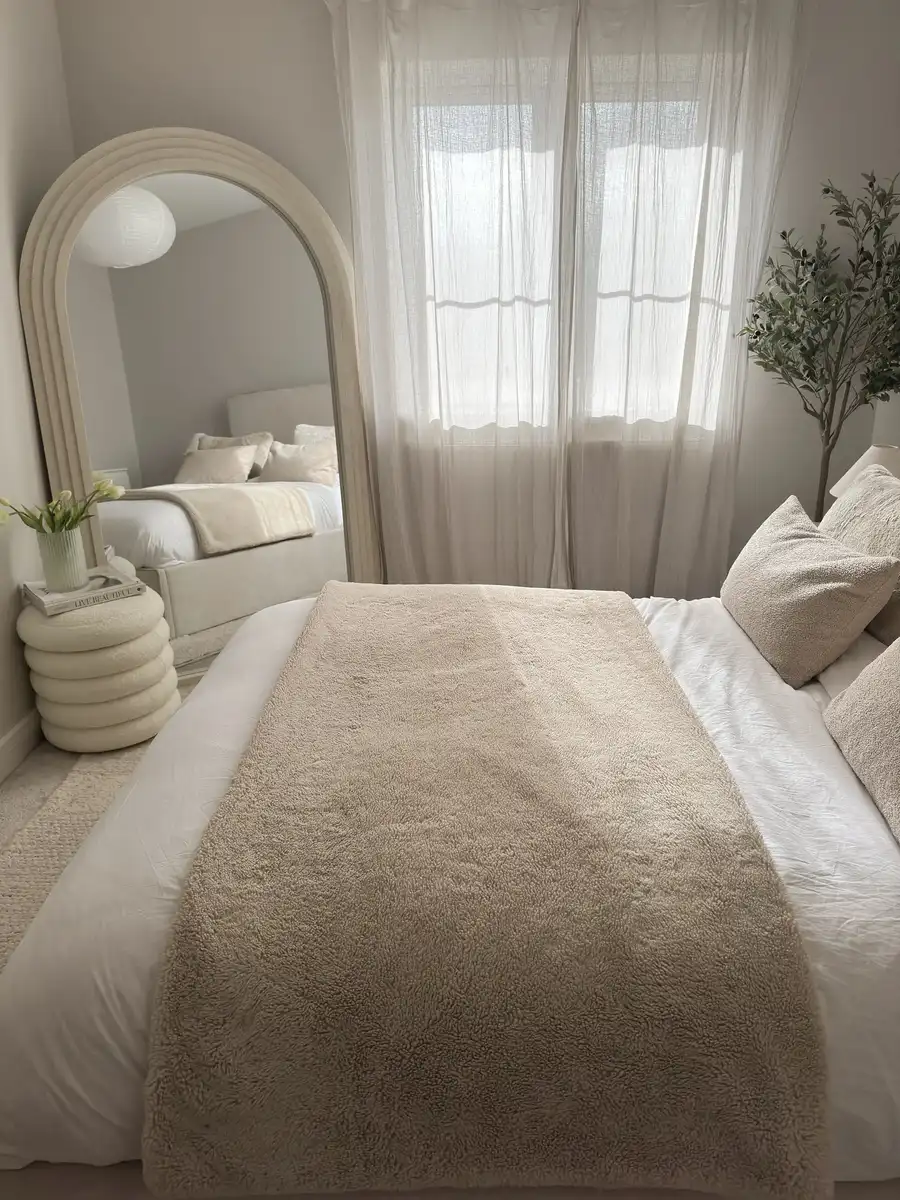
Probably my favorite detail in this room.
The oversized arched mirror fills the corner without making it look cluttered. Its thick cream frame almost disappears into the rest of the palette, so you notice the shape more than the color.
It also reflects the bed, which gives the narrow space a little more depth.
No extra wall art needed beside it. I’d leave that corner alone.
22. Blend Storage Into The Walls
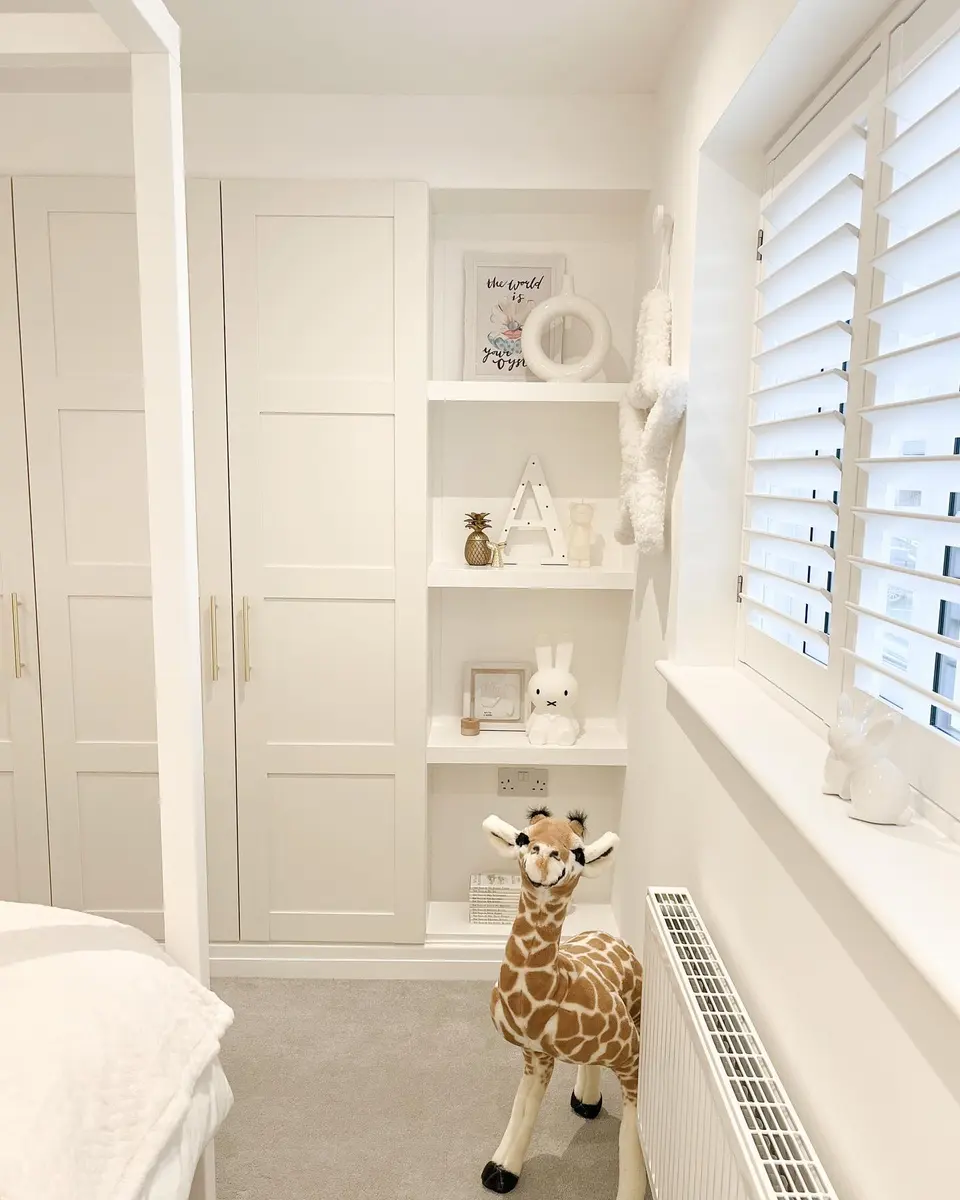
This is a practical one.
The tall wardrobes and open shelves are almost the same cream as the walls, so a large amount of storage doesn’t feel visually heavy.
Even the shelf styling stays pale. White ceramics. Light frames. A few playful objects.
The giraffe is obviously the exception, and that’s fine. One odd piece has more impact when everything around it is quiet.
23. Use White To Break Up Beige
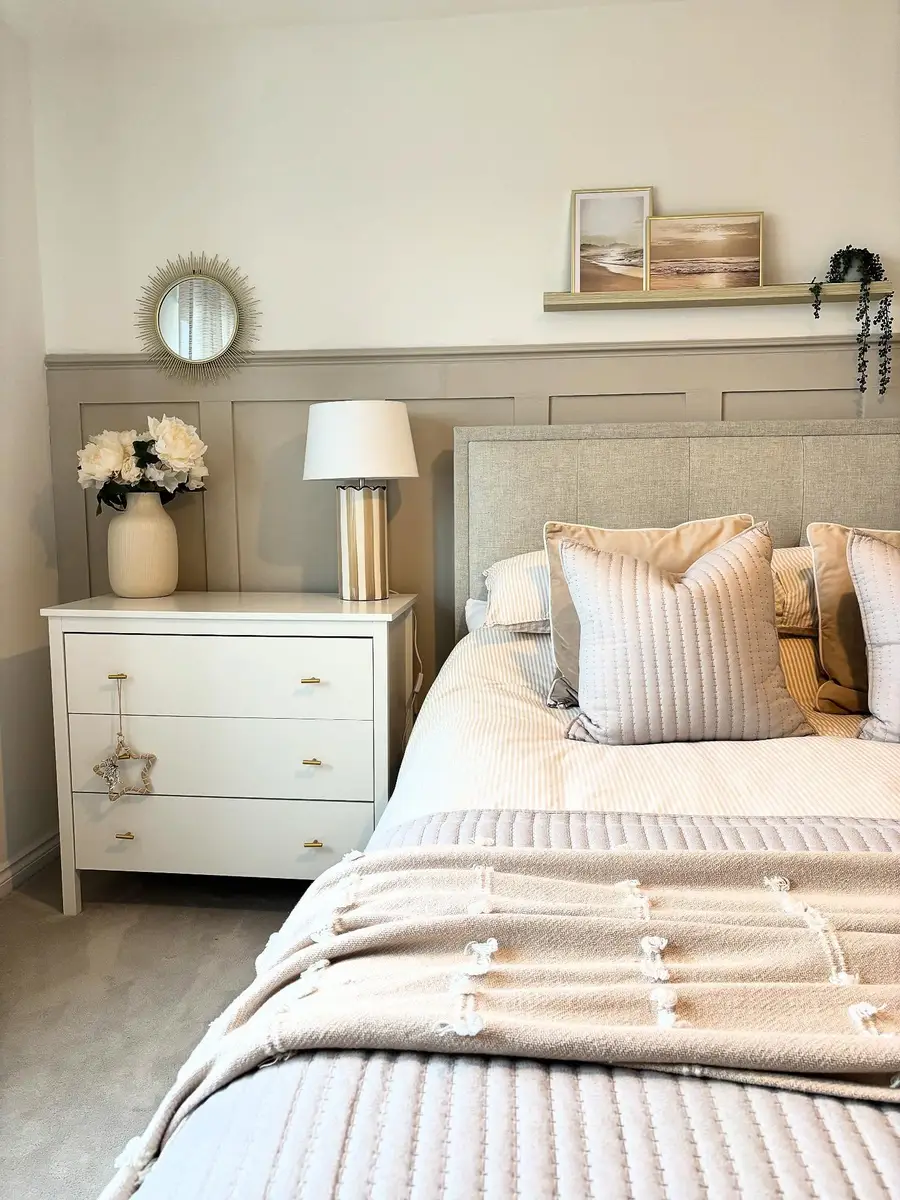
There is quite a lot of beige in this bedroom: the wall treatment, bedding, headboard, carpet, and several pillows.
The white dresser helps.
So do the white flowers, lamp shade, and lighter bedding. They create small gaps between the warmer shades instead of letting everything merge together.
If your neutral bedroom is starting to look muddy, you may not need more color. You might just need more white.
24. Build A Dresser Vignette With Height
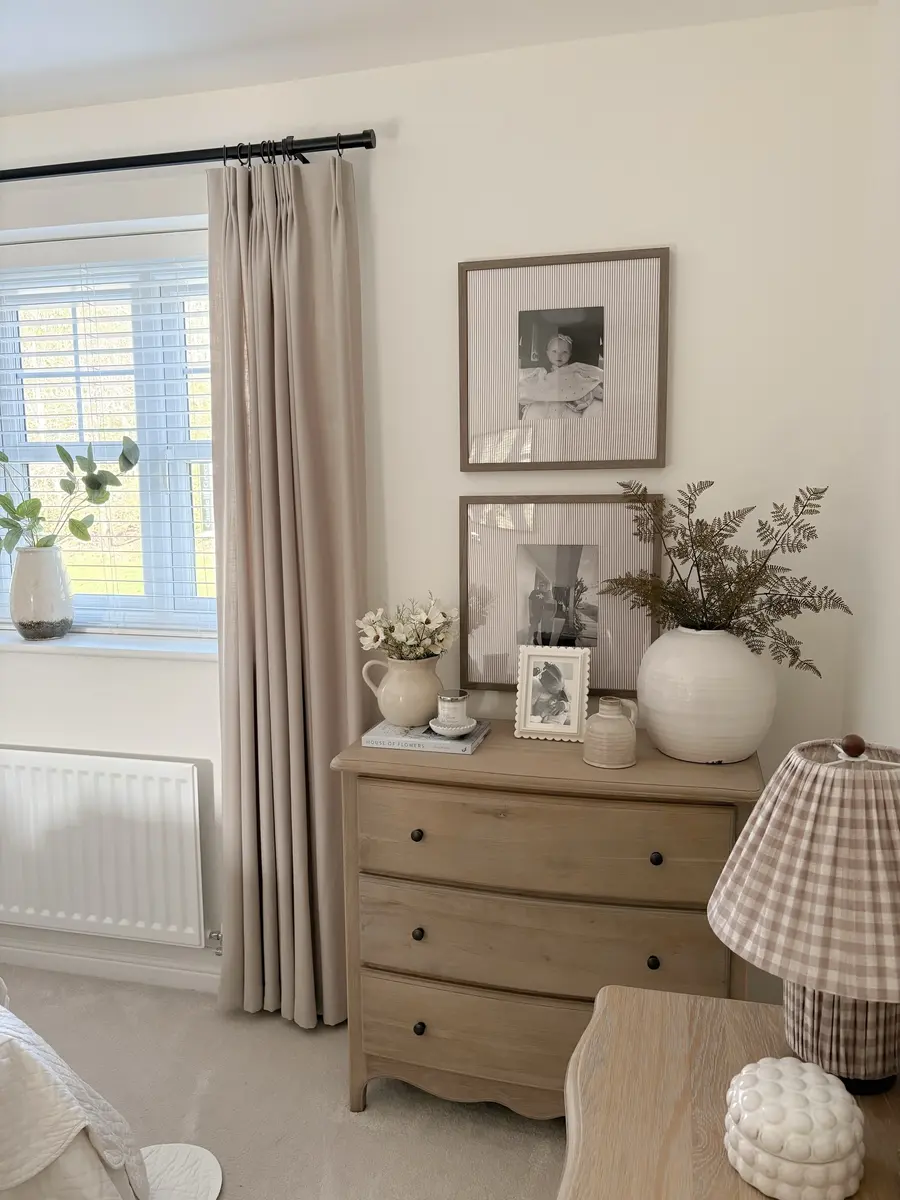
The dresser is fairly full, but it doesn’t look like a row of objects lined up across the top.
That’s because the heights change.
A tall leafy arrangement sits beside larger framed photos. Smaller vases, flowers, books, and a candle fill the lower level. The gingham lamp nearby adds pattern without touching the dresser at all.
If you copy anything here, copy the height changes. Not every accessory.
25. Hang Warm Lights Behind The Bed
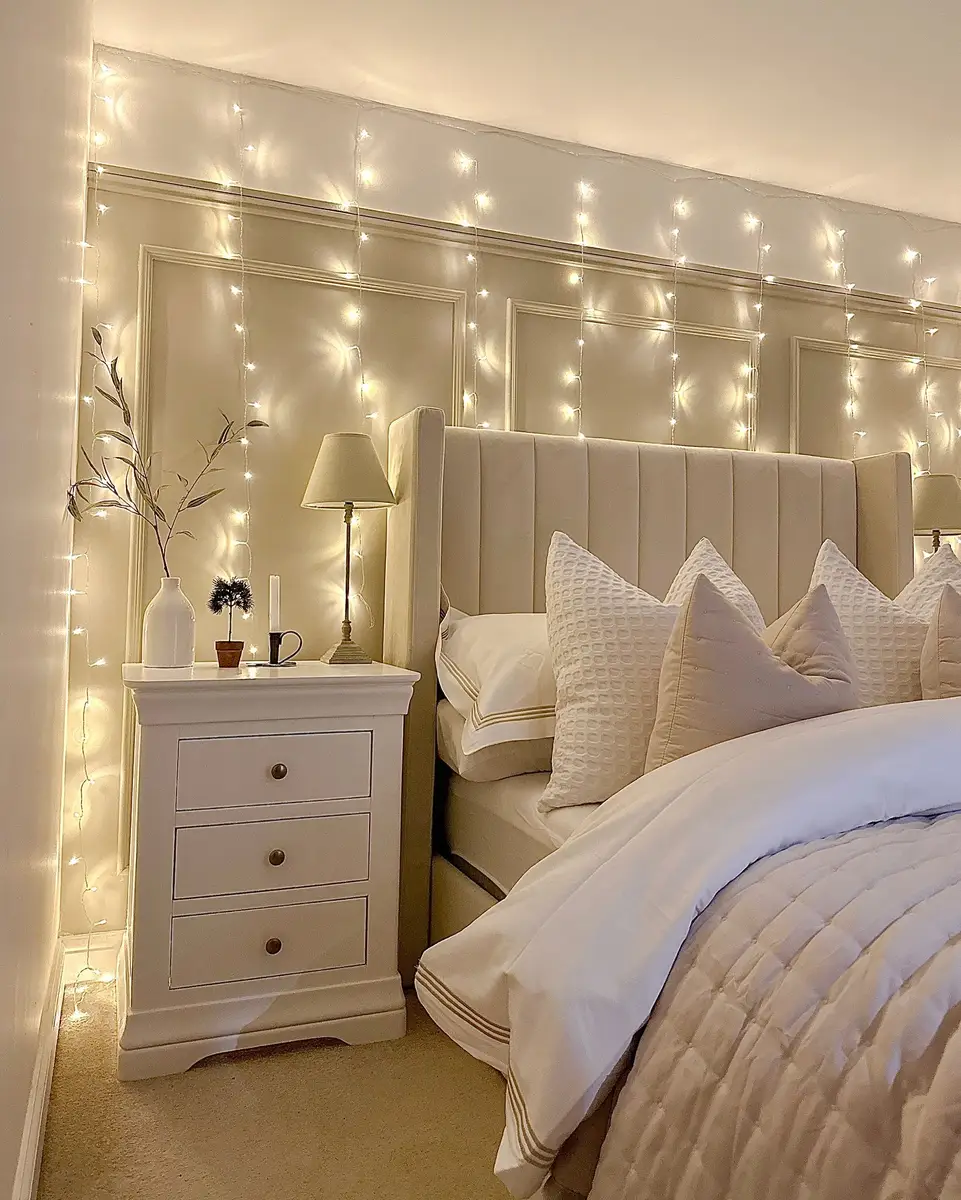
String lights can look temporary very quickly. Here, the wall paneling gives them a proper backdrop.
The warm lights hang in loose vertical lines behind a tall upholstered headboard, so the glow feels like part of the bedroom rather than an afterthought.
This works especially well because the rest is almost entirely cream.
I’d keep the bedside table simple. You don’t need a dozen candles competing with the lights.
26. Mix Cozy Bedding With Glossy Pieces
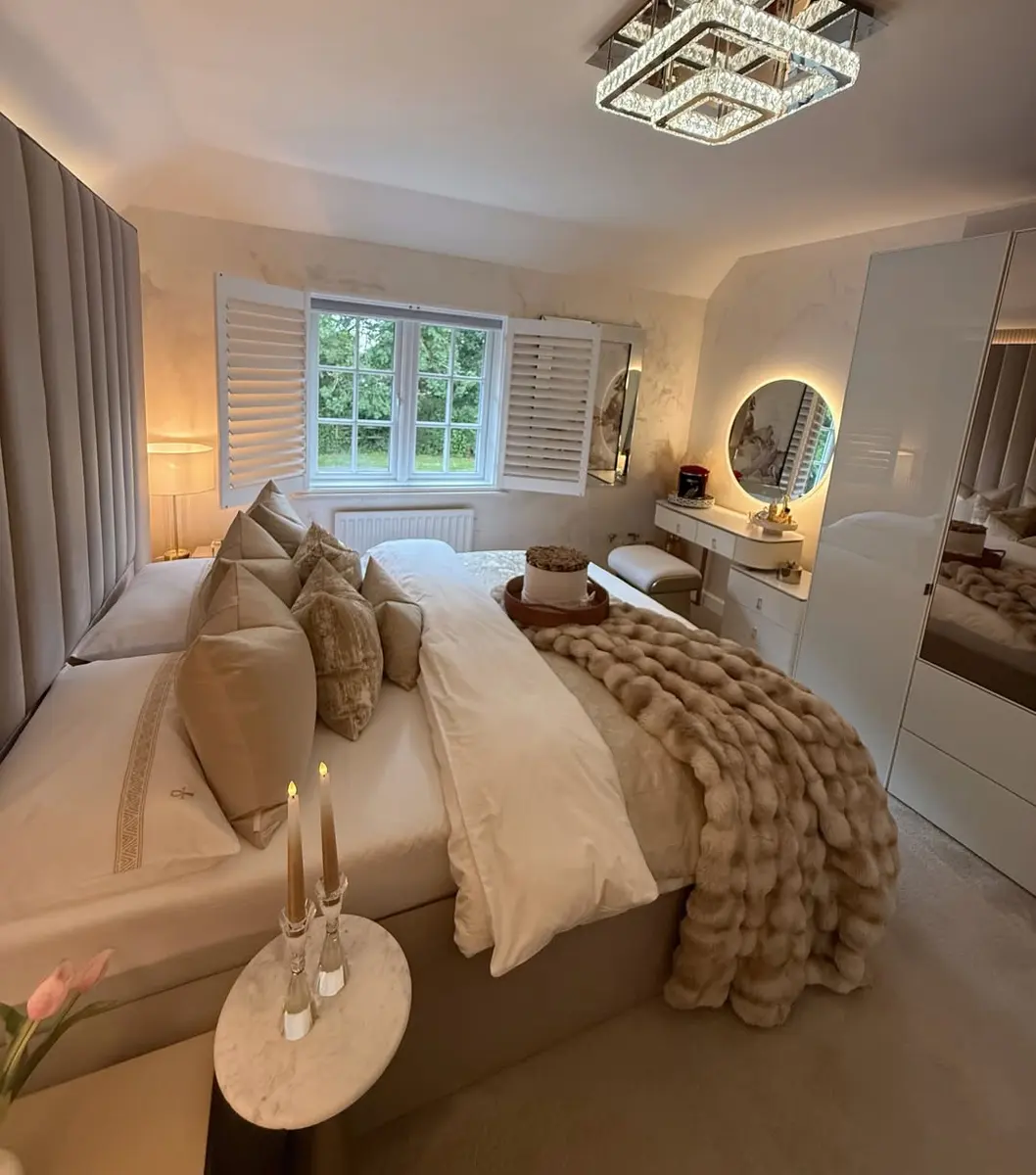
Most of this bedroom is soft. Very soft.
Plump taupe pillows, thick bedding, carpet, curtains, and a plush throw cover the bed. Then the glossy wardrobe, illuminated round mirror, and brighter ceiling fixture bring in a cleaner finish.
That contrast gives the room a slightly more polished look than the rustic neutral bedrooms earlier in the list.
You don’t need to choose between cozy and sleek. Just don’t make every surface shiny.
Final Thoughts
A cozy neutral bedroom doesn’t come from buying everything in beige.
The rooms that feel best usually have one thing that breaks up the softness. Maybe it’s black piping. A wood nightstand. Olive bedding. A woven wall piece. A chunky throw. Even sunlight across a textured pillow can be enough. If the bed itself still looks too flat, these tips on how to make a bed look fluffy work especially well with neutral bedding.
Start there.
Keep the calm colors you like, then add one detail with a different texture, depth, or shape. You can always add more later. Most of these rooms are strongest where they know when to stop.