Rose Pink Bedroom Color Pairings That Work
Rose pink is easy to love on a paint card, but covering a bedroom in it can feel risky. The wrong shade may look too sweet, too dark, or disconnected from the furniture you already own.
The rooms that use this color well give it something steady to sit beside. Warm wood, cream fabric, deep navy, black metal, and leafy green all help rose pink feel more mature.
These ideas show you how to use pink on walls, bedding, furniture, and smaller accents. You can copy a complete room or begin with one simple change that suits your space and budget.
1. Wrap the Walls and Trim in Muted Rose Pink
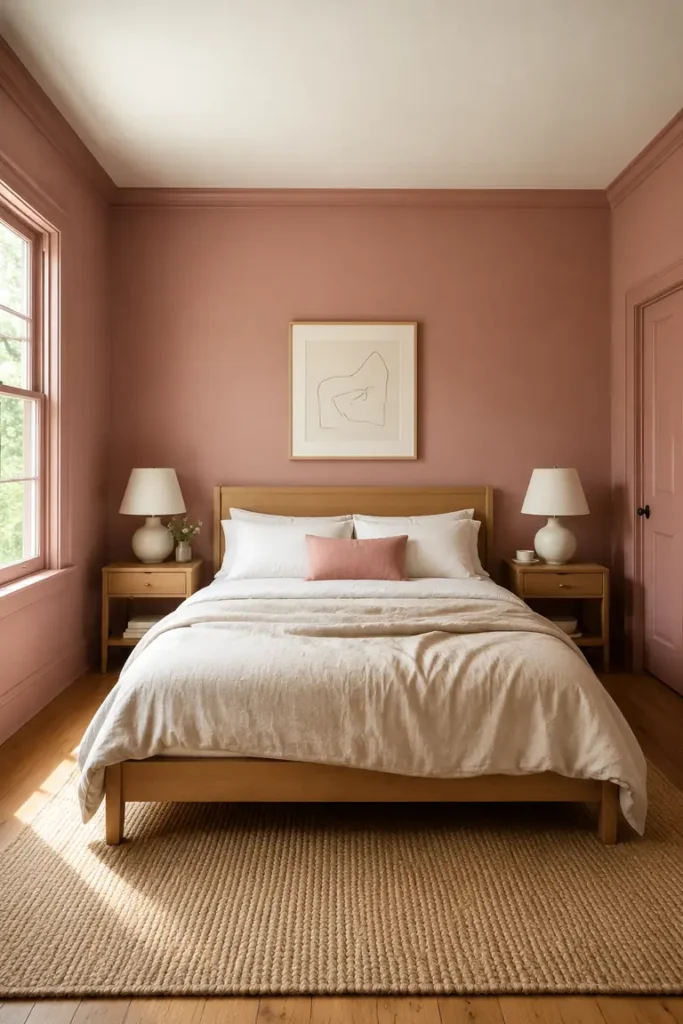
Painting the walls and trim in one muted rose shade creates a calm, wrapped feeling. It also removes the sharp visual lines that can make a small bedroom feel divided.
Choose a dusty or earthy rose rather than a bright candy pink. The brown or beige undertone makes the color easier to pair with oak furniture, woven rugs, and cream bedding.
Use a flat or matte finish on the walls and a soft satin finish on the trim. The slight change in shine adds depth while keeping the color consistent.
Leave the ceiling warm white if the room is small or has limited daylight. This keeps the upper part of the room open and prevents the rose walls from feeling heavy.
Muted Rose Room Formula
2. Paint a Dusty Rose Feature Wall Behind the Bed
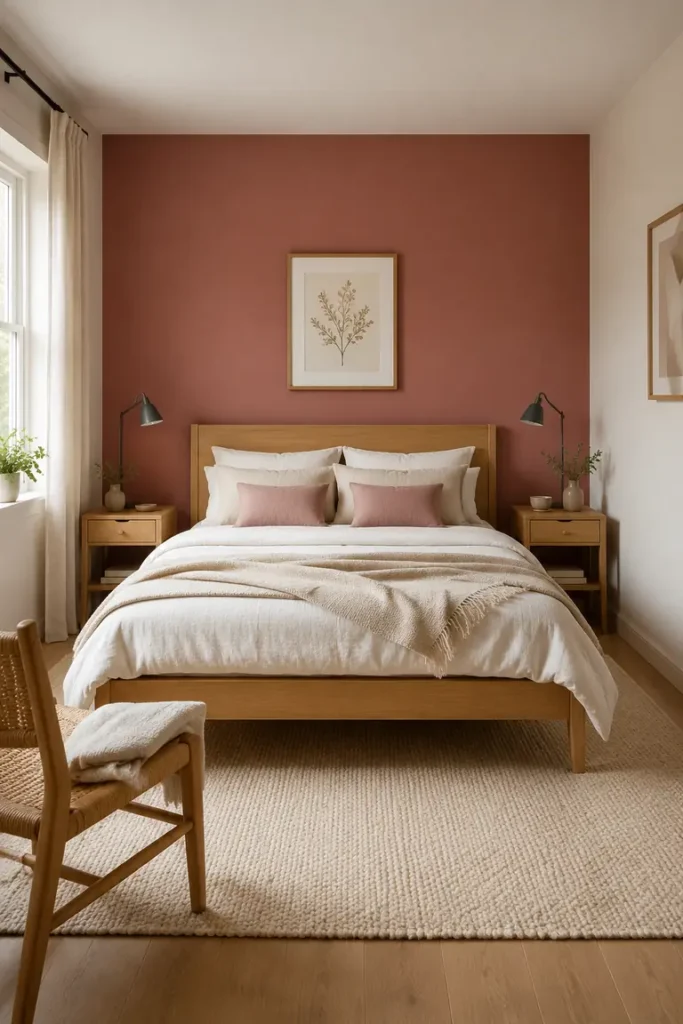
A single rose wall gives the bed a clear backdrop without surrounding the whole room in pink. It is a safer choice when the room is small, dark, or already has colorful furniture.
Paint the wall that holds the headboard, then keep the remaining walls warm cream or soft white. Place the bed near the center so the pink area frames both sides evenly. Light oak bedside tables will soften the contrast, while dark lamps can give the arrangement a cleaner outline.
Repeat the wall color through only one or two small accents. Too many matching pink pieces can weaken the impact of the feature wall.
3. Add Rose Pink Wall Molding for Gentle Depth
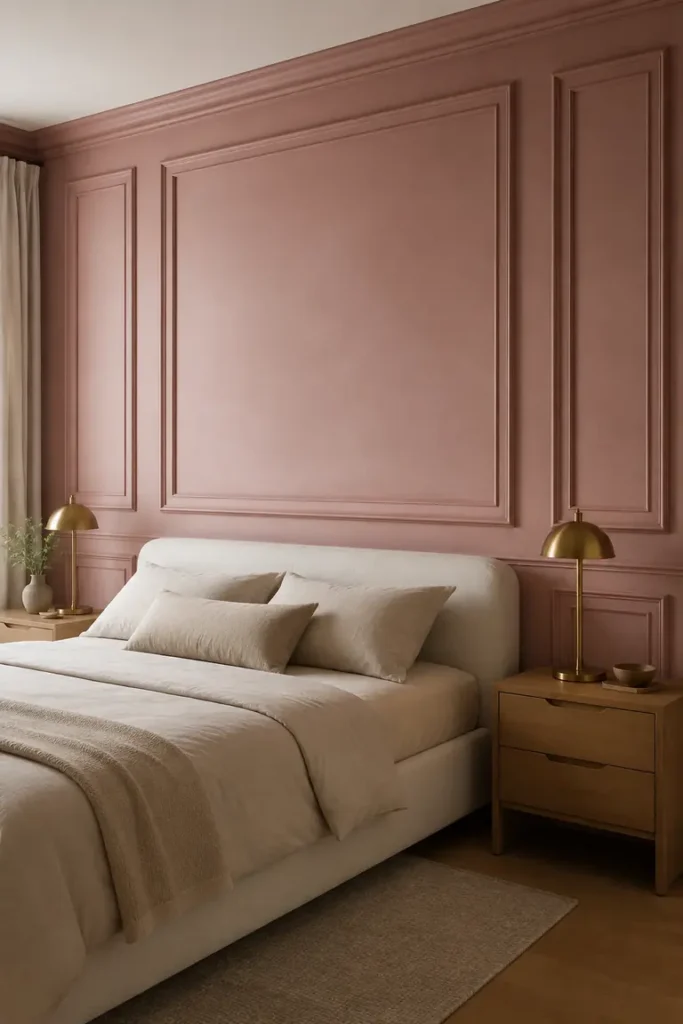
Plain pink walls can sometimes look unfinished, especially behind a simple bed. Narrow molding creates shadows and structure without needing large artwork.
A balanced arrangement is easier to achieve with three steps:
- Mark one wide central panel behind the headboard.
- Add narrower matching panels on both sides.
- Paint the molding and wall in the same rose shade.
Wood molding gives the cleanest result, while lightweight molding strips offer an easier option for renters. Keep the panel design simple because several small boxes can make a compact wall feel crowded.
The finished wall should frame the bed rather than compete with it.
4. Introduce a Soft Botanical Rose Wallpaper
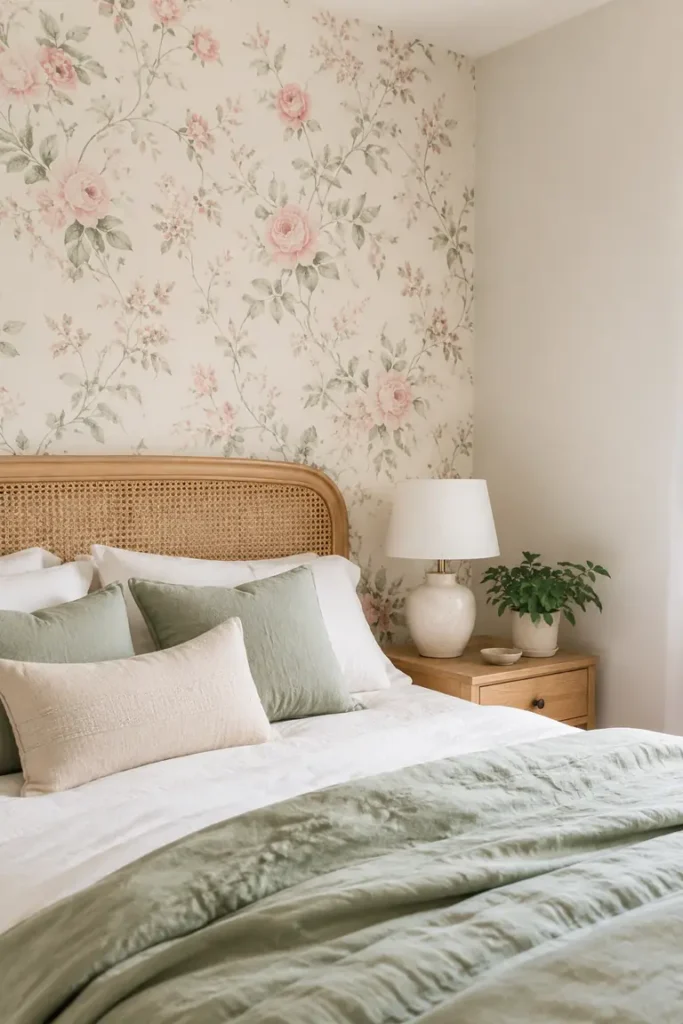
A rose wallpaper with fine leaves or flowers can give the bedroom more detail than solid paint. The best patterns have a soft background and enough open space between the shapes.
Use it behind the bed or inside a shallow alcove. A pale rose paper with sage, cream, or muted brown details can guide the rest of the room. Pull green from the leaves for a chair or cushion, then repeat cream through the bedding.
Large prints make a stronger statement in a spacious bedroom. Small rooms usually suit a lighter pattern with fewer colors.
Order a sample before buying full rolls. View it in morning and evening light because some pink backgrounds become much warmer under lamps.
Wallpaper Check
5. Let Blush Pink Bedding Carry the Main Color
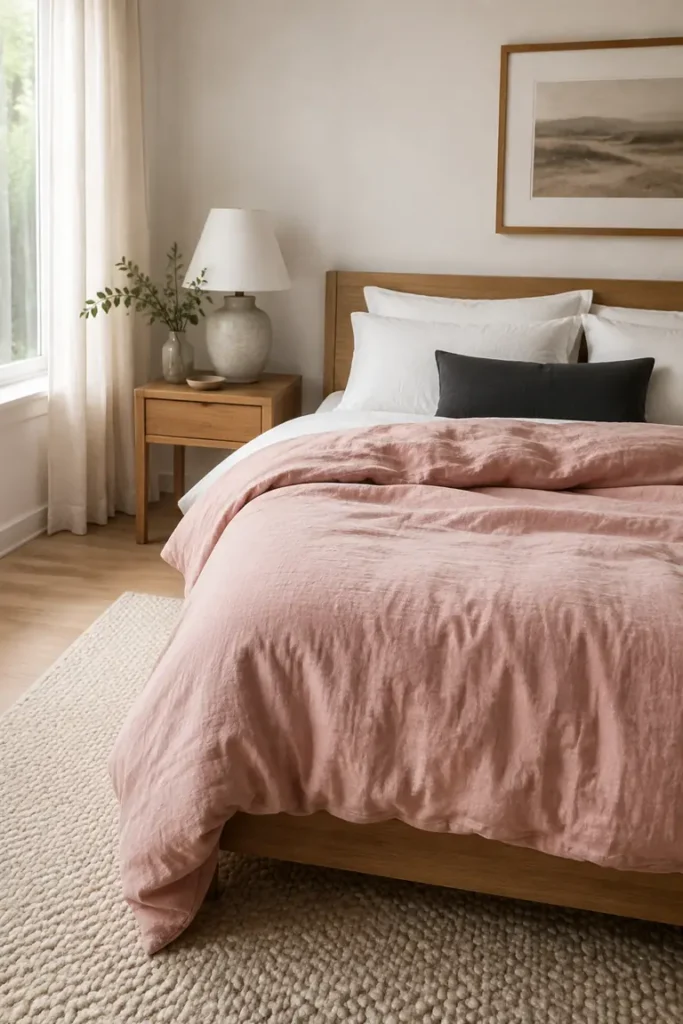
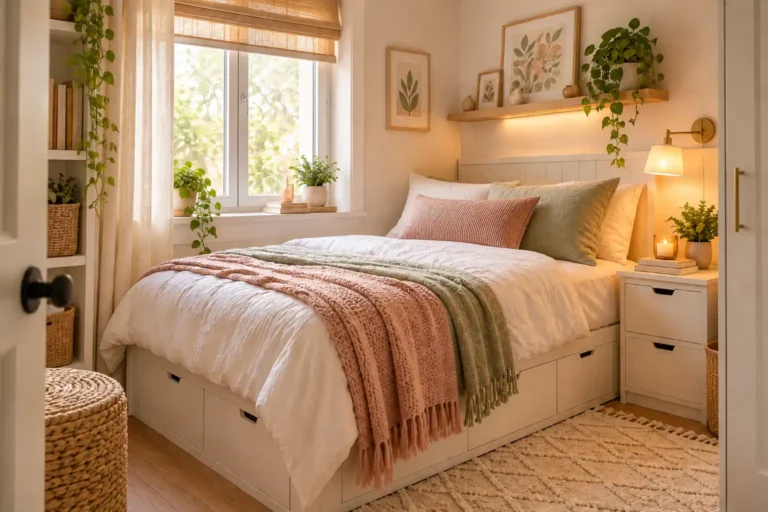
Blush bedding is useful when you want a noticeable color change without painting the room. It also lets you remove or replace the pink later with very little work.
For a light result: Place a blush coverlet over white sheets and keep the pillows mostly cream.
For a richer result: Choose a rose duvet, then add one charcoal, navy, or forest green cushion near the front.
Leave some white or neutral fabric visible around the pink layer. This break keeps a large rose duvet from looking like one solid block. Linen and washed cotton work especially well because their slight wrinkles give the color natural variation.
Quick Bedding Plan
6. Layer Blush, Dusty Rose, and Mauve Across the Bed
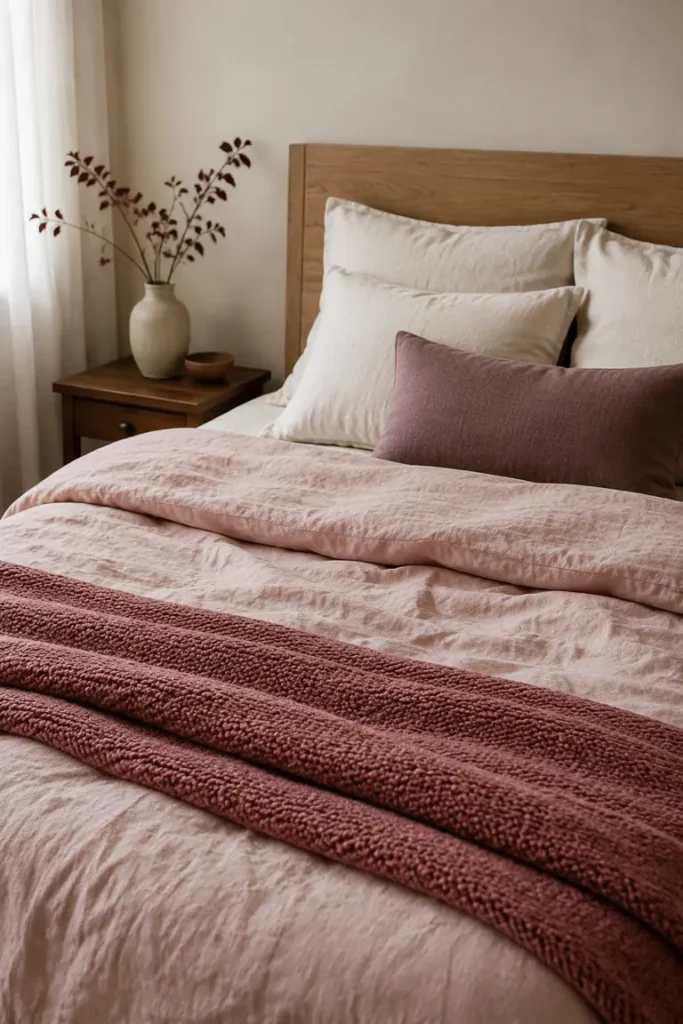
One pink shade can look flat when every fabric has the same finish. Using three related rose tones gives the bed depth while keeping the palette calm.
Let the palest color cover the largest area. Then reduce the size of each darker layer:
- Use pale blush for the duvet or quilt.
- Place a dusty rose throw across the lower third.
- Finish with one small mauve cushion near the front.
Change the fabric as the color changes. Smooth cotton, slub linen, and a chunky knit catch light differently, so the layers remain visible even when their colors are close.
Three rose tones are usually enough. More can make the bed feel crowded.
Tonal Layering Ratio
7. Keep Rose Pink Fresh With White and Warm Cream
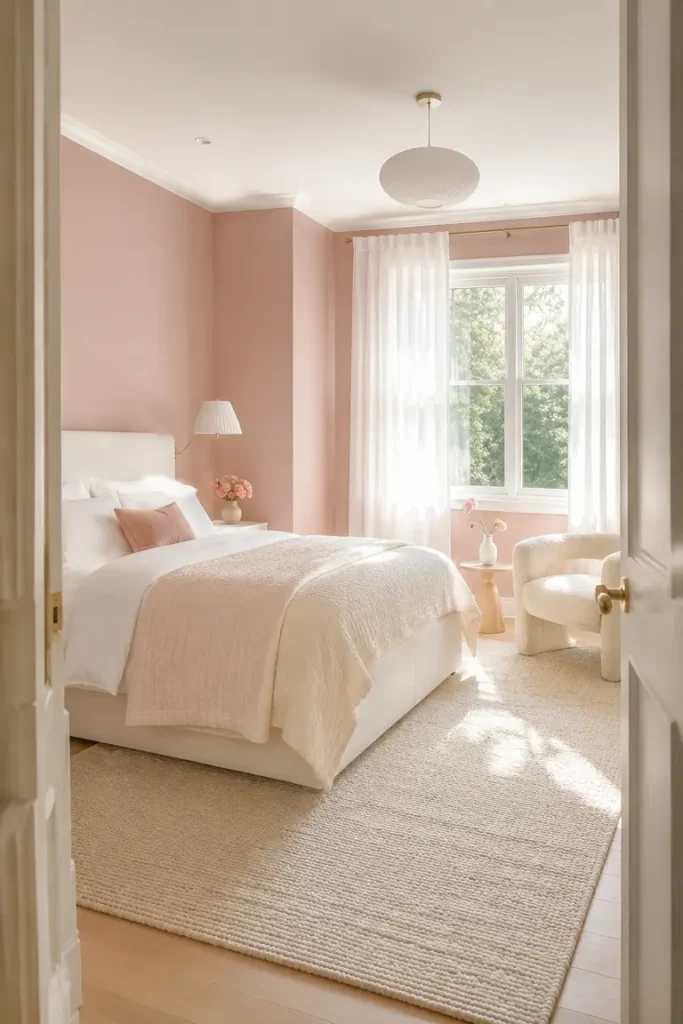
White gives rose pink a clean edge, while warm cream softens the contrast. Together, they stop the room from feeling overly sweet or visually heavy.
Use crisp white for sheets, ceilings, and window curtains. Bring warm cream through the rug, lampshades, upholstered chair, or a textured throw. This mix works especially well with dusty rose walls because the lighter surfaces reflect daylight back into the room.
Avoid bright blue white if the rose paint has brown or peach undertones. It may make the wall color appear dull. A warmer white will create a smoother connection.
Fresh Rose Palette
8. Pair Rose Pink Walls With Light Oak Furniture
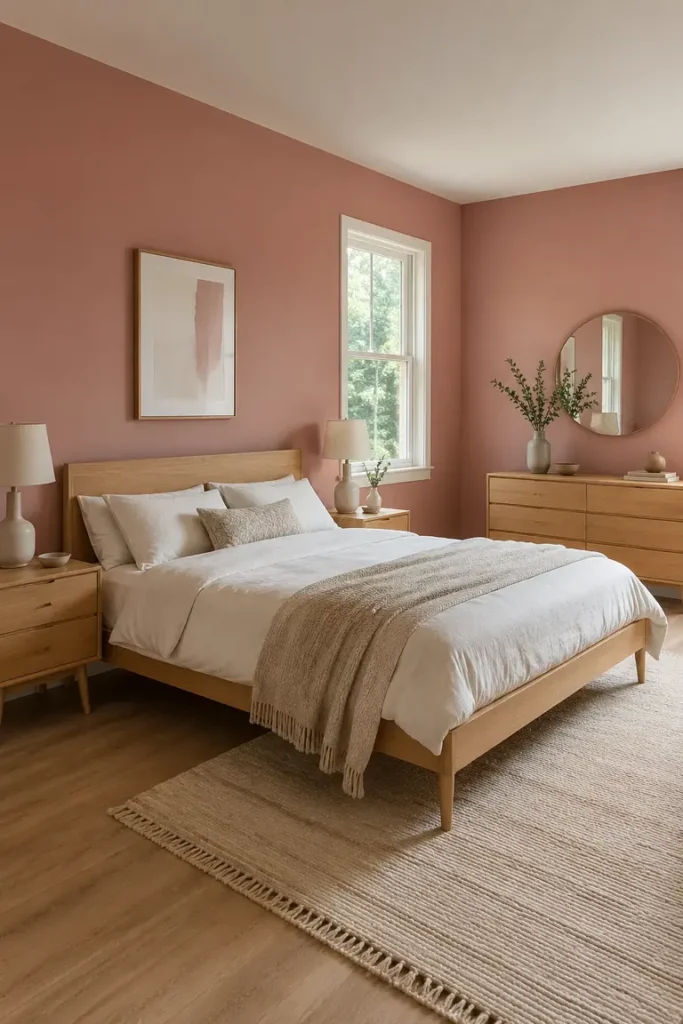
Choose pale or medium oak when you want rose walls to feel relaxed and natural. The golden grain connects well with pink shades that contain beige, brown, or peach.
A simple oak bed can become the visual center of the room without competing with the wall color. Match it with one or two oak bedside tables, but avoid filling every wall with the same wood.
For a smaller bedroom: Select furniture with raised legs so more floor remains visible.
For a larger bedroom: Add a low oak dresser or window bench to spread the wood around the room.
Keep the finish fairly matte. Very glossy orange wood can make dusty rose appear brighter than intended.
Wood Finish Guide
9. Ground Soft Pink With a Deep Navy Feature Wall
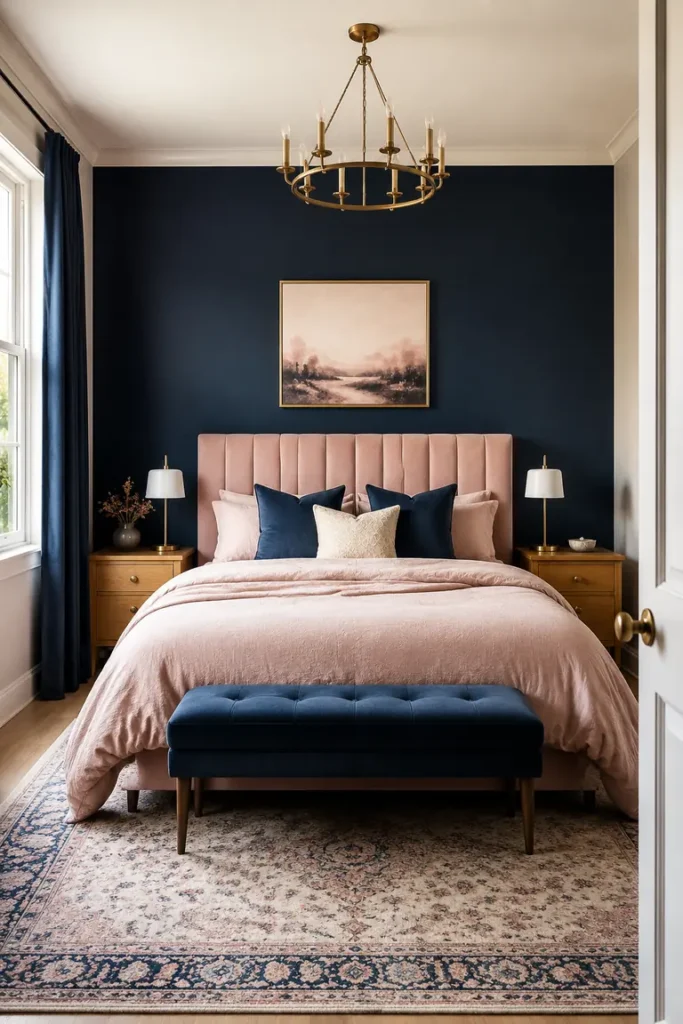
Deep navy gives pale pink enough weight to feel polished and balanced. Place the navy on the wall behind the bed, where it can frame blush bedding or a rose upholstered headboard.
Use more navy in a bright room with large windows. The daylight will keep the dark wall from closing in.
Use less navy in a narrow or shaded room. A navy headboard, bench, or pair of cushions can provide the same grounding effect without covering a full wall.
Repeat navy in two small places, such as the curtains and rug pattern. Keep the remaining furniture white or light oak so the color contrast stays clear.
Navy and Rose Balance
10. Mix Rose Pink With Forest Green and Living Plants
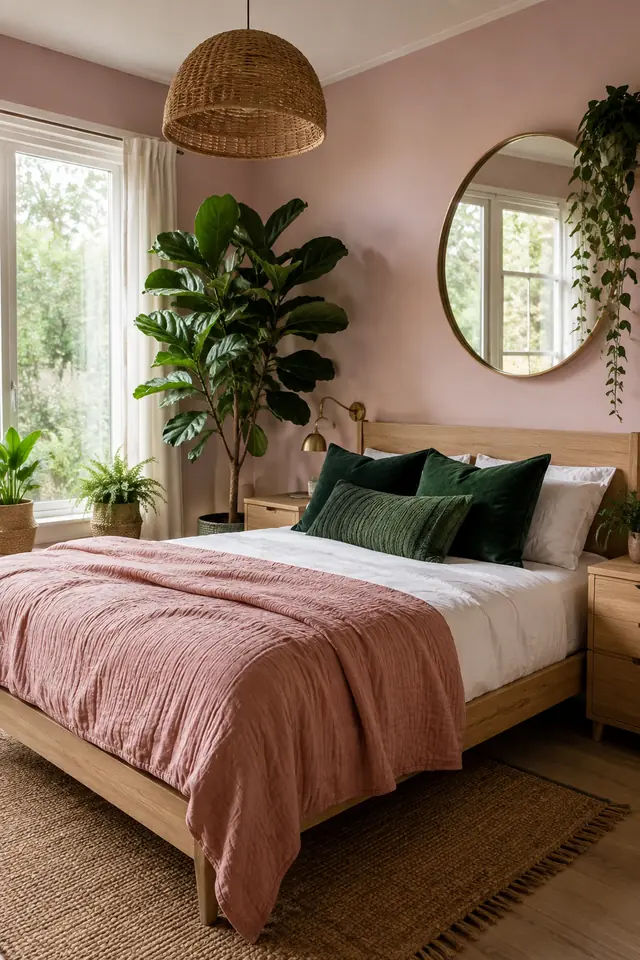
Rose walls can appear much more natural when surrounded by deep green. This pairing works because pink feels warm, while green gives the eye a cooler place to rest.
Build the combination in three parts:
- Place one tall plant near a bright window or empty corner.
- Add forest green cushions or a small chair near the bed.
- Repeat pink through the wall, blanket, or one ceramic pot.
Choose plants that suit the actual light in the room. A dark bedroom may need a plant that tolerates lower light, or a realistic artificial plant instead.
Leave space between larger plants and furniture. Crowding every corner with leaves can hide the clean color contrast you are trying to create.
Pink and Green in Three Steps
11. Give Rose Pink a Modern Edge With Matte Black Metal
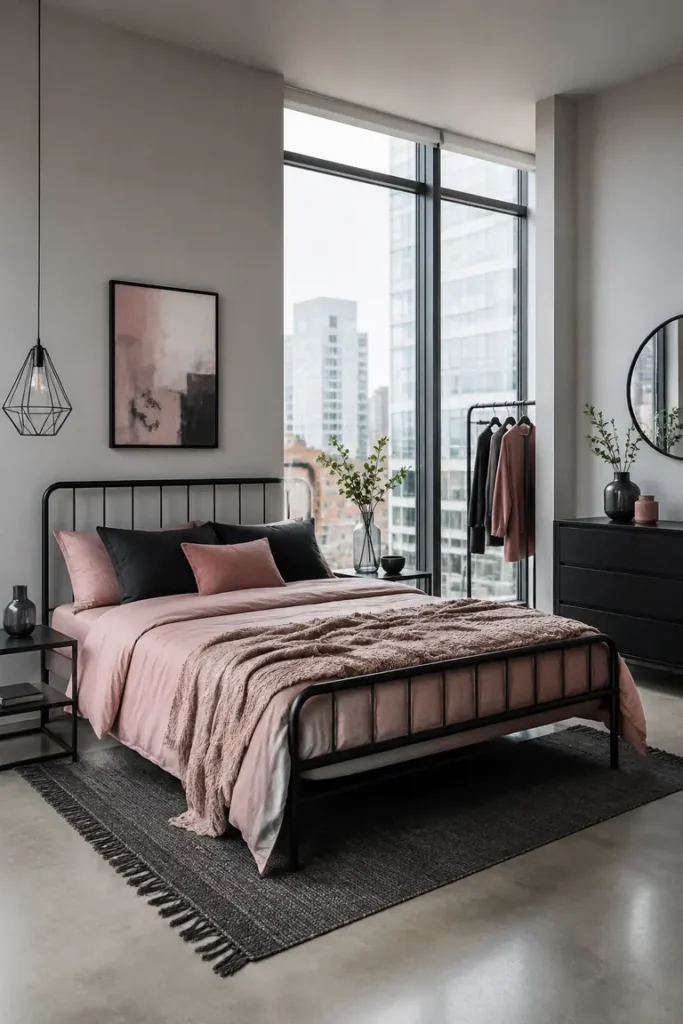
Rose pink can lean soft and traditional until black gives it a sharper outline.
Start with one main black piece, such as a slim metal bed frame. Repeat the finish through two smaller items, perhaps a pendant light and a round mirror frame. Spreading these dark points around the room creates balance without making the bedroom feel severe.
Open metal frames work better than bulky solid furniture because the pink wall remains visible through them. If the room begins to look too harsh, introduce light wood and cream fabric between the black elements.
Keep the black finish matte or softly textured. High shine can create distracting reflections beside a gentle rose palette.
Black Accent Formula
12. Add Small Brass Details for a Soft Evening Glow
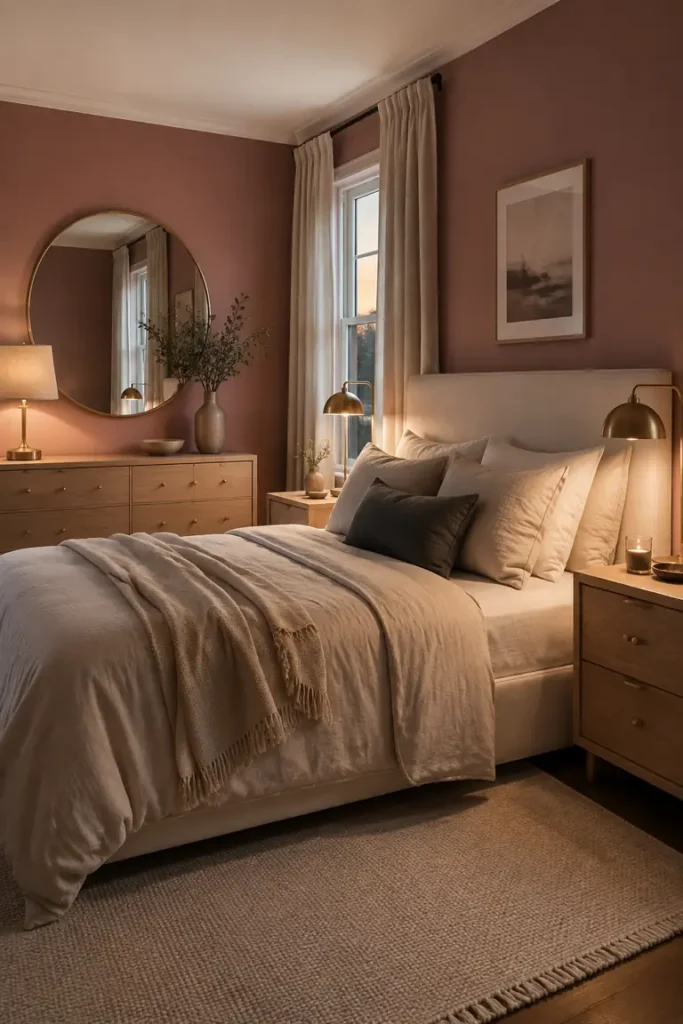
Brass picks up the warm side of rose pink, so the two colors feel naturally connected. It also adds a gentle shine without creating the strong contrast of black metal.
Choose aged or brushed brass for lamps, drawer handles, picture frames, or a slim mirror edge. Spread these pieces across the room instead of grouping them on one bedside table. Warm white bulbs will make both the brass and rose surfaces appear softer after sunset.
Limit the finish to a few small details. Too much bright brass can overpower a quiet pink palette.
Three Points of Brass
13. Calm the Pink Palette With Oatmeal Linen and Beige
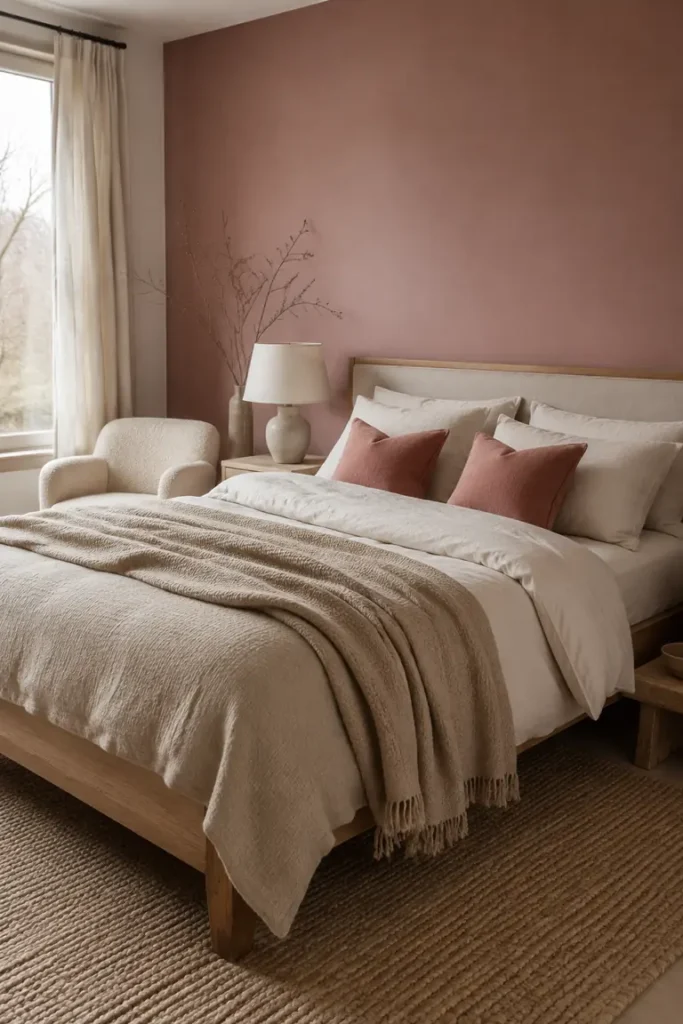
Oatmeal and beige reduce the sweetness of rose pink without making the bedroom feel cold. Their brown undertones are especially useful beside earthy pink walls and pale oak furniture.
Start large: Use an oatmeal duvet, upholstered chair, or woven rug.
Add softness: Place cream sheets or a light beige blanket between the rose and oatmeal pieces.
Keep pink visible: Repeat it through two cushions, a folded throw, or one section of the bedding.
Look for linen, cotton, wool, and other fabrics with visible texture. Flat beige fabric may appear dull, while natural fibers create small shadows that make the neutral layers easier to see.
Soft Neutral Layering Recipe
14. Bring in Jute, Rattan, and Other Woven Textures
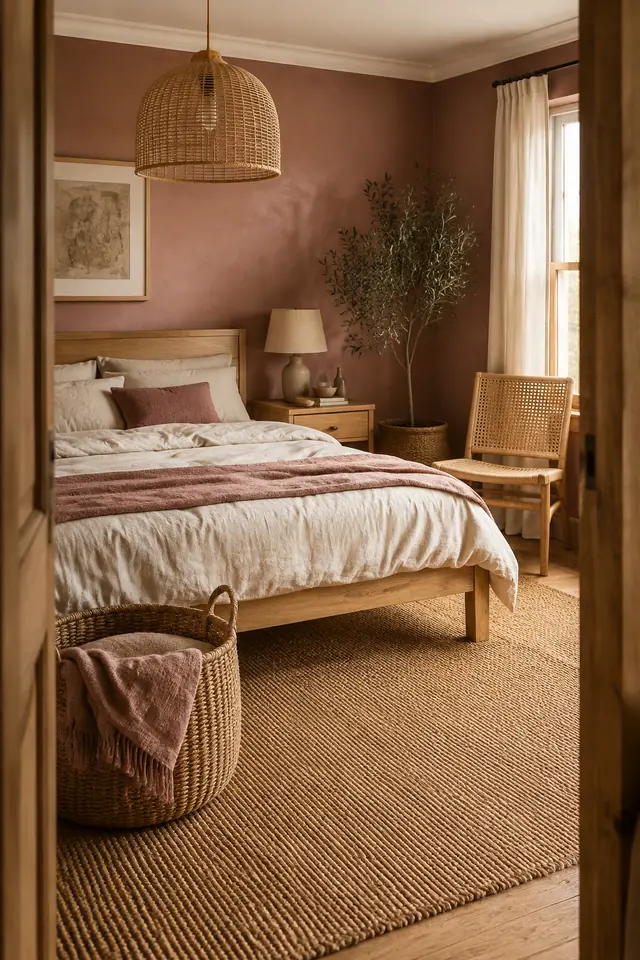
Rose pink becomes more relaxed when the room includes materials that look handmade and slightly uneven.
Start with one large woven surface, then add two smaller details. This gives the room texture without pushing it too far into a themed style.
- Place a jute or sisal rug beneath the lower part of the bed.
- Hang a rattan shade where it will cast soft patterns at night.
- Use one woven basket for blankets or extra cushions.
Choose a rug large enough to remain visible beside the bed. If jute feels rough under bare feet, place a smaller wool rug over it near the sleeping area.
Texture Checklist
- Underfoot: Jute, sisal, or woven wool rug
- Overhead: Rattan or cane light shade
- Storage: One firm basket with comfortable handles
Limit: Three woven pieces are usually enough.
15. Make a Blush Upholstered Headboard the Main Feature
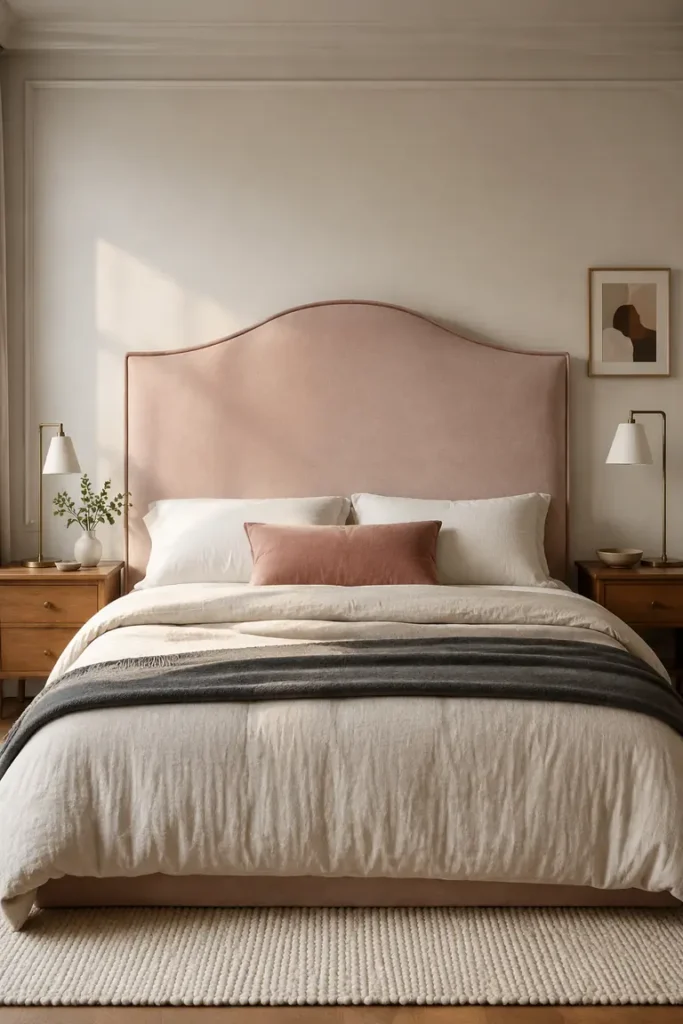
A blush headboard provides a clear dose of pink while leaving the walls open to other colors. It looks particularly strong against navy, warm white, soft gray, or muted green.
Choose a headboard tall enough to remain visible above the pillows. A plain rectangle suits a modern room, while a gentle curve feels softer. Deep button details create a more traditional result, but they can also collect dust and need more regular cleaning. For an easier surface, select smooth woven fabric with only light padding.
Match the headboard to one small bedding accent rather than the entire bed.
16. Frame the Bed With Rose Pink Curtains
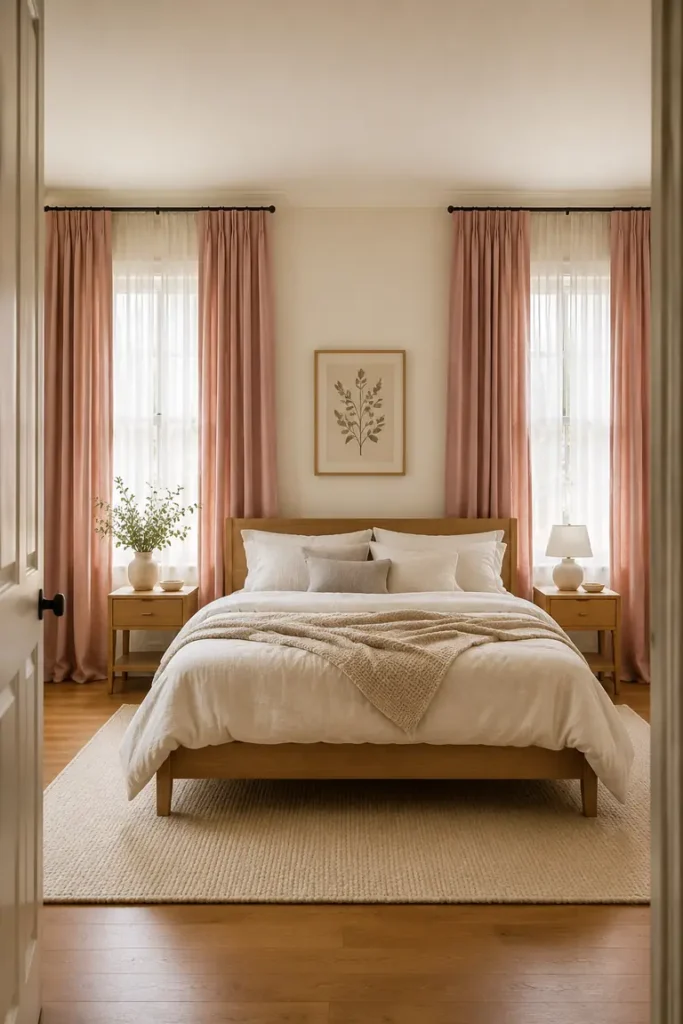
Hang rose curtains high and wide to make the window appear larger and give the bed a softer frame. This works especially well when the bed sits between two windows or directly beside one.
Use these proportions:
- Place the curtain rod several inches above the window frame.
- Extend it beyond both sides so open panels reveal more glass.
- Let the fabric end just above the floor.
Choose curtains slightly darker or lighter than the wall instead of searching for an exact match. White sheers behind the rose panels can provide privacy while still allowing daylight into the room.
Keep hanging fabric clear of heaters, vents, and damp window surfaces.
17. Anchor the Bedroom With a Faded Rose Patterned Rug
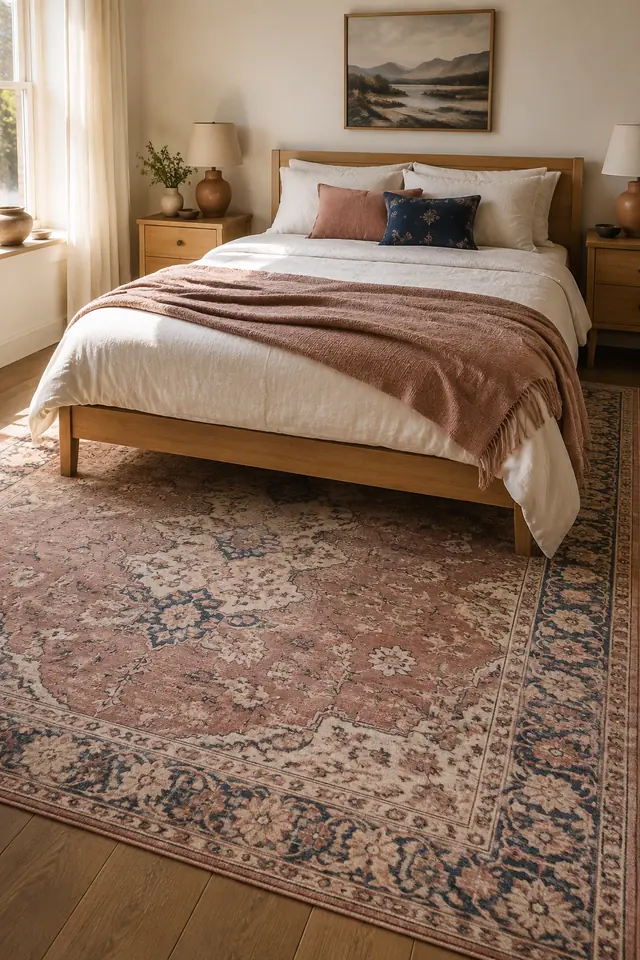
A faded patterned rug can connect rose walls, neutral bedding, and darker accents without adding another solid block of pink. Look for a design that mixes muted rose with cream, beige, navy, or charcoal.
Place the rug beneath the lower part of the bed so it remains visible at the foot and along both sides. If a large rug is beyond the budget, use two matching runners beside the bed.
Choose a low pile surface when easy cleaning matters. Very pale rugs may show marks quickly, while a softly distressed pattern can hide everyday wear.
18. Hang Botanical Prints Above the Headboard
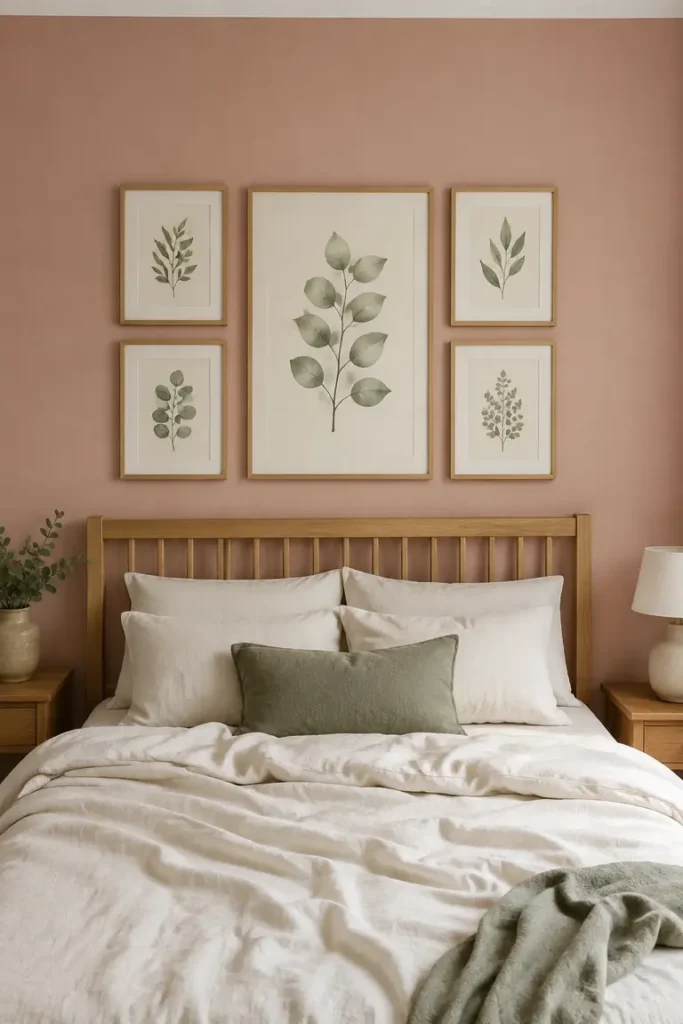
Botanical prints connect rose pink with the green plants and natural wood often used in this style of bedroom. They also fill the wall without needing one large piece of art.
Frame choice: Select light oak for a gentle result or slim black frames for sharper contrast.
Arrangement: Center the full group over the bed and keep the spaces between frames even.
Color: Choose prints with cream backgrounds, muted leaves, and only small areas of pink.
A group of three larger prints feels calm and ordered. Five or seven smaller pieces create a more relaxed gallery wall. Keep the total arrangement narrower than the headboard so it does not look top heavy.
19. Use Abstract Art to Connect Pink With Darker Accents
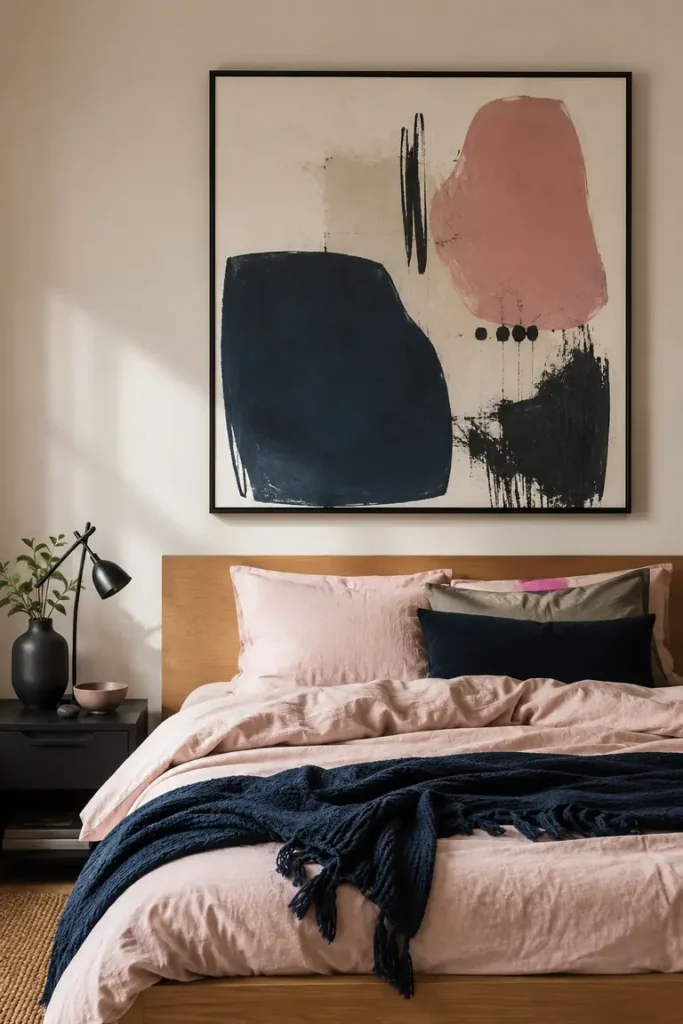
A modern rose bedroom can feel disconnected when the bedding is pink but the furniture is navy or black. Abstract art provides one place where those colors can meet.
Choose a piece with a cream background, one dark shape, and a smaller area of dusty rose. It does not need to match the bedding exactly. Slightly different shades make the room feel collected rather than copied. One large piece works well above a wide headboard, while two related prints suit a narrow bed.
Before buying, ask which existing colors the art will repeat. If it introduces several new shades, it may make the palette harder to control.
20. Create a Rose Pink Reading Corner Beside the Window
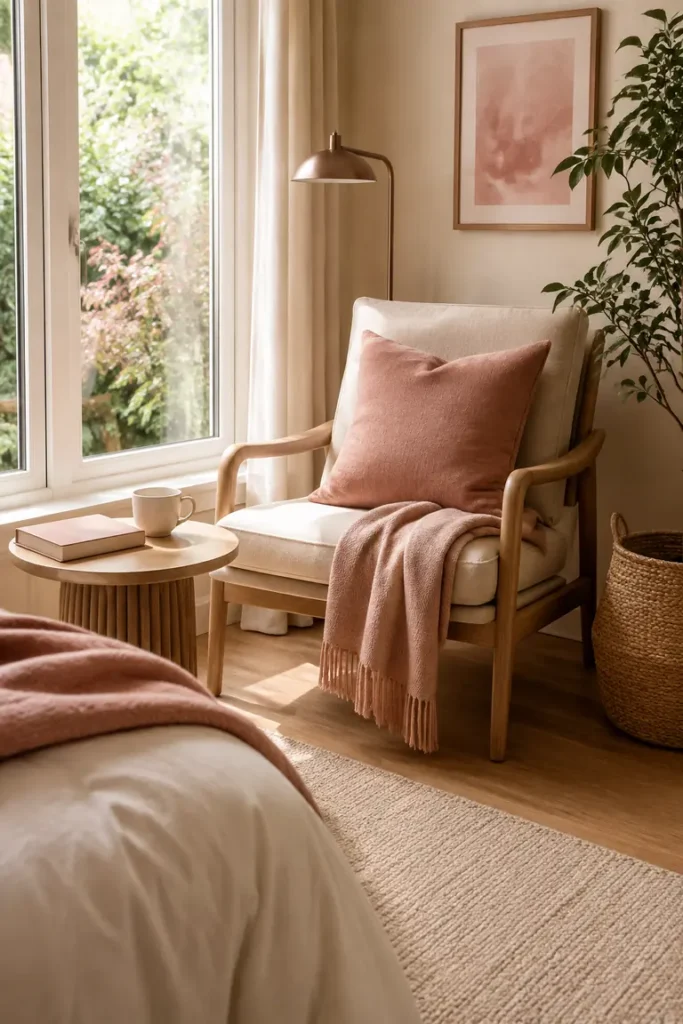
An unused window corner can carry the pink theme without adding more color around the bed.
Keep the arrangement compact and useful:
- Choose a light oak or rattan chair with comfortable arms.
- Add one rose cushion or a folded blush throw.
- Place a small table and reading lamp within easy reach.
A tall plant can fill the space between the chair and window, but it should not block the daylight. Leave a clear path from the doorway to the bed.
In a very small room, replace the chair with a narrow window bench. Storage beneath the seat can hold spare bedding or books.
21. Place a Rose Pink Bench at the Foot of the Bed
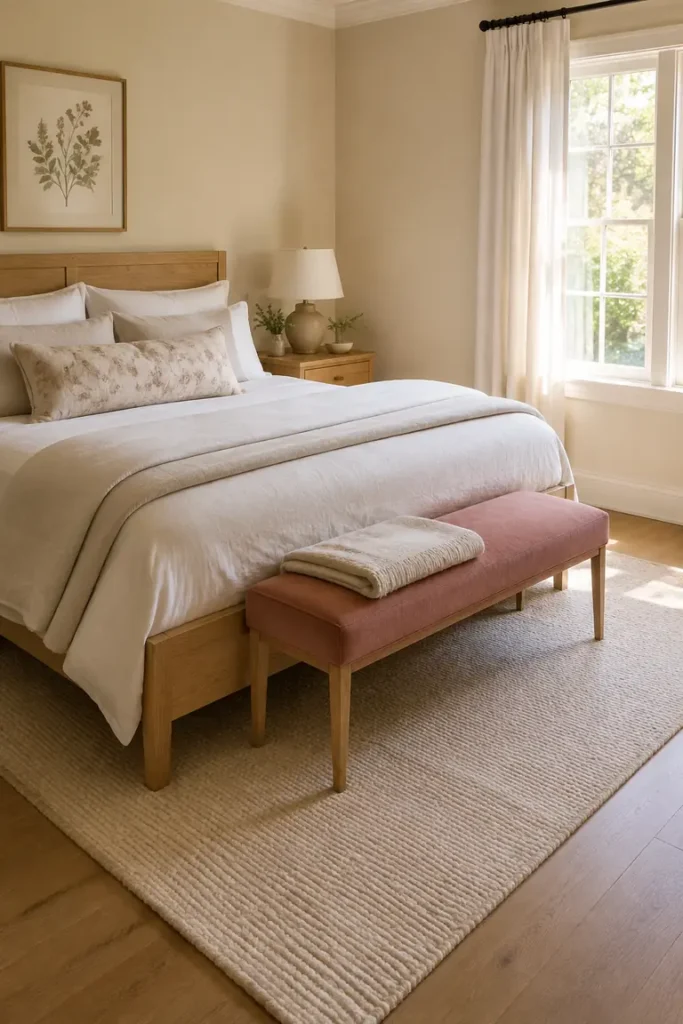
A rose bench repeats the bedroom color at a lower level, which helps balance pink walls, curtains, or a tall headboard. It also provides a practical place to sit, fold a blanket, or set down cushions at night.
Choose a bench that is narrower than the mattress and no taller than its top. Slim wooden legs keep the piece light, while a storage ottoman offers more function in a larger room.
Check the walking path before buying. A bench should not force you to squeeze between the bed and the opposite wall. If space is tight, use a small upholstered stool near one corner instead.
22. Style a Small or Rental Bedroom With Rose Accessories
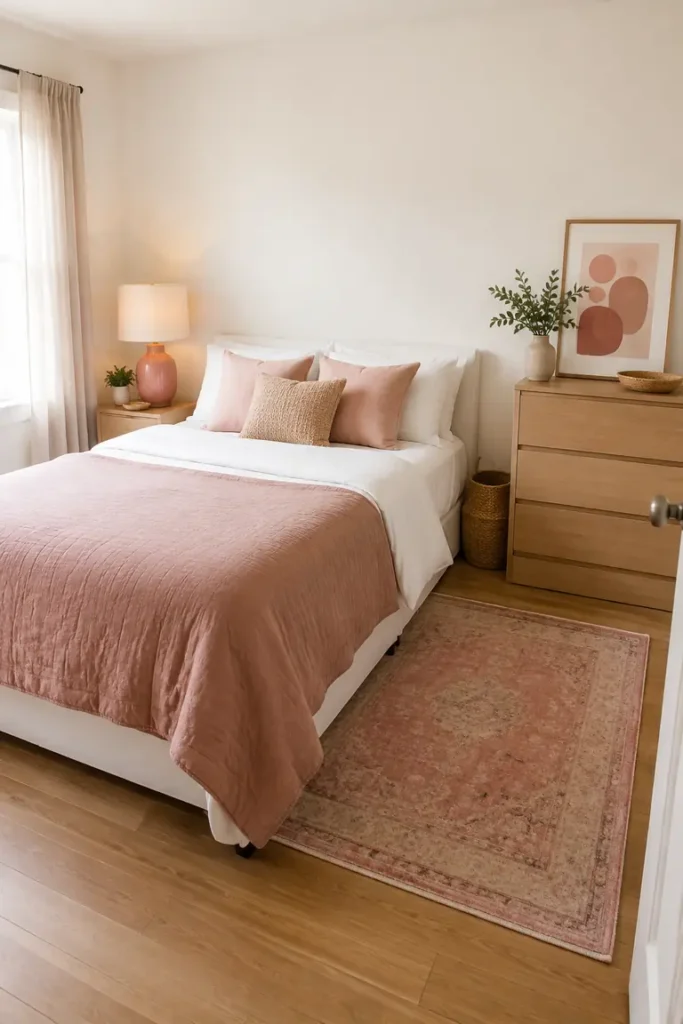
Paint is not necessary for making rose pink noticeable. One medium or large fabric item can establish the color, while smaller pieces repeat it around the room.
Choose items that can move with you:
- Spread a dusty rose coverlet across the bed.
- Place two blush cushions against neutral pillows.
- Add a small rose rug, lamp, vase, or framed print.
Keep the walls and larger furniture neutral so the room remains open. If several accessories are exactly the same pink, the result can look like a matching set. Mix pale blush with one deeper rose detail instead.
Store unused cushion covers and throws together. This makes it easy to change the palette without replacing the main furniture.
No Paint Rose Plan
23. Choose Layered Lighting That Makes Rose Pink Feel Warm
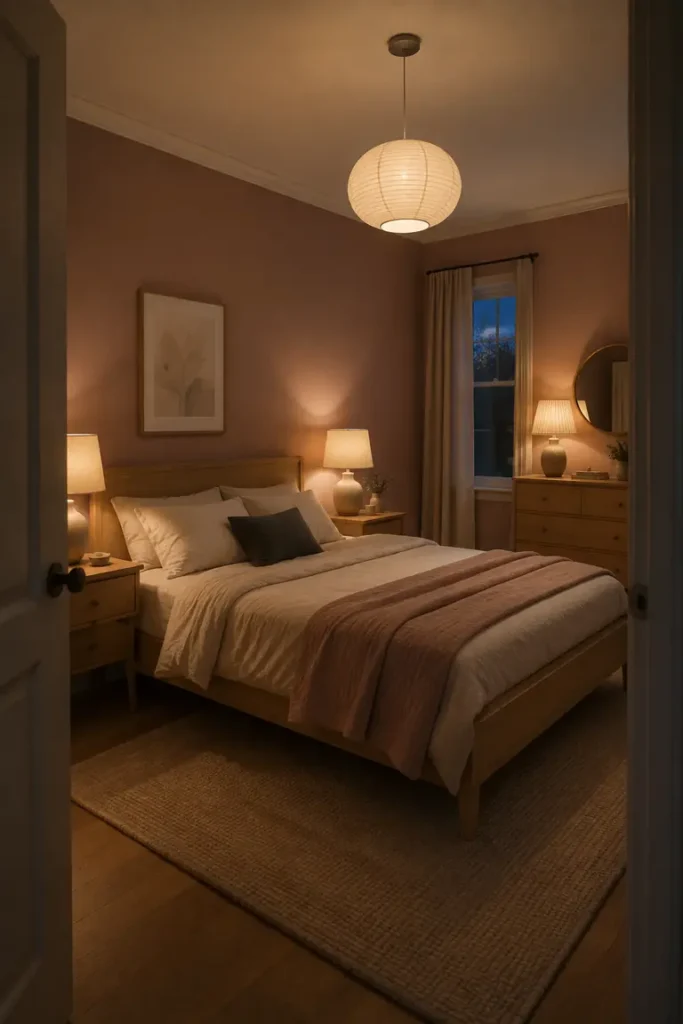
Rose pink can appear soft in daylight but dull or orange under the wrong bulb. Good lighting should reveal the color without washing it out.
Begin with a ceiling light for the whole room. Add matching bedside lamps for reading, then place a smaller lamp on the dresser or in a dark corner. Spreading light across different heights prevents harsh shadows and makes the pink surfaces feel richer.
Choose warm white bulbs and cream fabric shades for a gentle evening result. Use the same light color throughout the bedroom so one rose wall does not appear different from another.
Check the paint and fabrics with the lights turned on before making final purchases.
Three Levels of Light
Final check: Keep the bulb color consistent across all three levels.
Final Thoughts
Rose pink can cover the walls, lead the bedding, or appear through a few movable accents. The right amount depends on the room size, natural light, and furniture you already own. If you want to see rose beside other pink shades, these pink bedroom ideas for adults give you a wider set of combinations.
Begin with one change that has a clear purpose. Paint the headboard wall, add a blush coverlet, or pair two rose cushions with neutral bedding. Once that piece feels balanced, repeat the color in one smaller place.
Save these ideas for your next bedroom update, then build the palette slowly instead of buying everything at once.
Frequently Asked Questions
What colors go well with rose pink?
Rose pink pairs well with warm white, cream, beige, light oak, forest green, navy, charcoal, and matte black. Choose two supporting colors so the bedroom remains balanced.
Will rose pink make a small room look smaller?
No, not automatically. Pale blush can reflect light and feel open beside white ceilings and cream bedding. Dark dusty rose creates a more enclosed feeling, so use it on one wall when daylight is limited.
How can pink feel more grown up?
Choose a muted rose with brown, beige, or gray undertones. Pair it with simple furniture, natural fabrics, dark accents, and clean artwork. Give every color a clear purpose.
Can renters use rose pink without painting?
Yes. Bedding, curtains, rugs, cushions, lamps, artwork, and small furniture can introduce rose pink without changing the walls. Begin with one larger fabric piece and repeat the color through two smaller accents.