16 Beautiful Drop Zone Ideas That Beat Clutter
Shoes by the door, bags on the floor, and keys that always go missing can make an entryway feel messy. A well-planned drop zone gives each of these everyday items a clear home.
These drop zone ideas include family cubbies, storage benches, wall hooks, hidden cabinets, and small command centers. Whether you have a wide hallway or a tiny corner, you can create a setup that keeps your home tidy and makes busy mornings easier.
1. Build a Family Drop Zone Wall
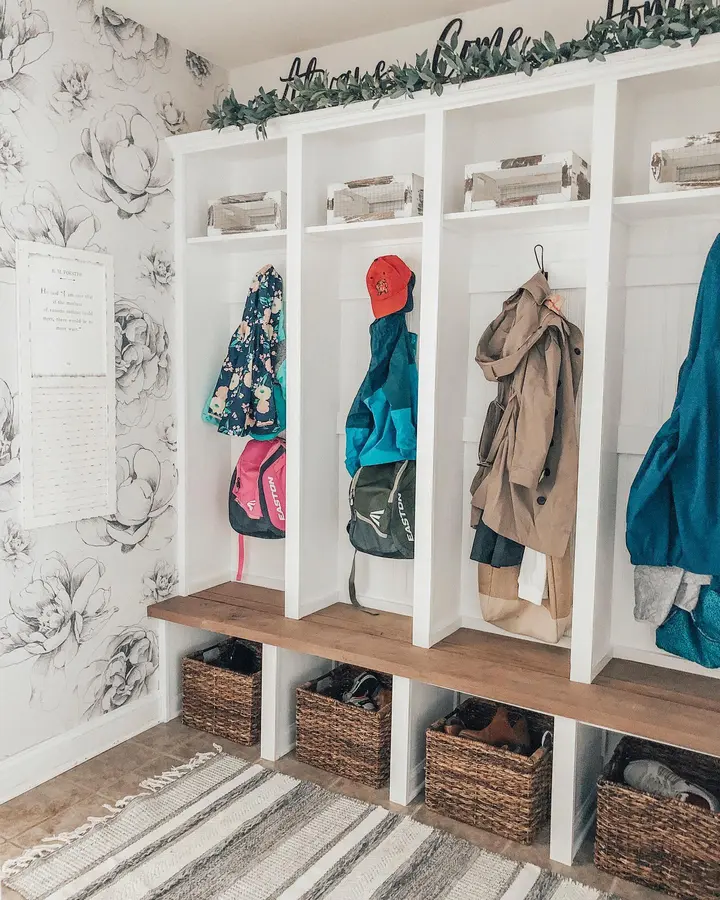
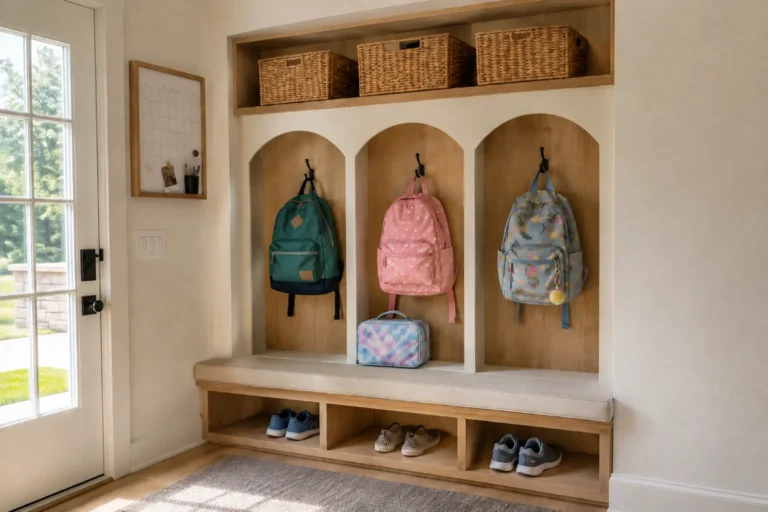
Shared entryways stay tidier when each person has a clear place for daily gear. Tall white cubbies separate coats, hats, and backpacks, while the wooden bench gives everyone a spot to change shoes.
Hooks keep bags off the seat, woven baskets hide shoes below, and upper boxes hold items used less often. Give each family member one cubby. This makes morning cleanup faster and stops everyone’s belongings from collecting in the same corner.
2. Mix Hidden Cabinets With Open Hooks
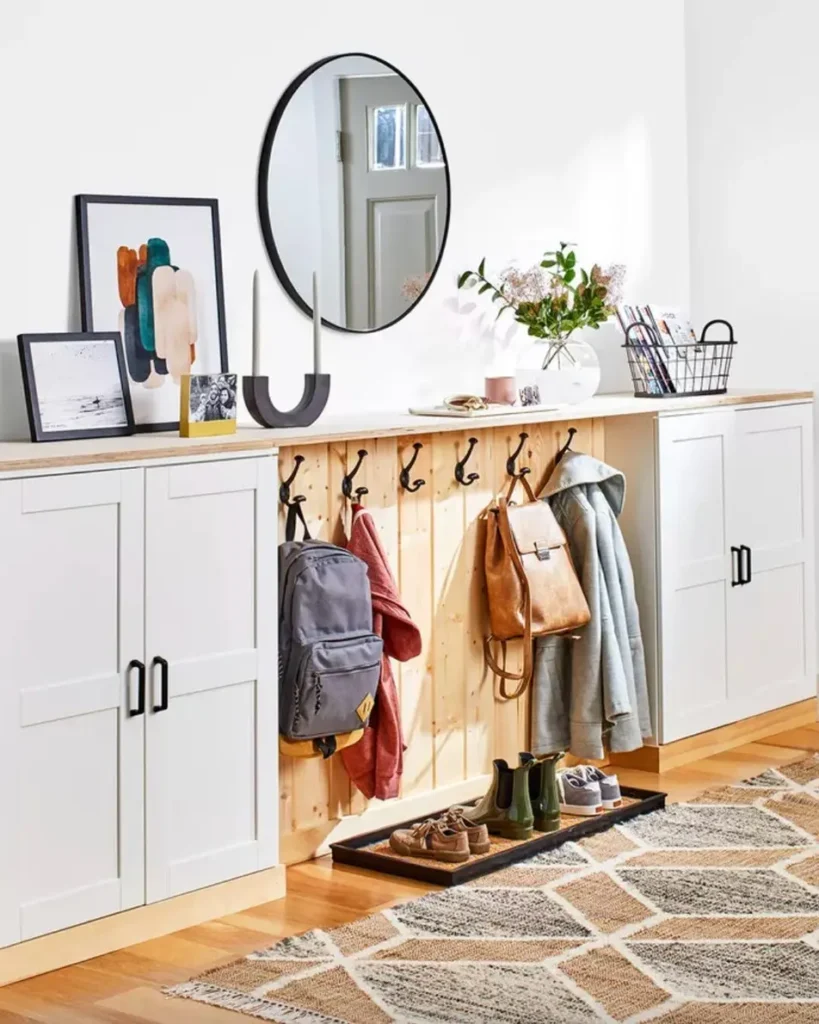
Not every entryway item needs to stay on display. A warm wooden hook panel placed between two white cabinets provides quick access and hidden storage in one drop zone.
Hang daily coats and bags in the open center. Place seasonal gear, spare shoes, and cleaning supplies inside the cabinets. A shallow floor tray can hold wet or muddy footwear. Finish the wall with a round mirror and a few framed pieces without taking away useful storage space.
3. Create a Family Command Center
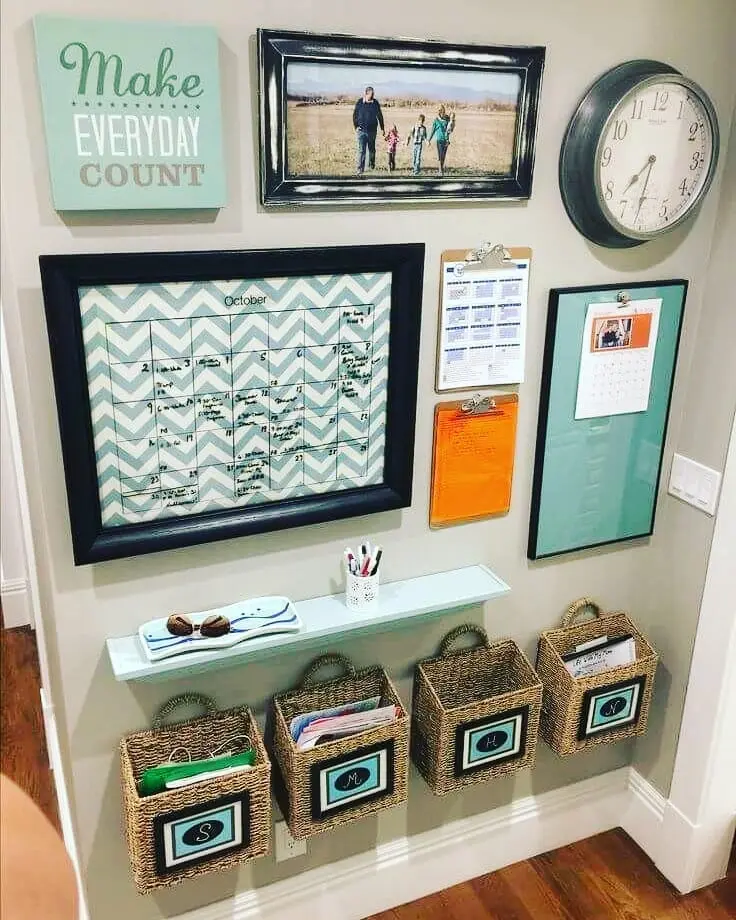
Busy homes need a landing place for school notes, forms, and mail. This narrow command center uses an empty wall without adding bulky furniture.
A calendar keeps family plans easy to check. Clipboards hold papers that need attention, while labeled baskets give each person a separate inbox. Keep pens on the slim shelf so notes and dates can be added right away. Clear old papers from the baskets once a week to prevent a messy pile.
4. Hide Sports Gear in Tall Cabinets
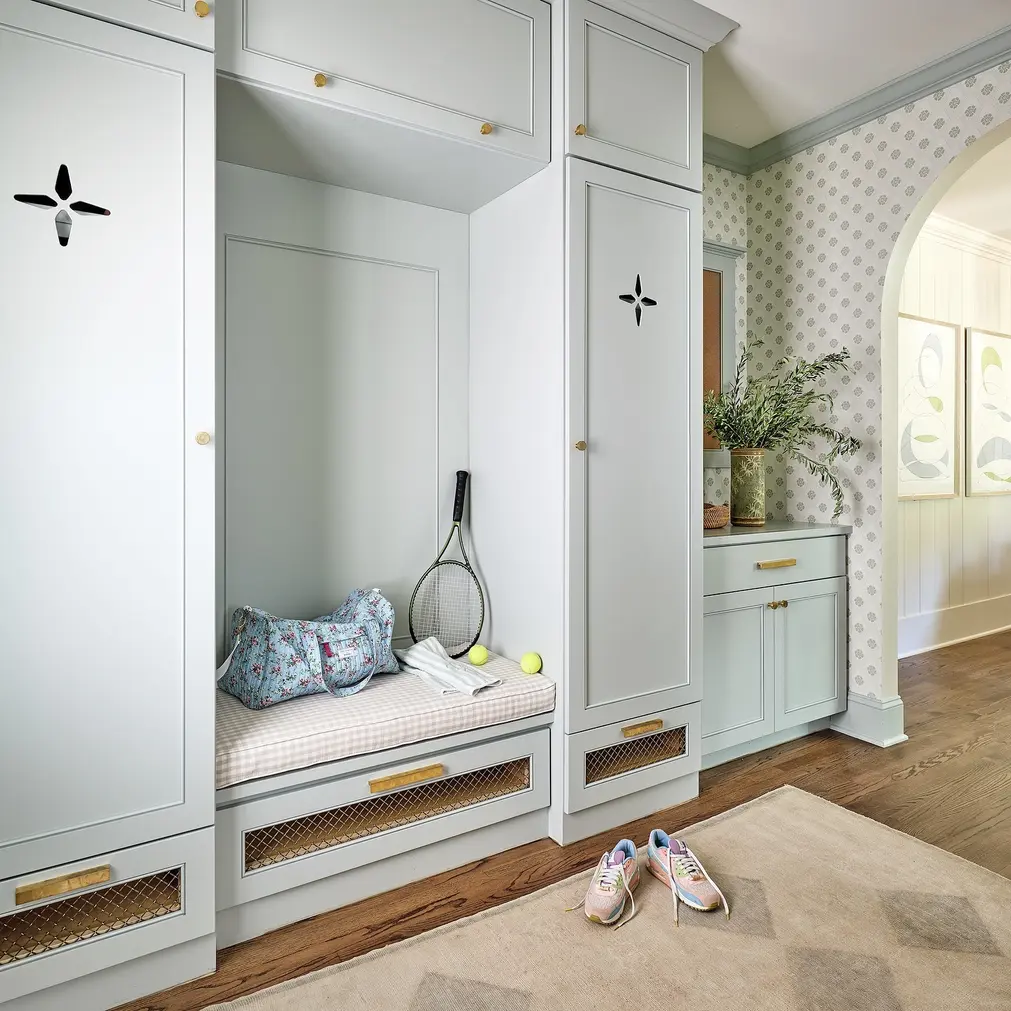
Sports equipment can take over an entryway fast. Floor-to-ceiling cabinets hide large bags, jackets, rackets, and extra shoes behind slim doors. The open center seat leaves enough room for packing a bag or changing footwear.
Low mesh-front drawers allow air to move around stored shoes and gear. Smaller upper cabinets can hold items used only on weekends. Add a washable bench cushion, then leave only the bag needed that day within sight.
5. Blend Closed Lockers Into the Wall
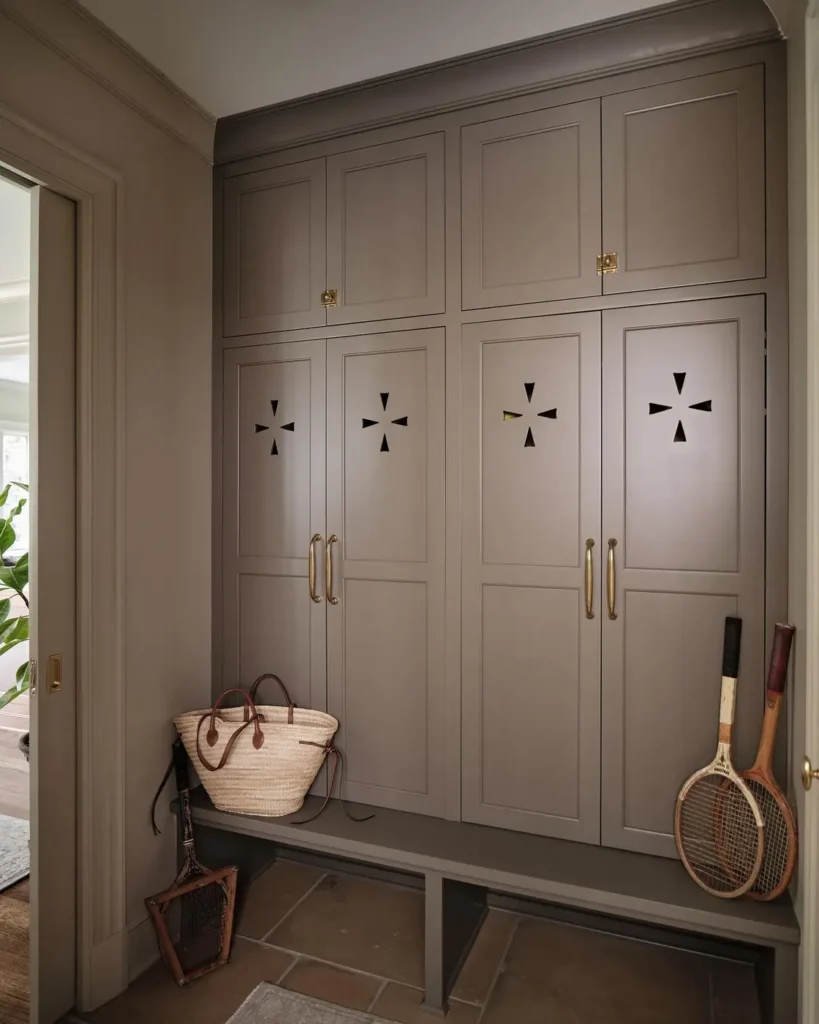
Open cubbies make grabbing things easy, but they can look busy when bags and coats pile up. Deep taupe lockers offer a calmer choice. Large doors hide bulky gear, while upper cupboards use the space near the ceiling.
Small cutouts provide airflow and break up the solid cabinet fronts. A bench runs below for bags and quick shoe changes. Painting the doors, frame, and seat the same color helps the large storage unit feel like part of the wall.
6. Try a Floating Kitchen Drop Zone
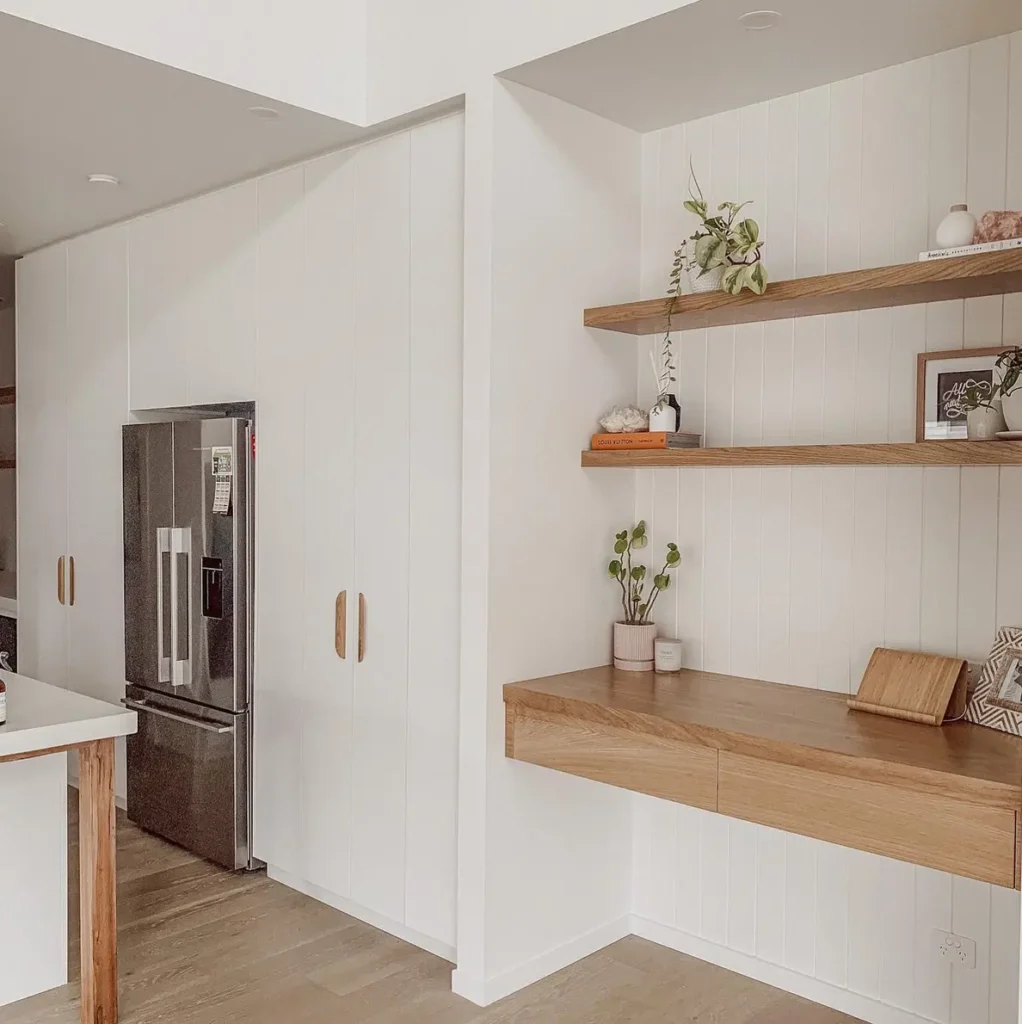
A floating drawer unit can turn a small kitchen wall into a useful drop zone without filling the floor. Place keys, a phone, or today’s mail on the wooden surface.
Use the drawers to hide chargers, pens, receipts, and other small items. The shelves above can display light decor while keeping the useful area below clear. Leave most of the surface open because too many objects can quickly turn it into another cluttered kitchen counter.
7. Give Everyone a Tall Cubby
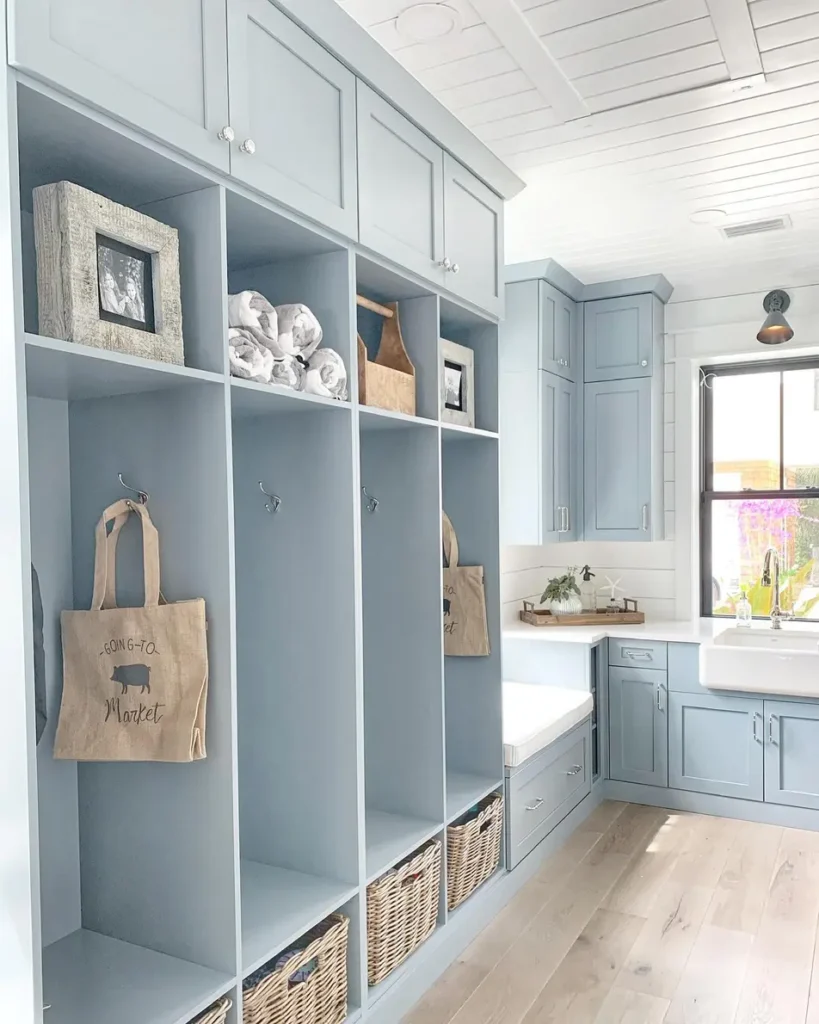
Instead of placing all coats and bags on one crowded rack, divide the drop zone into tall personal sections. Each family member gets a hook for daily items and a basket below for shoes, sports gear, or outdoor toys.
Rolled towels fit neatly on the upper shelves, while closed cupboards hide supplies that are not needed every day. The soft blue finish keeps this large storage wall from feeling too heavy. Add name labels if family members often mix up their belongings.
8. Stretch Storage Along the Hallway
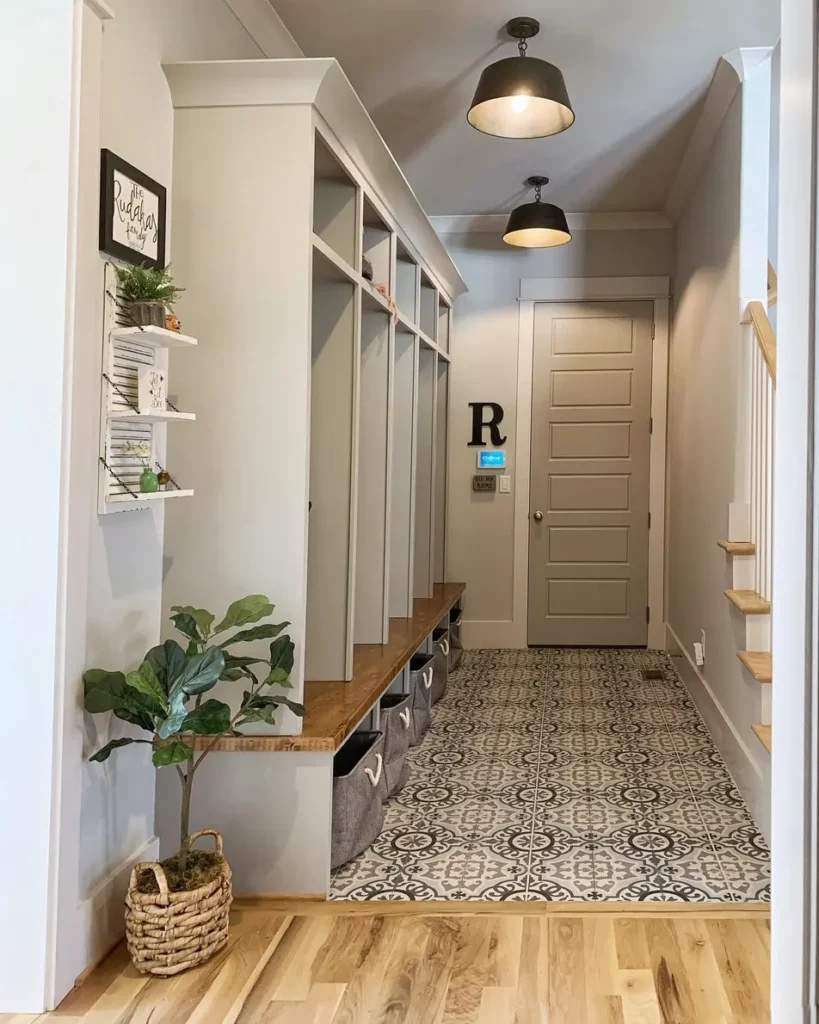
A long hallway can hold a full drop zone without blocking the path. Built-in cubbies line one wall, while the narrow wooden bench offers plenty of room for sitting and setting down bags.
Fabric bins below the seat hide shoes and loose gear. Open sections above give coats and backpacks their own hanging spots. A small wall area at the far end can hold keys or reminders. Keep the opposite wall clear so everyone can walk through with ease.
9. Tuck Shoes Into Bench Drawers
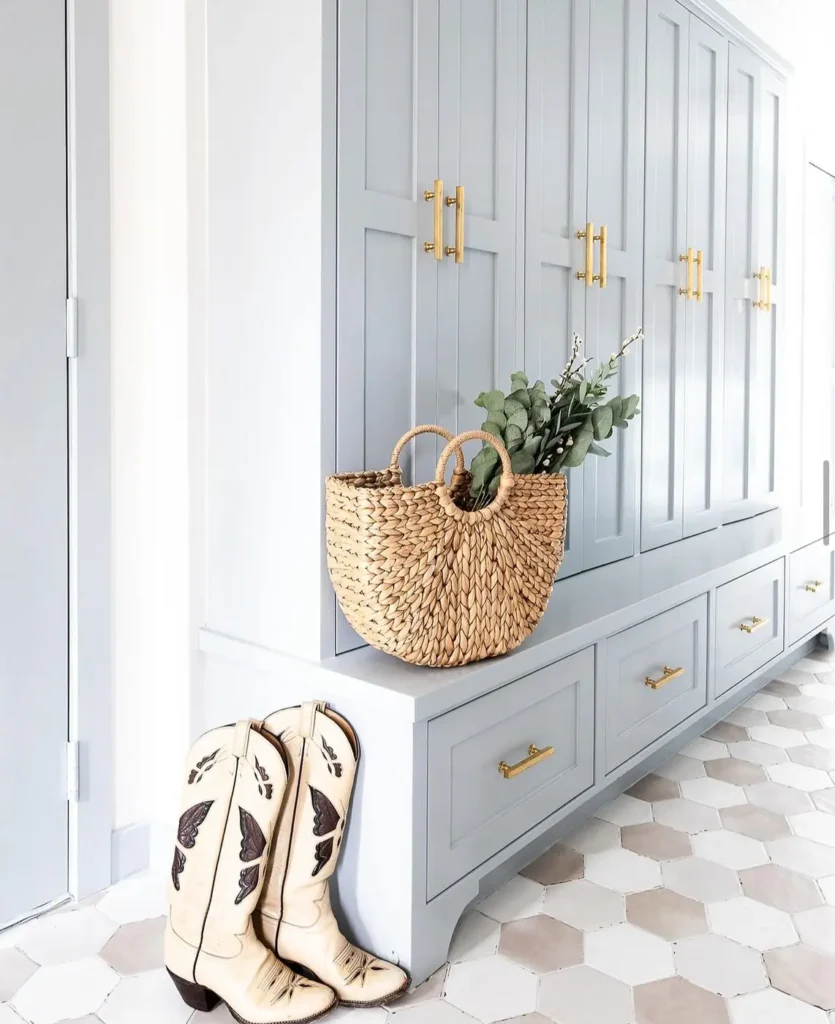
Wide drawers beneath the drop-zone bench give shoes a hidden home. Unlike open baskets, these drawers keep dust, laces, and worn footwear out of view. Tall cabinets above can store coats, hats, and bags without making the entry look crowded.
The pale blue-gray paint keeps the large unit feeling light, while brass handles add warmth. Divide the drawers by person or shoe type. Leave the bench mostly clear so it remains useful for sitting and unloading bags.
10. Wrap the Drop Zone in Green
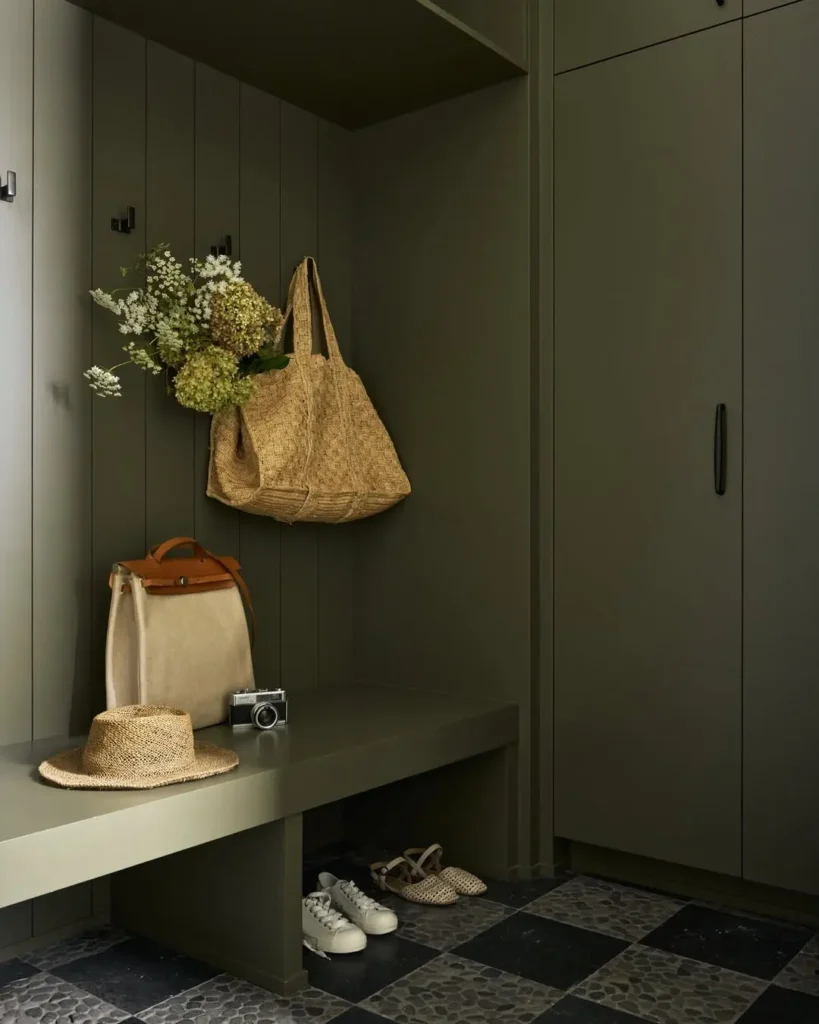
Painting the walls, cabinets, hooks, and bench the same deep green creates a bold drop zone. It also helps the large storage pieces blend together instead of looking like separate units.
Tall cupboards hide coats and household supplies. The open middle section keeps everyday bags easy to reach, while the long bench provides space for changing shoes. Since dark colors can make a small area feel dim, use strong lighting and pale accessories to add contrast.
11. Small Nook, Plenty of Storage
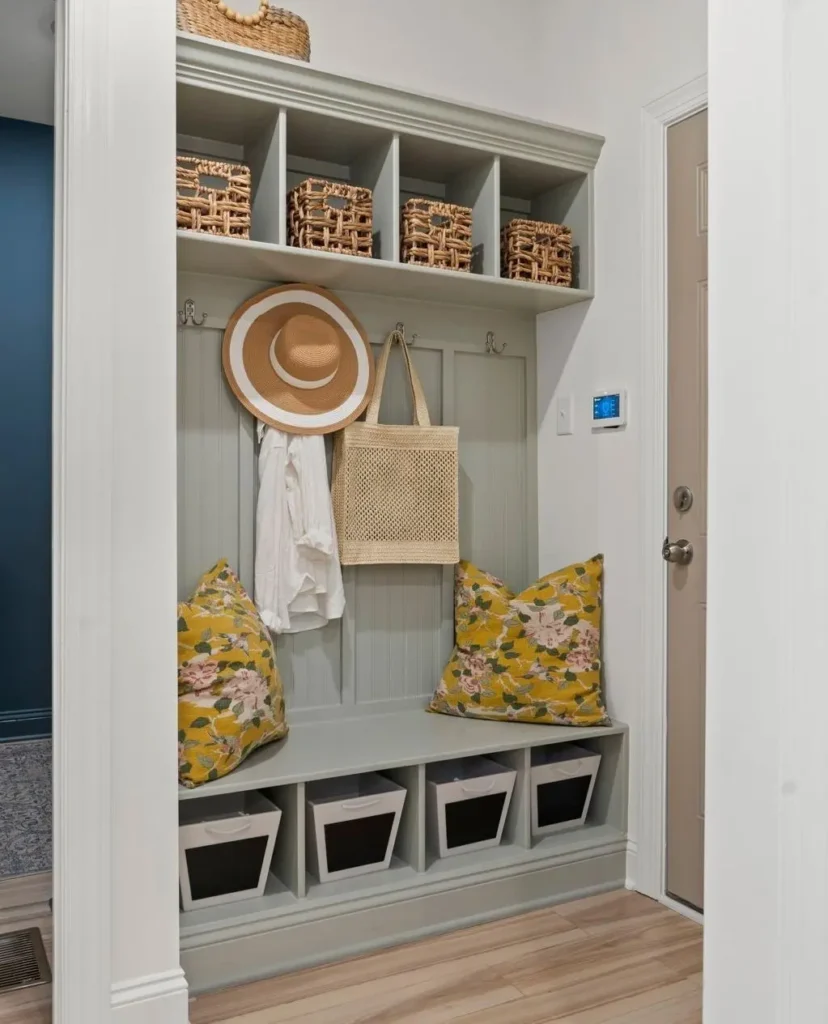
Short on entryway space? Turn a shallow wall nook into a useful mini drop zone. Hooks provide quick spots for a hat, jacket, and everyday bag. Four baskets above keep smaller items sorted, while open bins below collect shoes.
The floral cushions make the plain bench more colorful and comfortable. Use labels on the lower bins so children know where their belongings go. Since this nook sits beside the door, keep the seat clear and store only items used during the current season.
12. Add Shelves Beside the Bench
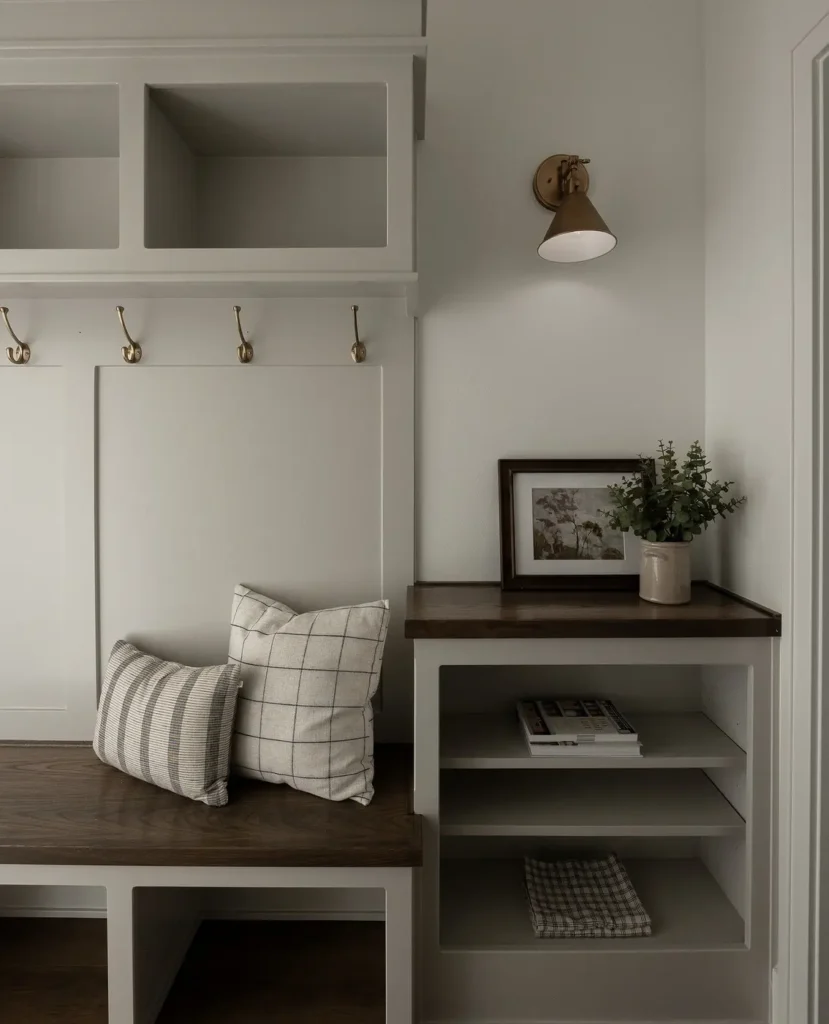
Keys, wallets, and mail need a smaller landing spot than coats and shoes. A narrow shelf unit beside the drop-zone bench handles these items without using much room. Its dark wooden top also gives the white built-in a warm finish.
Use the open shelves for baskets, folded scarves, or outgoing packages. Hooks above the bench can hold jackets and bags. A wall light makes it easier to find small items after dark. Keep decor to one or two pieces so the top stays useful during busy mornings.
13. An Empty Alcove Becomes Useful
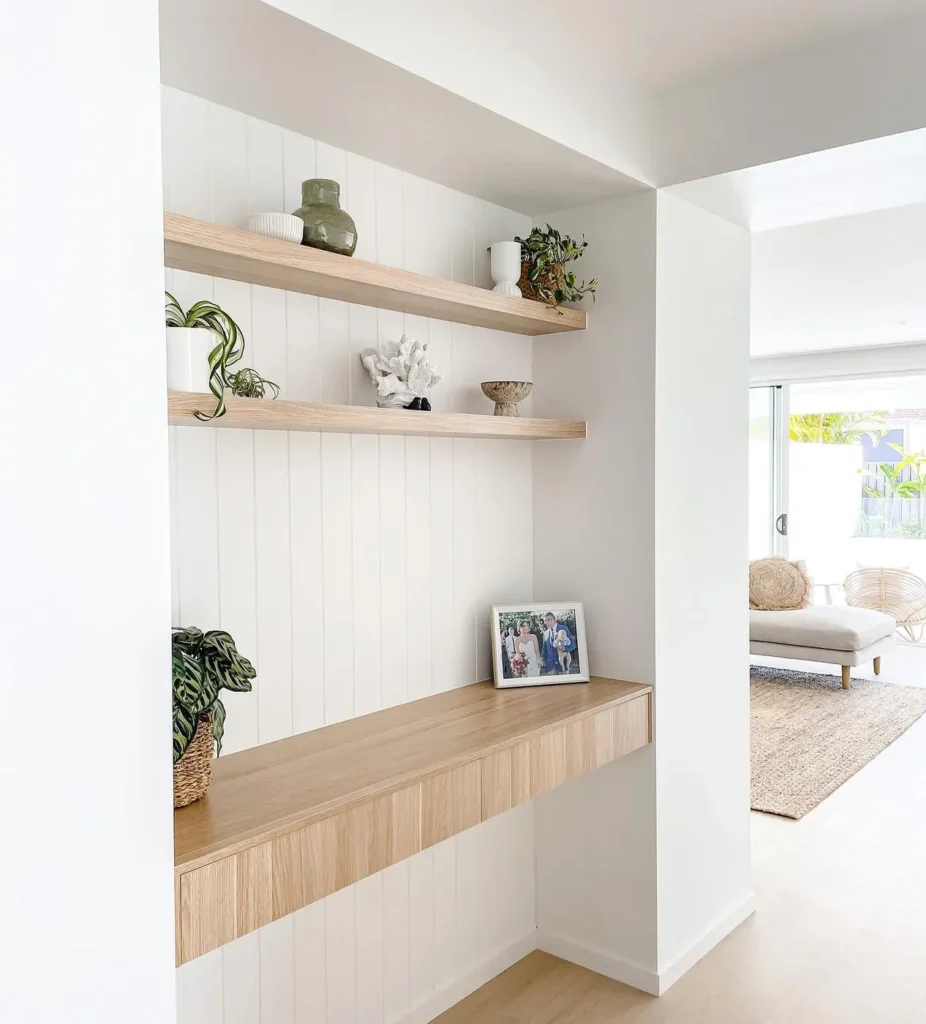
When you come home, place keys, sunglasses, and mail on the floating wooden ledge. A hidden drawer keeps these small items nearby without leaving them scattered across the surface.
Two matching shelves use the upper wall for light decor, but the main ledge should stay mostly empty. Vertical wall panels add detail without making the nook look busy. Because the unit does not touch the floor, the area feels open and is easy to clean.
14. Fake a Built-In With Furniture
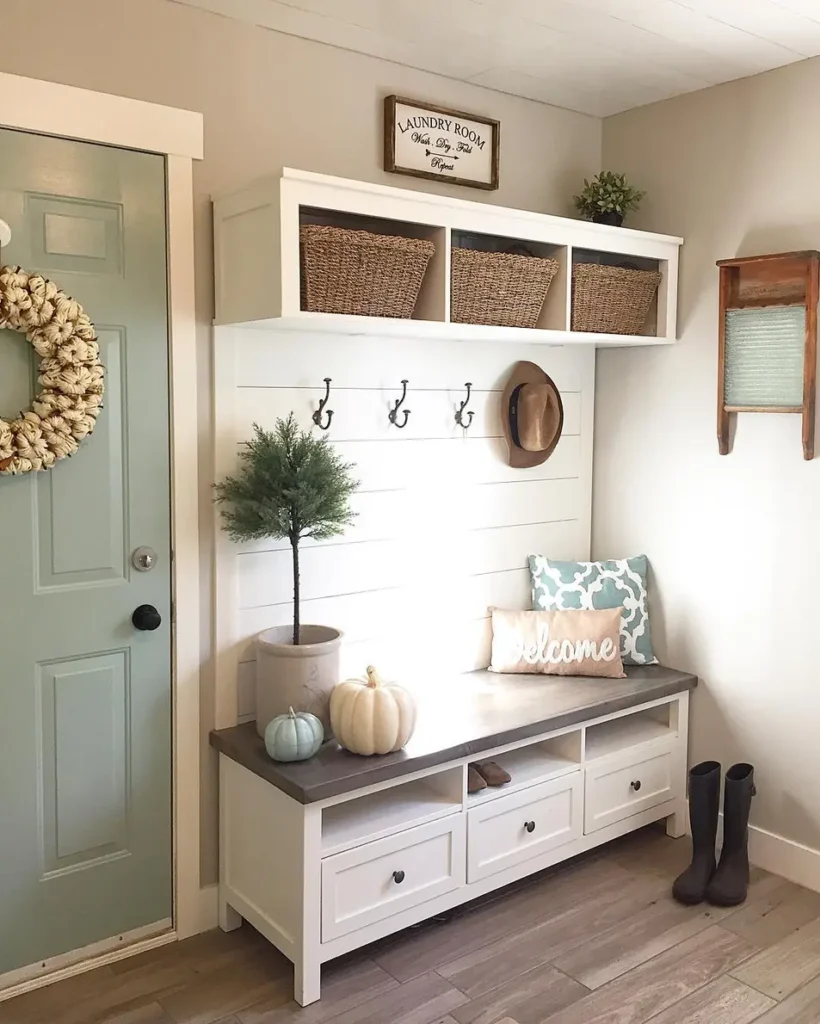
No custom cabinets? A storage bench and matching wall shelf can create a similar drop zone for less money. Place the bench under a row of hooks, then line up the edges to make both pieces look connected.
Drawers hide gloves, pet supplies, and shoe-care items. Open slots keep everyday footwear easy to grab. Above, three baskets hold lighter items that are not used as often. A wall panel ties everything together and protects the wall from hanging bags.
15. Keep Grab-and-Go Shoes Underneath
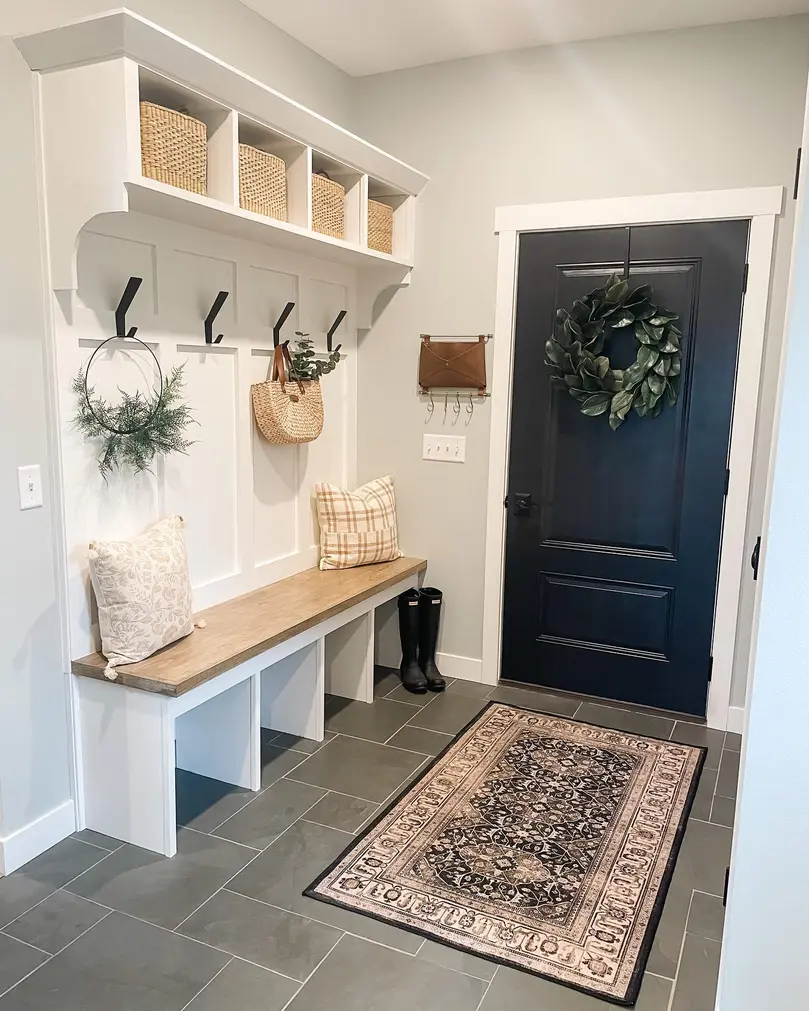
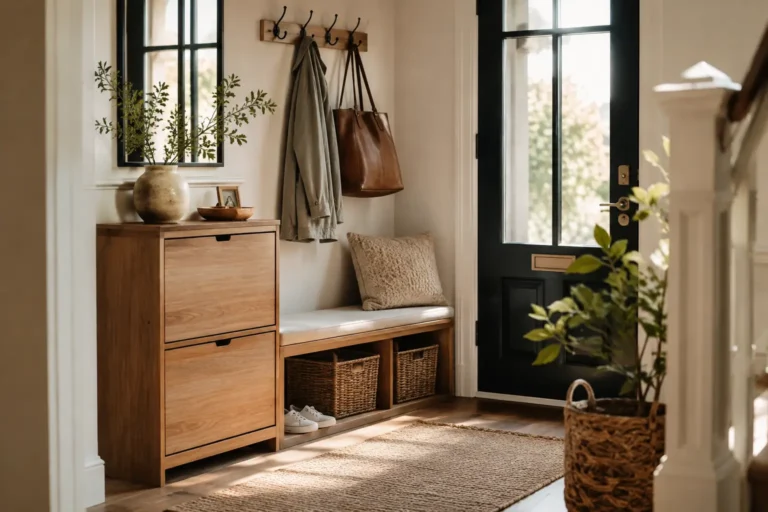
Make the space below your drop-zone bench useful instead of leaving it empty. Open sections keep everyday shoes near the door, so family members can quickly sit down, change footwear, and leave.
Place only one or two pairs in each section to prevent a messy pile. Less-used shoes can go inside the matching baskets above. Hooks handle coats and bags, while the long wooden seat gives everyone room to get ready. This top-to-bottom setup adds useful storage without requiring closed cabinets.
16. Bring Pattern Into the Drop Zone
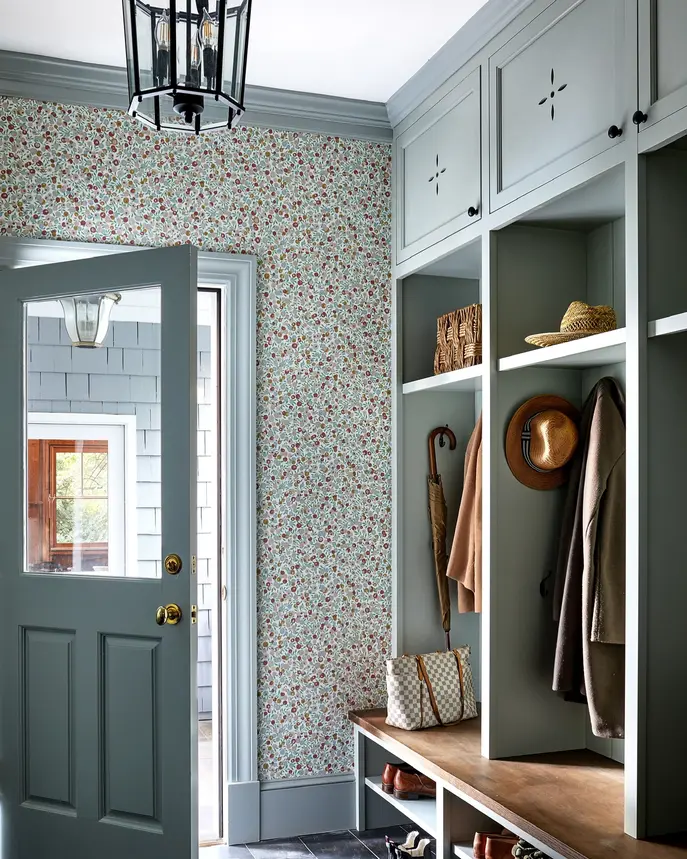
A drop zone does not have to look plain. Small floral wallpaper adds color around these soft green cubbies, while the matching door and trim help the whole entry feel connected.
Hooks hold coats, hats, and an umbrella. Open shelves keep baskets within reach, while upper cabinets hide items used less often. Shoes slide into the spaces below the wooden bench. Choose wallpaper with a small print so it adds interest without fighting with the coats and bags on display.
Build a Drop Zone That Works
Click or tap each card to reveal a practical setup tip.
Land Small Items
Give keys, wallets, and mail one easy-to-reach landing spot.
Hang Daily Gear
Keep coats, backpacks, and totes off the bench and floor.
Leave Room to Sit
A clear bench makes putting on shoes faster and easier.
Hide the Extras
Closed storage keeps seasonal and rarely used gear out of sight.
Sort Shoes Below
Give everyday footwear a clear place underneath the bench.
Reset Before Bed
A quick evening reset stops tomorrow’s clutter from growing.
Final Thoughts
The best drop zone should match your space and daily routine. A large family may need separate cubbies, while a small home might only need a narrow bench, a few hooks, and one drawer for keys and mail. When the entrance is especially tight, these small entryway organization ideas give you more compact options.
Begin with the items that usually collect near your door. Give each one an easy-to-reach place, keep the sitting area clear, and remove anything your family rarely uses. With the right setup, your entryway can stay neat without needing constant cleanup.