27 First Apartment Living Room Inspirations That Feel Like Home
Your first living room rarely comes together all at once. Maybe you start with a sofa you already own, a hand-me-down table, and one lamp. Then the room slowly starts to feel like yours.
These first apartment living room ideas show that you don’t need matching furniture or a huge decorating budget. Sometimes the biggest difference comes from one patterned rug, better evening lighting, a large mirror, a sofa cover, or simply choosing two colors and repeating them.
Some of these rooms are quiet and neutral. Others go all in on plants, art, bold color, or vintage pieces. Take the parts that suit your space and leave the rest. A first apartment should feel collected over time, not finished in one shopping trip.
1. Repeat Blue, Don’t Scatter It
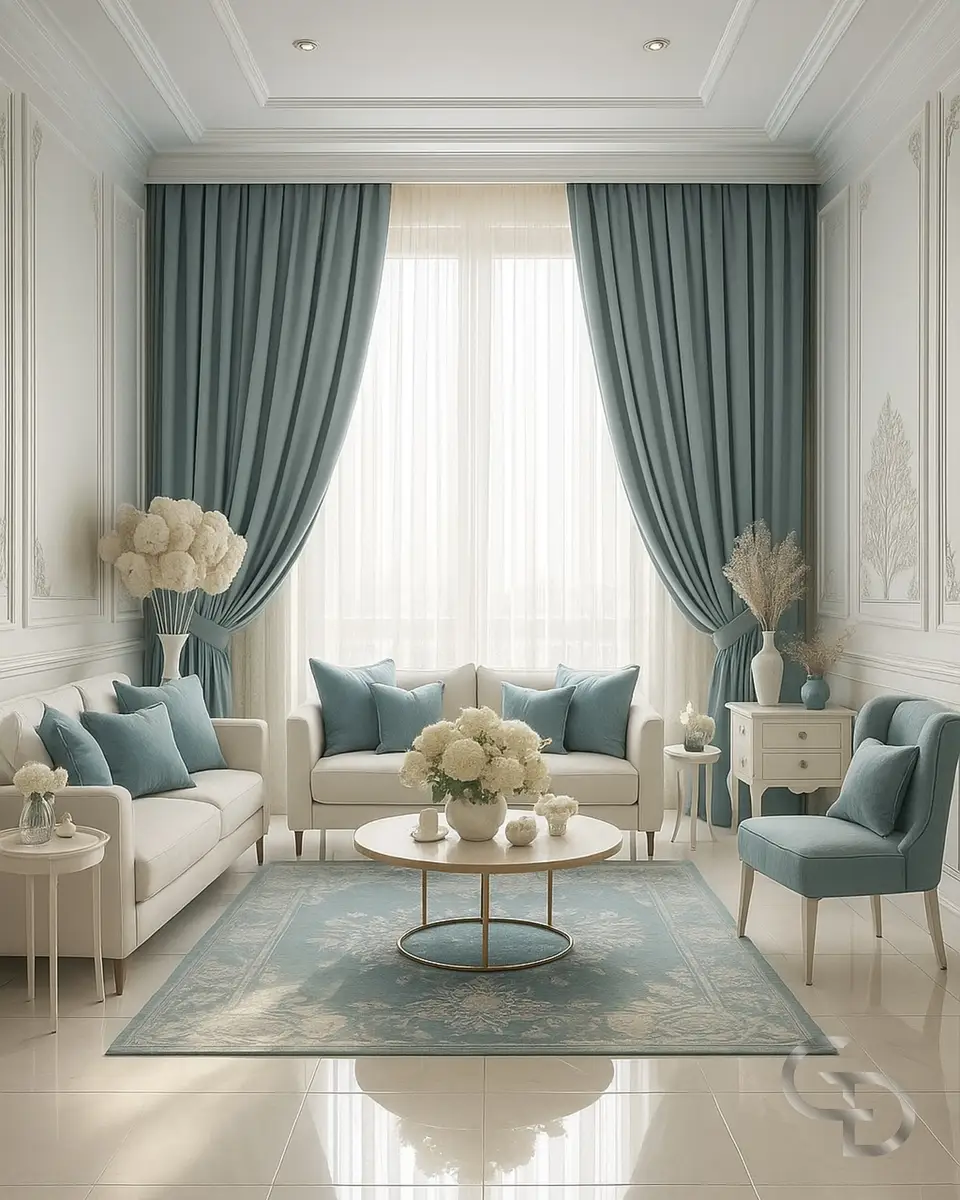
The room is very formal, but the color idea is simple. Dusty blue shows up in the full-length curtains, patterned rug, armchair, and sofa cushions. Because the same blue keeps returning, the white sofas don’t feel separate from the rest of the room.
You don’t need this much furniture to get the same calm effect. One sofa, one rug, and two or three cushions in the same muted blue would be plenty.
2. Let The Room Be Colorful
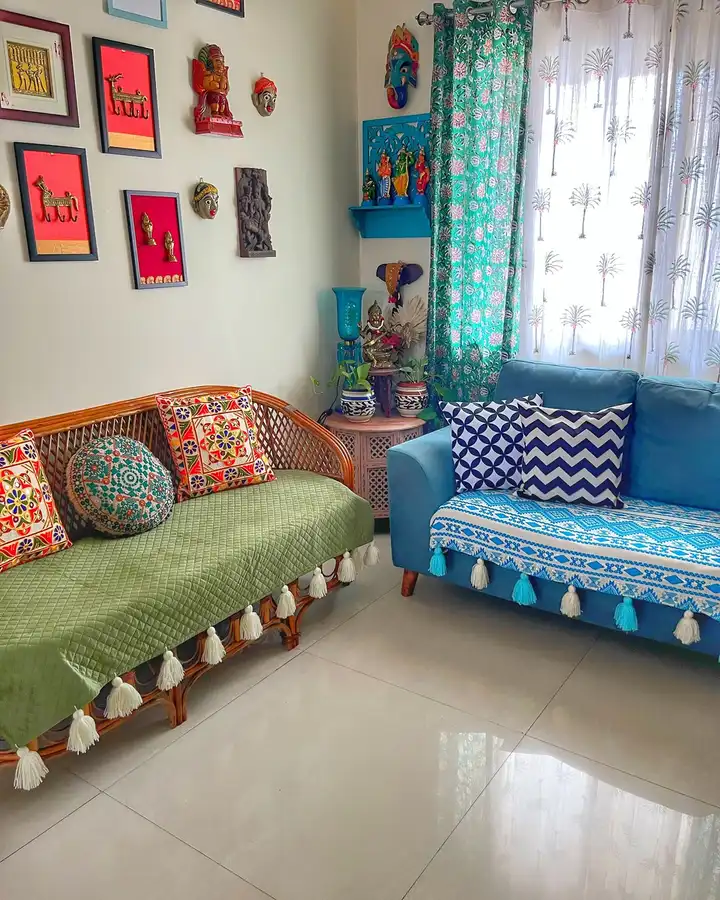
This one doesn’t apologize for color. Turquoise, olive green, red, orange, navy, and white all show up, yet the room still feels intentional because the patterns have a handmade, collected feel.
The cane sofa with the green cover might be my favorite detail. It looks completely different beside the solid blue sofa, and that mismatch is part of the charm.
I wouldn’t repeat every wall mask, cushion, and pattern. The colorful textiles and one small wall collection are enough to set the mood.
3. Build The Wall Slowly
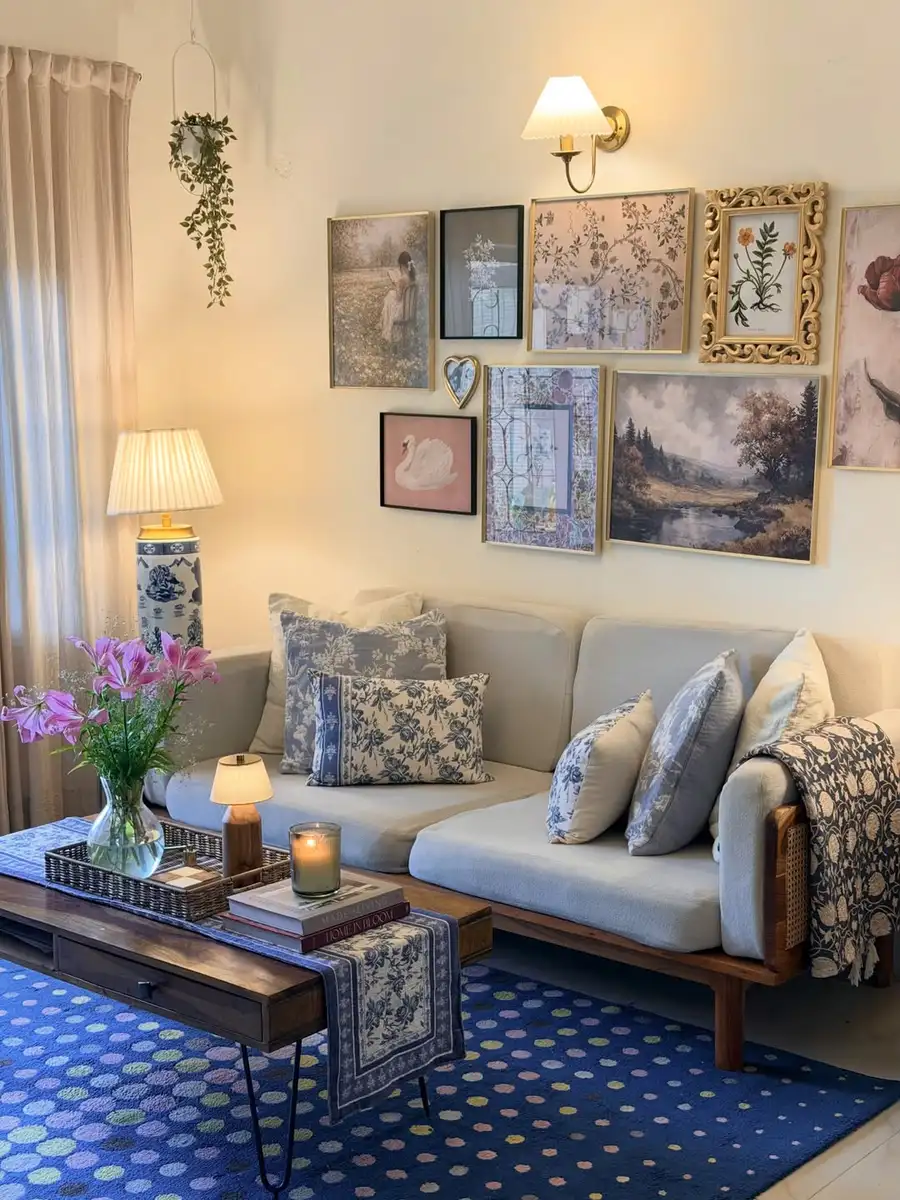
The sofa itself is quiet. Beige fabric, wood arms, blue and cream cushions. Then the wall above it does almost all the decorating.
Frames of different sizes sit close together rather than in a perfect grid, and the mix includes landscapes, florals, and softer vintage-looking prints.
Start with three pieces. Add another when you find something you actually like. There is no reason to buy eight matching prints on moving day just to fill the wall.
4. Blue And Brass Is Enough
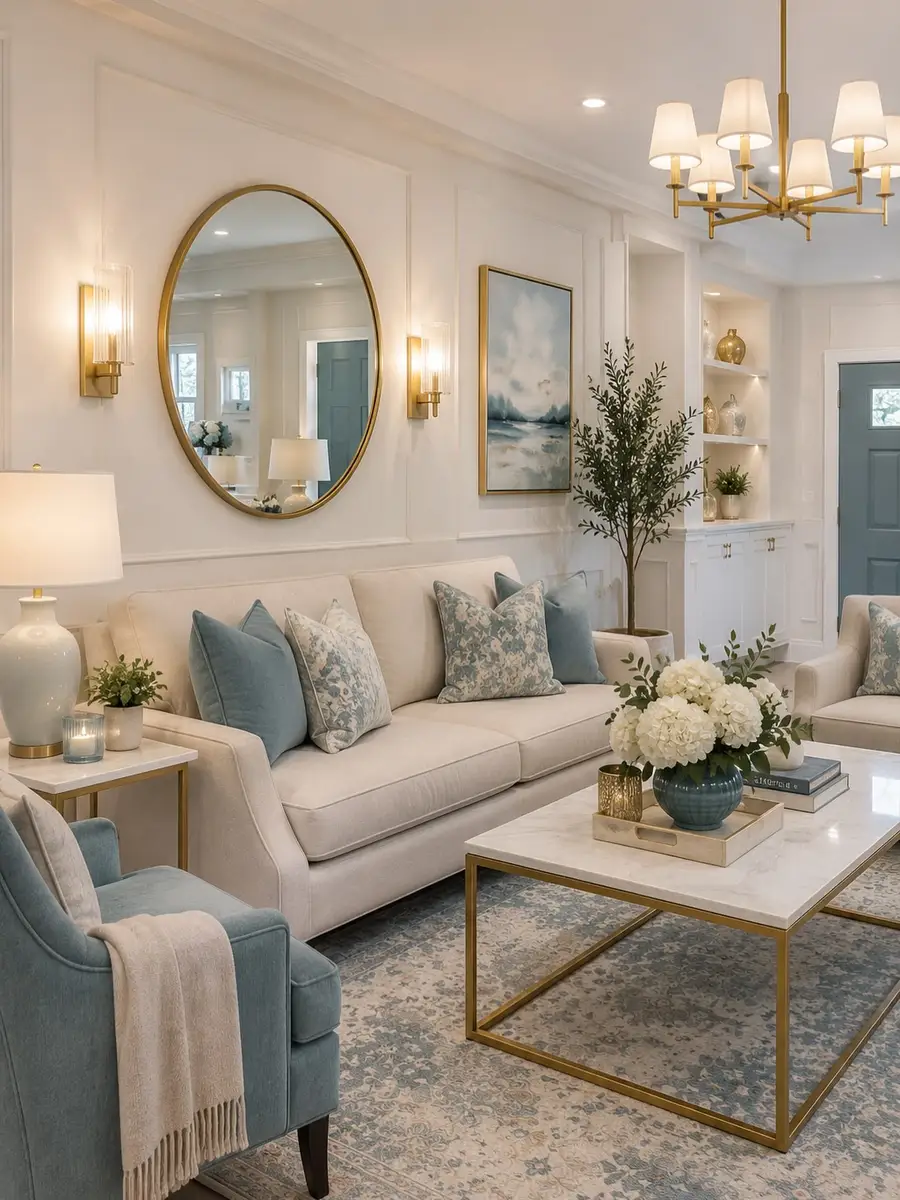
Cream upholstery, pale blue fabric, and warm brass. Three things, repeated.
The oval mirror is large enough to carry the sofa wall, while the sconces, chandelier, table frame, and picture frame bring in small hits of gold. Blue stays softer through the armchair, rug, cushions, and artwork.
I’d stop there. Another strong metal or accent color would make this room busier than it needs to be.
5. Use Lamps Instead Of Clutter
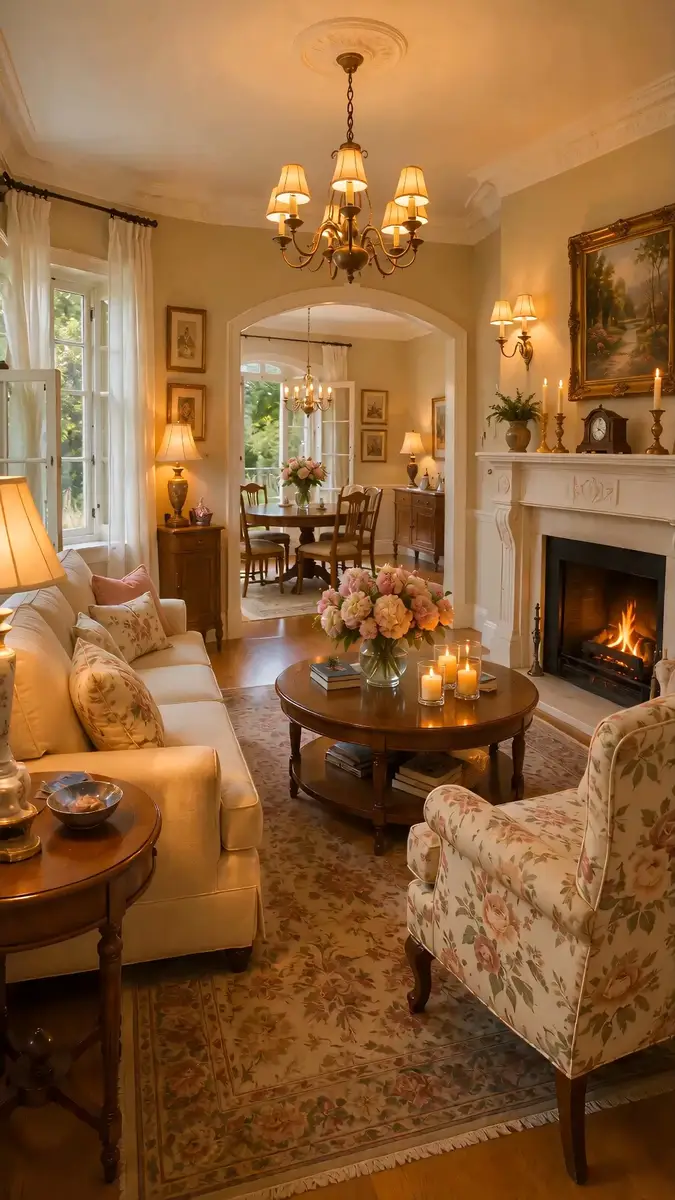
Look at how many sources of warm light are visible here. A chandelier, wall sconces, table lamps, candles, and the fireplace all contribute.
That matters more than another tray or decorative object.
The furniture is traditional and the floral armchair is fairly busy, but once the lamps are on, everything settles into the same warm mood. If your apartment feels flat in the evening, buy a lamp before buying more decor. Two small lamps at different heights can change a room surprisingly quickly.
6. Pick One Dramatic Feature
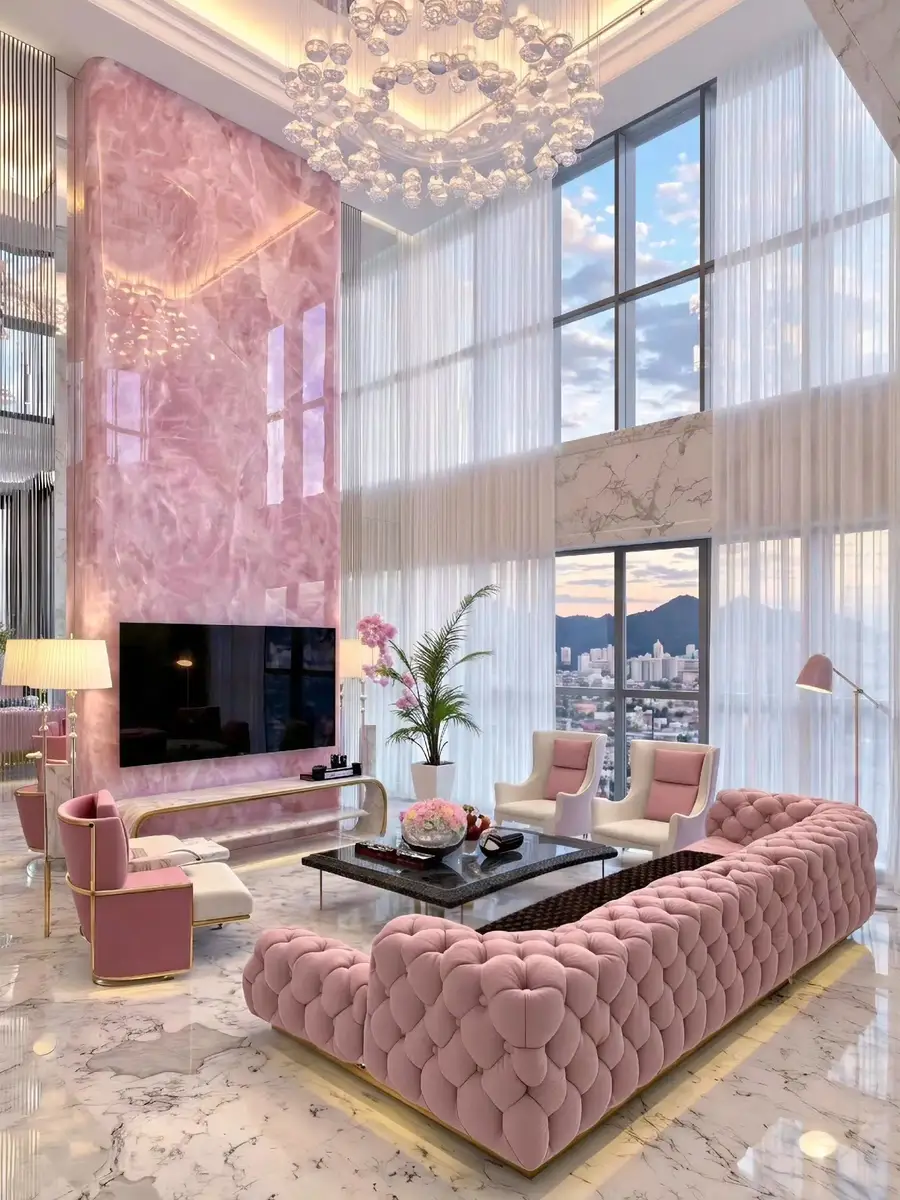
The pink TV wall already has enough presence to carry the room.
Its glossy surface is bold, and the huge chandelier adds even more drama overhead. What stops the space from becoming overwhelming is the softer seating around it. The blush sofa stays in the same color family, while the white chairs and tall sheer curtains give all that pink somewhere to breathe.
In a smaller home, one dramatic feature would be plenty. The rest can stay much quieter.
7. Leave The Neutrals Uneven
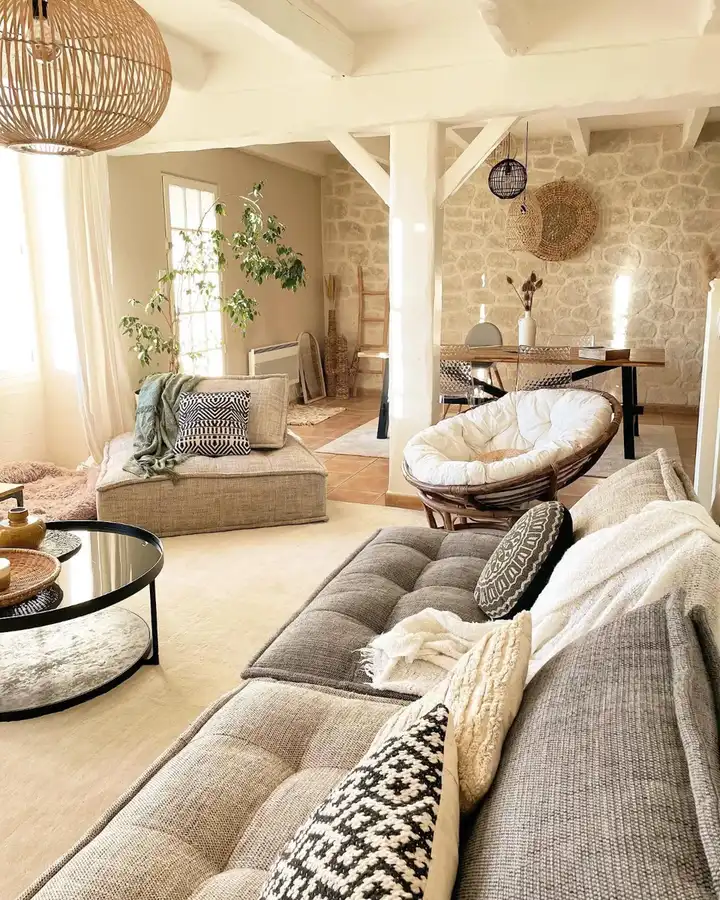
Beige, gray, cream, brown, black. Nothing matches exactly here, and that’s why the room doesn’t feel like a beige box.
The gray sectional has a rougher woven look. The round chair is softer and more casual. Stone adds another pale tone, while the black-and-white cushions break up all the warmth.
Furniture bought at different times rarely matches perfectly. Good. Let that happen. Keep it within a loose neutral range instead of chasing the exact same shade of beige.
8. Use Plants As Furniture
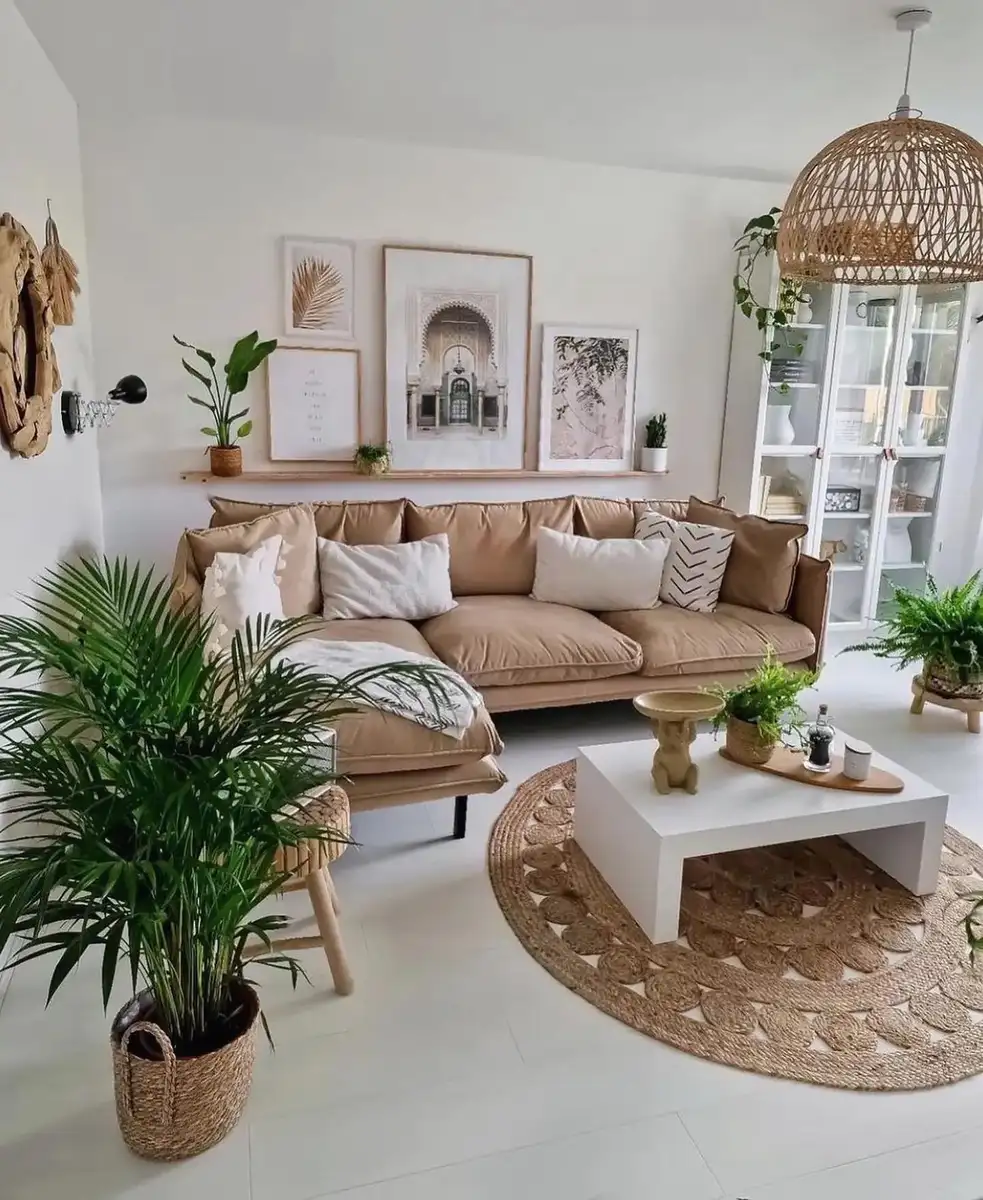
The large palm in the foreground is not a tiny finishing touch. It takes up real visual space.
Same with the plants beside the cabinet and near the window. Because the greenery fills those empty areas, the room doesn’t need more decorative furniture.
One healthy floor plant can do more for a blank corner than three small stools, baskets, or random objects.
9. Warm Up The TV Wall
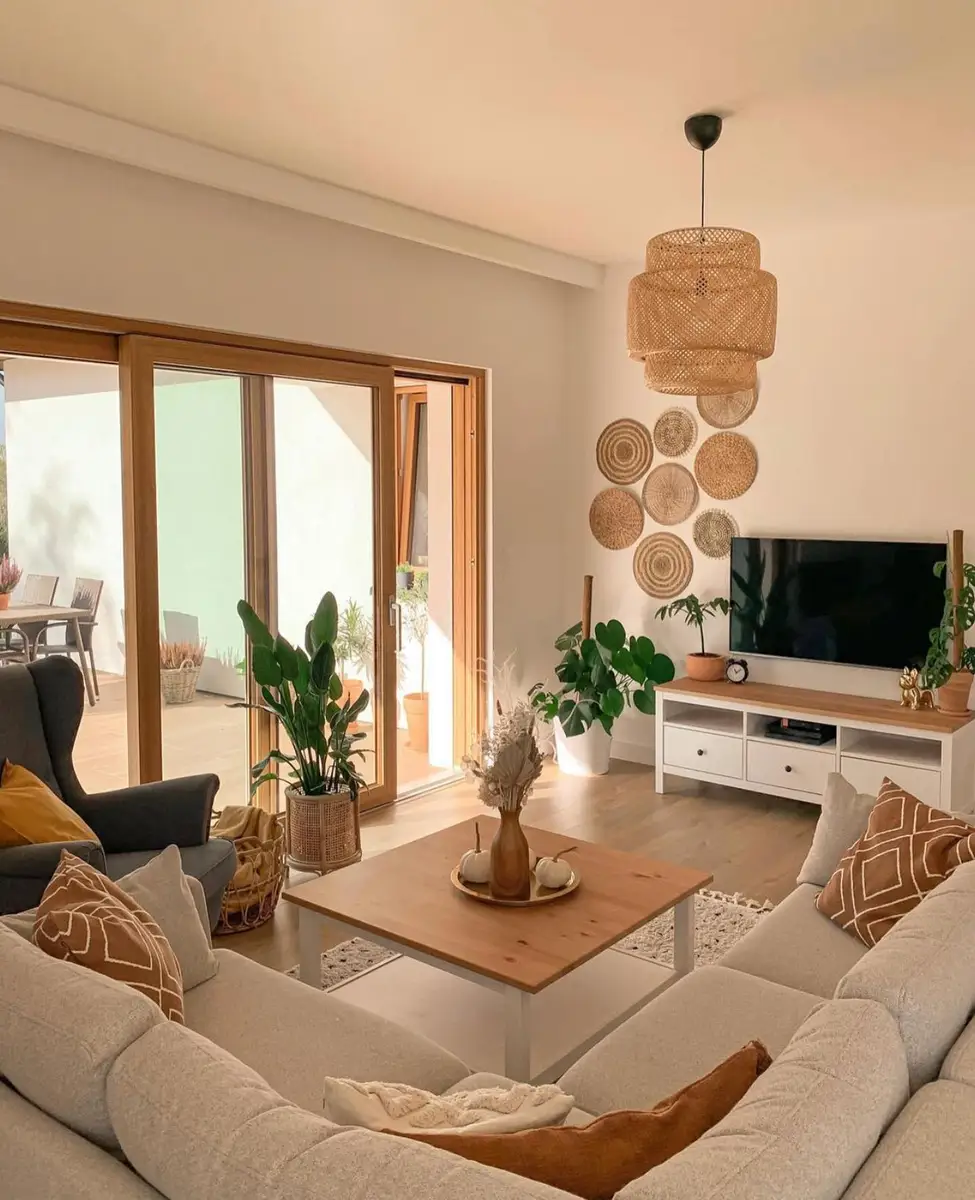
TV walls can get cold fast. Screen, console, straight lines. This room softens all of that with wood and woven pieces.
The console top, coffee table, and door frames repeat a warm timber tone, while the circular woven wall pieces break up the flat white wall above the television. Plants handle the remaining gaps.
One wood tone, a little greenery, and something woven on the wall is already enough. I wouldn’t crowd the TV with lots of tiny frames.
10. One Strange Shape Helps
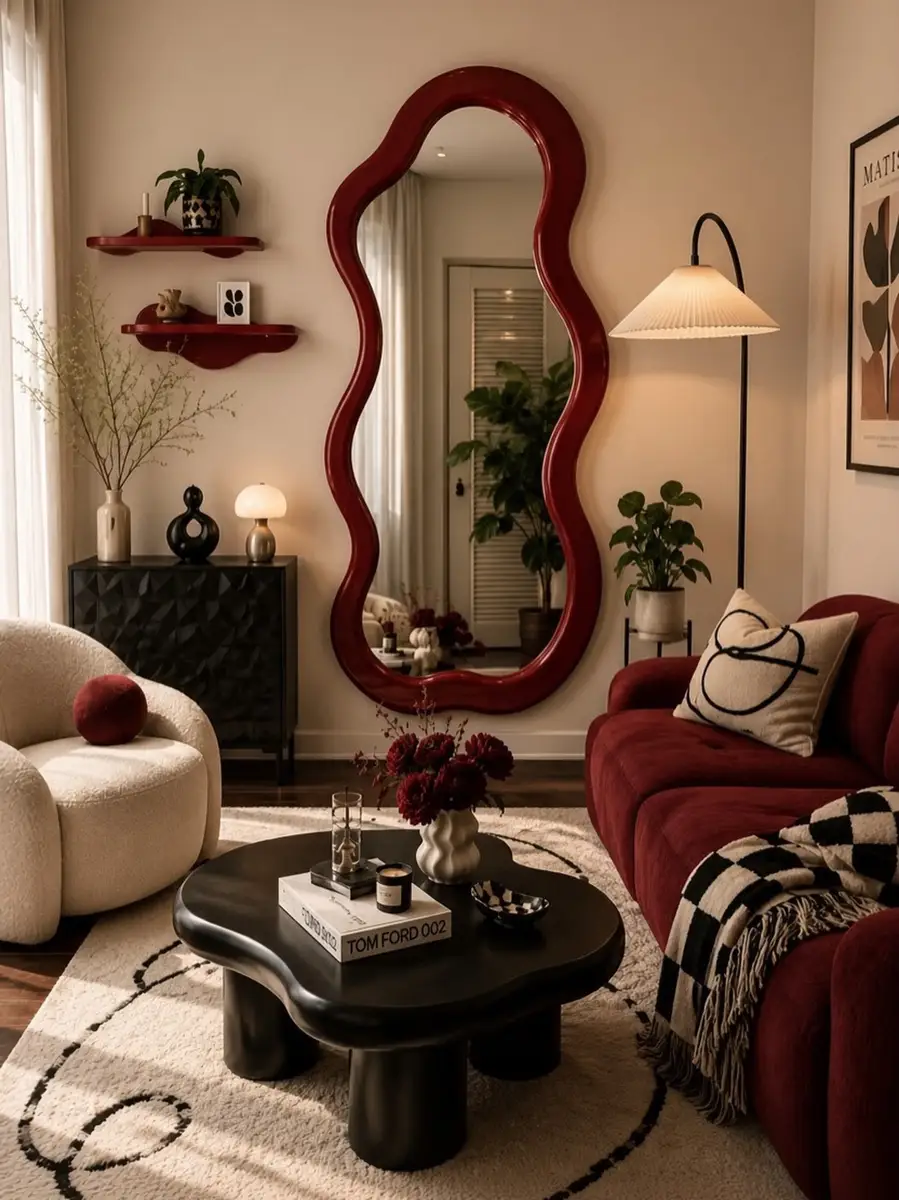
The red mirror is weird in the best way.
Its wavy frame immediately makes the room feel less predictable, especially beside the chunky red sofa and rounded cream chair. Even the black coffee table has an uneven organic outline. Straight rectangles are mostly left to the cabinet and framed print.
If the rest of your furniture is basic and boxy, one odd shape can change the room. A mirror is an easy place to do it.
11. Repeat Two Loud Colors
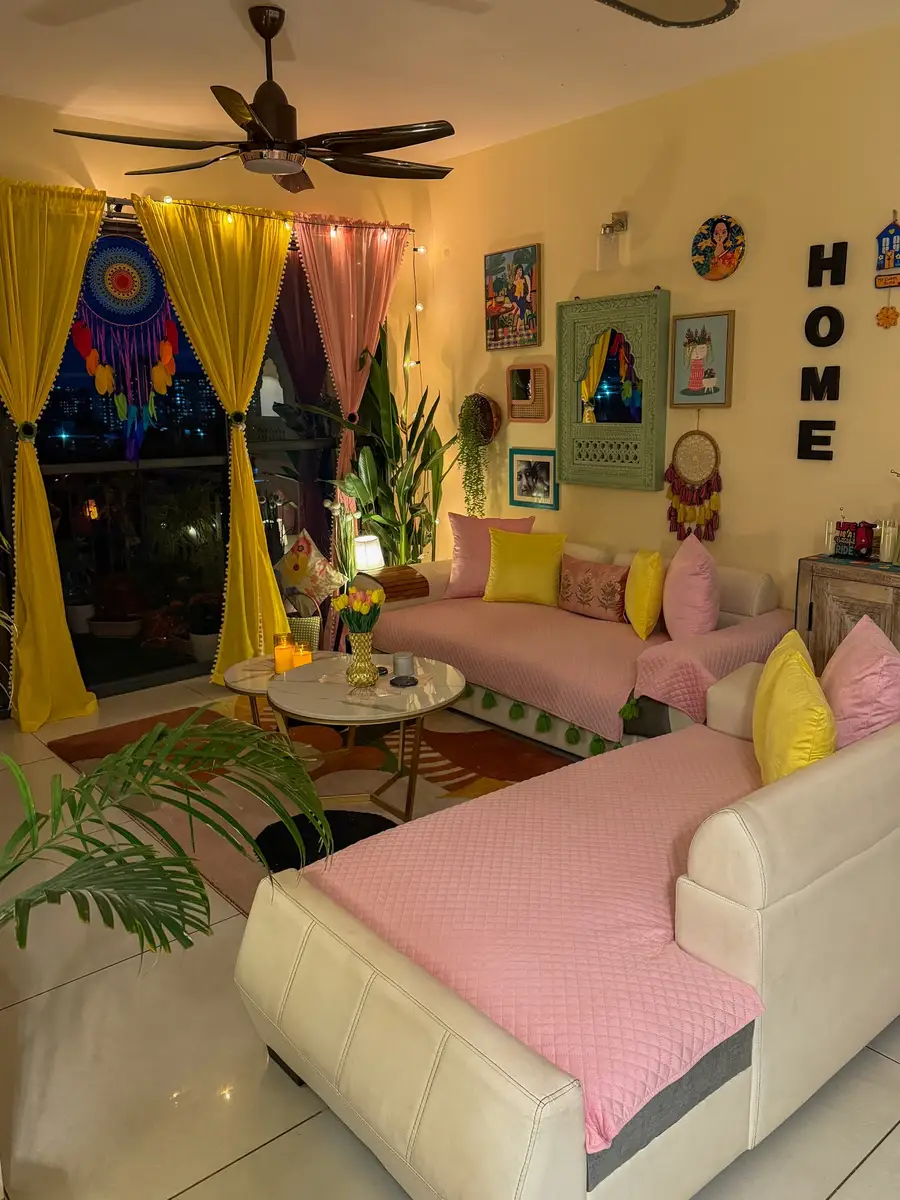
Yellow and pink carry almost the entire room.
The curtains are bright yellow and dusty pink. The sofa covers lean pink. Cushions repeat both colors. Even the smaller wall pieces stay within that lively palette.
There is a lot going on, but it doesn’t feel accidental.
If you like strong color, decide which two shades are in charge. Everything else can stay smaller. Here, the plants almost act like a neutral.
12. Finish One Side Table
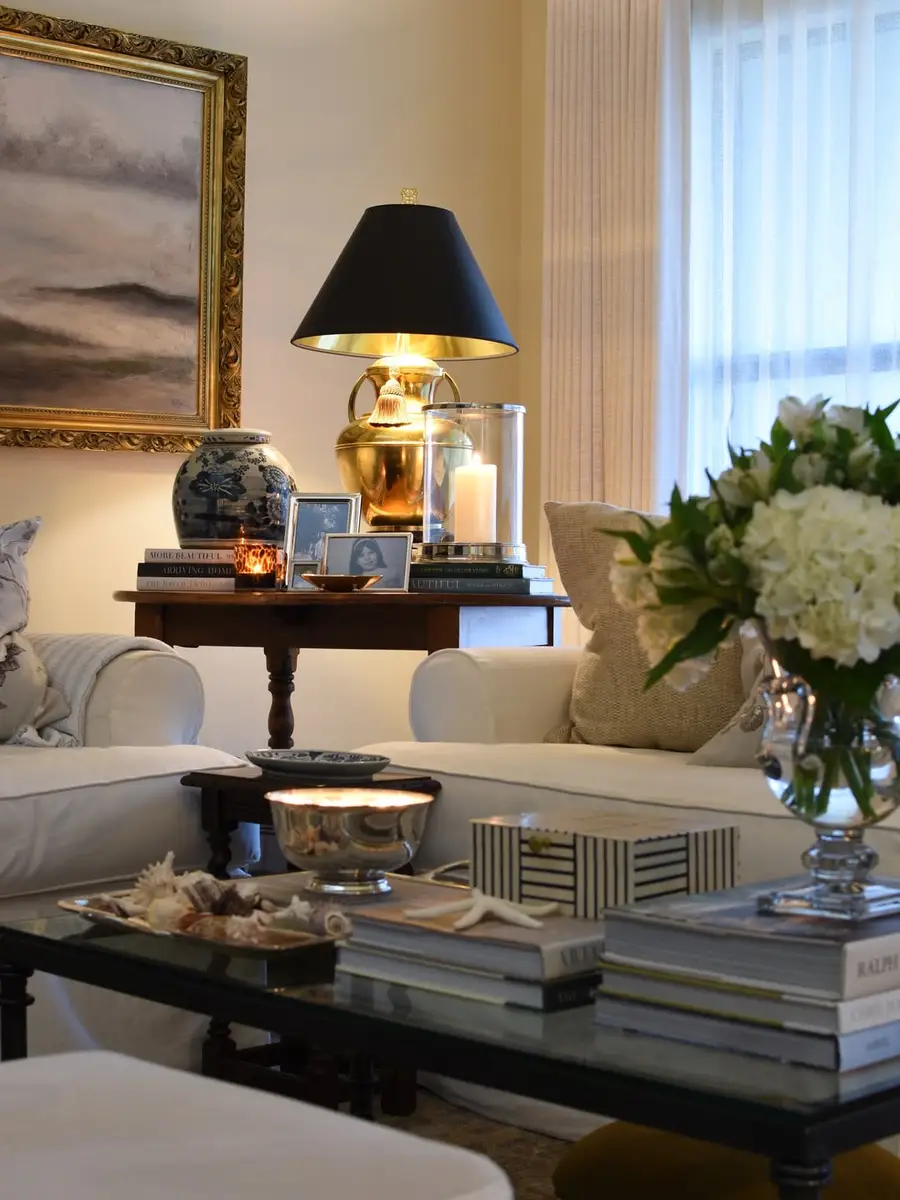
This is a useful reminder that a room doesn’t have to be finished all at once.
One dark wood table holds a brass lamp with a black shade, a blue-and-white jar, framed photographs, stacked books, and candlelight. That little corner already feels established.
Lamp first. Then something tall or rounded. One personal item. Maybe a few books.
Stop before every inch disappears.
13. Give The Floor Breathing Room
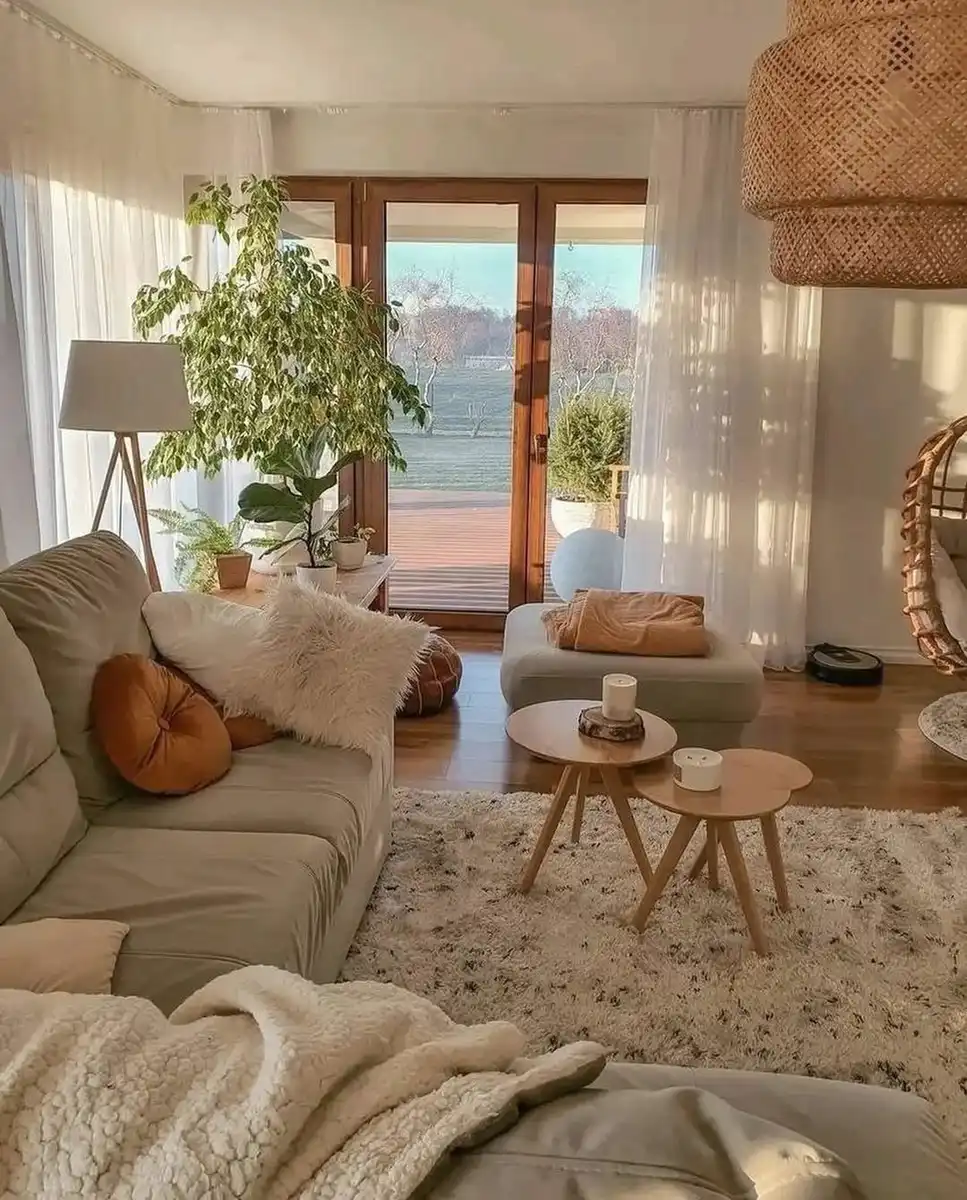
There is plenty of furniture here, but the center still feels open.
The nesting tables are small. The pale rug visually blends into the floor. Seating stays around the edges instead of pushing into the middle, and the tallest plants sit near the walls and windows.
That open patch matters.
A room can have beautiful pillows and plants and still be annoying if you have to squeeze around the coffee table every time you walk through it.
14. Let The Sofa Bring Color
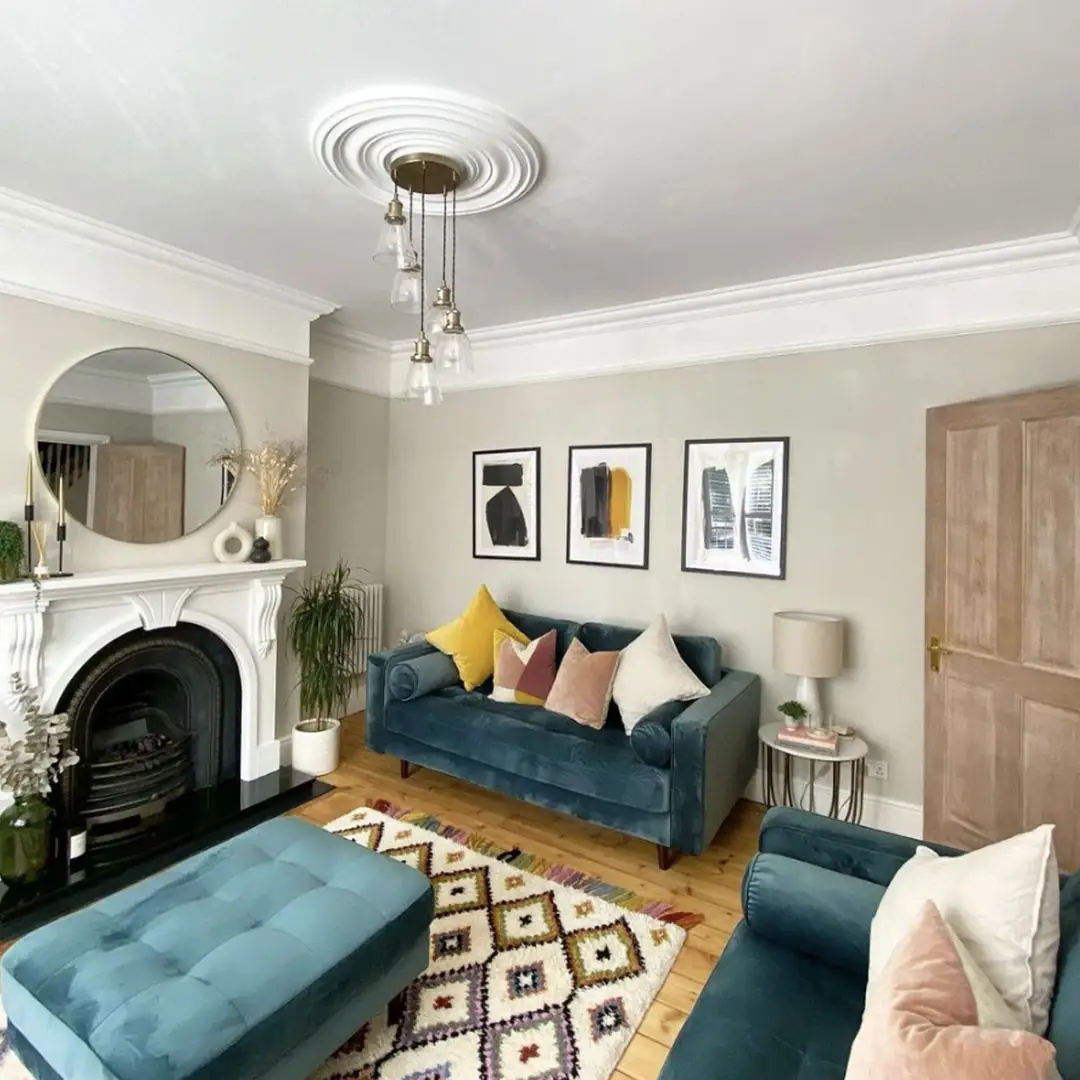
The teal-blue sofas do the heavy lifting, which means the walls can stay very quiet.
A mustard cushion, blush cushion, patterned rug, and three simple framed prints bring in smaller bits of color without fighting the seating. The large blue ottoman repeats the sofa color, but not every accessory does.
If beige furniture bores you, put the color into one large piece and let the rest settle down.
15. Paint Around The Fireplace
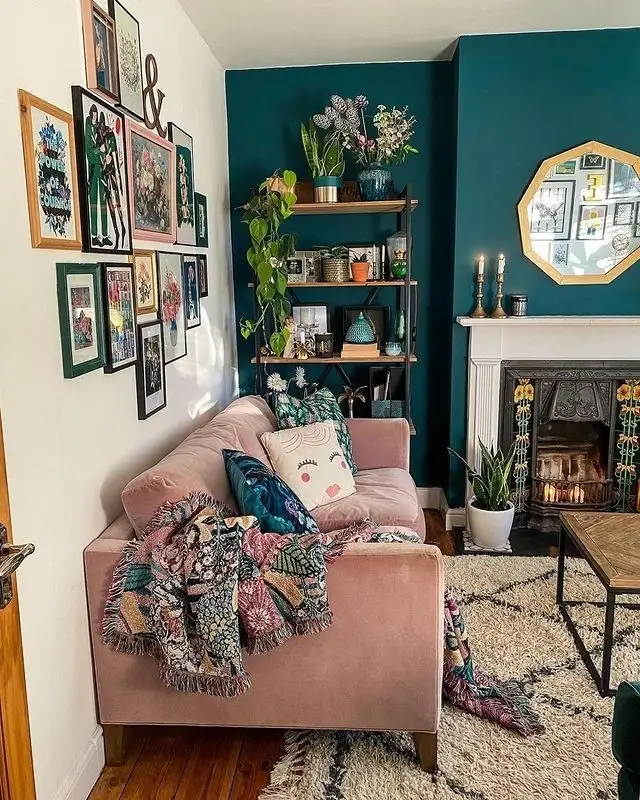
The deep teal wall gives the fireplace area a clear boundary and makes the blush sofa look even softer beside it.
Color continues around the shelving corner, so the painted section feels deliberate rather than like one random rectangle on the wall. The white fireplace surround also looks much sharper against that dark background.
Painting one architectural section may be enough. The whole room doesn’t need to change.
16. Work With The Existing Character
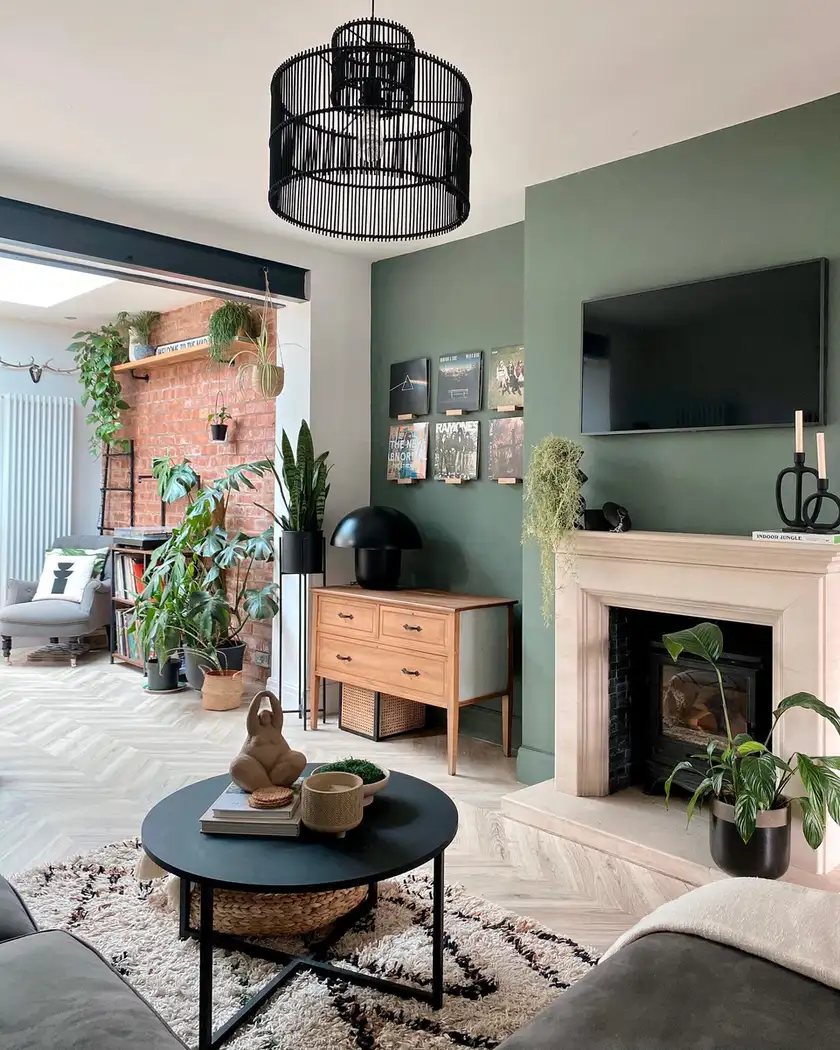
There is exposed brick in the next space, a traditional fireplace in the living room, a muted green wall, pale herringbone flooring, black lighting, and a simple wood cabinet.
Normally that sounds like too many styles.
Here, none of them are hidden. The fireplace stays traditional, the brick stays rough, and the newer furniture stays clean.
An older or awkward feature doesn’t automatically need covering up. Sometimes a calmer wall color and a few repeated dark accents are enough.
17. Put Your Hobbies On Display
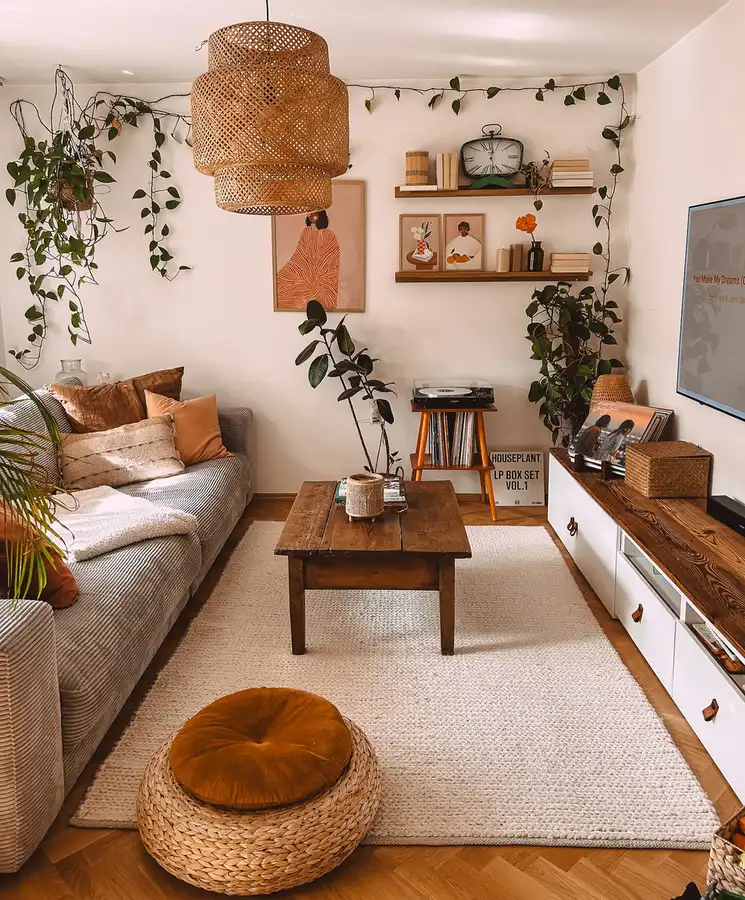
The record player isn’t tucked into a cabinet. The records aren’t hidden either.
They become part of the room.
Plants trail around the walls, small artworks sit on shelves, and books share space with the music setup. The simple sofa and plain rug keep all those personal things from becoming too much.
If you collect records, books, cameras, ceramics, or anything else worth seeing, start there instead of filling shelves with random decor.
18. Use One Oversized Mirror
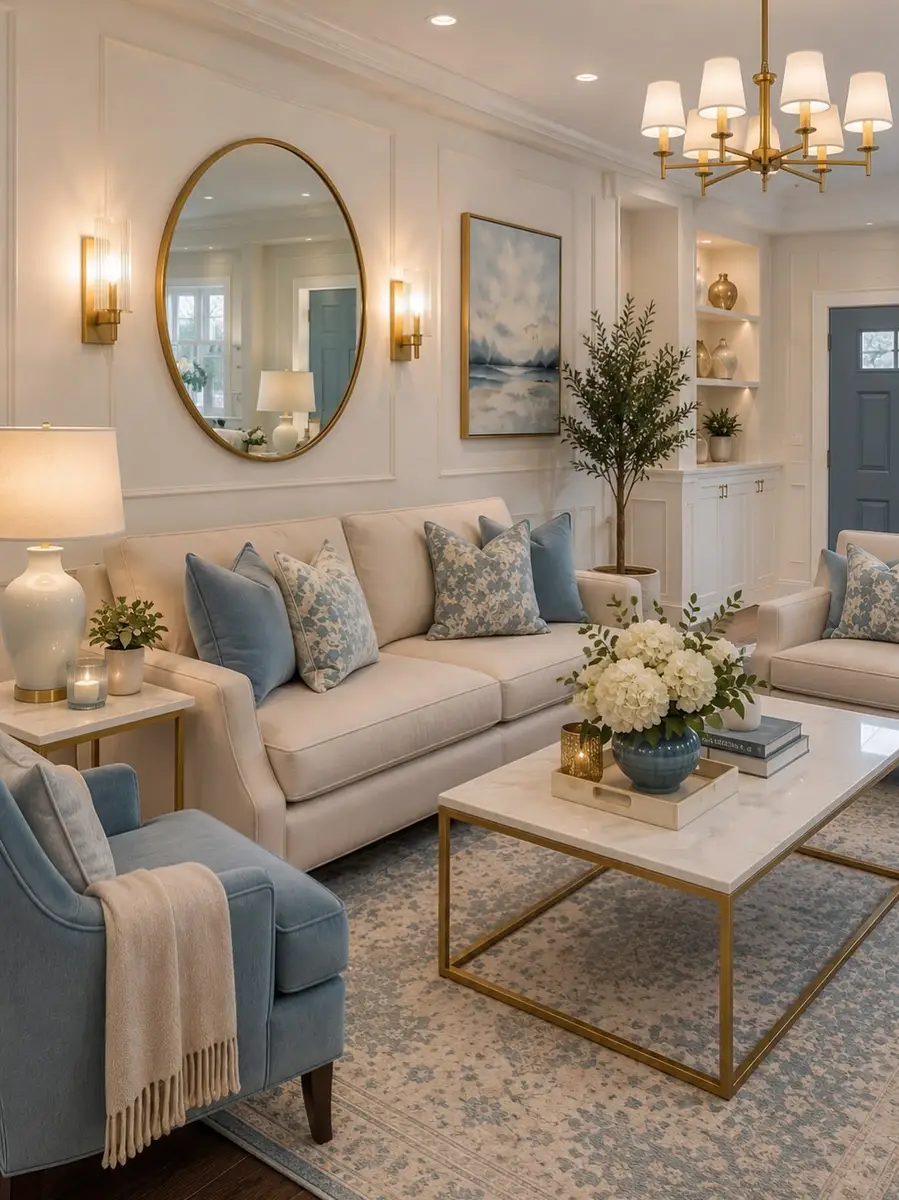
This room proves how much scale matters.
The oval mirror is much larger than the lamp, side table, or artwork beside it, so the wall already feels finished. It also reflects another part of the room instead of leaving a large stretch of white paneling blank.
One oversized mirror can be simpler than arranging six small frames.
Especially if you move often. One object, one hanging decision, done.
19. Make Nighttime Part Of It
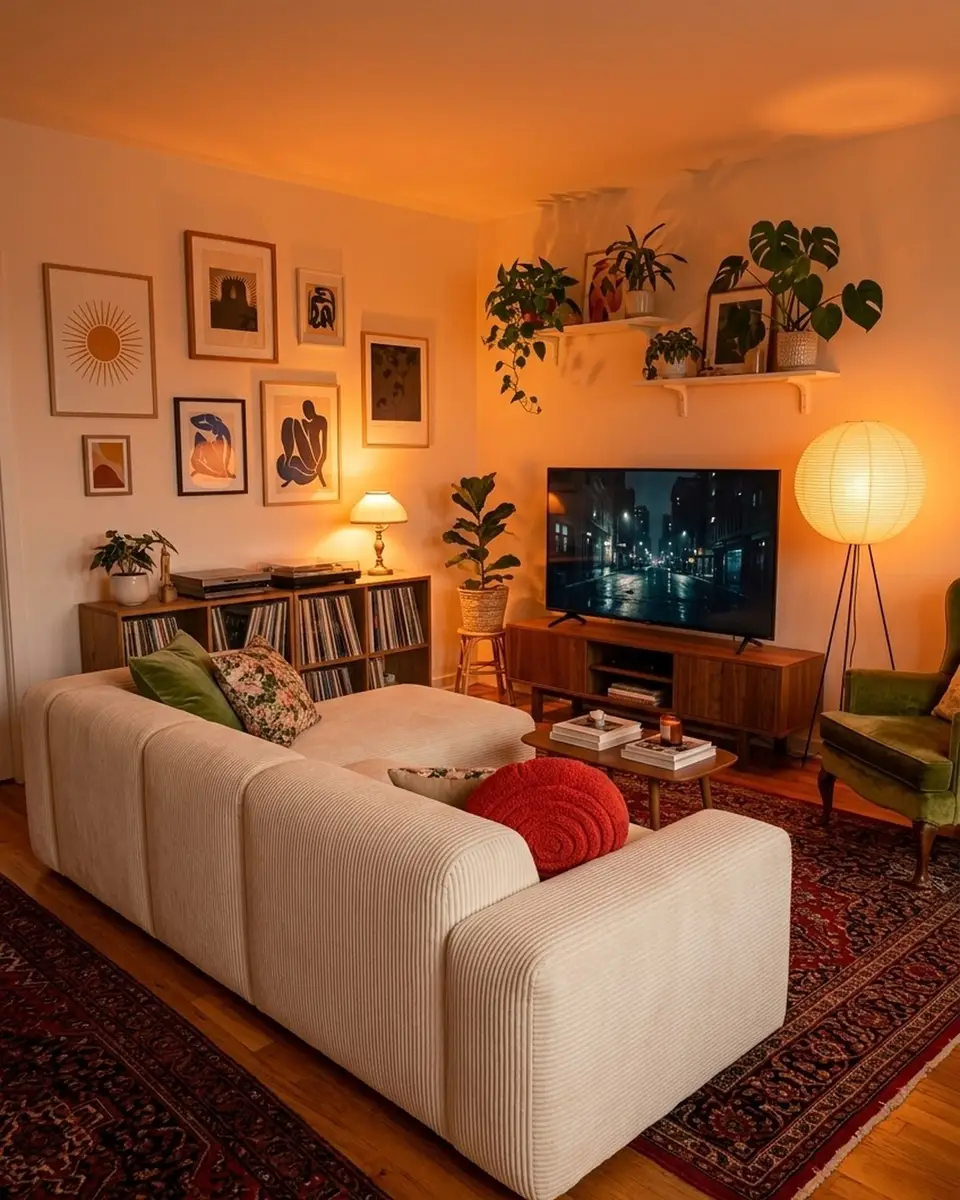
This room looks designed for evening.
The round floor lamp glows beside the TV, a smaller lamp lights the record storage, and warm orange light reaches the plants and gallery wall. The cream sectional is plain enough that the rug, records, art, and green chair get noticed instead.
I like this because it treats lighting as part of the room, not an afterthought. Your apartment may look fine at noon and miserable at 8 p.m.
Fix that first.
20. Pull Color From The Rug
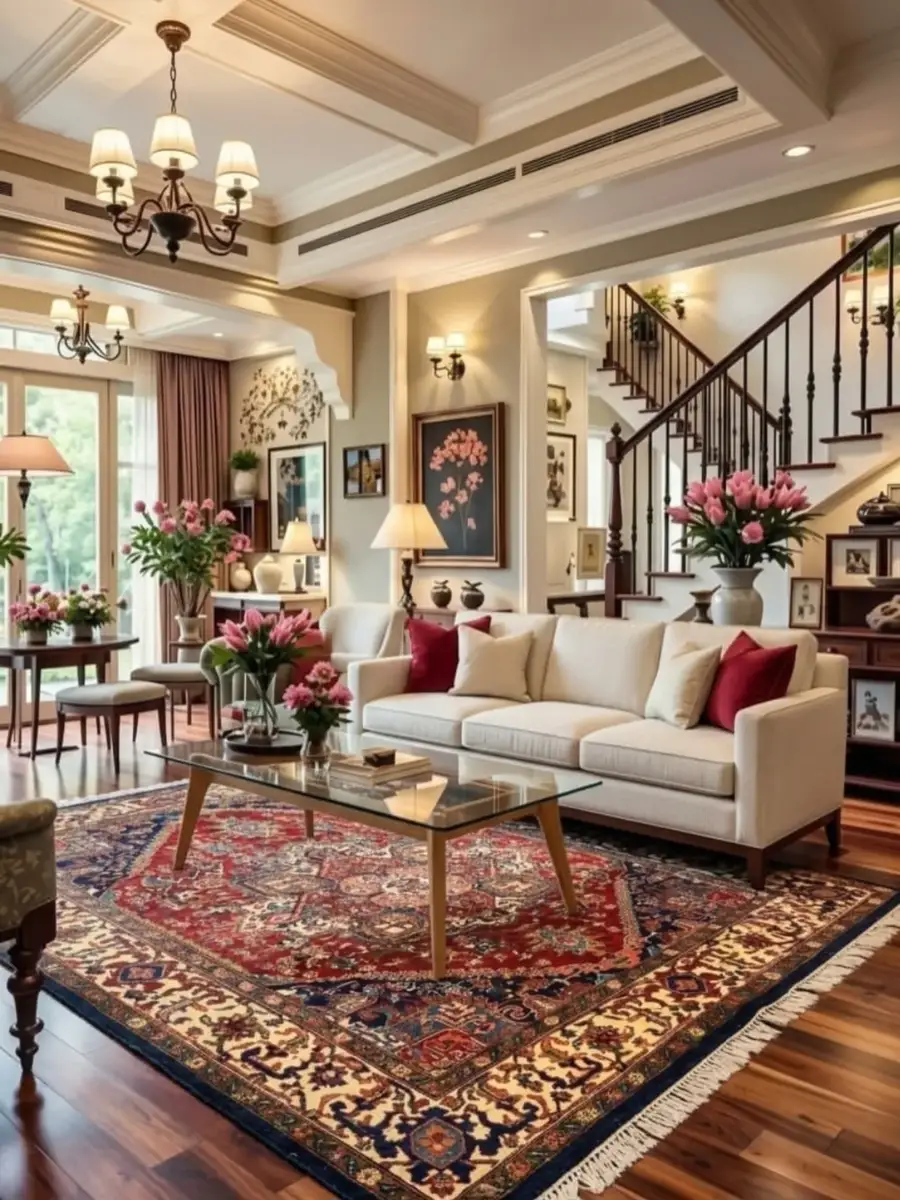
The rug gives this room its red, navy, cream, and muted gold palette before you even notice the cushions.
Deep red pillows pick up one of those shades, while the pink flowers soften the heavier reds. The sofa stays cream, giving the patterned floor somewhere to settle.
If you already own a busy rug, let it choose one or two accent colors for you. You don’t need to match every shade hiding in the pattern.
21. Choose A Shelf With Air
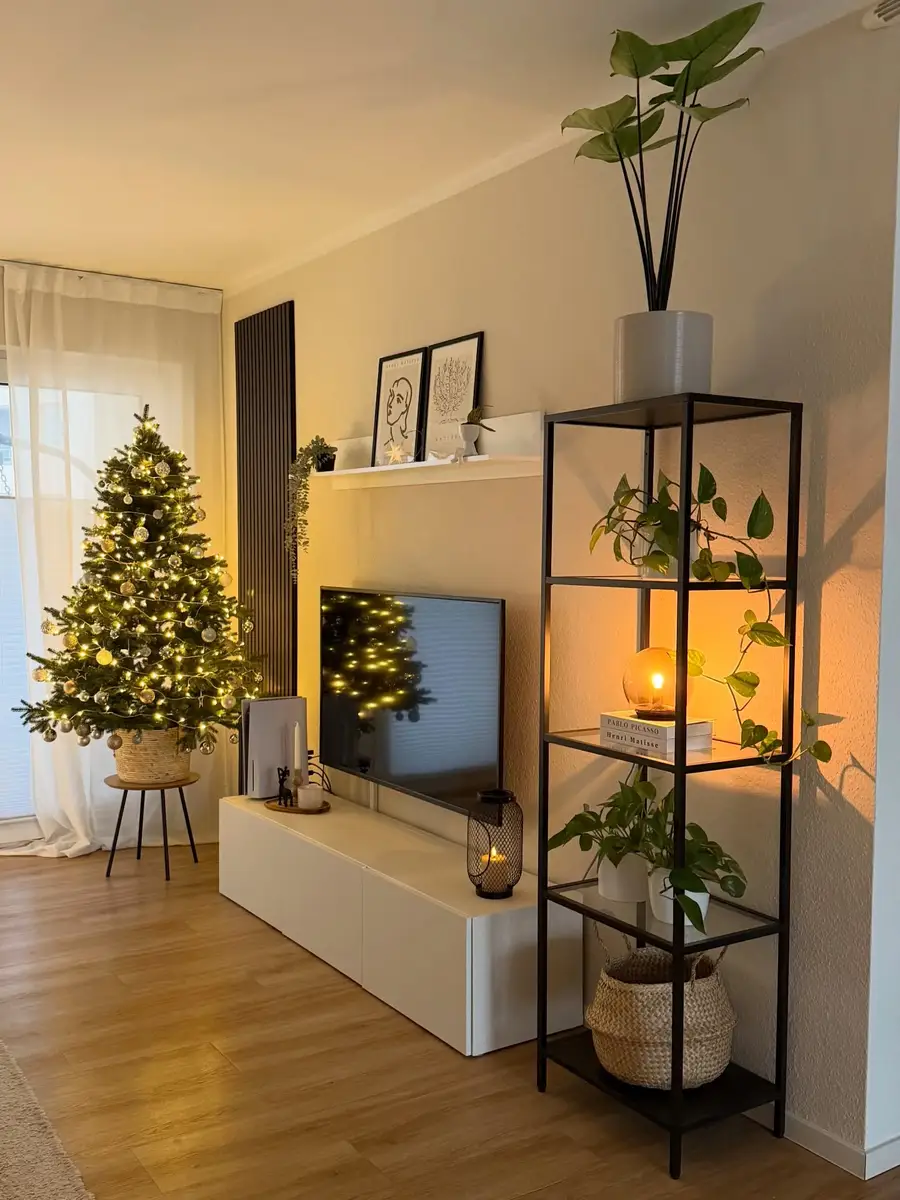
The black shelving unit works because you can still see the wall behind it.
That matters in a narrow room.
Plants sit at different levels, a small amber lamp glows halfway down, and a woven basket handles storage near the bottom. Nothing bulky blocks the corner. The low white TV cabinet follows the same idea horizontally.
Storage doesn’t have to look heavy just because it reaches the ceiling.
22. Make The Shelves Glow
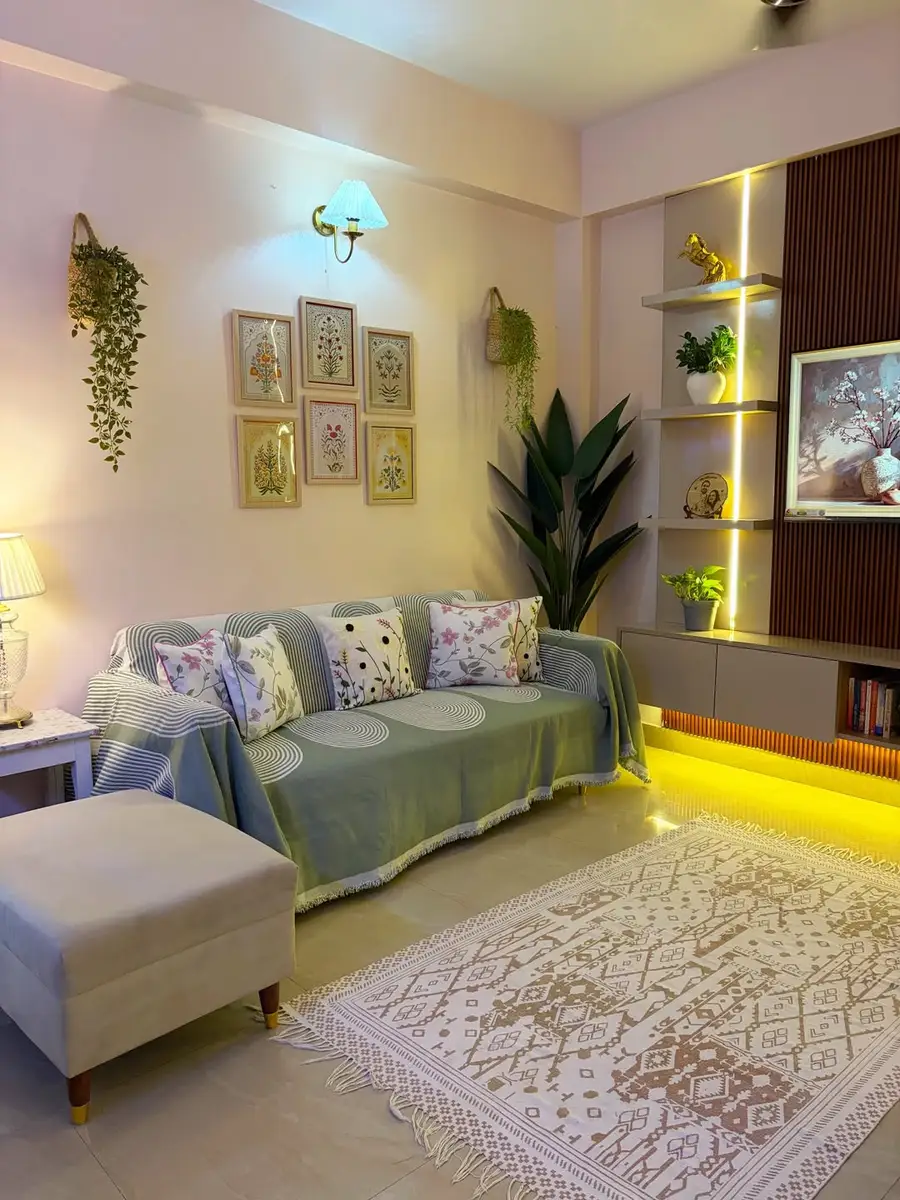
The built-in shelving would look fine without lighting, but that thin vertical strip changes the wall after dark.
It catches the shelf edges, lights the plants from the side, and spills a warm line of light onto the floor. Across the room, the sofa stays softer with floral cushions and small framed botanical prints.
A little hidden shelf lighting can do more than adding another row of decorative objects.
23. Let The Plants Get Messy
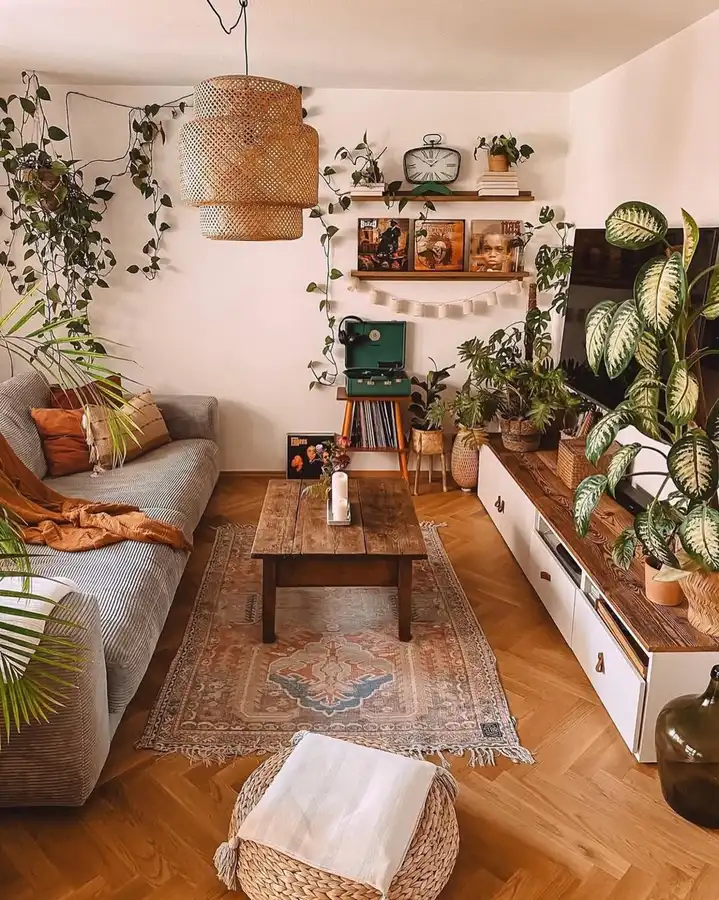
There are a lot of plants here. Some trail from shelves, some climb, some crowd the TV console, and one huge variegated plant pushes right into the screen area.
Normally I’d say edit it down.
But the slight messiness suits the room. Records, album covers, an old-style clock, woven baskets, and the rough wood coffee table already give it a collected feel.
Matching white pots would actually make this less interesting. Different heights and containers belong here.
24. Don’t Match The Seating
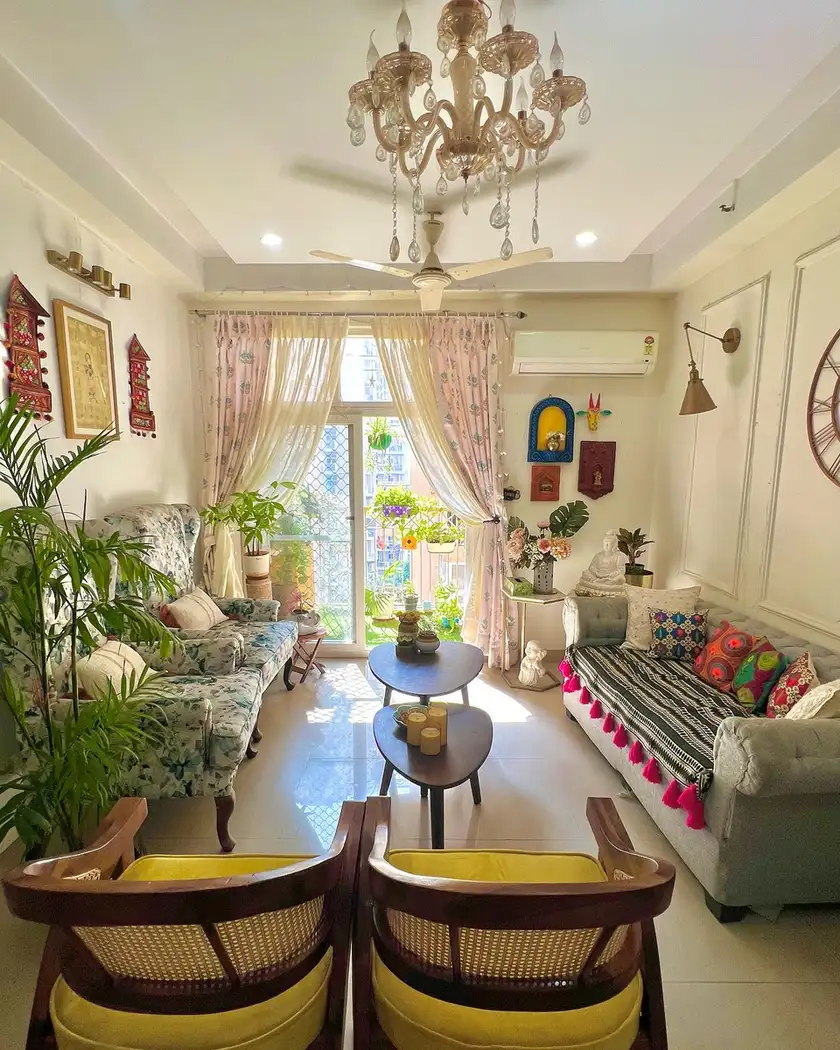
Two yellow cane-backed chairs face a floral sofa and a gray sofa covered with a black-and-white textile. None of them belong to a matching furniture set.
Good.
The room still feels connected because bright cushions and textiles repeat across the seating, while wood and cane appear more than once.
That matters when you’re combining gifted furniture, secondhand finds, and one or two newer pieces. Matching everything is expensive. Repeating color is cheaper.
25. Cover The Sofa First
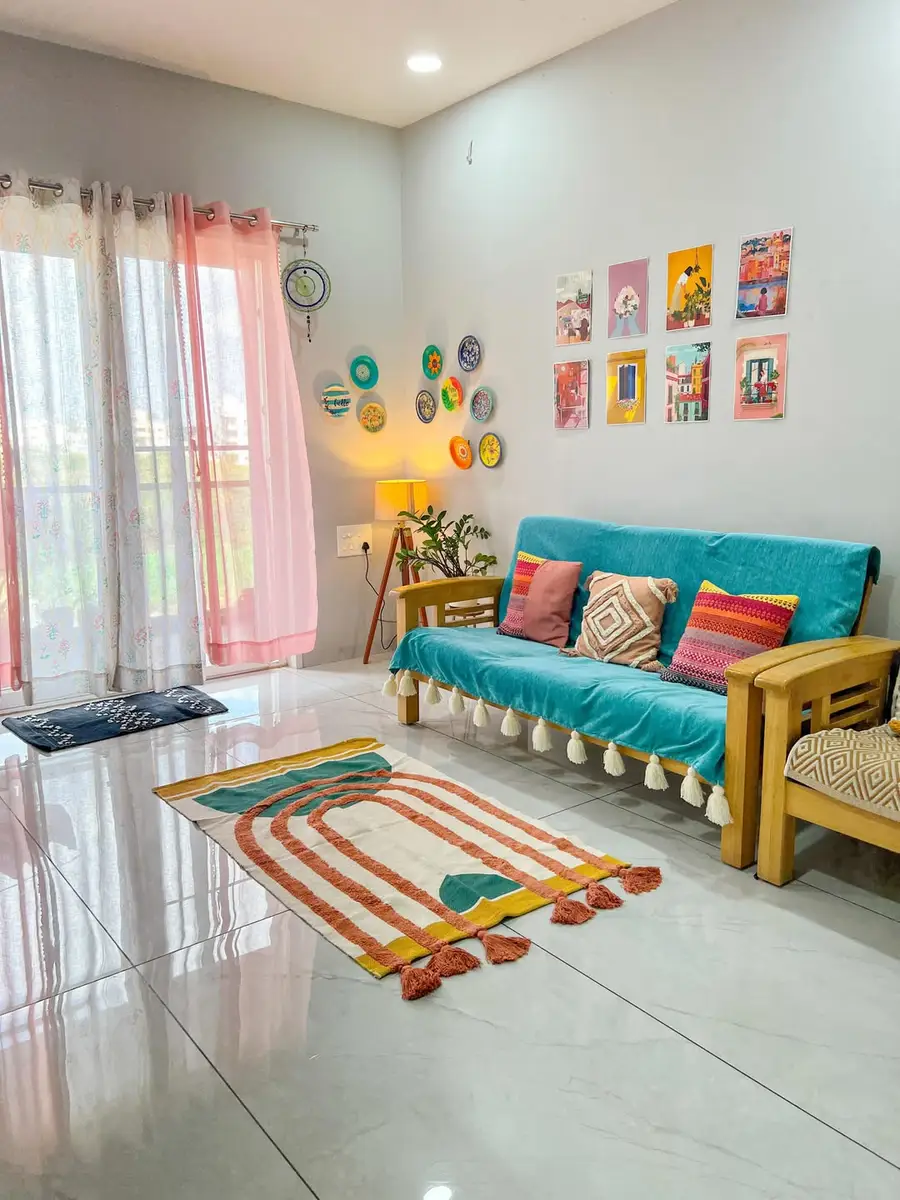
The turquoise sofa cover changes the entire room.
Underneath, the wooden sofa is quite simple. Add the bright fabric, tasseled edge, coral cushions, pink curtains, and colorful rug, and suddenly it belongs in a cheerful room.
If your first sofa is sturdy but ugly, cover it before replacing it. Then spend a little on cushions or wall prints that support the new color.
The covered sofa is the makeover.
26. Green Loves Burnt Orange
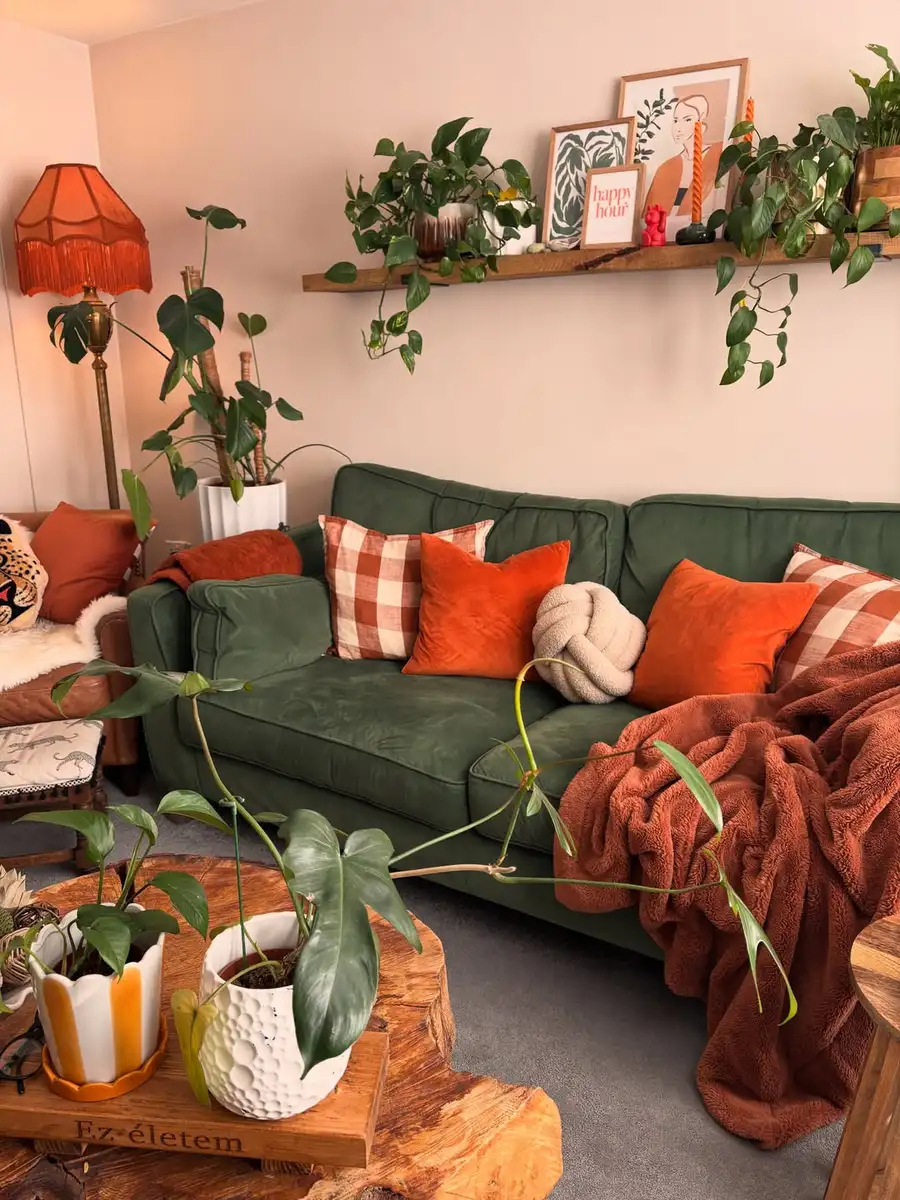
Deep green upholstery could have made this room feel dark, but the burnt orange keeps it lively.
Orange appears on the velvet cushions, thick throw, lamp shade, and smaller accessories. The wood coffee table sits naturally between those two colors, while the trailing plants make the sofa green feel even richer.
I wouldn’t introduce another strong accent here. Blue or pink would just compete.
Green, rust, cream, and wood are already doing enough.
Final Thoughts
You don’t need to recreate an entire room to get somewhere good. Start with the thing bothering you most.
Blank wall? Hang one large mirror or begin a small gallery. Ugly sofa? Cover it. Dark room? Add a lamp before adding decor. Empty corner? A tall plant may be enough. If that last corner is still bothering you, these empty living room corner ideas show a few more ways to use it without overfilling the room.
And don’t worry if your furniture doesn’t perfectly match. Some of the most interesting rooms here work because the pieces are a little different. Give yourself time to build the room slowly.